
Glass-integrated photovoltaic (PV) facade systems have crossed the threshold from architectural novelty to engineering specification item. The global BIPV market reached an estimated USD 34.78 billion in 2025 and is projected to hit USD 250.91 billion by 2035 at a 21.85% CAGR, according to Precedence Research. Mandates are accelerating that trajectory: the EU’s revised Energy Performance of Buildings Directive requires all new buildings to be zero-emission by 2030, and zero-emission requirements for publicly-owned buildings take effect on January 1, 2028.
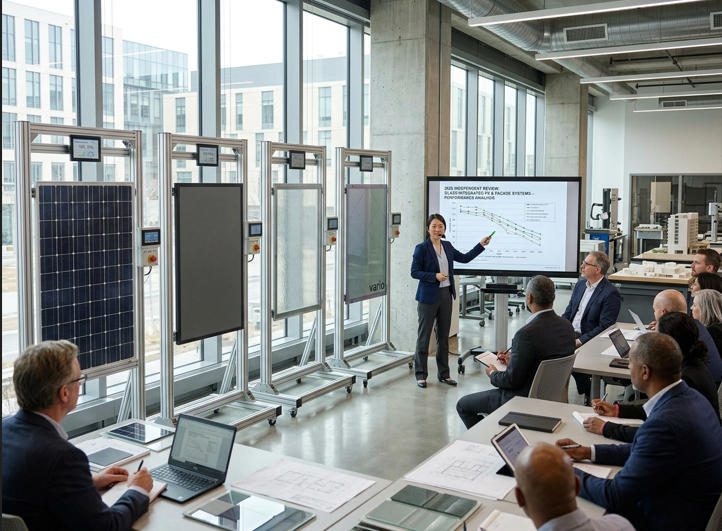
This independent review evaluates the latest generation of glass-integrated solar panel products and facade systems available in 2026. The evaluation criteria are performance (electrical output, optical properties, thermal management), aesthetics (design flexibility, color, pattern options), reliability (durability testing, weathering resistance, fire safety), installation practicality (retrofit versus new-build, supply chain, commissioning timelines), and economics (total cost of ownership, payback periods, ROI). The review draws on published test data, project case studies, manufacturer specifications, and field performance reports — not on marketing materials. Readers should expect specific numbers: watts per square meter, transmittance percentages, fire classifications, wind load ratings, and cost per square meter with payback calculations.
The products covered span glass-integrated PV modules (where solar cells are laminated between glass layers to serve as building envelope components), PV glass facades (curtain wall and rainscreen systems), solar skylights and canopies, and opaque solar cladding systems. Key manufacturers reviewed include Onyx Solar, Mitrex, SoliTek, ClearVue PV, ML System, and BIPV-focused suppliers such as Jia Mao BIPV whose product range spans transparent, colored, and laminated photovoltaic glass for facade integration.
Market Overview of Glass-Integrated Solar and Facade Systems
Latest Product Categories
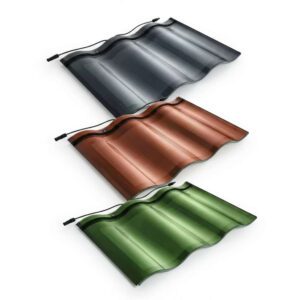
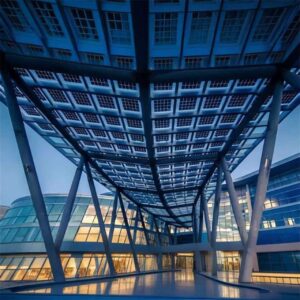
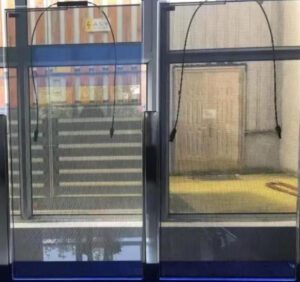
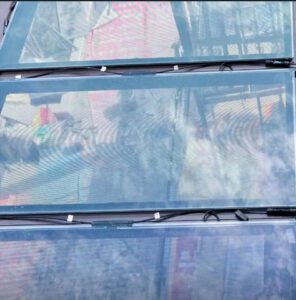
The glass-integrated PV facade market segments into four distinct product categories, each serving different architectural functions and performance requirements. Semi-transparent PV glass modules use crystalline silicon or thin-film cells (amorphous silicon, CdTe, or CIGS) laminated between two glass sheets, with spacing between cells that allows daylight transmission — typical visible light transmittance (VLT) ranges from 10% to 40% depending on cell density. Opaque solar cladding panels, such as Mitrex’s eFacade PRO, use high-efficiency monocrystalline cells behind a decorative glass layer that mimics stone, wood, or solid-color finishes — achieving up to 18 W per square foot (194 W/m²) while looking indistinguishable from conventional cladding. PV skylight and canopy systems use laminated safety glass with integrated cells to replace conventional overhead glazing. And PV louvre and shading systems, such as the 1,794-unit Onyx Solar installation at the Atlassian Tower in Sydney (247 kWp total), serve dual functions as solar shading devices and electricity generators.
A fifth emerging category — smart switchable PV glass — integrates electrochromic or thermochromic interlayers that adjust transparency based on light conditions or electrical signals. Manufacturers including Jia Mao BIPV are investing in self-dimming material R&D that automatically adjusts transparency, though commercial deployments remain limited to pilot projects as of early 2026.
Key Market Players and Regional Adoption
Market leadership in glass-integrated PV facades is distributed across European, North American, and Asian manufacturers. Onyx Solar (Spain) dominates the architectural semi-transparent segment with over 300 facade projects delivered across Europe by end-2025 and the landmark Atlassian Tower deployment in Australia. Mitrex (Canada) leads in opaque solar cladding with cell efficiency up to 22.5% and energy generation up to 405 W per panel. SoliTek (Lithuania) specializes in European-made glass-glass modules with BIPV-specific certifications. ML System (Poland) recently unveiled new solar facade panels and roof-integrated PV tiles optimized for European building codes. ClearVue PV (Australia) produces transparent PV glazing that transmits up to 70% visible light using luminescent interlayer technology.
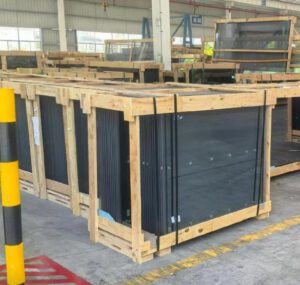
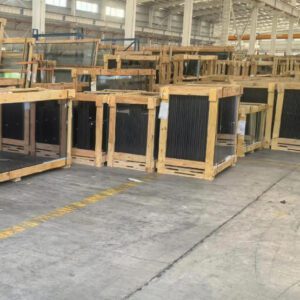
In Asia, Chinese manufacturers have scaled production rapidly. Jia Mao BIPV operates at 3 GW annual production capacity from their Shanghai facility — one of the largest dedicated BIPV manufacturing bases globally — and supplies transparent, colored, and laminated PV glass modules to projects across Southeast Asia, the Middle East, and Europe. Their automated production lines incorporate advanced laminators and precision laser cutting, enabling custom sizing and cell-layout patterns that smaller BIPV manufacturers cannot cost-effectively replicate at scale.
Regional adoption patterns reflect regulatory environments. Europe leads in absolute deployment volume, driven by EPBD mandates and national BIPV incentive programs in France, Italy, and Switzerland. China’s domestic BIPV market is growing at over 30% annually, propelled by provincial subsidies and net-zero building pilot programs. North America is the fastest-growing market by percentage, with BIPV facade specifications increasingly appearing in commercial projects pursuing LEED Zero Energy or Passive House certification.
Technology Trends Shaping Efficiency and Durability
Advances in Transparent Photovoltaic Cells and Interlayer Materials
Three cell technologies compete for the transparent and semi-transparent facade segment, each with distinct trade-offs. Crystalline silicon (c-Si) cells, spaced apart in the glass laminate to allow light between cells, deliver the highest per-cell efficiency (22%+ at the cell level) but create a visually discontinuous pattern — the opaque cell squares are clearly visible. Amorphous silicon (a-Si) thin-film cells produce a more uniform, subtly tinted appearance and achieve excellent temperature coefficients (-0.19%/°C for Pmax, roughly half the thermal loss of c-Si), but at lower efficiency (5–10% at the module level). Cadmium telluride (CdTe) thin-film offers a middle ground — approximately 12–16% module efficiency with uniform dark appearance and a temperature coefficient around -0.28%/°C.
The most significant recent advance is in semi-transparent perovskite cells. Laboratory efficiencies above 10% have been achieved while maintaining over 30% visible light transmittance — a performance combination that neither c-Si spacing nor a-Si thin-film can match. Perovskite-silicon tandem architectures, where a semi-transparent perovskite top cell is layered over a silicon bottom cell, have exceeded 33% combined efficiency in lab settings. Commercialization timelines for facade-integrated perovskite products remain 3–5 years out due to stability challenges under UV exposure and humidity, but several manufacturers have announced pilot production lines for 2027–2028.
Interlayer materials have evolved in parallel. Standard EVA (ethylene vinyl acetate) encapsulant, the industry workhorse, is being displaced by POE (polyolefin elastomer) in premium facade modules because POE resists UV yellowing 40% longer than EVA and blocks the acetic acid formation that causes delamination and snail trails. Jia Mao BIPV uses imported POE encapsulant films with a double-layer encapsulation structure that prevents Potential Induced Degradation (PID) — a failure mode that can reduce module output by 30% or more in high-voltage facade arrays if inadequately protected.
Impact of Glass Strength, Weight, and Framing on Performance
Facade-integrated PV modules must simultaneously meet structural glazing requirements (wind load, impact resistance, thermal expansion) and electrical performance standards. The glass configuration — thickness, tempering level, interlayer type — determines whether the module can serve as a structural curtain wall element or requires a separate support frame.
Standard BIPV glass-glass modules use two layers of 3.2 mm tempered glass (total module weight approximately 20–22 kg/m²). Thin-glass configurations using 2.0 mm tempered glass reduce weight to approximately 14–16 kg/m² — a meaningful difference for high-rise curtain wall installations where dead load on the structural frame is a design constraint. However, research from GroundWork® has identified a direct correlation between thinner glass and increased mechanical breakage during transport and installation, especially for modules exceeding 2.0 m² in area.
Framing systems interact with glass performance. Frameless modules bonded to curtain wall mullions with structural silicone offer the cleanest visual appearance but require precise engineering of the silicone joint width (typically 10–20 mm) to accommodate thermal expansion differentials between the glass, cells, and aluminum framing. Framed modules with aluminum perimeter frames add 1–2 kg/m² but provide mechanical edge protection that reduces handling damage during installation. Jia Mao BIPV’s frame sealing system uses hot-melt connection technology with integrated drainage channels — eliminating the micro-gaps that conventional gasket seals develop after years of thermal cycling and reducing the long-term risk of moisture ingress into the cell encapsulation.
Performance Metrics and Evaluation Methods
Optical Properties, Electrical Output, and Thermal Management
Evaluating glass-integrated PV facade products requires a different metric framework than evaluating conventional rooftop panels. Three parameters matter simultaneously: visible light transmittance (VLT), electrical power output (Wp/m²), and solar heat gain coefficient (SHGC). These parameters are inherently in tension — increasing cell density raises electrical output but reduces VLT and increases SHGC (because opaque cells absorb solar radiation and re-radiate heat inward).
| Product Category | Gamme VLT | Electrical Output (Wp/m²) | SHGC Range | Temp. Coefficient (Pmax) | Typical Application |
|---|---|---|---|---|---|
| Semi-transparent c-Si glass | 10–35% | 80–150 | 0.15–0.35 | -0.34 to -0.40%/°C | Curtain walls, skylights |
| Amorphous silicon (a-Si) glass | 5–25% | 30–70 | 0.10–0.25 | -0.19%/°C | Spandrel panels, hot climates |
| CdTe thin-film glass | 10–30% | 60–120 | 0.12–0.30 | -0.28%/°C | Facades, canopies |
| Opaque solar cladding (Mitrex-type) | 0% | 150–200 | N/A (opaque) | -0.34%/°C | Rainscreen cladding |
| Transparent luminescent PV (ClearVue-type) | 50–70% | 30–50 | 0.30–0.45 | Varies | Vision glazing, windows |
| Colored BIPV glass (Jia Mao BIPV) | 10–40% | 70–140 | 0.12–0.30 | -0.34%/°C | Custom facades, heritage |
The IEA PVPS Task 15 report on SHGC of BIPV modules documented that BIPV glazing with 20% VLT reduces cooling loads by up to 23.2% compared with conventional clear glazing — an energy saving that offsets a meaningful portion of the BIPV cost premium independent of the electricity generated.
Weathering, UV Resistance, and Reliability Testing
Facade-grade PV glass faces more severe environmental exposure than rooftop panels. Vertical mounting subjects modules to higher wind loads, direct wind-driven rain impact, and accelerated UV exposure on south and west orientations. The testing protocols that matter for facade applications extend beyond standard IEC 61215/61730 to include building envelope standards.
Key tests include IEC 61215 thermal cycling (200 cycles, -40°C to +85°C), damp heat (1,000 hours at 85°C/85% RH), and UV preconditioning (15 kWh/m²), supplemented by facade-specific tests: ASTM G154 accelerated weathering (UV fluorescent lamp exposure to assess coating and encapsulant degradation), salt mist testing per IEC 61701 for coastal installations, and ammonia resistance per IEC 62716 for agricultural proximity. Products that pass only IEC 61215 but have not undergone facade-specific weathering tests carry unquantified risk when installed in demanding building envelope applications.
Chart 1: Electrical Output Range by Glass-Integrated PV Product Category (Wp/m²)
0
50
100
150
200
Wp/m²
Opaque Cladding
150–200
Semi-transparent c-Si
80–150
Colored BIPV Glass
70–140
CdTe Thin-Film
60–120
a-Si Thin-Film
30–70
Transparent Luminescent
30–50
Aesthetics and Architectural Integration
Design Flexibility, Color, and Pattern Options
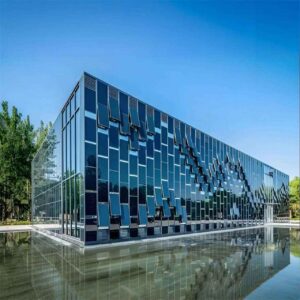
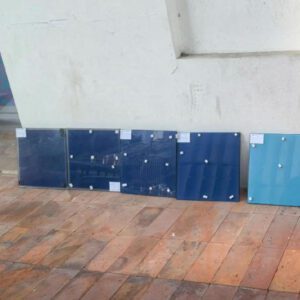
Architectural acceptance is the gatekeeper for BIPV facade adoption. Products that look like solar panels bolted to a wall face specification resistance from architects and building owners. The current generation of glass-integrated PV products has made significant progress in overcoming this barrier. Mitrex’s opaque cladding panels replicate stone, wood, concrete, and terracotta finishes through ceramic digital printing on the glass surface — from 3 meters away, the difference between Mitrex solar cladding and conventional stone veneer is visually undetectable. Onyx Solar offers over 20 standard color options from white and polar gray to sand, terracotta, and custom RAL colors. Jia Mao BIPV’s colored glass line provides custom color matching with transparency options from 10% to 90%, and their proprietary cell arrangement process creates custom architectural patterns using invisible busbar technology to maintain a clean, uniform surface appearance.
Pattern flexibility is advancing through laser-scribing techniques that allow thin-film cells to be patterned into geometric, organic, or branded designs — transforming the facade from a passive energy surface into an architectural design element. Semi-transparent modules with custom cell spacing can create deliberate patterns of light and shadow on interior spaces, an effect that several architectural practices have incorporated into their design vocabulary for lobbies, atriums, and transition spaces.
Standards for Building Code and Fire Safety
Fire safety requirements for glass-integrated PV facades are under increasing scrutiny. A March 2026 large-scale fire test study published via PV Magazine found that BIPV cavity wall facades with thin glass (2.0 mm) and standard EVA encapsulant exhibited significantly higher fire hazard under electrical load than modules with thicker glass and POE/ionomer encapsulants. The study tested four facade configurations and found that glass thickness and encapsulant type were the two most significant variables affecting fire propagation behavior.
Fire classification requirements vary by region. In the United States, UL 790 Class A fire classification is required for roof-mounted BIPV, and NFPA 285 testing is required for facade-mounted systems on buildings above 40 feet. In Europe, EN 13501-1 classification applies, with typical requirements of A2-s1,d0 (non-combustible) for high-rise facades. Jia Mao BIPV’s laminated glass modules meet B1-grade flame retardancy under Chinese standard GB 8624 and use fluorocarbon backsheets with 30-year UV resistance — materials that exceed the minimum fire performance thresholds for curtain wall integration.
Sustainability and Lifecycle Considerations
Recyclability, Embodied Energy, and End-of-Life
A 2025 prospective lifecycle analysis of BIPV facades published in Energy and Buildings found that embodied greenhouse gas emissions for a BIPV glass facade manufactured in 2023 ranged from 85–120 kg CO₂-eq/m², with projections showing a 30–38% reduction by 2033 as manufacturing energy sources decarbonize and material efficiency improves. The energy payback time — the period required for the BIPV facade to generate enough clean energy to offset its manufacturing energy — ranged from 2.5 to 5 years depending on location, orientation, and product type. Over a 30-year facade life, the net carbon benefit is substantially positive: a typical south-facing BIPV curtain wall in Central Europe avoids 60–90 kg CO₂-eq/m²/year, resulting in a net lifecycle carbon reduction of 1,500–2,400 kg CO₂-eq/m² over 30 years.
End-of-life processing for glass-glass PV modules is technically feasible but commercially underdeveloped. The glass, aluminum frame, copper wiring, and silicon cells are all recyclable. Current recycling processes recover 85–95% of the glass mass and 90–95% of the aluminum and copper. Silicon cell recovery is more challenging and less economically viable at current scale. The EU’s WEEE Directive classifies PV modules as electronic waste, requiring manufacturers to fund collection and recycling — a cost that should be factored into total cost of ownership but typically adds less than €2/m² when amortized over the product life.
Maintenance Needs and Cleaning
Vertical facade installations benefit from natural rain-washing that horizontal rooftop panels do not — a south-facing vertical BIPV module in a temperate climate with regular rainfall may require professional cleaning only once annually, versus 2–4 times for a horizontal rooftop array. Self-cleaning coatings further reduce maintenance frequency. Jia Mao BIPV’s ultra-clear tempered glass features a self-cleaning surface coating that reduces maintenance costs by approximately 30% — a saving that compounds meaningfully across a 500 m² commercial facade over 25 years of operation.
Maintenance access is the critical differentiator for facade versus rooftop systems. Cleaning a rooftop array requires standard fall-protection equipment. Cleaning a curtain wall facade at the 30th floor requires building maintenance unit (BMU) access, rope-access technicians, or swing-stage scaffolding — at 3–5x the cost per square meter of rooftop cleaning. This cost difference should be modeled into every facade BIPV economic analysis.
Durability, Safety, and Standards
Wind Load, Impact Resistance, and Fire Ratings
Facade-grade BIPV modules must withstand design wind pressures that vary dramatically by building height, terrain category, and geographic location. A 100-meter-tall building in a coastal city can experience design wind pressures exceeding 3,000 Pa on upper floors — well above the 2,400 Pa standard IEC 61215 mechanical load test. Specifiers must verify that the selected BIPV product has been tested to the project-specific design wind pressure, not merely to the IEC minimum. Jia Mao BIPV’s modules are tested to 4.0 kPa (4,000 Pa) wind pressure resistance — sufficient for most mid-rise and high-rise facade applications without requiring additional structural reinforcement.
Impact resistance for facade applications follows building glass standards (EN 12600 or ANSI Z97.1) rather than PV-specific hail testing. EN 12600 pendulum impact testing classifies glass by its behavior under body impact: 1B1 (highest performance — laminated glass that cracks but remains intact with no dangerous fragments) is the standard requirement for overhead and accessible facade glazing. BIPV modules using laminated glass-glass construction inherently meet this requirement; modules with tempered glass on the rear face only provide 1C1 classification.
Fire ratings represent the most rapidly evolving regulatory area. The NFPA 285 intermediate-scale fire test — required in the U.S. for combustible facade materials on buildings above 40 feet — subjects a multi-story facade mock-up to a calibrated burner simulating a fire emanating from a window opening. Passing NFPA 285 requires that the facade system limit flame propagation to defined boundaries. Several BIPV manufacturers have obtained NFPA 285 test reports, but specifiers should verify that the tested assembly exactly matches the proposed installation configuration — including the same insulation type, cavity depth, and mounting bracket system.
Wind-Driven Rain and Water Intrusion Testing
PV facades function as the building’s primary weather barrier. Any water intrusion through the BIPV glazing system — at joints, sealant lines, or module-to-mullion interfaces — can damage both the building interior and the electrical systems behind the facade. Water intrusion testing follows building envelope standards, not PV standards: ASTM E331 (uniform static air pressure difference for laboratory testing), AAMA 501.1 (field testing of installed curtain walls), and AAMA 501.2 (hose-stream diagnostic testing for field quality assurance).
These tests must be specified for any BIPV curtain wall or storefront system. A BIPV module that passes IEC 61730 wet leakage testing (which tests the PV module’s internal electrical insulation, not its water-tightness as a building envelope component) does not necessarily resist wind-driven rain penetration at the module-to-framing interface. The two test categories address different failure modes, and both must pass for a facade installation to be considered fully verified.
Installation, Supply Chain, and Commissioning
Retrofit vs. New-Build Challenges
New construction offers the most cost-effective path to BIPV facade integration because the PV modules replace conventional cladding materials — the incremental cost above standard curtain wall glazing is what drives the payback calculation, not the total system cost. In new construction, the BIPV system is designed into the structural frame from the outset, electrical conduit routing is planned during construction documentation, and installation sequencing aligns with the standard facade installation timeline. Jia Mao BIPV’s design guide for PV integration in new construction outlines a 10-step workflow from project kickoff through commissioning that integrates structural, electrical, and facade engineering into a coordinated specification process.
Retrofit projects face substantially greater complexity. Existing structural frames may not accommodate the dead load of glass-glass PV modules (20–22 kg/m²) without reinforcement. Electrical routing through existing wall cavities requires destructive investigation and often encounters unforeseen obstructions. Facade removal and replacement in occupied buildings requires noise mitigation, dust containment, and tenant coordination that can double project timelines. A retrofit that takes 3–5 days per floor in a vacated building may take 8–12 days in an occupied one. Despite these challenges, retrofit BIPV facade projects are increasingly viable as the cost of doing nothing rises: buildings that fail to meet tightening energy performance standards face declining asset values, higher operating costs, and eventual regulatory non-compliance.
Installation Timelines and Warranty Constraints
Installation timelines for BIPV facade systems typically run 50–100% longer than conventional curtain wall installation due to electrical commissioning requirements (string testing, inverter configuration, grid interconnection), the need for certified solar installers in addition to facade installers, and inspection hold points that require both building envelope and electrical inspections. A 2,000 m² BIPV curtain wall on a new-construction commercial building typically requires 10–16 weeks from first module placement to grid connection, versus 6–10 weeks for an equivalent conventional curtain wall.
Warranty constraints create scheduling pressure. Most BIPV manufacturers require installation by certified contractors to maintain warranty coverage. Improper handling — particularly during hoisting glass-glass modules to upper floors — can cause micro-cracks invisible to visual inspection but detectable through electroluminescence (EL) imaging. Best practice is to perform EL imaging on a statistical sample of modules immediately after installation to establish a baseline and detect handling damage before the contractor demobilizes.
Economics, Cost Comparison, and ROI
CAPEX vs. OPEX, Incentives, and Payback Periods
BIPV facade economics have reached a tipping point where, for new-construction projects replacing premium cladding materials (natural stone, high-performance curtain wall glazing), the incremental cost of BIPV over conventional cladding produces a positive ROI within the building’s design life. The cost structure breaks down as follows.
| Cost Element | Conventional Premium Curtain Wall | Semi-Transparent BIPV Curtain Wall | Opaque BIPV Cladding |
|---|---|---|---|
| Module/Panel Cost | €150–250/m² | €200–400/m² | €180–350/m² |
| Framing & Mounting | €80–120/m² | €90–140/m² | €70–110/m² |
| Electrical (BOS, Inverter, Wiring) | — | €40–80/m² | €35–70/m² |
| Installation Labor | €60–100/m² | €80–130/m² | €70–110/m² |
| Total Installed Cost | €290–470/m² | €410–750/m² | €355–640/m² |
| Incremental Cost Over Conventional | — | €120–280/m² | €65–170/m² |
| Annual Energy Value (€0.15/kWh) | — | €12–22/m²/year | €15–30/m²/year |
| Estimated Payback on Incremental Cost | — | 7–15 years | 4–10 years |
Opaque BIPV cladding delivers faster payback because its higher electrical output (150–200 Wp/m²) generates more annual revenue per square meter, and its lower incremental cost over conventional cladding reduces the investment gap. Semi-transparent BIPV carries a longer payback but provides additional value through daylighting, reduced cooling loads (up to 23% per the IEA PVPS data), and architectural differentiation.
Total Cost of Ownership and Depreciation
Total cost of ownership (TCO) over 30 years must account for electricity generation revenue (or avoided cost), cooling load reduction savings, facade maintenance savings or premiums, inverter replacement (typically once at year 12–15 for string inverters), government incentives (U.S. 30% ITC, EU member-state BIPV subsidies), accelerated depreciation (MACRS 5-year schedule in the U.S.), and green building certification value (LEED, BREEAM, WELL points attributed to on-site renewable generation).
For a commercial building with electricity costs of €0.15/kWh escalating at 2.5% annually, a 1,000 m² opaque BIPV facade generating 150 Wp/m² (150 kWp total system) in Central Europe (1,100 kWh/kWp specific yield for a south-facing vertical surface) produces approximately 165,000 kWh/year — worth approximately €24,750 in year 1 and growing with electricity price escalation to over €40,000/year by year 25. Over 30 years, cumulative energy value exceeds €950,000 before incentives. Against an incremental cost of €65,000–€170,000 over conventional cladding, the economics are compelling.
Chart 2: Typical BIPV Curtain Wall Installed Cost Breakdown (%)
Coût
Breakdown
PV Modules/Panels (45%)
Framing & Mounting (18%)
Electrical BOS (14%)
Installation Labor (23%)
Case Studies and Field Performance
Commercial Building Project Examples
Atlassian Central Tower, Sydney (2025–2026): Onyx Solar supplied 1,794 custom PV louvres for Atlassian’s 40-storey hybrid timber-and-steel headquarters — described as the tallest of its kind globally. Each louvre produces 138 Wp, with the full system totaling 247 kWp. The louvres serve as solar shading elements, reducing direct solar gain while generating electricity — a dual function that improves both the building’s energy balance and occupant comfort. The project was delivered through a partnership with Australian building products supplier Metz, demonstrating that large-scale BIPV facade projects require close collaboration between PV manufacturers, glazing contractors, and building product distributors.
Berlin “Living Laboratory” BIPV Facade (2024–2025): A comprehensive case study published in Energies documented the performance of a full-size BIPV ventilated curtain wall on a Berlin office building. The study measured actual electricity production, thermal behavior, and visual comfort over a full year. Key finding: the BIPV facade achieved a performance ratio of 78% — comparable to well-designed rooftop installations despite the suboptimal vertical orientation — and reduced the building’s annual cooling energy demand by 18% compared with a conventional glazed facade.
Global South BIPV Deployments (2023–2025): A TERI compendium of BIPV case studies across tropical, coastal, and hot-arid climates documented performance under conditions that European-centric product specifications rarely address: saline coastal air (requiring corrosion-resistant glass and frame treatments), high ambient temperatures exceeding 45°C (where low-temperature-coefficient products deliver 8–12% more annual yield than standard c-Si), and monsoon-driven horizontal rain (requiring enhanced sealant and drainage design). These deployments validated that products engineered for the most demanding conditions perform reliably across all climate zones.
Lessons Learned and Best Practices
Across the case studies reviewed, five consistent lessons emerge. First, BIPV facade performance depends more on system integration quality — sealing, wiring, framing, thermal management — than on cell efficiency alone. A 22%-efficient cell in a poorly sealed frame that develops moisture ingress at year 5 will underperform a 18%-efficient cell in a well-engineered system. Second, electrical design must account for partial shading from adjacent buildings, self-shading from the building’s own geometry, and seasonal variation in facade irradiance — facade arrays in mid-latitudes receive 50–70% of the annual irradiance that a horizontal surface receives, and this must be modeled accurately during financial projections. Third, post-installation EL imaging and baseline IV-curve testing should be contractual requirements, not optional extras. Fourth, facade maintenance costs are consistently higher than rooftop maintenance costs — budget 2–3x the per-square-meter maintenance cost for BIPV facades versus BIPV roofs. Fifth, procurement from manufacturers with demonstrated production scale and traceable quality systems, such as Jia Mao BIPV, reduces the risk of supply disruption and warranty claim complications on multi-year facade projects.
Future Outlook and Recommendations
Emerging Materials and Standards Roadmap
Three technology developments will reshape the glass-integrated PV facade market within the next 5 years. Perovskite-silicon tandem cells, already exceeding 33% efficiency in laboratory settings, will enable semi-transparent facade modules to produce 2–3x more electricity per square meter than current a-Si products while maintaining useful visible light transmission — if durability challenges under UV and humidity exposure are solved at commercial scale. Organic photovoltaic (OPV) materials printed on flexible substrates will enable PV integration into curved glass, irregular geometries, and lightweight facade systems that rigid glass-glass modules cannot address. And building-integrated PV + thermal (BIPV/T) systems — which harvest both electricity and heat from the facade — are entering commercial deployment for buildings seeking net-zero heating and cooling.
Standards are evolving to match. The IEA PVPS Task 15 is developing updated guidelines for BIPV testing that combine PV performance testing (IEC 61215/61730) with building product testing (EN 13501 fire, EN 12600 impact, AAMA 501 water intrusion) into an integrated qualification framework. UL 7103, the U.S. standard for BIPV system testing, is expected to undergo revision within 2 years to address newly identified fire risks in thin-glass facade modules with combustible encapsulants.
Guidance for Clients, Specifiers, and Installers
For clients and developers: begin with an energy model that includes facade irradiance analysis for each building orientation. A facade that receives less than 600 kWh/m² annual irradiance will produce insufficient energy to justify the BIPV premium over conventional cladding. South and west facades in mid-latitudes typically produce 3–5x more energy than north facades. For specifiers: require dual certification — PV performance (IEC 61215/61730) and building envelope performance (relevant fire, impact, and water intrusion standards for the project jurisdiction). Do not accept PV certification alone as evidence of facade suitability. For installers: coordinate facade installation, electrical commissioning, and building envelope testing in a single work sequence. Performing water intrusion testing (AAMA 501.2) after PV commissioning risks the need for disassembly if leaks are detected. Test building envelope integrity first, then commission the electrical system.
Watch: BIPV Solar Facade Systems Explained
This video provides a clear visual introduction to how BIPV solar facade systems integrate with building design and generate energy from the building envelope:

Glass-integrated PV facade systems in 2026 are technically mature, economically viable for new construction replacing premium cladding, and supported by a growing base of real-world project data. The performance range spans 30 Wp/m² for transparent luminescent glazing to 200 Wp/m² for opaque solar cladding — a breadth that allows specifiers to select products matching both energy targets and architectural intent. Payback periods on the incremental cost over conventional cladding range from 4 to 15 years depending on product type, facade orientation, electricity pricing, and incentive availability.
The critical questions designers, developers, and facility managers should ask manufacturers before specification are: what is the tested wind load capacity of the specific module configuration being proposed (not just the IEC minimum)? Has the product passed fire testing under the specific facade assembly configuration, including the proposed insulation and cavity design? What is the SHGC and VLT under actual (not marketing) test conditions? What is the warranty coverage for labor and logistics in addition to panel replacement? And can the manufacturer provide references from installations with at least 3 years of monitored field performance data?
The suggested next steps are to commission a facade irradiance analysis for the specific building geometry, request detailed quotations from at least three qualified BIPV manufacturers — for custom PV glass solutions, Jia Mao BIPV offers consultation tailored to project specifications — and, where possible, visit a completed BIPV facade installation or the manufacturer’s production facility before committing to a large-scale order. The data in this review demonstrates that the right glass-integrated PV facade product, properly specified and installed, delivers durable energy generation, thermal benefits, and architectural value. The wrong product — or the right product poorly specified — delivers liability.
Frequently Asked Questions (FAQ)
1. What defines glass-integrated PV versus traditional facade panels?
Glass-integrated PV modules replace conventional building materials (curtain wall glazing, cladding panels, skylights) with photovoltaic-active glass assemblies that generate electricity while performing all structural, weather-barrier, and aesthetic functions of the replaced material. Traditional facade panels are passive — they provide no energy generation. BIPV panels are specified as building components, not added-on equipment, which means they must meet both PV performance standards (IEC 61215, IEC 61730) and building product standards (fire, impact, thermal, water intrusion) simultaneously.
2. How are performance and longevity tested for facade-grade PV glass?
Facade-grade PV glass undergoes IEC 61215 design qualification (thermal cycling, damp heat, mechanical load, hail impact) and IEC 61730 safety qualification (dielectric withstand, fire classification, wet leakage). Additionally, facade-specific testing includes accelerated weathering per ASTM G154, salt mist per IEC 61701 for coastal sites, wind-driven rain resistance per ASTM E331 or AAMA 501, impact resistance per EN 12600, and fire classification per UL 790/NFPA 285 (U.S.) or EN 13501 (Europe). Products that carry only PV certification without building envelope testing data are not verified for facade use.
3. What are typical payback ranges for glass-integrated facade investments?
Payback on the incremental cost of BIPV over conventional cladding ranges from 4–10 years for opaque solar cladding and 7–15 years for semi-transparent PV curtain wall, depending on facade orientation, local electricity rates, and incentive availability. These figures assume new construction where the BIPV replaces a premium cladding material. Retrofit projects where the existing facade is not at end-of-life face longer payback (12–20+ years) because the full BIPV system cost, not just the incremental cost, must be recovered.
4. Which standards and certifications are most relevant for safety and reliability?
The minimum certification suite for glass-integrated PV facades includes IEC 61215:2021 (design qualification), IEC 61730:2023 (safety), a fire classification appropriate to the installation jurisdiction (UL 790 Class A or EN 13501 A2-s1,d0 for high-rise), impact testing per EN 12600 or ANSI Z97.1, and wind-driven rain testing per ASTM E331 or AAMA 501. For U.S. installations, UL 7103 is the integrated BIPV standard covering electrical, fire, wind, and weathering performance in a single test program. The manufacturer’s facility should hold ISO 9001:2015 quality management certification.
5. How does BIPV facade orientation affect energy yield?
Facade orientation has a dramatic impact on annual energy yield. A south-facing vertical facade in the Northern Hemisphere receives approximately 50–70% of the annual solar irradiance that a latitude-optimized tilted surface receives. East and west facades receive 40–60%. North facades receive only 15–30%. For a 1,000 m² facade in Central Europe, the difference between south and north orientation can mean 100,000+ kWh/year in production — the equivalent of the entire energy consumption of 25 European households.
6. What fire safety concerns are specific to BIPV facades?
BIPV facades introduce combustible materials (encapsulant films, junction box housings, cable insulation) into the building envelope — a concern that magnifies with building height and cavity design. A 2026 large-scale fire test study found that modules with thin glass (2.0 mm) and standard EVA encapsulant showed significantly higher fire hazard than those with thicker glass and non-combustible or low-combustibility encapsulants (POE, ionomer). Specifiers should require NFPA 285 (U.S.) or EN 13501-2 (EU) fire test reports for the complete facade assembly — not just the PV module in isolation.
7. Can glass-integrated PV facades be retrofit onto existing buildings?
Yes, but with significant additional complexity compared with new construction. Structural assessments must confirm that the existing frame can support BIPV module dead loads (typically 20–22 kg/m²). Electrical routing through existing cavities often requires exploratory demolition. Installation timelines are 50–100% longer in occupied buildings due to noise restrictions, tenant coordination, and limited work hours. Despite these challenges, facade retrofit with BIPV is economically viable when the existing facade is at or near end-of-life and would require replacement regardless.
8. What is the environmental impact of glass-integrated PV facades over their lifecycle?
Embodied carbon for a BIPV glass facade ranges from 85–120 kg CO₂-eq/m² at manufacture, with an energy payback time of 2.5–5 years. Over a 30-year life, a south-facing BIPV curtain wall in Central Europe avoids approximately 60–90 kg CO₂-eq/m²/year of grid electricity emissions, producing a net lifecycle carbon reduction of 1,500–2,400 kg CO₂-eq/m². At end-of-life, 85–95% of glass mass and 90–95% of aluminum and copper are recoverable through current recycling processes.
9. How do I select between semi-transparent and opaque BIPV facade products?
The choice depends on the facade zone’s functional requirement. Vision zones (where occupants need to see through the glass and daylight must penetrate) require semi-transparent products with appropriate VLT — typically 20–40% for office spaces. Spandrel zones (opaque areas between floors) and solid-wall areas are ideal for opaque solar cladding, which delivers 2–3x higher electrical output per square meter. Many facade designs combine both: semi-transparent BIPV in vision zones and opaque BIPV cladding in spandrel and parapet zones, maximizing energy generation while maintaining occupant comfort.
10. What maintenance access should be planned for BIPV facades?
Facade BIPV maintenance requires the same access infrastructure as conventional curtain wall maintenance — building maintenance units (BMUs), rope-access points, or swing-stage anchors. Annual cleaning, visual inspection of sealants and joints, and periodic electrical inspection (every 2–3 years) are standard requirements. Budget 2–3x the per-square-meter maintenance cost compared with rooftop solar due to high-rise access costs. Products with self-cleaning coatings, such as those from Jia Mao BIPV’s photovoltaic glass line (which reduce maintenance costs by approximately 30%), help offset this premium over the system’s lifetime.