A Strategic Guide for Industry Professionals in Construction, Energy, and Design

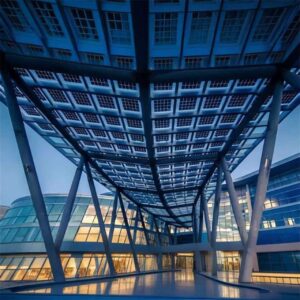
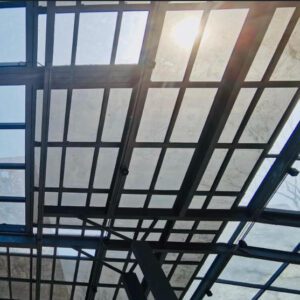
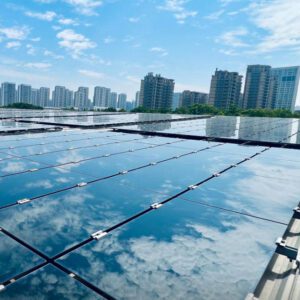
A south-facing BIPV glass façade does exactly what conventional glazing does — blocks weather, admits daylight, maintains views — and also generates electricity. That dual function is the core value proposition. Source: Unsplash.
1. The Rise of Building-Integrated Photovoltaics: From Niche to Necessity
For most of the past three decades, solar panels were something you mounted on top of a building after construction was complete. They sat in aluminum racks on rooftops, visible and utilitarian, disconnected from the building envelope below them.
That model is being fundamentally rethought.
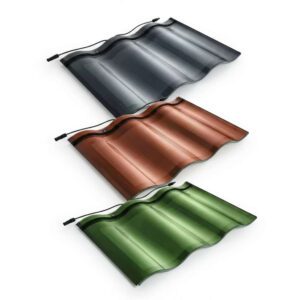
Building-Integrated Photovoltaics (BIPV) — a term for solar technology that remplace conventional building materials rather than adding onto them — has moved from specialty demonstration projects into mainstream commercial specification. A BIPV glass curtain wall generates electricity while functioning as the building’s primary weather barrier. A BIPV skylight controls glare and solar heat gain while producing kilowatt-hours. A BIPV roof tile performs as structural roofing while feeding a grid-tied inverter.
The market data reflects this shift decisively. The global BIPV market was valued at $23.4 billion in 2025 and is projected to reach $89.8 billion by 2030, growing at a compound annual growth rate of 21.2% (Grand View Research). Separately, the BIPV glass sub-segment alone is forecast to grow from $8.8 billion in 2025 to $63.5 billion by 2035 (Market Research Future). These are not speculative projections driven by laboratory announcements — they are being pulled by concrete regulatory and market forces.
Regulatory drivers are the strongest accelerating factor. ASHRAE 90.1-2022, the primary U.S. energy standard for commercial buildings, has tightened envelope and energy generation requirements significantly. The EU’s revised Energy Performance of Buildings Directive (EPBD) mandates that all new buildings be zero-emission by 2030 and that solar systems be installed on new non-residential buildings above 250 m² by 2026. LEED v4.1 and BREEAM Outstanding certifications reward on-site renewable generation with credits that BIPV glazing is uniquely positioned to deliver — because it generates energy from surfaces that are already part of the building design.
For contractors, EPCs, architects, and distributors, the practical implication is straightforward: clients and project owners are facing code mandates, ESG targets, and green certification requirements that standard rooftop arrays cannot always satisfy. Building-integrated glazing opens specification opportunities that did not exist five years ago.
| Driver | Impact on BIPV Adoption | Timeline |
|---|---|---|
| EU EPBD zero-emission mandate | Forces on-site generation on all new buildings | 2026–2030 |
| ASHRAE 90.1-2022 tightening | Raises envelope energy performance bar | Now in effect |
| LEED v4.1 / BREEAM Outstanding | Awards credits for BIPV that rack-mount cannot earn | Immediate |
| ESG corporate reporting (CSRD, SEC) | Developers must demonstrate measurable carbon reduction | 2025 onward |
| ITC 30% Federal Tax Credit (U.S.) | Reduces net BIPV cost by 30% through 2032 | Through 2032 |
| Net-zero building mandates (state/city) | Requires on-site generation in new construction | Jurisdiction-specific |
2. Transparent Solar Glass: Technology Breakdown for Technical Stakeholders
Not all transparent solar panels are the same product. Understanding the technology families — and what distinguishes them in a real specification — prevents costly mismatches between architectural intent and electrical performance.
How Photovoltaic Glass Works
At its core, photovoltaic glazing captures solar energy through semiconductor materials embedded within or coated onto the glass. The semiconductor absorbs photons — particles of light — and releases electrons, generating direct current (DC) electricity. That current travels through embedded busbars and cable exits to an inverter, which converts it to alternating current (AC) for the building’s electrical system.
The critical difference from standard panels: in transparent or semi-transparent configurations, the PV material must allow a meaningful fraction of visible light to pass through while still capturing energy from other parts of the solar spectrum. This creates the core design constraint that every specification decision must navigate.
Visible Light Transmittance (VLT) — the percentage of visible daylight that passes through the glass — is the primary variable. A 40% VLT product admits roughly the same daylight as tinted office glazing. A 10% VLT product looks significantly darker. Power output and VLT move in opposite directions: higher transparency generally means lower power density per square meter.
The Four Main Technology Families
Semi-transparent crystalline silicon uses spaced monocrystalline or polycrystalline cells laminated between two glass panes, with visible gaps between cells that allow light through. Efficiency at the cell level reaches 20–24%, but module-level efficiency is lower because of the gap area. This is the most mature and widely available product family, produced by manufacturers including Jia Mao BIPV and other major BIPV specialists. It suits façade spandrel panels, canopies, and applications where high power density is the priority.
Thin-film technologies (CdTe, CIGS, amorphous silicon) deposit photovoltaic material in extremely thin layers directly onto glass. Amorphous silicon in particular can be tuned to produce colored or patterned glazing and varied transparency levels — making it well-suited to architectural applications where appearance matters as much as output. Efficiency ranges from 6–18% depending on the specific technology and transparency level.
Organic Photovoltaics (OPV) use carbon-based semiconductor materials printed onto substrates. OPV products achieve high transparency — some exceeding 60% VLT — with good aesthetic flexibility. Commercial efficiency is currently 12–15%, with 10–15 year product warranties. They suit curved surfaces, atrium applications, and design-led projects where view quality is non-negotiable.
Perovskite solar cells represent the near-term frontier. Lab efficiencies now exceed 25%, and perovskite’s ability to be tuned to specific colors and transparency levels makes it architecturally compelling. Commercial BIPV perovskite products are entering limited deployment in 2025–2027, with broader availability expected before 2030. Project teams specifying perovskite today should verify outdoor durability data carefully — the technology is advancing rapidly, but not all products carry the 25-year warranties that crystalline silicon can offer.
Performance Metrics Comparison
| Technologie | Module Efficiency | Gamme VLT | Typical W/m² | Durée de vie | Meilleure application |
|---|---|---|---|---|---|
| Semi-transparent c-Si | 14–22% | 5–40% | 80–180 | 25–30 yr | Façade panels, spandrels, canopies |
| CdTe thin-film | 12–18% | 5–30% | 60–130 | 25+ yr | Large commercial façades |
| a-Si thin-film | 6–12% | 10–40% | 40–80 | 15–20 yr | Tinted glazing, atriums |
| OPV | 12–15% | 30–70% | 30–60 | 10–15 yr | Curved surfaces, high-transparency specs |
| Perovskite (emerging) | 18–24%* | 20–60%* | 80–160* | 15–20 yr* | Glazing, façades (maturing) |
Perovskite figures reflect pilot-stage commercial products; verify with manufacturer for field-validated data.
Compared to Traditional PV and Conventional Glazing
Standard rack-mounted monocrystalline panels achieve 20–23% efficiency with no transparency. They are the right choice when pure energy yield per dollar is the objective. Conventional architectural glazing — low-E coated insulating glass units — performs well thermally but generates no electricity. BIPV glazing occupies the intersection: measurably lower electrical output than opaque panels, but generating revenue from façade area that would otherwise produce nothing. In buildings where aesthetics, daylight, and energy generation must coexist — the majority of modern commercial projects — this intersection is exactly where specifications land.
3. Design Integration: Architectural Aesthetics Meets Energy Performance

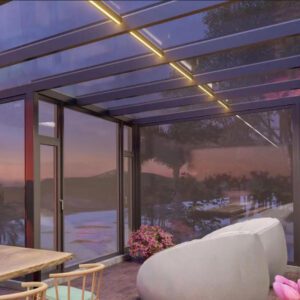
Design integration for BIPV glazing requires coordination across the architectural, structural, and MEP disciplines from schematic design — not as a retrofit decision after construction documents are complete. Source: Unsplash.
One of the persistent objections to BIPV glazing from architects and developers is the assumption that solar technology will compromise design intent. In practice, the opposite is increasingly true: well-specified transparent solar glass can enhance design quality while delivering measurable energy performance.
Seamless Façade Integration
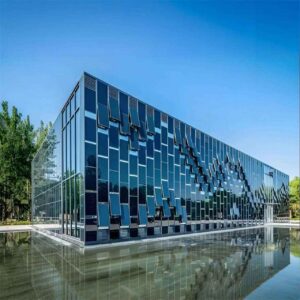
The strongest design argument for BIPV glazing is that it does not require visible hardware. No aluminum racking, no penetrations through finished cladding, no panel gaps that interrupt a continuous façade plane. A curtain wall system specified with BIPV glazing looks from the exterior — and from the interior — like a high-performance architectural glazing system, because that is exactly what it is.
The electrical components that differentiate BIPV from standard glazing — busbars, connectors, junction boxes — are integrated within the mullion system or placed in designated service zones behind the cladding line. Cable exits are planned at the design stage, not improvised during installation. When the integration is handled correctly, the only visual evidence of the energy-generating function is typically a slight cell pattern visible at close range on semi-transparent products.
Options de personnalisation
The customization latitude available in BIPV glazing has expanded substantially. For contractors and architects specifying these systems in 2025, the practical options include:
Cell color can be specified across a palette from standard black and dark blue through gray, brown, bronze, and, with some technologies, custom tones matched to architectural intent. Cell pattern — the arrangement and spacing of crystalline silicon cells — directly affects both VLT and power density, and can be designed to create geometric patterns visible on the façade. Transparency gradients allow a single glazing system to transition from higher-opacity zones (spandrels, vision-glass upper sections) to more transparent zones (eye-level view areas) within the same curtain wall. Lamination compatibility means BIPV layers can be incorporated into standard insulated glass unit (IGU) assemblies alongside low-E coatings, acoustic PVB interlayers, and other performance films.
Real-World Performance in Practice
A university research study published in Joule (Wheeler et al., 2022) modeled thousands of buildings and found that photovoltaic windows can cut energy use and CO₂ emissions by up to 40% in highly glazed commercial buildings. Michigan State University’s transparent solar research team has estimated that U.S. glass surfaces alone — windows, skylights, glass façades — could theoretically meet approximately 40% of national energy demand if converted to transparent PV.
These are modeling projections, not universal guarantees. Real-world output depends on orientation, climate zone, VLT specification, shading, and system sizing. A south-facing commercial office tower in Phoenix will generate significantly more than a north-facing façade in Seattle. But the underlying point — that façade glass is an undertapped energy surface in most current buildings — is validated by field installations globally.
Practical design guidance by application:
For south- and west-facing façades with significant solar exposure, prioritize higher cell density (lower VLT, 15–25%) to maximize energy capture, using daylight modeling to confirm that interior illuminance remains acceptable. For east-facing or lower-exposure zones, higher VLT (30–50%) maintains the view quality that occupants expect. For atriums and skylights, overhead sun exposure means even moderate-efficiency thin-film or OPV products can generate meaningful kilowatt-hours while providing the diffuse daylight quality that atrium occupants need.
4. Structural and Building Envelope Considerations for Contractors
For curtain wall contractors and roofing specialists, BIPV glazing integration raises questions that go beyond standard glazing specification. The product must perform simultaneously as an architectural glass system, a weather barrier, and an electrical generator — and the contractor is responsible for making all three functions work together reliably.
Load-Bearing Requirements
Standard BIPV glass panels with aluminum or glass-glass laminate construction weigh 15–25 kg/m², comparable to conventional insulating glass units of similar specification. This means that in most new construction projects, no extraordinary structural reinforcement is required purely to accommodate the panel weight. The structural engineer should confirm dead load compliance with ASCE 7-22 load combinations for your specific project configuration.
Wind uplift is the more critical structural consideration, particularly for high-rise façade applications. BIPV curtain wall panels on buildings above 40 feet are subject to significant wind pressure differentials. Panels should be tested and rated to a minimum 3.5 kPa wind resistance — some manufacturers including Jia Mao BIPV test their curtain wall products to 4.0 kPa, consistent with architectural curtain wall standards for demanding wind exposure categories.
Thermal Expansion and Weatherproofing
Glazing systems accommodate thermal expansion through carefully designed clearances between the glass unit edge and the frame rebate, combined with flexible gaskets and sealants. BIPV panels require the same approach with one additional constraint: electrical connections must be flexible enough to accommodate dimensional movement without fatigue failure of the wiring.
Solar film or adhesive-bonded electrical contacts at panel edges must maintain a 3–5 mm clearance from the perimeter weather seal to allow free thermal movement without compromising the waterproof seal. The glazing contractor and electrical contractor should jointly review the connection detail at shop drawing stage — this is not a detail to resolve in the field.
Sealant selection matters. Standard silicone joint sealants in curtain wall systems have 20–25 year service lives. For BIPV panels, the sealant must also be chemically compatible with the module encapsulant to avoid degradation of the PV cell lamination over time. Request manufacturer compatibility data before specifying.
Compatibility with Curtain Wall Systems, Roofing Assemblies, and Window Framing
BIPV glazing is designed to be compatible with standard framing systems — unitized curtain wall, stick-built curtain wall, and structural glazing systems. The key compatibility requirements are: sufficient mullion depth to accommodate the electrical cable routing, accessibility to the back-face junction boxes during maintenance, and confirmation that the thermal break design within the frame is not compromised by the cable penetration detail.
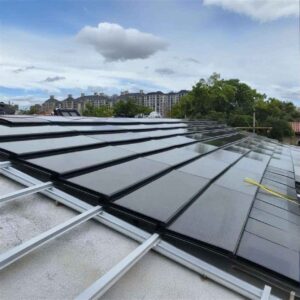
For roofing assemblies, BIPV tiles and membrane products must be integrated with the roofing contractor’s waterproofing system at every edge and penetration. An electrical cable exit through a roof membrane is a potential leak if not detailed correctly. Best practice is to route all wiring within the structural substrate before the waterproofing membrane is applied, with penetrations sealed to roofing industry standards (NRCA guidelines apply).
Installation coordination checklist for contractors:
- Confirm cable routing path in mullion or frame cavity before shop drawings are finalized
- Schedule electrical contractor for junction box installation concurrent with glazing — not as a follow-up trade
- Verify rapid-shutdown device location complies with NEC 690.12 requirements for building-integrated systems
- Confirm replacement panel accessibility — a damaged BIPV unit must be replaceable without disabling large sections of the array
- Request string-level monitoring capability from the system designer to enable fault detection after commissioning
5. Energy Yield Optimization: Real-World Performance Data

Real-time monitoring of BIPV output by façade zone allows building operators to identify underperforming strings before yield loss becomes significant. Source: Unsplash.
Understanding what a BIPV glazing system will actually generate — rather than what a datasheet implies — requires accurate energy modeling inputs. The gap between rated efficiency and real-world output is real, and it can be managed when the modeling is done honestly.
Energy Modeling Inputs That Matter
Orientation is the single largest determinant of annual yield after location. A south-facing vertical façade in a mid-latitude U.S. city captures approximately 60–70% of the energy of an optimally tilted south-facing roof at the same location. East and west façades capture 40–55% of optimal. North-facing façades in the northern hemisphere are generally not viable for BIPV energy generation.
Climate zone and peak sun hours determine the raw energy available. Phoenix, AZ averages approximately 5.5 peak sun hours per day. Boston, MA averages approximately 4.2. London, UK averages approximately 2.8–3.2. These are not trivial differences: the same BIPV system installed in Phoenix generates roughly 70% more annual electricity than the identical system in London.
Shading analysis is mandatory before finalizing system sizing. Neighboring buildings, rooftop equipment, and trees can reduce annual yield by 15–40% in urban locations. Use 3D shading analysis software — tools like Helioscope, PVsyst, or SketchUp with solar plugins — not simple rule-of-thumb estimates.
Performance ratio accounts for real-world losses from temperature, wiring, inverter conversion, and soiling. For BIPV façade systems, a conservative performance ratio of 0.75–0.82 is appropriate (versus 0.80–0.87 for well-ventilated rooftop arrays), reflecting the thermal penalty of reduced airflow behind flush-mounted panels.
Field Data: Buildings Generating Up to 40% via Solar Glass
Research published in Joule validated that photovoltaic window replacement in highly glazed buildings can reduce energy consumption by up to 40% through combined effects: direct electricity generation, reduced solar heat gain lowering cooling loads, and the displacement of artificial lighting in perimeter zones.
At the system level, a 1,000 m² south-facing BIPV façade in a mid-latitude U.S. city with 15% module efficiency and a 0.78 performance ratio generates approximately:
Adjusted for realistic performance ratio (0.78): approximately 192,000 kWh/yr — enough to power roughly 18 average U.S. households or offset a meaningful portion of a large office building’s base electrical load.
ROI Analysis: Payback Periods, Energy Savings, and Incentives
The ROI calculation for BIPV glazing must compare the incremental cost over conventional glazing — not the gross system cost — against energy savings and available incentives.
| Project Scenario | Location | BIPV Area | Installed Cost | Less: Conventional Glazing | Net BIPV Premium | Annual Energy Value | 30% ITC | Effective Payback |
|---|---|---|---|---|---|---|---|---|
| Commercial office façade | Phoenix, AZ | 500 m² | $175,000 | $55,000 | $120,000 | $18,000/yr | $36,000 | ~4.7 yr |
| Commercial office façade | New York, NY | 500 m² | $175,000 | $55,000 | $120,000 | $13,200/yr | $36,000 | ~6.4 yr |
| Mixed-use atrium skylight | Chicago, IL | 300 m² | $130,000 | $38,000 | $92,000 | $9,500/yr | $27,600 | ~6.8 yr |
| Residential curtain wall | Los Angeles, CA | 80 m² | $52,000 | $16,000 | $36,000 | $5,400/yr | $10,800 | ~4.7 yr |
Energy values based on NREL PVWatts estimates, 2025 commercial electricity rates (U.S. EIA), and 30% ITC under the Inflation Reduction Act. Payback periods exclude MACRS accelerated depreciation, which further improves commercial project economics.
The 30% Federal Investment Tax Credit (ITC) applies to BIPV systems on both commercial and residential buildings in the United States through 2032 under the Inflation Reduction Act. For commercial projects, MACRS 5-year accelerated depreciation can reduce effective payback to 10–15 years even in lower-irradiance markets. State and utility incentives — including California’s NEM 3.0, New York’s NY-Sun program, and various property tax exemptions — add further value that should be modeled at the project level. The DSIRE database is the authoritative source for current state-level incentives.
6. Procurement and Supply Chain Strategy for Distributors and EPCs

Procurement strategy for BIPV glazing requires a fundamentally different approach from commodity solar panel sourcing — lead times, MOQ structures, customization requirements, and quality verification all differ significantly. Source: Unsplash.
BIPV glazing is not procured the way standard solar panels are. The procurement cycle is longer, the product specifications are more complex, and the consequences of a supply disruption mid-project are more severe — because BIPV panels are part of the building envelope, not an add-on that can be substituted easily.
Leading Manufacturers and Product Availability
The BIPV glazing supply landscape divides into three tiers with meaningfully different capability profiles.
Architectural BIPV specialists — including Onyx Solar (Spain), Jia Mao BIPV (Shanghai), and AGC Solar (Belgium/Germany) — offer full design support, custom dimensions, VLT specifications, and the building-code documentation that architects and building departments require. Jia Mao BIPV, with 3 GW annual production capacity, offers transparent BIPV glass with VLT options from 10% to 90%, façade panels, solar roof tiles, railing glass, and canopy systems — all supported by IEC 61215, IEC 61730, and IEC 63092-1 (the BIPV-specific standard) certifications. For distributors building a complete BIPV product offering, a single manufacturer relationship covering all these product categories reduces supplier complexity and improves project delivery coordination.
Volume glass manufacturers — including Xinyi Solar, Flat Glass Group, and CSG — produce the largest quantities of solar glass for module manufacturers and can supply standard BIPV panel formats at competitive pricing. Their limitation is customization: non-standard dimensions, specific VLT targets, or architectural color requirements typically require extended lead times and minimum order quantities that are impractical for project-based procurement.
Regional specialists in Southeast Asia, India, and the Middle East are gaining ground as alternatives to Chinese-only supply chains, particularly for distributors with significant exposure to tariff risk or who need regional manufacturing proximity for logistics cost management.
Lead Times, Scalability, and Logistics
The BIPV supply chain for custom glazing products operates on a fundamentally different timeline from commodity solar modules. Standard BIPV products from established manufacturers carry lead times of 8–12 weeks from confirmed purchase order. Custom architectural specifications — non-standard dimensions, specific VLT percentages, custom cell patterns — add 4–8 weeks to that baseline. Budget 16–20 weeks for heavily customized products on first-order projects.
Distributors who manage lead time risk best maintain two qualified manufacturer relationships — a primary for volume and customization capability, and a secondary capable of covering at least 30% of monthly volume within 4–6 weeks of activation. For standard BIPV SKUs, maintain 4–6 weeks of safety stock; for custom specifications, build lead time into project quoting rather than carrying inventory.
For quality verification, insist on independent test reports from TÜV Rheinland, SGS, or Bureau Veritas — not self-declared conformity alone. A manufacturer who cannot produce third-party test documentation for IEC 61215 and IEC 61730 should not be on your approved vendor list for project-grade work.
Partnering with Brands for Co-Marketing and Specification Support
The most durable competitive advantage for distributors in the BIPV segment is specification-stage positioning. When your manufacturer partner can provide architect-facing documentation — U-values, SHGC data, VLT specifications, fire classification certificates, LEED/BREEAM credit calculation sheets — you become part of the specification conversation before the project goes out to bid. That positioning is worth more than any pricing advantage achievable at the procurement stage.
Evaluate manufacturer partnership depth using these criteria: technical response time (target: substantive answer within 48 hours), availability of project-specific engineering documentation, willingness to participate in architect and specifier presentations, lead-time flexibility for first-time orders, and clarity of warranty terms for both product and power output.
7. Code Compliance, Safety, and Certification Pathways
Navigating the regulatory landscape for BIPV glazing is more complex than for standard rooftop PV — because BIPV products are subject to both building material standards et electrical safety standards simultaneously. Missing either dimension during design or permitting creates delays that can be costly on a commercial project timeline.
U.S. Building Codes and Standards
NEC Article 690 (Solar Photovoltaic Systems) governs all electrical aspects of the BIPV installation — wiring methods, overcurrent protection, rapid-shutdown requirements, grounding, and system labeling. The 2023 NEC edition includes updated requirements for arc-fault circuit interrupter (AFCI) protection on PV output circuits, microinverter system configurations, and energy storage integration under Article 706. Any BIPV project specifying battery integration must coordinate Articles 690 and 706 from the electrical design stage.
Rapid shutdown under NEC 690.12 is a critical requirement that many first-time BIPV specifiers overlook. For building-integrated systems, rapid-shutdown devices must be installed to de-energize the array to safe voltage levels within 30 seconds of initiating shutdown — protecting firefighters and first responders from high-voltage DC hazards. BIPV products that embed power electronics (such as module-level power electronics or rapid-shutdown-equipped junction boxes) simplify NEC 690.12 compliance significantly.
IBC (International Building Code) Section 1509 governs rooftop solar installations, while Section 3111 addresses solar energy systems more broadly. The 2021 IBC and IRC editions require BIPV roofing systems to be listed and labeled to UL 7103, which integrates the structural, fire, and electrical requirements that the model codes expect for building-integrated roofing products. For façade-mounted BIPV, the relevant structural provisions fall under IBC Chapter 16 (Structural Design) and Chapter 14 (Exterior Walls).
NFPA 285 (Standard Fire Test for Exterior Wall Assemblies) is mandatory for exterior wall systems on buildings more than 40 feet in height. BIPV façade panels must comply as part of the complete wall assembly — glass panel, framing system, backup wall, and insulation — not as individual products in isolation. This means that specification of a BIPV panel that is individually fire-rated does not automatically satisfy NFPA 285; the complete assembly must be tested or engineered to comply.
U.S. and EU Electrical and PV Module Safety Standards
| Standard | Scope | Applies To |
|---|---|---|
| UL 61730-1/61730-2 | PV module electrical safety | All BIPV modules in the U.S. |
| IEC 61215 | Performance and durability (thermal cycling, UV, damp heat) | Module warranty verification |
| IEC 63092-1:2020 | BIPV-specific product standard (building material + PV) | True BIPV products |
| UL 7103 | BIPV roofing system listing | BIPV roofing in 2021 IBC/IRC |
| NFPA 70 (NEC 690) | Electrical safety for PV systems | All U.S. PV installations |
| EN 61730 (EU) | EU equivalent of UL 61730 | EU BIPV products |
| Marquage CE | EU market access certification | Products sold in the EU |
| IBC Section 3111 | Structural/building code for solar energy systems | U.S. commercial projects |
Third-Party Testing and Building Department Approvals
Third-party certification from TÜV Rheinland, Bureau Veritas, SGS, or Intertek is not optional for project-grade BIPV work — it is the evidence that building departments, architects of record, and insurance underwriters require before approving the installation. For Authority Having Jurisdiction (AHJ) submissions, prepare a complete product package: the module’s IEC 61215 test report, UL 61730 listing certificate, IEC 63092-1 BIPV certificate where applicable, fire classification documentation, structural load calculations, and the electrical wiring diagram showing NEC 690 compliance.
The common permitting failure mode in BIPV projects is treating the electrical permit and the building permit as independent processes. They are not. The AHJ needs to review the complete system — how the BIPV panels integrate with the wall assembly, where the conduit runs, where the rapid-shutdown device is located, and how the inverter room is accessed. Plan for permit review times of 6–12 weeks on complex commercial BIPV projects in major metropolitan jurisdictions.
8. Collaborative Project Delivery: Aligning Architects, Engineers, and Contractors

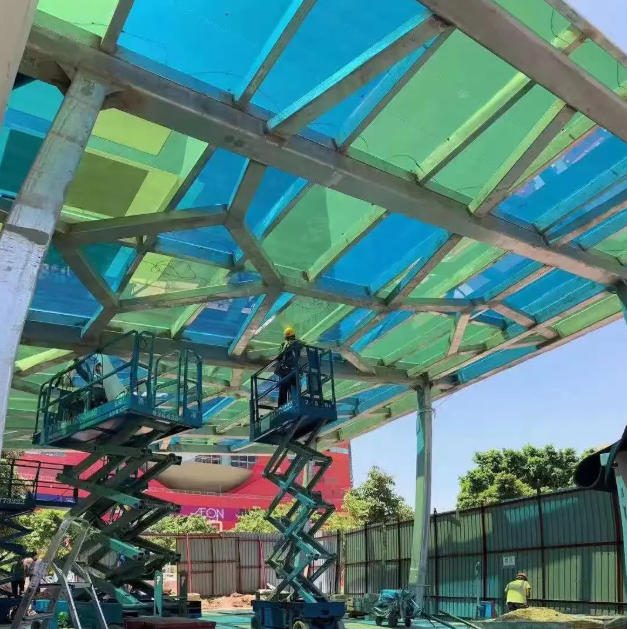
BIPV façade integration requires design coordination across architectural, structural, MEP, and glazing disciplines from early design — not as a procurement decision after construction documents are finalized. Source: Unsplash.
The most common source of BIPV project failure — cost overruns, performance shortfalls, installation delays — is not product quality or regulatory complexity. It is inadequate early-stage coordination between the design disciplines.
Early-Stage Coordination Between Design and Construction Teams
The façade contractor, electrical engineer, and BIPV product manufacturer need to be at the table during schematic design — not during shop drawing review. By the time shop drawings are submitted, hundreds of decisions that affect BIPV integration have already been made and are expensive to change: mullion depths, electrical room locations, cable tray routes, inspection access panels, and rapid-shutdown device mounting zones.
A practical early-stage coordination protocol for BIPV projects:
At concept design stage: identify the target façade zones for BIPV, establish VLT and power-density requirements, confirm orientation and shading assumptions, and select the technology family (c-Si, thin-film, OPV) based on architectural intent. At design development stage: confirm framing system compatibility with selected BIPV product, design cable routing within mullion system, establish string grouping strategy to minimize partial-shading losses, and submit preliminary interconnection application to the utility. At construction documents stage: finalize module layout, confirm structural calculations with PE-stamped drawings, complete NEC 690 electrical design, and prepare permit package for AHJ submission.
BIM Integration and Clash Detection for Complex Façades
Building Information Modeling (BIM) has become standard practice for complex façade coordination on commercial projects, and BIPV glazing benefits from BIM integration more than almost any other building system. A fully coordinated BIM model allows the team to identify conduit routing conflicts with structural members, confirm cable exit positions before mullion fabrication, model shading from adjacent building elements across all seasons, and detect clashes between junction box locations and architectural details before they become field problems.
BIPV manufacturers who provide BIM objects — Revit families or IFC exports — for their products significantly reduce the coordination burden on the design team. When evaluating manufacturers at the specification stage, ask specifically whether BIM objects are available and whether they include accurate electrical connection geometry, not just visual representations.
Risk Mitigation Through Integrated Design Workflows
The key risk events in a BIPV project are: product specified without adequate manufacturer engagement (leading to specification that cannot be manufactured as drawn), electrical system designed without input from the glazing contractor (leading to cable routing conflicts during installation), and utility interconnection application submitted late (leading to commissioning delays when the building is otherwise complete).
Mitigate these risks with a simple contractual mechanism: require the BIPV manufacturer to provide a project-specific technical feasibility review before the specification is locked, covering module layout, string configuration, cable routing strategy, and rapid-shutdown compliance. Jia Mao BIPV’s technical team, for example, supports distributors and project teams with façade module and inverter specification guidance to prevent these coordination failures from reaching the construction phase.
9. Financing and Incentive Models for Energy Service Providers
Energy service providers and ESCOs (Energy Service Companies) face a specific challenge with BIPV glazing that differs from standard solar: the upfront cost is higher, the payback period is longer in some markets, and integrating it into a performance-based energy contract requires a clear framework for attributing energy savings to the glazing investment.
PPA and ESCO Models for Solar Glazing
A Power Purchase Agreement (PPA) allows a building owner to receive the energy generated by a BIPV system without owning the system outright. The ESCO or developer installs and owns the BIPV system, and the building owner pays a per-kWh rate — typically set 10–20% below the prevailing utility rate — for electricity generated. The ESCO takes the 30% ITC and MACRS depreciation, which makes the economics viable even when the building owner’s capital is constrained.
For BIPV glazing specifically, PPAs work best when the BIPV installation is large enough to justify the transaction cost of structuring the agreement — typically above $150,000 net cost after incentives. Below that threshold, a standard loan-financed purchase with the building owner claiming the ITC directly often produces better economics.
An Efficiency Service Agreement (ESA) — sometimes called a “managed energy service agreement” — extends the ESCO model to cover both energy generation and energy efficiency improvements. For a BIPV project, an ESA can bundle the glazing replacement with other envelope improvements (additional insulation, air sealing, high-performance mechanical systems) to create a larger project that justifies ESCO transaction costs while delivering a comprehensive performance outcome.
Bundling with Energy Efficiency Upgrades for Maximum Client Value
The most compelling business case for BIPV glazing in a performance-based contract is not the electricity generation value alone — it is the combined energy benefit of generation plus load reduction. BIPV glass with lower SHGC than the conventional glazing it replaces reduces cooling loads while generating electricity. In a highly glazed commercial building, this combined effect can reduce total energy cost by 15–35%, creating a business case that is significantly stronger than either measure independently.
Energy service providers who have modeled the combined benefit — using whole-building energy simulation tools such as EnergyPlus or eQUEST — consistently achieve better client acceptance than those presenting generation value alone. The frontier study on solar energy integration in buildings provides a rigorous cost-benefit methodology that ESCOs can adapt for client-facing presentations.
Demonstrating Long-Term Asset Value and Lifecycle Cost Savings
Property value uplift is a quantifiable benefit that developers and building owners respond to. Buildings with BIPV glazing that qualify for LEED Platinum, BREEAM Outstanding, or net-zero certification command measurable rent premiums and reduced vacancy risk in commercial real estate markets. A 3–5% property value premium is consistently documented in green-certified commercial real estate across major U.S. markets.
For institutional owners with 20–30 year holding periods, the lifecycle cost advantage of high-quality BIPV glazing is substantial. Over a 25-year period, a well-specified BIPV façade system with 0.5%/year degradation rate generates electricity worth multiple times its incremental cost over conventional glazing — particularly in markets with rising electricity rates. ESCOs who model lifecycle value rather than simple payback consistently win client commitments at longer payback thresholds.
10. Future-Proofing Buildings: The Role of Solar Glass in Smart, Resilient Design
Integration with Building Energy Management Systems (BEMS)
BIPV glazing does not operate in isolation. In a well-designed building, it is one component of an integrated energy ecosystem that includes the HVAC system, lighting controls, battery storage, and the building energy management system (BEMS) that coordinates them.
Modern BIPV inverter systems communicate via industry-standard protocols — Modbus TCP/IP and BACnet/IP are the most widely supported — allowing the BEMS to monitor real-time generation output by zone, identify underperforming strings (often the first indication of a shading problem or a failed module), optimize self-consumption by shifting controllable loads to periods of peak generation, and report energy performance data for LEED operations certification and corporate ESG reporting.
Research on smart building BEMS integration confirms that BIPV systems paired with BEMS and smart grid integration provide grid flexibility benefits — the ability to reduce grid demand during peak periods — that are increasingly valued by utilities through demand-response programs. Buildings that can demonstrate dispatchable load flexibility are positioned to negotiate favorable demand-charge structures with utilities, adding a financial benefit that pure generation analysis does not capture.
Smart Glass Controls and Electrochromic Integration
The frontier of transparent solar technology is the integration of photovoltaic glass with dynamic glazing — electrochromic or thermochromic glass that changes tint in response to solar intensity, temperature, or control signals. In this configuration, the glazing simultaneously generates electricity, controls solar heat gain dynamically, and manages interior daylight in response to occupant needs and HVAC demand.
Commercial electrochromic glazing products (such as those from View, Inc. and Halio) are already deployed in commercial high-rise buildings. Their integration with BIPV layers is an active area of development, with early pilot installations demonstrating the combined energy benefit. Project teams specifying for 2027–2030 completion should ask manufacturers about electrochromic + BIPV compatibility at the specification stage, to ensure framing systems and electrical pathways are future-compatible.
Grid Resilience and Distributed Generation Goals
The distributed generation value of BIPV — generating electricity at the point of consumption — is increasingly relevant in a grid environment marked by extreme weather events, aging infrastructure, and growing electrification load. A building with BIPV glazing, battery storage, and smart controls can maintain critical loads during grid outages, reduce peak-demand charges, and participate in demand-response programs as a grid resource.
The GRESB analysis of building electrification and smart grid synergy confirms that grid-edge buildings — those with on-site generation, storage, and smart load management — are becoming preferred assets for institutional investors who must manage climate-related financial risk. A building with BIPV glazing is not just a lower-operating-cost asset; it is a more resilient and more financeable asset.
Positioning Clients as Leaders in Sustainable Innovation
For architects, consultants, and EPCs who advise building owners, the strategic positioning argument is as important as the technical case. The first office tower in a submarket with a certified BIPV façade does not just meet a code requirement — it sets a market reference that competitors and tenants will measure against. The first residential developer to deliver LEED Platinum units with transparent solar windows commands a differentiation that marketing teams cannot replicate without the underlying product.
The BIPV market’s 21.2% CAGR (Grand View Research) ensures that this differentiation window is finite. Early-adopting specifiers are building the track record, installer relationships, and specification libraries that will be competitive advantages when BIPV becomes standard practice in five to eight years.
YouTube Video: Transparent Solar Panels — How They Work and Where the Technology Is Headed
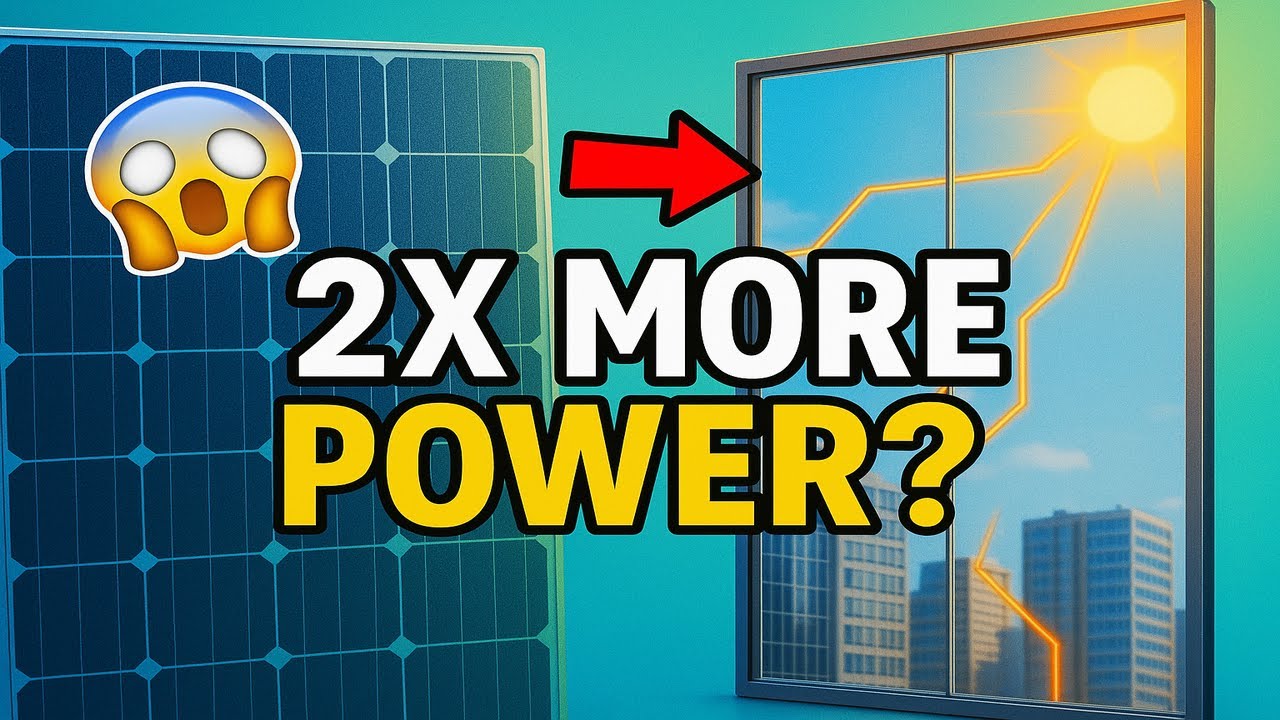
▶ Watch: Record-efficiency transparent solar panels — 12.3% efficiency at 30% VLT — and where BIPV glazing technology is headed next. A useful visual primer for teams presenting the technology to clients and project stakeholders.
Glossary of Key Terms
BIPV (Building-Integrated Photovoltaics): Solar technology that replaces conventional building materials — roofing, cladding, glazing — rather than mounting on top of them.
VLT (Visible Light Transmittance): The percentage of visible daylight that passes through the glass. Higher VLT = more daylight, typically lower power density.
SHGC (Solar Heat Gain Coefficient): The fraction of solar heat that passes through the glazing system. Lower SHGC reduces cooling loads in warm climates.
IGU (Insulated Glass Unit): A sealed multi-pane glass assembly used in curtain walls and windows. BIPV layers can be integrated within the IGU laminate.
Performance Ratio: The ratio of actual system energy output to theoretical maximum output, accounting for real-world losses. Typically 0.75–0.85 for BIPV façades.
ITC (Investment Tax Credit): The 30% federal tax credit for solar energy systems installed through 2032 in the U.S. under the Inflation Reduction Act.
NEC 690: The article of the National Electrical Code governing solar photovoltaic systems, including rapid-shutdown, wiring, grounding, and disconnecting requirements.
NFPA 285: The NFPA standard fire test for exterior wall assemblies — mandatory for buildings over 40 feet with BIPV façade cladding.
BEMS (Building Energy Management System): An automated control and monitoring system that manages a building’s energy-consuming systems, including HVAC, lighting, and on-site generation.
MACRS: Modified Accelerated Cost Recovery System — the U.S. federal depreciation method that allows 5-year accelerated depreciation of commercial solar assets, improving commercial project ROI significantly.
Frequently Asked Questions (FAQs)
1. What is the energy efficiency of transparent solar panels compared to traditional rooftop PV?
Semi-transparent crystalline silicon BIPV glazing achieves module-level efficiency of 14–22%, compared to 20–23% for standard opaque monocrystalline panels. The difference narrows significantly when you consider that BIPV is generating from façade area that would otherwise produce nothing, and that the panels also reduce cooling loads by lowering SHGC. Thin-film and OPV transparent products achieve 6–15% efficiency, depending on the VLT specification. For every project, the relevant comparison is not efficiency against rooftop panels — it is energy value generated versus the cost of the incremental glazing premium.
2. Can photovoltaic glass meet structural and safety standards for high-rise curtain walls?
Yes. Qualified BIPV curtain wall products from established manufacturers are tested and certified to architectural curtain wall structural standards. Wind pressure resistance of 3.5–4.0 kPa, compliance with ASCE 7-22 structural load requirements, and laminated safety glass construction per ASTM C1048 are standard specifications for commercial-grade BIPV façade panels. The full wall assembly — not just the individual panel — must be designed and documented to comply with NFPA 285 for buildings over 40 feet in height.
3. How do I specify solar glass to ensure compatibility with existing glazing systems?
Start with the existing framing system’s mullion dimensions and rebate depth — the BIPV panel must fit the same opening as conventional glazing. Confirm that the framing system has sufficient depth for cable routing in the mullion cavity. Request the BIPV manufacturer’s technical data sheet including panel thickness, weight, edge-connector dimensions, and cable exit location. For retrofits, confirm that the existing structural system can carry the additional dead load and that the existing weatherseal system is compatible with the BIPV panel’s edge detail.
4. What are the maintenance requirements for solar-integrated façades and skylights?
BIPV glazing maintenance requirements are modest but specific. Cleaning 2–4 times per year with approved cleaning methods (avoiding abrasives and chemicals that damage the encapsulant or anti-reflective coating) maintains optimal transmittance and output. String-level monitoring should be reviewed monthly to identify underperforming zones before the issue escalates. Inverter replacement is typically required at the 10–12 year mark. Spare panels should be ordered with the original installation and stored in appropriate vertical racks — replacing a custom BIPV unit years later may require a 12–16 week lead time.
5. Are there fire safety concerns with integrating PV cells into building envelopes?
Fire safety is a legitimate concern that is addressed through the certification system. UL 7103 covers BIPV roofing systems and integrates fire resistance requirements. For façade systems on buildings over 40 feet, NFPA 285 compliance is mandatory. BIPV panels from manufacturers with current IEC 61215 and UL 61730 listing certificates have been tested for fire behavior in module-level testing. The key action for specifiers: confirm that the NFPA 285 documentation covers the complete wall assembly as installed — glass panel, framing, backup wall, and insulation — not just the panel in isolation.
6. How does solar glass perform in low-light or northern climate conditions?
BIPV glazing continues to generate electricity in overcast and diffuse-light conditions, though at reduced output. Thin-film technologies, particularly amorphous silicon and CdTe, have better performance relative to rated output in low-light conditions than crystalline silicon. In northern European climates (London, Berlin, Stockholm), a BIPV façade will generate approximately 40–55% of the annual output of the same system in a high-irradiance southern European or U.S. Southwest location. The energy value case in lower-irradiance markets depends more heavily on electricity rate levels, cooling-load reduction benefits, and green certification value than on raw kilowatt-hour generation.
7. What building codes and certifications apply to BIPV installations in the U.S. and EU?
In the U.S.: NEC Article 690 (electrical), IBC Section 3111 (structural/building), NFPA 285 (fire, >40 ft), UL 7103 (BIPV roofing), UL 61730 (PV module safety), and local utility interconnection agreements. In the EU: EN 61730 (PV module safety), IEC 63092-1 (BIPV product standard), CE Marking (market access), and compliance with the revised EPBD energy performance requirements. For LEED certification, BIPV systems contribute to the Energy & Atmosphere Optimize Energy Performance credit and the Renewable Energy Production credit.
8. Can transparent solar panels be combined with other energy-efficient glazing such as low-E or triple-pane?
Yes. BIPV layers can be incorporated into insulated glass unit assemblies that also include low-E coatings, argon or krypton gas fills, and additional glass panes. The practical consideration is IGU thickness and weight — adding a BIPV layer to an already-complex triple-pane assembly increases both. The thermal and acoustic performance of the combined assembly should be modeled holistically. Request combined U-value and SHGC data for the complete IGU specification, not for individual layers in isolation.
9. What is the typical lead time for custom photovoltaic glass panels?
For standard catalog BIPV products from established manufacturers, lead times of 8–12 weeks from confirmed purchase order are typical. Custom specifications — non-standard dimensions, specific VLT percentages, custom cell colors or patterns — add 4–8 weeks, putting lead times for complex architectural glass at 14–20 weeks. First-time orders from a manufacturer may carry longer lead times as quality approval processes are established. Build these timelines into the project schedule at the design development stage, not after construction documents are issued.
10. How do I calculate the ROI and energy yield for a solar glass project?
ROI calculation requires five inputs: the incremental cost of BIPV glass over conventional glazing (not the gross system cost), the annual energy yield estimated from NREL PVWatts or comparable tool using site-specific inputs, the applicable electricity rate (and any time-of-use rate structure), available incentives (30% ITC, MACRS, state programs), and the project’s cost of capital. Use the formula: Annual kWh = Active Area (m²) × Module Efficiency × Daily Peak Sun Hours × 365 × Performance Ratio. Compare annual energy value (kWh × electricity rate) plus HVAC savings against net cost after incentives to calculate payback period and NPV.
11. Are there available incentives or tax credits for BIPV in residential construction?
Yes. The Residential Clean Energy Credit under the Inflation Reduction Act provides a 30% tax credit on the cost of BIPV systems installed in residential properties in the U.S. through 2032. The credit applies to the solar energy-generating component — for BIPV glazing, this is the module cost and installation, not the full glazing-system cost. State-level incentives including property tax exemptions, net metering, and cash rebates vary by state. The DSIRE database provides current state-by-state incentive data.
12. How do EPC firms integrate solar glass into performance-based energy contracts?
The most effective approach is to model the BIPV contribution as part of a whole-building energy performance guarantee, rather than isolating it as a separate solar generation contract. Calculate the combined energy benefit — electricity generation plus HVAC load reduction — and express it as a reduction in the building’s total energy cost per year. Structure the performance guarantee around total energy cost, not kilowatt-hour generation alone. This approach aligns the BIPV investment with the building owner’s actual energy cost exposure and simplifies the measurement and verification process.
13. What are the best practices for electrical integration and grid interconnection of BIPV?
Plan the electrical integration from the schematic design stage. Key decisions that must be made early: string grouping strategy (to minimize partial-shading losses), inverter location (inverter room must be accessible and thermally managed), conduit routing path (must be coordinated with the glazing framing system), rapid-shutdown device location (NEC 690.12 compliance), and utility interconnection approach (net metering vs. direct export). Submit the utility interconnection application concurrently with the building permit — not after — to avoid commissioning delays when the building is otherwise complete.
14. Can solar glass be retrofitted into existing buildings, or is it only for new construction?
BIPV glazing can be retrofitted into existing buildings, but the economics and complexity differ significantly from new construction. Retrofit feasibility depends on: the existing framing system’s ability to accommodate the BIPV panel’s thickness and weight, availability of conduit pathways for DC wiring, access for junction box installation, and the structural system’s capacity for dead load. In urban buildings, retrofitting typically triggers a building permit and possible structural review. Payback periods for retrofit BIPV are generally 8–12 years (versus 5–8 years for new construction) due to higher installation complexity. The 8MSolar retrofit analysis provides a useful framework for comparing retrofit and new-build economics.
15. How do architects balance transparency, aesthetics, and energy generation in design?
The design framework that works consistently: establish VLT requirements from occupant comfort and daylight modeling first, then identify the power-density and SHGC combination that the selected VLT allows, and finally optimize the panel layout within those constraints. Do not start with energy output targets and try to force VLT to fit — that sequence consistently produces glazing that occupants find unacceptably dark or that architects find visually incompatible with the design intent. Mock-up testing of the actual BIPV glass sample under real-site daylight conditions — not under office lighting — before final specification approval eliminates the most common aesthetic failure mode in BIPV projects.
Specification Decisions That Build a Long-Term BIPV Business
Transparent solar glass is not a product category for every project or every market. It is a product category that rewards professionals who understand both its constraints and its capabilities — and who apply that knowledge to the right project types, with the right clients, and with the right partners.
The fundamentals are clear: the technology works, the regulatory framework supports it, the financing tools exist, and the market is growing faster than almost any other segment in the built environment. The BIPV market’s projected growth from $23.4 billion in 2025 to $89.8 billion by 2030 is being driven by clients and developers who have energy mandates, ESG commitments, and green certification targets that standard construction practice cannot satisfy.
For contractors, the opportunity is in mastering the installation coordination challenges that most competitors are still learning. For EPCs, it is in building the energy modeling and performance contracting capability that turns BIPV glazing into a bankable energy asset. For architects and consultants, it is in developing the specification confidence that positions you as the expert when clients inevitably ask. For distributors, it is in assembling a product portfolio — transparent glass, façade panels, roof tiles, system components — that makes you a single-source BIPV partner rather than a glass reseller.
The window of differentiation is open. Building the specification depth and supplier relationships now is what determines which professionals lead this market segment in five years.
For BIPV glazing specifications, transparent panel comparisons, and project feasibility support, explore the BIPV product range at Jia Mao BIPV or review their transparent solar panel comparison guide to match technology to your next project.
Additional reference resources: NREL PVWatts Calculator for site-specific yield estimates · DSIRE Incentive Database for state and federal incentives · IEA PVPS BIPV Technical Guidebook for design reference · WBDG BIPV Resource for whole-building design context.