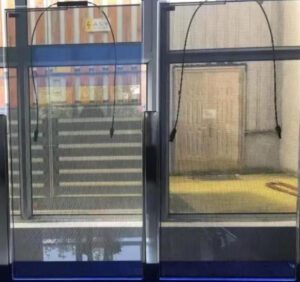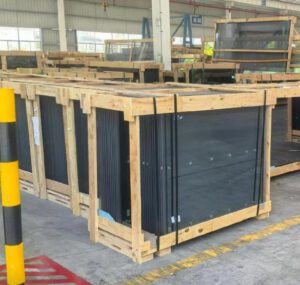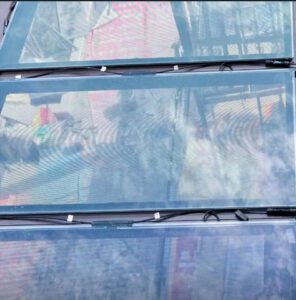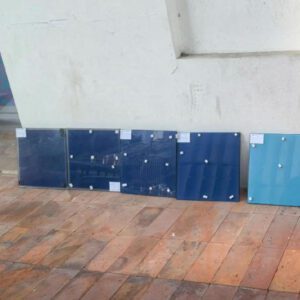
A decision-by-decision framework for architects, developers, and facilities managers who need to move beyond “good-looking glass” and specify solar glazing that performs measurably — for the next 30 years.
A 40-story office tower in Phoenix replaced 9,200 m² of standard clear curtain wall glazing (SHGC 0.86, U-value 5.8 W/m²K) with high-performance solar control glass (SHGC 0.27, U-value 1.1 W/m²K) during a façade renovation. The post-retrofit energy audit showed a single result that framed every subsequent glazing decision on the project team: annual HVAC energy consumption dropped 41%, saving approximately $380,000 per year. That figure does not include the reduced HVAC equipment sizing, the 68% reduction in tenant comfort complaints, or the positive impact on lease renewal rates — all of which were documented in the facility’s five-year operations review.
That is the real scale of what solar glass decisions mean for commercial buildings. Yet most glazing specifications are still driven primarily by aesthetics and initial unit cost, with performance metrics treated as footnotes. This guide corrects that imbalance. It walks through every major decision point — from understanding the technology and evaluating energy ROI, through procurement, installation, and long-term maintenance — so that every team member understands not just what to specify, but why.

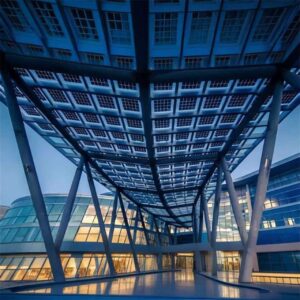
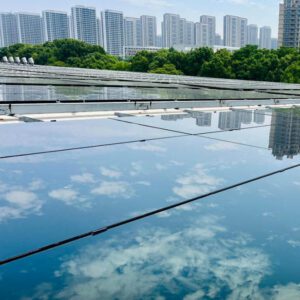
Modern commercial façades demand glazing that performs as an energy system, not just a transparent wall. Photo: Unsplash
The demand for solar glass in commercial facades is no longer driven solely by sustainability commitments. Tightening energy codes — ASHRAE 90.1-2022 now mandates SHGC ≤ 0.25 for fixed glazing in Climate Zones 1–3 — combined with rapidly escalating commercial electricity rates, are making high-performance solar glass the only code-compliant choice on a growing share of commercial projects. And as BIPV (Building Integrated Photovoltaics) technology matures, the question is increasingly not whether to specify solar glass, but which system, at what performance level, for which facade zones.
Understanding Solar Glass Basics
What Solar Glass Is and How It Works
The term “solar glass” covers any glazing product engineered to manage solar radiation — controlling how much sunlight, heat, and ultraviolet energy enters the building. This spans a wide spectrum: low-emissivity (low-E) coated glass, reflective glass, tinted glass, insulated glass units (IGUs) with solar control interlayers, electrochromic (dynamic) glass that changes tint on demand, and BIPV photovoltaic glass that simultaneously generates electricity.
Standard clear float glass transmits approximately 83–85% of visible light and allows 86% of solar heat to pass through (SHGC 0.86). It offers virtually no thermal insulation (U-value 5.8 W/m²K for single pane). Solar glass modifies these parameters dramatically — through coatings, interlayers, gas fills, and dynamic technologies — reducing SHGC to as low as 0.17 and U-value to below 1.0 W/m²K in triple-glazed configurations.
What unifies all solar glass products is a deliberate engineering intent: to optimize the relationship between visible light, solar heat, and thermal insulation — rather than treating glass as a passive transparent barrier.
Key Benefits and Common Limitations
Substantial HVAC energy reduction (15–45% in appropriate climates) · Improved occupant thermal comfort · Daylighting without overheating · Contribution to LEED/WELL certification · BIPV variants generate on-site electricity · Reduced peak demand charges · Long-term asset value enhancement
15–40% higher upfront cost vs. standard glass · Some coatings create exterior reflective glare · Semitransparent BIPV glass has lower power density than opaque panels · Custom BIPV orders require 10–24 week lead times · Some electrochromic products require power supply and maintenance · Warranty coverage caveats for non-standard configurations
When Solar Glass Makes Sense for Commercial Projects
Solar glass delivers the strongest ROI when three conditions align: (1) the building has significant glazing area relative to floor area — window-to-wall ratios above 30% in hot climates, or 40%+ in any climate; (2) the project owner has a hold period long enough to capture lifecycle savings (typically 7+ years); and (3) the glazing specification will be done once for the building’s life, not annually replaced. On shorter-hold speculative developments, the business case shifts toward material-offset credit — specifying BIPV glass that replaces what would have been conventional curtain wall spandrel glass, rather than a pure energy payback calculation.
Evaluating Energy Needs and ROI
Defining Energy Targets and Performance Goals
Before specifying a single glass type, the project team must set quantitative energy targets. This means answering: What is the target building Energy Use Intensity (EUI) in kBtu/sq ft/year? What SHGC is required for each facade orientation by the local energy code? What percentage of building energy consumption should the solar glass system offset (for BIPV projects)? What LEED or WELL credits depend on daylighting or renewable energy performance?
Orientation matters more than most project teams realize. South-facing facades in the northern hemisphere receive predictable, high-angle solar radiation that is relatively easy to manage with static solar control glass. East and west facades receive low-angle morning and afternoon sun that is much harder to block with external shading — making low-SHGC glass especially critical on these orientations. North facades receive minimal direct gain and can tolerate higher SHGC, allowing more daylight-transmissive glass that improves interior illuminance without the overheating risk.
Calculating Return on Investment and Payback Period
💰 30-Year Lifecycle Cost: Solar Control Glass vs. Standard Clear Glass (10,000 ft² commercial façade, Climate Zone 2)
🔲 Standard Clear Double-Glazed Glass
☀️ High-Performance Solar Control Glass
Assumptions: 10,000 ft² facade, ASHRAE Climate Zone 2 (Houston), 40% WWR, electricity at $0.11/kWh escalating 2.5%/yr, blind replacement at 10-yr intervals. Solar glass: SHGC 0.25, U-value 1.1 W/m²K. Standard: SHGC 0.70, U-value 2.7 W/m²K. HVAC downsizing reflects 25% chiller tonnage reduction. Net 30-year savings: $275,000 (34% reduction).
The $275,000 lifecycle saving in the scenario above explains why institutional investors and long-hold owner-operators consistently specify high-performance solar glass even under constrained capital budgets. The net present value of energy savings exceeds the glass premium within 4–7 years — a payback that improves further in high-electricity-rate states like California, Hawaii, Massachusetts, and New York, where commercial rates regularly exceed $0.20–$0.28/kWh.
Aligning Solar Glass with LEED and Green Building Requirements
Solar glass contributes to multiple LEED v4.1 credits simultaneously: EA Prerequisite (Minimum Energy Performance) through reduced HVAC loads; EA Credit (Optimize Energy Performance) through lower building EUI; EQ Credit (Daylight) by achieving target illuminance without blinds; EQ Credit (Quality Views) through visual transparency; and for BIPV glass, EA Credit (Renewable Energy Production) through on-site electricity generation. A well-specified solar glass façade can contribute 8–15 LEED points across these categories — a meaningful portion of any certification threshold and a marketable asset in lease negotiations with sustainability-focused tenants.
Types of Solar Glass Technologies
Building-Integrated Photovoltaics (BIPV) vs. Retrofit Modules
The fundamental choice in solar glass selection is whether the system is integrated (BIPV — where the glass replaces conventional glazing and simultaneously generates electricity) or retrofitted (BAPV — where solar modules are added on top of an existing envelope without replacing the primary glazing). For new commercial construction, BIPV is almost always preferable: it eliminates the duplicate cost of conventional glazing plus added modules, it delivers a cleaner architectural result, and it avoids the maintenance complexity of two overlapping systems. For existing buildings with glazed curtain walls in good condition, a BAPV approach using externally mounted solar shading fins or spandrel-zone modules may be the more cost-effective retrofit path.
The economic inflection point: when BIPV glass replaces a spandrel panel, skylight, or canopy that would have been specified anyway, the net incremental cost is often 15–30% above the conventional material — not the 60–100% premium that a pure solar-cost comparison suggests.
Crystalline Silicon, Thin-Film, and Transparent PV Options
| Technology | Typical Cell Efficiency | VLT Range | Power Density (W/m²) | Appearance | Best Application | Key Limitation |
|---|---|---|---|---|---|---|
| Monocrystalline silicon (opaque BIPV) | 20–23% | 0–10% | 160–200 | Uniform dark blue/black | Spandrel panels, canopies, low-slope roofs | Not suitable where vision glazing is required |
| Semitransparent crystalline silicon | 16–20% | 10–40% | 80–140 | Cell pattern visible; dotted appearance | Skylights, atriums, curtain wall vision zones | Cell spacing pattern may not suit all aesthetics |
| Thin-film (amorphous Si / CdTe) | 8–14% | 5–25% | 40–90 | Uniform, even tint; no visible cells | Large uniform facades, design-sensitive projects | Lower efficiency; less output per m² |
| Transparent / ultra-clear BIPV | 10–15% | 40–70% | 30–70 | Near-clear; minimal visual difference from standard glass | Vision glazing, premium facades, skylights needing high daylight | Lowest wattage per m²; higher cost per watt |
| Electrochromic (dynamic) glass | N/A (no PV generation) | 16–60% (variable) | 0 (manages loads, doesn’t generate) | Adjustable tint on demand | High-glare facades, media rooms, premium offices | $80–$150/ft²; requires power supply |
Glass Properties: Transparency, Tint, and Electrical Integration
Three performance metrics govern commercial solar glass selection in every climate and application context:
SHGC (Solar Heat Gain Coefficient) measures how much solar radiation becomes heat inside the building. For Climate Zones 1–3, ASHRAE 90.1-2022 mandates SHGC ≤ 0.25 for fixed commercial glazing — achievable only with high-performance solar control coatings or BIPV glass.
VLT (Visible Light Transmittance) determines how much usable daylight enters the building. The Light-to-Solar-Gain ratio (LSG = VLT ÷ SHGC) quantifies how efficiently the glass separates light from heat. Premium solar glass achieves LSG of 2.0–2.6 — meaning it admits 2.6× more useful light than heat — compared to 0.97 for standard clear glass.
U-value controls non-solar heat transfer — critical in cold climates (ASHRAE Zones 5–8) where heating loads dominate. ASHRAE 90.1-2022 requires commercial U-factors of 0.32–0.36 IP (1.8–2.0 W/m²K) for most climate zones, achievable only with double or triple-glazed IGUs incorporating low-E coatings and inert gas fills.
Building Codes and Regulatory Considerations

Regulatory compliance for solar glass spans energy codes, fire standards, structural requirements, and electrical codes simultaneously. Photo: Unsplash
Structural Requirements and Load Considerations
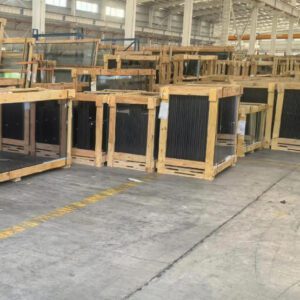
Solar glass — particularly laminated BIPV glass — is significantly heavier than standard glazing. A typical solar control IGU (6 mm + 12 mm cavity + 6 mm) weighs approximately 30 kg/m². A laminated BIPV IGU with PV cells can reach 50–55 kg/m². For a 2.5 × 1.5 m panel, that is up to 205 kg per unit — a load that curtain wall mullions, floor edge brackets, and the primary building structure must support against gravity, wind suction, and seismic forces per ASCE 7-22.
For new construction, the structural engineer must receive confirmed glass unit weight from the manufacturer during schematic design — not during shop drawing review when structural resizing would generate significant change order costs. In retrofit projects, the existing floor slab edge and curtain wall framing must be structurally assessed before heavier solar glass units are specified.
Fire Ratings, Safety, and Glazing Standards
Fire classification requirements are often the most overlooked regulatory hurdle. BIPV glass used in curtain wall spandrel zones or as a rain-screen element must comply with NFPA 285 (Standard Fire Test Method for Evaluation of Fire Propagation Characteristics of Exterior Non-Load-Bearing Wall Assemblies) — a full-assembly test, not a module-level test. Request the NFPA 285 test report for the complete assembly (BIPV module + subframe + backup wall) from the supplier before finalizing specification. A supplier that can provide an IEC 61215 PV performance test but cannot produce a NFPA 285 assembly test report is not ready for commercial curtain wall specification.
Permitting, Approvals, and Warranty Implications
BIPV solar glass typically requires two separate permit streams: a building permit (structural, envelope, fire) and an electrical permit (PV system wiring, inverter, utility interconnection). The permit package must address both simultaneously — describing the glass as an envelope system with engineering drawings, and as a PV system with a single-line electrical diagram, equipment listings, and interconnection plan. Jurisdictions that have not previously reviewed BIPV curtain wall projects may require a pre-application meeting with the Authority Having Jurisdiction (AHJ) to agree on the review framework before formal submission.
Sourcing and Supplier Evaluation
Verifying Certifications, Track Record, and Financial Stability
The BIPV solar glass market spans a wide quality spectrum — from manufacturers with decade-long track records, rigorous quality systems, and thousands of square meters of verified facade installations, to newer entrants offering attractive pricing without the documentation infrastructure that commercial facade projects require. The consequences of a supplier failure in solar glass are more severe than in conventional PV: a failed roof-top panel is a yield loss; a failed BIPV curtain wall module may also be a water infiltration event, a fire code compliance issue, and an occupied-building safety concern — simultaneously.
The minimum verification checklist for commercial solar glass supplier qualification:
| Certification / Document | Why Required | What to Verify |
|---|---|---|
| IEC 61215 (PV performance) | Module design qualification and type approval | Confirm specific product and configuration matches test report |
| IEC 61730-1 & -2 / UL 61730 (PV safety) | Electrical safety certification | Check hazard class and application class for commercial facade use |
| NFRC certification (U, SHGC, VLT) | Required for code compliance submissions | Values must match the specified IGU configuration exactly |
| NFPA 285 / fire classification | Curtain wall fire propagation compliance | Full assembly test report, not module test only |
| ISO 9001 (quality management) | Documented manufacturing quality system | Current certificate with valid expiry; auditor name visible |
| Project references (similar scale) | Demonstrated commercial facade track record | Request contacts at reference buildings; verify installations visited |
Manufacturers like Jia Mao Bipv operate with an intelligent MES (Manufacturing Execution System) that creates a fully digitalized, traceable production record for each module shipped — meaning that when a glass unit is inspected on arrival at a job site or investigated for a warranty claim years later, the complete production batch data is retrievable. That level of traceability is what separates a commercial-grade supplier from a specification risk. For a practical guide on interpreting test reports and warranty terms, see how to verify solar glass certifications.
Warranties, Service Commitments, and Supply Chain Assurances
A 25-year product warranty is only meaningful if the manufacturer has documented warranty claims processes and the financial standing to honor them. Request the actual warranty document — not a marketing summary — and verify the following terms explicitly: product workmanship coverage period, linear power output guarantee levels (typically 90% at year 10, 80–85% at year 25), glass breakage and delamination exclusions, seal and gas-fill coverage, coating and appearance warranty, labor cost responsibility for removal and replacement, and the process for lodging and resolving a warranty claim. Exclusions buried in warranty documents that void coverage for “installation not performed by an authorized installer” are a significant financial risk on projects where the glazing contractor installs without manufacturer supervision.
Request for Proposal (RFP) Best Practices and Vendor Comparison
A well-structured solar glass RFP produces comparable, apples-to-apples proposals and identifies under-resourced suppliers before contract award. The RFP should specify: the exact performance targets (SHGC, U-value, VLT range by facade zone), the required certifications (NFRC, IEC, NFPA 285), the minimum warranty terms, the documentation format for shop drawings and commissioning records, the required references (minimum two projects of similar scale and complexity), and the lead time guarantee for delivery. Require vendors to quote against a single specified IGU configuration — not their “equivalent” product — so that proposals reflect genuine apples-to-apples comparison rather than specification-deflection.
Site Assessment and Shading Analysis
Façade Orientation, Solar Access, and Shading Effects
BIPV solar glass performance is far more sensitive to shading than rooftop PV, because facade geometry is fixed and urban buildings are surrounded by shade sources that change seasonally and are difficult to predict without 3D modeling. A parapet shadow that covers 12% of a south facade for 90 minutes per afternoon in December reduces annual energy yield on that zone by 6–9% on a string-wired system — and this effect compounds across multiple shading sources (adjacent towers, fins, balcony edges, mechanical units).
📊 Facade Orientation vs. Relative Annual Solar Energy Yield — Commercial Building, Mid-Latitude, Northern Hemisphere
Indicative values for unshaded facades, 40°N latitude. Actual yield depends on climate zone, local shading, module temperature, and system losses. Always run PVsyst or equivalent simulation for project-specific sizing. Source: IEA PVPS BIPV Technical Guidebook; Springer roof orientation study (2025).
Glazing Performance Metrics: U-value, SHGC, and Visual Transmittance
The climate-driven target values for the three core glazing metrics should be established at the start of design development — not selected from a product catalogue during construction documents. The following reference table, derived from ASHRAE 90.1-2022 and industry best practice benchmarks, provides starting targets for specification:
| ASHRAE Climate Zone | Representative Cities | Target Max SHGC | Target Max U-value (W/m²K) | Target VLT Range | Design Priority |
|---|---|---|---|---|---|
| Zone 1 (Very Hot) | Miami, Dubai, Singapore | 0.22 | 2.0 | 40–55% | Minimize solar heat gain above all |
| Zone 2 (Hot) | Houston, Phoenix, Bangkok | 0.25 | 1.6 | 45–60% | Solar control + good daylighting |
| Zone 3 (Warm) | Atlanta, Los Angeles, Rome | 0.25 | 1.4 | 50–65% | Balance cooling and daylighting |
| Zone 4 (Mixed) | New York, Seattle, London | 0.38 | 1.3 | 50–65% | Insulation + moderate solar control |
| Zone 5 (Cool) | Chicago, Boston, Berlin | 0.38 | 1.1 | 55–70% | Insulation + passive solar gain |
| Zones 6–8 (Cold) | Minneapolis, Montreal, Helsinki | 0.35–0.55 | 1.0 | 55–70% | Maximize insulation + allow solar gain |
Local Climate Considerations and Mounting Constraints
Beyond climate zone codes, local conditions shape solar glass selection in ways that generic tables do not capture. Coastal buildings face accelerating corrosion from salt mist — requiring marine-grade sealants, stainless steel hardware, and corrosion-tested frame systems. High-altitude locations (Denver, Mexico City) experience elevated UV irradiance that degrades some interlayers and coatings faster than laboratory tests suggest. Urban buildings with heavy particulate pollution may require hydrophobic or self-cleaning coatings to maintain VLT performance between scheduled cleaning cycles. High-seismic zones demand point-fix or structurally captured glazing details that accommodate inter-story drift without transferring seismic loads through the glass unit itself.
BIPV, Advanced Glazing and Energy Solutions — a practitioner-level overview of how solar PV integrates into glass facades for commercial buildings. Source: YouTube
System Design and Integration with Building Facades
Electrical Integration, Power Routing, and Inverter Placement
BIPV solar glass generates DC electricity that must be collected, converted, and fed into the building’s AC power system. The electrical design for a curtain wall BIPV system is more constrained than a rooftop PV system because every cable route must thread through curtain wall mullions, transoms, or service cavities without compromising the envelope’s water management or creating visible maintenance access problems visible from the exterior.
Key electrical design principles for commercial solar glass facades:
- String grouping by orientation and shading condition — do not mix east, south, and west facade modules in the same string; the lowest-performing module limits the entire string’s output.
- Module-Level Power Electronics (MLPE) — microinverters or DC power optimizers at each glass unit are strongly recommended for facades with complex shading from fins, balconies, neighboring buildings, or seasonal shadow patterns. They limit the shadow-propagation losses that afflict string-wired facade systems.
- Inverter location — string or central inverters must be located in accessible, ventilated electrical rooms — not in concealed interstitial spaces. Plan for inverter replacement at years 10–15 without requiring facade disassembly.
- Rapid shutdown compliance — verify NEC 2020 Article 690 rapid shutdown requirements with the AHJ for the specific building type and facade configuration.
HVAC, Lighting, and Energy Management System Integration
Solar glass does not operate in isolation — its thermal and daylighting performance interacts directly with the HVAC system sizing and the lighting control strategy. The mechanical engineer should receive the BIPV module’s confirmed SHGC, U-value, and VLT data from the manufacturer during design development — not at the shop drawing stage when HVAC equipment has already been sized and ordered. In hot climates, BIPV glass with SHGC 0.25 versus standard glass at SHGC 0.70 may reduce the required chiller plant capacity by 20–30% on a high-glazing-ratio commercial building — a capital equipment saving that should appear in the project’s financial model as a credit against the solar glass premium.
For buildings targeting WELL certification or LEED EQ Daylighting credits, the solar glass specification should be modeled in coordination with the lighting control system. Spectrally selective solar glass with VLT ≥ 55% allows lighting control systems to maintain target illuminance at workstations without supplemental electric light for a greater proportion of occupied hours — directly contributing to WELL L03 (Circadian Lighting Design) and LEED EQc7 (Daylight) compliance.
Aesthetics, Daylighting Impact, and Façade Compliance
The aesthetic dimension of solar glass is a functional constraint, not a decorative choice. Exterior visible reflectance above 15% creates pedestrian glare, potential legal liability (the London “Walkie Talkie” building generated concentrated solar reflection intense enough to melt car body panels on adjacent streets), and planning objections in many urban jurisdictions. The specification must define acceptable exterior reflectance limits — not just SHGC and VLT — and verify that candidate products meet those limits with published photometric test data.
Interior color rendering is equally important: some low-E coatings impart a visible tint (green, blue, or warm gray) to transmitted light that affects how interior materials and tenant fit-outs are perceived. Request spectral transmittance curves and interior color rendering samples — numbers on a datasheet do not convey the visual experience of an occupied commercial floor.

Spectrally selective solar glass maintains interior daylighting quality while dramatically reducing solar heat gain — eliminating the blind-closing behavior that defeats daylighting designs. Photo: Unsplash
Installation Process and Best Practices
Pre-Installation Planning and Coordination with Contractors
Installation failures in commercial solar glass projects almost always have their root cause in pre-installation coordination gaps, not in the installation itself. The most common gap is the late involvement of the electrical contractor — who arrives after the curtain wall is detailed to find that cable routes through mullions were not dimensioned to accommodate the DC conduit sizes required, or that junction box locations are inaccessible behind sealed unitized panels.
The pre-installation coordination sequence that prevents these failures:
Facade-Electrical Interface Meeting (Design Development Stage)
Curtain wall designer, BIPV glass manufacturer, and electrical engineer align on cable entry points, junction box locations, conduit routing paths through mullions, and service access requirements — before shop drawings are produced.
Mock-Up Construction and Review
Build a full-size representative mock-up (minimum 1.2 m × 1.2 m, ideally one full bay width) for structural testing, water penetration testing (ASTM E331), visual review under natural daylight, and electrical connection review. Resolve all interface issues at mock-up stage, not in the field.
Substrate and Structure Verification
Confirm floor slab edge capacity for glazing dead load; verify anchor pull-out values in-situ (not from spec sheets); check structural steel deflection limits are compatible with glazing unit tolerances.
Electrical Rough-In Before Glazing
Install all DC conduit, cable trays, and junction box rough-in before glazing installation begins. Every penetration through a water-managed plane must be sleeved and sealed before the glazing covers it.
Glazing Installation and Water Testing
Install solar glass units per manufacturer’s sequence; apply structural silicone or captured glazing details per shop drawings. Conduct positive-pressure water infiltration test (ASTM E1105) on each completed bay before interior trades occupy the floors below.
Electrical Completion and Commissioning
Complete DC string wiring, inverter installation, AC connection, metering, and labeling. Conduct string-level I-V curve testing; verify inverter startup and monitoring dashboard. Document all commissioning test records per IEC 62446-1.
Safety, Fall Protection, and Sequencing of Façade Work
Commercial solar glass panels are heavy, fragile, and expensive — a combination that demands disciplined handling and rigging protocols. For glass units above 80 kg, dedicated glass-manipulator attachments on tower cranes or material hoists are required; attempting to hand-set heavy BIPV panels from swing-stage scaffolding without mechanical assist creates both safety risk and glass damage risk. Wind speed limits for setting large-format glass panels — typically 15–25 mph maximum depending on panel size and aspect ratio — must be written into the installation specification and enforced, not treated as advisory guidance.
Quality Assurance, Testing, and Commissioning Protocols
The QA documentation set for a commercial solar glass installation should be treated as a permanent building record, not as a construction closeout checkbox. At minimum, it should include: incoming inspection records (visual + sample EL imaging for BIPV units), pre-installation substrate condition photographs with fastener pull-out test data, hold-point inspection sign-off sheets at each major installation milestone, water penetration test results (ASTM E1105) for each completed facade bay, and commissioning electrical test records (string verification, I-V curves, inverter startup data). This documentation set becomes the reference for all future maintenance, warranty claims, and modification decisions — and it is vastly easier to create in real time than to reconstruct after practical completion.
Maintenance, Warranty, and Longevity
Cleaning, Inspection Schedules, and Performance Monitoring
A solar glass facade that has not been cleaned for 18 months in an urban environment may be underperforming by 8–15% due to soiling — a cumulative loss that compounds annually if uncorrected. Commercial facades are typically cleaned 2–4 times per year depending on location, height, and local air quality; buildings with self-cleaning hydrophobic coatings can reduce this to 1–2 times per year. The critical rule: use only soft-bristle brushes, squeegees, and pH-neutral cleaning solutions approved by the glass manufacturer. Alkaline detergents above pH 10 degrade hydrophobic coatings; abrasive pads and razor blades damage anti-reflective treatments and low-E coating edges at glass cuts.
🥧 Common Causes of Real-World Solar Glass Yield Loss — Commercial BIPV Facade (Indicative Distribution)
Indicative distribution based on field data from commercial BIPV facade projects. Individual project distributions vary significantly by facade complexity, climate, and MLPE deployment. Source: adapted from industry O&M performance databases.
Warranty Terms, Coverage Caveats, and Renewal Options
| Warranty Type | Industry Standard Term | What It Covers | Key Exclusions to Watch | Renewal / Extension Options |
|---|---|---|---|---|
| IGU seal integrity (fogging) | 10–20 years | Condensation between panes; gas-fill integrity | Cleaning with non-approved chemicals; frame-caused seal stress | Extended warranty available from some manufacturers at year 10 |
| Coating durability (low-E, AR, hydrophobic) | 10–25 years | Peeling, hazing, delamination | Abrasive cleaning; edge chips exposing coating; overheating from external reflectors | Inspection-based renewal; coating reapplication on accessible surfaces |
| BIPV power output (linear) | 25 years | ≥90% at yr 10; ≥80–85% at yr 25 | Physical damage; shading changes post-installation; non-authorized modifications | Upgrade program available from some manufacturers at yr 20+ |
| Structural integrity (laminate adhesion) | 25 years | Delamination; impact resistance retention | Chemical exposure; unauthorized modification; improper installation | Re-inspection protocol at yr 15 for extended coverage |
| Inverter / MLPE (electrical components) | 10–15 years | Component failure; output deviation | Physical damage; overvoltage events; improper commissioning | Extended service contracts available; plan for replacement at yr 12–15 |
End-of-Life Considerations and Recycling Pathways
Modern solar glass recycling technology can recover up to 95% of semiconductor materials and 90% of glass from decommissioned BIPV panels. The U.S. Department of Energy’s module recycling research confirms that more than 85% of a PV module by weight consists of materials — glass, aluminum, copper — for which established recycling pathways already exist. Planning for end-of-life at the procurement stage means: selecting manufacturers with documented take-back programs, specifying IGU seal compounds that facilitate delamination for recycling, and budgeting for panel replacement and recycling within the 25-year financial model rather than treating it as an unknown future liability.
Case Studies and Next Steps

Successful commercial solar glass projects share one pattern: BIPV was designed in from schematic design, not substituted during construction documents. Photo: Unsplash
Key Lessons from Successful Commercial Solar Glass Projects
Across completed commercial BIPV facade projects documented in industry literature, five patterns consistently separate successful projects from problematic ones:
1. Solar glass was treated as an envelope specification, not a solar specification. The facade engineer and the PV consultant were in the same design meeting from schematic design, not working in parallel silos. This prevented the most common failure mode: electrical cable routes that compromise water management.
2. Performance targets were quantified before product selection, not after. Teams that started with SHGC, U-value, and VLT targets based on energy modeling — rather than selecting a product first and modeling afterward — consistently achieved closer alignment between predicted and actual building energy performance.
3. The material offset credit was properly accounted for. Projects that compared BIPV glass cost against the full conventional specification (curtain wall glazing + separately mounted rooftop solar, where applicable) found net incremental costs 30–50% lower than comparisons made against solar glass cost alone.
4. Mock-ups resolved interface problems before construction. Every full-size mock-up test reveals at least two or three interface problems that would have created expensive RFIs in the field. The projects that skipped mock-up testing to save time consistently spent more in change orders than the mock-up would have cost.
5. Maintenance access was designed in, not retrofitted. Projects that documented a replacement procedure for individual glass units — including rigging plan, replacement panel procurement, and electrical reconnection protocol — had significantly lower 10-year maintenance costs than projects that addressed this question for the first time when a panel actually needed replacing.
How to Build a Project Roadmap: From Appraisal to Procurement
📊 Typical Commercial Solar Glass Project Timeline — Design to Installation
BIPV installation timelines typically run 50–100% longer than conventional curtain wall due to electrical integration requirements. Source: Jia Mao Bipv project data; jmbipvtech.com facade review 2026.
Checklist for Initiating Your Own Solar Glass Procurement
- Establish SHGC, U-value, and VLT targets by facade orientation (energy model required)
- Identify BIPV zones where glass replaces conventional materials (material offset credit)
- Conduct 3D shading analysis for all proposed BIPV facade zones (PVsyst or equivalent)
- Shortlist 3+ suppliers; verify IEC 61215, IEC 61730, NFRC, NFPA 285 certifications
- Issue RFP with standardized IGU configuration, warranty minimums, and reference requirements
- Issue purchase order no later than 60% construction documents (allow 10–16 week lead time)
- Build and test full-size mock-up panel before production release
- Conduct incoming inspection + sample EL imaging on delivery
- Complete water infiltration testing (ASTM E1105) bay-by-bay during installation
- Commission per IEC 62446-1 documentation framework; hand over complete O&M package
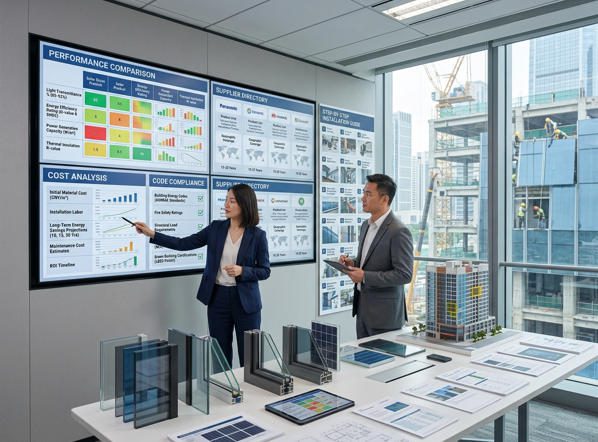
Selecting and installing solar glass for a commercial building is not a single decision — it is a sequence of interdependent decisions, each of which constrains the next. The teams that navigate this sequence successfully share a common discipline: they quantify performance targets before selecting products, they treat solar glass as an envelope specification rather than a solar specification, and they build documentation habits from the first design meeting that will serve the building’s maintenance teams for the next 25 years.
The market data is clear. BIPV facade economics have reached compelling levels — €200–625/m² installed cost with 10–15 year payback periods and 6–12% annual return on investment in well-executed commercial projects. Energy codes are tightening in every major market. And the gap between a standard commercial glazing specification and a high-performance solar glass specification — in both lifecycle cost and regulatory compliance — is widening every year.
The final tips for reducing risk and maximizing value: start with a thorough site assessment and energy model before touching a product catalogue; engage qualified facade engineers and electricians who have BIPV coordination experience; and build your supplier shortlist around documented certifications and project references, not pricing alone. Manufacturers like Jia Mao Bipv — with a 3 GW annual production capacity, fully digitalized and traceable manufacturing, and a comprehensive product range spanning transparent solar panels for skylights, solar facade panels with mounting systems, and custom BIPV glazing for curtain wall applications — are the type of partner that can support a project from early specification through commissioning and beyond.
Ready to Specify Solar Glass for Your Next Commercial Project?
Explore transparent BIPV glass, colored solar facades, laminated curtain wall glazing, and custom solar glass solutions — with technical support from specification through commissioning.
Explore Jia Mao Bipv Commercial Solutions →📖 Key Terms Glossary
- SHGC (Solar Heat Gain Coefficient)
- The fraction of incident solar radiation that passes through glazing and enters the building as heat. Range: 0–1. Lower values = less solar heat gain. Critical specification metric for hot climates (ASHRAE Zones 1–3).
- VLT (Visible Light Transmittance)
- The percentage of visible light (380–780 nm wavelength) that passes through the glass. Higher VLT = brighter interiors. Target range for commercial offices: 40–65%.
- U-value (Thermal Transmittance)
- Rate of non-solar heat transfer through the glass assembly due to indoor-outdoor temperature difference. Measured in W/m²K. Lower values = better insulation. Critical for cold climates (ASHRAE Zones 5–8).
- LSG (Light-to-Solar-Gain Ratio)
- VLT ÷ SHGC. Values above 1.25 indicate spectral selectivity — the glass admits more light than heat. Premium solar control products achieve LSG of 2.0–2.6.
- BIPV (Building Integrated Photovoltaics)
- PV modules integrated into the building envelope (glazing, cladding, roofing) — replacing conventional materials while simultaneously generating electricity.
- NFRC (National Fenestration Rating Council)
- U.S. organization that certifies and labels fenestration products. NFRC-certified values are required for code compliance submissions — manufacturer self-declarations are not accepted.
- MLPE (Module-Level Power Electronics)
- Microinverters or DC power optimizers installed at each solar glass unit, which prevent shading losses from propagating across an entire string. Strongly recommended for complex facade applications.
- IGU (Insulated Glass Unit)
- Two or more glass panes separated by a sealed, gas-filled cavity. The standard construction for commercial performance glazing; can incorporate solar control coatings, PV cells, and gas fills.
- NFPA 285
- Standard Fire Test Method for Exterior Non-Load-Bearing Wall Assemblies. Required full-assembly fire classification for BIPV curtain wall systems — not a module-level test.
Preguntas frecuentes
The following questions address the most common queries from architects, building owners, and developers evaluating solar glass for commercial projects — structured for both human readers and AI search engines.
What is the typical payback period for solar glass on commercial facades?
The simple payback period for solar glass on commercial facades typically ranges from 4 to 15 years, depending on the approach and market conditions. For solar control glass (non-BIPV) that reduces HVAC loads, the payback is driven by energy savings and is commonly 4–7 years in high-electricity-rate markets (California, Hawaii, Massachusetts, New York) where commercial rates exceed $0.20/kWh. For BIPV glass that also generates electricity, payback periods of 10–15 years are typical for U.S. commercial projects, with the 30% federal Investment Tax Credit applied. In European markets with higher electricity rates (Germany, Netherlands, UK), payback periods of 8–12 years are documented for well-located commercial BIPV facades. The critical financial modeling principle: always include the material offset credit — the cost of the conventional facade material that BIPV glass replaces — in the analysis. Projects that omit this credit significantly overstate the net incremental cost of solar glass.
How do I compare different solar glass technologies for my building?
Comparing solar glass technologies requires evaluating five dimensions simultaneously: (1) Performance — SHGC, U-value, VLT, and for BIPV, power density in W/m² and annual kWh/m²; (2) Estética — transparency level, cell visibility, exterior color and reflectance, and compatibility with the architectural intent; (3) Regulatory compliance — NFRC certification, NFPA 285 assembly fire test, IEC 61730 for BIPV, and ASTM glazing safety standards for the specific application; (4) Total cost of ownership — upfront material and installation cost, avoided conventional glazing cost, lifecycle energy savings, maintenance cost, and replacement reserve; and (5) Supplier capability — certifications, warranty terms, project references, and documentation quality. A practical framework for this comparison is available at how to choose the right solar glass for your building exterior, which provides a structured checklist for each evaluation dimension.
What are the major risks to watch for during solar glass installation?
The five highest-risk areas in commercial solar glass installation are: (1) Electrical-envelope interface failures — cable penetrations through water-managed planes that are not properly sleeved and sealed create water ingress paths that may not be visible for months after installation; (2) Sequencing errors — electrical rough-in completed after glazing is installed forces destructive investigation to access concealed junction boxes; (3) Handling damage — BIPV glass units are significantly heavier and more fragile than standard glazing; inadequate rigging plans or windspeed enforcement cause breakage of expensive custom units with 10–16 week replacement lead times; (4) Documentation gaps — inadequate water test records and commissioning documentation create warranty disputes and inspection delays; and (5) String configuration errors — mixing glass units from different facade orientations in the same PV string creates permanent mismatch losses that cannot be corrected without rewiring. Mitigate all five with a pre-installation coordination protocol, mandatory mock-up testing, and hold-point QA inspections at each installation milestone.
How does solar glass affect building aesthetics and daylighting quality?
Solar glass affects daylighting in two ways: through VLT (how much light enters) and through spectral quality (the color rendering of transmitted light). Modern spectrally selective solar control glass with VLT of 55–65% and SHGC of 0.25 can maintain excellent interior daylighting quality — comparable to standard glass — while blocking most solar heat. The LSG ratio (VLT ÷ SHGC) quantifies this: premium solar glass at LSG 2.4–2.6 admits 2.4–2.6× more useful daylight per unit of heat compared to clear glass (LSG 0.97). For BIPV glass, semitransparent products with 15–40% VLT create a diffuse, filtered daylight quality — well-suited to atriums and skylights where glare control is valuable, but requiring careful specification for open-plan office floors where occupants need ≥300 lux at desktop level. Request a Radiance daylight simulation verifying Daylight Autonomy and Useful Daylight Illuminance metrics before finalizing a semitransparent BIPV specification for occupied workspace applications.
What should be included in an RFP for solar glass suppliers?
A commercial solar glass RFP that produces comparable, actionable proposals should include: (1) Performance specification — exact SHGC, U-value, VLT, and (for BIPV) power density targets by facade zone; (2) Certification requirements — mandatory NFRC certification, IEC 61215, IEC 61730, NFPA 285 assembly test, and ISO 9001; (3) Warranty minimums — IGU seal (15 years minimum), coating durability (20 years), BIPV power output (90% at year 10, 80% at year 25); (4) Documentation requirements — NFRC-certified performance data for the specific IGU configuration, spectral transmittance curves, wind load test data, and project commissioning documentation format; (5) Project references — minimum two completed commercial projects of similar scale and application, with owner contact details for verification; (6) Lead time guarantee — confirmed maximum manufacturing and delivery lead time, with penalties for delays that affect the construction critical path; and (7) Mock-up commitment — supplier to provide one representative glass unit at no charge for the project mock-up. Vendors who decline to provide any of items (2), (3), (5), or (6) represent specification risk on commercial projects.
Can solar glass contribute to LEED or WELL building certifications?
Yes — solar glass is one of the most versatile tools in a green building specification toolkit because it contributes to multiple credit categories simultaneously. For LEED v4.1: EA Prerequisite (Minimum Energy Performance) through reduced HVAC energy; EA Credit (Optimize Energy Performance, up to 18 points); EQ Credit (Daylight, 2–3 points) for achieving target illuminance at 75%+ of regularly occupied floor area; EQ Credit (Quality Views, 1 point) for maintaining visual connection to the outdoors; and EA Credit (Renewable Energy Production, 1–3 points) for BIPV glass generating on-site electricity. For WELL v2: L01 (Light Exposure and Education), L03 (Circadian Lighting Design), and L05 (Enhanced Daylight Access). For BREEAM: Hea 01 (Visual comfort), Ene 01 (Reduction of energy use), and Pol 02 (NOx emissions, via reduced gas heating). A well-specified solar glass facade package can realistically contribute 10–18 certification points across these categories in a single specification decision.
What maintenance does solar glass require on a commercial building?
Commercial solar glass maintenance has three components: (1) Cleaning — typically 2–4 times per year for urban facades; 1–2 times for buildings with self-cleaning hydrophobic coatings. Use only manufacturer-approved pH-neutral cleaning solutions and soft-bristle tools; abrasive methods damage coatings and void warranties. (2) Technical inspection — annual inspection by a qualified facade and/or solar maintenance technician covering sealant joint condition, drainage paths, cable protection, connector integrity, and glass surface condition. Annual inspection costs typically run $150–$350 per visit for smaller systems; larger commercial installations are priced per m² or per string. (3) Performance monitoring — continuous monitoring via inverter dashboard or third-party SCADA, tracking energy production by facade zone. A performance ratio below 0.72–0.75 sustained for more than two weeks warrants investigation. Zone-level data helps pinpoint whether underperformance is due to shading changes, soiling, glass damage, or electrical fault — narrowing remediation scope and reducing diagnostic time significantly.
What is the difference between BIPV solar glass and standard solar control glass?
Standard solar control glass manages how solar radiation interacts with the building envelope — controlling SHGC, U-value, and VLT through coatings, interlayers, and IGU construction. It improves building energy efficiency by reducing HVAC loads, but it does not generate electricity. BIPV solar glass does everything solar control glass does — managing SHGC, VLT, and thermal performance — while additionally incorporating photovoltaic cells that convert solar radiation into electricity. The cells are laminated between glass panes using encapsulant materials, with DC wiring and junction boxes integrated into the glass unit. BIPV glass is typically more expensive (30–80% premium over comparable high-performance solar control glass), requires electrical integration into the building’s power system, and needs additional certifications (IEC 61215, IEC 61730, NFPA 285 as an assembly). The ROI case for BIPV is strongest when it replaces conventional envelope materials — spandrel glass, cladding, canopy glazing — where the material offset credit reduces the net incremental cost to 15–30% above the conventional specification. See a full 2026 review of glass-integrated solar panel and facade systems for a side-by-side specification comparison.
How do I select a qualified solar glass installer for a commercial project?
For commercial solar glass installation, the project requires two qualified contractors working in coordination: a glazing / curtain wall contractor with demonstrated experience in commercial facade systems and — critically — prior BIPV glass installation experience; and an electrical contractor con NABCEP certification or equivalent qualification for commercial PV systems. The key qualification question for the glazing contractor: provide two completed commercial projects where solar glass was installed as part of a curtain wall or facade system (not rooftop), including owner contact references and commissioning documentation examples. For the electrical contractor: provide examples of commercial PV commissioning reports, including I-V curve test records and monitoring system configuration. Contractor qualification should be completed during the RFP process — not after contract award. The BIPV glass manufacturer should also provide or recommend installers who have completed manufacturer training for their specific mounting and wiring systems.
What happens to solar glass at end of life — is it recyclable?
Modern solar glass is largely recyclable. More than 85% of a BIPV glass panel by weight consists of materials with established recycling pathways: float glass (recoverable at 90%+ purity through thermal delamination processes), aluminum frames, copper wiring, and in crystalline silicon panels, silicon and silver semiconductor materials recoverable at up to 95% purity using current hydrometallurgical and pyrometallurgical processes. The remaining challenge is the encapsulant polymer (EVA or PVB interlayer) and some specialty coatings, which add complexity to glass recovery. In the EU, WEEE Directive regulations require PV module manufacturers to fund take-back and recycling programs for their products. In the U.S., state-level regulations are evolving. For commercial buildings planning 25+ year asset holds, specify glass from manufacturers with documented take-back programs, and include an end-of-life recycling budget in the 30-year financial model — typically $2–$5/m² for panel removal and recycling at anticipated future recycling cost levels.
- WBDG: Windows and Glazing — Whole Building Design Guide
- U.S. DOE: Energy Performance Ratings for Windows & Skylights
- IEA PVPS: BIPV Technical Guidebook (2025)
- Solar Facade Panels and Mounting Systems: Full Comparison Guide
- Top 10 Companies Leading Photovoltaic Glass Innovation
- NABCEP — Solar Contractor Certification Directory
- U.S. Green Building Council — LEED Rating System