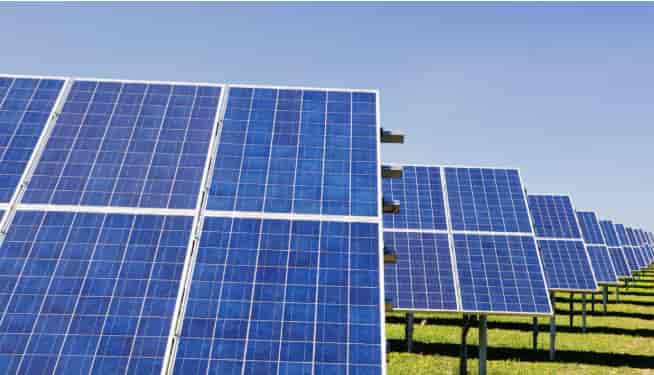
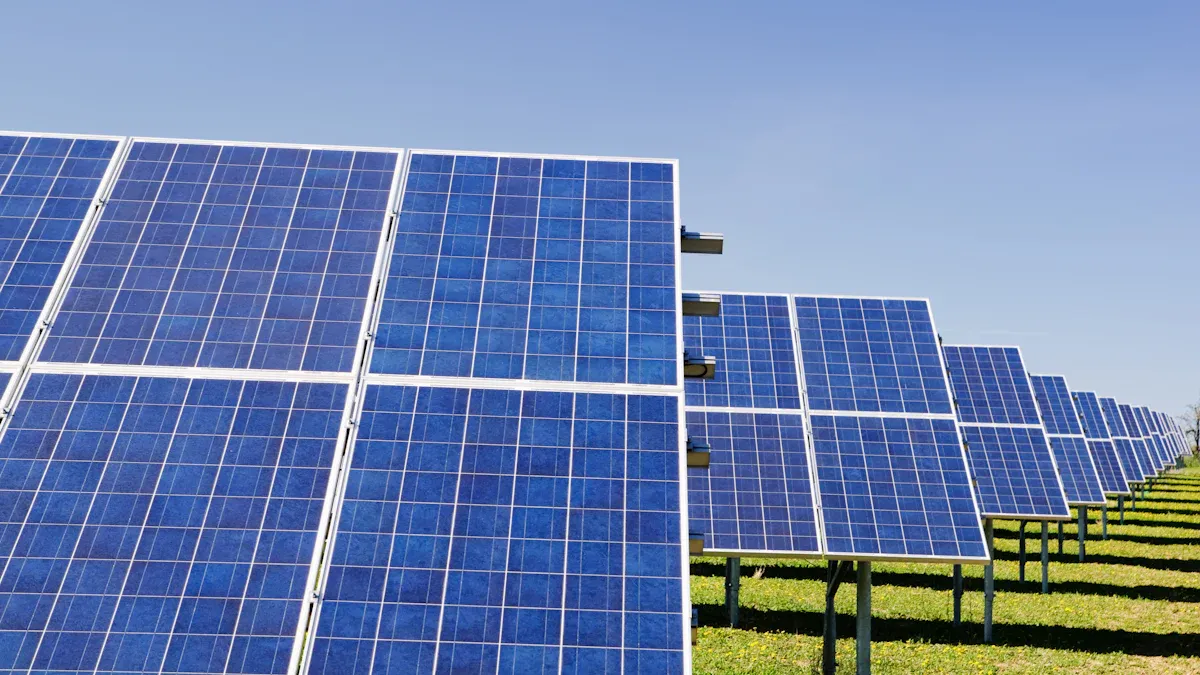
Choosing high efficiency solar modules helps you get more energy. You can meet your energy needs better. You get more power from each square meter. This is important when space is small. Studies show higher efficiency panels help you:
- Make more power in small spaces.
- Spend less on installation because you need less space.
- Keep energy steady, even when there is less sunlight.
Before you pick panels, think about your project type. Think about where you live. Think about how much energy you want. Companies like Jia Mao Bipv have choices for different needs.
Key Takeaways
- High efficiency solar modules make more power in small spaces. This makes them great for places with little room.
- Think about your project type and how much energy you need. This helps you pick the best solar panels.
- Check the efficiency ratings and warranties of solar panels. This helps make sure they work well for a long time.
- Pick panels from trusted companies with good certifications. This helps keep your system safe and high quality.
- Follow a step-by-step checklist to help you choose. This helps you make smart choices for your solar project.
Project Needs and Considerations
Residential vs. Commercial Projects
When you start a solar project, you need to know if it is for a home or a business. The size and energy use can be very different. You can see the main differences in the table below:
| Aspect | Residential Solar Installations | Commercial Solar Installations |
|---|---|---|
| Installation Size | Smaller, designed for single household energy needs | Larger, tailored to meet diverse business energy needs |
| Energy Consumption Patterns | Focused on household energy demands | Varies significantly based on business operations |
A home project usually uses fewer panels. You only need to cover your family’s energy use. A business project often needs more panels because it uses more power. Jia Mao Bipv has options for both homes and businesses. This helps you pick what fits your project best.
Space, Location, and Climate
You need to check how much space you have. Where your project is matters too. Space tells you how many panels you can put up. Where you live changes how much sunlight you get. The weather and temperature also change how well your panels work.
- If you live farther from the equator, your panels make less power. You lose about 1-2% for each degree away from the equator.
- If you live higher up, your panels can make more power. You get 3-4% more for every 1,000 feet higher.
- When it gets hotter than 77°F, crystalline silicon panels lose some power. They lose about 0.3-0.5% for each degree above 77°F.
- Sunlight, shade, dirt, and humidity all change how much power you get. Sunny days are best for making power. Shade from trees or buildings can lower your power. Dust or pollen on panels blocks sunlight. Humid air can spread sunlight and lower power too.
You should think about these things before you pick your solar modules.
Budget and Energy Goals
How much money you want to spend and how much power you want to make are important. You need to know how much energy you want to make each month and year. Most home solar systems pay for themselves in 5 to 8 years. In some places, it can take 6 to 10 years. Business projects may take longer, depending on how big they are and how much power they use.
- Look at your energy bills to see how much power you use.
- Work with your installer to find out how many panels you need.
- The size and efficiency of your panels help you reach your goals.
- High efficiency panels can cost more, but they make more power in less space.
Jia Mao Bipv can help you find the right modules for your money and power needs. Always match your project to the best solar solution.
High Efficiency Solar Modules Explained
What Is Solar Panel Efficiency
Solar panel efficiency shows how well a solar module makes electricity from sunlight. You find out solar panel efficiency by checking how much sunlight hits the panel and how much power comes out. If a panel has 20% solar panel efficiency, it turns one-fifth of the sunlight into electricity. People test solar panel efficiency using Standard Test Conditions. These tests use the same temperature and sunlight for every panel. This helps you compare panels in a fair way. But real-life solar panel performance can change. Things like temperature, the angle of the panel, and where you live can make solar panel efficiency lower than lab results.
- Solar panel efficiency means how much sunlight turns into power.
- A 20% solar panel efficiency panel makes one-fifth of sunlight into electricity.
- Standard Test Conditions let you compare panels easily.
- Real solar panel performance depends on temperature, angle, and location.
Efficiency Calculation and Typical Ranges
You can figure out solar panel efficiency with a simple math formula. Divide the highest power the panel can make by the size of the panel and the sunlight it gets. The formula looks like this:
Solar Panel Efficiency (%) = (Output Power / (Panel Area × Solar Irradiance)) × 100
Here is a table that shows how to use the formula:
| Parameter | Value |
|---|---|
| Output Power (Pmax) | 400 W |
| Module Size | 1.7 m × 1.0 m |
| Solar Irradiance | 1000 W/m² |
| Efficiency | 23.53% |
Most high efficiency solar modules today have solar panel efficiency between 13% and 24.8%. Many new panels reach 22% or more. The kind of solar cell, how the cells are put together, and the size of the panel all change solar panel efficiency. In the last ten years, solar panel efficiency has gotten much better. Ten years ago, most panels had solar panel efficiency between 15% and 18%. Now, you can buy high efficiency solar modules with solar panel efficiency over 22%. This means you need fewer panels to make the same power. You save space and money. New panels also last longer and are stronger.
Tip: Higher solar panel efficiency lets you make more power in less space. This is very helpful if your roof or project area is small.
Monocrystalline vs. Other Technologies
There are different types of solar modules you can pick. Monocrystalline panels are the most common high efficiency solar modules. These panels use pure silicon crystals. They usually have solar panel efficiency between 20% and 23%. Some special panels can reach up to 24%. Polycrystalline panels use mixed silicon crystals. Their solar panel efficiency is lower, usually between 15% and 17%. Thin-film panels have even lower solar panel efficiency, often between 10% and 12%. The table below shows the usual solar panel efficiency for each type:
| Type of Solar Module | Efficiency Range |
|---|---|
| Monocrystalline | 15% – 22% (up to 24% for advanced) |
| Polycrystalline | 14% – 17% (some newer over 20%) |
| Thin-Film | 7% – 15% (some lab results higher) |
Monocrystalline panels give you the best solar panel performance. You get more power from each panel. They also last longer and are stronger. Polycrystalline panels cost less, but you need more panels to make the same power. Thin-film panels are good for special uses, like curved places or low-light spots, but their solar panel efficiency is much lower.
Some of the highest efficiency commercial panels are Mission Solar N type modules (22.8%), REC Alpha Pure RX (22.6%), Q Cells Q.Tron BLK M G2+ (22.5%), and SunPower M series (22.3%). Jia Mao Bipv sells high efficiency solar modules that use advanced monocrystalline technology. You can pick these panels for top solar panel efficiency and steady performance.
When you choose high efficiency solar modules, look at solar panel efficiency, solar cell efficiency, and total panel efficiency. You want the best solar panel performance for your project. High efficiency solar modules help you reach your energy goals faster and use less space.
Comparing Solar Module Options
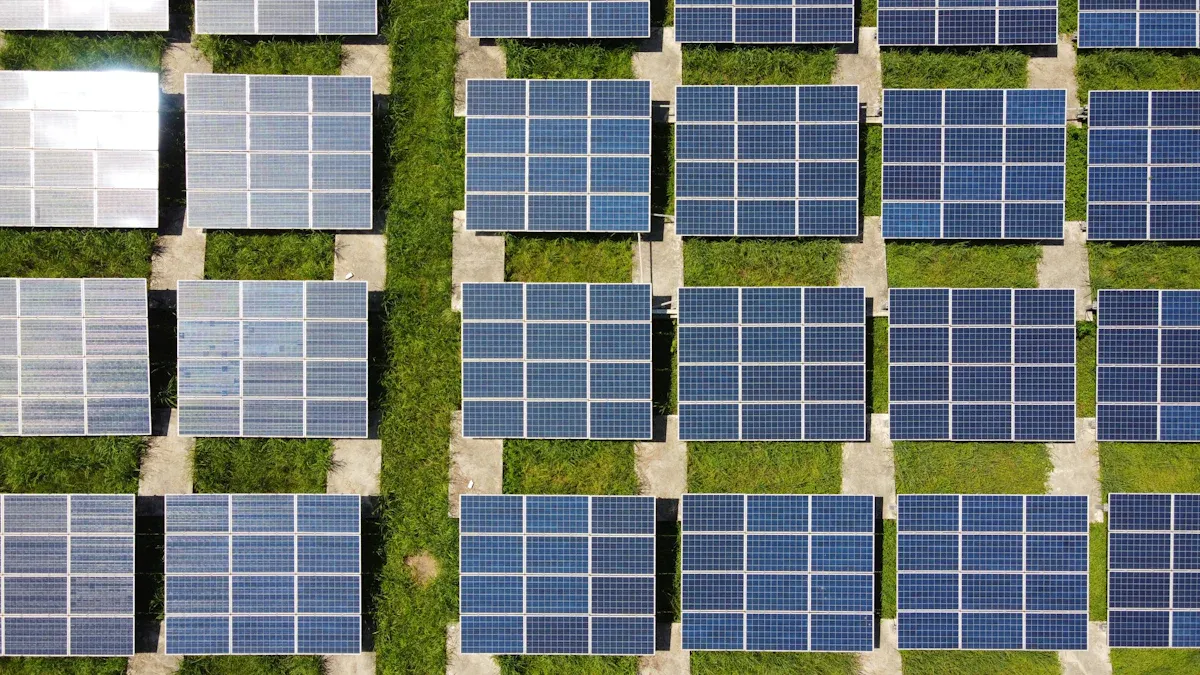
When you pick solar modules, you should look at some key things. You want good energy, strong panels, and long-lasting use. This part helps you check efficiency, wattage, warranty, how fast panels lose power, certifications, and if the company is trusted. By looking at these things, you can find the best solar module for your project.
Efficiency Ratings and Wattage
Efficiency ratings tell you how well a panel changes sunlight into electricity. If a panel has higher efficiency, it makes more energy from the same sunlight. This is helpful if you do not have much space. Wattage shows the most power a panel can make. Panels with higher wattage are usually bigger and use better technology. Here are some main ideas:
- High efficiency panels turn more sunlight into electricity. This means you get more energy.
- High wattage panels are often bigger and have more photovoltaic cells. They can give your system more power.
- If you do not have much space, high efficiency panels help you get more energy from each square meter.
- Most home panels are between 250W and 400W. They are about 65 inches by 39 inches. When wattage goes up, panels get bigger and heavier.
Tip: Always look at both efficiency and wattage when you compare panels. You want the most energy for your space.
If you want new high efficiency panels, check out Jinko Solar Tiger Neo, Mission Solar N type, and Jia Mao Bipv advanced monocrystalline modules. These panels give you strong energy and are very reliable.
Warranty and Degradation Rate
Warranty and degradation rate show how long your panels will last and how much energy they will make over time. Most top companies give two kinds of warranties: performance and product. Performance warranty covers how much energy your panels make for many years. Product warranty covers problems with the panel itself.
| Warranty Type | Duration |
|---|---|
| Performance Warranty | 25 years |
| Product Warranty | 10 to 12 years |
| Premium Options | Up to 30 years |
Degradation rate tells you how much energy your panels lose each year. High efficiency panels usually lose less energy each year. This means they last longer and work better. Here is how different types compare:
| Module Type | Median Degradation Rate (per year) | Mean Degradation Rate (per year) | Predicted Lifetime (years) |
|---|---|---|---|
| Monocrystalline Silicon | 1.23% | 1.37% | 16 |
| Polycrystalline Silicon | 1.35% | 1.44% | 16 |
| Amorphous Silicon | 1.65% | 1.67% | 13 |
- Some panels lose power faster than others. About 20% of panels lose power 1.5 times faster than normal.
- Most systems lose about 0.9% energy each year. Some lose power faster and may only last 11 years.
- Lower degradation rates mean your panels keep making good energy for more years.
Note: Pick panels with good warranties and low degradation rates. This helps your system last longer and keep making strong energy.
Certifications and Manufacturer Reliability
Certifications show your panels meet safety and quality rules. You should pick panels with important certifications. These prove your panels passed hard tests for safety and strength.
- UL 1703: Safety for flat-plate photovoltaic modules in the U.S.
- TUV Certification: Tough testing by a trusted group.
- PID Resistance: Keeps panels working well under high voltage.
| Certification | Description | Importance |
|---|---|---|
| IEC Standards | International standards for solar panels, including IEC 61215 and IEC 61730 | Sets basic rules for performance and safety |
| UL Certification | Safety standard for the U.S. | Makes sure panels are safe to use |
| TUV Certification | Testing by TUV Rheinland Group | Shows panels are good quality and work well |
| Salt Mist Testing | Checks for rust in salty air | Needed for places near the ocean |
| Ammonia Resistance Testing | Checks for damage from ammonia | Good for farms to stop early failure |
- IEC 61215 checks for heat, cold, heavy weight, and sunlight damage.
- Extra tests include more heat and weight checks for stronger panels.
- PV Module Quality Assurance Task Force uses even tougher tests.
It is important to pick a company that makes good, strong panels. Boviet Solar has been a top company for reliability since 2019. Silfab Solar also does well in tests for strength and lasting power. Other good brands are Astronergy, JA Solar, Meyer Burger, Mission Solar, Qcells, Trina Solar, JinkoSolar, and Longi Solar. Jia Mao Bipv sells high efficiency panels that are strong and last a long time. You can trust these brands to give you steady energy for many years.
Tip: Always buy solar modules from companies with good records and strong certifications. This helps you get safe, strong, and long-lasting panels for your project.
Solar Module Selection for Your Project
Matching Modules to Roof and Usage
You need to pick solar modules that fit your roof and how you use energy. The kind of roof and its shape change which mounting system works best. Look at the table below to see which system matches your roof and what you should check:
| Roof Type | Roof Material | Recommended Mounting System(s) | Key Considerations |
|---|---|---|---|
| Pitched | Asphalt Shingle | Rail-based, Rail-less | Holes need good flashing. Rafters must hold the weight. |
| Pitched | Tile (Clay/Concrete) | Special tile hooks, Rail-based with tile cutouts/lifts | Tiles break easily. Use special tools and be careful to stop leaks. |
| Flat | Membrane (TPO, EPDM, PVC) | Ballasted, Mechanically attached (low-penetration) | Wind can lift panels. Make sure the roof can hold the weight. |
You also need to think about how much energy you want. For systems that use their own power, size your solar modules to cover 80-120% of daytime use. Remember that energy use can change with seasons or grow in the future. How you place your panels matters too. East-West layouts help you get steady power all day. Monocrystalline modules from Jia Mao Bipv give strong and steady power for many projects.
Installation and Maintenance Factors
Good installation helps your solar modules last longer and work better. Bad installation can hurt your system and lower energy output. The weather can change how your modules work. Very hot or wet places can make modules wear out faster. Using strong materials and good building lowers this risk and helps you get more value. Taking care of your system keeps it safe and working well for years. High efficiency panels need less care because you use fewer modules. Special coatings and tough glass keep out dirt and protect from bad weather. This means you get more power and spend less money over time.
- Coatings keep out dirt and dust.
- Tough glass stands up to bad weather.
- Better inverter technology helps panels last longer.
Check your system often and fix problems fast. This keeps your solar modules working well and protects your money.
Step-by-Step Selection Checklist
Use this checklist to help you pick solar modules easily and correctly. You will get more value and strong returns from your system.
- Learn about PV module types and technology for your solar system.
- Read datasheets and compare modules for power and strength.
- Keep up with new trends like monofacial and bifacial photovoltaic modules.
- Find key numbers to make sure your investment is good.
- Use tools like panel comparison sheets to help you choose.
- Visit your site more than once to collect data for your solar modules.
- Tell everyone involved about your choices during selection.
- Use standard forms for reports and picking modules.
- Check for shade and roof limits before you decide.
- Look at grid connection and local permit needs for your project.
Tip: Picking solar modules carefully helps you get the most power, keep your money safe, and enjoy steady energy for years. Jia Mao Bipv can help you choose the best PV modules for any project.
You can pick the best high efficiency solar modules by doing a few things. First, check how well the panels work and what kind of technology they use. Next, compare how strong they are, how long the warranty lasts, and how much they cost. Make sure the panels will fit on your roof and follow local rules. You should also look for new things like bifacial panels.
| Factor | Benefit |
|---|---|
| Stable Thermal Performance | Panels last longer and give you more value |
| Higher Reliability | You get steady energy and need less fixing |
Jia Mao Bipv gives you expert advice and strong solar products. Use the checklist and talk to experts to make sure your panels are put in safely and work well. You can start your solar project and feel sure about your choice.
FAQ
What does module efficiency mean for my solar project?
Module efficiency tells you how much sunlight turns into electricity. If your module has higher efficiency, you get more power. This means you need less space for your modules. You can reach your energy goals faster.
How do I choose the right module for my roof size?
First, measure your roof to see how much space you have. Count how many modules will fit on your roof. High efficiency modules make more power in small areas. Ask your installer for help with picking and placing modules.
Why should I care about module warranties?
Module warranties help protect your money. They cover problems and make sure your module works well. A good warranty means your module lasts longer. Always check the warranty before you buy any module.
Can I use the same module for utility-scale solar projects and homes?
You can use a module for both homes and big projects. Utility-scale solar projects need lots of modules. These projects use modules with high efficiency and strong build. Jia Mao Bipv has modules for homes and big solar projects.
How often should I clean my module to keep it working well?
Clean your module every few months to keep it strong. Dirt and dust stop sunlight and lower power. Use water and a soft cloth to clean your module. Cleaning often helps your module work better and last longer.


-300x300.jpg)