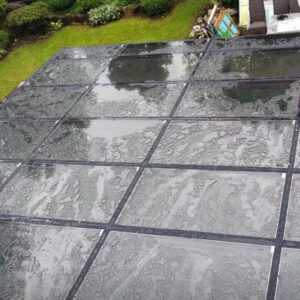
 Solar window technology is quietly reshaping how buildings generate and consume energy — one glass panel at a time.
Solar window technology — formally known as Building-Integrated Photovoltaics (BIPV) for glass applications — is no longer a science-fiction concept reserved for glossy conference keynotes. For distributors, agents, and construction contractors operating in the new energy sector, this technology represents one of the most significant commercial opportunities of the coming decade.
The BIPV glass market was valued at USD 7.21 billion in 2024 and is projected to surge to USD 63.54 billion by 2034, growing at a staggering CAGR of 21.88% (Market Research Future, 2024). The broader BIPV market — encompassing roofs, facades, and glass — stood at USD 23.41 billion in 2025 and is forecast to reach USD 85.9 billion by 2034 at a CAGR of 14.87% (Fortune Business Insights, 2025).
But market numbers alone do not tell the full story. Understanding how we arrived at this inflection point — from theoretical physics in university labs to commercial products being deployed in commercial towers — is what separates distributors who lead the market from those who follow it.
This article walks you through the complete evolution of solar window technology, phase by phase, with the specific depth that helps distributors and agents make confident sourcing, stocking, and customer education decisions.
Glossary of Key Terms:
- BIPV (Building-Integrated Photovoltaics): Solar technology directly embedded into building materials (windows, roofs, facades) instead of added on top.
- Perovskite: A crystalline material structure that has become a breakthrough solar cell material due to its low-cost production and rapidly improving efficiency.
- PCE (Power Conversion Efficiency): The percentage of sunlight converted to usable electricity — the primary performance benchmark.
- AVT (Average Visible Transmittance): The proportion of visible light that passes through a solar window — critical for occupant comfort and aesthetics.
- Thin Film: A flexible, lightweight PV technology applied as a coating, ideal for curved or non-standard surfaces.
1. The Foundation Era (2000–2010): Early Research and Theoretical Development
Understanding the Concept
The seeds of today’s multi-billion-dollar solar window market were planted in research departments that most industry professionals never heard of. During the first decade of the millennium, the central scientific question was deceptively simple: can a material simultaneously allow visible light to pass through it and convert sunlight into electricity?
Standard silicon solar cells work by absorbing photons across a broad spectrum. Making them transparent requires selectively harvesting only specific wavelengths — typically ultraviolet (UV) and near-infrared (NIR) — while allowing the visible spectrum (380–700 nm) to pass through freely. Achieving this without catastrophic efficiency losses required a fundamental rethinking of photovoltaic physics.
Early theoretical models from institutions including MIT, Stanford, and the University of Toronto demonstrated that such selectivity was thermodynamically possible, with theoretical maximum efficiencies for fully transparent solar cells calculated at approximately 20–21% under ideal conditions. This provided the academic justification for sustained research investment.
Key Scientific Breakthroughs of the Decade
The period saw three clusters of important development. First, researchers developed initial organic photovoltaic (OPV) compounds capable of being made semi-transparent, with efficiency values hovering below 1% — scientifically meaningful but commercially negligible. Second, quantum dot photovoltaics emerged as a theoretical pathway, using engineered nanocrystals that could be tuned to absorb specific wavelengths. Third, luminescent solar concentrators (LSCs) — devices that absorb and re-emit light to the panel edges where conventional cells convert it — demonstrated promise for window-format applications, with prototypes displayed at several European technology expositions.
The patent landscape during this era was highly fragmented. Between 2000 and 2010, hundreds of patent families were filed covering transparent electrode materials, selective absorber coatings, and lamination techniques. This early IP activity would later become a significant factor in the competitive dynamics of commercialization, as larger glass manufacturers acquired key patent portfolios.
Industry Insight: Distributors evaluating technology partners today should conduct IP due diligence that traces back to this era. Companies with foundational patent coverage — particularly around transparent electrode technology and selective spectral absorption — hold structural advantages that newer entrants cannot easily replicate.
2. The Experimental Phase (2010–2015): Laboratory Success and First Prototypes
From Theory to Working Models
Between 2010 and 2015, the discipline moved from theoretical models to functioning devices in controlled laboratory settings. This is the phase that established technical feasibility — a critical milestone for any emerging technology. For distributors assessing product maturity, understanding what was achieved in labs during this period provides essential context for evaluating manufacturer claims today.
 Laboratory prototypes from 2010–2015 were the proof-of-concept that attracted the first wave of corporate investment.
Notable Laboratory Achievements
The most commercially significant development of this era was the emergence of perovskite-based solar cells. In 2012, Henry Snaith’s team at Oxford University published results showing perovskite solar cells achieving 10.9% efficiency — a result that sent shockwaves through the photovoltaic research community because it was achieved with low-cost, solution-processable materials. By 2014, certified perovskite efficiency had crossed 17%, making the technology the fastest-improving photovoltaic material in recorded history.
Concurrently, MIT’s Richard Lunt and his team made seminal contributions to transparent photovoltaics. Their work on near-infrared organic solar cells — published in prominent journals between 2011 and 2014 — demonstrated that visible transparency of up to 86% was achievable with PCE values approaching 2%. This may sound modest, but it proved the fundamental approach was viable and that the efficiency-transparency tradeoff could be systematically engineered.
The University of Toronto’s Edward Sargent group advanced quantum dot photovoltaics during this period, demonstrating cells that could be tuned for specific spectral absorption and coated onto glass substrates. Their 2012 paper in Nature Materials showing 7% efficiency in solution-processed quantum dot PV was a landmark result.
Research Institutions and Their Contributions
- MIT (Cambridge, USA): Led transparent OPV research; established the theoretical framework for selective spectral harvesting that underpins most modern solar window approaches.
- University of Toronto: Pioneered quantum dot solar cells; Sargent Group’s work formed the basis for several subsequent startup ventures.
- EPFL (Lausanne, Switzerland): Produced key perovskite stability and scale-up research that influenced later manufacturing development.
- Fraunhofer ISE (Germany): Contributed critical thin-film deposition techniques relevant to large-area glass coating.
Industry Insight: Many of the companies that distributors will evaluate in 2025 are direct commercialization vehicles for this university research. Understanding the academic pedigree of a technology — whether it emerged from perovskite, organic, quantum dot, or silicon-based approaches — helps agents ask the right technical questions and assess long-term viability.
3. The Innovation Acceleration (2015–2018): Corporate Investment and Scaling
Market Entry and Competitive Landscape
The three-year window between 2015 and 2018 was when venture capital and strategic corporate investment flooded into solar window technology. Laboratory results had crossed credibility thresholds. Efficiency numbers were climbing. And the broader renewable energy investment climate — energized by the Paris Agreement (2015) and falling solar costs globally — created ideal conditions for commercial bets on BIPV glass.
Total venture investment in BIPV and transparent solar startups during this period exceeded USD 800 million globally, with the United States, United Kingdom, and Germany accounting for the majority. Government grants added a further layer of non-dilutive capital, particularly through EU Horizon 2020 programs and the U.S. Department of Energy’s SunShot Initiative.
Major Companies Entering the Space
SolarWindow Technologies (USA) began its commercialization journey during this period, developing a proprietary organic semiconductor process for coating electricity-generating layers onto glass and flexible plastic surfaces. Their modeling suggested the technology could outperform rooftop solar by 50-fold when applied to the full glass facade of a tall commercial building — a claim rooted in the comparative surface area advantage of facades over rooftops.
Ubiquitous Energy (USA), a spin-off from MIT and Michigan State University, commercialized the transparent luminescent solar concentrator approach, focusing exclusively on near-infrared and UV harvesting to achieve true visible transparency. Their ClearView Power™ technology became the most commercially advanced truly transparent solar window product.
Oxford PV (UK), spun out of Oxford University’s perovskite research, focused on perovskite-silicon tandem cells for high-efficiency applications, with BIPV glass as a key target market. By 2018, Oxford PV had raised substantial Series B funding and was building toward its first industrial production line in Brandenburg, Germany.
AGC Inc. (Japan, formerly Asahi Glass Company), one of the world’s largest flat glass manufacturers, formally entered the BIPV glass market with targeted R&D programs. Their strategic position — as both a glass manufacturer and a technology investor — gave them structural advantages that pure-play solar startups lacked.
Funding Milestones and Investment Trends
| Company | Key Investment Period | Primary Technology | Investment Type |
|---|---|---|---|
| Ubiquitous Energy | 2015–2018 | Transparent LSC (NIR/UV) | VC + Strategic |
| Oxford PV | 2016–2018 | Perovskite-Si Tandem | VC + Government |
| SolarWindow | 2015–2018 | Organic semiconductor coating | Public Markets |
| Polysolar | 2016–2018 | Flexible thin-film (CIGS) | VC + EU Grants |
| Physee | 2016–2018 | Smart glass integration | VC |
4. The Efficiency Breakthrough (2018–2020): Crossing Critical Thresholds
Technical Performance Milestones
Efficiency is the language that separates viable commercial products from interesting laboratory curiosities. Between 2018 and 2020, solar window technologies crossed several thresholds that fundamentally changed the investment and commercial calculus.
The key benchmark for commercial viability was broadly understood to be approximately 10% PCE at commercially viable transparency levels (>40% AVT). During this period, several technology streams approached or exceeded this target in certified conditions.
Oxford PV’s perovskite-silicon tandem cell achieved a certified 28% efficiency in 2019 — albeit on a small-area cell not yet transparent — demonstrating the underlying technology’s potential. For fully transparent solar windows, the trajectory was less dramatic but commercially more relevant: color-neutral transparent cells crossed 5% PCE with >70% AVT, and semi-transparent cells (30–50% AVT) reached 12–15% PCE in optimized laboratory conditions.
Efficiency vs. Transparency Trade-off — A Framework for Distributors
Understanding this trade-off is critical for customer conversations. The more electricity a solar window generates, the more light it necessarily absorbs, reducing transparency. This relationship is not linear, and technology differences between perovskite, organic, and quantum dot approaches produce different curves on this trade-off spectrum.
| Product Category | Typical AVT Range | Typical PCE Range | Best Application |
|---|---|---|---|
| Fully transparent solar glass | 70–90% | 1–5% | Office interiors, skylights |
| Semi-transparent solar glass | 40–70% | 5–12% | Commercial facades, atriums |
| Tinted solar glass | 20–40% | 10–15% | South-facing facades, curtain walls |
| Opaque BIPV modules | <5% | 18–22% | Spandrel panels, parapets |
Durability and Reliability Data
This period also saw the first serious long-term stability testing programs. The photovoltaic industry relies on IEC 61215 and IEC 61646 as baseline certifications for module durability, requiring thermal cycling, humidity-freeze, and damp heat testing. Solar window products faced additional structural demands — they must simultaneously perform as architectural glass, meeting EN 12150 (toughened glass) or EN 14449 (laminated glass) standards.
Early long-term field data from semi-transparent thin-film modules deployed in European test facilities showed annual degradation rates of approximately 0.5–0.8% per year, comparable to conventional silicon modules. However, perovskite-based products showed higher sensitivity to moisture ingress, requiring significant encapsulation improvements that occupied much of the R&D effort through 2019–2020.
Industry Insight: When evaluating supplier products, distributors should specifically request IEC certifications و architectural glass certifications. A product with solar performance certification but without structural glass certification may face installation barriers in regulated markets — a critical due diligence point that many first-time BIPV distributors overlook.
5. The Pilot Project Era (2020–2022): Real-World Testing and Validation
Commercial Deployment Begins
The transition from laboratory to building is where technologies either prove themselves or expose hidden weaknesses. For solar windows, the 2020–2022 period was the crucial validation phase, when real buildings in real climates produced real performance data — some of it confirming projections, some of it identifying challenges that lab conditions had not revealed.
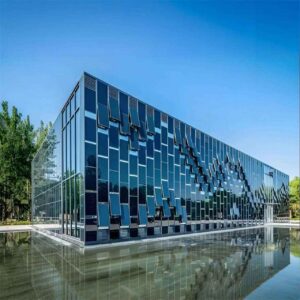
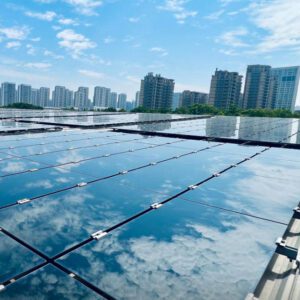
 BIPV glass facades on commercial buildings like this one in Europe generated measurable performance data during the 2020–2022 pilot era.
Notable Pilot Installations Worldwide
In Europe, the Netherlands became an early leader in BIPV glass deployment, partly due to Physee’s presence and active government support through the Dutch climate agreement. The company’s PowerWindow product was installed in the headquarters of BankGiro Loterij in Amsterdam — a commercially visible installation that generated approximately 50 kWh per square meter annually under Dutch irradiance conditions.
Germany’s Fraunhofer ISE oversaw multiple facade BIPV test installations across this period, collecting granular performance data that revealed important findings: south-facing facades with optimal tilt generated 65–75% of the energy output of equivalent horizontal rooftop installations, while east/west facades generated 45–55% — figures that matter significantly for ROI modeling in different building orientations.
In North America, the U.S. Department of Energy’s Solar Energy Technologies Office funded multiple BIPV glass demonstration projects under the SunShot and subsequent SETO programs. A notable pilot at a commercial building in Phoenix, Arizona, demonstrated that semi-transparent solar glass (35% AVT, ~12% PCE) on a south-facing curtain wall reduced cooling loads by 18% compared to conventional low-e glass — a dual benefit that improved the overall energy economics considerably.
In Asia-Pacific, China accelerated BIPV pilots as part of its 14th Five-Year Plan (2021–2025) targets for distributed solar. SP Group completed a 4 MWp BIPV project in Guangdong in October 2023, with the system generating 4.36 million kWh annually under a “surplus-to-grid” model. Projected over 25 years, the installation is expected to produce 110 million kWh of clean energy, reduce coal use by 1,600 tons, and cut carbon emissions by approximately 4,500 tons per year — concrete figures that give distributors in Asian markets real-world benchmarks to present to building developers.
Performance Data from Real Installations
The pilot era produced the following key empirical learnings that are now standard reference points for commercial BIPV glass specifications:
- South-facing facades at 30–45° latitude generated 100–130 kWh/m²/year under typical European irradiance.
- In high-irradiance regions (Arizona, UAE, Southern China), the same specifications yielded 150–200 kWh/m²/year.
- Building energy models incorporating semi-transparent solar glass reported 10–18% reductions in cooling energy demand, improving whole-building energy performance certificates.
- Installation complexity — particularly electrical integration with building management systems — added 15–25% to project costs versus initial estimates in early pilot phases, informing revised pricing models going forward.
- Customer satisfaction scores from pilot building occupants showed 87% approval ratings for light quality in spaces using semi-transparent BIPV glass at 40–55% AVT, versus 94% for conventional glazing — a manageable gap that closed further with product optimization.
6. The Manufacturing Scale-Up (2022–2024): Production Capacity Expansion
From Prototype to Production Lines
The gap between a successful pilot installation and a product that can be reliably delivered at scale is where many promising technologies falter. Solar window manufacturers recognized this challenge and invested heavily in industrial-scale production facilities, supply chain integration, and quality standardization between 2022 and 2024.
Production Facility Developments
Oxford PV’s Brandenburg, Germany facility — the world’s first dedicated perovskite-on-silicon tandem cell production line — reached initial production capacity in 2023, with annual output targeting gigawatt-scale expansion. This facility is significant not because it exclusively produces transparent products, but because it validates the industrial manufacturability of perovskite-based technology.
Solarstone launched a dedicated BIPV manufacturing facility in Estonia in October 2023, capable of producing 60 MW of integrated solar panels annually, assembling approximately 13,000 panels per month — sufficient to equip roughly 6,000 homes with 10 kW solar roof systems per year.
Swiss startup Climacy introduced two landmark products in this manufacturing scale-up era: the Smart Solar Roof (December 2023) featuring 430 W TOPCon double-glass frameless panels at 22.5% efficiency, and the CLI400M10 (January 2025), a 400 W semi-transparent glass-glass BIPV panel with 17.25% efficiency and 20% transparency specifically designed for facades and roof applications.
In China — which has emerged as the world’s largest BIPV manufacturing hub — production capacity for photovoltaic glass expanded dramatically, with several Tier-1 glass manufacturers integrating solar coating lines into existing float glass facilities. This approach dramatically reduced capital costs per unit area compared to greenfield solar-specific facilities.
Supply Chain and Distribution Network Evolution
The raw material supply chain for solar windows is more complex than for conventional silicon panels, requiring coordinated sourcing of specialty glass substrates, transparent conductive oxides (typically indium tin oxide or newer alternatives), photovoltaic active materials, encapsulants, and lamination films. Between 2022 and 2024, most leading manufacturers completed vertical integration initiatives to secure critical material flows.
For distributors, the most important supply chain development was the emergence of regional distribution hubs — particularly in Europe (Germany, Netherlands, Poland), Southeast Asia (Singapore, Vietnam), and North America (Texas, Ontario) — that reduced lead times from manufacturer-to-project from 16–24 weeks to 6–10 weeks for standard specifications.
Industry Insight: Distributors planning to carry BIPV glass inventory should understand that unlike conventional panels, most solar window products are partially customized (specific sizes, transparency levels, color tints) for each project. Maintaining a sample library rather than a large standard inventory, combined with firm lead-time commitments from 2–3 qualified manufacturers, is the practical inventory strategy adopted by leading BIPV glass distributors in Europe and China.
7. The Regulatory and Standards Framework (2020–2024): Creating Market Conditions
Building Codes and Certification Requirements
Technology readiness and market readiness are two different things. A product can perform brilliantly in testing but face complete market rejection if it lacks the certifications required by building codes, insurance underwriters, or procurement guidelines. Between 2020 and 2024, the regulatory infrastructure for solar windows made substantial — though still incomplete — progress.
International Standards Development
The key standards framework for BIPV glass operates across three dimensions:
Solar performance standards: IEC 61215-1 (design qualification for crystalline silicon) and IEC 61215-2 (thin film) cover basic photovoltaic performance testing. BIPV-specific standards under IEC 63092 (formerly IEC 62987) address the dual role of BIPV products as both building elements and power generators — this standard reached finalization in 2021 and has become the baseline certification requirement in most regulated markets.
Architectural glass standards: EN 12150 (thermally toughened glass), EN 14449 (laminated safety glass), and EN ISO 9050 (solar transmittance, reflectance, and UV transmittance) apply to the glass dimension of solar windows. Products must meet both solar and glass standards, which requires testing at both PV-specialized and glass-specialized certification labs.
Electrical safety standards: IEC 62109 (safety of power converters) and regional electrical codes (NEC in the USA, BS 7671 in the UK) govern the electrical integration of BIPV systems into building power infrastructure.
Government Incentives and Policy Support
The policy landscape has evolved significantly and now provides meaningful financial support in most major markets:
In the United States, the Inflation Reduction Act (2022) extended and expanded the Investment Tax Credit (ITC) for commercial solar installations to 30%, with additional bonus credits of 10% for domestic content and 10% for energy communities — applicable to BIPV installations. New York’s Local Laws 92 and 94 mandate sustainable roofing for large commercial buildings, creating direct demand for BIPV solutions.
In Europe, France introduced specific BIPV incentive provisions in 2022, including a feed-in tariff bonus for landscape-integrated BIPV systems meeting specific architectural criteria. Germany’s Building Energy Act (GEG) and the EU’s Energy Performance of Buildings Directive (EPBD) revisions create regulatory demand for solar integration in new construction.
In China, South Korea’s MOTIE allocated USD 185.5 million for renewable energy rebates in 2023, with BIPV system rebates increased to 15% — a direct policy signal that meaningfully accelerated commercial project economics.
Green Building Certification Integration
LEED (Leadership in Energy and Environmental Design) and BREEAM (Building Research Establishment Environmental Assessment Method) are the two dominant global green building certification frameworks, and both have incorporated provisions that reward BIPV glass integration. LEED v4.1 credits for Optimize Energy Performance, Renewable Energy Production, and Daylight all align with solar window installation benefits. BREEAM’s Energy category similarly credits on-site renewable generation and daylighting optimization.
For distributors, the green building certification link is commercially significant: commercial real estate developers pursuing LEED Gold or Platinum certification — now a standard requirement for Class-A office buildings in most major cities — are active and motivated buyers of BIPV solutions.
8. The Current Market Position (2024): Near-Commercial Availability
Where Solar Window Technology Stands Today
As of 2024–2025, solar window technology has crossed the threshold from “promising prototype” to “early commercial product” in several technology streams and geographic markets. This is the market reality that distributors and agents need to navigate with precision.

BIPV Global Market Snapshot (2024–2025)
| Metric | Value | المصدر |
|---|---|---|
| Global BIPV Market Size (2025) | USD 23.41 billion | Fortune Business Insights |
| BIPV Glass Market Size (2024) | USD 7.21 billion | MRFR |
| Transparent Solar Panels Market (2024) | USD 1.82 billion | WiseGuy Reports |
| CAGR (BIPV Glass, 2024–2034) | 21.88% | MRFR |
| Europe Market Share (2025) | 41.80% | Fortune Business Insights |
| Asia-Pacific Market Share (2025) | 29.96% | Fortune Business Insights |
| Commercial Segment Share (2024) | 55.88% | Fortune Business Insights |
Commercial Products Currently Available
The commercially available product landscape in 2024–2025 includes:
Fully transparent products (>70% AVT, 1–5% PCE): Primarily from Ubiquitous Energy (ClearView Power™) and limited offerings from Physee. These products are commercially available in North America and Europe for office, retail, and hospitality applications where visual transparency is paramount.
Semi-transparent products (30–60% AVT, 8–15% PCE): The most commercially mature category, available from multiple manufacturers including Polysolar, Onyx Solar, and several Chinese manufacturers. Prices range from approximately €200–625/m² (USD 220–690/m²) depending on technology, efficiency, and customization requirements.
Colored BIPV glass (architectural color, varied PCE): Products integrating color tinting for architectural effect while generating power, available from several European and Chinese manufacturers with customization options for logos, patterns, and specific hues.
Opaque spandrel BIPV panels (used in facade areas with no transparency requirement): The most cost-competitive category, approaching price parity with conventional premium cladding materials in high-volume applications.
Market Readiness Assessment
| العامل | Status | Implication for Distributors |
|---|---|---|
| Technology Readiness | Levels 7–9 (commercial deployment) | Products available; select partners carefully |
| Cost Competitiveness | Approaching parity with premium facades | ROI models now viable for commercial projects |
| Supply Chain | Regional hubs established | 6–10 week lead times achievable |
| Regulatory Framework | ~75% complete in major markets | Verify local certifications before committing |
| Customer Demand | Early adopters + sustainability mandates | Architect and developer channel most active |
| Barriers Remaining | High upfront cost, limited installer base | Training and financing programs critical |
9. The Competitive Landscape: Key Players Driving Innovation
Leading Companies and Their Strategies
Understanding the competitive structure helps distributors evaluate partnership quality, product longevity, and market positioning. Companies that جيا ماو BIPV works alongside in the BIPV ecosystem range from pure technology innovators to glass manufacturing giants — each occupying a distinct position in the value chain.
Established Technology Leaders
SolarWindow Technologies (USA) has developed a proprietary organic semiconductor technology for coating windows and glass on large commercial buildings. Their modeling demonstrates that when applied to all four sides of a 50-story commercial building, the technology can generate more electricity than rooftop panels occupying the building’s footprint — a compelling story for dense urban markets.
Ubiquitous Energy (USA) has arguably made the most progress in achieving true visual transparency. Their ClearView Power™ technology selectively harvests UV and near-infrared light using patented organic solar cell formulations, achieving AVT values above 70% while maintaining measurable power generation. The company has partnerships with major glass fabricators for volume production.
Physee (Netherlands) focuses on dynamic integration with building energy management systems, positioning solar windows as components of intelligent building platforms rather than standalone products.
Polysolar (UK) specializes in flexible organic photovoltaic glass, enabling curved and non-planar facade applications that conventional rigid PV glass cannot address.
Oxford PV (UK) represents the high-efficiency end of the market. Their January 2024 world record of 28.6% for a perovskite-silicon tandem panel — and their commercially focused 25%+ efficiency products from the Brandenburg facility — set the efficiency benchmark that all other approaches are measured against.
Building Material and Glass Manufacturers
AGC Inc. and Saint-Gobain are the most commercially significant glass manufacturers in the BIPV space. AGC and Saint-Gobain formally announced a partnership for decarbonizing flat glass manufacturing, with operational integration of new technology expected in H2 2024. Saint-Gobain’s extensive global distribution network — covering 170+ countries — gives their BIPV glass products an immediate channel advantage that pure-play solar window startups cannot match.
Guardian Industries and Corning are also active, primarily through strategic R&D investments and material supply rather than finished product commercialization.
Emerging Innovators and Regional Leaders
Several university spin-offs and funded startups are advancing next-generation approaches:
- Quantum dot companies pursuing solution-processable transparent cells at sub-$50/m² target costs
- Chinese BIPV glass manufacturers (multiple Tier-1 and Tier-2 players) competing aggressively on price for semi-transparent and opaque BIPV modules
- Regional specialists in Australia, South Korea, and India serving domestic market requirements with locally certified products
10. The Future Roadmap (2024–2030): Projected Developments and Market Opportunities
What’s Coming Next: Technology and Market Evolution
Watch this video for a comprehensive overview of where solar window technology is heading and why 2025–2030 represents the critical commercial window for distributors to establish market position:
▶ This NEW Solar Panel Window Hits Record Efficiency — A recent transparent tandem solar cell hit 12.3% efficiency with 30% transparency, signaling the pace of innovation ahead.
Expected Technology Improvements
The transparent tandem solar cell efficiency record reached 12.3% PCE at 30% transparency in March 2025 (PV Magazine), achieved by combining perovskite and organic layers in a tandem configuration. This result — published by an international research consortium — demonstrates that the efficiency-transparency tradeoff curve is still moving in favor of better performance on both dimensions simultaneously.
Projected technology milestones through 2030:
- 2025–2026: Semi-transparent perovskite cells reach 18–20% PCE at 30% AVT in commercial prototypes; first cost parity with premium glazing for semi-transparent products in high-irradiance markets.
- 2027–2028: Fully transparent products (>70% AVT) cross 8% PCE commercially; smart glass integration becomes standard rather than premium.
- 2029–2030: Perovskite stability challenges largely resolved through encapsulation advances; 25-year warranties become industry standard for perovskite BIPV glass.
Market Growth Projections and Opportunities
The addressable market for distributors is not uniform across regions or building types. The following breakdown provides a strategic prioritization framework:
| Market Segment | 2025 Status | 2030 Opportunity | Priority for Distributors |
|---|---|---|---|
| Commercial Office (facade) | Early adoption | High volume | عالية |
| Commercial Retail / Hospitality | Pilot stage | Growing | Medium-High |
| Industrial Buildings | Emerging | Significant | عالية |
| Residential (roof) | Limited | Growing | Medium |
| Infrastructure (noise barriers, canopies) | Niche | Expanding | Medium |
Preparation Strategies for Distributors and Agents
The market opportunity is real, but capturing it requires deliberate preparation. The distributors who will lead this market in 2027–2030 are making specific investments today:
Building technical expertise: Successful BIPV glass distributors employ or contract at least one technically trained person who understands PV performance specifications, architectural glass standards, electrical integration requirements, and ROI modeling. Without this capability, customer conversations stall at the “interesting technology” stage and never convert to orders.
Developing customer education programs: The end customers — building developers, architects, facility managers, and construction contractors — are generally not yet fluent in BIPV glass specifications. Distributors who invest in clear, non-technical customer education materials (comparison tables, site-specific ROI calculators, sample kits) consistently report shorter sales cycles and higher close rates.
Creating supply chain redundancy: Given lead times of 6–10 weeks for standard products and 12–16 weeks for custom specifications, distributors should qualify 2–3 manufacturers across different technology types to ensure project delivery reliability.
Marketing strategies for emerging technology adoption: Social proof is disproportionately important in emerging technology markets. Investing in case study documentation from early pilot installations — even at reduced margins — creates the reference portfolio that accelerates subsequent sales.
At جيا ماو BIPV, the approach has always been grounded in this principle: distributors and agents who understand the full technology narrative — from lab to commercial deployment — become trusted advisors rather than commodity suppliers. The difference compounds over time as the market grows.
BIPV Technology Ecosystem: Key Metrics at a Glance

Global BIPV Market Growth Projection
Market Size (USD Billion)
$85.9B ┤ ████
│ ████████
$60B ┤ ████████████
│ ████████████████
$40B ┤ ████████████████████████
│ ████████████████████████████
$23.4B ┤ ██████████████████████████████████████
│ █████████████████████████████████████████████
$10B ┤ ██████████████████████████████████████████████████
└──────────────────────────────────────────────────────
2025 2026 2027 2028 2029 2030 2031 2034
Regional BIPV Market Share (2025)
| Region | Market Size (2025) | شارك |
|---|---|---|
| Europe | USD 9.78 billion | 41.80% |
| Asia-Pacific | USD 7.01 billion | 29.96% |
| North America | USD 4.65 billion | 19.87% |
| Rest of World | USD 1.97 billion | 8.37% |
Positioning Your Business for the Solar Window Revolution
The journey from concept to commercial reality has taken more than two decades, but solar window technology is definitively past the theoretical stage. With a global BIPV market approaching USD 85.9 billion by 2034, efficiency records being broken in 2025, and major glass manufacturers deploying industrial production capacity, the question for distributors is no longer whether this market will materialize — it is who will capture it.
The companies that led the conventional solar panel distribution market in 2010 were not the ones who waited until 2015 to start building supplier relationships and technical competency. The same logic applies here. The distributors, agents, and construction partners who begin building BIPV glass expertise, supplier networks, and customer education capabilities in 2025–2026 will have structural advantages that later entrants cannot easily overcome.
For more information on sourcing BIPV glass products, technical specifications, and distribution partnership programs, visit Jia Mao Bipv’s product page or explore our comprehensive BIPV blog for distributor resources, market analysis, and product guides. You can also review BIPV vs. traditional solar panel comparisons و top BIPV products with installation guides to sharpen your product knowledge.
For broader industry context, reference resources from the IEA PVPS Task 15 on BIPV, the U.S. Department of Energy’s BIPV resources, and the U.S. Green Building Council’s LEED framework to support customer conversations around green building certification.
Call-to-Action
Ready to capitalize on the solar window revolution?
Contact the جيا ماو BIPV team to access detailed product comparisons, supplier specifications, margin structures, and customer qualification frameworks for the BIPV glass market. Our specialists work exclusively with distributors, agents, and construction partners — not retail customers — and can develop a customized BIPV glass product strategy tailored to your target markets and project pipeline.
📞 واتساب: +86 18321592370 | ✉️ in**@********ch.com
Frequently Asked Questions: Solar Window Technology for Distributors and Agents
1. What exactly is solar window technology, and how does it differ from traditional rooftop solar panels?
Solar window technology, formally classified as building-integrated photovoltaics (BIPV) for glazing applications, converts window glass into functional electricity generators while maintaining varying degrees of transparency. Unlike rooftop panels — which are added on top of existing structures and occupy dedicated space — solar windows replace conventional architectural glass in facades, skylights, and curtain walls. The fundamental difference is dual functionality: solar windows generate power و serve as the building envelope simultaneously, creating value in both dimensions. This makes them particularly compelling for urban commercial buildings with limited or inaccessible rooftops, where facade area often vastly exceeds available roof space.
2. What are the current efficiency rates of commercial solar windows, and how should distributors frame this for customers?
Current commercial solar windows achieve 5–15% PCE (Power Conversion Efficiency), compared to 18–22% for standard monocrystalline silicon rooftop panels. However, this direct comparison is commercially misleading and distributors should avoid making it. The relevant metrics are: (a) energy generated per euro of total project cost, amortized over the product’s 25–30 year lifespan; (b) the avoided cost of conventional glazing that solar windows replace; and (c) the additional building energy benefits, such as the 10–18% cooling load reductions documented in real-world pilot projects. When all three factors are included, the economics of semi-transparent BIPV glass in commercial facade applications are competitive with conventional premium glazing in most major markets.
3. Which companies currently offer solar window products ready for commercial distribution?
The commercially active landscape includes Ubiquitous Energy (ClearView Power™, true transparency focus, North America/Europe), Polysolar (organic PV glass, flexible applications, UK/Europe), Onyx Solar (PV glass facades and skylights, globally), Physee (smart glass integration, Netherlands/Europe), and multiple Chinese manufacturers offering semi-transparent and tinted BIPV glass at competitive price points. For Tier-1 glass volume, AGC and Saint-Gobain are developing BIPV glass product lines with their established distribution networks. Availability, certifications, and minimum order quantities vary significantly by region; distributors should verify regional product availability before marketing commitments.
4. What are the typical cost ranges for solar window installations, and how quickly do they achieve ROI?
BIPV glass products currently range from approximately €200–625/m² (USD 220–690/m²) depending on technology type, transparency level, efficiency rating, and customization requirements. Installation costs add an additional 20–35% depending on building complexity and electrical integration requirements. ROI timelines are heavily context-dependent: in high-electricity-cost regions (Northern Europe, Australia, Japan) combined with meaningful government incentives, commercial facade BIPV projects achieve ROI in 8–12 years. In premium buildings where BIPV glass replaces high-specification architectural glazing that itself costs €150–300/m², the incremental payback period can compress to 5–7 years. Distributors should develop region-specific, building-type-specific ROI models rather than citing generic payback periods.
5. What building codes and certifications do solar windows need to meet before installation?
Solar windows must satisfy requirements across three domains simultaneously. On the photovoltaic side, IEC 63092 (the BIPV-specific standard) and relevant performance standards (IEC 61215 or IEC 61646) are required. On the architectural glass side, EN 12150 (toughened glass), EN 14449 (laminated safety glass), and ISO 9050 (solar optical properties) apply in most markets. On the electrical integration side, regional electrical codes and IEC 62109 (power converter safety) apply. Additionally, products incorporated into LEED or BREEAM certified projects must document compliance with the specific credit requirements of those programs. Distributors should maintain current certification documentation from all supplier partners and verify that certifications are valid for their specific target markets.
6. Are there government incentives or subsidies available for solar window installations?
Yes, and the incentive landscape has strengthened significantly since 2022. In the United States, the Inflation Reduction Act provides a 30% Investment Tax Credit for commercial BIPV installations, with bonus credits bringing the effective rate to 40–50% in qualifying circumstances. In Europe, France has specific BIPV feed-in tariff bonuses for landscape-integrated installations, Germany’s climate programs support BIPV through multiple mechanisms, and South Korea increased BIPV rebates to 15% of installation cost in 2023. China, Japan, and the UAE have active programs. Distributors who maintain current knowledge of local incentive programs and can help customers navigate applications consistently close more deals — this is a genuine competitive differentiator, not a background detail.
7. How do solar windows perform in cloudy climates or regions with limited sunlight?
Solar windows generate electricity from both direct and diffuse sunlight, making them functional — though less productive — in cloudy climates. Performance studies from Northern European installations show that semi-transparent BIPV glass in northern Germany or the Netherlands generates approximately 100–120 kWh/m²/year compared to 150–180 kWh/m²/year in Southern Europe. This 40–50% reduction does not eliminate commercial viability in cloudy markets, particularly when high local electricity prices (which are especially prevalent in northern Europe) and strong government incentives are factored in. Distributors in cloud-prone regions should emphasize the cooling load reduction benefits — which persist regardless of direct irradiance — and the green building certification value.
8. What is the lifespan and warranty coverage for commercial solar window products?
Most commercially available BIPV glass products carry performance warranties of 25–30 years, guaranteeing 80–85% of rated power output after 25 years — a warranty structure identical to conventional silicon panel industry standards. Physical lifespans of 30–40 years are achievable with appropriate encapsulation. Distributors should scrutinize warranty terms carefully: coverage for manufacturing defects, environmental damage (hail, storm), discoloration, and labor costs varies significantly between manufacturers. Perovskite-based products currently carry shorter or more conditional warranties than thin-film or crystalline silicon BIPV glass, reflecting the technology’s earlier commercial maturity stage. The warranty terms that a manufacturer offers — and the financial strength to stand behind them — are among the most important due diligence criteria for long-term distribution partnerships.
9. How do solar windows integrate with building energy management systems and smart building technologies?
Advanced BIPV glass systems can integrate with Building Management Systems (BMS) via standard communication protocols (BACnet, Modbus, KNX) to provide real-time power generation monitoring, predictive maintenance alerts, and optimization data for whole-building energy management. Some products — particularly Physee’s offering and comparable smart glass solutions — incorporate dynamic electrochromic capabilities, adjusting transparency in response to sunlight intensity, occupancy, and time-of-day signals. Integration with energy storage systems (building-scale battery installations) enables solar window output to be stored and dispatched according to grid price signals, improving overall project economics. Distributors should understand these integration capabilities to position solar windows as components of comprehensive smart building solutions rather than standalone products.
10. What are the main barriers to widespread solar window adoption, and when will they be resolved?
The primary barriers are higher upfront costs versus conventional glazing, limited installer expertise, incomplete regulatory frameworks in some markets, and customer awareness gaps. Cost reduction is progressing rapidly: experts project price parity with premium architectural glazing for semi-transparent BIPV glass by 2026–2028 as manufacturing scales. Installer expertise is being addressed through manufacturer training programs, with leading companies offering certified installation partner networks. Regulatory completion is advancing — the IEC 63092 BIPV standard being finalized and adopted provides a consistent framework. Customer awareness is the most tractable barrier and the one where distributors can have the greatest impact through proactive education. Taken together, these barriers suggest that the 2025–2028 period is the optimal time to build distribution capabilities — before the market becomes fully mainstream.
11. How should distributors position solar windows in their product portfolios alongside traditional solar solutions?
Solar windows and rooftop panels are complementary rather than competitive technologies. Rooftop panels maximize energy generation per unit cost on available horizontal surfaces. Solar windows generate additional energy from vertical facade surfaces while replacing conventional glazing and providing aesthetic, cooling, and green certification benefits. The most effective distributor positioning is as a comprehensive building energy solution provider that selects the optimal combination of technologies — rooftop panels, BIPV roofing, and BIPV glass — based on each building’s specific geometry, orientation, energy profile, and regulatory context. This solution-selling approach commands higher margins and stronger customer relationships than single-technology distribution.
12. What technical training and certifications should distributors pursue to effectively sell solar window products?
Distributors should pursue training across four domains: (1) PV technology fundamentals including efficiency measurement, spectral performance, and degradation mechanisms; (2) architectural glass standards including safety requirements, thermal performance, and acoustic properties; (3) electrical integration including grid connection, inverter selection, and monitoring systems; and (4) building energy modeling including BIPV contribution to overall building energy balance. Manufacturer-specific certifications are essential for representing specific product lines. For market positioning, certification from BIPV-focused programs offered by institutions such as the Fraunhofer ISE or the IEA PVPS network provides credible third-party validation of technical competence.
13. What are the environmental and sustainability credentials of solar window technology?
BIPV glass delivers measurable environmental performance across multiple dimensions. A well-documented lifecycle assessment by Fraunhofer ISE found that semi-transparent BIPV glass achieves energy payback — the time required to generate as much energy as was consumed in its manufacture — in approximately 2.5–4 years, leaving 21–27 years of net clean energy generation within a standard warranty period. Buildings incorporating BIPV glass facades typically reduce operational carbon emissions by 10–30% compared to equivalent conventional glazing. The avoidance of dedicated land use for solar generation is an increasingly important credential as land scarcity for utility solar becomes a policy concern in Europe and dense Asian markets. These environmental credentials are directly relevant to corporate ESG programs, which are now a primary procurement driver for Class-A commercial real estate.
14. How do aesthetic considerations and design customization impact solar window marketability?
Design flexibility is one of the most strategically important competitive advantages of solar windows over rooftop panels, and it is frequently underemphasized by technically focused distributors. BIPV glass is available in multiple colors (from neutral grey to blue, green, and custom architectural hues), transparency levels, panel sizes, and surface textures. Several manufacturers offer customization options including building-specific logo integration and pattern etching — capabilities that are completely impossible with conventional rooftop panels. For premium commercial buildings, hospitality projects, and public infrastructure where architectural aesthetics are a primary decision criterion, these customization capabilities transform the customer conversation from “functional add-on” to “integral architectural element.” Distributors serving the architecture and design community should invest in high-quality physical sample libraries and visualization tools that allow specifiers to evaluate aesthetic options before committing to specifications.
15. What due diligence should distributors conduct before partnering with solar window manufacturers?
A robust due diligence process for BIPV glass manufacturer partnerships should evaluate eight dimensions: (1) technology maturity — what is the TRL level and what certifications has the product achieved?; (2) financial stability — is the company adequately funded for the long-term warranty commitments it makes?; (3) production capacity — can they reliably fulfill project volumes within required lead times?; (4) certification coverage — are the certifications valid in your target markets and building code jurisdictions?; (5) supply chain resilience — are critical materials and processes secure against disruption?; (6) technical support infrastructure — is there accessible expert support for installation and troubleshooting questions?; (7) IP position — does the company have defensible technology protection against competitive copying?; and (8) warranty terms — are warranty coverage, claims processes, and financial backing clearly defined and practically enforceable? Distributors who conduct this diligence systematically before formalizing partnerships protect both their business and their customers.
This article was produced with reference to data from Fortune Business Insights, Market Research Future, Grand View Research, BCC Research, PV Magazine, and direct technical publications from IEA-PVPS, Fraunhofer ISE, and MDPI Energy. Market projections are based on published research as of 2025 and are subject to revision as technology development and policy environments evolve.