Stop wasting time chasing the wrong solar prospects. Learn exactly which customer segments are most profitable for your business, what keeps them awake at night, and precisely how to position your solar solutions to close more deals faster.
 The distributors closing the most solar deals in 2025 aren’t the ones with the best products — they’re the ones who understand exactly who they’re selling to.
Here’s a question worth sitting with for a moment: of all the deals your team worked last quarter, how many were lost not because your pricing was wrong or your product was inferior — but because your pitch was built for a different buyer than the one sitting across from you?
In the solar distribution business, this happens constantly. A presentation built around monthly bill savings falls flat with a CFO who’s thinking about CAPEX schedules and board approvals. An ROI spreadsheet designed for a commercial enterprise lands in front of a homeowner who just wants to know if the panels will damage their roof. A pitch leading with environmental benefits is delivered to a small business owner whose only burning question is whether installation will shut down his warehouse for a week.
The result is the same every time: a stalled deal, a lost commission, and a prospect who buys from a competitor who happened to speak their language.
This article is a practical working tool. It decodes the three core solar customer segments — residential homeowners, small business owners, and commercial enterprises — from the perspective of distributors and agents who are responsible for moving product and generating revenue. You’ll get a clear picture of who each buyer actually is, what they’re genuinely worried about, how long they take to make decisions, and what messaging closes deals versus what messaging kills them.
The Real Problem You’re Facing: Why Generic Solar Pitches Don’t Close Sales
You’re Probably Losing Deals Because You’re Treating All Solar Prospects the Same:
Walk into any solar distribution team’s weekly meeting and you’ll hear a version of the same complaint: “The lead was interested, we had the right price, and then they just went quiet.” What usually doesn’t get said — because it’s harder to diagnose — is that the prospect went quiet because they felt the distributor didn’t actually understand their situation.
Generic solar pitching — “you’ll save money, it’s good for the environment, our panels last 25 years” — is the distribution equivalent of sending the same mass email to a commercial developer, a restaurant owner, and a suburban homeowner, and expecting all three to call back equally enthusiastic. They won’t. Because their concerns, their decision-making processes, and their definitions of “value” have almost nothing in common.
The Cost of Misidentifying Your Ideal Customer:
The financial cost of persona misalignment is quantifiable. If a commercial deal takes 18 months to close and requires 40 hours of sales effort, and your win rate in that segment is 12%, your cost-per-acquisition is dramatically higher than if you’re closing residential deals in 4 months at a 35% win rate. The math alone should drive segment selection — but most distributors are not running these numbers.
Beyond the direct cost, there’s the opportunity cost: every hour spent pursuing a segment where your win rate is low is an hour not spent deepening relationships in the segment where you genuinely have an advantage. Over a full year, that gap compounds into the difference between a growing pipeline and a stagnant one.
The Data-Driven Approach to Customer Segmentation:
According to Aurora Solar’s buyer research, solar customers cluster into distinct behavioral types — the Cost Saver, the Lifelong Learner, the Early Adopter, the Pragmatist — and each type requires a fundamentally different sales approach. The top-performing distributors in competitive markets are not the ones with the largest product catalog or the most aggressive pricing. They’re the ones who have mapped their sales team’s capabilities and their market’s customer profile to a deliberate segment strategy, then built their messaging, collateral, and follow-up processes around it.
Why Your Competitors Are Already Winning With Targeted Strategies:
The commercial solar segment grew 6% in 2025 while the residential segment actually declined 2% year-on-year in the US, according to SEIA’s 2025 annual report. Q3 2025 saw commercial solar set a second-quarter record, growing 27% compared to Q2 2024. Distributors who identified this shift 12–18 months ago and pivoted their approach toward commercial and C&I (commercial and industrial) buyers are now sitting on pipelines their competitors are scrambling to match. The market signals were visible — but only to those who were paying attention to segment-level data, not just aggregate solar market growth figures.
Residential Homeowners: The Largest Market (But Not Always the Easiest)
 Residential solar is the highest-volume segment — but also the most psychologically complex sale in the distributor’s portfolio.
Who They Really Are: The Complete Residential Homeowner Profile:
The residential solar buyer is not a single archetype. In practice, they split into two meaningfully different groups that require different approaches: early adopters and mainstream homeowners.
Early adopters represent roughly the first 15–20% of solar penetration in any given neighborhood. They track their utility bills obsessively, follow energy news, and often know more about panel efficiency ratings than your sales team does. They’ve already researched three competitors before your first conversation. They need technical accuracy and product transparency more than they need persuasion.
Mainstream homeowners are the larger and more commercially significant group. They became interested in solar because their neighbor got panels, or their utility bill crossed a psychological pain threshold, or they saw an ad at the right moment. They are genuinely interested but deeply uncertain. The combination of a large upfront purchase, a roofing modification to their most valuable asset, and 25-year warranty claims they can’t verify creates significant friction.
In terms of profile: the most active residential solar buyers in developed markets own homes valued between $350,000 and $800,000, carry moderate-to-high energy bills (typically $150–$300/month or more before solar), and are homeowners (not renters) in markets with credible solar incentive structures. In Southeast Asia and emerging markets, the profile shifts toward higher-income urban and peri-urban homeowners in countries where grid reliability is inconsistent — where solar is as much about energy security as it is about savings.
Their Deepest Pain Points and Objections:
The upfront cost is the most visible objection — but it’s rarely the real one. What’s actually happening when a homeowner says “it’s too expensive” is often a combination of three underlying concerns: they don’t fully believe the payback calculations they’ve been shown, they’re not sure who to trust in an industry with well-documented predatory sales practices, and they’re anxious about what happens if something goes wrong with either the installation or the company that sold it to them.
The concern about contractor quality is consistently underestimated by distributors. A homeowner is inviting a work crew to drill into their roof — the second-largest asset most families own. Stories of botched installations, voided roof warranties, and fly-by-night solar companies that disappeared after taking deposits are not fringe concerns. They circulate through neighborhood Facebook groups, HOA meetings, and family conversations. Any distributor who doesn’t address this directly and proactively is leaving it to the prospect’s imagination.
Their Decision-Making Timeline: How Long It Really Takes:
The residential solar decision typically unfolds over 3–6 months. Here’s what actually happens during that window, and it matters for how you structure follow-up.
During the first month, most prospects are in passive research mode — watching YouTube videos, checking review sites, asking neighbors. They’re not ready to talk to a salesperson; they’re building a mental framework. The second and third months typically involve active comparison — requesting quotes, reading contracts they don’t fully understand, and having the “should we really do this?” conversation with their spouse or partner.
The spouse or partner dimension is chronically underserved in solar sales. Research consistently shows that major household financial decisions — which a $15,000–$30,000 solar installation clearly qualifies as — require alignment between both partners. Distributors who present only to one person in a two-adult household are setting themselves up for a “I need to talk to my wife/husband” stall that becomes a dead deal. The fix is simple: make both decision-makers part of the conversation from the first meeting.
Urgency triggers that genuinely accelerate the timeline include: a utility rate increase announcement, a neighbor completing an installation, expiration of an incentive program, or a home renovation project that makes roof access convenient anyway. Generic urgency manufacturing (“this offer expires Friday”) is recognized immediately by experienced homeowners and destroys the trust you’ve been building.
Messaging That Actually Resonates With Homeowners:
Lead with the monthly bill impact in dollar terms — not percentages, not kilowatt hours, dollars. “Your current bill is $220/month. After solar, similar homes in your neighborhood average $18–$35/month” is something they can feel immediately. “You’ll offset 85% of your energy consumption” requires mental arithmetic that loses them before the value lands.
Environmental impact messaging works for early adopters and a specific segment of values-driven buyers. It does not work as the primary message for mainstream homeowners, and leading with it in markets where price pressure is high actively signals that you’re either naive about their priorities or running a different agenda. Mention it when it’s relevant; don’t lead with it.
Social proof — specifically, local social proof — is the most powerful conversion tool available. A homeowner in Jakarta is more persuaded by “17 families in this district installed our system in the past 8 months” than by any global case study. Photos of completed installations on homes that look similar to theirs, reviews from customers whose names and neighborhoods they can verify, and references they can actually call are worth more than any product specification sheet.
How to Position Your Solar Products and Services to This Segment:
Financing structures are the single most powerful deal-enabler for the residential segment. A homeowner who can’t comfortably write a $20,000 check can often commit to a $180/month loan payment — especially when their current bill is $220. The distributor who brings financing options to the table, whether through manufacturer partners, third-party lenders, or government scheme facilitation, is removing the primary barrier to purchase.
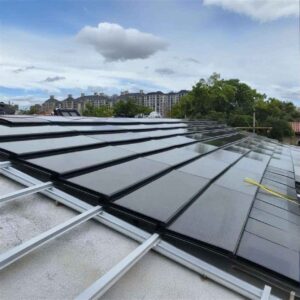
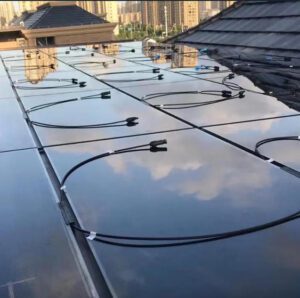
For BIPV-focused distributors, products like the solar roof tiles from Jia Mao BIPV sit at a compelling intersection for the premium residential market: they replace conventional roof materials entirely, generate electricity, and are indistinguishable from conventional roofing to a street-level observer — which matters significantly in neighborhoods with strict aesthetic standards or HOA restrictions. For premium residential buyers, this combination of aesthetics and function justifies a price point well above conventional panel installations.
Small Business Owners: The Underserved Goldmine
 Small business owners make faster decisions than commercial enterprises and pay better margins than residential — making them the most underserved profit opportunity in solar distribution.
Who They Are: Defining the Small Business Solar Buyer:
The small business solar buyer is typically an owner-operator or majority owner of a business generating $2M–$20M in annual revenue, with a facility they either own or lease on a long-term basis. The industries where solar economics are most compelling are those with high daytime energy consumption: food and beverage processing, light manufacturing, retail with significant refrigeration or HVAC loads, logistics and warehousing, and agricultural operations.
Industries that are less compelling targets include highly seasonal businesses with mismatched consumption profiles, businesses in leased facilities with short remaining terms, and operations where landlord relationships or building structure make installation impractical.
The critical insight about decision-making authority in small businesses: it varies dramatically. In a sole proprietorship, the owner decides — and they decide relatively fast. In a family business, there may be two or three stakeholders with meaningful influence who don’t always agree. In a small business with an outside accountant or financial advisor, that advisor has enormous gatekeeping authority and needs to be treated as a key influencer, not a background character. Identifying the decision architecture in the first meeting is not optional — it’s the most important intelligence you’ll gather.
Their Specific Pain Points That Differ From Homeowners:
Small business owners are not primarily worried about their monthly energy bill in the way homeowners are. They’re worried about operational continuity. “How long is installation going to take?” and “Will you need to shut anything down?” are the questions that determine whether the conversation continues. A food processing facility that can’t interrupt refrigeration for more than 4 hours, a retail store that can’t close during peak season, or a manufacturing operation running three shifts has a legitimate installation logistics concern that needs to be addressed before any financial discussion is productive.
Permitting and compliance is the second major friction point. Small business owners typically lack in-house expertise for navigating building permits, utility interconnection applications, and commercial electrical inspections. They’ve heard stories of solar installations that dragged on for 9 months in permitting hell before a single panel was installed. Distributors who can demonstrate a track record of managing the permitting process end-to-end — and show a realistic permit-to-energization timeline for their specific jurisdiction — are immediately differentiated from competitors who present only the finished product.
Capital justification is real and shouldn’t be underestimated. Unlike a homeowner making a personal financial decision, a small business owner is accountable to a P&L. The solar investment needs to be defensible — to the accountant, to a business partner, to a bank relationship manager if financing is involved. “It’s good for the environment” is useless in that conversation. A clean financial model showing payback period, IRR, and the interaction with tax incentives is the document that actually moves the deal.
Decision-Making Timelines for Small Business Solar Projects:
Small business deals typically close in 4–8 months, making them faster than commercial enterprise deals but longer than residential. The timeline is primarily controlled by the fiscal year budget cycle. A business owner who needs to allocate capital for a solar installation in Q3 typically needs to have made that decision by Q1 or early Q2 of the same year — which means that sales conversations happening in Q3 are often effectively conversations about the following year’s budget.
Understanding this cycle changes how you manage the pipeline. A prospect who says “we’re interested but not ready to move yet” in September is not a dead lead — they’re a Q1 priority. Distributors who maintain gentle, value-adding contact through the intervening months (sharing a relevant government incentive update, a case study from a similar business, a market rate analysis) arrive at Q1 with a warm relationship, while competitors are starting from cold.
Messaging That Speaks to Business Owners’ Bottom Line:
Frame solar as an operational cost reduction strategy, not an energy product. The language shift matters enormously. “Reduce your energy costs by 35–55%” lands differently than “generate clean electricity.” The first is a P&L improvement; the second is a utility bill conversation they’ve already had with their landlord.
On tax incentives: the US Investment Tax Credit (ITC) currently provides a 30% tax credit for commercial solar installations (stable through 2032), and accelerated depreciation allows businesses to deduct a significant portion of the system cost in Year 1. In 2025, bonus depreciation stands at 40%. These two incentives combined mean that for many profitable small businesses, the effective net cost of a solar installation — after tax benefit realization — can be 45–55% below the gross system price. Presenting this clearly, in a simple one-page financial summary, is the difference between a “we’ll think about it” and a request for proposal.
Competitive advantage is a legitimate secondary motivator for small business buyers in markets where customers are beginning to ask suppliers about sustainability practices. A regional food brand that can credibly claim solar-powered production is differentiating in a way that’s visible to end consumers. A logistics company that offsets its facility energy with solar is strengthening its supply chain sustainability credentials for corporate customers with ESG reporting requirements. These aren’t primary reasons small businesses buy solar — but for the right subset of businesses, they accelerate the decision.
Positioning Strategies That Win Small Business Deals:
Minimal-disruption guarantees need to be specific, not generic. “We’ll work around your schedule” is something every competitor says. “For facilities like yours, our installation team typically completes the rooftop work over two weekends, with electrical connection requiring a 4-hour service interruption during off-peak hours — we’ve done this for three similar manufacturing operations in your area” is a statement that actually reduces anxiety.
Turnkey solutions — where the distributor manages permitting, engineering, utility interconnection, and installation coordination rather than handing the business owner a list of things they need to do — command a premium because they genuinely deliver premium value. Small business owners are already managing dozens of operational priorities; a solar project that requires them to project-manage three different contractors is a reason not to proceed. One point of accountability is worth paying for.
The BIPV installation roadmap resources from Jia Mao BIPV offer exactly this kind of structured, step-by-step guidance that distributors can adapt and present to small business customers as evidence of a managed process — from site assessment through commissioning to grid connection. It transforms an intimidating project into a defined sequence with clear milestones.
Commercial Enterprises: The High-Value, Complex Sale
Who They Are: Understanding the Commercial Buyer Landscape:
The commercial enterprise solar buyer is a fundamentally different animal from the small business owner. We’re talking about companies with energy bills of $500,000 per year or more, multiple facilities across geographies, dedicated energy management or procurement functions, and a decision-making process that involves a committee rather than an individual.
The facility portfolio complexity creates specific needs: a multi-site company doesn’t want a different solar installation company, product brand, and warranty structure for each of its 12 facilities. They want a distributor or integration partner who can provide consistent specifications, unified warranty management, and a single commercial relationship across the portfolio. This is both a technical challenge and a commercial opportunity for distributors who can meet the bar.
The approval hierarchy in commercial enterprise solar typically involves: the facility or operations team (technical qualification), the energy manager or sustainability director (specification and program management), the CFO or VP Finance (financial approval), and sometimes the board (for investments above capital approval thresholds). Missing any of these stakeholders from your relationship map is a way to have a deal killed by someone you never met.
Their Unique Pain Points and Obstacles:
Energy cost management is a board-level concern in any business where energy represents more than 3–5% of operating costs. This includes manufacturers, data centers, cold chain logistics operators, hospitals, and large retail chains. When board members are asking questions about energy cost exposure in an environment of volatile electricity prices, the energy manager’s credibility is tied to having a credible answer. Solar is increasingly part of that answer — not just as a cost reduction but as a hedge against electricity price escalation.
Regulatory and utility interconnection complexity is genuinely daunting at commercial scale. A 2 MW commercial installation involves utility-level interconnection studies, potentially requires upgrades to the local distribution network, and has to navigate local authority regulations, fire code requirements for rooftop access, and structural engineering sign-offs. Distributors who can bring a credible technical team to early-stage conversations — or who are partnered with EPC (Engineering, Procurement, and Construction) firms who can — are immediately differentiated from those presenting a quote sheet.
Extended Decision-Making Timelines and What Drives Them:
Commercial enterprise solar deals take 12–24 months from initial contact to signed contract. This is not inefficiency — it’s the pace of how large organizations evaluate and commit to capital expenditures. Understanding the forces driving this timeline helps distributors work with it rather than against it.
The annual capital budget cycle is the primary constraint. A project that isn’t in next year’s budget by Q4 of this year isn’t happening next year. Procurement for enterprise solar typically involves an RFP (Request for Proposal) process — meaning the deal is being evaluated by a committee, not just a relationship. Board approval thresholds for solar projects vary by company but are often triggered somewhere between $500,000 and $2M in project value. And utility interconnection processes, depending on jurisdiction and project scale, can add 3–9 months of technical timeline to the commercial process regardless of how quickly the business decision is made.
The practical implication: a commercial deal that feels stalled is often just following its natural institutional pace. The worst thing a distributor can do is push urgency into a process that has its own structural timeline. The best thing they can do is use the long pre-decision window to deepen relationships, provide genuinely useful analysis, and be the most knowledgeable partner in the room when the RFP opens.
Messaging That Moves Commercial Decision-Makers:
The CFO and finance committee speak in CAPEX, NPV (Net Present Value), and IRR (Internal Rate of Return). NPV is the total value of future energy savings, discounted to today’s dollars — the single most rigorous measure of whether a solar investment creates shareholder value. IRR is the implied annual return on the capital invested. For a well-structured commercial solar deal, NPV is typically positive over a 10-year horizon, and IRR often exceeds 12–18% — comparing favorably to many alternative capital deployment options.
Presenting these numbers in a format that mirrors the company’s own internal investment templates is a signal that you understand their world. Coming in with a generic “payback period” slide when they’re accustomed to discounted cash flow analysis tells them you’ve never worked with a company at their level before.
Energy independence and risk mitigation language resonates with the sustainability director and increasingly with the CFO. A company that generates 40% of its electricity from owned solar assets has reduced its exposure to utility price volatility by 40% on that portion of consumption — and that reduction has a calculable risk value that belongs in the financial analysis.
ESG (Environmental, Social, and Governance) commitments are real motivators but are increasingly a secondary validator rather than a primary driver in commercial solar decisions. The company that leads with ESG in their solar purchase decision is a company whose core financial case still needs to hold up — and in most well-run businesses, it does.
Positioning Your Offerings for Enterprise-Level Credibility:
Scale and experience matter at this level in a way they simply don’t in residential. An enterprise buyer who is considering a $3M portfolio-wide solar program needs to know that the distributor or partner has successfully delivered at that scale before. Reference sites, detailed case studies with quantified outcomes, and named client references are not optional — they’re gatekeepers.
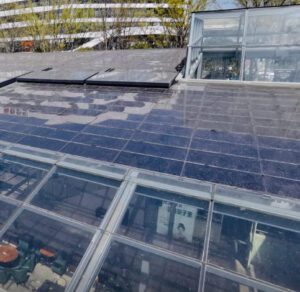
BIPV-specific opportunities in commercial enterprise are significant and growing. Commercial developers, property investment companies, and large retail chains constructing new facilities are specifying BIPV glass facades and roofing systems as standard elements of sustainable building design. The photovoltaic glass buildings case study library at Jia Mao BIPV provides exactly the kind of documented real-world evidence — energy yields, facade specifications, installation logistics — that enterprise procurement teams require before advancing a new product category to their approved vendor list.
How to Identify Which Segment to Target First (For Maximum Distributor Profitability)
Analyzing Your Current Customer Base and Win Rates by Segment:
The most reliable indicator of where you should focus is where you’re already winning — and why. Pull your last 24 months of closed deals. Categorize each by segment. Calculate: average deal size, sales cycle length, gross margin, and close rate. Then calculate the metric that actually matters: revenue generated per hour of sales effort invested, by segment.
Most distributors who do this exercise are surprised by the result. A segment that looked attractive on deal size alone often looks significantly less attractive when cycle length and close rate are factored in.
The following table provides a working framework for this analysis:
| Metric | Residential | Small Business | Commercial Enterprise |
|---|---|---|---|
| Average deal size | $12,000–$35,000 | $80,000–$500,000 | $500,000–$5M+ |
| Typical sales cycle | 3–6 months | 4–8 months | 12–24 months |
| Average close rate (industry range) | 25–40% | 18–28% | 10–18% |
| Gross margin range | 10–20% | 18–28% | 12–22% |
| Repeat purchase likelihood | Low–Medium | Medium | عالية |
| Referral rate | Medium | Medium–High | عالية |
| Sales skill requirement | معتدل | عالية | Very High |
Evaluating Market Conditions in Your Territory:
Residential saturation is a real and measurable phenomenon. In markets where solar penetration of suitable homes already exceeds 25–30%, the remaining prospect pool is increasingly composed of late adopters — harder to convince, more price-sensitive, and more likely to have already rejected solar once. Checking penetration data for your territory, available from local utility companies and regional energy agencies, tells you whether the residential opportunity is still expanding or beginning to compress.
Small business and commercial opportunity density can be assessed from public records — business registrations, commercial property data, and utility large customer databases in many jurisdictions. The key leading indicator is the volume of commercial construction in your region: new commercial buildings are the most cost-effective BIPV specification opportunity, because BIPV glass is being chosen instead of conventional facade materials rather than installed in addition to them.
Calculating Lifetime Value and Profitability by Segment:
Lifetime value (LTV) is where commercial and small business segments often reveal advantages that aren’t obvious from single-deal economics. A commercial enterprise customer who places three portfolio-wide orders over 5 years at $2M each is generating $6M in revenue from one relationship — plus referrals to similarly sized companies in their industry network. A residential customer who refers two neighbors is generating perhaps $50,000–$70,000 in additional revenue. Both are valuable; the commercial customer’s LTV is in a different league.
Repeat business potential by segment follows a clear pattern: residential customers typically don’t add additional solar capacity after initial installation, though battery storage add-ons create a secondary sales opportunity. Small businesses who have a positive experience frequently expand — adding capacity at a second facility, upgrading inverter systems, or adding battery storage. Commercial enterprise customers with positive first-deployment experiences often return for portfolio expansion programs that dwarf the initial project.
Creating Customized Sales Strategies for Each Persona
Tailoring Your Pitch and Presentation Materials:
One set of materials for three segments is a revenue leak. The structural differences in what each buyer needs to see are large enough that a presentation built for residential actively repels commercial buyers, and vice versa.
For residential homeowners: visual presentations showing before-and-after energy bills from real customers, simple payback period charts, installation photo galleries from local projects, and financing calculators. Mobile-friendly content matters because a significant portion of residential research and initial engagement happens on smartphones.
For small business owners: a one-page financial summary showing the interaction of ITC tax credit, accelerated depreciation, energy savings, and net investment cost. A project timeline showing permit, installation, and interconnection milestones. One or two case studies from businesses in similar industries with quantified outcomes — “a 4,500 sq ft food processing facility in this region reduced energy costs from $8,200/month to $3,800/month within 60 days of commissioning” communicates more than any product specification.
For commercial enterprises: formal energy audit and feasibility study documents, detailed financial modeling in a format matching their internal investment templates, portfolio-level analysis for multi-site companies, and technical reference documents from completed comparable projects. White papers on regulatory and utility interconnection processes in their jurisdiction show that you’ve done this before.
🎥 Recommended Watch: Solar Sales and Marketing Strategies That Close More Deals
This practical webinar breaks down the messaging and channel strategies that are generating real results for solar sales teams across all three customer segments.
Selecting the Right Communication Channels for Each Segment:
Homeowners research solar primarily through Google searches, YouTube, review platforms like Google Reviews and local Facebook groups, and word-of-mouth from neighbors. Your digital presence — Google Business profile, review volume and recency, and neighborhood-level visibility — is the channel that drives residential inbound leads. Paid search advertising targeting homeowners in high-income ZIP codes with above-average energy bills is the most efficient paid channel for residential volume.
Small business owners typically encounter solar through a different path: trade association newsletters, industry-specific publications, conversations at industry events, and referrals from accountants or financial advisors who understand the tax incentive landscape. Positioning yourself as a speaker or contributor in industry associations relevant to your highest-value small business segments (food manufacturing, logistics, agriculture) generates qualified inbound that costs a fraction of cold outreach.
Commercial enterprise buyers are the most systematically risk-averse in their vendor evaluation. They use industry analyst reports, attend large-format trade events like Solar Power International, and rely heavily on peer-to-peer references from executives at comparable companies. Getting into the consideration set for a commercial enterprise deal means having credibility in their network before an RFP opens — which requires sustained relationship-building investment measured in years, not months.
Building Relationships and Trust Differently for Each Persona:
For residential: community events, local partnerships with roofing contractors or real estate agents, and neighborhood-level word-of-mouth are the trust-building channels that matter. A solar open house at a completed installation, where the homeowner invites neighbors to see the system and ask questions, generates more qualified residential leads per hour of investment than almost any alternative.
For small business: industry association membership and active participation (not just exhibiting) is the most efficient relationship-building path. Appearing on a panel discussion at a regional food and beverage industry conference, speaking to the real tax and energy economics of solar for businesses in that sector, positions you as an expert before the first one-on-one sales conversation happens.
For commercial: executive-level relationship building is not optional. The energy manager may specify your product, but the CFO signs the check and the CEO often has informal veto power over major capital decisions. Getting access to that level of relationship requires either warm introductions from mutual contacts or a sustained presence at the industry events where senior executives actually show up and have real conversations.
Common Mistakes Distributors and Agents Make When Targeting Solar Customers
Mistake 1: Using the Same Messaging for All Three Segments:
The damage this does is both immediate and cumulative. Immediately, it produces the disconnect that causes deals to stall — the prospect senses that the salesperson is running a script rather than addressing their actual concerns. Cumulatively, it builds a reputation in the market for generic, uninformed solar pitching that eventually closes doors before conversations can open.
Auditing your current materials for persona alignment is straightforward: take your standard presentation and read it from the perspective of each segment. For every slide, ask: does this address a concern this buyer actually has? Is the language in their vocabulary? Would this make them more or less confident that I understand their business? If the answer is consistently “less” for a given segment, you have identified where your messaging revision needs to start.
Mistake 2: Ignoring the Actual Decision-Makers and Influencers:
The facility manager who invited you in is often not the person who controls the budget. The wife or husband who wasn’t at the residential presentation is often the partner who says no. The CFO who wasn’t mentioned in your first three meetings is often the person who kills a commercial deal at the final stage.
Asking directly and early — “Who else will be involved in this decision, and what does your approval process look like?” — is not presumptuous. It’s professional. Buyers who are serious about evaluating a significant capital purchase expect a professional vendor to understand their decision process. The question also reveals whether you’re talking to a decision-maker or an influencer, which changes your entire strategy.
Mistake 3: Leading With Features Instead of Solving Their Specific Pain Points:
A 25-year performance guarantee is a genuinely valuable product attribute. For a small business owner whose primary concern is whether the installation will interrupt operations, it answers a question they weren’t asking. The warranty needs to come after you’ve established that their operations concern is addressed — not before.
Similarly, environmental impact data has a specific audience and a specific moment in the conversation where it resonates. Leading with it in a commercial deal where the CFO is calculating NPV signals that you’ve misjudged the room. It belongs in the proposal appendix, as a supporting element for ESG reporting purposes, not as the opening argument.
Mistake 4: Not Adjusting Your Timeline Expectations:
Pushing a residential homeowner toward a decision before they’ve had the “should we really do this?” conversation with their partner is the fastest way to get a commitment that falls apart three days later. The consideration phase exists because the decision is genuinely large for most households. Respecting that pace while maintaining professional contact and providing useful information during it is the strategy that produces durable commitments.
Conversely, being too patient with a commercial buyer who is drifting can cost you the deal to a competitor who stayed more present. Commercial deals have their own institutional timeline, but within that timeline there are points where momentum builds and points where it stalls. Reading those moments — and proactively providing the next piece of relevant analysis when momentum is building — keeps you front of mind at the decision points that matter.
Tools and Resources for Tracking and Refining Your Customer Personas
CRM Systems and Data You Should Be Capturing About Each Prospect:
The data that matters most for persona-based selling is often not what default CRM templates capture. Beyond the standard contact information and deal value fields, you need to be systematically recording: which segment does this prospect belong to, what is their specific pain point as they’ve articulated it (not your interpretation), what is their decision-making structure and who else is involved, what is the timeline constraint driving their evaluation, and what objections have come up in each conversation.
For solar distributors specifically, CRM tools like HubSpot, Pipedrive, or dedicated solar CRM platforms like Scoop Solar enable you to segment your pipeline by customer type, track conversation history, and set systematic follow-up sequences tuned to each segment’s natural decision timeline. A commercial deal with a 12-month expected close needs a different follow-up cadence than a residential deal expected to close in 90 days.
Creating Feedback Loops With Your Sales Team:
Lost deal debriefs are the most underutilized source of persona intelligence available to any distribution business. When a deal is lost, the instinct is to move on. The discipline that separates improving sales teams from plateauing ones is the habit of asking — in a structured, blame-free format — what specifically the prospect said about why they chose a competitor, what objections came up that the team couldn’t address, and whether the initial segment classification was correct.
Win debriefs are equally important: what messaging landed, which materials generated the most engagement, at what point in the process did the prospect shift from evaluation to commitment, and what was the specific trigger. Codifying this into your persona guides turns individual wins into repeatable team capability.
Staying Current With Changing Market Conditions and Customer Priorities:
Solar incentive structures, utility rate trends, and building code requirements affecting BIPV applications change frequently enough that personas built 18 months ago can be meaningfully out of date. A quarterly review process — examining whether the pain points, decision timelines, and competitive context for each segment have shifted — is the minimum investment required to keep your sales approach calibrated to current reality.
Monitor competitor messaging actively. When a major competitor changes their residential pitch structure, or launches a new commercial-focused value proposition, that change contains intelligence about what their sales team has found resonating with buyers in your shared market.
Real-World Examples: How Top Distributors Are Using Personas to Win More Deals
Case Study 1: A Residential-Focused Distributor Who Discovered a Profitable Small Business Niche:
A regional solar distributor in Southeast Asia had built a solid residential business over three years — a reliable pipeline, a trained installation team, and a referral network among local homeowners. Their win rate in residential was 32%, generating steady but not exceptional revenue.
During a routine account review, the sales director noticed that 6 of their residential customers were also small business owners who had asked during the residential conversation whether solar made sense for their commercial property. Three of those conversations had been passed to a larger competitor because the team didn’t feel confident in commercial-scale proposals.
The pivot: the distributor spent two weeks with a financial advisor developing a simple small business solar ROI model. They identified 40 local businesses in the food and light manufacturing sector with high daytime energy profiles. They made 40 outreach contacts framed around the tax incentive deadline for accelerated depreciation in their market. They closed 7 deals within 6 months — with an average deal size 4.8x their average residential contract — and their average gross margin per deal improved by 11 percentage points.
Case Study 2: A Commercial Specialist Who Added Small Business to Their Mix:
A commercial-focused distributor in India had built an impressive portfolio of utility-scale and large C&I solar contracts. Their average deal size was significant, but their pipeline was lumpy — long gaps between contract signings, with the team often underutilized during the 14–18 month evaluation phases of active commercial deals.
They identified small business solar as a pipeline filler — faster-moving deals that could generate revenue and keep the installation team active between large commercial projects. The adaptation challenge was significant: their standard commercial proposal ran to 40 pages and required 3 engineering site visits before submission. For a 150 kW small business installation, that process was completely disproportionate.
The fix was a standardized small business feasibility package — a 2-hour site visit, a 6-page proposal template with a financial summary on page 1, and a turnaround commitment of 5 business days from site visit to proposal delivery. Within 12 months of launching this approach, small business deals represented 28% of the company’s total revenue, filled pipeline gaps that had previously resulted in team utilization falling below 60%, and — unexpectedly — generated 4 referrals that led to new large commercial opportunities.
Case Study 3: A Regional Distributor Who Dominates All Three Segments:
A distributor operating across three provinces in China has built a genuinely multi-segment business by one mechanism above all others: dedicated segment teams with segment-specific training, materials, and performance metrics.
Their residential team is measured on volume, close rate, and customer satisfaction scores. Their small business team is measured on deal margin and repeat purchase rate. Their commercial team is measured on relationship depth (number of stakeholders engaged per account) and contract value per deal.
Each team has its own persona guide — updated quarterly — and its own pitch materials. Cross-segment referrals are incentivized: when a residential salesperson identifies a homeowner who also owns a commercial property, the referral to the commercial team generates an internal commission. This structure means that every customer contact point is a potential gateway to a different segment — and the company’s knowledge of local solar demand across all three buyer types gives them market intelligence that no segment-only competitor can match.
Your Action Plan: Implementing Persona-Based Selling This Month
Week 1: Audit Your Current Customer Base and Sales Materials:
Pull every closed deal from the past 24 months. Categorize each by segment (residential, small business, commercial). For each segment, calculate: number of deals, total revenue, average deal size, average time from first contact to close, and gross margin percentage. Then — critically — pull your lost deals from the same period and categorize them by segment. Calculate your win rate (closed deals / total opportunities) for each segment.
Review your current pitch presentation, proposal template, and follow-up email sequences. For each piece, identify which segment it was designed for. Count how many of your materials are genuinely segment-specific versus how many are generic solar pitches with the company logo at the top.
Week 2: Create or Refine Your Three Persona Profiles:
For each segment, build a one-page persona guide that your entire team can reference. Include: a specific description of the buyer’s professional role and business context, their top 3 pain points in language they would actually use (not your language), their decision timeline and the factors that control it, the 3 objections that most commonly come up and the best responses to each, and the 2–3 messages that most reliably create engagement.
Align your team on these profiles through a working session — not a presentation they watch, but a session where they challenge the profiles based on their own deal experience. The insights your most experienced sales agents carry in their heads are often more accurate than any external research, and getting them into a shared document makes them organizational assets rather than individual advantages.
Week 3: Customize Your Sales Approach for Each Segment:
Update your core presentation to have three versions — one for each segment. Each version should open by acknowledging a pain point specific to that segment, not with a company overview. Update your proposal template for small business to be streamlined enough to be delivered within a week of a site visit. Update your commercial proposal to include an NPV/IRR financial model page that mirrors the format enterprise financial teams use internally.
Train your agents on the persona-specific selling techniques through role-play, not lecture. Pair experienced and newer agents for practice conversations where the experienced agent plays the buyer persona and gives feedback on how accurately the pitch addressed their specific concerns versus drifting into generic solar benefits.
Week 4: Launch and Track Results:
Implement segment tagging in your CRM from day one. Every new opportunity should be classified by segment at the point of entry, with the primary pain point recorded in the notes field from the first conversation. Set 90-day targets for each segment: win rate, average deal size, and pipeline volume.
At the 90-day mark, review the data against your baseline from Week 1. Where win rates have improved, identify what changed and codify it. Where they haven’t, run a lost deal review for that segment and adjust the approach before month 4 begins.
Why Persona-Based Selling Is Your Competitive Advantage
The distributors and agents who dominate solar sales in competitive markets over the next three years will not be the ones with the best panels or the lowest prices. They will be the ones who understand their buyers more completely than competitors do, communicate in their language rather than solar industry language, and build the kind of trust that makes price a secondary consideration in the purchase decision.
Persona-based selling is not a theory. It’s the operational discipline that translates market knowledge into closed deals, closed deals into customer relationships, and customer relationships into the referral networks and repeat business that define a durable distribution business.
The residential homeowner, the small business owner, and the commercial enterprise buyer each represent a legitimate and profitable opportunity — but each requires a different version of you. The distributors who learn to be all three, deploying the right approach for the right buyer at the right moment, will find that the solar market’s extraordinary growth translates into extraordinary personal revenue.
For distributors looking to go deeper on BIPV product specifications and technical positioning — particularly for commercial and premium residential applications — the Jia Mao BIPV product and resource library offers detailed technical documentation, installation guides, and case studies that can be integrated into your segment-specific sales materials.
The top-performing solar distributors we see winning consistently share one habit above all others: they stopped selling solar and started solving specific problems for specific buyers. When you make that shift, you’ll notice it immediately in your conversion rates — and in the quality of the customer relationships you’re building.
Ready to stop leaving money on the table?
Download our free Solar Customer Persona Workbook and start implementing segment-specific strategies with your team this week.
Glossary of Key Terms
Customer Persona: A detailed profile of a specific type of buyer — their role, concerns, decision-making process, and communication preferences — used to tailor sales messaging and strategy.
CAPEX (Capital Expenditure): Money a business spends to acquire, upgrade, or maintain physical assets. Commercial solar is typically treated as CAPEX, which affects how it’s evaluated and approved in enterprise organizations.
NPV (Net Present Value): The total value of future cash flows (energy savings) from a solar investment, discounted back to today’s dollars. A positive NPV means the investment creates value.
IRR (Internal Rate of Return): The annualized return rate that makes the NPV of an investment equal to zero. Commercial solar deals typically generate IRR of 12–18% — often exceeding alternative capital uses.
ITC (Investment Tax Credit): A US federal tax credit currently worth 30% of the solar installation cost, available to commercial and residential buyers. Stable through 2032.
Accelerated Depreciation / Bonus Depreciation: A US tax provision allowing businesses to deduct a significant portion of the solar system cost in Year 1, rather than depreciating it over the asset’s full life. In 2025, bonus depreciation stands at 40%.
BIPV (Building-Integrated Photovoltaics): Solar technology embedded directly into building materials — facades, roofing, glazing — that functions as both a structural building component and an electricity generator.
EPC (Engineering, Procurement, and Construction): A contracting model where a single firm is responsible for the complete scope of a solar project, from engineering design through physical installation.
C&I (Commercial and Industrial): A buyer category encompassing businesses whose energy consumption is larger than typical residential but which may not be classified as utility-scale. Often used to describe the 100 kW–2 MW solar installation range.
RFP (Request for Proposal): A formal procurement document issued by organizations (typically commercial enterprises or government agencies) soliciting competitive bids from vendors for a defined project scope.
الأسئلة المتداولة
FAQ 1: How do I know if I’m targeting the right customer segment for my distribution business?
The clearest signal is your win rate by segment over the past 12–24 months. If you’re closing 35% of residential opportunities but only 12% of commercial deals, the data is telling you something about where your team’s skills and your market’s conditions are best matched — at least for now. Pair win rate analysis with margin analysis: a 35% residential close rate at 12% margin may be less profitable than a 15% commercial close rate at 22% margin, depending on deal sizes. Run both numbers before drawing conclusions about where to focus.
FAQ 2: Can I successfully serve all three segments, or should I specialize in one?
Serving all three is achievable but requires genuinely separate approaches — different materials, different pitch structures, and ideally different team members or at least team members trained to switch modes by segment. The most common failure mode is attempting to serve all three with a single generic approach and wondering why win rates are mediocre across the board. The most successful multi-segment distributors we see use dedicated segment teams with segment-specific training, materials, and performance metrics. If that level of specialization isn’t possible yet, master one segment first, generate the cash flow and credibility it provides, then expand.
FAQ 3: How long does it really take to close a deal with each segment, and why does the timeline matter for my business?
Realistic timelines: residential 3–6 months, small business 4–8 months, commercial enterprise 12–24 months. The reason timelines matter beyond patience is cash flow planning. A distribution business that predominantly pursues commercial enterprise deals needs significantly more working capital runway than one focused on residential — because revenue is concentrated in large, infrequent closes rather than smaller, more frequent ones. Factor your segment mix into your cash flow forecast, not just your revenue forecast.
FAQ 4: What’s the biggest objection I’ll face from each segment, and how should I address it?
For residential: cost and financing anxiety. Address it early, directly, and with specific numbers — monthly payment amounts from your financing partners, after-incentive net cost, and local examples of similar homes with documented payback periods. For small business: operational disruption during installation. Address it with specifics — installation timeline for a facility of their size, exactly which operations are affected and for how long, and references from similar businesses who went through the process. For commercial enterprise: regulatory and interconnection complexity. Address it by bringing a credible technical partner to early meetings and showing a realistic utility interconnection timeline from comparable projects in their jurisdiction.
FAQ 5: Should my commission structure differ by customer segment?
Yes — and most successful solar distribution businesses structure it this way. The key variables that should drive commission structure differences are: deal size (larger deals can sustain lower percentage commissions while generating higher absolute payouts), sales cycle length (agents investing 18 months in a commercial deal need a structure that compensates for that time investment relative to the residential agent closing monthly), and effort intensity (commercial deals require more senior skill and preparation time than residential). A flat percentage across all segments systematically undercompensates your most valuable commercial sellers and overpays for residential volume, creating the wrong team incentive structure.
FAQ 6: How do I train my sales team to sell effectively to different buyer personas?
Persona guides alone are not sufficient — they’re reference documents, not skill builders. The most effective training combines: (1) role-play sessions where experienced team members play the buyer persona convincingly and give feedback on whether the pitch addressed their actual concerns or drifted into generic solar benefits; (2) shadowing arrangements where agents developing in a new segment accompany experienced agents on live customer meetings; (3) regular lost deal debriefs structured around persona fit — did we correctly identify the segment, did our messaging match their concerns, and where did the conversation go off-track? Build this into onboarding and ongoing monthly training, not as a one-time event.
FAQ 7: What’s the most common messaging mistake solar distributors make across all three segments?
Leading with product attributes rather than customer pain points. A 25-year warranty is a genuinely valuable product feature — but it only creates excitement if the customer’s primary concern is long-term reliability. For a small business owner whose primary concern is operational disruption, the warranty is background noise until that concern is addressed. The structural fix: every opening conversation should begin with questions that identify the specific concern, and every subsequent message should be framed around addressing that concern specifically. The product attribute that happens to solve that concern can then be introduced naturally as the solution to a problem they’ve already articulated.
FAQ 8: How often should I update my customer persona profiles to stay current?
Quarterly reviews are the right cadence for actively competitive markets — incentive program changes, utility rate adjustments, building code updates, and competitor moves can all shift buyer priorities within a single quarter. At minimum, commit to an annual comprehensive review that looks at: have the primary pain points for each segment changed, are the decision timelines still accurate, have new objections emerged that weren’t in the original profiles, and what does our lost deal data from the past year tell us about where our messaging isn’t landing?
FAQ 9: Is it worth investing in formal market research to develop my personas, or is my own customer data enough?
Your own customer data is the most valuable starting point because it’s directly relevant to your market, your product portfolio, and your team’s capabilities. It’s also free. Start there: pull your closed deal records, interview your top 5 customers in each segment about what their decision process looked like and what almost stopped them from proceeding, and debrief your sales team on the objection patterns they’re seeing. Formal research becomes valuable when you’re expanding into a market or segment where you have no existing customer data — new geography, new customer type — where you need to build a persona from scratch without the shortcut of existing relationship intelligence.
FAQ 10: How do I handle a prospect who doesn’t fit neatly into my three standard segments?
Use the closest matching segment as your working framework and stay alert for signals that the fit isn’t quite right. The most common edge cases: a family business that is legally a “small business” but makes decisions with the complexity of a commercial enterprise; a high-net-worth homeowner whose financial sophistication means they want NPV analysis rather than payback period framing; a government agency that operates with commercial-scale procurement processes but has different motivations from a private enterprise buyer. In each case, the persona guide gives you a starting framework — the specific conversation gives you the calibration data to adjust it.
FAQ 11: What metrics should I track to measure whether persona-based selling is actually improving my results?
Track five metrics by segment, before and after implementing persona-specific approaches: win rate (closed deals / total opportunities), average deal size, average sales cycle length (days from first contact to signed contract), gross margin percentage, and customer satisfaction score or Net Promoter Score. The combination tells you whether you’re closing more often, at better economics, in less time, with customers who are happy enough to refer. Any improvement in two or more of these metrics after implementing persona-specific approaches is meaningful evidence that the approach is working.
FAQ 12: How do I identify whether a prospect is the actual decision-maker or just an influencer?
Ask directly in the first conversation: “Who else will be involved in evaluating this decision?” and “What does your internal approval process typically look like for an investment of this size?” These questions are professional and expected from a serious vendor. The answers tell you whether you’re talking to the decision-maker, a gatekeeper, or an influencer — and each role requires a different strategy. A gatekeeper needs to be equipped to advocate for you internally; an influencer needs to help you access the decision-maker; a decision-maker needs to be taken through the full evaluation process.
FAQ 13: Should I adjust my pricing or package structure by customer segment?
Core product pricing should reflect your cost structure and market position consistently — but packaging, financing structure, service inclusions, and warranty terms absolutely should vary by segment. Residential buyers value financing flexibility and installation warranty. Small business buyers value turnkey project management and installation timeline guarantees. Commercial enterprise buyers value dedicated account management, multi-site coordination, and energy audit services. These differences in what buyers value most should be reflected in what you bundle into each segment’s offering — not as add-ons that increase cost, but as default inclusions that differentiate your segment-specific value proposition.
FAQ 14: How do I compete against larger, better-resourced distributors who are entering my market?
The realistic competitive advantage of a smaller, specialized distributor against a larger generalist competitor is depth of expertise and speed of response in a defined niche. A larger competitor serving 10 segments across 5 geographies cannot provide the local market knowledge, customer intimacy, and application-specific expertise that a specialist can deliver in their chosen focus. Identify the one segment and geography where your knowledge is deepest and your relationships are strongest. Invest in becoming so thoroughly the expert there that a larger competitor’s entry into your market is felt as an inconvenience rather than an existential threat. The BIPV product resources from Jia Mao BIPV are an example of the kind of deep technical content that helps specialist distributors build that expertise advantage visibly.
FAQ 15: What’s the fastest way to improve my win rate with a segment I’m currently struggling with?
Run a structured lost deal analysis for that segment from the past 6–12 months. For each lost deal, answer: at what stage did we lose momentum, what specifically did the prospect say about why they chose a competitor or decided not to proceed, what objections came up that our team couldn’t effectively address, and was our initial segment classification and pain point identification correct? In the majority of cases, this analysis reveals that the root cause is one of three things: messaging misalignment (not speaking to their actual concern), stakeholder misidentification (not reaching the real decision-maker), or timeline mismanagement (pushing too hard too early, or losing momentum in the middle stages). Each of these is fixable with training and process changes — none of them require a different product.
For BIPV-specific product specifications, technical documentation, and distributor resources, visit Jia Mao BIPV at www.jmbipvtech.com. Additional industry research is available through SEIA’s Solar Market Insight Reports, Aurora Solar’s buyer research, and the IEA’s Global Solar Market Outlook.