Commercial Solar Roof Tiles vs Panels: A Buyer’s Guide

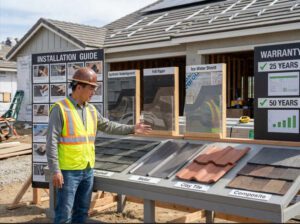
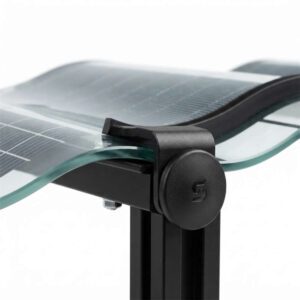
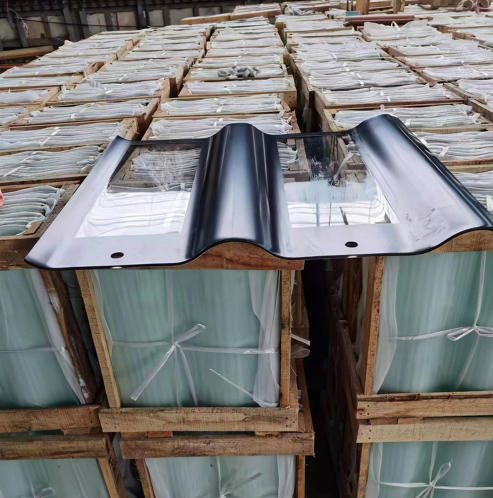
Solar roof tiles combine a roofing surface with electricity generation. Illustrative photograph—not a Jia Mao Bipv installation. Photo: Helena Wright, via Wikimedia Commons solar tile photograph, licensed under Creative Commons Attribution 2.0. Image unchanged.
Thesis Statement
Commercial solar roof tiles can give businesses a more integrated roof than traditional solar panels. But appearance alone is not enough: energy output, installation scope, roof condition, and lifetime costs determine which option fits a commercial project.
A hotel entrance roof and a warehouse roof may receive the same sunlight. They do not face the same buying decision.
For the hotel, visible racks may conflict with the design brief. For the warehouse, a hidden roof and strong daytime electricity demand may make conventional panels the better investment.
That difference matters when preparing a specification, pricing a roofing package, or building an energy proposal.
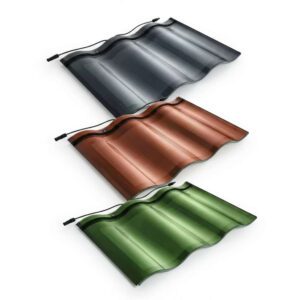
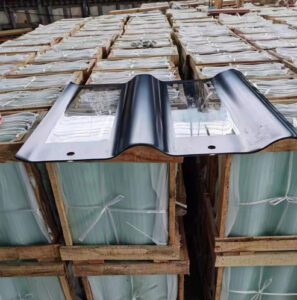
Solar roof tiles are roofing units that generate electricity while forming part of the roof covering. Traditional solar panels are separate electricity-generating modules installed above a roof.
Roof tiles belong to building-integrated photovoltaics, or BIPV: solar products that replace a conventional building material. The U.S. Department of Energy explains this dual role in its overview of solar technology integrated into building materials.
For roofing and curtain-wall contractors, solar EPCs, distributors, and design teams, the practical question is therefore:
Does this project need solar added to an existing roof, or a new roof that also produces electricity?
The answer should guide the comparison of appearance, performance, and commercial risk.
1. Appearance and Brand Impact
The visual appeal of a commercial solar installation can influence how a building is presented to tenants, visitors, and customers.
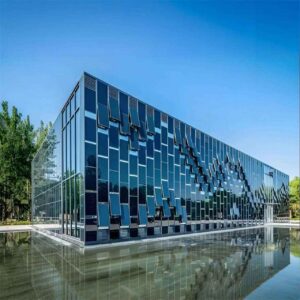
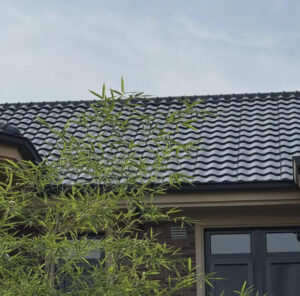
Solar roof tiles can follow a roof’s existing pattern. Some resemble slate; others use curved profiles or overlapping glass shingles. Wiring and mounting details may be less visible than those of a raised panel array.
This can be useful for:
- Hotels and visitor facilities with prominent rooflines.
- Corporate offices where the roof forms part of the architectural identity.
- Retail buildings facing public streets.
- Redevelopment projects with strict design requirements.
However, “integrated” does not mean “invisible.” Tile color, glass texture, edge details, and inactive roofing pieces can all affect the finished appearance.
What commercial projects actually demonstrate
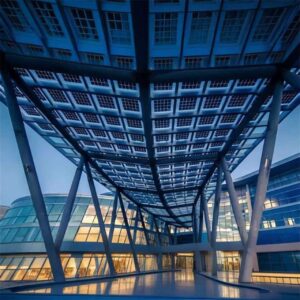
Google’s Bay View and Charleston East developments offer a documented example.
Google described a “dragonscale” solar roof with about 90,000 solar units and nearly 7 MW of installed capacity across the two developments. Its project account projected generation equivalent to roughly 40% of their energy needs.
The Google dragonscale roof project account explains that the roof design balanced architecture, glare control, and solar capture.
This shows how an integrated solar roof can become part of a company’s public sustainability story. It does not prove that roof tiles increase sales or property value by a fixed percentage.
A second example is Saint-Charles International in Perpignan, France. SunStyle reports that its integrated system replaced existing roof membranes across approximately 68,000 m² of warehouse roofs, with 9 MW of capacity.
The commercial integrated-roof project examples show that BIPV can serve large roof-renovation projects—not only small, design-led buildings.
Neither example is presented as a Jia Mao Bipv customer project.
Turn appearance into a clear specification
Architects and contractors should approve more than a sample tile. Request:
- A roof layout showing active and inactive units.
- Ridge, valley, eaves, and gutter details.
- A full-size mock-up viewed from the street.
- Color and glare samples under daylight.
- A defined repair method that preserves the roof pattern.
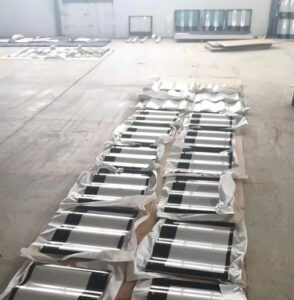
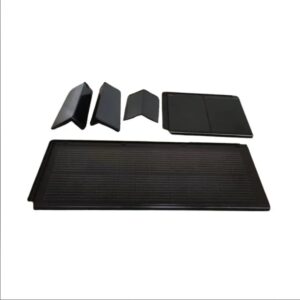
For early product selection, the Jia Mao Bipv solar roofing tile range provides a starting point for discussing roof profiles and project requirements.
نظرة ثاقبة في المجال: Design approval should happen before the final energy layout. A late color or roof-pattern change can alter power density, cable routing, and the quantity of inactive tiles.

This residential example illustrates the integrated finish; it is not evidence of commercial performance or a Jia Mao Bipv project. Photo: Wikideas1, Tesla Solar Roof photograph on Wikimedia Commons, CC0 public-domain dedication.
2. Performance and Installation Differences
Performance metrics and installation methods determine whether a solar roof can meet the building’s energy needs without creating roofing problems.
Start by separating three measurements:
- Efficiency: The share of incoming sunlight converted into electricity.
- Installed capacity: The system’s rated power, measured in kilowatts, or kW.
- Annual energy output: The electricity produced over a year, measured in kilowatt-hours, or kWh.
A high efficiency figure does not automatically produce the best commercial result. Roof coverage, shade, orientation, operating temperature, and daytime demand also matter.
Compare products on the same basis
Canadian Solar’s TOPHiKu6 all-black datasheet lists module efficiencies from 21.3% to 22.8%, depending on the power model.
SunStyle publishes solar roof power densities of approximately 170–172 watts per square metre for its listed tile formats.
These figures use different area bases. Module efficiency concerns the module itself. Installed roof power density can include overlaps and roofing geometry.
| Performance question | Solar roof tiles | الألواح الشمسية التقليدية |
|---|---|---|
| What area should be measured? | Installed coverage, including overlaps and inactive roof zones | Module area and the full array layout, including gaps and access routes |
| Can orientation be adjusted? | Usually follows the roof slope and direction | Racking may allow tilt and layout adjustments |
| What affects temperature? | Roof build-up and ventilation beneath the tiles | Airflow beneath modules and mounting height |
| What limits usable area? | Valleys, ridges, penetrations, shade, and inactive pieces | Setbacks, access routes, equipment, shade, and structural limits |
| What should determine selection? | Modeled output from the complete roof design | Modeled output from the complete array design |
Sources: Canadian Solar rooftop module specifications و SunStyle published roof power-density figures.
Do not compare a tile’s cell efficiency with a panel’s whole-module efficiency. Ask each supplier to state the tested product, measurement area, and test conditions.
Color can change the energy layout
The Jia Mao Bipv product page for curved CIGS photovoltaic roof tiles lists 32 W for the black version و 25 W for the red or green versions.
CIGS means copper indium gallium selenide, a thin-film material that converts sunlight into electricity.
On those published ratings, a colored tile has about 22% less rated power per unit than the black version. The same quantity of tiles would therefore provide less installed capacity.
That trade-off may be acceptable on a visible hotel roof. It still needs to appear in the energy estimate.
Confirm the current model datasheet and installed coverage before ordering. A marketing efficiency figure should never replace a roof-level calculation.
Installation: compare the full scope, not just placement speed
Panel installation adds an electrical system to a roof. Tile installation coordinates roofing and electrical work within one roof assembly.
| Installation stage | Solar roof tiles | Traditional panels |
|---|---|---|
| Roof preparation | Roof removal or new-roof preparation may be part of the package | Existing roof must be checked for condition and remaining life |
| Weather protection | Underlay, drainage, flashing, and tiles must work together | Existing roof remains the main weather barrier |
| Electrical work | Connections are coordinated with tile placement | Modules are installed on mounting hardware and connected |
| Handover | Roofing and electrical acceptance both matter | Array acceptance and roof-interface checks both matter |
| Main scheduling risk | Coordination between roofing and electrical trades | Roof repairs, mounting approvals, and electrical connection |
There is no reliable universal “commercial tiles take X days” rule.
Ask bidders to provide separate milestones for:
- Roof preparation.
- Weather-tight completion.
- Mechanical and electrical completion.
- Inspection.
- Utility permission to operate.
Residential installation timelines should not be used to price a large commercial roof.
An illustrative commercial energy and payback comparison
The following worksheet compares two hypothetical 100 kW systems on a building whose conventional roof replacement would cost $100,000.
These are transparent modeling assumptions—not market-average prices, customer results, or supplier quotations.
Both options assume:
- 90% of solar electricity is used on site.
- Avoided electricity costs $0.15/kWh.
- Exported electricity earns $0.05/kWh.
- No incentives, financing charges, or property-value premium.
- No demand-charge savings.
| Worksheet item | Solar roof tiles | Traditional panels |
|---|---|---|
| Installed capacity | 100 kW | 100 kW |
| Assumed first-year generation | 135,000 kWh | 140,000 kWh |
| Roof and solar project cost | $300,000 | $280,000 |
| Conventional roof-only baseline | $100,000 | $100,000 |
| Incremental cost above roof-only baseline | $200,000 | $180,000 |
| Electricity used on site | 121,500 kWh | 126,000 kWh |
| Electricity exported | 13,500 kWh | 14,000 kWh |
| First-year electricity value | $18,900 | $19,600 |
| Assumed annual maintenance allowance | $2,200 | $1,800 |
| First-year net operating benefit | $16,700 | $17,800 |
| Simple incremental payback | 12.0 years | 10.1 years |
Electricity value = on-site use × avoided tariff + exports × export tariff.
Simple payback = incremental project cost ÷ annual net operating benefit.
The modest energy difference is an assumption for this example. It is not an inherent penalty applying to all solar tiles.
Figure 1. Assumed first-year generation from the worksheet. One megawatt-hour, or MWh, equals 1,000 kWh.
Figure 2. Assumed energy split—not a measured commercial average.
نظرة ثاقبة في المجال: The timing of electricity use can matter more than a small efficiency difference. A processing facility running through the day may use most solar output directly. A building with low daytime demand may export more electricity at a lower rate.
Use an initial tool such as the PVWatts solar production calculator for screening. Final BIPV design should also account for the selected roof assembly, ventilation, shading, and electrical layout.
Video: See the roofing concept before reviewing bids
Spirit Energy’s Everything To Know About Solar Roof Tiles | Are They Worth it? introduces tile integration and practical trade-offs.
It is a UK-focused overview, not a commercial installation specification.
https://www.youtube.com/watch?v=01C0H1ypLdw
Short Technical Glossary
| Term | Plain-language meaning | Commercial example |
|---|---|---|
| Power density | Rated solar power per unit of area | A roof delivering 170 W/m² needs about 588 m² to provide 100 kW, before other layout constraints |
| Specific yield | Annual electricity per installed kW | 100 kW producing 140,000 kWh has a yield of 1,400 kWh/kW/year |
| Self-consumption | Solar electricity used directly in the building | Refrigeration uses electricity while the roof generates it |
| Temperature coefficient | How power changes as the solar cells get hotter | A negative coefficient means hotter cells produce less power |
| Degradation | Gradual loss of output over time | The long-term model allows generation to decline |
| Net present value | Future cash flows converted into today’s money | Useful when comparing projects with different costs and repair schedules |
3. Decision Factors for Commercial Buyers
Several factors determine whether tiles or panels fit the project: cost, durability, repair access, regulations, financing, and responsibility for the roof.
Compare complete project costs
A factory tile price is not an installed roof price.
Tender comparisons should include:
- Active and inactive roofing units.
- Underlay, flashings, supports, and drainage details.
- Inverters, protection equipment, cables, and monitoring.
- Scaffolding, lifting, and temporary weather protection.
- Engineering, permits, and utility connection.
- Spare parts, commissioning, and maintenance access.
For distributors, also check packaging, minimum order quantities, batch consistency, and replacement-product availability.
The basic comparison is:
Complete solar roof assembly versus conventional roof assembly plus a complete panel system.
If the existing roof is healthy, removing it solely to install tiles adds a cost that panels may avoid.
Durability and maintenance: separate the warranties
A power warranty does not necessarily cover leaks, labor, access equipment, or business interruption.
| Risk | Evidence to request |
|---|---|
| Water entry | Roof assembly details, weather tests, and a named roofing warranty provider |
| Wind uplift | Project-specific structural design and tested attachment details |
| Hail or impact damage | Applicable test reports and insurance requirements |
| Electrical faults | Safety certification, isolation method, and commissioning records |
| Replacement difficulty | A demonstrated single-unit replacement procedure |
| Supplier changes | Spare stock and a written compatibility or substitution plan |
Tiles can create a clean roof surface, but repair work must protect both roofing and electrical functions.
Panels are often easier to replace independently. Their mounts and roof interfaces still need inspection. Ballasted and seam-clamped systems may avoid some penetrations; other mounting systems do not.
Regulations: approval applies to the assembly
BIPV must satisfy electrical requirements and the requirements of the building material it replaces.
UL Solutions explains that BIPV roof-covering testing and certification can address electrical safety, fire, wind, weather protection, impact, and durability.
Requirements vary by country and local authority. Confirm:
- Roof slope and permitted applications.
- Fire performance of the complete roof assembly.
- Wind and snow loads.
- Fire-service access and electrical shutdown requirements.
- Utility export limits.
- Heritage or planning approval.
- Insurer acceptance.
A tile that looks suitable for a historic building still needs formal approval.
What contractors and energy providers should settle before signing
Testimonials are useful only when they describe a comparable project. Ask reference customers about roof size, climate, crew experience, repair events, and warranty response—not simply whether they liked the product.
For a practical tender review, divide responsibility clearly:
| Buyer or project role | Question to resolve |
|---|---|
| Roofing or envelope contractor | Who owns flashing, drainage, leaks, and weather-tight handover? |
| Solar EPC—engineering, procurement, and construction contractor | Who owns electrical design, commissioning, and output monitoring? |
| Energy service provider | Are tariffs, customer demand, and export assumptions supported by data? |
| Architect or consultant | Are the approved appearance and technical layout consistent? |
| Building-material distributor | Can replacement units be supplied throughout the agreed service period? |
| General contractor | Are roofing and electrical milestones linked in one schedule? |
نظرة ثاقبة في المجال: One integrated product does not automatically create one accountable contractor. Write the roofing–electrical responsibility boundary into the contract.
Financing and environmental claims
Commercial options may include direct purchase, loans, equipment leases, and a power purchase agreement, or PPA. Under a PPA, a third party owns the solar system and the customer buys its electricity.
The EPA’s explanation of commercial solar power purchase agreements also highlights ownership of renewable energy certificates.
These certificates track the renewable attributes of electricity. If they are sold to another party, the building operator may not retain the right to make the same renewable-electricity claim.
For a tile-based PPA, agree separately on roof ownership, leak liability, insurance, and the roof’s condition when the energy contract ends.
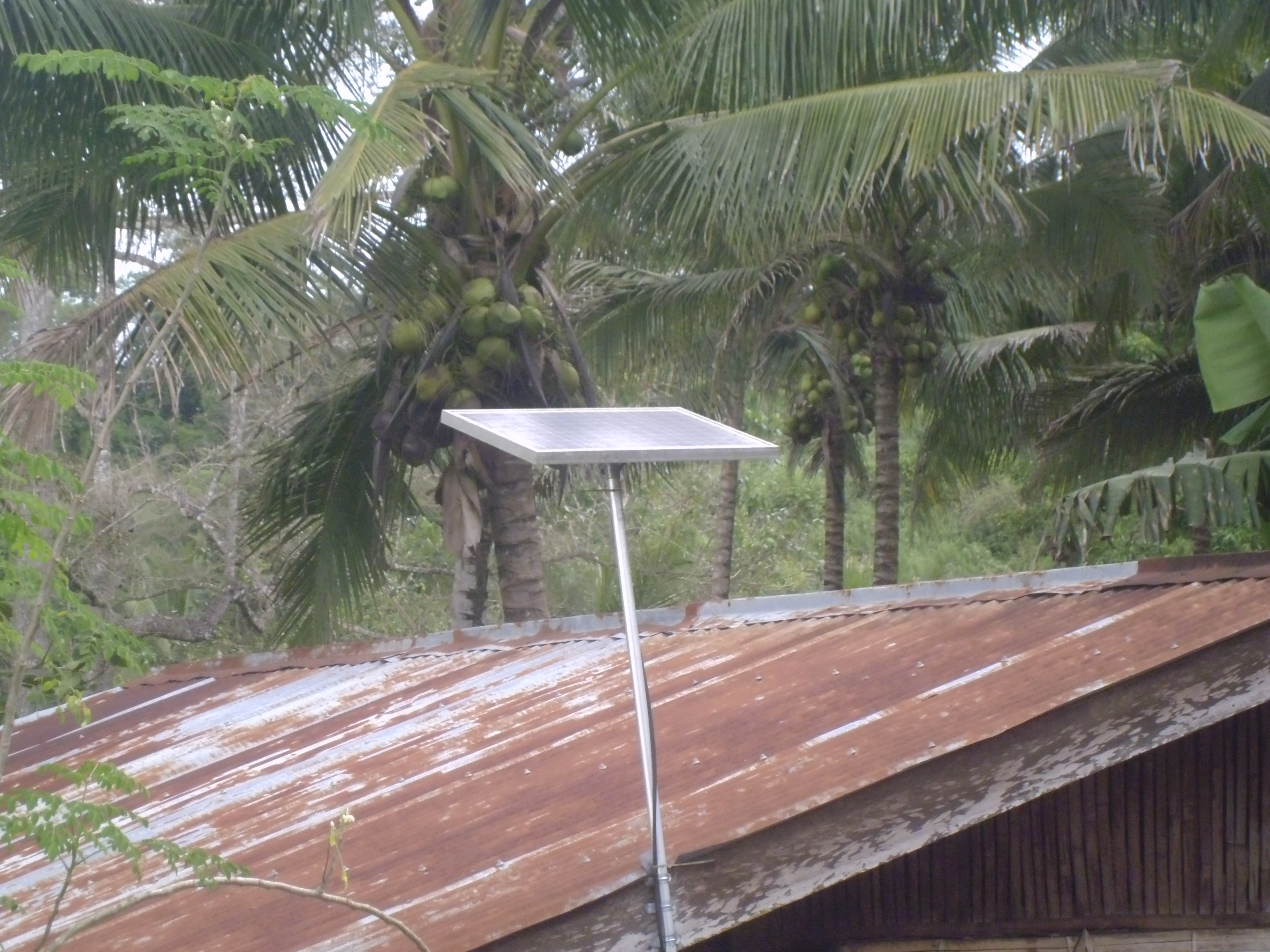
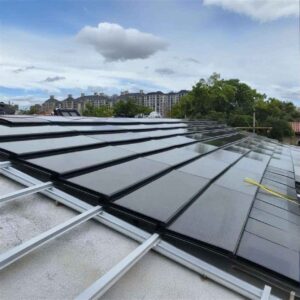
Warehouse example illustrating solar added above a roof; not a Jia Mao Bipv project. Photo: Bonvallite, warehouse rooftop solar photograph, licensed under Creative Commons Attribution-ShareAlike 3.0. Image unchanged.
Counterargument
Traditional panels often offer a better return because they have a lower upfront cost, widely available components, and established installation methods.
That argument is strong where:
- The existing roof has substantial remaining life.
- The array is not visible from public areas.
- Fast payback is the main objective.
- Future expansion and simple replacement matter.
But it becomes incomplete when the roof already needs replacement or the architectural brief rules out a raised array.
In the illustrative worksheet, comparing the $300,000 tile roof with only the $180,000 panel package would exaggerate the premium. The panel option also needs the $100,000 conventional roof, making its complete project cost $280,000.
Tiles may therefore earn their premium through avoided roofing costs, design integration, and suitability for the approved building concept.
Potential property-value benefits should remain outside the base financial case unless supported by project-specific evidence.
The balanced position: Tiles can justify a higher initial cost, but aesthetics alone should not be presented as guaranteed financial return.
The choice between commercial solar roof tiles and panels depends on the building—not on a blanket claim that one technology is better.
Tiles deserve serious consideration for visible pitched roofs, new construction, and planned roof replacement. Panels are often the stronger option for healthy existing roofs where output, cost, and service access take priority.
Before selecting either system, require:
- A complete roof and electrical layout.
- A site-specific energy model.
- A matched-scope cost comparison.
- Project-relevant test reports and warranties.
- A repair plan with clear responsibility.
For a Jia Mao Bipv review, provide roof drawings, location, roof condition, preferred finish, electricity-use data, and target capacity through the commercial BIPV project enquiry page.
Those inputs make it possible to compare roof integration and energy needs before procurement decisions become expensive to change.
Related FAQs
1. What are the primary differences between commercial solar roof tiles and solar panels?
Solar roof tiles generate electricity while forming part of the roof covering. Traditional panels generate electricity above a separate roof. Tiles require combined roofing and electrical design; panels depend on the condition and suitability of the roof beneath them.
2. How do solar roof tiles affect building appearance and brand image?
Tiles can follow the roof pattern and reduce the visibility of mounting hardware. This can support design-led hotels, offices, and visitor buildings. Brand benefits are more credible when supported by measured generation and accurate environmental claims—not appearance alone.
3. What is the average commercial cost difference between solar tiles and panels?
There is no dependable global average covering different roof types, labor markets, product designs, and project scopes. Compare complete installed prices. For roof replacement, compare the integrated tile roof with a conventional replacement roof plus panels—not with panels alone.
4. Do solar roof tiles produce less electricity than traditional panels?
Not necessarily. Compare installed capacity and annual output from the actual layouts. Tiles may need more roof area for a given capacity, depending on the product. Equal-capacity systems can still have different output because of temperature, orientation, shading, and other losses.
5. What maintenance do solar roof tiles and panels need?
Both need output monitoring and periodic checks for damage, debris, wiring issues, and water-entry risks. Tiles also require a repair method that preserves the roof covering. Confirm safe access, isolation procedures, spare parts, and labor coverage before installation.
6. Do building regulations favor one option?
Rules usually focus on safety and performance rather than favoring a technology. Tiles may suit some design requirements, but BIPV roof coverings need appropriate roofing and electrical evidence. Local approval, utility connection, and insurer acceptance remain necessary.
7. How do commercial installation times differ?
Panels can often be added without replacing the roof. Tiles may involve roof removal, underlay, flashing, and coordinated electrical work. Compare project-specific schedules and distinguish weather-tight completion from utility permission to operate. Neither option has a universal commercial timeline.
8. What financing options are available?
Depending on the market, businesses may use cash purchase, loans, leases, or PPAs. BIPV financing also needs to address the roof’s non-electrical function. Check roof ownership, insurance, leak responsibility, incentives, and end-of-contract obligations.
9. How do the environmental impacts compare?
Both generate electricity without fuel combustion during operation. A fair comparison also considers manufacturing, transport, roofing materials replaced, lifetime generation, repair, and end-of-life treatment. BIPV’s dual function can be relevant, but lower lifecycle impact should be demonstrated through project-specific assessment.
10. What are the long-term financial benefits of commercial solar roof tiles?
Potential benefits include electricity savings and replacement of some conventional roofing materials. The result depends on tariffs, on-site consumption, installed cost, maintenance, degradation, and financing. Use a long-term cash-flow model and keep unverified property-value premiums outside the base case.