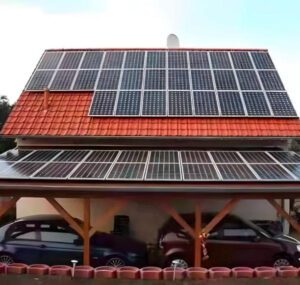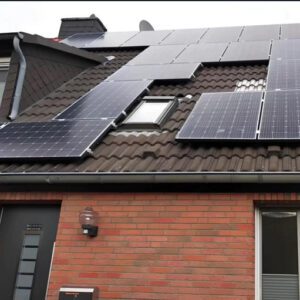

A contractor opens a bid and sees $795 per square metre for a solar facade. The same facade in standard triple glazing costs $520. The reflex is to close the file and go back to cladding.
That reflex is expensive. The $520 option still has to be bought, installed, cleaned and replaced. It just never sends a bill back.
This guide breaks the BIPV cost down line by line. It covers the material you delete, the hardware you add, the labour nobody budgets for, and the 25-year picture.
We build these packages at Jia Mao Bipv, so the costs below come from quotes and site hours, not from a summary of other people’s articles. Every figure sits in an illustrative model. Swap in your own numbers before you decide.
The short version. BIPV is not a cheaper power plant. It is a more expensive wall that pays rent. Judge it on the wall budget, not the energy budget.
What is BIPV? Key terms in plain English
BIPV means Building Integrated Photovoltaics. The solar module is the building material. It is the roof, the glass, or the railing. Remove it and the building stops being weather-tight.
BAPV means Building Applied Photovoltaics. The panels sit on top of a finished roof. Remove them and the roof still works. Most rooftop solar is BAPV.
That single difference drives every cost question in this article.
| Term | Plain meaning | Why it matters for cost |
|---|---|---|
| Wp (watt-peak) | Module power under standard test light | Sets how much power one square metre can hold |
| Specific yield (kWh/kWp) | Annual energy per unit of installed power | Turns hardware into a revenue forecast |
| Material offset | The cladding cost you no longer pay | The single largest line in any BIPV business case |
| BoS (balance of system) | Everything except the modules: inverters, cable, monitoring | Usually 12–20% of capex and easy to underestimate |
| U-value | How fast heat crosses a surface (lower is better) | Decides whether the facade meets energy code |
| TCO (total cost of ownership) | Capex plus O&M plus replacements over the full life | The only fair way to compare BIPV with cladding |
| Hot spot | A shaded cell that overheats and can fail | Drives layout and walkway design on facades |
| Semi-transparent module | Glass with spaced or thinned cells that lets light through | Each step of transparency removes power |
1. From solar add-on to solar building material
For twenty years, solar was something you bolted on. A crew arrived after the roof was done. They drilled, mounted rails, and left.
BIPV reverses the order. The module arrives with the facade package. It is detailed in the same drawings as the mullions. It is inspected by the same clerk of works.
That reversal changes who carries risk. On a bolt-on job, the roofer owns the roof and the electrician owns the array. On a BIPV job, one surface does two jobs. Someone has to own both.
Why the quotes look higher. Three things inflate a BIPV number at first sight:
- The quote bundles two trades into one line.
- The module is a laminated safety glass unit, not a framed panel.
- Certification, testing, and commissioning sit in the BIPV price but hide in other budgets on a normal job.
What this article gives you. A technical and financial framework. Use it to test a BIPV bid against a cladding bid, line by line, before you recommend either one.
2. Material offset: the financial pivot
BIPV should be budgeted as a dual-purpose envelope, not as an energy system. The moment you file it under “renewables”, you compare it with a $0.95 per watt panel and it loses.
File it under “facade”. Now the comparison is honest.

How the offset works
Take 1,000 m² of south facade on a 12-storey office block. You need a wall either way. The only question is which wall.
| Line item (USD, per m²) | Standard curtain wall | BIPV glass facade | Difference |
|---|---|---|---|
| Glass or PV laminate | 330 | 480 | +150 |
| Aluminium framing and supports | 120 | 130 | +10 |
| Junction boxes, cabling, connectors | 0 | 55 | +55 |
| Labour, glazing, commissioning | 70 | 130 | +60 |
| Total per m² | 520 | 795 | +275 |
| 1,000 m² package | 520,000 | 795,000 | +275,000 |
The real gap is $275 per square metre, not $795. The $520 was never optional.
What the $275 buys
The extra 110 kWp produces about 95,700 kWh in year one at 870 kWh per kWp. At a blended $0.16 per kWh, that is roughly $15,300 a year.
Simple payback on the premium: about 18 years. Over 25 years the electricity is worth around $355,000. That covers the $275,000 premium and leaves a margin near $80,000, before extra maintenance. It is a margin, not a jackpot.
Industry insight. Facade BIPV almost never wins on energy alone. It wins when the roof is full, the tariff is high, and the cladding was going to be premium glass anyway. Say that out loud in the bid meeting. Clients trust the number more when you admit the limits.
Where the offset is largest
- Premium glass buildings. A high-performance unitised system can reach $700–$900 per m². The BIPV premium shrinks fast against that baseline.
- Roofs that need a real covering. Solar tiles replace the tile or metal roof, not a membrane.
- Balustrades and canopies. Small areas, high visual impact, and a steel or glass cost you delete anyway. Our درابزين الشرفة الشمسي exist for exactly this reason.
3. Hardware and material cost drivers
Two BIPV facades can differ by 60% in price and look identical in a render. These are the variables that move the number.

Transparency
Light transmission is bought with power. A 20% transparent module keeps more glass and fewer cells, so it makes less electricity per square metre. A 40% transparent module makes less still.
Rule of thumb from quoting real projects: every extra 10 points of transmission costs roughly 8–12% of module power and adds 5–8% to laminate price. You pay twice.
Colour and texture
Standard BIPV glass comes in grey, blue-grey, and bronze. Custom colours use coloured PVB interlayers or printed patterns. Both add cost, and both cut yield.
Expect a 10–25% efficiency loss for a strong custom colour. Expect a 15–30% price premium for a small custom batch. Architects often accept that trade. Contractors should price it explicitly, because the client will ask later why the array underperforms the model.
Prefabrication
| Approach | Cost profile | Best for |
|---|---|---|
| Factory-assembled unitised panel | Higher unit price, lower site labour, tighter tolerances | Towers, fast programmes, tight water-tightness specs |
| Site-integrated frame and laminate | Lower unit price, more site hours, more weather risk | Low-rise, small areas, retrofit |
| Pre-wired module strings | Slight premium, big saving on electrical labour | Any project above 500 m² |
Certification you cannot skip
These documents decide whether the facade passes inspection, not whether it looks good.
- IEC 63092-1 and 63092-2 — the BIPV-specific module standards. Ask for them by number.
- IEC 61215 and 61730 — design qualification and safety for the PV side.
- EN 50583 — the European BIPV framework, widely referenced in tenders.
- Fire class — A2-s1,d0 or B-s1,d0 depending on height and local code.
- Structural test report — wind load, snow load, and impact resistance for the glass build-up.
A supplier who cannot produce these on request is selling you a liability. The testing cost sits inside their price for a reason.
4. Installation complexity and labour cost
BIPV sits at the meeting point of two trades that rarely share a schedule: glazing and electrical.

Who does what
The glazing contractor sets the panel, aligns the mullions, and seals the joints. A certified electrician makes the DC connections and tests the string. Neither crew can finish without the other.
On a 1,000 m² facade, this coordination typically adds 8–15% to the installation line. On a badly sequenced job it adds much more, because a sealed facade that fails an insulation test has to be opened again.
Coordination costs people forget
- Setting out. The module grid has to match the structural grid. A 30 mm error at level 3 becomes a 300 mm problem at level 12.
- Scaffolding and access. One pass, not two. If the electrical crew comes back later, you pay for the scaffold twice.
- Weather windows. Sealant needs dry conditions. A missed window costs a week, not an hour.
- Interface with the frame. Brackets, embed plates and deflection joints all need sign-off before the first panel arrives.
Where modular systems pay back
Pre-wired, pre-tested panels cut site electrical work sharply. Connectors arrive factory-fitted. Strings arrive labelled. The electrician plugs in and tests instead of terminating 400 joints on a scaffold.
On our BIPV solutions and applications page you can see how the panel build-up changes between roof, facade and railing work. The electrical labour per square metre is not the same.
5. Balance of system and electrical infrastructure
The modules are the visible half. The other half hides in a plant room.

Inverters
A facade array is split across orientations and shaded in patches. That favours module-level electronics or multiple small inverters over one large central unit.
Practical consequences:
- More inverters means more wall space in the plant room.
- Plant rooms on facades are hot. Derating above 40 °C is real, and it costs yield.
- Replace the whole inverter fleet around year 12–15. Budget $95–$130 per kWp, twice over 25 years.
DC cabling across a tall facade
A 12-storey facade string can run 60 metres vertically before it reaches the riser. Long runs mean voltage drop. Keep total DC loss under 2%. That usually means thicker cable, which means more copper, which means money.
Cheap cable here is a false saving. The loss repeats every sunny hour for 25 years.
Monitoring and BMS
Real-time monitoring is not a luxury on BIPV. A facade fault is invisible from the ground. Without string-level data, a failed junction box can quietly cost 3% of yield for a year.
Integration with the building management system typically adds 1–3% to the electrical package. It also gives the facility team the one thing they will actually use: an alarm when a string dies.
6. Maintenance and operating cost over 25 years
A BIPV facade is a power plant you cannot walk away from. It needs a plan, not a promise.
Cleaning
Vertical glass stays cleaner than a tilted roof, because rain sheets down it. Most facades need 2–4 cleans a year. Roofs in dusty regions need more.
| Surface | Cleans per year | Method | Typical cost |
|---|---|---|---|
| Vertical facade, tempered glass | 2–3 | Manual pole or rope access | $1.0–$1.6 per m² per year |
| Tilted roof array | 3–4 | Manual or semi-automated | $2.0–$3.0 per m² per year |
| Canopy or skylight | 2–3 | Access platform | $1.5–$2.5 per m² per year |
Hydrophobic coatings reduce soiling loss but add cost and need reapplication. Test the claim on one elevation before you coat the whole building.
Replacing one module
This is where BIPV differs most from BAPV. A bolt-on panel unbolts. An integrated module may be bonded, structurally sealed, or sandwiched behind a rainscreen.
Ask three questions before you sign:
- Can a single module be removed without disturbing its neighbours?
- Is a spare module held in stock, or is it a 12-week factory order?
- Does the replacement need scaffold, or is there internal access?
A $400 module with a $4,000 replacement procedure is a $4,400 module. Price the procedure, not the part.
Degradation and mid-life replacement
Glass-glass BIPV modules typically lose 0.5–0.7% of output per year. Over 25 years that is 12–17% of year-one yield, and it is already inside a good model.
Plan for one inverter replacement cycle. Plan for a small module breakage allowance, around 1–2% of the array over the life. Do not plan for zero.
7. Energy yield and revenue
Yield is where optimistic models go to die. Three variables decide the outcome: orientation, shading, and what you do with the electrons.

Orientation
The same square metre of PV does very different work depending on where you put it.
A south facade in a mid-latitude city reaches roughly 870 kWh per kWp. A well-tilted roof reaches 1,150. The roof wins per square metre. The facade wins because there is far more of it.
Self-consumption versus export
An office tower uses most of its power between 8am and 6pm. A south or east facade generates in exactly that window. That timing is worth more than raw volume.
In our model, 75% of generation is consumed on site at $0.21 per kWh, and 25% is exported at $0.09. Blended value: $0.16 per kWh.
Move that split to 40% self-consumption and the business case weakens by roughly a third. Check the building’s load profile before you check the module datasheet.
Certification and rent
This is the part that rarely makes it into a contractor’s spreadsheet, and it is often the largest number in the room.
- LEED awards points for on-site renewable energy and for optimising energy performance. See the LEED rating system for the current credit language.
- BREEAM treats low-carbon energy generation as a material credit. The BREEAM technical standards set out the evidence required.
- Certified office space in major markets has repeatedly leased at a premium over uncertified stock. Landlords price that premium into the asset, not into the energy bill.
For a $30 million building, a 2% uplift in asset value is $600,000. That single line is larger than the entire 25-year energy value of the facade. Put it in the memo.
8. Risk, insurance and warranty
Power in the building skin introduces risks that a passive wall does not have. Ignoring them does not remove them. It just moves them to the client.
Insurance
Insurers price an “active” facade differently from a passive one. Expect questions about fire load, DC isolation, arc-fault protection, and access for firefighters.
Premium increases are usually modest, in the range of 5–15% on the property policy, but they are not zero. Get the broker involved at design stage, not at handover.
Electrical installation should follow the local code throughout. In the United States that means NFPA 70, the National Electrical Code. In Europe, the relevant harmonised standards apply. Either way, the isolation procedure has to be documented and posted.
Warranty alignment
Three warranties overlap on one surface, and they do not match:
| الضمان | Typical duration | Covers |
|---|---|---|
| Module product | 10–12 years | Manufacturing defects |
| Module performance | 25–30 years | Output above a stated curve |
| Facade weather-tightness | 10 years | Water and air penetration |
| Workmanship | 2 years | Installation defects |
The 2-year workmanship window is the one that bites. A leak at year 4 is a facade problem and a PV problem at the same time, and each supplier will point at the other.
Fix it in the contract. Name one party as the single point of responsibility for the integrated assembly. Then name the escalation path.
Testing and commissioning
Budget 2–4% of the BIPV package for testing. It is cheap compared with opening a sealed facade.
- Water spray test on a sample bay, witnessed.
- Insulation resistance and polarity check on every string.
- Current-voltage curve trace on every string, recorded.
- Thermal imaging scan in daylight, to catch hot spots and bad joints.
- Monitoring system commissioning, with alarms proven.
Keep the records. They are the evidence you will need at year 6.
9. BIPV versus conventional PV versus standard cladding
Time for the side-by-side. All figures are for the same 1,000 m² south facade and an 80 kWp roof array on the same building, 25 years, undiscounted, at a flat $0.16 per kWh.
Capex comparison
| الخيار | Facade capex | Roof PV capex | Total capex |
|---|---|---|---|
| A. Standard curtain wall + 80 kWp roof PV | 520,000 | 76,000 | 596,000 |
| B. BIPV facade + 80 kWp roof PV | 795,000 | 76,000 | 871,000 |
| C. BIPV facade only | 795,000 | 0 | 795,000 |
Lifetime cost of ownership
| 25-year item | A. Cladding + roof PV | B. BIPV facade + roof PV | C. BIPV facade only |
|---|---|---|---|
| Capex | 596,000 | 871,000 | 795,000 |
| O&M and cleaning | 48,000 | 73,000 | 55,000 |
| Inverter replacement | 17,600 | 41,800 | 24,200 |
| Extra testing and commissioning | 0 | 15,000 | 15,000 |
| Total cost | 661,600 | 1,000,800 | 889,200 |
| Energy credit over 25 years | 341,500 | 696,700 | 355,200 |
| Net cost of ownership | 320,100 | 304,100 | 534,000 |
Option B wins on net cost. It wins by about $16,000, which is not a landslide. It wins because the facade adds 110 kWp that the roof cannot hold.
Here is where that money actually goes. The chart makes the key point: about 87% of the 25-year cost is locked in at procurement, before anyone switches the system on. Every operational saving you argue about later is worth a fraction of the capex number.
The roof case, where the numbers are easier
Roof BIPV is a different animal. It replaces a covering that has to be bought anyway, and it faces the sky at a good angle.
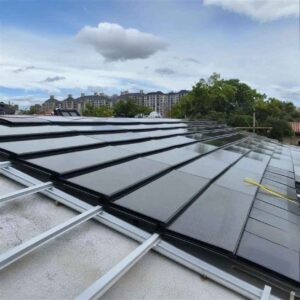
Illustrative model: 500 m² pitched roof, solar tiles at $230 per m² against a metal roof at $85 per m². That is a $72,500 premium for 65 kWp.
At 1,100 kWh per kWp, the array makes about 71,500 kWh a year, worth roughly $11,400. Simple payback: about 6.3 years.
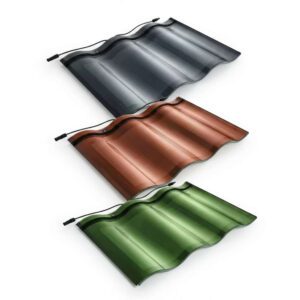
That is a fundamentally better payback than a facade, and it is why our CIGS curved solar roof tiles carry most of the volume on pitched roofs.
Carbon and ESG
A 110 kWp facade generating 95,700 kWh a year avoids roughly 40–55 tonnes of CO₂ annually, depending on the local grid. Over 25 years that is over 1,000 tonnes.
Reporting teams need that number in a defensible format. Give them measured generation data, not a brochure estimate. The IEA solar PV tracker is a good neutral reference for grid emission factors and market context.
10. The decision framework
Judge BIPV on total cost, then on asset value. Never on the module price alone.
Run these five checks before you commit
- What cladding cost do I delete? If the answer is under $400 per m², the BIPV premium will hurt. If it is over $600, the case gets easy.
- How much roof do I have? Fill the roof first. It is cheaper per kWh, every time. Then look at the facade.
- What is my self-consumption split? Above 70% is strong. Below 40% needs a harder look.
- Can I sequence the trades? One scaffold pass, one crew window. If not, add 10% to installation.
- Does certification move the asset value? If yes, the premium is a marketing cost with a return. If no, be honest with the client.
Where BIPV is the right call
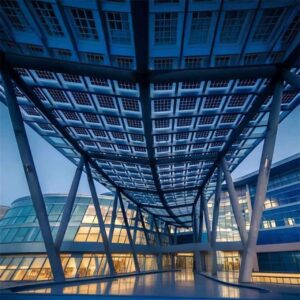
Choose BIPV when aesthetic value and energy autonomy overlap. A landmark tower with a glass skin and no roof space is the textbook case. A factory with 8,000 m² of empty roof is not.
Bring the design team in early
Most BIPV cost is locked before the first quote is issued. The facade module size, the structural grid, the plant room, the riser route: all decided in schematic design.
Change them at that stage and BIPV costs what it should. Change them at tender and you pay for the redesign, the retest, and the delay.
If you are pricing a project now, send the drawings to our project team and ask for a line-by-line offset sheet. Compare it with your cladding bid. That comparison, not the module price, is the number that decides the job.
A note on where these numbers come from
The model above uses representative mid-market figures for 2026. Your electricity tariff, labour rate, facade specification and grid connection will move every line. Read the framework, then replace the inputs.
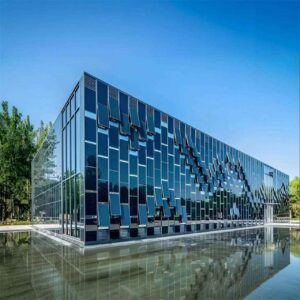
Our own work at Jia Mao Bipv runs from full glass facades, such as the Wuhan Science and Technology Exhibition Center, to industrial rooftops like the Chongqing Mountain City commercial building. The cost structure differs on each one. You can read more about how we build these packages on the Jia Mao Bipv about page.
Watch a real integrated roof being installed
This short demonstration shows how an integrated roof tile system goes down on a pitched roof. Watch the sequence, not the brand. The waterproofing detail is the part that decides whether the roof survives year ten.
https://www.youtube.com/watch?v=7Cd5A9kPt2c
Frequently asked questions
1. How do I calculate the exact offset value of the glass I am replacing with BIPV?
Take your current curtain wall quote and break it into four lines: glass unit, framing, labour, and sealant or flashing. Drop the glass unit line entirely, because the BIPV laminate replaces it. Add back only the PV-specific costs: laminate premium, junction boxes, cabling, and the electrical labour to connect it. The difference between the two totals is your true offset. Do this per square metre, then multiply by the actual glazed area, not the gross facade area.
2. Does BIPV increase insurance premiums on a commercial building?
Usually yes, but modestly. Expect a 5% to 15% increase on the property policy, driven by fire load and DC electrical risk rather than by the solar panels themselves. The premium depends on how well you document isolation points, arc-fault protection, and firefighter access. Bring your broker into the design review. A well-documented system often prices close to a passive facade, and a poorly documented one can be declined.
3. What happens if one BIPV panel breaks? Do I replace the whole section?
Not usually, but it depends on the mounting method. Unitised systems allow a single module to be removed from the front with a vacuum lifter. Bonded or structurally sealed systems may require dismantling a run of modules. Ask two questions at tender: can one module come out alone, and is a spare held in stock? A replacement that needs twelve weeks and a scaffold costs far more than the module.
4. How does the U-value of BIPV compare with a standard triple-glazed curtain wall?
A typical BIPV insulating glass unit reaches a U-value of about 1.1 to 1.8 W/m²K, depending on cavity depth, gas fill and coating. A high-performance triple-glazed unit reaches 0.7 to 1.0. So BIPV is usually slightly worse thermally, and the gap is roughly 0.3 to 0.8 W/m²K. On a large glazed area that difference matters for heating and cooling load, so model it early. Ask the supplier for a tested U-value for the exact build-up, not a generic figure.
5. Which is more cost-effective, BIPV on the roof or on a south-facing facade?
The roof wins on cost per kWh, almost every time. A tilted roof array reaches around 1,150 kWh per kWp, while a vertical south facade reaches around 870. The roof also costs less to install because access is simpler. The facade only becomes the better choice when the roof area is too small to use the building’s full potential, or when the facade cladding budget is already high.
6. How do I handle warranty overlap between the solar supplier and the general contractor?
Name one party as the single point of responsibility for the integrated assembly, and write that into the contract before award. Then align the durations: module product warranty at 10 to 12 years, performance at 25 to 30, weather-tightness at 10, workmanship at 2. The weak point is the 2-year workmanship window, because a leak at year 4 falls between two suppliers. Agree in writing who responds, and how fast.
7. Are there government subsidies for BIPV that differ from rooftop solar?
Often yes. Many markets treat BIPV as a building material and a renewable asset at the same time, which opens both construction incentives and energy incentives. Some cities add floor-area bonuses or fast-track permits for certified green buildings. The rules change often. Check the current national scheme and the local building authority before you model any subsidy, and never put an unconfirmed grant in the base case.
8. How does BIPV affect the construction timeline?
It usually adds two to four weeks to the facade programme, not to the whole project. The extra time goes into setting out, electrical coordination, and commissioning. Factory pre-wiring and unitised panels recover most of it, because the electrical work happens in parallel with glazing rather than after it. The real risk is sequencing: if the electrical crew arrives after the facade is sealed, you lose the schedule and the scaffold budget.
9. Can BIPV be used in renovation, or only on new builds?
Both, but renovation is harder. On a new build, the module grid is designed with the structure. On a retrofit, you inherit the existing grid, the existing fixing points, and often a facade that was not designed for cable routes. Over-cladding and canopy or railing systems are the practical retrofit options. Full facade replacement in a live building is possible, but the access and weather protection costs usually dominate.
10. How do I stop hot spots caused by shading from neighbouring buildings?
Design the string layout around the shade pattern, not around the aesthetics. Put shaded areas on separate strings with module-level electronics, and keep walkways and structural fins out of the cell area. Run a shading simulation for 21 December, the worst day, and check the result at 9am, noon and 3pm. A hot spot is a warranty claim waiting to happen, and it is cheaper to design out than to fix.
Glossary of technical terms used in this article
| Term | Meaning in one sentence |
|---|---|
| BIPV | A solar module that works as the building envelope itself. |
| BAPV | Solar panels mounted on a finished roof or wall. |
| Material offset | The cost of the cladding you no longer need to buy. |
| Specific yield | Annual energy produced per kilowatt-peak installed, in kWh/kWp. |
| Balance of system | Inverters, cabling, connectors, monitoring and mounting. |
| U-value | Heat flow through a surface; lower means better insulation. |
| Hot spot | Local overheating from a shaded or faulty cell. |
| String | A series-connected group of modules feeding one input. |
| Commissioning | The tests that prove the system is safe and working before handover. |
| TCO | Total cost of ownership across the full service life. |