The Strategic Shift Toward Building-Integrated Photovoltaics (BIPV)
The way we design and build homes is changing fast. Energy costs are rising. Regulations are tightening. And the people buying homes — and the buildings they live in — expect more from the materials inside them.
Photovoltaic (PV) glass is at the center of this shift.
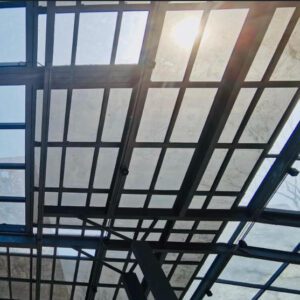
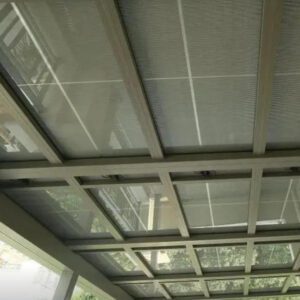
Unlike traditional solar panels bolted onto a rooftop as an afterthought, PV glass is built directly into the structure of a home — windows, skylights, facades, and curtain walls. It serves two jobs at once: it acts as your building’s glass envelope و generates clean electricity from sunlight.
Glossary — Photovoltaic (PV) Glass: A type of glass with embedded solar cells (typically thin-film or crystalline silicon) that convert sunlight into electricity. Also called BIPV glass when integrated into the building envelope itself, rather than added on top of it.
The numbers behind this technology are hard to ignore. The global BIPV glass market was valued at USD 4.6 billion in 2025 and is projected to reach USD 24.1 billion by 2035, growing at a compound annual growth rate (CAGR) of 18.1% (Vantage Market Research, 2025). Broader BIPV adoption — including all integrated solar building products — is expected to surge from USD 24.2 billion in 2025 to USD 103.1 billion by 2035 (Research Nester).
For curtain wall contractors, EPCs, building material distributors, and architects, this is not a future trend. It is a current procurement decision.
This guide explains the top benefits of PV glass for residential buildings — with real data, practical design scenarios, and the business case your clients need to hear.

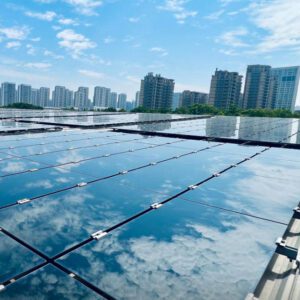
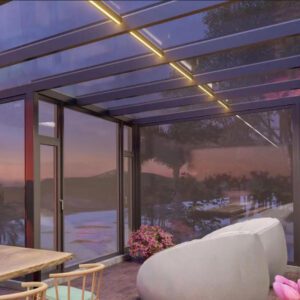
A modern home with an integrated glass facade — PV glass replaces standard glazing while generating on-site electricity.
Energy Cost Reduction: A Value Proposition You Can Sell
Every homeowner wants lower utility bills. PV glass delivers a direct, measurable answer to that need — and it gives your sales team or design pitch a concrete financial argument.
A properly specified BIPV glazing system reduces a home’s dependency on grid electricity by generating on-site renewable energy throughout the day. In a typical residential installation, homeowners can expect annual energy savings of $1,000 to $2,000+, depending on system size, local utility rates, and orientation (Solar Energy World).
Over a 25-year lifecycle — the standard warranty period for PV glass — that adds up to $25,000 to $50,000+ in cumulative savings per household.
The property value effect is equally compelling:
- A 2024 Zillow-based study found that solar-equipped homes sell for a 6.8% premium over comparable homes without solar (Revision Energy).
- EnergySage research indicates solar can add up to $79,000 in value for higher-end installations.
- The U.S. Department of Energy confirms that solar homes consistently sell faster and at higher premiums than non-solar equivalents (Energy.gov).
For design-build firms and EPCs, this means PV glass isn’t just a sustainability upgrade — it’s a demonstrable increase in asset value that end clients and real estate investors can quantify.
PV glass also supports net-zero energy home (NZEH) designs, where the building produces as much energy as it consumes annually. Green building certifications like LEED and BREEAM specifically reward on-site renewable generation, making PV glass a strategic specification choice from day one of design.
Seamless Aesthetic Integration Without Compromising Design Flexibility
One of the most common objections to solar technology in high-end residential architecture is simple: it looks industrial. Traditional roof-mounted panels interrupt rooflines, limit design expression, and often conflict with neighborhood or homeowner association guidelines.
PV glass eliminates that problem entirely.
Because it replaces conventional glazing rather than adding a layer on top of it, PV glass can be specified in:
- Variable transparency levels (from fully opaque to semi-transparent, allowing daylight control)
- Custom tints and colors (neutral gray, blue, bronze, or black — matching design intent)
- Any standard or custom sizing (cut to fit curtain wall modules, skylights, balustrades, or canopies)
- Curved or flat configurations for complex architectural geometries
This level of customization means architects maintain full design control. A luxury home can feature floor-to-ceiling solar-generating glass that looks indistinguishable from high-performance architectural glazing — because it is.
Leading manufacturers such as أونيكس سولار demonstrate how PV glass has been used in everything from residential skylights to full building facades, with projects ranging from contemporary villas to passive-house certified homes.
Glossary — Curtain Wall: A non-structural outer wall of a building, typically made of glass and metal framing, that carries no floor loads but provides weather protection and aesthetic envelope. PV glass integrates directly into curtain wall systems.
For specifiers, this flexibility means you can propose PV glass on projects where traditional solar panels would never be approved — historic districts, design-controlled communities, or premium residential developments where aesthetics are non-negotiable.

Dual-Function Performance: Glazing + Power Generation in One System
Standard construction logic separates systems: the glazing contractor installs the glass, and the solar contractor installs the panels. This means two procurement streams, two installation schedules, two sets of subcontractors, and two sets of warranties to manage.
PV glass collapses those two systems into one.
Here is what that consolidation means in practice:
| الميزة | Traditional Approach | PV Glass Approach |
|---|---|---|
| Solar system | Separate roof-mounted array | Integrated into glazing |
| Glazing system | Standard architectural glass | Same glass unit (dual function) |
| Roof space used | Yes (panels on roof) | No (glass is the generator) |
| Number of contractors | 2 (glazing + solar) | 1 (glazing contractor) |
| Installation complexity | أعلى | Reduced |
| Visual profile | Visible panel array | Clean architectural appearance |
For curtain wall contractors, this simplification is significant. Rather than coordinating with a separate solar EPC, the glazing installation is the energy system installation. When planned correctly, this reduces site conflicts, compresses project schedules, and simplifies commissioning.
Roof space that would otherwise be covered by solar arrays can be used for green roofs, rooftop terraces, mechanical equipment, or left unobstructed — a real advantage in dense urban residential developments.
Enhanced Building Envelope Efficiency and Thermal Performance
PV glass does more than generate electricity. It also improves the thermal performance of the building envelope — the combination of all exterior surfaces that separate conditioned interior space from the outdoor environment.
Modern BIPV glass units are engineered as insulated glass units (IGUs) — typically double or triple-glazed assemblies incorporating the solar layer alongside low-emissivity (low-e) coatings and inert gas fills. This gives them thermal performance profiles comparable to — and in some configurations better than — standard high-performance glazing.
Key thermal metrics to specify:
- U-value: Measures the rate of heat transfer through glass (lower is better). High-performance BIPV IGUs can achieve U-values of 1.0–1.4 W/m²K, comparable to premium double-glazed architectural glass.
- Solar Heat Gain Coefficient (SHGC): Measures how much solar radiation passes through as heat. PV glass intercepts a portion of this radiation to generate electricity, effectively reducing SHGC and lowering summer cooling loads.
Glossary — U-value: A measure of how well a building element conducts heat. A lower U-value = better insulation. Standard single-pane glass has a U-value of ~5.8 W/m²K; a high-performance BIPV IGU can achieve 1.0–1.4 W/m²K.
Glossary — SHGC (Solar Heat Gain Coefficient): The fraction of solar radiation admitted through a glazing system. Values range from 0 to 1; lower values reduce cooling loads in warm climates.
By reducing solar heat gain through glass surfaces, PV glass can meaningfully lower HVAC loads — the energy needed to cool and heat the building. For a 2,500 sq ft home with significant glazing area, this can reduce cooling energy consumption by 10–20%, depending on climate zone and glazing ratio.
This thermal benefit also supports compliance with energy codes including:
- IECC (International Energy Conservation Code) — the residential energy standard adopted in most U.S. states
- ASHRAE 90.1 — the commercial and mixed-use energy standard
- California Title 24 — one of the most stringent state-level energy codes in the U.S.
Specifiers can review current glazing compliance pathways via the International Code Council’s IECC resources.
Accelerating Compliance with Green Building Standards and Incentives
For EPCs, developers, and design firms working on certified green building projects, PV glass is one of the most efficient paths to earning points in multiple credit categories simultaneously.
LEED (Leadership in Energy and Environmental Design): PV glass contributes to LEED credits in Energy & Atmosphere (on-site renewable energy), Sustainable Sites, and Materials & Resources. The U.S. Green Building Council provides the framework — PV glass supports multiple credit categories in a single specification.
BREEAM: The UK-based standard similarly rewards on-site generation, envelope performance, and reduced carbon emissions — all addressed by a well-specified BIPV system.
Living Building Challenge: One of the most rigorous certifications available, requiring net-zero energy on an annual basis. PV glass is a core enabling technology for meeting this standard in glazing-intensive designs.
On the financial incentive side, the U.S. Section 25D Residential Clean Energy Credit provided a 30% federal tax credit on PV glass installed in qualifying residential properties through December 31, 2025 (IRS.gov). For a $50,000 BIPV glazing installation, that represents $15,000 in direct tax savings for the homeowner — a powerful closing argument in any sales conversation.
Beyond the federal credit, many states and utilities offer additional rebates and renewable energy incentives. EPCs and contractors should check the DSIRE database for current state-by-state incentive listings.
For ESG-focused developers and municipalities with renewable energy mandates, PV glass also provides verifiable, measurable on-site generation data that satisfies reporting requirements and builds toward net-zero carbon portfolio commitments.

Future-Proofing Homes Against Energy Volatility and Regulatory Shifts
Electricity prices in the United States increased by an average of 2.5–4% annually over the past decade, with some markets experiencing sharper spikes during grid stress events. Homeowners who lock in on-site generation with PV glass hedge against this volatility for the life of the installation.
For residential developers and spec-home builders, this is a meaningful selling point. A home with integrated PV glass has a built-in energy cost buffer that becomes more valuable as utility rates rise — and that value is embedded in the building itself, not dependent on equipment the homeowner must maintain separately.
On the regulatory side, building performance standards are tightening across North America and Europe:
- Over 40 U.S. states have adopted versions of the IECC requiring progressively lower energy use intensity for new construction.
- The U.S. Department of Energy’s Building Performance Standards (BPS) initiative is pushing existing buildings toward decarbonization targets.
- The EU’s Energy Performance of Buildings Directive (EPBD) mandates that all new buildings be near-zero energy by set deadlines.
Contractors, developers, and material suppliers who specify PV glass today are positioning themselves and their clients for this regulatory direction. Buildings designed to current code minimums may require expensive retrofits within a decade. Buildings designed with integrated renewable generation are already ahead of the curve.
Streamlined Installation and Maintenance for Contractors
A common concern among glazing contractors new to BIPV is the installation learning curve. In practice, properly designed PV glass systems are engineered to integrate with standard curtain wall framing systems — the same aluminum or steel profiles, the same wet/dry glazing methods, and the same site sequencing that experienced glazing crews already know.
The primary additions are:
- Electrical junction boxes built into or behind the glass units, connecting to standard inverter equipment
- Cable management routed through the curtain wall framing (planned at design stage)
- Coordination with the electrical contractor for inverter installation and grid connection
The PV+BIPV Installer Guide provides a practical reference for facade contractors entering the BIPV installation space.
On the maintenance side, PV glass significantly simplifies the post-installation picture compared to roof-mounted solar arrays:
- No moving parts — no trackers, no mechanical wear components
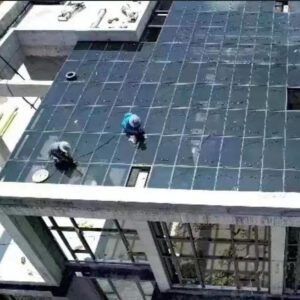
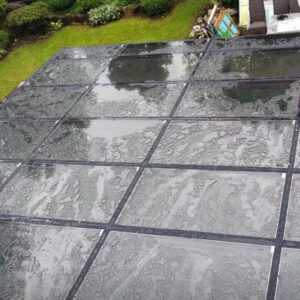
- Cleaning uses the same methods as standard architectural glass — periodic washing with non-abrasive cleaning solutions
- Electrical performance monitoring can be handled via standard inverter monitoring platforms
- No roof penetrations or waterproofing risks associated with traditional rack-mounted systems
Typical PV glass installations carry 25-year performance warranties guaranteeing at least 80% of rated output at year 25, with a 10–12 year warranty on materials and workmanship (Sinovoltaics, PV Module Lifespan Guide). For facility managers and homeowners, this translates to decades of low-maintenance energy generation.
Strengthening Brand Positioning for Material Suppliers and Design Firms
The specification market for building materials is competitive. Architects have hundreds of glazing products to choose from. Distributors compete on price, availability, and service. In that environment, adding BIPV glass to your product portfolio is a genuine differentiator.
Here is why it matters commercially:
For material brands and distributors: PV glass sits in a high-value product category with strong demand growth. Adding it to your line gives you access to green building projects, EPC procurement, and developer specifications that standard glazing suppliers are excluded from. The BIPV glass market is expected to grow from USD 4.6 billion in 2025 to USD 24.1 billion by 2035 — stocking and specifying this product now positions you ahead of broader market adoption.
For architecture and design firms: Specifying BIPV glass signals fluency in integrated building performance — a capability that wins high-performance residential commissions and sustainability-focused institutional clients. It also enables firms to credibly pursue LEED, BREEAM, and Passive House certified projects with a single glazing specification that addresses energy, envelope, and aesthetics simultaneously.
For EPCs and energy service providers: BIPV glass expands your project scope from roof-only solar to full building envelope integration — higher contract values, deeper client relationships, and differentiation from installers limited to standard panel systems.
The firms that build expertise in BIPV specification and installation now will carry a durable competitive advantage as building energy codes tighten and client demand for integrated energy design grows.
Scalability and Replicability Across Residential Project Types
One of PV glass’s underrated strengths is its adaptability. It is not a product reserved for custom luxury homes or large commercial projects. It scales across the full residential typology:
| Project Type | PV Glass Application | Key Benefit |
|---|---|---|
| Single-family homes | South-facing facades, skylights, window glazing | Owner energy savings, property value premium |
| Townhouses | Party-wall glazing, balcony railings, canopies | Shared systems, reduced per-unit cost |
| Multi-unit residential | Curtain wall facades, common-area skylights | Portfolio-level energy performance |
| Luxury developments | Full-facade BIPV systems, custom tints | Design differentiation, premium positioning |
| Retrofit projects | Curtain wall replacement, window upgrade | Immediate energy savings, no demolition required |
The modular nature of curtain wall construction means that a BIPV glass specification developed for one project type can be replicated across a developer’s portfolio with minimal redesign effort. The same glass unit — same dimensions, same framing system, same electrical configuration — can be used across multiple buildings in a development, reducing procurement complexity and driving down unit costs through volume.
For retrofit applications, PV glass can be introduced as a direct replacement for underperforming glazing during planned facade upgrades, renovation projects, or window replacement programs. The MIT study on photovoltaic retrofit vs. new construction quantifies the trade-offs involved and confirms the viability of both approaches for residential applications.
Watch: How BIPV Curtain Wall Systems Are Installed
The video below walks through the standardized installation process for a BIPV curtain wall system — including embedded part positioning, glass unit handling, electrical routing, and commissioning steps. It is an excellent reference for glazing contractors and project managers evaluating BIPV for the first time.
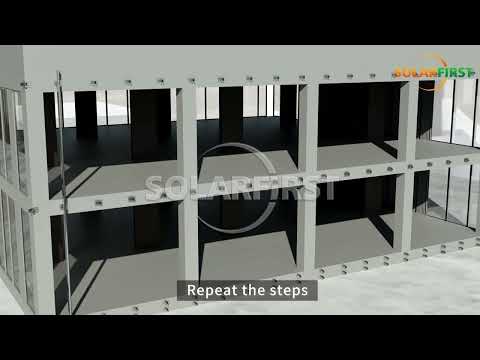
Source: YouTube — BIPV curtain wall installation walkthrough for contractors.

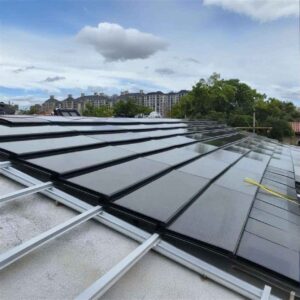
PV glass eliminates the visual disruption of roof-mounted arrays while performing the same energy function — integrated into the building from the start.
Positioning PV Glass as a Strategic Asset, Not Just a Product
PV glass solves multiple problems in a single specification decision:
- Design: Replaces conventional glazing without compromising aesthetics
- Energy: Generates on-site renewable electricity, reducing grid dependency
- Compliance: Supports LEED, BREEAM, IECC, and renewable energy mandates
- Cost: Delivers demonstrable ROI through energy savings, property value increases, and tax incentives
- Differentiation: Positions contractors, suppliers, and design firms ahead of the regulatory curve
The advice for any stakeholder in the residential construction chain — whether you are a curtain wall contractor, an EPC, a building material distributor, or an architecture firm — is to engage with BIPV glass early in the design and procurement process. The most value is captured when PV glass is specified at concept stage, where orientation, glazing ratios, and framing systems can be optimized for both performance and aesthetics.
The future of residential construction is integrated, intelligent, and energy-generating. Buildings that merely consume energy are already behind the standard the market is moving toward. PV glass is not a premium add-on for forward-thinking projects — it is becoming the baseline expectation for high-performance residential design.
Ready to specify BIPV glass for your next project? Connect with a certified BIPV supplier or EPC partner to get a performance simulation and system specification tailored to your project’s climate, orientation, and design requirements.
Glossary of Key Terms
| Term | Definition |
|---|---|
| BIPV (Building-Integrated Photovoltaics) | Solar technology integrated directly into the building envelope (glass, roofing, facades) rather than mounted on top |
| PV Glass | Glass units with embedded solar cells that generate electricity from sunlight |
| U-value | Measure of heat transfer through a building element; lower = better insulation |
| SHGC | Solar Heat Gain Coefficient; fraction of solar radiation that enters as heat; lower = less heat gain |
| IGU (Insulated Glass Unit) | A sealed glass assembly with two or more panes separated by a gas-filled space for insulation |
| LEED | Leadership in Energy and Environmental Design — the most widely used green building certification system globally |
| BREEAM | Building Research Establishment Environmental Assessment Method — the UK-origin green building standard |
| IECC | International Energy Conservation Code — U.S. model code for building energy efficiency |
| EPC | Energy Performance Contractor — a firm that designs and implements energy systems in buildings |
| Net-Zero Energy Home | A home that produces as much energy as it consumes on an annual basis |
| Curtain Wall | A non-structural exterior wall, typically glass and metal framing, that encloses a building |
| Low-e Coating | A microscopically thin metallic coating on glass that reduces infrared and UV heat transfer |
Frequently Asked Questions About Photovoltaic Glass for Homes
How does photovoltaic glass differ from traditional solar panels in residential applications?
Traditional solar panels are mounted on top of a building’s existing structure — typically on the roof — using racking systems. They are an addition to the building. Photovoltaic glass, by contrast, is integrated directly into the building envelope: it is the window, the skylight, or the facade panel. This means PV glass performs two functions simultaneously — serving as structural glazing and generating electricity — without occupying additional space or altering the building’s silhouette. For residential applications, this translates to cleaner aesthetics, no roof penetrations, and a simpler coordination process during construction.
Can PV glass be customized for different architectural styles and homeowner preferences?
Yes. Modern PV glass is available in a wide range of transparency levels (from nearly opaque to lightly tinted semi-transparent), colors (neutral gray, bronze, blue, black), and custom dimensions. Curvature is possible for specialized architectural applications. This flexibility makes PV glass suitable for contemporary minimalist designs, traditional homes with large glazing areas, and everything in between — without forcing the design to conform to the product.
What is the typical energy output of residential PV glass compared to standard solar panels?
PV glass efficiency varies by product type and installation orientation. Thin-film BIPV glass typically achieves efficiencies in the range of 6–12%, compared to 18–22% for standard crystalline silicon panels. However, because PV glass replaces glazing that would otherwise generate zero energy, its net contribution is additive to the building’s performance rather than a direct substitute for roof-mounted panels. In south-facing vertical facade applications, modern PV glass achieves 70–90% of the energy output of a comparably sized roof panel installation.
Is PV glass suitable for retrofit projects, or is it limited to new construction?
PV glass works well in both scenarios. For new construction, it can be designed into the building from day one — optimizing orientation, sizing, and framing for maximum performance. For retrofit projects, it is commonly introduced as a replacement for aging or underperforming facade glazing during planned renovation cycles. A curtain wall replacement that also adds energy generation is a straightforward upgrade for building owners seeking both performance improvement and ESG value.
How does PV glass impact the structural and thermal performance of a building envelope?
BIPV glass units are engineered to meet or exceed the structural and thermal standards of conventional architectural glazing. As insulated glass units (IGUs), they achieve competitive U-values (typically 1.0–1.4 W/m²K for double-glazed configurations) and provide meaningful solar heat gain control through the energy-conversion process. They do not compromise the structural integrity of curtain wall systems and are compatible with standard load calculations for facade design.
What are the maintenance requirements for photovoltaic glass in residential settings?
Maintenance is minimal. PV glass has no moving parts, so mechanical wear is not a concern. Routine maintenance consists of periodic cleaning with standard non-abrasive glazing cleaning methods (water, mild soap, soft cloth or squeegee) — the same process used for any architectural glass. Electrical performance should be monitored annually through the inverter system. Most manufacturers provide 25-year warranties covering performance degradation, with typical annual efficiency loss of less than 0.5% per year.
Are there financial incentives or tax credits available for installing PV glass in homes?
The U.S. Section 25D Residential Clean Energy Credit provided a 30% federal tax credit for qualifying PV glass installations in residential properties through December 31, 2025. Many states and utilities offer additional incentives — rebates, property tax exemptions, and net metering programs — that can significantly reduce effective installation costs. Contractors and homeowners should consult the DSIRE incentive database for current state-specific programs.
How do contractors handle electrical integration when installing PV glass?
PV glass units are manufactured with integrated electrical connections (junction boxes and output leads) that connect to standard string or microinverters. The inverter converts the DC power generated by the glass into AC power for the home’s electrical system. This work is handled by the licensed electrical contractor in coordination with the glazing installer. When properly planned at design stage — with cable routing integrated into the curtain wall framing — the electrical installation adds minimal complexity to the overall glazing scope.
Can PV glass be combined with battery storage and smart home energy systems?
Yes — BIPV glass is an ideal component of an integrated home energy ecosystem. The electricity generated by PV glass feeds into the home’s electrical system through the inverter, where it can power loads directly, charge a home battery storage system (such as a Tesla Powerwall or comparable product), or be exported to the grid via net metering. Integration with smart home energy management systems allows homeowners to optimize self-consumption, time-of-use billing, and grid feedback in real time.
What is the lifespan and warranty coverage for residential-grade PV glass?
High-quality PV glass carries a 25-year power output warranty, typically guaranteeing at least 80% of rated output at year 25. Material and workmanship warranties are commonly 10–12 years. Given that the glass itself has no moving parts and is protected by the same lamination and edge-sealing technology used in standard architectural glass, real-world lifespans frequently exceed the warranty period. Studies suggest that well-maintained PV modules continue operating with minimal degradation beyond 30 years (Sinovoltaics).
How does PV glass support architects in achieving net-zero energy building goals?
Net-zero energy buildings must balance total annual energy consumption with on-site generation. PV glass contributes directly to the generation side of that equation while simultaneously improving the envelope performance that determines consumption. For glazing-intensive residential designs — large windows, skylights, glass balustrades — PV glass transforms glazed surfaces from energy liabilities into energy assets. This is a critical enabler for achieving net-zero balance without adding separate solar array infrastructure.
What support do manufacturers and suppliers provide for specifiers, contractors, and EPCs?
Leading BIPV glass suppliers provide technical specification support including energy yield simulations (based on project location, orientation, and glazing ratios), BIM-compatible product models, structural certifications, and sample supply for design review. Installation training for glazing and electrical contractors is typically available, and some manufacturers provide on-site commissioning support for larger projects. Performance monitoring tools — tracking actual vs. expected energy generation over time — are commonly offered as part of the system package.