Understanding Microinverter Capabilities and Limitations — A Technical Guide for Solar Distributors, Agents, and System Integrators
 An off-grid solar installation demands much more than just panels — inverter selection is the difference between a reliable system and a costly failure. (Image: Unsplash)
Introduction: Why Microinverters and Off-Grid Systems Are Often Misunderstood
The DIY solar market has exploded over the past three years. Industry data from Fortune Business Insights pegs the global microinverter market at USD 4.78 billion in 2025, projected to reach USD 16.82 billion by 2034 — a compound annual growth rate of nearly 15%. With this surge in popularity comes a parallel surge in confusion, particularly among customers who have done just enough research to be dangerous.
Marketing language doesn’t help. Phrases like “works anywhere,” “module-level intelligence,” and “maximum power optimization” sound compelling on a product data sheet, but they do not tell the full story about where these technologies genuinely belong — and where they absolutely do not.
For solar distributors, agents, and building contractors, this confusion creates a painful operational reality: customers call back with system failures, warranty disputes escalate, and your reputation takes the hit. A customer who installed microinverters in their remote cabin based on a misinformed recommendation isn’t just an unhappy buyer — they’re a liability.
This guide is designed to give you the technical clarity to cut through the noise. It explains precisely what microinverters can and cannot do in off-grid environments, when hybrid configurations make sense, and how to build a consultative sales process that protects your customers and your business. At Jia Mao BIPV, we’ve supported hundreds of distributors across global markets, and the inverter misapplication problem is among the most preventable — and most costly — issues we consistently see in the field.
What Are Microinverters and How Do They Function?
Core Technology and Design Principles
A microinverter is a small power conversion device mounted directly beneath an individual solar panel. Its primary job is to convert the Direct Current (DC) electricity produced by that specific panel into Alternating Current (AC) electricity — essentially performing at the module level what a traditional string inverter performs for an entire array of panels.
The core advantage this architecture offers is module-level Maximum Power Point Tracking (MPPT) — a process by which the inverter continuously adjusts its operating point to extract the highest possible energy from each panel, regardless of what neighboring panels are doing. In a shaded or partially obstructed installation, this is genuinely powerful: research cited by the National Renewable Energy Laboratory (NREL) shows microinverter architectures can yield 5–25% more energy than string inverters on partially shaded arrays.
Each microinverter communicates with a central monitoring platform via powerline communication (PLC) or wireless protocols such as Zigbee or Wi-Fi. This means installers and system owners can track the real-time performance of every individual panel — a granular monitoring capability that string inverter systems historically lacked.
Efficiency ratings for leading microinverters from manufacturers like Enphase, APsystems, and Hoymiles typically fall between 96–97% peak CEC efficiency. This is competitive with string inverters in comparable conditions.
Key Operational Characteristics
Understanding the operational envelope of a microinverter is essential before any product recommendation. A standard residential microinverter such as the Enphase IQ8 operates within an input voltage range of roughly 16–60V DC, with a peak output capacity of approximately 245 VA per unit. Its output is a clean 240V (or 230V in markets like Europe and Australia) AC sine wave at 60Hz or 50Hz respectively.
Critically, microinverters respond extremely quickly to changing solar irradiance — the embedded MPPT algorithms typically sweep and reset within milliseconds. Their thermal management is passive in most designs, relying on aluminum heat-sink housings rated for operating ambient temperatures between -40°C to +65°C. Most leading microinverter products carry 25-year limited warranties, which is a compelling selling point for distributors offering long-term system guarantees.
But none of these characteristics address the fundamental operational dependency that makes microinverters problematic for off-grid use — which we’ll examine next in precise detail.
The Off-Grid System Fundamentals You Must Know
Essential Components of Off-Grid Solar Setups
An off-grid solar system is an energetically isolated ecosystem. It produces power, stores it, manages it, and delivers it — all without any connection to a utility grid. The four foundational components are:
Solar panels generate DC electricity from sunlight. A battery bank stores that energy for use when the sun isn’t shining — sizing typically ranges from 10 kWh for small cabins to 100+ kWh for larger homesteads or agricultural facilities. A charge controller — usually an MPPT charge controller — regulates the voltage and current flowing from the panels into the batteries, preventing overcharge damage. And a battery-based inverter converts the stored DC energy into usable AC electricity for loads while simultaneously managing the state of the entire system.
System voltage configurations are typically 12V (small, low-power setups), 24V (medium residential applications), or 48V (the standard for most serious off-grid installations above 3 kW). The voltage configuration must be consistent across the charge controller, battery bank, and inverter — any mismatch creates catastrophic inefficiency or outright system failure.
Load management is the hidden challenge of off-grid design. Unlike grid-tied systems where demand can be met instantly from infinite grid supply, off-grid systems have finite stored energy. Proper load profiling — mapping which appliances run at which times and for how long — is non-negotiable in system design.
Power Flow and Energy Management in Isolated Systems
The fundamental logic of an off-grid system operates as a closed loop. Panels generate DC → charge controller regulates flow into batteries → battery-based inverter draws from batteries to produce AC power → loads consume that AC power. At night, or on heavily overcast days, the system runs entirely on stored battery energy.
Battery charging cycles matter enormously to system longevity. Depth of Discharge (DoD) — how deeply you drain a battery before recharging — directly impacts lifespan. A lithium iron phosphate (LiFePO4) battery discharged to 80% DoD daily might last 3,000–5,000 cycles (roughly 8–14 years), while the same battery routinely discharged to 100% DoD could fail in under 500 cycles. The battery inverter’s built-in Battery Management System (BMS) enforces DoD limits automatically — this is a critical protection function with no equivalent in any microinverter.
Many serious off-grid installations also integrate a diesel or propane generator as a backup. The battery inverter handles automatic transfer switching (ATS) — detecting when battery voltage drops below a threshold and starting the generator seamlessly, without interrupting AC loads. This is sophisticated, safety-critical automation that requires centralized system intelligence.
The Core Problem: Why Microinverters Struggle Off-Grid

Misconception #1 — Microinverters Can Replace Battery Inverters
This is the most dangerous misconception in the market, and it stems from a superficial understanding of what microinverters actually do. A microinverter’s entire operating logic is predicated on the existence of a live AC voltage reference — specifically, the 50Hz or 60Hz sine wave provided by the utility grid. The microinverter synchronizes its own AC output to this reference through a process called Phase-Locked Loop (PLL) synchronization.
Without a grid reference, the microinverter has no waveform to synchronize to. It cannot self-generate the AC reference voltage. It has no battery terminals, no charge controller circuitry, no BMS, and no way to “decide” when energy should flow in or out of storage. In the absence of a grid signal, UL 1741-compliant microinverters are specifically programmed to shut down — a safety feature called anti-islanding protection, designed to prevent a microinverter from energizing a grid that utility workers assume is de-energized.
In practical terms: if you install microinverters on an off-grid cabin with no battery inverter, the system produces exactly zero usable electricity, even in full sunshine. Every single watt is wasted because there is no valid AC reference for the microinverter to lock onto.
Misconception #2 — Microinverters Provide Sufficient System Voltage Regulation
Off-grid systems require tight voltage regulation to protect both the battery bank and connected loads. A 48V battery system, for example, must remain within approximately 44–58V DC depending on battery chemistry and state of charge. Battery inverters incorporate sophisticated voltage regulation circuits that respond in real time to changes in both supply (solar generation) and demand (load switching).
Microinverters have no awareness of battery voltage. They operate entirely in the AC domain and have no mechanism to regulate the DC bus voltage of a battery bank. If battery voltage drops due to a cloud cover event or high load demand, a battery inverter responds by adjusting its draw and potentially triggering load shedding. A microinverter simply continues attempting to synchronize to an AC reference it can no longer maintain — and then trips offline.
The consequence for your customers: voltage collapse during peak demand events (running a well pump, an air conditioner compressor, or any high-inrush load) and complete system shutdown at precisely the moment reliable power is most needed.
Misconception #3 — Multiple Microinverters Create Redundancy
Some technically-minded customers propose scaling up microinverter count to create “redundancy” in an off-grid setting. The logic seems appealing: if one unit fails, the others keep running. But this reasoning misunderstands what redundancy actually requires in a power system.
True system redundancy requires centralized control intelligence — a master device that monitors overall system state, coordinates power flow between generation, storage, and loads, and enforces safety limits. A collection of independently operating microinverters has none of this. They are individual, decentralized AC generators with no shared communication backbone for energy management. They cannot coordinate battery charging rates, cannot enforce DoD limits, cannot shed loads intelligently, and cannot synchronize generator integration.
In a real-world failure scenario documented in a residential off-grid project in northern Canada, a customer installed eight microinverters alongside a small battery bank and a separate MPPT charge controller, believing the parallel configuration would provide robust power. During a winter week with limited solar irradiance, the batteries depleted because the microinverters couldn’t regulate charging through the separate charge controller interface, and the system collapsed entirely — requiring a complete redesign at significant retrofit cost.
When Microinverters Actually Work for Off-Grid (Limited Scenarios)
Hybrid Systems with Battery Backup and Proper Controllers
There is a legitimate — though technically demanding — scenario in which microinverters can play a productive role in an off-grid environment: AC-coupled hybrid systems. In this architecture, a battery-based inverter (such as a Schneider Electric XW Pro, SMA Sunny Island, or Sol-Ark) forms the local AC microgrid. The battery inverter generates the 50/60Hz sine wave reference that the microinverters need to synchronize.
The microinverters then operate in what is effectively a “virtual grid” created by the battery inverter’s AC output. Solar energy generated by the panels flows through the microinverters as AC power, into the AC bus, where the battery inverter can then convert it back to DC to charge the battery bank — a process that involves two conversion steps and carries an efficiency penalty of approximately 3–5% compared to direct DC-coupled charging.
This architecture works, but it demands extremely careful engineering. The battery inverter must support frequency-shift power control — a protocol by which the battery inverter signals the microinverters to throttle back production when the battery bank is full, by raising the AC bus frequency slightly above the standard 50/60Hz setpoint. Not all battery inverters support this protocol with all microinverter brands. Compatibility must be verified at the component specification level before system design is finalized.
Specific Use Cases Where Microinverters Add Value
In predominantly DC off-grid systems where an existing battery inverter already handles core energy management, microinverters can supplement AC generation with genuine benefits: module-level monitoring provides granular performance data that simplifies maintenance diagnostics, and individual MPPT per panel optimizes harvest from partially shaded or mixed-orientation arrays.
For distributors, this translates to a specific customer profile: mid-to-large off-grid installations where the client already has a properly designed battery-inverter system and wants to maximize harvest from a complex panel layout. This is an upsell opportunity, not a primary system architecture.
Technical Requirements for Off-Grid Microinverter Success
For AC-coupled off-grid microinverter deployments, the minimum technical requirements are non-negotiable. The battery bank must be sufficiently large to absorb AC-coupled power without exceeding the battery inverter’s absorption capacity — a rule of thumb is at least 1 kWh of battery capacity per 100W of AC-coupled microinverter capacity. The battery inverter must support frequency-shift throttling. All components must share compatible communication protocols. And commissioning must include validation of the frequency-shift response curve under full load conditions — not just a panel-by-panel startup test.
Traditional Battery-Based Inverters: Why They’re the Off-Grid Standard
 Battery-based inverters integrate charge control, load management, and protection into a single centralized system — the proven architecture for off-grid reliability. (Image: Pexels)
How Battery Inverters Solve Off-Grid Challenges
A battery-based inverter (sometimes called a “hybrid inverter” or “off-grid inverter”) is engineered from first principles to manage isolated power systems. Its internal architecture integrates multiple functions that microinverters cannot perform: an MPPT solar charge controller regulates power from the PV array directly into the battery bank; a battery management system enforces charging and discharging limits tailored to battery chemistry (lead-acid, LiFePO4, lithium NMC); a bidirectional inverter stage converts DC to AC for loads and AC back to DC for charging; and a transfer switch manages seamless transitions between solar, battery, and generator sources.
The result is a single, intelligent device that acts as the “brain” of the entire off-grid system — continuously monitoring voltage, current, state of charge, load demand, and generation capacity, and making real-time decisions to keep the system balanced and protected.
Critical Features That Microinverters Cannot Provide
The feature gap between microinverters and battery inverters is not a matter of degree — it’s a matter of fundamental design purpose. Battery inverters provide bulk/absorption/float charging algorithms tuned to specific battery chemistries. They provide automatic load shedding — dropping non-critical loads when battery voltage drops below a threshold, protecting essential loads. They provide generator start/stop automation with configurable parameters (minimum battery voltage, time-of-day restrictions, minimum run-time to prevent wet-stacking). They provide system-wide fault detection with configurable alerts and automatic shutdown protocols.
None of these capabilities exist in any commercially available microinverter, including advanced units like the Enphase IQ8 with its Sunlight Backup feature — a function that only provides limited, loads-restricted backup during grid outages, not true off-grid capability.
Performance Advantages for Off-Grid Applications
In real-world off-grid conditions, battery inverters demonstrate performance characteristics that directly translate to customer satisfaction and reduced after-sales support burden for distributors. High-frequency battery inverters typically achieve 93–97% DC-AC conversion efficiency at rated load, while low-frequency transformer-based units (the preferred choice for high-inrush loads like well pumps and compressors) deliver exceptional surge capacity — often 300% of rated continuous power for several seconds.
Battery inverters are also inherently scalable. Most major platforms (SMA Sunny Island, Schneider XW Pro, Victron MultiPlus) support parallel stacking — adding units to increase capacity as customer needs grow, without replacing the existing system. This is a compelling sales argument for growing agricultural or commercial off-grid applications.
Comparative Analysis: Microinverters vs. Battery Inverters for Off-Grid
Technical Specifications Comparison Table
| Parameter | Microinverter (e.g., Enphase IQ8) | Battery-Based Inverter (e.g., Victron Quattro 48/5000) |
|---|---|---|
| Primary Function | DC-AC conversion at module level | DC-AC inversion + battery charging + load management |
| Grid Dependency | Required (anti-islanding shutoff without grid) | Not required (self-forming AC bus) |
| Battery Management | None | Fully integrated (MPPT + BMS protocols) |
| Input Voltage Range | 16–60V DC (panel-level) | 38–66V DC (48V battery system) |
| Output Capacity | 245–400 VA per unit | 3,000–15,000 VA (single unit) |
| Peak Efficiency | 96.5–97.5% (CEC rated) | 93–97% (load-dependent) |
| Surge Capacity | None (continuous rating only) | 200–300% rated power for 1–5 seconds |
| MPPT Channels | 1 per module | 1–3 (dedicated charge controller input) |
| Generator Integration | Not supported | Full ATS with configurable start/stop |
| Load Shedding | Not possible | Configurable priority-based load shedding |
| المراقبة | Module-level (individual panel data) | System-level (voltage, SOC, power flows) |
| UL Standard | UL 1741 (grid-tied) | UL 458 / UL 1741 SA (off-grid/hybrid) |
| الضمان | 25 years (most brands) | 5–10 years (extended available) |
| Typical Unit Cost (USD) | $180–$250 per unit | $1,500–$5,000 per unit |
Cost Analysis for Distributors and Resellers
The per-unit cost comparison between microinverters and battery inverters often misleads buyers into thinking microinverters are the budget-friendly option. For an off-grid system sized at 5 kW of solar, consider the real total system cost:
A microinverter-only approach (which technically cannot function off-grid) would require 12–15 microinverter units at ~$200 each ($2,400–$3,000), plus a separate MPPT charge controller ($300–$800), plus a separate battery inverter to actually manage the system ($2,000–$4,000) — totaling $4,700–$7,800, with redundant functionality and complex inter-component communication requirements.
A battery inverter-based approach with integrated MPPT charge control and a traditional string inverter input totals $2,500–$5,000 for the core inverter platform, plus $300–$600 for DC cabling and protection — $2,800–$5,600 total, with unified system management, single-vendor support, and straightforward commissioning.
Over a 10-year system lifespan, the battery inverter approach consistently delivers lower total cost of ownership — particularly when accounting for reduced technical support calls, simpler troubleshooting, and single-warranty management.
Installation Complexity and Support Requirements
From an installation partner perspective, battery inverter systems follow a well-established commissioning procedure: size the battery bank, configure the charge controller parameters for battery chemistry, set the AC output voltage and frequency, configure load priorities, and test generator integration. The process is mature, widely documented, and supported by extensive manufacturer training programs.
Microinverter installations in hybrid off-grid configurations add substantial complexity: verifying battery inverter compatibility with specific microinverter brands, validating frequency-shift response curves, ensuring the battery inverter’s AC output is stable enough to serve as a microinverter reference, and troubleshooting communication failures between separate monitoring ecosystems. This is specialized work that requires your installation partners to be trained on two separate system architectures simultaneously — a meaningful increase in training cost and error risk.
Real-World Case Studies: Off-Grid System Failures and Successes
 Proper system design separates successful off-grid installations from expensive failures — and the inverter selection decision sits at the heart of every outcome. (Image: Pexels)
Case Study #1 — Microinverter Misapplication in a Remote Cabin
A residential customer in a mountainous region of British Columbia, Canada, purchased a 3.6 kW system consisting of nine 400W panels each fitted with a brand-name microinverter. The distributor — unfamiliar with off-grid requirements — recommended the system based on the microinverter brand’s strong marketing for residential rooftop applications. A 10 kWh LiFePO4 battery pack was added as a “storage supplement,” connected via a basic grid-tied string inverter acting as a bypass.
Within three weeks of commissioning, the customer reported complete power loss during evening hours and intermittent daytime failures. Investigation revealed the core problem: the microinverters had no valid AC grid reference during the battery-only periods and were shutting down via anti-islanding protection. The “battery storage” was not integrated with any battery management system capable of forming an AC bus reference. The solar array was generating zero AC output during battery operation.
The retrofit solution required the complete replacement of the battery management system with a proper off-grid inverter-charger ($3,200 in hardware alone), plus additional labor for reconfiguration and commissioning. The customer’s total system cost increased by 47% over the original quote. The distributor absorbed the labor cost to preserve the relationship.
Lesson for your team: Off-grid recommendations require a specific discovery question before any product suggestion: “Will this system ever operate without a utility grid connection, even temporarily?” If the answer is yes, battery inverter architecture is mandatory.
Case Study #2 — Successful Hybrid Microinverter Implementation
A boutique eco-resort in rural New Zealand required a 22 kW solar system to serve a mix of AC loads (kitchen equipment, HVAC, guest room appliances) while maintaining complete grid independence. The system designer specified a core battery-based inverter bank (three Schneider XW Pro units stacked for 18 kW continuous output), a 120 kWh LiFePO4 battery bank, and — as a supplementary generation layer — 40 microinverter units on a complex, multi-pitch roof where shading from an adjacent ridge created significant inter-panel variability.
The microinverters in this configuration served a specific, valid purpose: module-level MPPT optimization extracted an additional 12–18% harvest from the shaded panels compared to a string inverter alternative, verified through 90-day production monitoring. The Schneider inverters formed the AC bus reference, and frequency-shift throttling was validated and configured prior to commissioning.
Over 18 months of operation, the system achieved a renewable energy fraction of 94%, with the diesel backup generator running an average of just 3.4 hours per month during winter. Guest satisfaction surveys cited “100% power reliability” as a top-three amenity. The distributor who designed and supplied this system has since secured two additional contracts from the same hospitality group.
Case Study #3 — Traditional Battery Inverter System Reliability
A 15 kW off-grid system designed by a specialized off-grid integrator for a remote agricultural operation in rural Australia — servicing a 3-bedroom homestead, water pump, workshop machinery, and cold storage — was commissioned eight years ago using a Victron MultiPlus-II inverter-charger platform, 48V 48 kWh lead-acid battery bank (later upgraded to LiFePO4 in year five), and a conventional string DC input.
Over eight years of continuous operation in an environment characterized by temperature extremes (summer highs of 47°C, winter lows of -2°C), the system required two scheduled battery maintenance services, one inverter firmware update, and the battery bank replacement in year five (planned and budgeted by the customer from the outset). Total unplanned downtime over eight years: less than four hours, caused by a rodent-damaged AC cable — a physical infrastructure issue unrelated to the inverter system itself.
The homeowner’s recorded energy expenditure over eight years totaled approximately AUD $28,000 (hardware, maintenance, generator fuel) versus an estimated AUD $91,000 in utility costs had the property remained grid-connected. This is the kind of documented ROI narrative that distributors should be equipped to tell.
🎬 Watch: Microinverter vs. Battery Inverter — Technical Deep Dive
Understanding the operational differences between these technologies is much clearer when you can see them in action. This video from a leading solar engineering educator covers the key technical distinctions that align directly with what your customers need to understand:
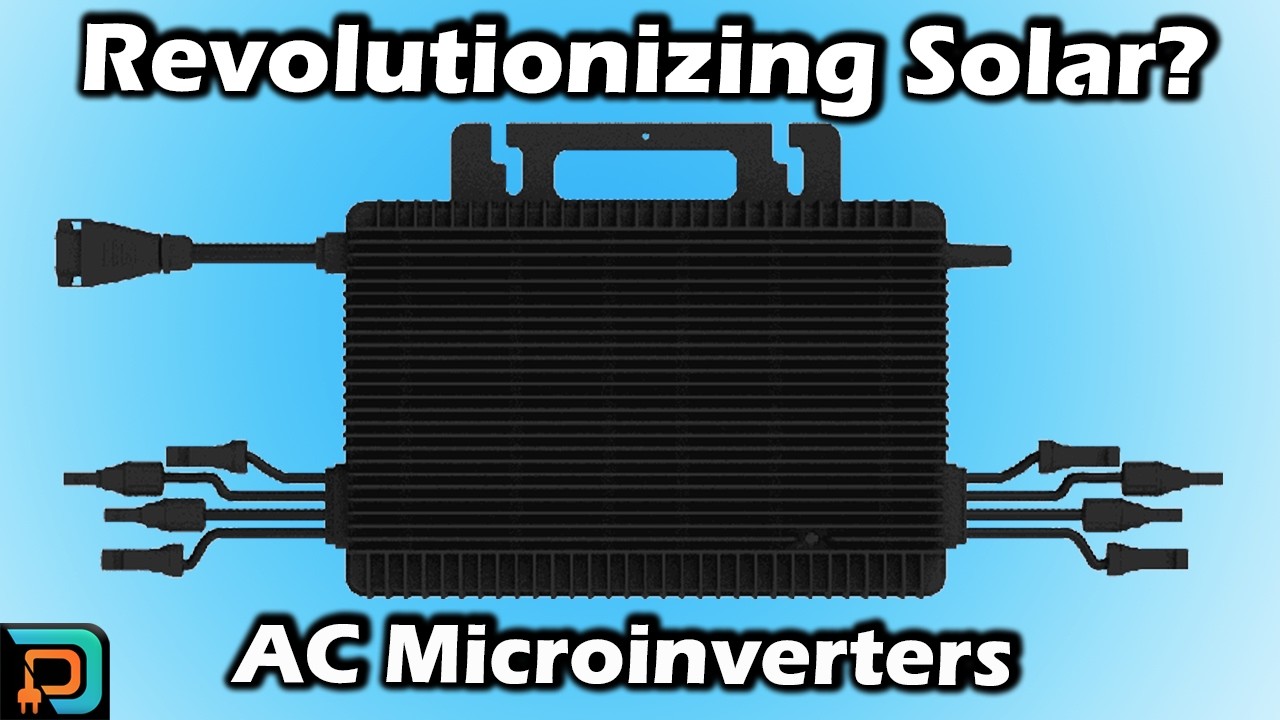
▶️ Should You Use a Microinverter? – Real Test! (YouTube) — Recommended viewing for your sales and technical team.
Practical Guidance for Distributors and Sales Professionals

How to Assess Customer Requirements
The single most important step in any off-grid product recommendation is front-loading the discovery process. Before any product discussion, your sales team should establish answers to the following questions:
The first question is location and grid access: “Is there a utility grid connection at the installation site, or will the system need to operate in complete grid isolation?” This seems obvious, but many customers don’t distinguish between “we want to reduce our grid dependence” (a hybrid scenario) and “we have no grid access” (a true off-grid scenario).
The second question concerns energy demand: “What is the average daily energy consumption, and what are the peak load events?” A 10 kWh/day average with a 5 kW well pump as the peak load requires dramatically different system architecture than a 10 kWh/day average with only 1 kW peak loads.
The third question addresses autonomy requirements: “How many consecutive days without significant solar irradiance does the system need to survive independently?” For climates with extended cloudy seasons — Pacific Northwest, Northern Europe, Canadian prairies — the answer may be 5–7 days, requiring battery bank sizes that completely change the system economics.
Finally, the fourth question covers seasonal variation: “Does solar resource availability change significantly across seasons at this location?” A system designed for summer performance in a northern latitude location may be dramatically undersized for winter operation.
Product Recommendation Framework
Based on the discovery questions above, your recommendation logic should follow a clear decision architecture:
If the customer has reliable grid access and no backup requirement, a grid-tied microinverter or string inverter system is appropriate. This is the microinverter’s native environment — it excels here.
If the customer has grid access but requires backup power during outages (a common scenario for businesses and homes in areas with unreliable utility service), a hybrid inverter system with battery storage is appropriate. Microinverters can be AC-coupled into this architecture with proper compatibility verification.
If the customer has no grid access — full stop — a battery-based inverter system is mandatory as the primary energy management platform. Microinverters may supplement this system in specific shading scenarios, but they cannot serve as the system foundation.
This decision framework should be documented and distributed to your entire sales team as a standing reference document. At Jia Mao BIPV, we provide distributor partners with consultation templates and system sizing tools — explore our inverter product portfolio و BIPV solutions catalog for specifications and compatibility guidance.
For broader technical context on how off-grid systems compare to grid-tied and hybrid architectures, the Clean Energy Reviews guide to designing off-grid and hybrid solar systems is an excellent reference to share with technically-minded customers.
Managing Customer Expectations and Education
The most effective way to manage customer expectations around microinverter limitations is through analogy rather than technical specification. An accessible framing for your sales team: microinverters are like Formula 1 race cars — extraordinarily optimized for a specific environment (the grid-tied “circuit”), but completely unable to navigate off-road terrain. Battery inverters, by contrast, are purpose-built 4×4 platforms — perhaps less glamorous in a brochure, but engineered to handle the real-world unpredictability of isolated system conditions.
When customers push back (“But the microinverter manufacturer’s website says it works with battery storage”), your team should be equipped to explain the specific difference between grid-tied systems with battery backup (where the grid still acts as the primary voltage reference) and true off-grid systems (where no external reference exists). The Enphase IQ8’s “Sunlight Backup” feature, for example, provides limited power to designated backup loads during grid outages — but only during daylight hours, only within specific load limits, and only from a pre-configured backup circuit. It is emphatically not an off-grid system.
For your team’s ongoing education, the SRNE Solar comparison guide on string vs. micro vs. hybrid inverters provides an accessible technical reference that complements the guidance in this article.
Positioning Your Product Portfolio
The technical depth demonstrated in this guide is itself a positioning strategy. Distributors who can articulate the difference between microinverter grid synchronization requirements and battery inverter BMS integration are not just product sellers — they are system design consultants. That expertise commands higher margins, deeper customer relationships, and repeat business.
Effective portfolio positioning for off-grid markets involves three tiers. A basic off-grid tier centers on a quality battery inverter platform with integrated MPPT charge control, a mid-sized LiFePO4 battery bank, and a conventional string PV input — appropriate for small cabins and agricultural outbuildings. A mid-range hybrid tier adds system redundancy, larger battery capacity, and possibly an AC-coupled microinverter supplementary layer for complex roof geometries. A premium integrated tier for commercial or agricultural applications incorporates multiple battery inverter units in parallel stack, advanced monitoring, generator integration, and comprehensive load management programming.
You can explore Jia Mao BIPV’s full range of solar energy products — from high-efficiency solar panels to microinverters vs. string inverter comparison resources — to build tiered proposal packages for your customers. For advanced reading on system-level BIPV integration, the BIPV installation and design guide provides comprehensive technical context.
Glossary of Key Terms
For reference during customer consultations or team training, the following definitions clarify the core technical concepts in this article:
MPPT (Maximum Power Point Tracking): An algorithm used by inverters and charge controllers to continuously find and operate at the voltage/current combination that extracts maximum power from solar panels under varying irradiance and temperature conditions.
Anti-Islanding Protection: A safety feature built into grid-tied inverters (including microinverters) that causes them to shut down automatically when the utility grid is disconnected or goes offline. This prevents the inverter from energizing grid wiring that utility workers may be servicing.
AC Coupling: A system architecture in which solar panels connected to AC-output inverters (such as microinverters) feed into the AC bus of a battery-based inverter system. The battery inverter manages all DC-side battery functions; the microinverters operate on the AC side.
Frequency-Shift Power Control: A communication method by which a battery inverter signals AC-coupled inverters (including microinverters) to reduce their output power by slightly raising the AC bus frequency above the nominal setpoint (e.g., from 60Hz to 62Hz). This prevents battery overcharge in AC-coupled systems.
Depth of Discharge (DoD): The percentage of a battery’s total capacity that has been consumed before recharging. Higher DoD per cycle reduces total battery lifespan. LiFePO4 batteries tolerate up to 80–90% DoD; lead-acid batteries should typically not exceed 50% DoD.
State of Charge (SOC): The remaining energy in a battery expressed as a percentage of full capacity. Battery inverters continuously monitor SOC to make load management and charging decisions.
Phase-Locked Loop (PLL): An internal circuit in grid-tied inverters that synchronizes the inverter’s output waveform to an external AC reference (typically the utility grid). Without a stable PLL reference, the inverter cannot produce synchronized AC output.
Frequently Asked Questions (FAQs)
FAQ #1: Can I use microinverters without a battery system in an off-grid setup?
No. Microinverters require a grid or virtual grid (AC bus reference) to function. Without a battery-based inverter forming this reference voltage, microinverters will shut down via anti-islanding protection even in full sunshine. Off-grid systems must have battery-based inverters to manage energy storage, provide the AC voltage reference, and regulate system voltage. Attempting to run microinverters without this reference produces zero usable AC power output.
FAQ #2: Will multiple microinverters in parallel work for off-grid applications?
While parallel microinverter configurations are technically achievable in AC-coupled hybrid architectures, they require a battery-based inverter to form the AC bus reference and manage centralized energy control. Without that battery inverter backbone, multiple microinverters in parallel still have no voltage reference to synchronize to, no battery management capability, and no mechanism for load priority management — making them non-functional for true off-grid use.
FAQ #3: What’s the difference between microinverter efficiency and battery inverter efficiency in off-grid systems?
Microinverters achieve 96–97.5% peak CEC efficiency in converting panel-level DC to AC in grid-tied conditions. Battery inverters achieve 93–97% efficiency in DC-AC conversion, with additional conversion losses in the battery charge/discharge cycle (typically 92–96% round-trip efficiency for LiFePO4). However, comparing efficiency ratings is less meaningful than comparing functional capability: microinverters lack the battery management, voltage regulation, and load control functions that are mandatory for off-grid operation. Efficiency comparisons between the two technologies are only meaningful when both are being considered for the same type of application — and for off-grid use, only battery inverters are architecturally qualified.
FAQ #4: Can microinverters work with a separate charge controller for off-grid use?
This creates a technically complex, redundant configuration that introduces significant integration risks. A microinverter produces AC output — it cannot interface directly with a DC charge controller, which manages DC charging current into the battery bank. You would need the AC output from the microinverter to be converted back to DC by an additional device before the charge controller could process it — adding conversion losses and components. A battery inverter with integrated MPPT charge control eliminates this complexity entirely, making it the appropriate architecture.
FAQ #5: Are microinverters safer than battery inverters for off-grid installations?
Neither technology is inherently safer than the other — they are designed for different application environments, and safety must be assessed within the context of intended use. Battery inverters include off-grid-specific safety features: low-voltage disconnect (LVD) to prevent battery over-discharge, configurable load shedding to protect critical circuits, overtemperature shutdown, and generator transfer safety interlocking. Microinverters include grid-tied safety features: anti-islanding protection, rapid shutdown compliance, and ground fault detection. Using microinverters in an off-grid environment bypasses the safety architecture they were designed around — which itself creates safety risk.
FAQ #6: What happens if I use a microinverter in an off-grid system during a power outage?
The microinverter will immediately shut down via anti-islanding protection when it detects the absence of a grid voltage reference. The solar panels continue generating DC power, but that power cannot be converted to usable AC. The system would operate entirely on stored battery power — if a properly sized battery bank is present — but the solar generation capability is completely lost for the duration of the outage. This defeats the fundamental purpose of having a solar array in an off-grid environment.
FAQ #7: Can I retrofit microinverters into an existing off-grid battery system?
Yes, in a properly designed AC-coupled configuration — but only if your existing battery inverter supports frequency-shift power control and is compatible with the specific microinverter brand you intend to install. The retrofit adds AC-side solar generation capability, which can be beneficial in complex roof geometries with significant shading. However, it adds system complexity, requires specialized commissioning, and introduces an additional monitoring ecosystem to manage. For most standard off-grid retrofits, upgrading the existing string DC input or adding additional panels to the existing charge controller is more cost-effective and simpler to maintain.
FAQ #8: How do microinverters compare to string inverters for off-grid use?
String inverters share the same fundamental limitation as microinverters for off-grid applications: they are grid-tied technology requiring an external AC voltage reference. Standard string inverters will also shut down via anti-islanding protection without a grid connection. Battery inverters — regardless of whether the solar array uses module-level microinverters or string-level DC input — remain the mandatory system management platform for isolated off-grid systems.
FAQ #9: What battery capacity do I need if I want to use microinverters off-grid?
In a properly designed AC-coupled off-grid system (where a battery inverter forms the AC bus reference), battery capacity must be sized based on daily energy consumption multiplied by desired autonomy days — not on the microinverter capacity. A commonly used rule of thumb for autonomy planning is: Battery Capacity (kWh) = Daily Load (kWh/day) × Autonomy Days ÷ DoD Limit. For a system consuming 20 kWh/day with 3-day autonomy and 80% DoD: The microinverter capacity in this scenario only affects how quickly the batteries recharge during daylight hours — the battery inverter manages all charging and voltage regulation.
FAQ #10: Are there any new microinverter technologies that work off-grid?
The Enphase IQ8 introduced “Sunlight Backup” capability — the ability to provide limited power to a designated backup circuit during grid outages, using only real-time solar production (not battery storage). This is a meaningful advancement, but it is not equivalent to true off-grid capability: it only functions during daylight hours, only within specific panel wattage and load circuit limits, and requires a compatible Enphase battery system (IQ Battery 5P) to extend operation beyond sunlight hours. For full off-grid independence, battery-based inverter platforms remain the established and proven standard.
FAQ #11: How much more expensive is a battery inverter compared to microinverters?
A quality battery inverter (e.g., Victron MultiPlus-II 48/3000) costs approximately $1,200–$2,000, compared to $180–$250 per microinverter unit. However, for a 5 kW solar system, you would need 12–15 microinverter units ($2,160–$3,750) plus a separate MPPT charge controller ($300–$600) plus a separate battery inverter anyway — totaling $3,660–$6,350 in core conversion equipment. A battery inverter with integrated MPPT replaces the charge controller and consolidates system management, typically delivering a lower total equipment cost and significantly lower integration complexity. For off-grid applications, microinverters add cost without replacing any mandatory system component.
FAQ #12: Can I use microinverters if I have a generator backup in my off-grid system?
Generator backup does not resolve the microinverter’s fundamental grid-dependency. A generator provides a local AC voltage source, which technically could serve as the reference that allows microinverters to synchronize — but this creates a configuration in which solar generation is only functional when the generator is running, eliminating the economic and operational benefit of solar entirely. A battery inverter with generator integration allows solar generation to charge batteries and supply loads both with and without the generator running — which is the operationally and economically rational design.
FAQ #13: What certifications and standards apply to off-grid inverters?
Grid-tied inverters, including microinverters, are certified under UL 1741 and must comply with IEEE 1547 for interconnection to the utility grid. Off-grid and hybrid inverter systems must comply with UL 458 (power converters/inverters for use in mobile applications) or the relevant UL 1741 SA (Supplemental Article) standard for standalone and island-mode operation, depending on jurisdiction and application. Energy storage systems must comply with UL 9540. Your installation partners and customers should verify that the specific inverter products being specified carry the certifications required by their local building authority and utility interconnection standards.
FAQ #14: How do I explain microinverter limitations to customers considering off-grid systems?
The most effective analogy for non-technical customers: a microinverter is like a high-performance navigation system designed for urban roads — extraordinarily precise and efficient in its intended environment, but fundamentally dependent on the road network (the grid) to function. An off-grid system is like driving across open terrain where no roads exist. You need a vehicle (battery inverter) built specifically for that environment — with its own power management, terrain-sensing capability, and self-sufficiency. No matter how advanced the navigation system is, it cannot substitute for the vehicle.
FAQ #15: What’s the most common mistake distributors make when recommending inverters for off-grid customers?
The most consistent error is anchoring product recommendations to the customer’s most recent reference point — typically a neighbor’s grid-tied microinverter system or a YouTube video featuring a DIY rooftop installation — without conducting a structured needs assessment. Microinverters dominate residential rooftop advertising because that is their largest market segment. Distributors who haven’t been specifically trained on off-grid system architecture default to recommending the product they sell most — even when it is architecturally incompatible with the customer’s actual application. The solution is a standardized pre-sale discovery questionnaire that makes grid access status a mandatory first-step qualification criterion.
Making the Right Inverter Choice for Your Customers
 Technical expertise is the most durable competitive advantage in the solar distribution business — it converts customer trust into long-term commercial relationships. (Image: Unsplash)
Key Takeaways for Distributors and Sales Professionals
The central insight of this guide is straightforward but consequential: microinverters are precision tools engineered for grid-tied environments, and their architectural dependency on an external AC voltage reference makes them fundamentally unsuitable as the primary inverter technology in true off-grid systems. Battery-based inverters remain the industry standard for isolated system operation — not because they are more glamorous or better marketed, but because they are purpose-built for the physical and electrical realities of operating without a utility grid connection.
Hybrid AC-coupled configurations represent a legitimate middle ground for specific applications — complex roof geometries, supplementary generation in existing battery systems, or large installations with defined shading challenges. But these configurations require verified component compatibility, specialized commissioning, and an appropriately sized battery inverter as the foundational system element.
The broader takeaway for your business is that technical differentiation — the ability to diagnose customer needs accurately and match those needs to the right system architecture — is the most defensible competitive advantage available to solar distributors. Price competition in commodity solar components is intense and margin-destructive. Consultative technical expertise is rare and commands premium positioning.
Action Items for Your Sales Strategy
The immediate priorities for your team are audit, training, and documentation. Begin by auditing your active customer database for any off-grid or hybrid installations where microinverters were recommended as the primary energy management technology — these accounts carry retrofit risk and should receive proactive technical outreach before a failure event forces reactive intervention.
Train your sales and technical teams using the framework in this guide. Establish the four discovery questions (grid access, daily load, autonomy requirement, seasonal variation) as a mandatory pre-sale checklist. Create a simple laminated decision tree card for your sales team to reference during customer visits.
Develop case study documentation from your successful hybrid and off-grid installations — the eco-resort and agricultural operation examples in this article illustrate the narrative power of real performance data. Customers and prospects respond to measured outcomes far more compellingly than to specification sheets.
Finally, build strategic partnerships with manufacturers of complementary off-grid technologies — battery management platforms, charge controllers, LiFePO4 battery suppliers — to offer complete, integrated system proposals rather than isolated product recommendations. Explore Jia Mao BIPV’s full product range as a starting point for building a comprehensive off-grid solution portfolio, and reference the hybrid vs. grid-tied vs. off-grid comparison guide for additional context to share with your customers.
Building Long-Term Customer Relationships
The solar distribution business ultimately runs on trust — and trust is built through competence demonstrated at critical decision moments. When a customer is considering a $30,000–$80,000 off-grid system investment, the distributor who can explain exactly why a specific inverter architecture is the right choice, supported by technical reasoning and real-world case study evidence, is the distributor who earns the sale, the referral, and the 10-year service relationship.
Preventing system failures through informed product recommendation is not just a technical obligation — it is a business development strategy. Every customer who avoids a costly retrofit because your team asked the right questions is a case study, a testimonial, and a referral waiting to happen.
Ready to Become an Off-Grid Solar Expert?
🎯 Download our exclusive Distributor’s Guide to Off-Grid System Design — featuring detailed specification comparisons, customer assessment templates, and product recommendation frameworks. Equip your sales team with the technical knowledge that converts customer inquiries into confident, profitable installations.
Get Your Free Distributor’s Resource Kit → Visit jmbipvtech.com
📅 Plus: Access our monthly webinar series where solar industry experts discuss emerging technologies, market trends, and advanced system design strategies specifically for distributors and resellers. Each session includes live Q&A and downloadable reference materials.
This article was prepared by the technical content team at Jia Mao BIPV, a specialized manufacturer and supplier of BIPV solar products, inverters, and integrated solar system components serving distributors, agents, and building contractors across global markets. For product inquiries, system design support, or distributor partnership opportunities, visit www.jmbipvtech.com.
External references: Clean Energy Reviews – Off-Grid System Design Guide | SRNE Solar – Inverter Type Comparison | Fortune Business Insights – Microinverter Market Report | Enphase – IQ8 Off-Grid Configurations