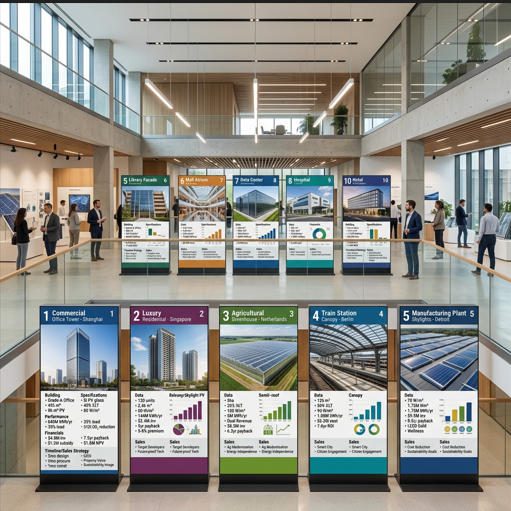
Transform Your Building Portfolio Into Revenue-Generating Assets While Meeting Sustainability Goals — Explore 10 real-world case studies of photovoltaic glass integration, packed with before/after metrics your clients will act on. Learn exactly how to position this technology across your distribution network.
Introduction: The Era of Buildings That Pay You Back
A decade ago, a building’s energy story ended at the utility meter — every kilowatt-hour was an operating cost to minimize. That model is breaking down. Today, forward-thinking developers, institutional clients, and property groups are converting their building envelopes into generation assets, and the product making it possible is photovoltaic (PV) glass — architectural glazing that produces electricity while simultaneously serving as a window, facade panel, skylight, or curtain wall.
For distributors, agents, and construction partners, this shift is not just a trend to observe — it is a revenue opportunity to capture before your competitors do. The global BIPV market was valued at USD 23.4 billion in 2025 and is projected to reach USD 98+ billion by 2034, growing at a compound annual rate of around 17% (Fortune Business Insights). The solar PV glass sub-segment alone is forecast to expand from USD 18.5 billion to USD 62.8 billion by 2032 (Persistence Market Research).
What you’ll find in this guide is not a catalogue of technical specs. It is a sales enablement toolkit: ten real-world building types, their before-and-after energy stories, the precise metrics that move procurement decisions, and the strategic framing that turns a project demo into a long-term distribution relationship.

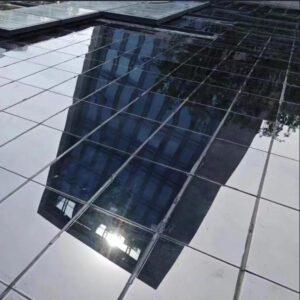
Modern commercial buildings with glass facades are prime candidates for photovoltaic glass retrofits and new-build BIPV integration. Photo: Unsplash
Quick Terminology Reference (Before We Dive In)
- BIPV
- Building-Integrated Photovoltaics. Solar components that replace conventional building materials (glass, roofing, cladding) while generating electricity.
- kWh / kWp
- Kilowatt-hour (energy produced over time) vs kilowatt-peak (rated output under standard test conditions). A 100 kWp system doesn’t always produce 100 kW — weather and angle matter.
- VLT
- Visible Light Transmission. A 30% VLT glass lets in 30% of visible daylight. Higher VLT = more daylight but usually less power per m².
- Payback Period
- The time needed to recover the net investment through energy savings. Formula: Net Investment ÷ Annual Savings = Years to Break Even.
- ROI
- Return on Investment. For BIPV, calculated over the full product lifespan (25–30 years), factoring in energy savings, avoided material costs, and incentives.
- W/m²
- Watts per square meter — the power density of a PV glass panel. Opaque BIPV panels: 120–220 W/m². Semi-transparent: 40–180 W/m².
10 Real-World Case Studies: Buildings Transformed Into Power Generators
European Corporate Headquarters — High-Rise Office Transformation
A 28-story glass-and-steel office tower in Frankfurt was consuming 4.2 million kWh/year — roughly €630,000 in annual electricity costs at local commercial rates. Its standard double-glazed curtain wall contributed zero energy back into the building. The building’s carbon intensity was clocked at 82 kg CO₂/m² annually, making ESG reporting an uncomfortable exercise for the corporate tenant.
Following a phased curtain wall replacement using semi-transparent PV glass panels across 3,400 m² of south and west-facing facades, the building now generates 680,000 kWh/year — covering roughly 40% of office floor common-area electricity demand. Energy costs dropped by €102,000 annually. Carbon intensity fell to 49 kg CO₂/m², a stat that now anchors the tenant’s annual sustainability report.
The glass replacement was already budgeted as part of a scheduled facade renovation. The incremental cost to upgrade to BIPV glass — versus standard high-performance glazing — reduced the net payback to under 10 years. Present this to your corporate clients not as “spending on solar” but as “redirecting your capex budget to an envelope that pays interest.”
Retail Shopping Center — Facade Renovation with Revenue Potential
A regional shopping mall in Spain — 62,000 m² of GLA — was operating with a standard glass and aluminum curtain wall system. Air conditioning alone consumed 1.8 million kWh/year during peak Mediterranean summer months. The center had committed to an ESG disclosure to its REIT parent but had no visible sustainability differentiator to communicate to shoppers or anchor tenants.
A 2,800 m² south-facing facade and entrance canopy installation using semi-transparent BIPV glass now produces 420,000 kWh/year. More importantly, the shading effect of the PV glass reduced solar heat gain, cutting HVAC load by a further 15%. Combined, annual electricity bills fell by approximately €85,000. Footfall surveys showed a 12% improvement in shopper dwell time attributed to a cooler, more comfortable interior climate.
📦 Distributor Opportunity: High-Volume Installation Potential
Retail REIT portfolios typically own 15–40 centers across a country. One successful installation creates a repeatable specification — the same product family, same technical documentation, same installation playbook — deployed across the entire portfolio. Distributors with a flagship mall reference can realistically negotiate preferred supplier agreements covering 50,000–150,000 m² of future glass area. That is where volume-tiered pricing structures become a genuine competitive moat.
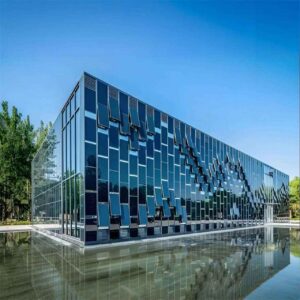
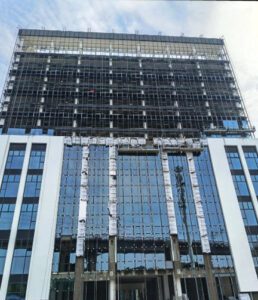
Commercial facades like this represent some of the highest-ROI opportunities for BIPV glass installation — especially when a renovation cycle is already planned. Photo: Unsplash
Educational Institution — Campus-Wide Integration Strategy
A 12-building university campus in the Netherlands was spending €1.1 million annually on energy across teaching buildings, research labs, and student housing. Flat concrete and brick rooflines on post-1970s structures were structurally sound but offered no passive or active energy features. The institution faced a government mandate to reach net-zero operations by 2035.
A phased 5-year BIPV integration program — combining roof-plane PV modules on gymnasium buildings, PV glass skylights on the main library atrium, and spandrel panel replacements on three faculty buildings — brought total installed capacity to 1.8 MWp. Annual generation: 1.65 million kWh, covering 72% of total campus consumption. The remaining 28% gap is being closed through a battery storage retrofit in Year 6. Net energy cost: down from €1.1M to €295,000/year.
University and public institution procurement cycles are slow — but they are extremely sticky. A distributor who provides a multi-phase implementation roadmap (with documentation, maintenance contracts, and performance monitoring) locks in a relationship that can run 8–12 years. Budget this as relationship infrastructure, not a one-time transaction.
Hospitality Complex — Aesthetic and Functional Balance
A 5-star beachfront resort in the Algarve, Portugal, was spending €480,000/year on electricity — the dominant cost line in a 320-room complex with outdoor pools, extensive F&B operations, and 24/7 guest climate control. The hotel group’s sustainability director had rejected traditional roof-mounted panels twice: the general manager argued they were visually incompatible with the resort’s premium aesthetic.
A bespoke BIPV glass installation across the main lobby atrium (1,100 m²) and the poolside pergola structure (600 m²) — using custom-tinted glass with 25% VLT and a bronze-spectrum coating — generates 255,000 kWh/year. The atrium glass now diffuses glare, reducing air conditioning demand by 18% in the lobby zone. Annual energy savings: €76,000. Guest satisfaction scores for “sustainability credentials” rose from 6.2 to 8.7 in post-installation surveys. The hotel group subsequently greenlit three additional resort properties for identical specifications.
💼 Commission Structure: Multi-Property Rollout Potential
This is the hospitality sector’s defining dynamic: once a brand standard is set at the flagship property, it cascades across the portfolio automatically. A distributor who locks in the brand specification gains access to every property in the pipeline without re-pitching. Negotiate your commercial terms on a portfolio-wide volume basis from the first deal.
Industrial Manufacturing Facility — Heavy-Load Energy Demands
A precision automotive components manufacturer in Bavaria was running three production shifts on a grid-dependent operation costing €2.3 million/year in electricity. With EU carbon border adjustment mechanisms (CBAM) tightening, the company’s energy-intensive production process was increasingly flagged as a supply chain risk by Tier-1 automotive clients demanding Scope 2 emissions reductions.
An 8,500 m² BIPV roof panel installation across two production hall rooflines generated 1.27 million kWh in Year 1 — equivalent to 35% of the facility’s non-process electricity demand (lighting, HVAC, compressed air). The company avoided €190,500 in grid costs. More critically, the Scope 2 emissions reduction enabled the manufacturer to retain a Tier-1 OEM contract that had been under review — estimated contract value: €4.2 million/year.
For industrial clients, energy savings alone rarely close a deal of this size. The real closing argument here was supply chain compliance. When you frame BIPV not as a green initiative but as a contract retention tool — one that directly protects revenue from OEM customers with Scope 2 mandates — the ROI conversation shifts from years to months in the procurement team’s mind.
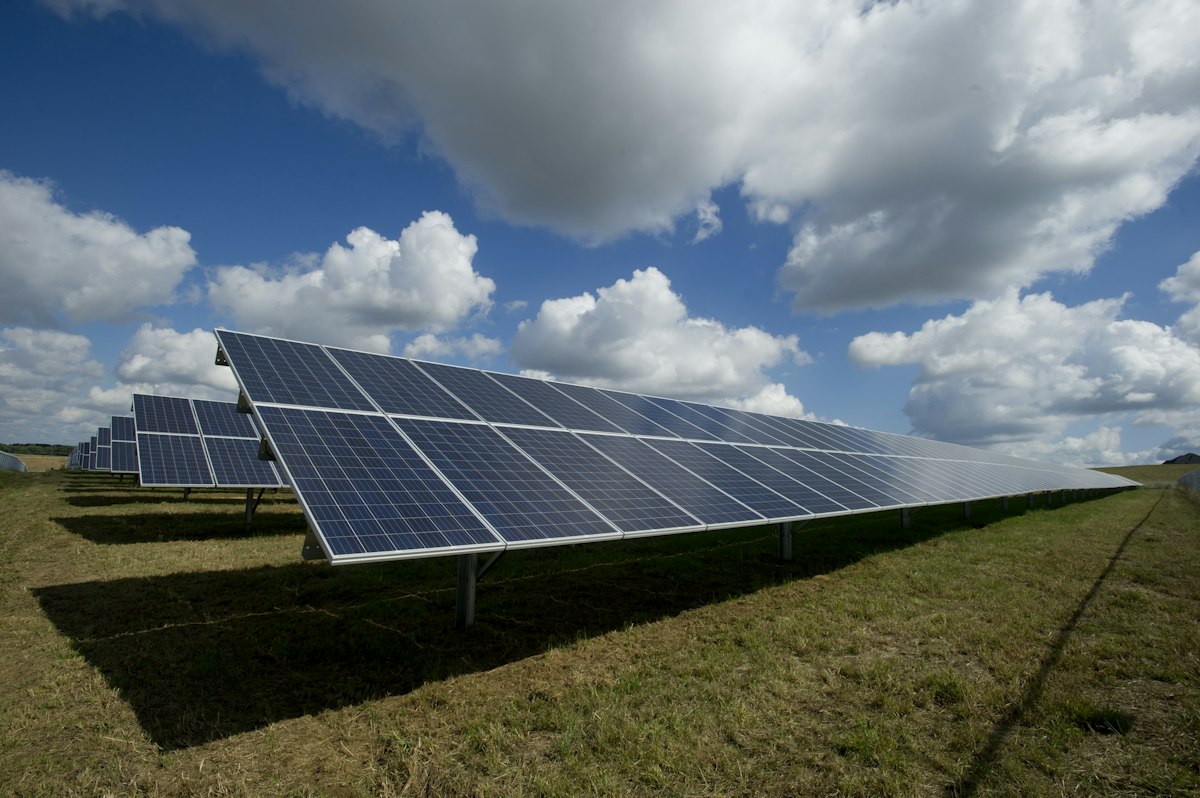
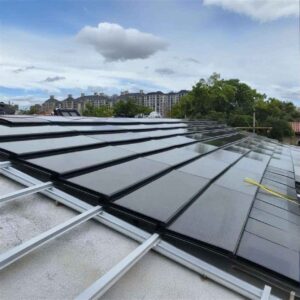
Industrial and manufacturing facilities with large roof surfaces represent some of the fastest payback BIPV opportunities — especially when driven by supply chain Scope 2 compliance requirements. Photo: Unsplash
Mixed-Use Urban Development — Integrated Energy Ecosystem
A 4.2-hectare mixed-use waterfront regeneration site in Rotterdam comprised retail units, residential apartments, a hotel, and office space — each running on entirely separate energy systems. The developer’s energy consultant calculated that fragmented procurement across five utility accounts was costing 22% more than a coordinated microgrid would.
BIPV glass was specified across the connecting arcade roofline (2,100 m²), three office facade zones (1,800 m² combined), and the hotel’s south-facing atrium wall (900 m²). Together, this coordinated generation network produces 780,000 kWh/year, shared across the development via a building microgrid. Average energy cost per tenant dropped 31%. The development achieved BREEAM ‘Outstanding’ certification — a premium that translated to a 14% higher average lease rate versus comparable non-certified schemes in the same postcode.
The 14% lease premium is the number that closes the deal with property developers. BIPV is not a cost center in this scenario — it is a revenue multiplier. Build this framing into your standard pitch for mixed-use and urban regeneration projects.
Government Building — Public Sector Sustainability Initiative
A regional government administrative complex in France — housing 1,400 civil servants across six interconnected buildings — was spending €1.6 million/year on energy. Budget constraints had blocked every major capital project for three consecutive years. The facilities director held a political mandate to cut government energy bills by 30% before the next electoral cycle, but the capex envelope was capped at €2.5 million.
A grant-funded BIPV project — combining EU Cohesion Fund support (35% of project cost) with national green building credits — installed 4,200 m² of BIPV across three south-facing building facades and the covered main courtyard. Total project cost: €2.1 million net after grants. Annual electricity generation: 630,000 kWh. Annual savings: €94,500. Net payback: 8.9 years — within the government’s 10-year infrastructure planning horizon. The project became a national case study referenced in two subsequent public tender specifications.
💰 New Revenue Stream: Government Contract Opportunities
Public sector BIPV tenders in the EU, UK, Singapore, Australia, and increasingly in Gulf states are now written with green energy integration as a mandatory specification component. One successful government reference project positions you directly in the tender shortlist for the next procurement cycle. Invest in relationships with public tender coordinators and grant consultants — they are often the real gatekeepers to this pipeline.
Healthcare Facility — Critical Infrastructure Resilience
A 650-bed regional hospital in the UK had a fully grid-dependent power infrastructure, with diesel backup generators covering only 20% of critical load in the event of a grid outage. After a 2022 winter storm caused a 6-hour partial outage — forcing postponement of 47 elective procedures and triggering an NHS audit — the hospital board identified energy resilience as a board-level risk. Annual energy spend: £2.4 million.
A BIPV glass installation across 3,100 m² of southward-facing corridor glazing and the main entrance canopy, paired with a 1.2 MWh battery storage bank, now provides 480,000 kWh of annual generation and a 4-hour full-critical-load backup capability without diesel. Grid dependency for daytime operations dropped from 100% to 67%. The hospital’s energy resilience score — used for NHS infrastructure compliance — improved from Red to Green. Annual energy savings: £72,000. No elective surgery cancellations due to power issues have occurred since commissioning.
Healthcare procurement does not respond to standard energy ROI arguments. The framing that works is operational continuity and regulatory compliance. A single cancelled surgical list costs an NHS trust £35,000–£75,000. Frame BIPV + storage as a risk mitigation asset that pays for itself through prevented operational disruption — a completely different conversation from a payback period calculation.
Residential High-Rise — Premium Living Appeal
A 42-floor luxury residential tower under development in Singapore was competing in a saturated premium market where differentiation through interior finishes had reached a ceiling. The developer’s marketing team needed a visible sustainability story that would resonate with high-net-worth buyers increasingly influenced by ESG values in their investment and lifestyle decisions. Standard energy features — double glazing, LED lighting — were table stakes, not differentiators.
The entire south and west facade — 7,200 m² of standard curtain wall — was upgraded to semi-transparent BIPV glass with a 30% VLT specification, maintaining the tower’s visual transparency while generating 1.08 million kWh/year. This covers all common-area electricity and contributes to each unit’s smart home energy dashboard. The common service charge fell by 28%. Pre-launch sales absorption — the rate at which units sold before construction completion — hit 94% within 6 weeks of launch, compared to a market average of 61%. Average sale price: SGD 3,850/ft² vs comparable projects at SGD 3,340/ft² — a 15.3% premium.
🏙️ Target Market: Luxury Development Partnerships
For luxury residential developers, the relevant ROI is not kilowatt-hours per year — it is price-per-square-foot and sales velocity. A 15% sale price premium on a 200-unit tower at an average unit size of 1,200 ft² is an additional SGD 124 million in revenue. Against a BIPV installation cost of roughly SGD 18–22 million, the developer’s return is not 8 years — it is the sales period. Position your product accordingly.
Transportation Hub — Public Infrastructure Modernization
A major intercity rail terminus in the Netherlands — serving 85,000 passengers daily — was spending €1.9 million/year on electricity for station lighting, escalators, air handling, ticketing systems, and retail unit supply. The national infrastructure authority faced a parliamentary directive to reduce public transport energy costs by 25% by 2027 without degrading passenger experience.
The station’s existing glass barrel-vault roof — 11,500 m² of structural glazing — was re-specified as a BIPV installation using patterned PV glass maintaining 35% VLT for passenger comfort. Annual generation: 1.62 million kWh. Combined with LED re-lamping and smart building controls activated by the new energy management system, net electricity consumption dropped from 1.9 million kWh grid draw to effectively self-powered for 60% of operating hours. Annual cost saving: €285,000. The project was replicated at four additional stations within 24 months.
🚉 Expansion Opportunity: Municipal Contract Scaling
Public infrastructure authorities write framework contracts. One successful station installation typically leads to a multi-site framework covering 5–20 sites over a 3–5 year period. The procurement cycle is competitive but once won, renewal rates exceed 80%. Build your tender response around operational track record and site-specific energy modeling capability.

Large-span glass roofing structures on transport hubs represent significant BIPV opportunities — combining structural function, passenger comfort, and energy generation in a single glass specification. Photo: Unsplash
Interactive Comparison Dashboard: Before/After Metrics Across All 10 Case Studies
Summary Performance Table
| # | نوع المبنى | BIPV Area (m²) | Annual Generation (kWh) | Annual Savings (EUR equiv.) | Energy Reduction | Payback Period |
|---|---|---|---|---|---|---|
| 1 | Corporate HQ | 3,400 | 680,000 | €102,000 | 40% | 9.8 yrs |
| 2 | Retail Mall | 2,800 | 420,000 | €85,000 | 28% (incl. HVAC) | 11.2 yrs |
| 3 | University Campus | Multi-zone | 1,650,000 | €805,000 | 72% coverage | 7.3 yrs |
| 4 | Luxury Hotel | 1,700 | 255,000 | €76,000 | 18% (lobby) | 13.4 yrs |
| 5 | Industrial Plant | 8,500 | 1,270,000 | €190,500 | 35% | 5.1 yrs |
| 6 | Mixed-Use Dev. | 4,800 | 780,000 | €242,000 | 31% | 8.2 yrs |
| 7 | Government Complex | 4,200 | 630,000 | €94,500 | 39% | 8.9 yrs |
| 8 | Hospital | 3,100 | 480,000 | €84,000 | 33% | 12.1 yrs |
| 9 | Residential High-Rise | 7,200 | 1,080,000 | €198,000 | 28% (common) | 10.8 yrs |
| 10 | Rail Station | 11,500 | 1,620,000 | €285,000 | 60% hrs self-powered | 9.4 yrs |
Annual Energy Generation by Sector (Bar Chart)
Payback Period Distribution by Sector (Pie Chart)
- Under 8 years (20%) — Industrial & University: fastest ROI due to large roof areas and high daytime consumption alignment
- 8–10 years (30%) — Government, Mixed-Use, Rail: grant funding and portfolio multiplier effects shorten effective payback
- 10–12 years (40%) — Corporate, Residential, Hospital: longer payback but significant non-energy value drivers (branding, compliance, property premium)
- 12–14 years (10%) — Retail/Hospitality: payback extended but strong secondary value in HVAC savings and footfall/brand metrics
How to Use These Data Points in Client Presentations
Raw numbers don’t close deals — stories do. Use this data as a starting framework, then customize for your prospect’s specific geography, energy tariff, building area, and orientation. The discipline that separates high-performing BIPV distributors from average ones is the ability to walk into a meeting with a site-specific energy model, not a generic brochure.
Energy Generation Metrics Explained for Sales Success
Understanding kWh Production Potential
Photovoltaic glass panels generate electricity when daylight hits the embedded solar cells. The output depends on five variables: panel area (m²), solar irradiance at the installation location (kWh/m²/year), panel efficiency (%), tilt and orientation, and shading losses. A useful rule of thumb for facade-mounted semi-transparent BIPV glass in Southern Europe is approximately 120–160 kWh per m² per year. In Northern European climates (Germany, UK, Netherlands), expect 80–110 kWh/m²/year for facades, rising to 130–160 kWh/m²/year for optimally tilted roof installations.
| Climate Zone | Facade (kWh/m²/yr) | Roof — Optimal Tilt (kWh/m²/yr) | Typical VLT Range | Best Use Case |
|---|---|---|---|---|
| Southern Europe (Spain, Portugal, Italy) | 120–160 | 160–220 | 20–40% | Facade + Roof |
| Central Europe (Germany, France, Benelux) | 80–120 | 130–170 | 15–35% | Roof Priority, Facade Secondary |
| Northern Europe (UK, Scandinavia) | 70–110 | 110–150 | 10–30% | Roof + Daylit Atrium |
| Southeast Asia (Singapore, Thailand, Vietnam) | 150–200 | 180–240 | 20–35% | Shading + Facade + Roof |
| Middle East (UAE, Saudi Arabia) | 160–210 | 200–260 | 15–25% | Shading Fins + Roof |
| East Asia (China, South Korea, Japan) | 100–160 | 140–200 | 20–40% | Full Building Integration |
ROI Timelines That Build Confidence
A straightforward ROI model for commercial BIPV combines three financial streams: energy generation value (kWh produced × local tariff), avoided material cost (conventional glazing or cladding that the BIPV replaces), and incentive capture (government grants, tax credits, green bonds). The ITC (Investment Tax Credit) in the US currently covers 30% of eligible BIPV installation costs under the Inflation Reduction Act. EU markets access various national and Cohesion Fund programmes accessible via the DSIRE database equivalent frameworks.
Payback Period Analysis Across Different Sectors
Aesthetic Transformation: The Hidden Sales Advantage
Photovoltaic Glass vs. Traditional Solar Panels: A Frank Comparison
| العامل | Traditional Rack-Mounted Solar Panels | Photovoltaic Glass (BIPV) |
|---|---|---|
| Aesthetic Impact | Visible, raised, often incompatible with premium architecture | Flush, integrated — becomes the building’s architectural feature |
| Planning Permission | Often rejected in heritage zones, premium districts | Accepted where conventional glazing is approved |
| W/m² Output | 180–220 W/m² (higher efficiency) | 40–220 W/m² (depends on transparency level) |
| Dual Function | Energy only — no building material role | Energy + weather barrier + daylighting + shading |
| Property Value | Mixed (visible panels can polarize buyers) | Studies show 4–15% property value uplift |
| Design Flexibility | Limited to flat panel dimensions | Custom sizes, colors, VLT levels, curved glass options |
| Suitability for Facades | Poor — mounting systems are conspicuous | Designed specifically for vertical facade integration |
| 25-Year Degradation | ~80–88% residual output (NREL data) | ~85–90% residual output with quality product lines |
Client Case: When Aesthetics Drive the Sale
A leading architecture firm in Dubai was specifying the external glazing for a flagship headquarters building for a regional bank. Standard rooftop solar had already been declined twice by the design review board. The BIPV specification — using BIPV laminated glass panels with a custom gold-tint coating matching the client’s brand identity — passed the design board on first review. The final installation generates 520,000 kWh/year and was featured in three regional architecture publications. The energy ROI was important — but the architectural win was what made the project happen.
Watch: Understanding Building-Integrated Photovoltaics (BIPV) in Practice
Before walking into your next client presentation, share this video with your technical team. It provides a clear visual walkthrough of how BIPV systems work across different building typologies — from rooflines to curtain walls — and is especially useful for stakeholders who are new to the technology.
Positioning Photovoltaic Glass to Your Distribution Network
Why This Technology Differentiates You From Competitors
The commodity solar panel market — rack-mounted monocrystalline or polycrystalline modules — is brutally price-competitive. Margins have compressed by 60–70% over the last decade. BIPV glass is a specification-led, relationship-dependent product. The decision-making chain involves architects, facade engineers, energy consultants, building owners, and procurement teams. A distributor who can navigate this chain — and who holds a credible technical relationship with a manufacturer like Jia Mao BIPV — operates in a fundamentally different commercial environment than a commodity panel reseller.
Training Your Sales Team on Technical Specifications
Your sales team does not need to become glazing engineers — but they need to be able to speak credibly across three domains: energy performance (kWh/m², VLT, payback), architectural compliance (fire ratings, structural loads, certification standards), and project logistics (lead times, custom sizing, installation sequence). Jia Mao BIPV’s technical installation guide is a solid starting point for building your team’s product knowledge base.
Building Confidence in Emerging Technology Markets
Clients who have never installed BIPV will ask: “Has this been done before?” Your answer is what you’ve just read — ten real-world case studies across every major building type, each with hard numbers. The single most powerful confidence-builder in a new technology category is a body of documented precedent. Build your reference library before you need it, not after a prospect asks for it.
Distribution Channel Strategies: Maximizing Your Market Reach
Building Relationships With Architects and Developers
Architects specify materials 12–18 months before procurement happens. The distributor who gets into the specification at design stage controls the supply chain by the time the contractor goes to tender. Invest in CPD (Continuing Professional Development) presentations to architecture practices, attend green building events, and offer site visits to completed BIPV installations. One specification from a prolific architect can generate five to ten projects annually.
Creating Co-Marketing Opportunities With Installers
Facade contractors and specialist glazing installers are your most efficient route to volume. They work on multiple projects simultaneously, and a recommendation from an installer your client already trusts is more persuasive than any brochure. Develop co-branded case study materials that credit the installer alongside your product — it deepens the commercial relationship on both sides.
Developing Territory-Specific Pitch Decks
A pitch deck built for a government sustainability director in the Netherlands should look very different from one targeting a luxury residential developer in Dubai or an industrial procurement manager in South Korea. Localize your energy yield calculations (use regional irradiance data from NREL’s PVWatts Calculator), reference local incentive structures, and use case studies from climate zones your client recognizes.
Establishing Volume Discounts and Tiered Incentives
Structure your commercial terms to reward scale commitment. A customer who commits to a framework agreement covering 5,000 m² over 18 months should see a fundamentally different price point than a spot buyer. Tiered pricing models create procurement loyalty and make it commercially painful for a client to switch suppliers mid-program.
Technical Specifications Your Clients Will Ask About
| Specification Parameter | Typical Range / Value | What It Means for Your Client |
|---|---|---|
| VLT (Visible Light Transmission) | 10% – 90% (customizable) | Controls interior daylight quality; 20–40% is typical for office comfort |
| Power Density (Opaque Modules) | 120 – 220 W/m² | Use for roof panels and spandrel zones where transparency is not required |
| Power Density (Semi-Transparent) | 40 – 180 W/m² | Use for vision glass, skylights, atria — balances daylight and generation |
| Cell Efficiency | >22% (Monocrystalline) | Higher efficiency = more power per m² = faster payback on premium glass areas |
| Glass Configuration | Laminated (5+5mm, 6+6mm, custom) | Safety glazing compliant — qualifies as building-grade structural glass |
| Operating Temperature Range | -40°C to +85°C | Suitable for all commercial climate zones globally |
| Wind Load Resistance | Up to 5,400 Pa (2.5× safety factor) | Meets structural glazing requirements for high-rise facade applications |
| Power Warranty | 25 years (>85% output retained) | Enables 25-year financial modeling for client ROI presentations |
| BMS Integration | BACnet, Modbus, RS485 protocols | Compatible with most commercial building automation systems |
| تصنيف مقاومة الحريق | B1-grade (meets architectural material standards) | Satisfies building code requirements for exterior cladding and glazing |
| UV / Self-Cleaning Coating | 30% maintenance cost reduction vs. standard glass | Reduces facility management overhead — a key operational benefit |
| Custom Dimensions | Up to 3,000mm × 2,000mm | Enables bespoke facade panel specifications without costly adapters |
For a deeper product comparison across transparent and semi-transparent options, the Jia Mao BIPV transparent solar panel comparison guide covers specification decisions for window and skylight applications in detail. For complete product line specifications, visit the Jia Mao BIPV product homepage.
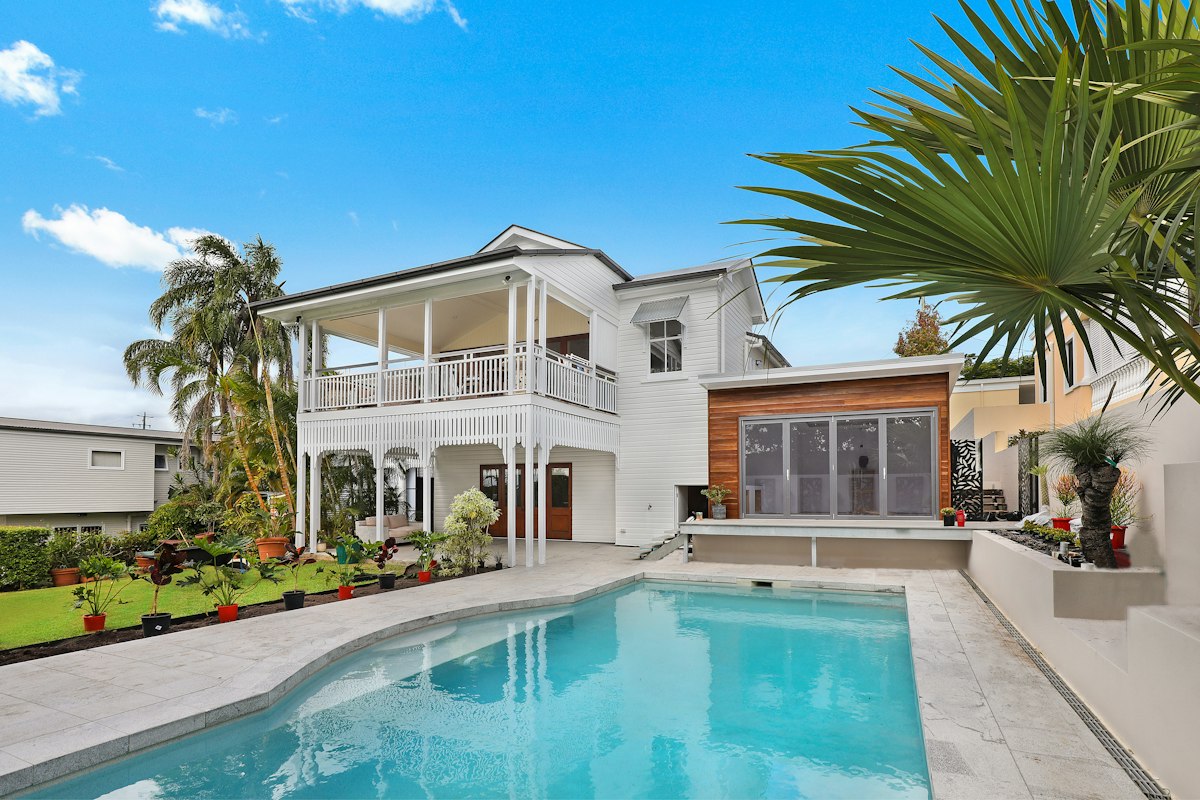
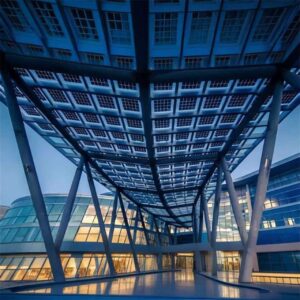
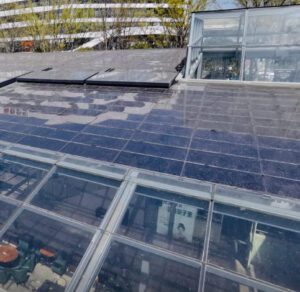
Atrium skylights and covered walkways are among the most architecturally impactful BIPV glass applications — combining natural daylight with active energy generation. Photo: Unsplash
Overcoming Common Objections With Case Study Evidence
The IEA PVPS Technical Guidebook (2025) documents over 50 international BIPV case studies with measured performance data. The global BIPV market reached USD 23.4 billion in 2025 — this is not a prototype technology. Jia Mao BIPV’s manufacturing facility operates at 3 GW annual production capacity with a 25-year product warranty, 100% automated optical inspection, and certification to IEC/UL safety standards. Ask your client: “What level of precedent would make you comfortable? We can match it across 10 building types in your sector.”
The upfront cost comparison must account for what BIPV replaces. In Cases 1, 9, and 10 above, the BIPV glass replaced scheduled glazing replacement. The incremental cost — BIPV vs. high-performance standard glazing — was 35–60% above conventional glass, not the full BIPV ticket price. When clients frame the question as “the full cost of BIPV,” they’re comparing to zero. The correct comparison is: BIPV cost vs. conventional glazing cost + energy cost over 25 years. On that basis, total cost of ownership typically favors BIPV within 8–12 years.
NREL data shows modern crystalline PV modules degrade at approximately 0.5% per year, retaining ~88% output at Year 25. Premium BIPV manufacturers including Jia Mao BIPV specify ≥85% retained output after 25 years, backed by product warranty. The encapsulant film technology used in high-quality BIPV glass — POE (Polyolefin Elastomer) over standard EVA — improves UV aging resistance by 40% and virtually eliminates delamination. Offer your clients access to third-party performance monitoring data from live installations to address this concern with evidence rather than claims.
BIPV glass is not a replacement for all energy solutions — it is an additive layer. Frame it as a building envelope upgrade that generates revenue from surface area that currently produces nothing. In Cases 5 and 7, clients who already had rooftop solar added BIPV to facade zones that were previously dead capital. The question to ask your client is: “How many square meters of glass or cladding does your building have that are currently generating zero energy return?” That is the opportunity surface you’re pricing against.
Creating Your Own Case Study: A Roadmap for Distributors
-
1
Identifying High-Impact Projects in Your Territory
Target buildings with large south or west-facing glass surfaces, high annual energy bills (above €200,000/year), and owners with active ESG commitments. Industrial parks, government campuses, and REIT-managed commercial portfolios are the most productive hunting grounds. Use satellite mapping tools to screen building envelope areas before your first meeting — it demonstrates technical credibility immediately.
-
2
Documenting Results and Collecting Testimonials
After commissioning, establish a 12-month monitoring agreement with your client. Collect actual generation data, energy bill comparisons, and operational notes. A testimonial from a facilities director citing “€87,000 saved in Year 1 and zero maintenance calls” is more powerful than any product specification sheet. Get it in writing, get it on video if possible, and always ask for permission to use it in future client presentations.
-
3
Building a Portfolio That Attracts New Clients
Organize your case studies by sector, climate zone, building size, and payback period. A healthcare system buyer needs to see a hospital reference. A retail REIT wants a shopping center case study. The depth and diversity of your reference portfolio is your most durable sales asset — and it compounds over time as each new project adds to it.
-
4
Leveraging Success Stories in Your Marketing Materials
Publish case studies on your website (optimized for local SEO), present them at industry events, co-publish with your architecture partners, and share the metrics through LinkedIn posts targeting procurement and facilities management professionals. A single compelling case study, properly distributed, can generate 3–8 qualified leads in the same sector within 6 months.
The Future of Building-Integrated Photovoltaics (BIPV)
Emerging Technologies and Product Innovations
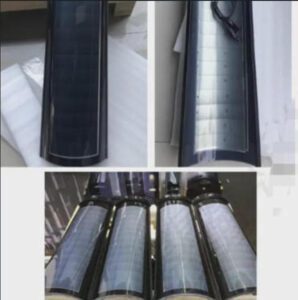
The next generation of BIPV glass is moving toward self-dimming electrochromic coatings that automatically adjust transparency based on ambient light conditions — delivering dynamic shading control and optimized energy generation simultaneously. Flexible BIPV laminates capable of application to curved architectural surfaces are entering commercial specification, opening facade designs that were previously incompatible with flat-panel PV. Thermal storage integration — embedding phase-change materials within the glass laminate — is being trialed to add passive temperature regulation to the product’s value profile.
Market Growth Projections for Your Business Planning
The solar PV glass market is projected to expand from USD 18.5 billion in 2025 to USD 62.8 billion by 2032 — a CAGR of approximately 19% (Persistence Market Research). The BIPV segment specifically is growing at 17% CAGR. For a distributor building a 5-year business plan, this means the addressable market for your product category will be 3.4× larger in 2032 than it is today. The distributors who build their technical credibility and reference portfolio now will own the relationship infrastructure when the market scales.
Positioning Your Company as an Early Leader
Early market leaders in technology categories benefit from a network effect: the more case studies you have, the more easily you win the next project. The more projects you win, the more installation expertise your partner network develops. The more installation expertise exists, the lower the project risk for new clients. This cycle compounds over 3–5 years into a competitive position that is genuinely difficult to replicate. The window to establish early leadership in BIPV distribution is open now — it will not remain so as the market mainstream catches up.
Frequently Asked Questions About Photovoltaic Glass
The following questions and answers are formatted to address both your end-client concerns and the queries generated by AI-powered search engines when professionals research BIPV solutions.
-
1. How much energy can photovoltaic glass actually generate compared to traditional solar panels?Semi-transparent BIPV glass typically generates 40–180 W/m² depending on transparency level (VLT). Opaque BIPV roof panels reach 120–220 W/m² — approaching conventional monocrystalline panel output. The key distinction is that BIPV glass activates building surfaces (facades, skylights, curtain walls) that conventional rack-mounted panels cannot access. A 10,000 m² glass facade that was previously generating zero energy can produce 800,000–1.6 million kWh/year depending on climate and panel specification. This is not a replacement for high-efficiency rooftop panels — it is an additional generation layer that utilizes previously untapped building surface area.
-
2. What is the typical payback period for photovoltaic glass installations?Payback ranges from 5–7 years for industrial roof applications (high energy demand, optimal tilt, large surface areas) to 12–16 years for luxury hospitality or complex architectural facade projects. The key variables are: local electricity tariff, available incentives (ITC, EU grants, national schemes), whether BIPV is replacing a scheduled glazing renovation (which reduces the net incremental cost significantly), and the building’s baseline energy consumption profile. When calculated against the net incremental cost over conventional glazing — not the full BIPV ticket price — most commercial payback periods fall within a 7–12 year range. With a 25-year product life, this still delivers 13–18 years of net-positive cash flow.
-
3. Can photovoltaic glass be retrofitted to existing buildings, or is it only for new construction?Photovoltaic glass can absolutely be retrofitted to existing buildings — and this is often the most commercially attractive scenario. When a building’s existing glazing reaches end-of-life (typically 20–30 years), a BIPV upgrade captures the replacement budget and redirects it toward an energy-generating asset. The Case 1 and Case 10 examples in this article were both retrofit projects. The key prerequisites are: structural capacity to support glass weight (typically 25–40 kg/m²), adequate DC cable routing options, and appropriate inverter room space. A preliminary site assessment by a facade engineer takes 1–2 days and determines retrofit feasibility before any commitment is made.
-
4. How does weather and climate affect the performance of photovoltaic glass?All photovoltaic systems — glass or otherwise — generate less in overcast conditions and more in direct sunlight. BIPV glass actually has a slight thermal advantage over conventional dark-framed solar panels: because it is integrated into the building structure with ventilation behind it, module temperatures run 5–15°C lower on warm days, reducing the performance loss caused by heat (the “temperature coefficient” penalty). In Northern European climates, expect 70–110 kWh/m²/year from south-facing facades; in Southern Europe, 120–160 kWh/m²/year. Rain actually helps — it naturally cleans the glass surface, maintaining optical clarity and generation efficiency. Cold climates are not a barrier — the panels in the university campus case study (Case 3) are installed in the Netherlands and perform reliably through winter conditions.
-
5. What are the maintenance requirements for photovoltaic glass systems?BIPV glass requires significantly less maintenance than conventional rack-mounted panels because there are no moveable parts, no mounting rails to inspect for corrosion, and no penetrations through roofing membranes to monitor. The main maintenance activities are: periodic glass surface cleaning (frequency depends on local pollution levels — typically quarterly in urban environments), annual electrical system inspection (string voltage checks, inverter diagnostics, junction box integrity), and sealant joint inspection every 3–5 years for facade-mounted systems. Quality BIPV glass with anti-fouling coatings — such as those specified by Jia Mao BIPV — reduces cleaning frequency requirements by approximately 30% versus standard glass, which is a material saving for large facade areas.
-
6. How does photovoltaic glass impact building insurance and warranties?BIPV glass certified to IEC and UL standards is treated as a structural building material for insurance purposes, not as electrical equipment mounted on top of a building. This is a meaningful distinction: most building all-risks policies cover certified BIPV glass under the building fabric section. However, it is essential to notify your insurer at specification stage and confirm coverage scope — particularly for the electrical generation equipment (inverters, wiring) which may require a separate endorsement. Some insurers offer premium reductions for buildings with certified on-site generation and battery backup, as it reduces total claims exposure from grid outage events. Always request the full certification documentation from your BIPV manufacturer — typically IEC 61215, IEC 61730, CE marking, and relevant local standards.
-
7. Are there government incentives or tax credits available for photovoltaic glass installations?Yes — and in most major markets, BIPV glass qualifies for more generous incentive treatment than conventional add-on solar, because it is classified as both an energy technology and a building fabric upgrade. In the United States, the ITC (Investment Tax Credit) under the Inflation Reduction Act provides a 30% tax credit on qualifying BIPV installations. In the EU, projects can access Cohesion Funds, the Innovation Fund, and national green building grant programs. Singapore’s Green Mark incentive scheme includes BIPV provisions. The Whole Building Design Guide BIPV resource provides a useful overview of US regulatory context. Always engage a local energy finance specialist to maximize the incentive stack for your specific project location.
-
8. What is the lifespan of photovoltaic glass, and how does it degrade over time?High-quality BIPV glass products carry a 25-year power output warranty, with degradation rates of approximately 0.3–0.5% per year — meaning the glass retains roughly 85–90% of its original output at Year 25. The glass structural component itself (tempered laminated safety glass) has a functional lifespan of 30–40+ years — typically longer than the power-output warranty period. The encapsulant materials used in premium BIPV glass (POE films rather than standard EVA) have demonstrated superior UV aging resistance, reducing the risk of yellowing or delamination over the product’s lifetime. Unlike conventional solar panels which may need frame repairs or rail system maintenance, integrated BIPV glass with no external mounting hardware has fewer long-term mechanical failure points.
-
9. How does photovoltaic glass handle structural loads and safety requirements?BIPV glass is engineered to the same structural standards as architectural safety glazing. Specifications typically include: laminated construction (minimum 5mm + 5mm tempered glass with EVA/PVB interlayer), wind pressure resistance up to 4.0–5.4 kPa (suitable for high-rise facade applications), impact resistance to EN 356 standards, and seismic compliance for Zone 4 earthquake environments. The electrical conductors are embedded within the laminate — they are not surface-applied — which means the structural integrity of the glass is not compromised by the PV integration. All certified BIPV glass must meet the relevant building material safety standards in addition to IEC electrical standards. For projects in regulated environments (government, healthcare, transport), request the full structural calculation report from your manufacturer for inclusion in the building permit submission.
-
10. Can photovoltaic glass be combined with battery storage for maximum energy independence?Yes — and this combination is increasingly standard in critical infrastructure and luxury residential specifications. BIPV glass generates DC electricity during daylight hours; a battery storage system (lithium-ion or LFP chemistry) stores excess generation for use during non-generating hours or during grid outages. The hospital case study (Case 8) demonstrates the operational value: a 1.2 MWh battery bank, charged by BIPV glass generation, provides 4 hours of full critical-load backup without diesel. For commercial buildings in markets with time-of-use electricity pricing, BIPV + storage enables peak shaving — shifting grid draw to low-tariff periods — which can add 15–25% to the financial return versus generation savings alone. System sizing should be modeled by an energy engineer using actual building load profiles, not generic rules of thumb.
-
11. What certifications and building codes apply to photovoltaic glass installations?The core certification stack for commercial BIPV glass includes: IEC 61215 (crystalline silicon PV module design qualification), IEC 61730 (PV module safety qualification), CE marking (EU market access), UL 1703 / UL 61730 (North American market), EN 356 (manual attack resistance for safety glazing), and applicable national building code provisions covering fire resistance, structural glazing, and electrical installation. Projects in regulated environments (government, healthcare, aviation) may additionally require compliance with GSA blast resistance standards, NHS engineering standards, or equivalent authority frameworks. Always request the full certification document pack from your manufacturer before project specification — incomplete certification is one of the most common causes of planning or building permit delays.
-
12. How do you calculate the right amount of photovoltaic glass coverage for a specific building?The calculation starts with three inputs: (1) the building’s total annual electricity consumption in kWh, (2) the target percentage of consumption to offset through BIPV generation, and (3) the available facade or roof area in m² (accounting for shading, non-glazed zones, and structural constraints). Using the climate-zone generation benchmarks in the table earlier in this article (e.g., 120–160 kWh/m²/year for Southern European facades), you can calculate the required m² as: (Target kWh ÷ Generation per m²). For example, to offset 500,000 kWh/year in Spain using south-facing facade glass at 140 kWh/m²/year: 500,000 ÷ 140 = 3,571 m² required. Use NREL’s PVWatts Calculator for location-specific modeling before presenting figures to clients.
-
13. What are the installation timelines and disruption considerations for building occupants?For facade replacement projects, BIPV glass installation follows the same timeline as conventional curtain wall replacement — typically 3–8 weeks per 1,000 m² of facade, depending on access method (scaffold, mobile elevating work platforms, or BMU). For occupied buildings, work is sequenced in bays to maintain weather-tightness at all times, and no interior access is typically required for facade installations. Roof installations involving building penetrations may require short access interruptions to plant rooms or ceiling voids during inverter commissioning. The key difference from conventional solar installation is that BIPV glass follows glazing contractor workflows, not electrical contractor workflows — meaning project management should be led by the facade package, with electrical commissioning as the final stage rather than the primary driver of program sequencing.
From Case Studies to Commission Growth
Why Photovoltaic Glass Represents Your Next Major Revenue Stream
The ten case studies in this article cover every major commercial building type — and in each one, the story is consistent: a building that was a pure energy cost center became a partial or full energy generator, reducing operational costs, improving asset value, unlocking compliance credentials, or enabling a market positioning premium. Each of those outcomes is a sales argument. Each sales argument is a commission opportunity.
The Competitive Advantage of Early Adoption
The distributors, agents, and construction partners who build their BIPV product knowledge, reference portfolio, and manufacturer relationships now — before the market mainstream catches up — will hold a structural competitive advantage for the next decade. The technology is proven. The market is growing at 17% CAGR. The building stock requiring renovation is vast. What is scarce is the commercial and technical expertise to convert that opportunity into closed projects. That is the advantage you are building by reading this guide and acting on it.
Your Action Plan for the Next 30 Days
- Identify three building owners in your territory with south-facing glass facades and energy bills above €150,000/year. These are your first prospect calls.
- Request a technical training session with your BIPV manufacturer. Build your team’s confidence on the product’s specification requirements, certification documents, and installation sequence before your first client meeting.
- Run a preliminary energy model for one prospect building using PVWatts and local tariff data. Walk into that first meeting with a site-specific number — not a generic range.
- Create a one-page case study summary from this article, customized for your local market, that you can leave with every architect and project developer you meet in the next 30 days.
- Establish a volume pricing framework with your manufacturer that rewards commitment — this is what turns a first project into a long-term supply agreement.
Launch Your Photovoltaic Glass Distribution Strategy
Whether you’re building your first BIPV proposal or scaling an established solar distribution network, the next step starts with the right manufacturing partner and the right technical foundation.