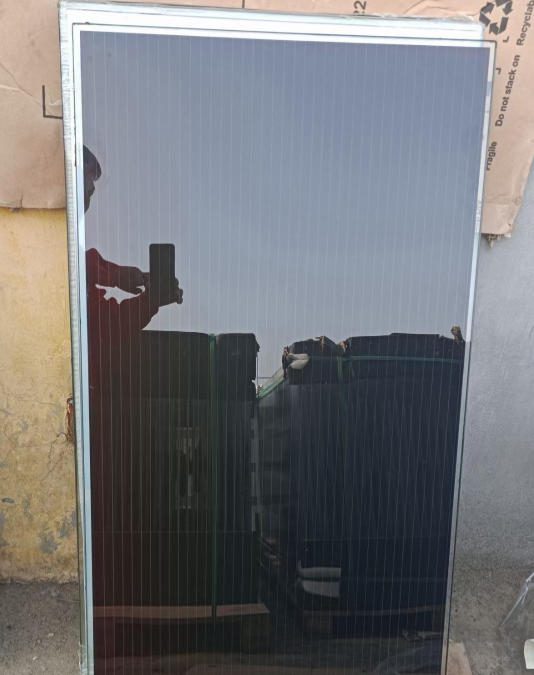
A Complete Guide for Solar Distributors and Agents to Educate Customers and Close More Sales

Your customer has already said no to rooftop panels twice. The pitch didn’t land — the appearance bothered them, or the installation felt invasive, or their roof just isn’t the right orientation. You walked away without a sale.
That customer is still losing between USD 1,200 and USD 2,600 every year on energy bills they don’t need to be paying. They still care about their home’s resale value. They still feel the anxiety of watching their utility rate increase for the fourth consecutive year. They just haven’t heard the right solution yet.
Solar panel windows — photovoltaic glass products that generate electricity while functioning as standard windows — solve a fundamentally different set of customer problems than rooftop panels do. They answer the aesthetic objection before it’s raised. They address the structural concern before it’s asked. And they open a conversation with the 40–60% of homeowners your traditional solar pitch never reaches.
This guide gives you everything you need to have that conversation with confidence: real performance data, specific talking points for different customer types, honest objection handlers for the questions that kill deals, and a clear path from first conversation to signed contract.
What this guide covers for distributors and agents:
- Five concrete selling frameworks that map directly to the things your customers already care about
- Data you can quote in the meeting — not ranges and estimates, but numbers from verifiable sources your customers can check
- Objection scripts for the five questions that most frequently stall the close
- A practical next-steps framework that reduces friction from consideration to installation
1. Dramatically Lower Energy Bills While Maintaining Natural Light
The Real Problem Your Customers Face
US residential electricity costs have risen nearly 40% since 2021, and rates increased another 2.6% above inflation in 2025 alone (Utility Dive, 2025). The average American household now spends USD 1,200–2,600 per year on electricity, depending on home size, climate, and local utility rate.
Your customer knows this. They feel it on their bill every month. But here is the problem that most conventional solar pitches miss entirely: the homeowners who are losing the most through energy inefficiency are often the same homeowners who refuse rooftop solar because they don’t want their house to look like it has a space station mounted on the roof.
Standard windows, even modern double-pane products, contribute directly to that energy loss — accounting for 25–30% of residential heating and cooling costs (US Department of Energy). Your customer is paying for that loss 12 months a year, not just in summer.
How Solar Panel Windows Solve This
Solar panel windows — photovoltaic glass (PV glass) units that contain thin-film or crystalline solar cells laminated between glass layers — address the energy bill problem from two directions simultaneously, and this dual-function story is what makes the pitch different from every conversation your customer has had before.
Direction one: electricity generation. The PV cells integrated into the glass generate electricity from sunlight, feeding directly into the home’s electrical system. A south-facing installation of 300–500 square feet of solar windows generates 3,500–6,000 kWh per year in a mid-latitude US market, offsetting a meaningful portion of the home’s annual consumption.
Direction two: reduced thermal load. The Low-E coating on premium solar windows reflects infrared heat, reducing the solar heat entering the home in summer. A well-specified solar window installation can reduce HVAC energy consumption by 15–25% compared to conventional clear glass, adding a second layer of savings that conventional rooftop solar cannot provide.
The combined effect is a single product solving two energy problems your customer already has — and they didn’t know one product could do both.
Quantifying the Savings
Give your customers a number they can check against their own bill. Here is the framework for your sales conversation, adapted by climate zone:
| Home Profile | Solar Window Area | Annual Generation | HVAC Savings | Total Annual Value |
|---|---|---|---|---|
| 3-bed, Zone 3 (Southwest, USD 0.25/kWh) | 400 sq ft south | ~5,800 kWh | ~USD 320 | ~USD 1,770 |
| 3-bed, Zone 4 (Mid-Atlantic, USD 0.22/kWh) | 350 sq ft south | ~4,900 kWh | ~USD 280 | ~USD 1,358 |
| 3-bed, Zone 5 (Midwest, USD 0.18/kWh) | 350 sq ft south | ~4,200 kWh | ~USD 210 | ~USD 966 |
| 4-bed, Zone 6 (Northeast, USD 0.28/kWh) | 500 sq ft south | ~5,500 kWh | ~USD 390 | ~USD 1,930 |
Figures calculated using NREL TMY irradiance data and average US commercial electricity rates. Actual results depend on home orientation, shading, and window placement. Use the NREL PVWatts calculator for location-specific modelling.
When you present these numbers, present them as an annual utility bill reduction, not as a kilowatt-hour figure. Your customer understands “saving USD 1,400 a year on electricity.” They do not immediately understand “generating 4,900 kWh annually.”
The Aesthetic Advantage Over Rooftop Panels
This is the point that reopens the conversation with homeowners who have already said no to solar.
Rooftop panels are visible from the street, asymmetrical on most residential rooflines, and permanently associated in many buyers’ minds with a utilitarian, industrial aesthetic. Solar panel windows look like windows. From street level, a home with solar windows is architecturally indistinguishable from a home with premium tinted glass — because that is exactly what it is.
The emotional reality for many homeowners: they want the savings, they just don’t want the visual compromise. Solar panel windows remove that trade-off entirely. The product that generates electricity is also the product that makes the home look modern, considered, and intentional — not retrofitted.
For your sales team, this reframe is the difference between a conversation that stalls at “I’ve thought about solar but it’s not for us” and one that continues to “tell me more about how that would look on our home.”
2. Increase Home Property Value and Market Appeal
The Wealth-Building Angle Your Customers Care About
Most homeowners make improvements with one eye on resale. A new kitchen may recover 60–80% of its cost. A roof replacement typically recovers 50–70%. So when a customer asks “is this worth it?”, they are almost always asking two questions simultaneously: will this save me money now, and will I get this money back when I sell?
Solar panel windows answer both questions, and the property value data is strong enough to put specific numbers in front of your customer.
ROI Timeline and Property Value Increases
Homes with solar energy systems sell for an average of 4.1% more — a median value uplift of approximately USD 9,274 on the average US home (Zillow research, 2024 validation). For a USD 450,000 home, that is an USD 18,450 increase in appraised value at sale.
The data on solar windows specifically mirrors or exceeds the broader solar premium because the aesthetic integration eliminates the buyer hesitation that sometimes appears with visible rooftop panel installations.
The payback timeline your customers need to understand:
The national average solar installation payback period is 6–10 years, with a national median of 7.1 years in 2025 (Solar Permit Solutions). Solar panel windows sit in the 7–12 year simple payback range depending on the size of installation, local electricity rate, and applicable tax incentives. But the payback analysis your customer needs to see includes the property value impact — which changes the calculation meaningfully.
When property value appreciation is included in the payback calculation — as it should be for any homeowner who will eventually sell — the effective payback often drops to 4–6 years. Presenting this calculation in writing, with the customer’s specific home value and local electricity rate plugged in, transforms the “is this worth it?” conversation into a straightforward investment analysis.
Appraisal Impact and Buyer Psychology
The appraisal mechanism behind the solar premium is well documented. Appraisers use an income-capitalization approach: the present value of future energy savings, discounted at the local electricity rate, generates an asset value that is added to the property appraisal.
But buyer psychology operates on a different — and often more powerful — driver: differentiation. In competitive real estate markets, a home with integrated solar windows occupies a unique position. It is modern, future-ready, and low-maintenance in a way that conventional homes cannot claim. In markets where inventory is tight and buyers are making rapid decisions, this differentiation translates directly into faster sale timelines.
A home that would otherwise sit on the market for 45–60 days closing in 22 days — because it is the only listing in its price range with solar windows — is a real scenario your customers can visualize. And it is the kind of tangible, concrete outcome that moves hesitant buyers from “interesting” to “I want that.”
Why This Beats Traditional Solar for Resale Value
Traditional rooftop panels create a complication at resale: leased systems must be either transferred (with buyer approval) or bought out before closing, which can stall or derail transactions. Owned rooftop systems add value but also raise buyer questions about maintenance history, warranty remaining, and roof condition under the panel mounts.
Solar panel windows are the glazing system itself — they are as permanent, as straightforward to transfer, and as clearly value-additive as any other premium building material in the home. There is no lease transfer conversation, no roof condition concern, and no visual objection to manage with prospective buyers.
This is the comparison that closes deals with homeowners who want both the financial benefit of solar and a clean, uncomplicated transaction when they eventually sell.
3. Reduce Your Carbon Footprint Without Lifestyle Changes

The environmentally conscious buyer exists in every market segment and has significant purchasing power. The key is making the environmental benefit concrete and personal — not abstract. Source: Unsplash
Speaking to the Environmentally Conscious Buyer
This buyer segment is larger — and more diverse — than most distributors realize. The environmentally motivated buyer is not exclusively a demographic of young urban professionals. They include:
- Empty nesters in established neighborhoods who want to leave a legacy they’re proud of
- Professional couples in their 40s managing corporate ESG commitments personally as well as professionally
- Retirees on fixed incomes who see solar as a practical alignment of their values with their financial interests
- Parents who speak regularly to their children about climate and want to demonstrate that their household lives consistently with those conversations
The mistake is pitching the environmental benefit as an ideology. The pitch that works — for all of these segments — is making the environmental impact specific, personal, and tangible.
Quantifying Environmental Impact in Terms They Understand
Avoid generic statements. “Reduces your carbon footprint” means nothing until it is attached to a number your customer can picture.
Here is the framework that works in sales conversations:
For a 3-bedroom home with 400 square feet of south-facing solar windows generating 5,000 kWh annually:
- CO₂ avoided: approximately 2.1 metric tons per year (using US average grid emissions factor of 0.42 kg CO₂/kWh)
- Equivalent to: removing one average passenger car from the road for a full year
- Over 25-year system life: 52.5 metric tons of CO₂ avoided — equivalent to planting approximately 875 trees (EPA tree carbon sequestration estimate)
These are the numbers to put in front of an environmentally conscious buyer. “You will avoid more carbon in the first year of ownership than a passenger car emits in 12 months” is a statement that lands because it uses a reference point your customer already understands.
For context on the broader impact: a 15% increase in solar power generation across California alone is associated with a reduction of 913 metric tons of CO₂ emissions (published research, NIH/PMC, 2025). Individual household solar installations are the distributed generation backbone of that aggregate impact.
The Guilt-Free Energy Consumption Message
This is the emotional pivot that separates a good environmental pitch from a great one.
Many environmentally motivated buyers carry a background anxiety about energy consumption — they feel guilty running air conditioning in July, feel conflicted about driving to their children’s activities, and experience low-level discomfort about the gap between their values and their daily energy use.
Solar panel windows close that gap without requiring any behavioral change. The message is explicit and honest: “You keep living exactly the way you live now. You keep the lights on, the AC at the temperature you want, the charging cables plugged in. The difference is that a meaningful portion of the energy powering all of that is now generated by your own home, from sunlight that was already hitting your windows anyway.”
This is permission to use energy without guilt — and for the right buyer, that emotional relief is worth a significant premium over any pure ROI calculation.
How to Communicate This Benefit to Different Customer Segments
Eco-warrior segment: Lead with the carbon numbers. Specific tons of CO₂ avoided, tree equivalent, car equivalent. Then show the financial benefit as a secondary justification that proves this isn’t a luxury choice.
Practical homeowner with environmental awareness: Lead with the financial benefit (bill reduction, property value), then add the carbon offset as confirmation that the decision they’re making for financial reasons is also the right decision for the values they already hold.
Corporate professional managing ESG obligations: Connect the home decision to their professional context. “You’re managing emissions reporting for your organization. This is how you manage it for your household — with the same rigor and the same measurability.”
Parent audience: Frame the installation as something the whole family participates in — monitoring the generation data on the smart home app, tracking the CO₂ offset in real time. Make it a shared household value that’s visible and quantifiable, not abstract.
4. Enjoy Year-Round Energy Independence and Grid Resilience
The Security and Peace of Mind Factor
US residential electricity rates have risen 140% since 1990 in nominal terms (Electric Choice historical data). The customers looking at solar panel windows in 2025 have already watched their bills climb 40% since 2021. They are not wondering whether rates will increase further — they are wondering by how much.
The energy independence pitch is not an ideological argument about self-sufficiency. It is a concrete financial hedge: locking in a portion of your household energy production at a fixed cost (the installation) protects that portion of your energy budget from future rate increases, regardless of what utilities do in 2026, 2030, or 2035.
Your customer understands fixed-rate mortgages. They understand locking in a gasoline price with a futures contract, conceptually. Solar panel windows are the same idea applied to electricity — you are converting a variable, escalating operating cost into a fixed capital cost with a predictable return.
How Solar Panel Windows Provide Backup Power
Be honest with your customers about what solar panel windows can and cannot do for backup power — and frame the honesty as a service, not a limitation.
What solar windows alone cannot do: A solar panel window system connected to the grid via a standard string inverter will shut down automatically during a grid outage, even if the sun is shining. This is a safety requirement — utility workers need to know that distributed generation systems are not back-feeding into lines they’re working to repair. A customer who believes their solar windows will keep the lights on during a blackout, without a battery system, will be a disappointed customer.
What solar windows with battery storage can do: A solar panel window system paired with a home battery system (lithium-ion battery storage units like the Tesla Powerwall, Enphase IQ Battery, or equivalent) can provide full backup power capability. The solar windows charge the battery during daylight hours, and the battery powers critical loads during outages — lights, refrigeration, medical equipment, device charging — indefinitely as long as the sun returns each day.
The US Department of Energy’s solar and resilience resource confirms this clearly: pairing solar with storage provides a clean and reliable backup power source that recharges daily from solar generation. For customers in areas with frequent outages or in climates with extreme weather events, this combination is a compelling safety investment, not just an energy investment.
Pairing with Battery Storage for Maximum Independence
The battery storage conversation that pairs naturally with solar windows is not a technical upsell — it is the completion of a solution your customer is already motivated to consider.
Frame it this way: “The solar windows generate your electricity. The battery stores what you generate and don’t immediately use, so you have power when you need it — at night, on cloudy days, during outages. Together, they’re a complete home energy system. Separately, the windows still make financial sense — but the combination is what genuinely reduces your dependence on the grid.”
Home battery storage systems currently average USD 10,000–15,000 installed for a 10 kWh system. For a customer already investing USD 20,000–35,000 in solar windows, the incremental cost of battery storage is 30–45% of the primary investment — and it delivers the full energy independence experience that makes your customer a vocal, enthusiastic referral source.
Protection Against Future Rate Increases
US electricity rates increased 2.6% above inflation in 2025 alone (Utility Dive). At that rate of escalation, a customer currently paying USD 1,800/year on electricity will pay approximately USD 2,650/year by 2035 — USD 850 more annually, every year, without any change in their consumption habits.
The solar window customer who offsets USD 1,400/year of that bill in 2025 is not just saving money today. They are protecting themselves against paying an additional USD 600 in annual bills by 2035. The hedge value of on-site generation increases every year as utility rates escalate — a point worth making explicitly in any ROI conversation.
5. Transform Your Home’s Appearance and Modern Appeal
The Design-Conscious Homeowner’s Perspective
Do not underestimate this motivation. In high-value residential markets — the segment where solar panel windows are most commercially viable — appearance is frequently the primary purchase driver, with energy savings operating as validation of a decision already made on aesthetic grounds.
The homeowner in a USD 600,000–1,000,000 home who is evaluating solar windows is not primarily motivated by a 7-year payback calculation. They are motivated by the desire to live in a home that reflects their values, their sophistication, and their position as an early adopter of technology that will be mainstream in a decade. The energy savings confirm the decision. The aesthetics make it.
For your sales team: do not bury the design conversation in the middle of the ROI discussion. Lead with it for this segment, or at least give it equal weight. A customer who falls in love with the way solar windows look on their home is a customer who will find a way to make the financial model work.
Aesthetic Options and Customization Possibilities
Modern solar panel windows from manufacturers including Jia Mao BIPV are available with a far wider range of aesthetic options than most homeowners — and many distributors — realize.
Transparency levels (VLT — Visible Light Transmittance): From 10% (similar to a lightly tinted architectural glass) to 60% (near-clear, almost indistinguishable from a conventional window). The choice depends on the room’s function: a bedroom benefits from higher VLT for morning light, while a west-facing living room in a hot climate benefits from lower VLT for solar heat rejection.
Tint and color options: Contemporary solar glass is available in neutral grey, warm bronze, cool blue-green, and custom-matched tints that align with the home’s existing glazing palette. The Delta-E color difference tolerance in premium products is below 2.0 — meaning color matching to existing windows is achievable for retrofit projects without visible inconsistency.
Frame integration: Solar windows integrate with aluminum, fiberglass, and uPVC frame systems in standard residential configurations — including casement, awning, fixed-pane, and sliding formats — meaning the product adapts to the home’s existing architectural language rather than imposing a new one.
Custom cell patterning: For architectural features where partial transparency is desirable — entry canopies, stairwell glazing, decorative partition glass — custom cell patterns can create geometric designs, gradient densities, or clear-zone configurations that serve both the design intent and the energy generation objective simultaneously.
Explore the full range of customizable photovoltaic glass window options to understand the specification flexibility your customers actually have access to.
Before-and-After Visual Storytelling
The most effective tool for closing an aesthetically motivated buyer is a photorealistic render showing their specific home with solar windows installed. Not a stock photo of a vaguely similar house. Their house, their facade, their street-facing elevation — with the proposed solar window specification visualized accurately.
The conversation this render supports:
Before the render: “Solar windows are integrated into the glass — they look just like tinted architectural windows from the outside.” [Customer interest, but abstract]
After the render: “Here is what your south elevation would look like with our 30% VLT specification in grey-neutral tint. The frame finish matches your existing window profile.” [Customer can see it. The conversation shifts to logistics and timeline.]
Request rendering capability from your manufacturer as part of your distributor agreement. If your product supplier cannot produce a facade render within 5 business days of receiving elevation drawings, that is a competitive disadvantage in the premium residential market where this product is sold. For additional examples of real-world BIPV project outcomes across building typologies, the photovoltaic glass case studies library provides before-and-after reference material your team can use directly in customer presentations.
The “Future-Proof” Home Narrative
Position the early adopter identity explicitly — for the right customer, it is a motivation as powerful as any financial metric.
“The homes that looked ahead in 2010 had LED lighting when everyone else had incandescents. In 2015, they had EV chargers when most garages didn’t need them. In 2025, the homes that are ahead are the ones with solar glazing — because in 2035, building codes in most states will require on-site renewable energy generation in new construction. You’re not early. You’re right on time.”
This narrative positions the purchase as sophistication, not experimentation. It validates the customer’s desire to be an informed, forward-thinking homeowner rather than a passive consumer of whatever technology the market eventually mandates. And it is factually accurate — the EU’s revised Energy Performance of Buildings Directive requires zero-emission new buildings from 2028, a policy trajectory that the US is following with increasing urgency at state level.
Installation and Maintenance Considerations

Professional installation by a certified glazing team is non-negotiable for solar windows. Setting honest expectations about the process protects your relationship and your warranty. Source: Unsplash
What Your Customers Need to Know Before Committing
The installation conversation is where deals die from overselling. A customer who was told “it’s a quick process, in and out in a day” and then experiences a 12-week timeline from order to operational system becomes a complaint and a retraction, not a referral.
Set the timeline clearly and honestly, and you remove the disappointment entirely. Customers who know what to expect are satisfied customers, even when the process is longer than they’d prefer. It is the gap between expectation and experience — not the experience itself — that generates negative word of mouth.
Professional Installation Requirements and Timeline
The full project timeline for a residential solar window installation — from signed agreement to system producing power — typically runs 8–16 weeks. Here is the honest breakdown:
Week 1–2: Site assessment and system design. An engineer visits the property to measure openings, assess structural frame capacity for the additional glass weight, evaluate electrical panel compatibility, and confirm roof or wall structural sufficiency.
Week 2–4: Permitting. Solar window installations require a building permit (glazing modification) and an electrical permit (PV interconnection). In most jurisdictions, permit approval takes 2–4 weeks. Some municipalities take longer.
Week 4–12: Manufacturing. Custom-dimensioned solar windows are manufactured to order — standard lead times for premium products run 8–14 weeks. This is the longest phase, and it is non-negotiable with quality products.
Week 12–14: Installation. The glazing installation itself — removing existing windows and fitting the solar units — takes 1–3 days for a standard residential installation of 6–12 window units. Electrical commissioning adds 1–2 days.
Week 14–16: Utility interconnection. The solar system cannot generate credited power until the utility approves the grid connection. Approval typically takes 2–4 weeks after commissioning.
Total customer disruption — the period when workers are in or around the home — is typically 3–5 days spread over the installation and commissioning phases. Everything else is waiting: for permits, for manufacturing, for utility approvals.
Long-Term Maintenance and Durability Expectations
This is where honest positioning protects your relationship for 25 years.
Solar panel windows carry a 25-year power performance warranty (minimum 80% of rated output at year 25) from quality manufacturers including Jia Mao BIPV. This warranty structure is consistent with premium solar module standards and is more rigorous than most conventional window product warranties.
Actual maintenance requirements:
- Exterior cleaning: Every 12–18 months in most climates, or more frequently in dusty or high-pollen environments. The same cleaning schedule as conventional premium windows. No special products required — mild soap solution and a soft cloth or squeegee.
- Electrical inspection: Every 5 years by a licensed electrician. A 2-hour inspection that verifies connection integrity, inverter performance, and output monitoring accuracy. Cost: USD 150–350.
- Performance monitoring: Continuous via the inverter monitoring app (most modern systems include real-time generation data accessible on a smartphone). If output drops below projected levels, this is the early warning system.
What actual degradation looks like over time: Quality solar PV technology degrades at approximately 0.5% per year in rated output. At year 25, a system originally producing 5,000 kWh/year still produces approximately 4,400 kWh/year — 88% of original output, comfortably above the 80% warranty threshold. The system does not “wear out” in the conventional sense; it gradually and predictably produces slightly less per year, all within a range that is quantified and warranted.
The Enphase solar panel cleaning and maintenance guide provides detailed practical guidance your customers can reference, confirming that despite 25+ year equipment lifespans, day-to-day maintenance requirements are genuinely minimal.
Financing Options That Make This Affordable
Removing the Price Objection With Real Solutions
The upfront cost of solar panel windows — typically USD 18,000–45,000 for a full residential installation depending on the number of window units, VLT specification, and local installation rates — is the number that initially stops the conversation.
Your job is to reframe this number before your customer calculates a monthly payment in their head using a credit card rate. The cost structured correctly is manageable for a far larger portion of your target market than the sticker price suggests.
Government Incentives and Tax Credits Your Customers Qualify For
Federal ITC (Investment Tax Credit): The Residential Clean Energy Credit under IRC Section 25D provides a 30% federal tax credit for solar energy system installations, extended through 2034 by the Inflation Reduction Act. For a USD 25,000 solar window installation, this credit is worth USD 7,500 — reducing the net federal tax liability dollar-for-dollar in the year of installation.
Important 2025 update: The residential ITC as previously structured required installation completion by December 31, 2025. The commercial ITC under Section 48E continues at 30% with no expiration currently specified. Consult the IRS Residential Clean Energy Credit guidance and a qualified tax professional for current eligibility status, as this area of tax law is subject to legislative change.
State-level incentives: Available in approximately 35 US states. California, New York, Massachusetts, New Jersey, and Oregon consistently offer the most generous state programs. Check the DSIRE Database of State Incentives for Renewables and Efficiency for current programs in each state your customers are in — updated monthly.
Net metering credits: Most states with net metering require utilities to credit solar producers at or near the retail electricity rate for energy fed back to the grid. For a solar window customer producing more power than they consume at midday, these credits apply directly against night-time consumption, effectively allowing the grid to function as a battery — and reducing the need for expensive home battery storage.
Loan and Lease Options Compared
Not every customer has USD 25,000 in available capital. Here is the honest comparison of financing structures your team should be able to explain:
| Financing Option | How It Works | Best For | Key Consideration |
|---|---|---|---|
| Solar loan (secured) | Customer borrows against home equity; owns system from day one | Customers with home equity and good credit | Interest cost reduces but does not eliminate savings |
| Solar loan (unsecured) | Personal loan, no equity required; typically 6–12% APR | Customers without equity or unwilling to use it | Higher interest cost; shorter payback |
| PACE (Property Assessed Clean Energy) | Repaid via property tax assessment over 10–25 years; no credit check | Customers who prefer property-attached financing | PACE obligation transfers with home sale — requires disclosure |
| Lease / PPA | Customer pays monthly for power generated; does not own system | Customers who want no capital outlay | No ITC benefit; transfers complicate home sale; no appreciation |
| الشراء النقدي | No interest cost; full ITC benefit; maximum long-term return | Customers with available capital | Highest upfront requirement |
The leasing trade-off your customers need to understand: A solar lease or Power Purchase Agreement (PPA — a contract where a third party owns the system and sells the generated electricity to the customer at a fixed rate) requires zero upfront capital, which sounds attractive. But the customer does not own the system, does not benefit from the federal tax credit, and must either transfer the lease or buy the system out when selling the home — creating friction at precisely the moment when frictionless transactions matter most. For most homeowners with access to any form of financing, a loan structure is financially superior to a lease over the system’s full life.
PACE loans — available in 37 states — finance the installation through the property tax bill, with repayment periods of 10–25 years and no personal credit check required. Most PACE loans for solar windows total USD 25,000–35,000, with monthly payments of USD 85–150 added to the property tax assessment. At current electricity savings, most PACE-financed solar window installations are cash-flow positive from month one.
Overcoming Common Objections and Concerns
The Skeptical Homeowner’s Legitimate Questions
The homeowner who pushes back on solar panel windows is not a difficult customer. They are a customer who is close to a decision and needs one more credible answer. Address their objections directly, with data, and without defensiveness.
Performance in Cloudy Climates
The honest answer: Solar panel windows generate electricity from diffuse irradiance — the scattered daylight present even under a fully overcast sky — not only from direct sunlight. Under typical overcast conditions, output falls to 10–25% of rated capacity (Coulee Energy BIPV performance analysis). On partially cloudy days, the range is wider: 30–70% of rated capacity depending on cloud density.
The financial reality for high-latitude and overcast-climate markets: Seattle, Portland, Boston, and Chicago have lower annual solar irradiance than Phoenix or Miami — but they also have significantly higher electricity rates. The financial performance of a solar window installation in Boston (average 0.28/kWh, 4.2 peak sun hours/day) is comparable to one in Atlanta (average USD 0.14/kWh, 5.8 peak sun hours/day) because the higher electricity rate in Boston compensates for the lower generation.
The script for this objection: “You’re right that a cloudy day produces less power than a sunny one. But your system generates power every daylight hour, not just when the sun is directly overhead. In your climate, the system generates approximately [X kWh] per year — which at your utility rate of [Y cents/kWh] is worth about [Z dollars] annually. Here’s the calculation for your specific location.” Then show the PVWatts output for the customer’s zip code and proposed glazing area. Transparent, verifiable data ends the objection.
Compatibility With Existing Electrical Systems
What your customers need to know: Solar panel windows integrate with standard residential electrical systems in most homes built after 1970. Two potential upgrade requirements to address proactively:
Electrical panel capacity: Homes with 100-amp service panels (common in homes built before 1980) may need a panel upgrade to 150 or 200 amps to accommodate the solar interconnection and any associated battery storage. Panel upgrades cost USD 1,500–4,000 and are often incentivized through separate utility efficiency programs. This cost should be included in the total project budget your customer is evaluating — not discovered after installation.
Inverter type: Solar windows connect to a standard string inverter or microinverter system — the same electrical infrastructure as any rooftop solar installation. If the home already has an existing solar installation, compatibility with the existing inverter depends on the system’s remaining capacity and the additional PV output of the solar windows. An electrical assessment resolves this.
The reassurance your customer needs: “We run an electrical assessment as part of the site visit. If there’s an upgrade needed, we’ll tell you the cost upfront — before you’ve committed to anything. You’ll see the full picture before you make any decision.”
Getting Started: Your Next Steps
From Consideration to Installation
The customer who has made it to this conversation — has heard the five benefits, understands the financials, has had their objections answered honestly — is not experiencing doubt. They are experiencing friction. The next step feels unclear, the process feels opaque, and the decision feels bigger than it needs to.
Your job at this stage is to reduce friction, not to close harder. A customer who knows exactly what the next step is and why it is low-pressure is far more likely to take it than one who feels a closing moment approaching.
Scheduling a Professional Assessment
The call to action that converts at highest rates in solar window distribution is not “buy now” or “sign today.” It is “let’s schedule a free 45-minute assessment at your property — no obligation, no pressure, just a clear picture of what’s possible for your specific home.”
The assessment does three things: it makes the process concrete for the customer, it demonstrates your professionalism and technical competence, and it produces the specific numbers (glazing area, energy model output, financial projection with their local electricity rate) that make the financial decision clear without requiring the customer to take anything on trust.
What to Expect in a Consultation
Demystify the process explicitly. Customers who know what a consultation involves are far more likely to schedule one than those who imagine a high-pressure sales meeting.
Tell them: “The assessment takes about 45 minutes. We’ll look at your south and west-facing windows, measure the glass area, and check your electrical panel. We’ll ask you a few questions about your monthly energy bill and your priorities. Within a week, you’ll have a written project proposal showing exactly what the installation would look like, what it would generate in your climate, what it would cost before and after the available federal credit, and what your payback timeline looks like. You don’t have to decide anything during the visit.”
That is a consultation a customer can say yes to without anxiety. And customers who say yes to the consultation close at significantly higher rates than those who receive only a phone pitch.
Why Solar Panel Windows Represent the Future of Home Energy

The five transformations this guide covers — lower bills, higher property value, reduced environmental impact, energy independence, and improved aesthetics — are not independent selling points. They are five answers to the same underlying customer question: “Is this the right decision for my family and my home?”
Your customer already knows their energy bills are too high. They already want their home to be worth more when they sell. They already feel the background anxiety of grid dependence in an era of escalating utility rates and increasing climate disruption. They already want to feel like they’re doing the right thing for the planet without sacrificing comfort or convenience. And they already care about how their home looks.
Solar panel windows answer all five concerns in a single product. Your job — as the distributor, agent, or builder who brings this product to their market — is to make that connection visible, concrete, and personally relevant to each customer you sit with.
The distributors who build expertise in this product category now, who can walk into an architect’s meeting, a developer’s boardroom, or a homeowner’s kitchen and answer every question with specific data and honest clarity, are building a competitive position that commodity competitors cannot replicate. The product is the starting point. The expertise is the advantage.
Schedule Your Free Solar Window Assessment Today
Your customers are one honest conversation away from a decision that will save them thousands over the next 25 years and increase the value of their home. Give them that conversation.
👉 Contact Jia Mao BIPV for a distributor product consultation and sales support package — or compare available transparent solar panel specifications for your market at the full product comparison tool.
📺 Watch: How BIPV Solar Windows Work — The Technology Behind the Transformation
Before your next customer presentation, watch this expert walkthrough of building-integrated photovoltaic technology, covering how solar windows generate power, how they integrate with building systems, and what real-world project outcomes look like:
Source: IEA PVPS — Building-Integrated Photovoltaics Application and System Design
Glossary of Key Technical Terms
BIPV (Building-Integrated Photovoltaics): Solar energy products that replace conventional building materials — in this context, glass windows — while simultaneously generating electricity. One product, two functions.
VLT (Visible Light Transmittance): The percentage of daylight that passes through the glass. A 30% VLT solar window transmits 30% of visible light, similar to a lightly tinted car window.
Low-E (Low-Emissivity) Coating: A microscopically thin metallic layer on the glass surface that reflects infrared heat while allowing visible light to pass through, reducing both heating and cooling loads.
SHGC (Solar Heat Gain Coefficient): The fraction of solar energy that enters the building as heat. Lower SHGC means better solar control for hot climates; higher SHGC means more passive solar heating in cold climates.
ITC (Investment Tax Credit): The US federal tax credit that covers 30% of the installed cost of qualifying solar energy systems. Applies to commercial installations under IRC Section 48E.
PACE (Property Assessed Clean Energy): A financing structure that allows homeowners to fund solar installations through their property tax bill, repaid over 10–25 years, with the obligation attached to the property — not the individual.
PPA (Power Purchase Agreement): A contract where a third party owns the solar system and sells the generated electricity to the homeowner at a fixed rate. The homeowner does not own the system and does not receive the federal tax credit.
Net Metering: A utility billing arrangement that credits solar energy producers for electricity fed back to the grid, effectively using the grid as a storage buffer and reducing night-time electricity costs.
kWh (Kilowatt-hour): The standard unit of electrical energy — the energy used by a 1,000-watt appliance running for one hour. Your monthly electricity bill is measured in kWh.
TMY (Typical Meteorological Year): A 30-year average climate dataset used to produce location-specific solar energy generation estimates. The basis for NREL PVWatts calculations.
Delta-E: A color science measurement of the visual difference between two colors. Below 2.0 is considered an indistinguishable match for architectural glass specifications.
12 Frequently Asked Questions (FAQs)
1. How much money can I actually save on my energy bills with solar panel windows?
Savings depend on four variables specific to your home: the total square footage of south and west-facing glazing where solar windows are installed, your local solar irradiance (how many peak sun hours your location receives annually), your current utility electricity rate (ranging from USD 0.11/kWh in low-rate states to USD 0.32/kWh in California and the Northeast), and the thermal performance of the solar window specification relative to your current windows.
As directional benchmarks: a 3-bedroom home in a mid-latitude US market with 350–400 square feet of south-facing solar windows typically generates USD 800–1,600 per year in electricity savings plus USD 200–400 in HVAC load reduction — a combined annual energy value of USD 1,000–2,000. High-electricity-rate markets (New England, California) consistently produce results at the upper end of this range. Run the NREL PVWatts calculator with your specific location and proposed glazing area for a location-verified estimate.
2. Do solar panel windows work effectively in cloudy or rainy climates?
Yes, with realistic expectations. Solar panel windows generate electricity from diffuse irradiance — the scattered daylight present on overcast days — not only from direct sunlight. Under overcast conditions, output typically falls to 10–25% of rated capacity. On partially cloudy days, output ranges from 30–70% of rated capacity.
The financial case in cloudy-climate markets is supported by higher electricity rates: Seattle, Boston, and Chicago all have electricity rates 40–80% above the national average, which compensates for lower annual irradiance. A Boston homeowner generating 4,200 kWh annually at USD 0.28/kWh captures USD 1,176 in energy value — comparable to a Phoenix homeowner generating 5,800 kWh at USD 0.14/kWh capturing USD 812. Climate realism paired with accurate rate-adjusted projections is what prevents disappointment and generates referrals.
3. What’s the difference between solar panel windows and traditional rooftop solar panels?
Both technologies convert sunlight into electricity. The key differences are placement, aesthetics, and function.
Rooftop panels are mounted above the roof surface on a separate racking structure — they generate electricity but add no other building function, and they are visible from ground level as a distinct architectural element. Solar panel windows are integrated into the building glazing — they are windows that also generate electricity, providing light transmission, thermal insulation, and solar control simultaneously with power generation. There is no separate racking, no roof penetration, and no visible panel from street level.
For homeowners where aesthetic acceptance is the barrier to solar adoption — a significant segment in every market — solar windows provide the same financial benefit as rooftop panels through a product that looks like a premium design upgrade rather than an energy infrastructure addition.
4. How long do solar panel windows last, and what’s the warranty coverage?
Quality solar panel windows carry a 25-year power performance warranty (minimum 80% of rated output at year 25) and a 10-year product warranty covering manufacturing defects. Real-world data from crystalline silicon PV technology — the same cells integrated into premium solar windows — shows average annual degradation of approximately 0.5%, meaning a system still produces 87.5% of original output after 25 years — comfortably within warranty.
The glass component itself can last significantly longer than the PV warranty period. Laminated architectural glass in commercial and residential applications routinely performs for 30–50 years in properly maintained installations. The functional end-of-life of a solar window system is determined by the PV cell degradation curve, not the glass durability — and that curve is slow, predictable, and well within the warranty structure from reputable manufacturers.
5. Can solar panel windows be installed on any home, or are there limitations?
Solar panel windows can be installed on most homes built after 1970, with the following pre-installation assessments required:
Structural frame compatibility: Solar window units weigh 24–35 kg/m², compared to 18–22 kg/m² for standard double-pane windows. Most window frames from 1975 onward can support this weight, but a structural assessment confirms compatibility before manufacturing begins.
Electrical panel capacity: Homes with 100-amp service (common in pre-1980 construction) may need a panel upgrade to 200 amps for the solar interconnection. Cost: USD 1,500–4,000, sometimes incentivized through utility programs.
Orientation: South-facing and west-facing glazing areas generate the most power. North-facing windows generate minimal output and are rarely worthwhile for solar specification. An honest orientation assessment — part of the standard site survey — determines the actual viable installation area.
HOA restrictions: In communities governed by homeowner associations, check the CC&Rs for any restrictions on window specification changes. Many states have solar access laws that limit HOA authority to block solar installations, but this varies by state.
6. How much does it cost to install solar panel windows, and what’s the typical payback period?
A residential solar panel window installation typically costs USD 18,000–45,000 gross, depending on the number of window units, the VLT and tint specification, and local installation rates. After applying the relevant federal tax credit (where applicable — consult a tax professional for current eligibility), the net cost is typically USD 13,000–32,000.
At combined energy savings of USD 1,200–2,000 per year for a mid-size installation, simple payback runs 7–12 years before including property value appreciation. When the property value impact (typically 4.1% of home value, per Zillow data) is factored in, effective payback for homeowners in the USD 400,000–700,000 home value range can fall to 4–7 years. After payback, the system generates net-positive value for 13–18 years against a 25-year performance warranty.
7. Will solar panel windows affect the resale value of my home?
Yes, positively. The most comprehensive available dataset — Zillow’s analysis of solar installations across US residential markets — shows that homes with solar energy systems sell for an average of 4.1% more than comparable non-solar homes, with a median value uplift of approximately USD 9,274. Solar panel windows generate this premium through two mechanisms: the energy cost savings quantified in the appraisal (using income-capitalization methodology), and the buyer perception advantage of a premium, architecturally integrated product with 25-year warranted performance.
Solar windows specifically carry an additional advantage over rooftop panels at resale: there is no lease transfer complication (if the system is financed via a loan or purchased outright), no roof condition question arising from panel mounts, and no aesthetic concern from buyers evaluating the home’s street appeal. For home sellers in competitive markets, solar windows can reduce time-on-market — buyers looking at two comparable listings will typically prefer the one with lower operating costs and a modern, architecturally coherent design specification.
8. Do I need to replace all my windows, or can I install solar windows selectively?
Selective installation is not only possible — it is the recommended strategy for most residential projects. South and west-facing glazing areas deliver the highest power output per installation dollar. In a typical 3-bedroom home with windows on all four elevations, south and west-facing windows represent 40–60% of total glazing area but 70–90% of achievable solar generation.
A phased approach — installing solar windows on the high-value south and west elevations first, with conventional replacement windows on north and east elevations — reduces the initial investment while capturing the majority of the energy and financial benefit. East-facing windows can be added in a second phase if budget and appetite for further investment develop after the first phase demonstrates performance. This flexibility also allows homeowners to tie solar window installation into a natural replacement cycle — when existing windows reach end of life, the replacement specification becomes solar rather than conventional.
9. What maintenance is required to keep solar panel windows performing optimally?
The maintenance program for solar panel windows is effectively identical to conventional premium window maintenance, with one addition:
Exterior cleaning: Every 12–18 months in most climates, or more frequently in dusty, high-pollen, or high-bird-activity environments. Use mild soap solution and a soft cloth or squeegee — no abrasive cleaners or high-pressure washers. Unclean glass reduces solar generation by 5–15% depending on soiling level, so this is the highest-ROI maintenance task.
Electrical system inspection: Every 5 years by a licensed electrician. Verifies connection integrity, inverter performance, and output monitoring accuracy. Cost: USD 150–350.
Performance monitoring: Continuous via inverter monitoring app. If output drops unexpectedly below projected levels, the monitoring alert is the trigger for a service call — not a fixed inspection schedule.
There are no moving parts, no lubricants, no mechanical components to service, and no separate solar panel maintenance program required beyond the glass cleaning that conventional windows require anyway.
10. Are there tax credits or rebates available to help offset the installation cost?
The available incentive landscape as of 2025–2026:
Federal ITC (Residential Clean Energy Credit): Provided a 30% tax credit for qualifying residential solar installations completed by December 31, 2025. For installations after this date, confirm current eligibility with a qualified tax professional or the IRS directly, as this area of tax legislation has been subject to change.
Federal ITC (Commercial — Section 48E): A 30% tax credit with no current expiration date for commercial solar installations, including BIPV solar windows on commercial properties.
State incentives: Available in approximately 35 US states. New York (NY-Sun program), Massachusetts (SMART program), California (NEM 3.0 net metering), New Jersey (SuSI solar incentive), and Oregon (Energy Trust incentives) are among the most generous. Check the DSIRE database for current program status and eligibility criteria in your state.
PACE financing: Available in 37 states, allowing installation cost repayment through property tax assessments without requiring the upfront incentive calculation — though PACE does not reduce the gross installation cost, it eliminates the capital requirement.
11. How do solar panel windows integrate with my existing electrical system?
Solar panel windows connect to the home’s electrical system via an inverter — a device that converts the direct current (DC) generated by the PV cells into the alternating current (AC) that home appliances and the grid use. The inverter connects to the main electrical panel, and a production meter (or a bidirectional smart meter for net metering) measures the generation for utility billing purposes.
Two potential compatibility considerations: first, homes with 100-amp electrical panels may need an upgrade to 200 amps to accommodate the additional solar interconnection — an assessment made during the site survey. Second, if the home already has an existing solar installation, the electrical assessment will determine whether the existing inverter has remaining capacity for the additional output or whether a system expansion is required. Most modern inverters can be expanded or supplemented with minimal additional cost.
12. What happens to my solar panel windows during extreme weather or storms?
Solar panel windows are manufactured to meet the same structural, impact, and safety standards as architectural safety glass. Specifically:
Wind resistance: Commercial-grade solar windows are rated to wind pressure resistance of 2.5–4.0 kPa, equivalent to sustained winds of 90–130 mph — suitable for all US hurricane and tornado exposure categories except the most extreme coastal sites.
Hail resistance: Most solar panel window products pass IEC 61215 hail impact testing, which involves 25 mm (1-inch) diameter ice balls at 23 m/s. Research on PV fleet performance under extreme weather shows that over 80% of systems perform within 10% of predicted production even in severe weather regions (US Department of Energy FEMP analysis).
Glass breakage: In the event of glass breakage from an extreme impact event (beyond design parameters), solar panel windows are laminated glass products — meaning the PV cell interlayer holds the glass fragments in place rather than allowing dangerous shattering. The electrical circuit is isolated by an inline fuse or circuit breaker. The broken unit can be replaced without affecting the performance of adjacent units in the system.
Performance during storms: Output falls during heavy rain and dark overcast conditions as expected — the system generates at 5–20% of rated capacity during intense storm conditions. The system resumes normal generation as soon as daylight irradiance recovers post-storm. There is no storm recovery procedure required and no performance impact from getting wet.
Research sources: NREL PVWatts tool and TMY solar irradiance data, Zillow residential solar value premium analysis (2024), US Department of Energy Solar and Resilience Basics, Utility Dive electricity rate analysis (2025), Electric Choice historical US electricity rate data (1990–2025), IRS Residential Clean Energy Credit guidance, DSIRE Database of State Incentives for Renewables and Efficiency, Coulee Energy BIPV diffuse light performance analysis, Patsnap organic solar window cloudy-climate efficiency data, Enphase solar maintenance guide, Solar Permit Solutions 2025 payback period national data, Paradise Solar Energy commercial ROI benchmarks, and Jia Mao BIPV product performance and warranty documentation. All financial projections are for planning guidance — consult a licensed financial and tax advisor for project-specific calculations.