Understanding your solar customers isn’t just about demographics—it’s about identifying which buyer personas generate the highest margins, require the least support, and create the most referrals. This data-driven guide helps distributors and solar agents segment the market strategically, target the right buyers, and close deals faster.

Solar distributors who segment their customer base close deals faster, generate higher margins, and build more referral-driven pipelines.
The solar market is growing fast — but growth doesn’t automatically mean profit. The U.S. solar industry installed 43.2 GW of capacity in 2025 according to SEIA’s 2025 Market Insight Report, yet the commercial segment grew 6% while residential declined 2% year-on-year. That divergence isn’t a footnote. It’s a signal.
As a distributor or solar agent, you already know that chasing every lead wastes time and compresses margins. The real profit comes from understanding which customer segments align with your business model, your inventory, and your team’s selling capacity.
This guide breaks down the three primary solar buyer personas — the Eco-Conscious Homeowner, the Cost-Focused Family, and the Commercial Business Buyer — and gives you a concrete, data-backed framework to identify, target, and convert each one more profitably.
Why Customer Segmentation Matters for Your Solar Business
The Cost of Selling to the Wrong Customers
How Poor Targeting Drains Your Margins
Here’s a number worth sitting with: a commercial solar deal can take 12–24 months to close and requires 40+ hours of sales effort. If your win rate in that segment is 12%, your cost-per-acquisition is roughly 8–10× higher than closing a residential deal at a 35% win rate in under 90 days.
Most distributors aren’t running these calculations. They’re measuring total pipeline value — not revenue generated per hour of sales effort invested by segment. That gap in measurement is where margin leaks out.
Beyond direct cost, there’s opportunity cost: every hour spent pursuing the wrong segment is an hour not spent deepening relationships where you genuinely have competitive advantage. Over a full year, that compounds.
Consider a real pattern seen among B2B solar distributors: teams that split their sales effort equally across all three segments without a defined strategy often find that 70–80% of their revenue comes from just one segment — after the fact. The question is whether you design for that, or discover it accidentally.
Why One-Size-Fits-All Messaging Fails in Solar Sales
A presentation built around monthly bill savings will actively repel a CFO running a capital allocation committee. An ROI spreadsheet designed for a commercial enterprise lands in front of a homeowner who just wants to know whether the panels will damage their roof.
The result is the same every time: a stalled deal, a lost commission, and a prospect who buys from a competitor who happened to speak their language.
Generic solar pitching — “you’ll save money, it’s good for the environment, our panels last 25 years” — is the distribution equivalent of sending the same mass email to a corporate energy manager, a restaurant owner, and a suburban homeowner, and expecting all three to respond with equal enthusiasm. They won’t. Because their definitions of “value” have almost nothing in common.
How Segmentation Increases Your Conversion Rate and Lifetime Value
The Data Behind Focused Targeting
Industry-wide solar lead-to-sale close rates run at 8–12%, with top-performing distributors achieving 15–20% (WebTonic Solar Analytics, 2026). But referral leads — the kind generated by satisfied customers who already trust you — close at 29–37% according to Sunvoy’s solar lead source analysis.
That’s a 3–4× conversion multiplier sitting inside your existing customer base, unlocked by the kind of relationship quality that only comes from getting the persona match right in the first place.
For commercial segments specifically, the multi-year relationship value matters even more. A commercial enterprise customer who places three portfolio-wide orders over 5 years at $2M each generates $6M in revenue from a single relationship — plus referrals to similarly sized companies in their industry network.
Real Examples: Distributors Who Increased Revenue 40%+ by Niche Focusing
A regional solar distributor in Southeast Asia had built a solid residential business over three years — a 32% win rate, a trained installation team, and a referral network among local homeowners.
During a routine account review, the sales director noticed that 6 of their residential customers were also small business owners who had asked about commercial solar during their residential consultation. Three of those conversations had been passed to a larger competitor because the team didn’t feel confident in commercial-scale proposals.
The pivot: the distributor developed a simple small business solar ROI model, identified 40 local businesses in food and light manufacturing with high daytime energy profiles, and launched targeted outreach framed around the tax incentive deadline for accelerated depreciation. Within 6 months, they had closed 7 commercial deals with an average deal size 4.8× their average residential contract, and gross margin per deal improved by 11 percentage points.
That’s not a theoretical segmentation benefit. That’s a real distributor who ran the numbers and repositioned.
Persona #1 – The Eco-Conscious Homeowner (The Values-Driven Buyer)

The eco-conscious homeowner is not just buying electricity savings — they’re making a statement about their values. Your messaging needs to honor both dimensions.
Who They Are and Why They Matter to Your Bottom Line
Demographics, Income Levels, and Geographic Hotspots
The eco-conscious homeowner is typically a college-educated professional, aged 35–55, with household income above $100,000. They own their home outright or carry moderate mortgage debt on a property valued between $450,000–$900,000. In the U.S., they concentrate in California, the Pacific Northwest, Colorado, Massachusetts, and New York. Internationally, they’re most active in Germany, the Netherlands, Australia, and urban centers in Southeast Asia.
What defines them isn’t income alone — it’s a consistent pattern of purchase behavior that reflects environmental values: they buy organic food, drive hybrid or EV vehicles, and actively track their household carbon footprint. Solar isn’t an impulse purchase for them. It’s a logical extension of a lifestyle already in progress.
What Motivates Their Purchase Decision
A 2024 study published in Sustainability journal (Jabbour Al Maalouf et al., 2024) found that a positive attitude toward solar energy strongly predicts purchase intention (β = 0.944, p < 0.001), and that environmental identity is one of the strongest predictor variables in the eco-conscious segment.
But here’s the data point that surprises most distributors: 51% of eco-conscious buyers still cite lower energy costs as their primary motivation (SolarTechOnline, 2025 State of Solar Report). Environmental impact is the identity driver; financial savings is the permission structure that justifies the investment to themselves and their partner.
If your pitch leads entirely with environmental benefits and skips the financial case, you’re leaving out the element that lets them say yes.
Why They’re High-Margin but Require Specific Messaging
This segment typically accepts a premium price point when the product aligns with their values. They’re less likely to shop purely on price and more likely to pay for quality, certification, and brand credibility. That means your gross margins in this segment can run 5–12 percentage points higher than in the pure price-sensitive segments.
The trade-off: they do extensive research. They’ll compare your environmental certifications, warranty terms, panel origin, and manufacturing sustainability before your second conversation. If your materials aren’t ready for that level of scrutiny, you’ll lose the deal to a competitor whose website shows IEC certifications, recycling programs, and third-party environmental audits.
Their Buying Journey: From Awareness to Decision
Where They Research (and Why Your Content Needs to Be There)
Eco-conscious buyers are information-intensive researchers. They discover solar through:
- Environmental blogs, podcasts, and YouTube channels
- Neighborhood Facebook groups and HOA sustainability committees
- Energy news publications (Canary Media, CleanTechnica, PV Magazine)
- Google searches for “sustainable home upgrades” and “BIPV roofing”
- Conversations with peers who’ve already installed
Your digital presence — particularly your content about environmental performance, lifecycle carbon analysis, and building-integrated options — determines whether you appear in these discovery channels at all. A product page alone is insufficient. Content that explains how solar reduces their household’s carbon footprint, in specific and measurable terms, is what earns their initial trust.
The Objections They Raise and How to Overcome Them
| Objection | What They Actually Mean | The Response That Works |
|---|---|---|
| “I want to make sure it’s truly green” | Concerned about manufacturing carbon footprint | Share panel lifecycle analysis data; highlight IEC/ISO certifications; provide origin transparency |
| “Is the company going to be around in 25 years?” | Worried about warranty support over the system’s life | Show years in operation, financial stability, reference installations from 10+ years ago |
| “I don’t want ugly panels on my roof” | Aesthetic identity is important to their home | Introduce BIPV glass options; show installed photos of integrated systems |
| “Is it really that impactful?” | Need proof that individual action matters | Show carbon offset data in equivalent terms: “equivalent to planting X trees annually” |
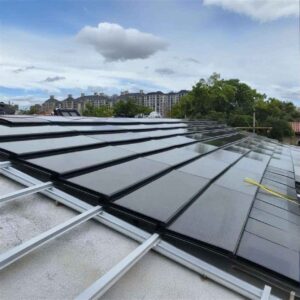
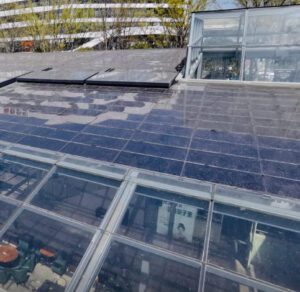
The aesthetics objection deserves particular attention in this segment. Products like the BIPV solar glass systems from Jia Mao BIPV directly address this concern — because when solar glass replaces conventional facade or roofing material, it doesn’t look like “solar panels on a house.” It looks like a premium architectural choice that also generates electricity. For eco-conscious buyers who’ve hesitated because of aesthetics, this reframe often moves the conversation from consideration to commitment.
The Timeline: How Long These Buyers Take to Decide
Typical decision window: 3–5 months from first awareness to signed contract.
- Month 1: Passive research. They’re watching videos, reading articles, comparing options. They are not yet ready to talk to a salesperson.
- Month 2–3: Active comparison. Requesting quotes, reading warranties, having internal household discussions.
- Month 4–5: Final evaluation. Checking references, verifying certifications, aligning with partner.
The household alignment dimension is chronically underserved. Research consistently shows that major household financial decisions require alignment between both adult partners. Distributors who present only to one person in a two-adult household are setting themselves up for the “I need to talk to my partner” stall that quietly becomes a dead deal. The fix: invite both decision-makers from the first meeting.
Targeting Strategies That Work for Eco-Conscious Buyers
Digital Channels and Content That Resonate
Content marketing — not paid advertising — is the primary acquisition channel for this persona. A single well-researched article on “how to calculate your household solar carbon offset” published on your website and shared in local sustainability communities can generate qualified inbound leads for months.
Prioritize:
- SEO content targeting searches like “sustainable home solar,” “BIPV glass roof,” and “net zero home solar upgrade”
- YouTube content showing real installations with environmental outcome data
- Email nurture sequences that educate before they sell
- Google My Business reviews from eco-conscious customers who mention both environmental and financial outcomes
Partnerships and Communities to Leverage
- Local EV and sustainability groups (owners often overlap with solar buyers)
- Green building certification bodies (LEED, BREEAM, Green Star)
- Architects and interior designers specializing in sustainable homes
- HOA sustainability committees in affluent neighborhoods
- Environmental nonprofits open to approved vendor partnerships
The Messaging Framework That Converts This Segment
Lead with identity alignment — then validate with financial logic. The structure that works:
- Open with impact: “This system will offset X tonnes of CO₂ annually — the equivalent of removing two cars from the road.”
- Validate with economics: “It also reduces your energy bill from $X to $Y monthly, paying back the investment in 6–8 years, then generating free energy for the next 20+.”
- Close with legacy: “Homes with solar sell for 4.1% more on average (Zillow Research), and the system produces clean energy for your family’s use for decades.”
Messaging Tactics and Value Propositions
How to Position Environmental Impact (Without Sounding Preachy)
The mistake most distributors make is leading with advocacy language — “help save the planet,” “fight climate change,” “join the green revolution.” This framing sounds like a charity pitch, not a business transaction, and it alienates the 40% of this segment who care about environmental outcomes but don’t identify with activist language.
Instead, use data-specific, consequence-specific language: “This 8 kW system will prevent approximately 6.4 tonnes of CO₂ emissions annually, based on your local grid’s carbon intensity.” It’s the same message — but delivered as professional analysis rather than marketing persuasion.
Emphasizing Long-Term Sustainability and Legacy
This segment thinks in decades, not months. Their purchase horizon isn’t “what does this cost me today” — it’s “what does this mean for my home’s future, my family’s energy security, and what I’m leaving behind.” Content and conversations that explicitly address the 25-year performance arc of a solar system — including panel degradation rates (typically <0.5%/year), inverter lifecycle management, and system value at resale — speak directly to how this buyer actually evaluates the decision.
Building Trust Through Certifications and Third-Party Validation
Third-party validation is non-negotiable for this persona. They’ve been sold “green” claims before that turned out to be greenwashing. The certifications that move them:
- IEC 61215 and IEC 61730 (international standards for PV module performance and safety)
- UL Certifications (U.S. safety standard)
- ISO 9001 (quality management — manufacturing credibility)
- LEED compatibility documentation (for BIPV applications in sustainable buildings)
- Carbon footprint LCA (Life Cycle Assessment) data for panels and installation
Providing these proactively — before they ask — signals that you understand their level of diligence and are ready for it.
Persona #2 – The Cost-Focused Family (The ROI-Driven Buyer)
Who They Are and Their Role in Your Revenue Mix
Income Brackets, Family Structures, and Motivations
The cost-focused family is the highest-volume segment in residential solar distribution. Household income typically ranges from $65,000–$130,000. They own a 3–5 bedroom home in a suburban or semi-rural area with above-average electricity consumption — typically $180–$320/month before solar. Energy bills are a genuine financial pressure point.
They’re not ideologically motivated by clean energy. They’re motivated by a spreadsheet that doesn’t balance. When their utility sends a rate increase notice, or when a neighbor mentions their solar system has dropped their monthly bill from $280 to $22, that’s the trigger that moves them from “we should look into this someday” to “get me a quote this week.”
What Keeps Them Awake at Night (Energy Bills)
The pain is specific and quantifiable. A family spending $280/month on electricity is spending $3,360/year on a utility bill that delivers zero equity, zero appreciation, and no optionality. When you frame solar as converting an operating expense into an owned asset — “instead of paying the utility $3,360/year for 20 years ($67,200 total), you invest $18,000 today and eliminate that expense” — you’re speaking the language of a buyer who has already done the math intuitively.
Why This Segment Often Has the Shortest Sales Cycles
When a cost-focused family has already decided to go solar and is comparing installers, the timeline compresses to 2–4 weeks. They’ve done the calculation, they’ve gotten three quotes, they’re ready to choose. The distributor who leads with a clear, credible ROI number and doesn’t make the process complicated wins.
The danger in this segment is the opposite of the eco-conscious buyer: moving too slowly once they’re ready, or burying the financial case in a 40-slide presentation when all they want is a one-page summary showing payback period, monthly savings, and financing options.
Their Buying Journey: Speed, Savings, and Skepticism
How They Research (Spreadsheets, Comparisons, and Reviews)
Cost-focused families research like comparison shoppers. Their toolkit:
- Google searches for “[city name] solar installation reviews”
- Energy bill calculators on solar company websites
- YouTube videos comparing solar companies’ pricing and warranties
- Consumer review platforms (Google Reviews, Trustpilot, Yelp for local installers)
- Facebook groups asking “what did you pay for your solar system?”
- Conversations with neighbors who have gone through the process
They arrive at your first conversation having already formed price expectations and having already disqualified distributors with poor reviews. Your online reputation — specifically the volume and recency of 5-star reviews from local customers — is often the reason you’re in the room or not.
The Price Objections You’ll Face and Proven Rebuttals
| Objection | Underlying Concern | Effective Response |
|---|---|---|
| “It’s too expensive” | Can’t see the full financial picture | Show total cost of not going solar: 20 years × current bill = $X |
| “What if electricity prices drop?” | Worried about losing the bet | Historical data: U.S. retail electricity prices have increased 2–3% annually for 20 years (EIA) |
| “I’ve heard companies close and leave you with no support” | Warranty risk | Show your warranty backstop provider, years in business, and reference customers from 5+ years ago |
| “My roof might need replacing soon” | Timing concern | Walk through the combined roof+solar option — a net cost analysis often shows similar or better economics than sequential projects |
| “I need to think about it” | Partner hasn’t agreed | Ask: “Is there anyone else we should include in the next conversation?” |
The Decision Timeline: Why They Move Fast When Ready
The decision window for cost-focused families follows a distinctive pattern: long consideration phase (weeks to months), followed by a very fast decision when a trigger event fires. The trigger is almost always one of:
- A utility rate increase announcement
- A neighbor completing an installation
- A government incentive deadline approaching
- The arrival of their worst-ever energy bill
- A home renovation already in progress that makes solar installation convenient
Understanding this means your follow-up cadence matters more than your initial pitch. The family who said “we’re thinking about it” in March and received a useful update in May when a new state rebate was announced will often be ready to sign by June. The family who didn’t hear from you between March and June bought from whoever called them in May.
Targeting Strategies That Reach Cost-Focused Families
Local Advertising and Community Channels
This persona responds to hyper-local presence. What works:
- Google Ads targeting high-income suburban ZIP codes with above-average electricity rates
- Neighborhood-level Facebook and Nextdoor ads featuring real customer testimonials from nearby residents
- Local newspaper and community event sponsorships
- Direct mail in neighborhoods with high owner-occupied housing rates
- Door-to-door canvassing in neighborhoods immediately after a visible local installation
The geographic granularity matters. An ad that says “Solar in [Your City]” is generic. An ad that says “47 families in [Specific Neighborhood] have already installed — here’s what their bills look like now” is a social proof statement that a cost-focused family can verify and connect to their own situation.
Referral Programs and Neighborhood Networks
Referral leads close at 29–37% compared to 5–10% for paid digital leads (Sunvoy lead source data). For the cost-focused family segment, cash referral incentives are the highest-performing reward structure. A $300–$500 bill credit or cash payment for a verified referral that converts is a marketing expense that far outperforms equivalent paid advertising spend.
The neighborhood network dynamic is powerful: once 10–15% of homes on a street have installed solar, the remaining homeowners experience social proof pressure from every walk past the visible installations. Systematically tracking installation density by neighborhood and prioritizing canvassing in blocks with high existing penetration exploits this momentum.
The Channels Where They Actually Search for Solar
- Google Search: “#1 priority — be visible for “[city] solar installation,” “solar panels [city] cost,” and “solar company reviews [city]”
- Google Maps: Your Google Business profile with 4.8+ star average and 50+ recent reviews is often the single most important sales asset in this segment
- Facebook Local Groups: Being present and helpful in community groups — not advertising, but answering questions genuinely — builds trust that converts
- YouTube: “Should I get solar in [state]?” comparison videos rank well and generate qualified traffic at low cost
Messaging Tactics That Drive Action
Leading With Numbers: ROI Calculators and Payback Periods
Lead with dollar impact in specific, local terms — not percentages or kilowatt-hours. The message that lands:
“Based on your address, current electricity rate of $0.17/kWh, and estimated consumption, a 9 kW system would reduce your monthly bill from $245 to approximately $22. The system costs $21,600 before incentives, $15,120 after the 30% federal tax credit. At your current rates, payback is 6.1 years. After that, you’re looking at 20+ years of nearly free electricity.”
That specific scenario is what converts a cost-focused buyer. Generalities don’t. If your quote process can’t produce that level of specificity within 24 hours of a site assessment, you’re losing deals to competitors who can.
Simplifying the Complexity: Breaking Down Financing Options
The financing conversation is the single highest-leverage sales tool in this segment. A family that can’t comfortably write a $20,000 check can often say yes to a $165/month solar loan — especially when their current utility bill is $245. The monthly payment is lower than what they’re already paying, with the added benefit that it builds equity rather than disappearing to the utility company.
Financing structures to have ready:
| Structure | How It Works | Best For |
|---|---|---|
| Solar Loan (5–20 yr) | Fixed monthly payment; customer owns system | Families with good credit wanting ownership |
| PACE Financing | Repaid through property taxes; transfers with home | Owners planning to sell within 5–7 years |
| Lease/PPA | No upfront cost; pay for electricity produced | Families with limited capital or lower credit scores |
| Cash Purchase | Full upfront payment; maximum long-term ROI | High-income buyers focused on maximizing returns |
Social Proof That Matters: Neighbor Testimonials and Local Case Studies
A homeowner in Phoenix is more persuaded by “23 families in the Scottsdale zip code installed our system in the last 8 months, and their average bill dropped from $290 to $31/month” than by any global case study or corporate testimonial.
Social proof for this persona must be:
- Local — same city or ideally same neighborhood
- Specific — dollar amounts, not percentages
- Verifiable — named customer, with contact available on request
- Visual — photos of their actual roof installation, not stock imagery
Persona #3 – The Commercial Business Buyer (The Strategic Investor)

Who They Are and Why They’re Worth Your Time
Business Types, Decision-Making Structures, and Budget Sizes
The commercial business buyer is operating a facility — or portfolio of facilities — where energy represents a meaningful line item. The highest-value target industries:
- Manufacturing and processing: High daytime energy consumption, owned facilities, long operating horizons
- Cold chain logistics and food distribution: Refrigeration-heavy loads that run continuously
- Retail chains and shopping centers: Large roof areas, predictable consumption profiles
- Healthcare: 24/7 operations, energy security requirements, ESG reporting pressure
- Commercial real estate developers: New build specification opportunities, BIPV facade potential
Project values in this segment range from $200,000 for a small commercial installation to $5M+ for a portfolio-wide solar program. Deal sizes are 15–150× larger than the average residential contract.
What Success Looks Like for Commercial Operations
For the CFO: a solar program that shows positive NPV over a 10-year horizon, IRR exceeding the company’s cost of capital (typically 8–12%), and a tax benefit structure that reduces net investment cost by 40–55% through the federal ITC and accelerated depreciation.
For the operations or facilities team: a system that goes in without disrupting production schedules, maintained by a credible service partner who responds within 4 hours to a fault alert, and documented with clear commissioning and warranty records.
For the sustainability director: a documented reduction in Scope 2 emissions (emissions from purchased electricity) with audit-ready data for ESG reporting.
These are three different success definitions. Missing any one of them means a stakeholder who could kill your deal at the final stage.
Why This Segment Offers Higher Deal Values and Longer Relationships
The commercial segment’s advantage isn’t just deal size — it’s relationship depth. A commercial enterprise customer who has a positive first deployment experience will typically return for portfolio expansion, upgrade programs, and storage additions. The average commercial relationship lifetime value (LTV) over 5 years, for a customer managing a portfolio of 5+ facilities, routinely exceeds $3M–$8M in cumulative project value.
The BIPV real-world case studies at Jia Mao BIPV document exactly this pattern: commercial developers who specified BIPV glass on one project and returned for portfolio-wide programs because the energy performance data from the first installation justified the expansion investment.
Their Buying Journey: Committees, Compliance, and Complex Timelines
Who’s Actually Making the Decision (And Why You Need to Know)
The commercial solar deal typically involves four distinct stakeholder types — and missing any one of them is how deals die in the final stages:
| Stakeholder | Role in the Decision | What They Need From You |
|---|---|---|
| Facility / Operations Manager | Technical qualification, installation logistics | Project timeline, disruption management plan, technical specs |
| Energy Manager / Sustainability Director | Specification and program management | Energy performance data, carbon offset documentation, LEED compatibility |
| CFO / VP Finance | Financial approval | NPV, IRR, tax benefit model, payback period analysis |
| CEO / Board | Capital approval above threshold | Strategic rationale, risk mitigation, comparable company precedents |
Asking directly and early — “Who else will be involved in this decision, and what does your internal approval process look like?” — is not presumptuous. It’s professional. It also reveals whether you’re talking to a decision-maker or an influencer, which changes your entire strategy for the account.
The Regulatory and Compliance Concerns They Raise
Commercial solar at scale introduces compliance complexity that small business and residential buyers simply don’t encounter:
- Utility interconnection studies: A 500 kW+ commercial installation requires formal studies of the local distribution network, which can take 3–9 months
- Structural engineering: Roof load analysis before panel specification and installation approval
- Building and electrical permits: Commercial permits in many jurisdictions require licensed engineers to stamp the plans
- Fire code requirements: Setback and access requirements for rooftop solar vary by jurisdiction and affect system design
- Metering and net metering policies: Commercial net metering policies vary significantly by utility and state, affecting the financial model
Distributors who bring a credible technical team to early-stage commercial conversations — or who are partnered with EPC (Engineering, Procurement, and Construction) firms who can manage these processes — are immediately differentiated from competitors presenting only a quote sheet.
The Extended Sales Cycle: Planning for 6-18 Month Timelines
Commercial enterprise solar deals take 12–24 months from initial contact to signed contract. This is not inefficiency — it’s the institutional pace of how large organizations evaluate and commit to capital expenditures.
The forces controlling this timeline:
- Annual capital budget cycle: A project not in next year’s budget by Q4 of this year isn’t happening next year
- RFP (Request for Proposal) process: Committee evaluation, not individual decision
- Board approval thresholds: Triggered between $500,000–$2M depending on company
- Utility interconnection timeline: 3–9 months of technical process, regardless of commercial decision speed
The practical implication: a commercial deal that appears stalled is often following its natural institutional pace. The worst response is pushing artificial urgency. The best response is using the pre-decision window to deepen relationships, provide genuinely useful analysis, and be the most knowledgeable partner in the room when the RFP opens.
Targeting Strategies for Commercial Decision-Makers
B2B Channels and Industry Events That Generate Leads
The channels where commercial decision-makers actually evaluate vendors:
- Solar Power International (SPI): The largest U.S. solar trade event — where commercial procurement teams research vendors
- Industry association events: Manufacturing, logistics, retail, and food industry conferences where energy costs are a regular topic
- LinkedIn: The most efficient platform for identifying and reaching energy managers, sustainability directors, and CFOs by company size and industry
- Webinars and white papers: In-depth technical content signals the expertise level commercial buyers require before qualifying a vendor
- Commercial real estate broker networks: For BIPV specification in new-build commercial projects
Building Relationships With Facility Managers and CFOs
The approach that works in commercial B2B is teaching before selling. Content that helps a facility manager understand how to assess their building’s solar potential, or that helps a CFO build the internal business case for board approval, earns trust that competitive pricing alone cannot buy.
A practical tactic: create a one-page “Commercial Solar Financial Summary Template” — a simple model that a CFO can drop their facility’s energy data into and instantly see an estimated IRR, NPV, and tax benefit breakdown. Providing this before asking for anything positions you as a partner rather than a vendor. It also advances the internal approval process with every influential stakeholder who reviews it.
Partnerships With Commercial Real Estate and Energy Consultants
Commercial real estate brokers, energy consultants, and sustainability advisors are gatekeepers with enormous influence over commercial solar vendor selection. A single relationship with a commercial energy consultant who advises 30 corporate clients across your region is worth more prospecting effort than 30 individual cold outreach campaigns.
Offering white-label ROI analysis tools, co-branded case studies, and referral fee structures to energy consultants creates a channel that generates pre-qualified commercial leads at a fraction of direct outreach cost.
Messaging Tactics for Business Operations
Quantifying Operational Savings and Tax Incentives
The U.S. Investment Tax Credit (ITC) currently provides a 30% tax credit for commercial solar installations, stable through 2032 (IRS Commercial Solar Tax Credit). Combined with bonus depreciation — currently at 40% in 2025 — the effective net cost of a commercial solar installation after first-year tax benefit realization can be 45–55% below the gross system price.
Present this as a combined financial model:
| Cost Component | Example: $1,000,000 Project |
|---|---|
| Gross system cost | $1,000,000 |
| Federal ITC (30%) | -$300,000 |
| Year-1 bonus depreciation (40% × 85% basis) | -$136,000 (tax savings at 25% rate) |
| Net effective investment cost | ~$564,000 |
| Annual energy savings | $75,000–$120,000/yr |
| Simple payback (net cost) | 4.7–7.5 years |
| 20-year NPV | $800,000–$1,400,000 |
Positioning Energy Independence as Competitive Advantage
Commercial buyers in energy-intensive industries are increasingly exposed to board-level questions about energy cost exposure. In a volatile electricity price environment, a company that generates 35–50% of its facility electricity from owned solar assets has reduced its energy cost risk by that proportion — and that reduction has a calculable financial value that belongs in the analysis.
For commercial real estate developers, BIPV glass facades represent a dual-value proposition: they generate on-site electricity while qualifying the building for LEED Energy & Atmosphere credits, which supports higher rental premiums and lower vacancy rates in markets where ESG-conscious tenants are the primary demand driver.
Addressing Risk, Warranty, and Long-Term Performance Guarantees
Commercial buyers will scrutinize warranty terms more rigorously than any other segment. The minimum credibility bar:
- Product warranty: 25-year panel manufacturer warranty with a named backstop provider
- Performance guarantee: Linear degradation of no more than 0.5%/year (80%+ output at year 25)
- Workmanship warranty: 10-year minimum on installation
- Service response SLA: Written commitment to response time for system faults
- Monitoring: Real-time system monitoring with automated fault alerts
Any distributor who cannot provide a written, quantified response to each of these points is not competitive in commercial enterprise solar procurement.
Comparative Analysis – Which Persona Drives Your Bottom Line?
Profit Margins by Persona: Where Your Real Money Lives
Installation Costs, Material Margins, and Service Revenue
The table below summarizes the segment-level economics that determine true profitability for distributors and agents:
| Metric | Eco-Conscious Homeowner | Cost-Focused Family | Commercial Business |
|---|---|---|---|
| Avg. deal size | $18,000–$45,000 | $12,000–$28,000 | $200,000–$5,000,000+ |
| Typical sales cycle | 3–5 months | 2–4 months | 12–24 months |
| Close rate (industry range) | 22–35% | 28–40% | 10–18% |
| Gross margin range | 22–35% | 15–22% | 18–28% |
| Referral rate | 30–35% | 20–28% | 15–22% |
| Repeat/expansion rate | Low | Low–Medium | High |
| Support burden (post-sale) | Medium | Medium | Medium–High |
| Sales complexity | Medium | Low–Medium | Very High |
| Revenue per sales hour | High | Very High | Medium |
Referral Rates and Customer Lifetime Value
Referral conversion rates vary dramatically by segment. Rocket Launch Media solar data shows referral-to-close rates of 35–50% for both residential and commercial solar, with an average ROI of approximately 14× on referral program investment.
For eco-conscious buyers, referrals are particularly powerful because they spread through value-aligned social networks — sustainability communities, EV owner groups, green building associations — where trust is already established and the referral carries identity endorsement, not just product recommendation.
For commercial buyers, a single referral from a satisfied enterprise client to a peer company at a similar scale can generate more revenue than an entire quarter of residential marketing spend.
Support Burden and Post-Sale Friction by Segment
Support burden follows predictable patterns that affect your true cost of sale:
- Eco-conscious homeowners: Moderate. They track system performance closely (often via app) and will contact you if output drops unexpectedly. Proactive monitoring alerts prevent most support calls.
- Cost-focused families: Moderate. Bill impact is their primary metric — if the bill goes down as promised, support need is minimal. Installer quality issues at commissioning generate the most friction.
- Commercial business buyers: Medium–High. Enterprise clients expect formal service level agreements, response time commitments, and documented maintenance records. The support relationship is more demanding but also creates the ongoing engagement that drives expansion revenue.
Market Saturation and Opportunity Gaps
Which Segments Are Oversaturated in Your Region
Residential solar saturation is measurable and market-specific. In U.S. markets like California, Massachusetts, and Hawaii, solar penetration of eligible rooftops exceeds 30%, meaning the remaining prospect pool is increasingly composed of late adopters — harder to convert, more price-sensitive, and more likely to have already evaluated and declined solar previously.
Checking penetration data for your territory — available from SEIA’s state-level installation data and from local utility companies — tells you whether the residential opportunity in your market is still expanding or beginning to compress.
Emerging Opportunities in Underserved Segments
Commercial building renovation projects represent a significant emerging opportunity, particularly for BIPV product distributors. Buildings undergoing facade upgrades or roofing replacements are ideal BIPV specification candidates because the building material is being replaced anyway — the incremental cost of specifying BIPV glass instead of conventional cladding is significantly lower than the cost of adding solar to an existing building.
New commercial construction is the highest-leverage BIPV opportunity. Specifying integrated photovoltaic glass from Jia Mao BIPV at the architecture and engineering stage — before construction begins — eliminates the retrofit premium and produces better-integrated aesthetics than any post-construction installation can match.
How to Position Your Business Against Competitors in Each Niche
In residential: differentiate on local presence, review volume, and installation track record — not product specifications. Most homeowners can’t evaluate panel efficiency differences, but they can evaluate whether you have 200 five-star reviews from neighbors in their city.
In small business: differentiate on speed, simplicity, and demonstrated sector expertise. A food manufacturer wants a distributor who has installed solar at other food manufacturing facilities and can show specific outcomes — not a generic commercial solar pitch.
In commercial enterprise: differentiate on technical depth, relationship quality at the executive level, and demonstrated experience with comparable projects at comparable scale. A $3M portfolio-wide solar program is not a stretch from a $300K commercial deal — unless the distributor behaves as though it is.
The Ideal Customer Mix for Sustainable Growth
Portfolio Strategy: Why You Need All Three Personas
A distribution business dependent on a single segment is fragile. Residential volume provides cash flow consistency but compresses in saturated markets. Commercial enterprise provides transformational revenue but creates lumpy pipeline. Small business provides margin balance and referral leverage.
The distributors building the most durable businesses in 2025 are running a deliberate portfolio — residential for volume and referrals, small business for margin and momentum, commercial for transformational growth and long-term LTV.
Capacity Planning: How Many Customers of Each Type Can You Handle?
The capacity question is real: a commercial enterprise deal in active evaluation consumes 3–5× more senior sales time per week than a residential deal. A team of 5 sales agents can handle 60–80 residential deals simultaneously, but should not carry more than 8–12 active commercial enterprise relationships.
Failing to plan for this creates the worst outcome: winning commercial deals you can’t service properly, damaging the relationship that was supposed to generate multi-million dollar lifetime value.
Resource Allocation: Where to Invest Your Sales and Marketing Budget
A practical budget allocation framework for a distribution business targeting all three segments:
| Segment | % of Marketing Budget | % of Sales Time | Expected Revenue Contribution |
|---|---|---|---|
| Eco-Conscious Homeowner | 20% | 25% | 15–25% of revenue |
| Cost-Focused Family | 35% | 35% | 30–40% of revenue |
| Commercial Business | 45% | 40% | 40–55% of revenue |
These ratios shift based on your market’s saturation level, your team’s existing strengths, and your current pipeline distribution. The framework is a starting point, not a prescription.
Tactical Implementation – From Segmentation to Sales
Building Your Segmentation System
Lead Scoring: Identifying Which Persona a Prospect Belongs To
Lead scoring for solar distributors doesn’t require sophisticated software to start — it requires a consistent framework applied at first contact. The signals that identify persona quickly:
How they found you:
- Organic search for “eco-friendly solar” → likely eco-conscious
- Organic search for “solar panels cost payback period” → likely cost-focused family
- LinkedIn InMail or trade event → likely commercial
Their first question:
- “Is this good for the environment?” / “Are your panels sustainably made?” → eco-conscious
- “What’s the payback period?” / “What would my bill be?” → cost-focused
- “Can you provide an ROI model?” / “What are your largest installations?” → commercial
Their contact information:
- Personal Gmail, residential address → residential
- Business email, company name → commercial or small business
The QuickEstimate lead scoring framework for solar CRMs provides a practical 0–100 scoring system using both prospect fit and engagement signals that maps well to this three-persona structure.
Data Collection: What Information You Actually Need
At first contact, capture:
- Property type (residential/commercial/industrial)
- Monthly energy bill (dollar amount, not percentage)
- Roof/facility ownership vs. lease
- Decision timeline (“when are you hoping to have this installed?”)
- Who else is involved in the decision
That’s it for the first conversation. Attempting to capture more creates friction. The goal of the first conversation is qualification and relationship, not a completed form.
CRM Setup: Organizing Your Pipeline by Persona
In whatever CRM tool you use — whether HubSpot, Pipedrive, or a dedicated solar platform like Scoop Solar — create three separate pipeline stages for each persona. The reason: follow-up timing, messaging sequences, and sales activity requirements differ enough between segments that a single unified pipeline creates systematic confusion.
Commercial deals need monthly touchpoints over 12–18 months. Residential deals need weekly touchpoints over 8–12 weeks. Mixing them in the same pipeline view generates the wrong urgency signals for both.
Customizing Your Sales Pitch by Persona
The Discovery Questions That Reveal Buyer Motivation
Ask these questions early, and listen carefully to what the answers tell you about persona:
- “What made you reach out about solar now?” — The answer reveals the triggering event and primary motivation.
- “What’s your biggest concern about going solar?” — The answer is almost always their real objection.
- “Who else will be part of this decision?” — Reveals decision-making structure and any stakeholders you haven’t met.
- “What does success look like for this project?” — Surfaces their personal definition of value: environmental impact, bill reduction, ROI, or operational efficiency.
- “What’s your timeline for moving forward?” — Distinguishes active buyers from information gatherers.
Objection Handling Scripts for Each Segment
Eco-Conscious Buyer — “How do I know your panels are truly sustainable?”
“That’s exactly the right question. Here’s our panel’s lifecycle carbon assessment — it shows the manufacturing carbon cost and the break-even point where the system has offset its own production footprint, which for this panel is approximately 2.1 years of operation. After that, every year of operation is net positive. I can also share our IEC certifications and manufacturing audit reports if that would be useful.”
Cost-Focused Family — “I need to think about the cost more.”
“That’s completely fair — it’s a significant investment. Can I show you the 20-year comparison? On one side: your current trajectory, paying [$X/month] indefinitely with anticipated rate increases. On the other: the solar option with the financing we discussed, where your total payments in year 1 are actually [lower than your current bill]. The math shifts when you look at the full horizon, not just the upfront number.”
Commercial Buyer — “We’re not sure about the ROI in our specific situation.”
“That’s a fair concern — and generic ROI claims aren’t useful to you. Can we schedule 90 minutes with your energy data? I’ll bring a financial model that uses your actual consumption, your utility rate structure including demand charges, your tax profile, and the 30% ITC timeline. You’ll leave with a project-specific NPV and IRR — the same format your finance team will review internally. That gives you a real number to work with.”
Closing Techniques That Work for Different Buyer Types
- Eco-conscious: Close on values alignment. “This system would make your home net-zero. That’s a legacy statement — and it’s available to you right now.”
- Cost-focused: Close on financial clarity. “With the financing we discussed, your first payment is less than your current energy bill. You’re cash-flow positive from month one.”
- Commercial: Close on process advancement. “The next step isn’t a commitment — it’s scheduling the site assessment so we can bring you a project-specific model. That gives your team the numbers they need to evaluate this properly.”
Creating Targeted Marketing Campaigns
Content Calendars for Each Persona
Running a content calendar that serves all three personas without confusion requires topic separation:
| Persona | Content Types | Publishing Cadence | Key Platforms |
|---|---|---|---|
| Eco-Conscious | Environmental impact reports, LEED content, BIPV aesthetics | 2× per month | Blog, Instagram, LinkedIn |
| Cost-Focused Family | ROI calculators, bill comparison tools, financing explainers | 2× per month | Blog, Google, Facebook |
| Commercial | Case studies, white papers, ROI modeling tools, trade event content | 1× per month | LinkedIn, Email, Trade Publications |
Ad Copy and Landing Pages That Convert
Each persona needs its own landing page — not a generic “Get a Solar Quote” form. The reason: conversion rates on segmented landing pages typically run 2–3× higher than generic pages because the visitor immediately recognizes that the content was written for someone in their situation.
Eco-conscious landing page headline: “Make Your Home Net-Zero: Solar Systems Designed for the Sustainability-Conscious Homeowner”
Cost-focused landing page headline: “How Much Could You Save? Calculate Your Solar Payback Period in 60 Seconds”
Commercial landing page headline: “Commercial Solar ROI Calculator: Get a Project-Specific NPV and IRR Model for Your Facility”
Email Sequences That Move Prospects Through Your Pipeline
Design 4–6 email sequences for each persona, triggered at key pipeline stages. The structure that works:
- Email 1 (immediate): Acknowledge their inquiry, set expectation for next step, share one relevant proof point (a local case study for their segment)
- Email 2 (3 days later): Address their segment’s most common concern before they have to raise it
- Email 3 (7 days): Provide a useful tool — ROI calculator, financing guide, or environmental impact estimator
- Email 4 (14 days): Social proof — a case study from a customer in their segment with specific outcome data
- Email 5 (30 days): Market update — a new incentive, rate change, or relevant industry news that creates legitimate urgency
- Email 6 (60 days): Re-engagement — “We’ve helped X customers this month — is now a better time to revisit?”
Training Your Team to Sell to Multiple Personas
Role-Playing Scenarios and Skill Development
Role-playing is the most efficient skill-development tool available, and the most consistently skipped. A monthly 90-minute session where experienced reps play persona-specific buyers — a cost-focused homeowner who leads with “I just want the cheapest option,” a CFO who asks for NPV calculations on page 1, an eco-conscious buyer who challenges your panel’s environmental credentials — builds capabilities that no amount of slide-deck training can match.
Metrics and Accountability by Segment
Track these metrics separately for each persona, monthly:
| Metric | Eco-Conscious | Cost-Focused | Commercial |
|---|---|---|---|
| Close rate (leads → contract) | Target: >25% | Target: >30% | Target: >12% |
| Avg. sales cycle | Target: <4 months | Target: <6 weeks | Target: <16 months |
| Avg. deal size | Target: >$22,000 | Target: >$15,000 | Target: >$250,000 |
| Referral rate (customers → referrals) | Target: >30% | Target: >22% | Target: >15% |
If one persona’s metrics are persistently underperforming targets, run a structured lost-deal review before investing more in that segment. The problem is usually messaging misalignment, not market opportunity.
Continuous Improvement: What to Track and Measure
The data most teams track tells you what happened. The data that improves performance tells you why. Add these fields to your CRM close/lost tracking:
- Primary reason for win (what tipped the decision?)
- Primary reason for loss (what objection wasn’t addressed?)
- Persona self-assessment accuracy (did the deal close as the segment you initially classified it?)
- Messaging that generated the most engagement (which email, slide, or conversation point visibly moved the prospect?)
Advanced Strategies – Maximizing Revenue Per Persona
Upselling and Cross-Selling by Segment
Battery Storage Bundles for Eco-Conscious Buyers
Eco-conscious buyers who have already committed to solar are the highest-conversion audience for battery storage add-ons. Their motivation — energy independence and resilience — aligns perfectly with what a home battery provides. The conversation isn’t “would you like to buy more?” — it’s “do you want your system to be resilient during outages and fully optimized for self-consumption?”
Battery storage attachment rates among eco-conscious buyers who are offered the option at the time of solar quote run at 35–45% in markets with good battery incentive structures, compared to 15–20% for cost-focused buyers.
Financing and Extended Warranty Packages for Cost-Focused Families
Cost-focused families respond to risk reduction packages framed as financial protection. An extended warranty or performance monitoring subscription — priced at $15–$25/month — addresses their underlying concern about what happens if the system underperforms. When framed as “performance insurance that guarantees your savings stay on track,” attachment rates improve significantly versus presenting it as a standalone product.
Energy Monitoring and Optimization Services for Commercial Clients
Commercial buyers need real-time performance visibility and formal reporting for ESG purposes. An annual energy monitoring and reporting service — providing monthly production reports, annual carbon offset certificates, and system health diagnostics — creates a recurring revenue stream that also deepens the client relationship. Commercial clients who receive regular, professional-grade reporting are significantly more likely to expand the program to additional facilities.
Referral Programs Tailored to Each Persona
Why Eco-Conscious Buyers Refer (And How to Incentivize Them)
Eco-conscious buyers refer because sharing the environmental decision reinforces their own identity — it’s socially meaningful, not just transactionally motivated. Cash rebates are less effective with this persona than impact-based incentives.
What works: “For every verified referral you generate, we’ll plant 50 native trees in your region through [verified reforestation partner]” or a donation in their name to a local environmental organization. The gesture costs less than a cash referral fee but carries more emotional resonance with this persona.
Neighborhood Networks: Leveraging Cost-Focused Family Referrals
For cost-focused families, cash is the referral motivator. A structured program offering $500 in bill credits for a verified referral that contracts is both simple to understand and compelling to act on.
The amplification opportunity: when two adjacent neighbors install through your referral program, the visible social proof on the street generates organic third-party conversations that you don’t have to initiate. One referral sale in a neighborhood can turn into a cluster of 4–8 installations within 12 months.
B2B Referral Partnerships for Commercial Expansion
Commercial referral programs operate through formal partnership structures, not informal word-of-mouth. An energy consultant or commercial real estate broker who refers a client to you and receives a structured referral fee (typically 1–3% of project value for commercial projects) has a financial incentive to bring you into every relevant client conversation they have.
Formalizing these relationships with signed partner agreements, co-marketing materials, and quarterly performance reviews transforms individual referrals into a systematic channel.
Retention and Repeat Business by Segment
Long-Term Engagement Strategies for Each Buyer Type
Post-sale engagement looks different by segment:
- Eco-conscious homeowner: Annual carbon offset summary; content about EV charger integration; system anniversary message with performance highlights
- Cost-focused family: Annual bill comparison report showing actual vs. projected savings; proactive battery storage offer timed to utility rate increases
- Commercial business: Quarterly system performance review meeting; annual portfolio expansion analysis; regulatory update briefings relevant to their industry’s solar incentive environment
Service Offerings That Deepen Customer Relationships
Service and maintenance contracts are the highest-margin revenue stream in solar distribution that most distributors systematically underexplore. An annual service contract at $350–$1,200 for residential systems, or $2,000–$15,000 for commercial systems, creates recurring revenue, maintains system performance, and ensures that when the customer considers adding storage or expanding capacity, you’re already in the relationship.
Timing the Next Conversation: When to Re-Engage Past Customers
The optimal re-engagement timing:
- 18 months after installation: Battery storage — technology has improved, incentives may have changed
- 3 years after installation: System health review — potential inverter upgrade opportunity
- 5 years after installation: Expansion conversation — has their energy consumption grown?
- 7–10 years after installation: Portfolio conversation — are there other properties in the family or business portfolio?
Setting these touchpoints in your CRM at installation is the most reliable way to ensure they actually happen.
Regional and Market-Specific Variations
How Geography Changes Your Persona Targeting
Urban vs. Suburban vs. Rural Buyer Differences
Geography reshapes personas in ways that demographic data alone misses. In dense urban environments, the residential solar opportunity is often constrained by high-rise construction (no roof access), mixed tenure (renters can’t install), and small roof areas. The eco-conscious and commercial personas dominate urban markets, with BIPV facade and window systems representing the primary residential-adjacent opportunity.
Suburban environments are the natural habitat of the cost-focused family — homeownership rates are high, roofs are large, and visible neighbor installations create social proof dynamics that urban density doesn’t allow. The most effective suburban solar marketing leverages micro-geography: targeting neighborhoods with high recent installation rates and focusing canvassing and local advertising investment where momentum is already building.
Rural and semi-rural environments show the strongest commercial and agricultural solar potential: large unshaded roof areas, high electricity consumption for agricultural operations, and often limited grid reliability that makes solar-plus-storage a functional necessity rather than an environmental preference.
Regional Climate and Incentive Programs That Shift Motivations
Solar economics shift meaningfully by climate zone. In high-irradiance markets (Southwest U.S., Middle East, Southeast Asia, Australia), payback periods are 4–7 years and the financial case is obvious. In moderate irradiance markets (UK, Germany, Northern China), payback stretches to 8–14 years, and the weight of messaging has to shift toward incentive programs, regulatory drivers, and energy security rather than pure financial return.
The DOE’s Solar Photovoltaic System Cost Benchmarks provide region-specific cost data that distributors should use to calibrate their ROI messaging by geography.
Competitive Landscape: Adjusting Your Strategy by Market
In saturated competitive markets, differentiation on price is a race to the bottom. The distributors winning in competitive markets are differentiating on:
- Speed to proposal (same-day quote capability)
- Local installation track record (more verified reviews than competitors)
- Technical depth for the commercial segment
- Product differentiation — including BIPV options that competitors don’t carry
Seasonal Fluctuations and Timing Your Campaigns
When Each Persona Is Most Likely to Buy
Historical solar purchase behavior follows clear seasonal patterns:
| Persona | Peak Buying Season | Why |
|---|---|---|
| Eco-Conscious Homeowner | Spring (March–May) | Tax refund availability; spring renovation mindset; Earth Day marketing cadence |
| Cost-Focused Family | Summer (June–August) | Peak energy bills; heat-related bill shock; summer financing promotions |
| Commercial Business | Q4 (Oct–Dec) | Year-end capital budget utilization; ITC deadline awareness |
Coordinating Your Sales Efforts With Incentive Cycles
Federal and state incentive deadlines — particularly year-end ITC utilization for commercial and the annual solar rebate cycles in markets with capped incentive pools — are the most reliable urgency drivers in solar sales. Building a 90-day marketing campaign around legitimate deadline urgency outperforms any manufactured urgency tactic.
Planning Inventory and Capacity Around Demand Patterns
The commercial Q4 concentration creates a predictable capacity crunch for distributors who don’t plan for it. Pre-ordering inventory in Q3 for Q4 commercial installations, and building installer partner capacity before the demand spike rather than during it, is the operational discipline that separates distributors who capture Q4 commercial revenue from those who lose it because they can’t deliver.
Measuring Success – Metrics That Matter for Distributors and Agents
KPIs by Persona
Conversion Rate, Deal Size, and Sales Cycle Length
Track these KPIs monthly, by persona, without exception:
| KPI | Eco-Conscious | Cost-Focused | Commercial |
|---|---|---|---|
| Lead-to-quote conversion | >55% | >65% | >35% |
| Quote-to-contract conversion | >28% | >32% | >14% |
| Avg. contract value | >$22,000 | >$15,000 | >$300,000 |
| Avg. days to close | <120 | <45 | <450 |
| Referrals per closed deal | >0.8 | >0.6 | >0.4 |
Customer Acquisition Cost and Lifetime Value
Customer acquisition cost (CAC) in residential solar reached $0.85/W in high-competition U.S. markets according to Wood Mackenzie research, translating to $6,800–$8,500 for a typical 8–10 kW residential system.
The ratio that matters is not CAC alone — it’s LTV:CAC. A target LTV:CAC ratio of 3:1 or higher is the standard benchmark for a sustainable distribution business. For commercial clients, this ratio routinely exceeds 8:1 when portfolio expansion revenue is included.
Referral Rate and Net Promoter Score by Segment
The industry-wide solar referral rate runs at 20–25% of satisfied customers generating at least one referral. Top-performing distributors in focused segments report referral rates of 30–35% for eco-conscious buyers and 22–28% for cost-focused families.
Net Promoter Score (NPS) — the simple measure of whether customers would recommend you — should be tracked separately by segment. An NPS of 50+ in residential indicates strong referral potential. An NPS below 40 in commercial indicates a service quality gap that will show up in retention and expansion data within 12–18 months.
Profitability Analysis
Gross Margin by Persona and Product Type
BIPV products consistently deliver higher gross margins than standard rooftop panel installations because:
- They replace conventional building materials (eliminating the customer’s alternative cost)
- They carry architectural specification credibility that commodity panels don’t
- They’re less susceptible to pure price comparison because fewer distributors carry them
Standard solar panel gross margins for distributors typically run at 12–22%. BIPV glass and facade products, sourced from manufacturers like Jia Mao BIPV, typically generate 25–38% gross margins for distributors with established commercial relationships, according to data from the jmbipvtech.com distributor resources.
Total Cost of Sale: Hidden Expenses You Might Be Missing
The expenses most often omitted from cost-of-sale calculations:
- Engineering and permitting coordination time (often 8–15 hours per commercial deal, not billed to the client)
- Proposal development costs (detailed commercial proposals can take 20–30 hours to produce)
- Technical pre-sales support (site assessments, structural analysis reviews)
- Post-sale support in warranty period (commercial clients generate significantly more support requests than residential)
Fully-loaded cost-of-sale analysis changes the apparent profitability of each segment — often revealing that the “easiest” residential deals are less profitable per hour invested than they appear, and that commercial deals’ higher support burden is fully offset by their larger margins when measured accurately.
Calculating True ROI on Your Segmentation Strategy
The test of whether your segmentation investment is paying off:
$$\text{Segmentation ROI} = \frac{(\text{Revenue with segmentation} – \text{Revenue without}) – \text{Segmentation investment cost}}{\text{Segmentation investment cost}} \times 100$$
A distribution business spending $3,000/month on CRM tools, segmented content creation, and training — and generating $45,000/month more in closed revenue than their pre-segmentation baseline — is generating a 1,400% ROI on that investment. Run this calculation for your own business every quarter.
Dashboards and Reporting
What to Track Weekly, Monthly, and Quarterly
Weekly: New leads by segment, active pipeline by segment, overdue follow-ups, and appointments set for the coming week.
Monthly: Close rates by segment vs. target, average deal size vs. last month, sales cycle length trends, and referral leads received.
Quarterly: Full P&L by segment (revenue, gross margin, cost of sale, net contribution), LTV:CAC by segment, NPS by segment, and competitive analysis update.
Identifying Trends and Adjusting Your Strategy
Trends that require strategic response:
- Close rate dropping >5 percentage points in any segment → audit messaging and objection handling for that segment immediately
- Sales cycle lengthening by >20% in commercial → investigate whether a competitor has entered your market with a faster proposal process
- Referral rate dropping → audit post-sale customer experience; identify whether a service quality issue has emerged
- Deal size declining → investigate whether your pricing is eroding or whether your segment mix is shifting toward smaller accounts
Common Pitfalls and How to Avoid Them
Mistakes Distributors Make When Segmenting
Over-Complicating Your Personas (When Three Is Enough)
Some sales teams create seven or eight micro-personas — the eco-conscious urban millennial homeowner, the suburban boomer looking for retirement income security, the ESG-driven commercial tenant, and so on. In practice, micro-persona proliferation creates more confusion than clarity in a sales team that needs to make fast, confident positioning decisions in real conversations.
Three personas is enough to capture the 85%+ of the solar market that matters commercially. The remaining variation is handled by good discovery questions in the first conversation, not by a 20-segment classification system that nobody on your team can keep straight.
Ignoring Data and Relying on Gut Feel
The conviction that “I know my customers” — without supporting data — is the single most common reason distribution businesses stop growing. Gut feel captures anecdotal patterns and misses structural shifts. The commercial solar segment grew 6% while residential declined 2% in 2025. Distributors relying on gut feel would have doubled down on residential. Distributors watching the data pivoted to commercial 18 months earlier.
Pull your numbers. Trust what they show you. Adjust accordingly.
Failing to Update Your Segments as Markets Evolve
A persona profile built on 2022 data is not a 2025 business tool. Incentive programs change, utility rate structures evolve, competitive landscape shifts, and the demographics of active solar buyers in any given market move as penetration increases and the early-adopter pool exhausts itself.
A quarterly review of your persona profiles — involving your sales team’s current deal experience, not just historical data — is the minimum discipline required to keep your segmentation strategy calibrated to current market reality.
Messaging Missteps That Kill Conversions
Trying to Appeal to Everyone (And Reaching No One)
A solar marketing message designed to resonate with all three personas simultaneously ends up resonating with none of them. “Save money, save the planet, and power your future” is a tagline, not a value proposition. It tells the cost-focused family nothing about their payback period, tells the eco-conscious buyer nothing about your environmental credentials, and tells the commercial CFO nothing about the IRR.
Segment-specific messages are more work to create and less comfortable to commit to because they appear to exclude potential buyers. They don’t. They attract more of the right buyers, at higher conversion rates, with less wasted effort.
Misaligning Your Value Proposition With Buyer Motivation
Presenting environmental impact data to a CFO evaluating a capital expenditure request doesn’t just fail to convert — it actively damages credibility by signaling that you misread the room. Every value proposition element in your pitch should map directly to a concern the specific persona has expressed or is known to carry.
Map your pitch elements:
| Value Proposition Element | Eco-Conscious | Cost-Focused | Commercial |
|---|---|---|---|
| Carbon offset data | ✅ Primary | ⚠️ Secondary | ⚠️ ESG reporting only |
| Monthly bill savings | ✅ Secondary | ✅ Primary | ⚠️ Less relevant |
| Payback period | ✅ Secondary | ✅ Primary | ⚠️ Less relevant than IRR |
| NPV / IRR | ❌ Not primary | ❌ Not primary | ✅ Primary |
| ITC tax benefits | ⚠️ Mention | ✅ Relevant | ✅ Critical |
| Aesthetics / BIPV options | ✅ High relevance | ⚠️ Some relevance | ✅ Spec relevance |
Overselling Features When Buyers Care About Benefits
A 22% panel efficiency rating is a feature. “At 22% efficiency, this panel generates the same energy as a conventional panel using 18% less roof space — which matters for your home because it gives you flexibility if you want to add storage later” is a benefit statement that connects the feature to something the buyer actually cares about.
The translation discipline — from feature to buyer-specific benefit — is the core skill that separates distributors who close deals from those who lose them on product comparisons.
Operational Challenges and Solutions
Training Your Sales Team to Think in Segments
Persona-based selling is a skill that has to be deliberately built, not assumed. The training cadence that works:
- Monthly: 90-minute role-play session covering one persona per month
- Onboarding: New agents shadow closed deals in each segment before running their own
- Continuous: Lost deal debrief protocol that always asks: “Was our persona classification correct, and was our messaging aligned to that persona?”
Tie compensation to segment-specific metrics — not just total deals closed — to create the right incentives for agents to develop all three skill sets.
Managing Inventory for Different Customer Needs
Each persona has different product requirements that affect inventory planning:
- Eco-conscious homeowners: Higher demand for aesthetically premium options (BIPV glass, black-frame panels, low-profile mounting systems)
- Cost-focused families: Higher demand for cost-optimized panel tiers with strong efficiency-per-dollar ratio
- Commercial business: Large format panels, commercial-grade inverters, monitoring systems, structural mounting for flat commercial roofs
Carrying the right inventory for the segments you’re actively targeting — not just your historically popular products — is an operational discipline that pays off in faster deal cycles and fewer lost opportunities due to “we don’t currently stock that.”
Scaling Your Business Without Losing Focus
The growth paradox in solar distribution: as you add revenue, you add complexity. Sales teams get larger, product lines expand, and the temptation is to chase every segment simultaneously with equal effort. The businesses that scale most sustainably resist this temptation.
The discipline: define your primary segment (the one generating your highest revenue per sales hour), secondary segment (your strongest growth opportunity), and developmental segment (the one you’re building capacity in). Direct 60% of your sales and marketing investment to the primary, 30% to the secondary, and 10% to developmental. Review and rebalance quarterly.
Your Next Steps to Segment and Dominate Your Market
Your solar business won’t grow by chasing every lead equally. The distributors and agents winning right now are the ones who’ve cracked the code on customer segmentation — they know exactly who they’re targeting, why those customers buy, and how to close deals faster.
The three personas in this guide — the Eco-Conscious Homeowner, the Cost-Focused Family, and the Commercial Business Buyer — represent the majority of the solar market. By understanding their motivations, buying journeys, and pain points, you’ll be able to allocate your resources smarter, craft messaging that resonates, and ultimately increase your bottom line.
Start with one persona. Master your targeting and messaging for that segment. Then expand. Within 90 days, you should see measurable improvements in conversion rates, deal size, and customer satisfaction.
The solar market’s next growth cycle will be won by distributors and agents who are specialists in their buyers’ worlds — not generalists chasing every lead. Jia Mao BIPV partners with distributors globally who are ready to build that kind of focused, high-margin solar business. Whether you’re selling standard rooftop systems, commercial installations, or premium BIPV glass facades, the foundation is always the same: understand your buyer, speak their language, solve their problem.
Ready to segment your solar business and unlock higher margins?
Download our free Buyer Persona Workbook — a practical template you can use today to identify which customers are most profitable for your operation. Plus, get access to our proprietary Lead Scoring Model that automatically categorizes prospects into the right persona.
Or, if you’d like a personalized consultation on how to implement segmentation in your specific market, schedule a 30-minute strategy call with one of our solar business experts.
👉 Explore BIPV Products and Resources
🎥 Watch: Solar Sales and Marketing Training for Distributors and Agents
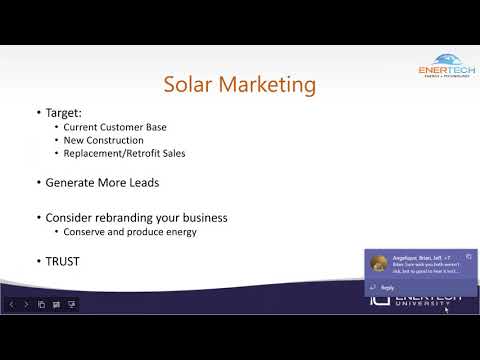
Part 1 of a six-part solar sales and marketing series covering lead generation, customer segmentation, and closing strategies for distributors and agents. Highly recommended for teams building their segment-based selling capability.
📊 Quick Reference: The Three Solar Buyer Personas at a Glance

| Characteristic | Eco-Conscious Homeowner | Cost-Focused Family | Commercial Business Buyer |
|---|---|---|---|
| Primary motivation | Environmental legacy + values alignment | Monthly energy bill reduction | Operational savings + tax efficiency |
| Avg. deal size | $18,000–$45,000 | $12,000–$28,000 | $200,000–$5M+ |
| Sales cycle | 3–5 months | 2–4 weeks (once decided) | 12–24 months |
| Close rate | 22–35% | 28–40% | 10–18% |
| Referral rate | 30–35% | 20–28% | 15–22% |
| Best channel | Content, SEO, sustainability networks | Local advertising, referrals, Google | LinkedIn, trade events, energy consultants |
| Top objection | “Is it truly sustainable?” | “Is the ROI real?” | “What’s the IRR and NPV?” |
| Closing message | Legacy, identity, and net-zero | Cash flow positive from month one | Tax-adjusted net investment and risk mitigation |
| Upsell opportunity | Battery storage + aesthetics | Extended warranty + financing | Monitoring + portfolio expansion |
Glossary of Key Terms
Buyer Persona: A detailed profile of a specific type of customer — their role, concerns, decision-making process, and communication preferences — used to tailor sales messaging and strategy. Example: a cost-focused family is a buyer persona defined by their primary motivation to reduce monthly energy bills.
Customer Lifetime Value (LTV): The total revenue a distributor expects to earn from a customer across the entire relationship, including initial purchase, upsells, and referrals. Example: a commercial enterprise customer who adds storage and expands to three more facilities over 5 years generates significantly higher LTV than their initial $500,000 contract suggests.
Customer Acquisition Cost (CAC): The total cost of acquiring a new customer, including marketing spend, sales team time, proposal development, and all other pre-sale expenses. Example: if your total sales and marketing spend in a month is $10,000 and you close 3 deals, your CAC is approximately $3,333.
ITC (Investment Tax Credit): A U.S. federal tax credit worth 30% of the solar installation cost, available to both commercial and residential buyers, stable through 2032.
NPV (Net Present Value): The total value of future energy savings from a solar installation, discounted back to today’s dollars. A positive NPV confirms that the investment creates financial value.
IRR (Internal Rate of Return): The annualized return rate on a solar investment — typically 12–20% for well-structured commercial deals, making solar competitive with many alternative capital deployments.
BIPV (Building-Integrated Photovoltaics): Solar technology embedded directly into building materials — facades, roofing, windows — that serves simultaneously as a structural building component and an electricity generator. Example: a glass curtain wall that generates electricity while functioning as the building’s exterior cladding.
EPC (Engineering, Procurement, and Construction): A contracting model where a single firm manages the complete scope of a solar project — from engineering design through physical installation. Critical for commercial enterprise deals where the buyer needs single-point accountability.
Bonus Depreciation: A U.S. tax provision allowing businesses to deduct a significant portion of the solar system cost in Year 1. At 40% in 2025, this accelerates the tax benefit timeline and improves first-year cash flow for commercial buyers.
LTV:CAC Ratio: The ratio of customer lifetime value to customer acquisition cost. A ratio above 3:1 indicates a sustainable customer acquisition model; ratios above 5:1 indicate strong profitability.
FAQ: 15 Real Questions Solar Distributors and Agents Ask About Customer Segmentation
1. How do I know which persona a prospect belongs to before they even call?
Look for signals in how they found you and their initial inquiry language. Eco-conscious buyers mention sustainability, environmental impact, or BIPV aesthetics. Cost-focused families lead with questions about savings, payback periods, and financing. Commercial prospects ask about ROI, tax incentives, or operational efficiency data. These early signals, captured consistently in your CRM, build a reliable pre-call classification system that improves your first-conversation win rate.
2. What if a prospect doesn’t fit neatly into one persona?
Most prospects have characteristics of multiple personas. Use your five discovery questions to identify their primary motivation. If a family cares 60% about cost and 40% about environmental impact, lead with ROI and savings — but include sustainability messaging as secondary validation. Your segmentation is a guide for prioritizing your messaging emphasis, not a rigid cage that constrains the conversation.
3. Should I focus all my sales efforts on just one persona to maximize profit?
No. A balanced portfolio of all three personas reduces revenue volatility and maximizes total lifetime customer value across your business. However, if you’re just starting out or repositioning, focus first on the persona that aligns best with your existing strengths, inventory, and local market conditions. Once you’re generating consistent profit in that segment, expand.
4. How do I adjust my messaging if I’m selling to multiple personas simultaneously?
Create separate marketing campaigns, landing pages, proposal templates, and email sequences for each persona. Your sales team should have persona-specific discovery scripts and objection-handling frameworks. This isn’t extra work — it’s targeted work that generates 2–3× better conversion rates than generic messaging.
5. Which persona typically has the shortest sales cycle?
Cost-focused families, especially once they’ve already decided to go solar and are comparing installers. Their timeline compresses to 2–4 weeks from first contact to signed contract once the financial case is clear. Commercial buyers have the longest cycles (12–24 months) due to capital approval processes and utility interconnection timelines.
6. How do I generate leads for the commercial buyer persona when I’m primarily residential?
Build relationships with commercial real estate brokers, energy consultants, facility managers, and industry association networks. Create case studies showing commercial ROI from any previous commercial installations you’ve completed. Attend one relevant commercial industry event per quarter. Consider hiring a dedicated B2B business development professional once you have a pipeline of 5–10 active commercial opportunities.
7. What’s the biggest mistake distributors make when targeting eco-conscious buyers?
Over-emphasizing environmental benefits without addressing cost and financial return. Eco-conscious buyers still require positive ROI to justify the purchase — environmental impact is the identity driver, but financial viability is the permission structure. Lead with both dimensions simultaneously rather than treating them as mutually exclusive.
8. How do I handle price objections differently for each persona?
Cost-focused families: Show the 20-year total cost comparison between solar and continuing with the utility. Eco-conscious buyers: Emphasize long-term value, system longevity, and environmental legacy while confirming the financial case. Commercial buyers: Quantify tax incentives, IRR, and NPV in a format their finance team can review directly. Same underlying financial logic — completely different emotional and analytical framing.
9. Should I change my product offerings based on which persona I’m targeting?
Your core product line stays consistent, but your bundling and presentation should vary. Offer BIPV aesthetics and battery storage bundles to eco-conscious buyers. Offer financing packages and performance guarantees to cost-focused families. Offer energy monitoring, portfolio management, and formal service level agreements to commercial clients.
10. How often should I re-evaluate my customer segments?
Quarterly for a meaningful review, with lightweight monthly monitoring of key metrics by segment. Markets shift — new incentive programs launch, competitor strategies evolve, and regional demographics change as solar penetration increases. Stale persona profiles are worse than no profiles because they create confident misdirection.
11. What’s the best way to train a new sales rep on persona-based selling?
Start with the one-page persona guide for each segment and 30 minutes of solo reading. Follow with shadowing — having the new rep observe at least two closed deals in each segment before running their own. Then role-play each persona in a structured session before their first live conversation. Measure their close rate by persona monthly for the first six months and provide specific feedback on persona alignment.
12. Can I use the same referral program for all three personas?
No. Eco-conscious buyers respond best to impact-based incentives — donations to environmental causes, tree-planting programs, carbon offset contributions — because referrals in this segment are socially motivated. Cost-focused families want straightforward cash or bill credits. Commercial clients want tiered incentive structures tied to the value of the referral project, managed through a formal partner agreement.
13. How do I know if my segmentation strategy is actually working?
Track close rate, average deal size, sales cycle length, customer acquisition cost, and lifetime value separately for each persona — monthly, without exception. If one persona is generating significantly higher revenue per sales hour than the others, you’re seeing segmentation working. If performance metrics are identical across all three, your targeting and messaging may not be sufficiently differentiated.
14. What should I do if one of my three personas isn’t generating revenue in my market?
Don’t abandon segmentation — recalibrate which segments to prioritize. Some markets are saturated in residential but have abundant commercial pipeline. Others have limited eco-conscious demand but strong cost-focused family activity. Analyze your regional data and allocate 80% of your effort to the two personas generating the most return in your specific geography, while maintaining minimal investment in the third for optionality.
15. How do I prevent my sales team from reverting back to generic, one-size-fits-all pitches?
Make persona-based selling a core competency with operational reinforcement: include it in hiring criteria, onboarding curriculum, and ongoing performance management. Tie compensation to segment-specific metrics, not just total deals. Run monthly role-play sessions on persona-specific objection handling. Review recordings of sales calls and provide feedback explicitly on persona alignment. When a deal is lost, ask as a standard question: “Was our messaging aligned to the persona this buyer actually was?”
For additional resources on BIPV product specifications, installation guides, and commercial case studies relevant to distributor and agent sales, visit jmbipvtech.com.