The most important PV panel trends for 2026 are perovskite-silicon tandem cells entering commercial production, transparent photovoltaic glass becoming standard in new construction, bifacial panels dominating utility-scale deployments, plug-in balcony solar crossing the 4-million-household mark in Europe, and AI-driven optimization reshaping how solar systems are monitored, maintained, and monetized. These are not laboratory curiosities or conference-stage promises — each trend has shipped products, verified performance data, and documented financial returns backing it up right now.
What makes 2026 different from previous years is convergence. Perovskite technology is no longer “five years away.” Transparent PV glass is no longer limited to showcase demonstration projects. Bifacial panels are no longer a premium upsell — they are the default. And AI is no longer an add-on monitoring dashboard — it is embedded in inverter firmware, panel-level diagnostics, and grid dispatch algorithms. For consumers, the practical outcome is lower system costs, faster payback periods, and more installation options than at any previous point. For the industry, the outcome is a market reconfiguring itself around technologies that did not exist at meaningful scale three years ago.
This article maps each of these trends with production-verified data, identifies the market forces driving them, and provides actionable guidance for homeowners, businesses, and investors looking to act on them.
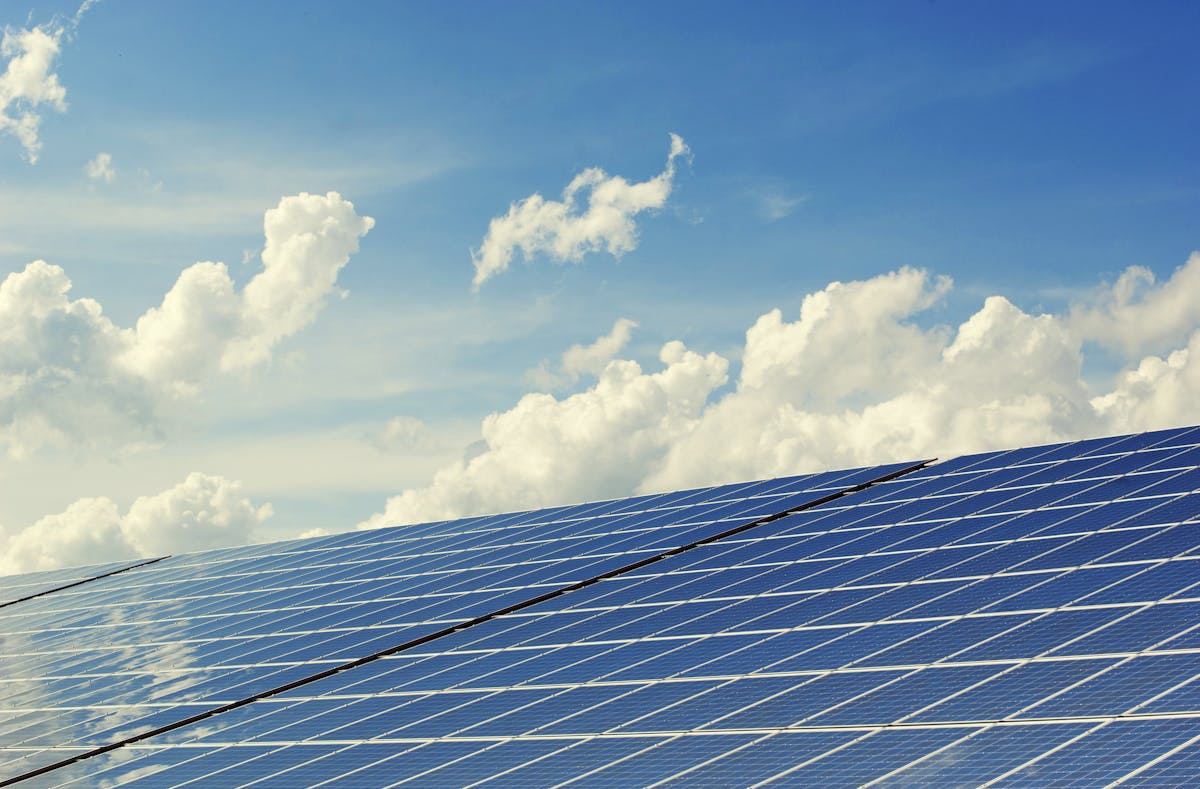
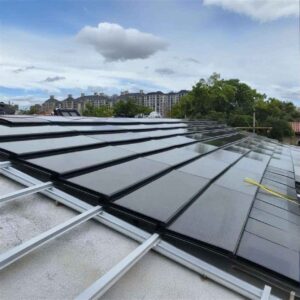
Image: Global cumulative solar PV capacity now approaches 3 TWdc, with 649 GW of new installations projected for 2026. (Source: Pexels – Free to use)
2026 Photovoltaic Trends Overview
Market Growth and Adoption
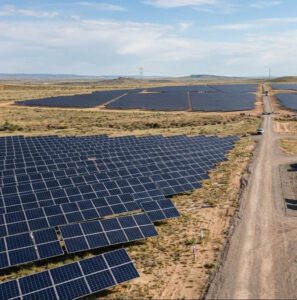
Global solar PV capacity has entered a phase of sustained, high-volume expansion. According to the International Energy Agency (IEA), cumulative installed solar capacity is set to nearly triple from approximately 3 TWdc today to nearly 8 TWdc by 2034. In the first half of 2025 alone, the world added 380 GW of new solar capacity — a 64% increase over the same period in 2024, according to Ember. For 2026, Bloomberg New Energy Finance projects 649 GW of new solar capacity — roughly flat compared to 2025’s 655 GW but still representing the second-largest deployment year in history.
In the United States, the U.S. Energy Information Administration (EIA) projects 43.4 GW of new utility-scale solar capacity in 2026 — a 60% increase over 2025’s 27.2 GW additions. Solar accounted for 54% of all new U.S. electricity-generating capacity in 2025, per SEIA, and that share is expected to hold or increase in 2026.
Global Shifts in Solar Use
The geographic and application-level distribution of solar is diversifying rapidly. China remains the dominant market, but the EU’s solar PV capacity reached an estimated 406 GW in 2025, according to the European Commission. India, Brazil, and Southeast Asia are scaling distributed generation programs. And within mature markets, solar is migrating beyond rooftops: floating PV arrays, solar carports, agrivoltaics (farming under solar panels), and building-integrated photovoltaics (BIPV) are all growing at double-digit annual rates.
The total global investment in solar reached USD $450 billion in 2025, making it the single largest investment category in the energy transition, according to the IEA’s World Energy Investment 2025 report.
Global Solar PV Installations by Year (GW)
Annual Global Solar PV Installations (GW)
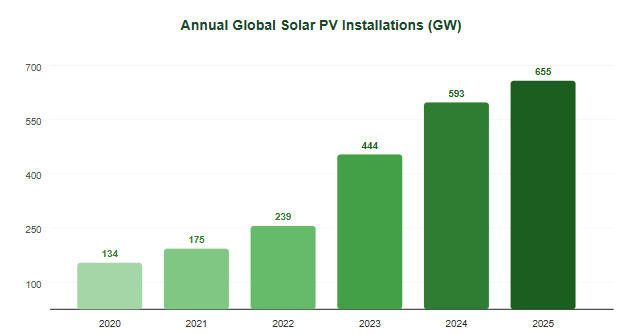
Bar Chart: Global annual solar PV installations have nearly quintupled since 2020. Sources: IEA, BNEF, IEA-PVPS, Ember.
Key PV Panel Technologies for 2026
Perovskite Tandem Cells
Perovskite-silicon tandem cells are the single most consequential technology shift happening in photovoltaics right now. By layering a perovskite light-absorbing material on top of a conventional silicon cell, tandem cells capture a wider portion of the solar spectrum than either material can alone — the perovskite layer absorbs high-energy blue and UV photons while the silicon layer captures lower-energy red and infrared photons. The result is a theoretical efficiency ceiling above 43%, compared to ~29% for silicon alone.
In practice, lab records have already exceeded 35%. Trina Solar announced in January 2026 that its research platform achieved 35% efficiency on small-area perovskite-silicon tandem cells — a new world record. LONGi Solar’s certified 33% large-area tandem cell, confirmed by NREL, represents another milestone. And on the commercial side, Oxford PV shipped its first batch of 72-cell tandem panels at 24.5% module efficiency to a U.S. utility-scale project — the first verified commercial deployment of perovskite tandem technology.
The remaining challenge is durability. Perovskite materials degrade faster than silicon when exposed to moisture, heat, and UV radiation. But breakthroughs in encapsulation chemistry — including self-assembled monolayer (SAM) passivation and zinc-oxide protective coatings — are rapidly closing this gap. Industry consensus is that perovskite tandems will achieve 25-year reliability certification within the next 12–18 months, opening the door to mass-market deployment by 2028.
Transparent PV Glass
Transparent photovoltaic glass turns windows, facades, and skylights into electricity-generating surfaces without blocking visible light. This technology sits at the intersection of solar energy and architecture — and it is moving from demonstration to mainstream specification faster than most observers expected.
The technology works by embedding photovoltaic cells (typically thin-film, organic PV, or selectively-absorbing materials) into laminated glass assemblies. The transparency level is adjustable: semi-transparent panels at 30–50% visible light transmittance (VLT) generate more power, while high-transparency panels at 60–90% VLT generate less power but function as nearly-normal windows. According to GreenLancer, newer designs with protective coatings are expected to last 20–30 years, approaching parity with conventional solar panels.
Manufacturers like Jia Mao Bipv are at the forefront of this market. Their transparent BIPV glass products achieve up to 91.5% light transmittance with monocrystalline silicon cells rated above 22% efficiency, and their product line offers transparency levels from 10% to 90% to match diverse architectural requirements. With documented annual energy yields of 180–250 kWh/m², these panels generate measurable revenue from building surfaces that would otherwise contribute nothing to a facility’s energy balance.
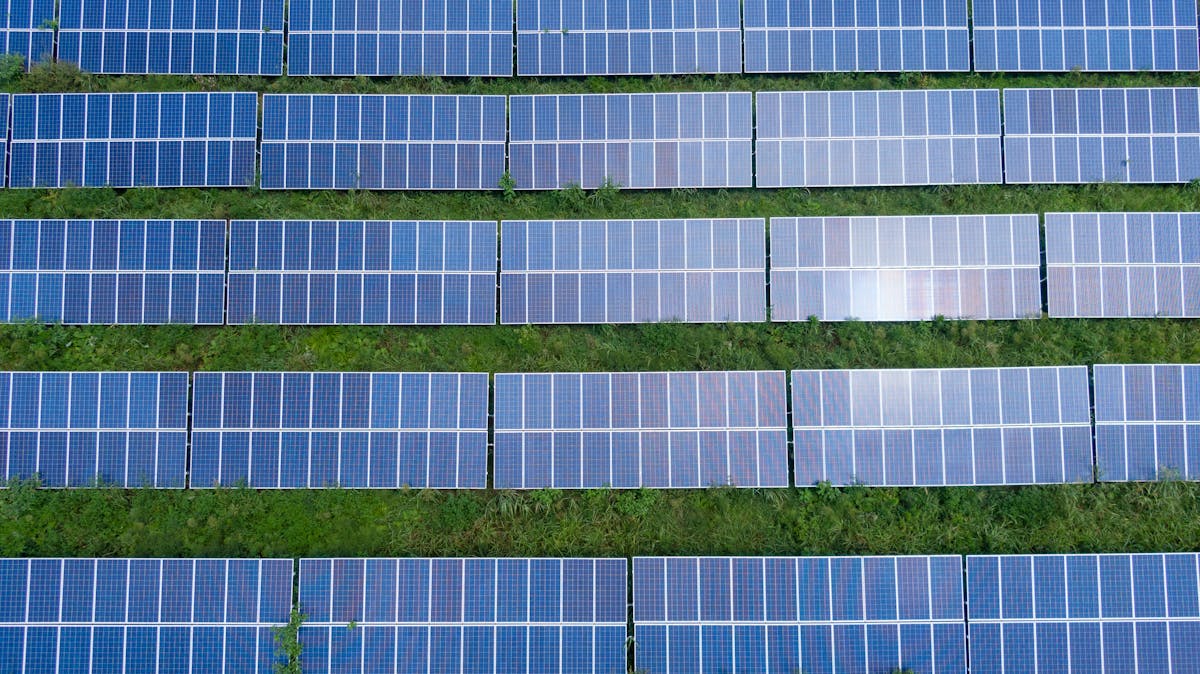
Image: Modern glass facades represent the largest untapped surface area for solar energy generation — transparent PV glass turns these surfaces into power plants. (Source: Pexels – Free to use)
Ultralight Flexible Solar Sheets
Conventional rigid solar panels weigh 18–25 kg each and require structural racking designed to bear that load. Ultralight flexible solar sheets — using thin-film CIGS, organic PV, or flexible perovskite substrates — weigh as little as 2–4 kg per square meter, enabling installation on surfaces that cannot support conventional panels: curved roofs, fabric canopies, vehicle surfaces, and temporary structures.
Japan has invested heavily in this technology, with government programs targeting flexible perovskite panels for building facades and disaster-relief shelters. European companies like FlexSol Solutions have demonstrated curved flexible panels generating electricity on stadium roofs, highway sound barriers, and architectural canopies. While flexible panels typically operate at lower efficiencies (12%–18%) than rigid crystalline silicon modules (20%–25%), their weight advantage and form-factor flexibility open installation sites that rigid panels simply cannot reach.
Bifacial PV Panels
Bifacial panels capture sunlight from both front and rear surfaces, harvesting reflected light from the ground, roofing membrane, or adjacent structures. This dual-sided capture adds 5%–20% additional energy output compared to monofacial panels, depending on the installation geometry and ground albedo (reflectivity).
In 2026, bifacial has become the default technology for utility-scale and large commercial installations. The bifacial solar module market is projected to reach USD $34.78 billion in 2026, growing to $499.3 billion by 2035 at a 9.6% CAGR. Bifacial installations grew 300% year-over-year in 2025, according to SEIA data, driven by the combination of N-type TOPCon cells (which have a naturally high bifacial factor of ~85%) and the trend toward ground-mounted systems with elevated racking and reflective ground cover.
Plug-In and Balcony Solar
Plug-in balcony solar — compact 300–800W systems that attach to apartment balcony railings and plug directly into a wall outlet — has become one of the fastest-growing solar segments in Europe. Over 4 million European households have now installed balcony solar, according to PCMag. Germany alone surpassed 1 million registered balcony installations by June 2025 — doubling from a year earlier — after the country’s Solar Package I policy streamlined permitting and strengthened tenant protections.
Wood Mackenzie identifies balcony solar as one of three defining trends for 2026, predicting that the model will expand into U.S. markets where apartment dwellers have been historically excluded from solar adoption. The technology is relevant beyond its modest per-unit wattage: it represents the first practical mechanism for renters and multi-unit housing residents to participate directly in distributed energy generation.
AI Integration in Solar Systems
Artificial intelligence is no longer a futuristic talking point in the solar industry — it is a deployed operational tool. In 2026, AI-driven solar optimization operates across three layers: system design, real-time performance management, and predictive maintenance.
At the design layer, AI algorithms analyze satellite imagery, shading patterns, roof geometry, and local weather data to generate optimized panel layouts in minutes — a process that previously required hours of manual engineering. At the performance layer, AI-powered maximum power point tracking (MPPT) controllers adjust inverter behavior in real time based on cloud forecasts, temperature predictions, and historical irradiance data, squeezing 5%–12% additional yield from existing arrays. At the maintenance layer, AI systems analyze panel-level performance data to detect microcracks, hotspots, and soiling patterns before they cause meaningful output loss — reducing operations and maintenance (O&M) costs by 20%–30%, according to HTEC’s white paper on AI-driven solar optimization.
Material and Design Breakthroughs
Beyond headline technologies, several material-level advances are improving panel economics in 2026. Anti-soiling coatings using hydrophobic nano-surfaces reduce cleaning frequency by 30%, directly cutting maintenance costs for commercial and utility-scale installations. Low-temperature coefficient materials (temperature coefficients as low as −0.24%/°C for HJT cells) preserve output in hot climates where cell temperatures routinely exceed 65°C. And double-glass panel constructions — standard for bifacial modules — are extending mechanical lifespan beyond 30 years while improving moisture resistance and eliminating backsheet degradation, a historically common failure mode.
2026 Key PV Technologies at a Glance
| Technology | Efficiency Range | Maturity Stage | Key Application | 2026 Market Status |
|---|---|---|---|---|
| Perovskite-Silicon Tandem | 24.5% – 35% (lab) | Early commercial | Utility-scale, rooftop | First shipments delivered (Oxford PV) |
| Transparent PV Glass | 5% – 22% | Commercial | Facades, skylights, windows | Scaling rapidly in BIPV sector |
| Ultralight Flexible Sheets | 12% – 18% | Niche commercial | Curved surfaces, vehicles, temp structures | Japan, EU government programs active |
| Bifacial N-type TOPCon | 21% – 24.5% | Mass market | Utility-scale, C&I rooftop | Default for new installations |
| Plug-In Balcony Solar | 18% – 22% | Mass market (EU) | Apartments, renters | 4M+ EU households; U.S. entry beginning |
| AI Solar Optimization | +5% to +12% yield gain | Deployed at scale | All system types | Embedded in inverters, monitoring platforms |
| Back-Contact (XBC) Cells | 22% – 25% | Premium commercial | Space-constrained rooftops | Led by Aiko Solar, LONGi, Maxeon |
Table: Overview of key PV panel technologies in 2026 with efficiency ranges, maturity stages, and market status.
Solar Industry Trends and Market Drivers
Policy and Incentive Shifts
The policy landscape for solar in 2026 is a patchwork of accelerating incentives in some regions and emerging headwinds in others. In the United States, the 30% federal Investment Tax Credit (ITC) remains available for commercial projects that begin construction in 2026, and domestic content bonus credits can push the effective incentive to 40% or higher. However, ongoing anti-dumping and countervailing duty (AD/CVD) investigations into solar module imports from Southeast Asia continue to create pricing uncertainty. In Europe, the EU Solar Standard is pushing member states to mandate solar-ready building codes for all new construction, effectively guaranteeing long-term demand growth. Germany’s Solar Package I has already turbocharged residential and balcony solar adoption.
Supply Chain and Sourcing
The global solar supply chain remains concentrated in China, which controls over 80% of silicon purification, wafer production, and cell manufacturing capacity. Diversification efforts are underway — the IRA has catalyzed over $20 billion in announced U.S. solar manufacturing investment — but the full upstream supply chain (polysilicon to module) will not achieve meaningful geographic diversity before 2028–2030. In the near term, tariff fluctuations, logistics disruptions, and raw material pricing continue to cause quarterly price volatility in module markets. According to Surge’s 2026 procurement analysis, project developers are responding by locking in longer-term supply contracts and diversifying vendor portfolios across 2–3 module suppliers.
Financing and Investment
Global clean energy investment reached a record USD $2.3 trillion in 2025, with solar accounting for approximately $450 billion — more than any other single energy technology, according to BloombergNEF. Solar corporate funding alone totaled $22.2 billion across 175 deals in 2025, per PV Magazine citing Mercom Capital Group.
For 2026, financing conditions are favorable for commercial and residential solar. Commercial payback periods have dropped by 33% compared to two years ago, per Wood Mackenzie, driven by rising electricity rates that increase the value of avoided grid power. Solar loans, power purchase agreements (PPAs), and commercial property-assessed clean energy (C-PACE) financing are all available at historically competitive terms.
2025 Global Clean Energy Investment Breakdown
2025 Global Clean Energy Investment ($2.3T)
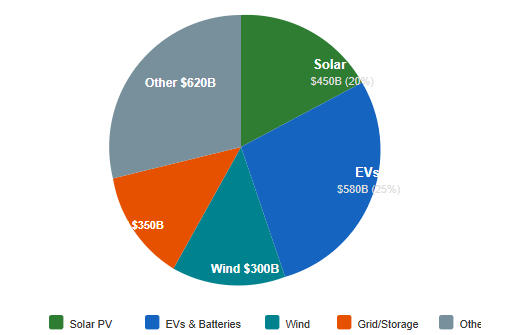
Source: BloombergNEF, IEA World Energy Investment 2025
Challenges and Opportunities in PV Panels
Cost and Affordability
Solar module prices have dropped dramatically over the past five years — wholesale pricing for mainstream N-type TOPCon modules is now $0.14–$0.22 per watt, down from $0.30+ in 2022. However, module cost is only one component of total system cost. Balance of system (BOS) components — inverters, racking, wiring, and connectors — along with permitting, labor, and interconnection fees still represent 60%–70% of total installed cost. Reducing these “soft costs” is where the next wave of cost reduction must come from, and AI-driven design automation, standardized racking systems, and streamlined permitting are all contributing to progress.
For homeowners, residential solar system costs average approximately $2.75 per watt installed (before incentives) in 2026. With the federal ITC, this drops to roughly $1.93/W. For commercial systems, costs average $1.80–$2.55/W depending on system size. The economic case for solar has never been stronger, but affordability remains a barrier for lower-income households and small businesses without upfront capital — a gap that leasing, PPA, and community solar models continue to address.
Sustainability and Lifecycle
As solar deployment accelerates, so does the volume of panels approaching end-of-life. Forecasts project photovoltaic waste could reach 685,000 tonnes by 2030 and 1.1 million tonnes by 2035. The good news: advanced recycling plants operating in 2026 are achieving recovery rates above 95% for high-purity silicon, glass, aluminum, and silver — materials that are then fed back into the manufacturing supply chain. The EU’s Waste Electrical and Electronic Equipment (WEEE) Directive already mandates solar panel recycling, and similar regulations are advancing in the U.S. and Asia.
At the manufacturing level, sustainability improvements include solar-powered production facilities (reducing the embodied carbon of new panels), double-glass constructions that eliminate polymer backsheets (improving recyclability), and POE encapsulants that resist UV degradation better than EVA — extending panel service life and reducing the frequency of replacement. Manufacturers like Jia Mao Bipv have adopted imported POE encapsulant films that enhance UV aging resistance by 40%, along with fluorocarbon backsheets rated for 30 years of UV resistance without discoloration — design choices that directly extend lifecycle and reduce waste.
Compatibility and Upgrades
A practical challenge for both homeowners and commercial operators is backward compatibility: can new, higher-efficiency panels be integrated into existing racking and inverter infrastructure? In most cases, the answer is yes — but with caveats. Higher-wattage panels may have different voltage characteristics that require inverter firmware updates or string reconfiguration. Larger panel dimensions (some 2026 commercial panels exceed 2.4m in length) may not fit existing racking footprints. And emerging DC-optimized or microinverter-based architectures may require complete electrical redesigns when adding capacity to legacy string-inverter systems.
For future-proofing, the industry recommendation in 2026 is to select modular inverter platforms, install oversized conduit and wire gauges, and choose racking systems with adjustable mounting positions. This approach adds 3%–5% to upfront installation cost but can save 15%–25% on future expansion or repower projects.
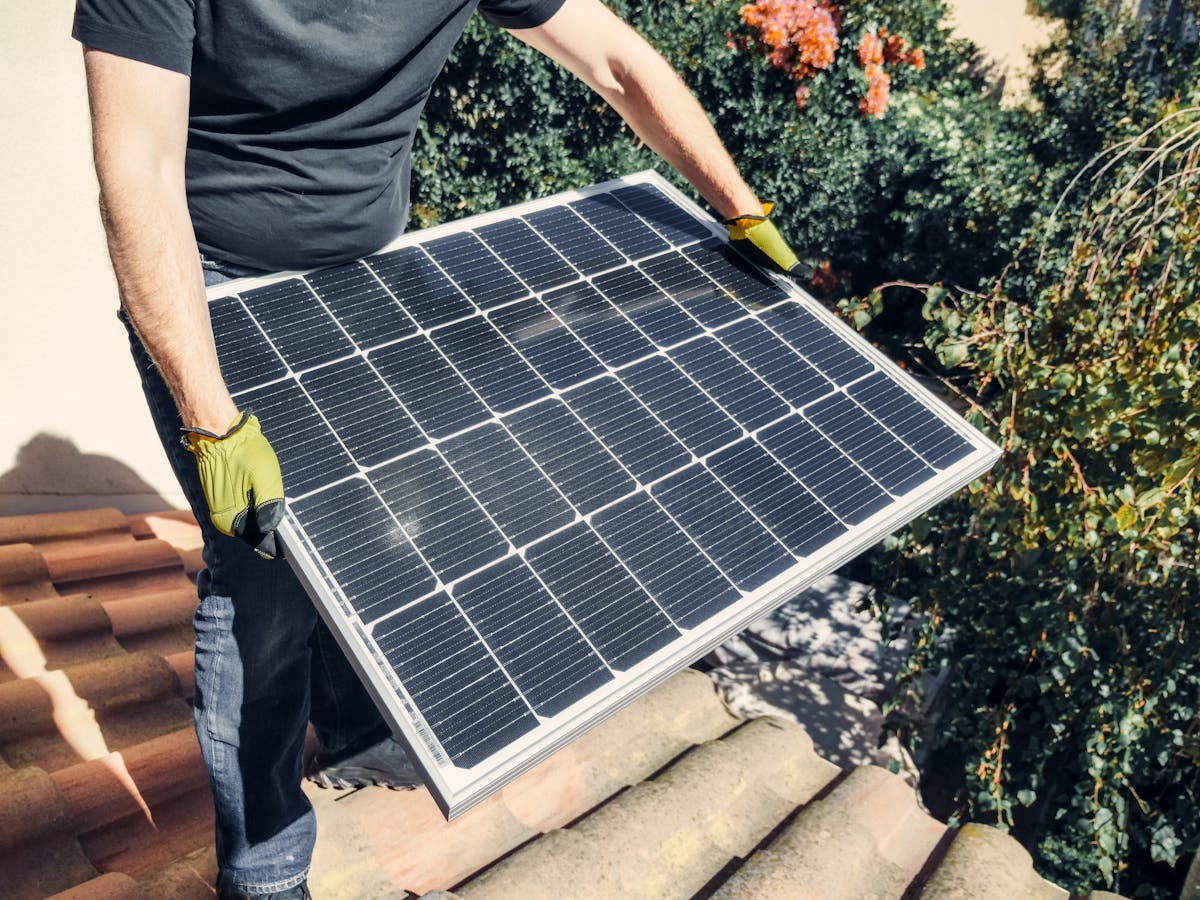
Image: Professional installation practices — including proper string sizing, conduit routing, and weather sealing — directly affect system longevity and upgrade compatibility. (Source: Pexels – Free to use)
Practical Solar Adoption Insights
Strategies for Homeowners and Businesses
For homeowners evaluating solar in 2026, the decision tree starts with roof condition (replace a roof older than 10 years before installing panels), shading assessment (eliminate or mitigate significant shading sources), and energy consumption baseline (size the system to offset 80%–100% of annual grid consumption for maximum financial return). Pairing solar with battery storage is increasingly standard — falling battery prices and time-of-use electricity rate structures make storage economically viable in most U.S. and European markets.
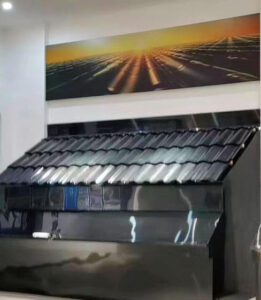
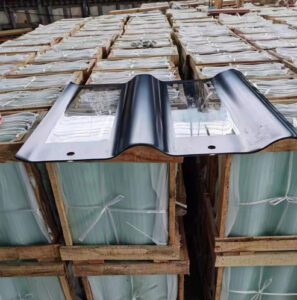
For businesses, the strategic calculus extends beyond electricity bill reduction to include demand charge management (solar-plus-storage systems that shave peak demand charges), tax optimization (ITC + accelerated depreciation), and ESG reporting (verified carbon reduction from on-site generation). Buildings that incorporate BIPV technology — such as Jia Mao Bipv’s full product portfolio of photovoltaic glass, solar roofing tiles, and transparent solar modules — can claim energy generation from surfaces that simultaneously serve architectural functions, maximizing both energy return and building design value.
ROI and Payback Periods
Residential solar payback periods in 2026 average 6–10 years, depending on location, electricity rate, and incentive availability. In high-rate states like California, Massachusetts, and New York, payback can be as fast as 4–5 years. Commercial payback periods average 3–5 years with the federal ITC and MACRS depreciation, and as fast as 3 years in states with additional incentives. Wood Mackenzie estimates that increasing average annual retail rate growth from 2% to 6% between 2026 and 2050 reduces the national average commercial payback period to under 4 years.
| Segment | Avg. System Cost ($/W) | Net Cost After ITC | Payback Period | 25-Year Savings |
|---|---|---|---|---|
| Residential (10 kW) | $2.75/W | ~$19,250 | 6–10 years | $37,000–$154,000 |
| Small Commercial (50 kW) | $2.30/W | ~$80,500 | 4–6 years | $120,000–$250,000 |
| Large Commercial (200 kW) | $1.90/W | ~$266,000 | 3–5 years | $500,000–$900,000 |
| BIPV Facade (per m²) | Varies by design | Offset by material savings | 8–15 years | Dual value: energy + building envelope |
Table: Solar ROI estimates for 2026 by segment. Assumes 30% federal ITC, average U.S. electricity rates, and 1,400 kWh/kW annual production. BIPV payback varies by project scope and replaced building material costs. Sources: EnergySage, Wood Mackenzie, SEIA.
Future-Proofing Investments
The pace of solar technology advancement means that panels installed today will be outperformed by panels available in 3–5 years. However, this does not mean buyers should wait. The financial return on solar is determined by when you start generating — every year of delayed installation is a year of electricity purchased from the grid at rising rates. The correct future-proofing strategy is not to wait for better panels, but to install today using modular architectures that allow easy expansion and panel swaps when next-generation technology (especially perovskite tandems) reaches mass-market pricing.
Specifically, invest in oversized inverter capacity, modular racking, and pre-wired expansion conduit. These measures cost 3%–5% more upfront but save 15%–25% on future system expansions. And for building projects that have a 5+ year construction horizon, specify BIPV-ready designs that accommodate future panel integration into facades, windows, and roofing surfaces — capturing the efficiency gains of next-generation technology as it becomes available.
Watch: What Solar’s 2025 Breakthroughs Mean for 2026
This video from Undecided with Matt Ferrell recaps the key solar breakthroughs of 2025 and explains what they mean for solar buyers, investors, and the industry in 2026:
Video: “How Solar Changed in 2025 (And What’s Next)” — Undecided with Matt Ferrell (YouTube)
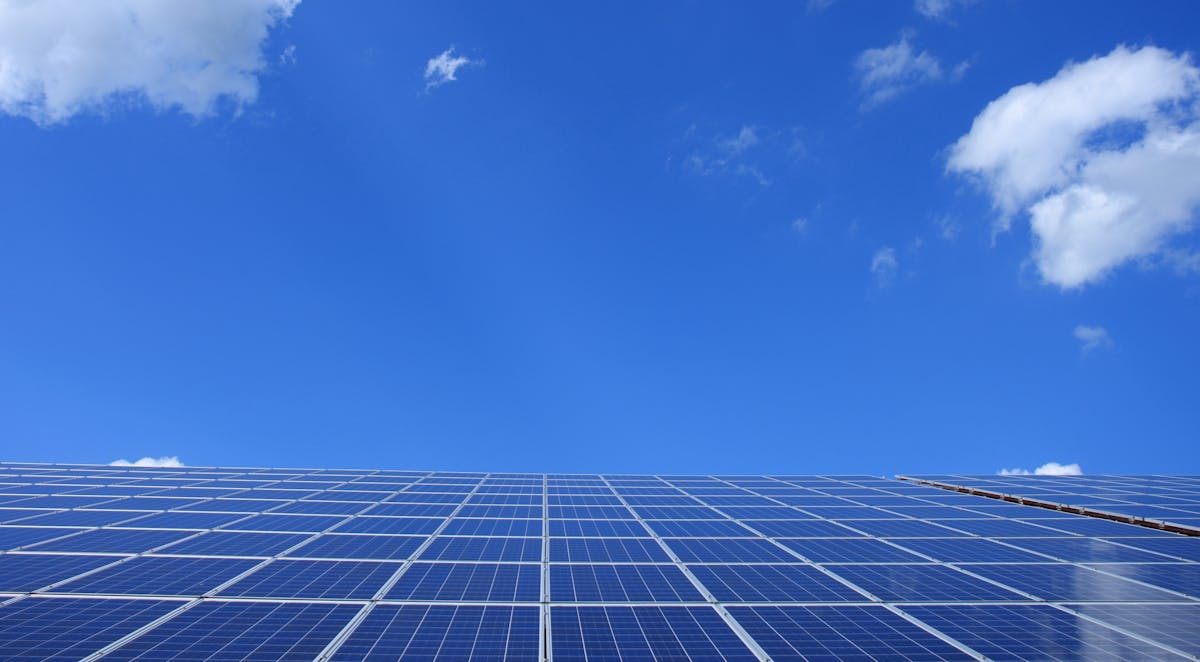
Image: Bifacial panels on elevated racking with reflective ground cover can add 10%–20% additional energy capture from rear-side light absorption. (Source: Pexels – Free to use)
The PV panel trends reshaping solar energy in 2026 are not incremental improvements — they represent a structural shift in what solar technology can do, where it can be deployed, and how quickly it pays for itself. Perovskite-silicon tandem cells are delivering commercial modules above 24.5% efficiency with a clear path to 27%+ by decade’s end. Transparent PV glass is turning building facades into revenue-generating surfaces without sacrificing architectural design. Bifacial panels have become the default for new installations, adding 5%–20% free energy from reflected light. Over 4 million European households have proven that plug-in balcony solar is a viable entry point for renters and apartment dwellers. And AI-driven optimization is extracting 5%–12% more yield from existing systems while cutting maintenance costs by 20%–30%.
For readers considering adoption, the practical takeaway is: the technology is ready, the economics are favorable, and the available product range — from standard rooftop panels to BIPV facade systems from manufacturers like Jia Mao Bipv — covers virtually every building type and budget. Payback periods have compressed to 3–5 years for commercial systems and 6–10 years for residential, with rising electricity rates accelerating those timelines every quarter.
What to watch next: the first certified 25-year-rated perovskite tandem modules (expected within 12–18 months), the expansion of balcony solar into U.S. markets, and the continued decline of balance-of-system costs driven by AI design automation and standardized installation practices. The solar industry’s next chapter is not about whether these technologies work — that has been proven. It is about how fast they scale.
Frequently Asked Questions (FAQ)
1. What are the most important PV panel trends in 2026?
The defining trends are perovskite-silicon tandem cells entering commercial production, transparent PV glass scaling in the BIPV sector, bifacial panels becoming the default for new installations, plug-in balcony solar surpassing 4 million units in Europe, and AI-driven optimization becoming embedded in inverter and monitoring platforms. Each trend has shipped products, verified performance data, and documented financial returns.
2. Are perovskite solar panels available to buy in 2026?
Yes, but in limited quantities. Oxford PV shipped its first commercial perovskite-silicon tandem panels at 24.5% module efficiency to a U.S. utility-scale project. Lab efficiencies have exceeded 35% (Trina Solar). However, mass-market availability is expected by 2028–2029 once 25-year durability certification is achieved. The primary remaining challenge is material stability under long-term moisture and UV exposure.
3. What is transparent PV glass and where is it used?
Transparent photovoltaic glass embeds solar cells into laminated glass assemblies that allow visible light to pass through while generating electricity. Applications include building facades, skylights, curtain walls, and windows. Transparency levels range from 10% to 90%, with higher-transparency panels generating less power but functioning as nearly-normal glass. Manufacturers like Jia Mao Bipv produce transparent BIPV glass yielding 180–250 kWh/m² annually with up to 91.5% light transmittance.
4. How much extra energy do bifacial solar panels produce?
Bifacial panels add 5%–20% additional energy output compared to monofacial panels, depending on installation geometry and ground reflectivity (albedo). Ground-mounted systems with elevated racking and reflective surfaces (white gravel, TPO membranes) achieve the highest rear-side gains. On typical flush-mounted dark rooftops, rear-side gain is usually under 3%–5%.
5. What is balcony solar and does it work in the United States?
Balcony solar refers to compact 300–800W plug-in photovoltaic systems designed for apartment balconies. Over 4 million European households have installed them, with Germany leading at 1 million+ units. In the U.S., the technology is emerging but faces regulatory hurdles around interconnection rules and utility metering. Several states are considering simplified permitting frameworks to enable adoption.
6. How is AI improving solar panel performance in 2026?
AI operates across three layers in solar systems: design optimization (automated panel layout using satellite imagery and weather data), real-time performance management (cloud-forecast-adjusted MPPT control that boosts yield by 5%–12%), and predictive maintenance (detecting microcracks, hotspots, and soiling patterns before they cause output loss, reducing O&M costs by 20%–30%).
7. What is the payback period for solar panels in 2026?
Residential solar payback averages 6–10 years (4–5 years in high-rate states). Commercial solar payback averages 3–5 years with the 30% federal ITC and MACRS depreciation. Wood Mackenzie reports that rising electricity rates have reduced commercial payback periods by 33% compared to two years ago.
8. How are solar panels recycled?
Advanced recycling plants in 2026 recover over 95% of panel materials — including high-purity silicon, glass, aluminum, silver, and copper. The process involves thermal or chemical separation of encapsulation layers, followed by material sorting and purification. The EU mandates solar panel recycling under its WEEE Directive, and similar regulations are advancing in the U.S. and Asia.
9. Should I wait for better solar panels or install now?
Install now. The financial return on solar is driven by when you start generating — every year of delay is a year of electricity purchased at rising grid rates. The correct future-proofing strategy is to install today with modular architecture (oversized inverter capacity, expandable racking, pre-wired conduit) that allows easy panel upgrades as next-generation technology reaches mass-market pricing.
10. What is BIPV and why does it matter in 2026?
BIPV (Building Integrated Photovoltaics) refers to solar technology that replaces conventional building materials — facades, roofing, windows, floor tiles — while generating electricity. BIPV matters because it unlocks energy generation from surfaces that standard rooftop panels cannot reach. With manufacturers like Jia Mao Bipv achieving 22%+ cell efficiency in custom-colored and custom-sized modules, BIPV panels serve dual functions as both building envelope and power generator — reducing total building cost while adding an energy revenue stream.