Solar Glass Maintenance: A Practical Guide to Cleaning, Inspection, and Troubleshooting BIPV Systems
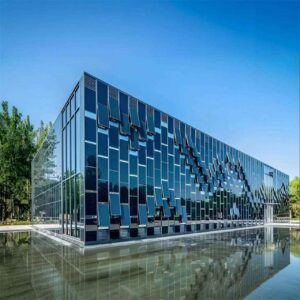
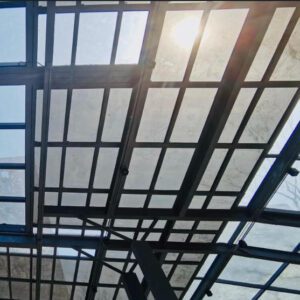
 Solar glass facade on a public building in Madrid. Every pane is part of the building skin and part of the power plant. Image: Wikimedia Commons, CC BY-SA.
Thesis: If you want solar glass to last its full design life and keep producing the energy it was sold on, you have to stop fixing things only after they break. You need a planned, technical maintenance program that covers both jobs the glass does: keeping the weather out and making electricity.
I. Why Maintenance Decides Your BIPV Return
BIPV(建物一体型太陽光発電) means solar modules that replace a regular building material, like a curtain wall pane, skylight, or roof tile. A rooftop panel just sits on top of the building. BIPV glass is the building.
That difference changes how you maintain it. When a standard solar panel fails, you get a power problem. When a BIPV curtain wall unit fails, you can get a power problem, a leak, and a tenant complaint on the same day.
The pain points we hear most often
Curtain wall contractors, EPCs, and facility teams tend to describe the same three problems:
- Slow, unexplained yield loss. Output falls 2–3% a year and nobody can say if it’s dirt, shading, or a failing component.
- Aesthetic weathering. Water spots, streaks, and hazy coatings show up on a facade the architect specified to look flawless.
- Knowledge gaps. The facility team knows glass, the EPC knows electrics, and nobody owns the point where the two meet.
Who owns longevity?
Long-term performance is shared work. The general or curtain wall contractor is responsible for the envelope: seals, frames, and drainage. The EPC (Engineering, Procurement, and Construction) contractor owns the electrical system and the performance model. The building owner or FM team lives with the asset for 25+ years.
Industry insight: On most BIPV projects, the biggest long-term risk isn’t a bad module. It’s a messy handover. Once the EPC’s defects-liability period ends (usually 12–24 months), responsibility often goes to an FM team that has no string maps, no IR baseline, and no idea which seals are structural.
Our team at Jia Mao Bipv has written a related BIPV inspection and lifecycle monitoring guide. This article goes further into hands-on protocols for each stakeholder.
II. Strategic Cleaning Protocols for High-Performance Solar Glass
Bad cleaning can scratch the glass surface for good or cause “hot spots.” Either one hurts how the building looks and how much power it makes.
A hot spot is a small area of a solar cell that heats up much more than the area around it. It happens when part of a cell is shaded, by a bird dropping for example, so the cell stops generating and starts resisting current. Hot spots can reach 100°C or more and can permanently damage the encapsulant.
 Soft tools, low pressure, and clean water are the core of safe solar glass cleaning. Image: Wikimedia Commons, CC BY-SA 4.0.
1. Build a cleaning matrix around your local pollution
A fixed “twice a year” schedule doesn’t work for every site. Base the schedule on what lands on the glass and on the glass angle. Vertical facades rinse themselves in rain much better than low-slope roofs do.
| Site Type | Main Soiling Source | Vertical Facade | Tilted Roof / Skylight (10–30°) | Low-Slope Roof (<10°) |
|---|---|---|---|---|
| Suburban / low traffic | Pollen, light dust | Every 12 months | Every 6 months | Every 4 months |
| Urban core | Diesel soot, construction dust | Every 6–12 months | Every 4 months | Every 3 months |
| Industrial / port | Fly ash, metallic fallout, salt | Every 4–6 months | Every 2–3 months | Every 1–2 months |
| Coastal | Salt film | Every 6 months | Every 3 months | Every 2 months |
| Near airports / rail | Fine carbon, rubber particulate | Every 6 months | Every 3 months | Every 2 months |
Starting points only. Adjust once you have 6–12 months of monitoring data (see Section VIII).
Indicative annual soiling losses with no cleaning. Steeper glass sheds dirt better.
For context, the IEA’s research on PV soiling losses puts average global soiling losses at about 4–7% of energy, and losses are much higher in dusty or industrial areas.
2. Choose cleaning agents that protect AR coatings
An AR (anti-reflective) coating is a very thin layer, usually silica-based and only a fraction of a micron thick, that cuts glare and lets more light reach the cells. It typically adds 2–3% to output. Once you scrub it off, it doesn’t come back.
Safe:
- pH-neutral cleaners (pH 6–8) labeled for PV or architectural glass
- Diluted, non-ionic mild detergent for oily films
- Isopropyl alcohol (under 10% solution), only for spot-treating stubborn residue
Avoid:
- Ammonia-based or alkaline glass cleaners
- Hydrofluoric or strong acid “restorers”
- Abrasive pads, scouring powders, razor scrapers on coated surfaces
- Pressure washers above roughly 1,000 psi (they also force water past gaskets)
Field example: A distributor client once told us that a facade crew used a standard alkaline window cleaner on an AR-coated skylight. Within 18 months the glass looked faintly milky, and string output on that elevation measured about 3% below the matching untreated elevation. The coating damage was permanent.
3. Use the right water
Tap water leaves calcium and magnesium behind when it evaporates. On solar glass, those mineral scales scatter light and hold onto more dirt.
| Water Type | Total Dissolved Solids (TDS) | Use on Solar Glass? |
|---|---|---|
| Hard tap water | 200–500+ ppm | No: leaves scale spots |
| Softened water | 150–400 ppm (sodium-based) | Not ideal: leaves residue |
| Reverse osmosis / deionized | Under 10 ppm | Yes: recommended standard |
| Distilled | Under 5 ppm | Yes: best for small areas |
Target: final rinse under 20 ppm TDS. A $20 handheld TDS meter will check it.
Many current modules, including the photovoltaic glass range from Jia Mao Bipv, use ultra-clear tempered glass with anti-fouling surface treatments, so they need cleaning less often. They still need the right water and the right chemistry. Self-cleaning coatings reduce the work. They don’t make it optional.
III. Comprehensive Inspection Routines for Long-Term Performance
Regular diagnostics catch hidden failures before they turn into energy losses across the whole system.
A latent failure is a defect that exists but isn’t hurting output yet, like a micro-crack that will spread after three more winters.
1. Visual audit parameters
Walk the facade, or inspect it from a BMU or drone, and log these:
| 何を見るべきか | What It Looks Like | Why It Matters |
|---|---|---|
| Micro-cracks | Fine “spider web” lines in cells (often only visible in EL or IR) | Cut off parts of a cell and cause hot spots |
| Delamination | Milky patches, bubbles, or peeling between glass layers | Lets moisture in and corrodes cell contacts |
| Snail trails | Dark, wavy lines across cells | Sign of micro-cracks plus moisture |
| Edge seal failure | Discoloration or fogging at glass edges | Moisture path into the laminate |
| Joint seal integrity | Gaps, cracking, or pulling away at curtain wall silicone | Water leaks into the building |
| Junction box condition | Cracked lids, burn marks, swelling | Fire and safety risk |
Delamination means the layers of a laminated glass module (glass, encapsulant film, cells, glass) are coming apart. It is one of the clearest signs that a module is nearing end of life.
2. Thermal imaging (thermography)
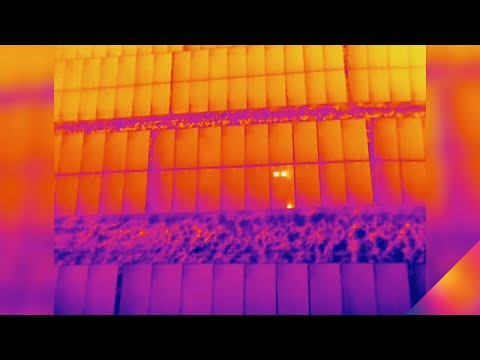
Thermography uses an infrared (IR) camera to show surface temperatures. A healthy string looks even. Problems show up as hot cells, hot strings, or a hot junction box.
What IR reveals:
- Single hot cell: soiling, cracking, or cell defect
- Patchwork pattern: a damaged module or partial shading
- Whole module warmer, in a striped pattern: a bypass diode has activated or failed. A bypass diode is a small part in the junction box that lets current go around a shaded or damaged cell group.
- Hot connector: high resistance, loose or corroded joint
The international reference for this work is IEC TS 62446-3. For good results, scan with at least 600 W/m² of irradiance on the glass, while the system is under load. On vertical facades, that sets a narrow time window for each elevation.
Video: How thermal drones find solar module faults (FLIR)
https://www.youtube.com/watch?v=ImyjRyIXhaM
3. Electrical validation
Visual and IR checks find symptoms. Electrical tests confirm the cause.
| Test | What It Measures | Typical Pass Benchmark | Frequency |
|---|---|---|---|
| Open-circuit voltage (Voc) | String voltage with no load | Within ±3% of temperature-corrected expected value | Annually |
| Short-circuit / operating current | String current | Within ±5% across similar strings | Annually |
| Insulation resistance (Riso) | Leakage path between conductors and earth | ≥ 1 MΩ (often much higher on new systems) | Annually |
| I-V curve trace | Full power curve shape | No steps or “knees” in the curve | Every 2–3 years, or after a fault |
| Earth continuity | Frame and mounting grounding | Low-ohm continuous path | Annually |
These tests follow the IEC 62446-1 testing and documentation framework, which most insurers and lenders expect to see in your maintenance records.
IV. Advanced Troubleshooting for Facility Management Teams
When on-site teams have a clear technical triage process, downtime drops and expensive emergency call-outs become rare.
Triage means sorting problems by cause and urgency so that each one goes to the right person.
 The inverter and its DC isolators are where most alerts start, and where your triage should start too. Image: Wikimedia Commons / geograph.org.uk, CC BY-SA.
1. Diagnosing “underperformance”
When the dashboard shows low output, work through these questions in order:
- Is it everywhere or local? If every string drops at once, check the weather, the grid, or the inverter first.
- Is it a time-of-day pattern? A drop at the same hour every day usually means shading, from a new building, a sign, or a tree.
- Is it slow and steady? A loss that builds over weeks and recovers after rain points to soiling.
- Is it sudden and permanent? A step change on one string points to hardware failure: a diode, connector, or cracked module.
Illustrative split based on common commercial O&M ticket patterns. Note that one in ten “faults” is really a data or communications problem.
2. Reading inverter and monitoring alerts
Error codes differ by brand, but most of them fall into a few families:
| Alert Family | Common Wording | Likely Cause | First Action |
|---|---|---|---|
| Insulation / ground fault | “Riso low,” “GFDI,” “Isolation fault” | Moisture in a connector, damaged cable insulation | Do NOT reset repeatedly. Isolate and call a qualified electrician |
| Grid fault | “Grid over-voltage,” “Frequency out of range” | Utility-side issue | Usually clears itself. Log it, and escalate if it repeats daily |
| String / MPPT | “String current low,” “PV input abnormal” | Soiling, shading, open circuit | Compare with sister strings, then inspect |
| Over-temperature | “Derating,” “Temp high” | Blocked inverter ventilation | Clear the vents and check room temperature |
| Communication | “Offline,” “No data” | Router, logger, SIM card | Restart the logger before you assume a power loss |
MPPT (Maximum Power Point Tracking) is the inverter function that keeps finding the voltage at which strings give the most power. One MPPT input usually serves one or two strings, which makes it a handy diagnostic unit.
Connecting string-level data loggers, like those in the solar monitoring and accessories line, turns “the building is down 8%” into “string 3B on the south elevation is down 40%.” The second statement is one you can actually act on.
3. Connection point integrity
In BIPV, DC connectors and junction boxes are often hidden inside mullions, transoms, or roof voids. Heat, moisture, and vibration build up there.
Watch for:
- Oxidation: green or white crust on terminals, often caused by condensation inside the frame
- Loosening: daily thermal cycles slowly back screw terminals out
- Mismatched connectors: joining different MC4-type brands is a leading cause of connector fires
Industry insight: Connector failures in BIPV usually cluster at the top of a facade or at roof ridges, where heat builds up in the cavity. Put those zones first on your IR route.
V. The Role of Specialized Contractors in Post-Installation Service
A clear partnership between the EPC and the building owner keeps technical warranties valid and keeps the system running at its best.
1. Set up a Service Level Agreement (SLA)
An SLA is a contract that spells out what the service provider will do, how often, and how fast they will respond.
| SLA Element | Recommended Standard for Commercial BIPV |
|---|---|
| Health checks | Quarterly remote review plus annual on-site visit |
| Response time (critical: ground fault, fire risk) | 4–24 hours |
| Response time (non-critical: single string down) | 3–5 working days |
| Availability guarantee | ≥ 98–99% system uptime |
| Reporting | Monthly dashboard summary; annual performance report |
| IR scan | Annually, plus after severe weather |
| Spare parts | Agreed stock of modules (1–2% of total), connectors, and gaskets kept on site |
Tip for owners: Order spare BIPV modules at the same time as the main order. Custom sizes, colors, and transparency levels are made in batches. A matching replacement ordered five years later may come from a different cell batch with a visibly different shade.
2. Manage firmware and software updates
Inverters and power optimizers (small devices fitted to each module that tune its output individually) run firmware. Manufacturers release updates that fix bugs, improve grid compliance, and sometimes recover yield.
Good practice:
- Keep a firmware log for every device
- Install updates in a low-sun window, never at midday
- Test on one inverter before rolling out to the whole fleet
- Check that grid-code settings survived the update
3. Replace damaged panels without breaking the waterproof seal
Swapping a BIPV module combines glazing work with electrical work. The order of steps matters:
- Isolate the string with LOTO (see Section IX)
- Disconnect the DC connectors, then label and photograph them
- Remove the pressure plate or structural silicone using the system manufacturer’s method
- Remove the module, then inspect and clean the frame rebate
- Install the new module with new gaskets and setting blocks
- Apply silicone only within its temperature and humidity limits, and let it cure fully before load-bearing
- Reconnect, test Voc and insulation resistance, and update the as-built record
- Water-test the joint (for example, hose test to AAMA 501.2 or the local equivalent)
For more on how these assemblies are detailed, see our article on integrating PV glass into curtain walls and roofs.
VI. Managing the Interface: Solar Glass and Building Envelope Integrity
Solar glass works as a power plant and as the building’s skin, so maintenance has to cover both jobs at once.
1. Gaskets and structural silicone
Structural silicone is the adhesive that holds glass to the frame in many curtain wall systems. It carries wind load, so it does structural work, not just sealing. Gaskets are the rubber (usually EPDM) strips that seal pressure-plate systems.
| Component | Check | Warning Signs | Typical Service Life |
|---|---|---|---|
| Structural silicone | Adhesion, hardness, cohesion | Cracking, chalking, peeling from the substrate | 20–25+ years (system-dependent) |
| Weather seal silicone | Continuity | Gaps, pinholes, dirt pickup | 15–20 years |
| EPDM gaskets | Compression, shrinkage | Corners pulling back, hardening | 15–25 years |
| Drainage / weep holes | Clear flow | Blocked by debris or insects | Check annually |
Industry insight: In BIPV curtain walls, cables usually run through the mullions. Every cable entry is another possible leak path, so check cable glands and grommets in the same pass as the gaskets.
2. Thermal expansion and contraction
Aluminum frames expand about three times more than glass when they heat up. A 2-meter aluminum mullion can grow roughly 2 mm between a winter night and a summer afternoon. BIPV glass also runs hotter than normal glazing because the cells absorb energy, often 20–35°C above ambient.
Over years, these movements can:
- Load glass edges if setting blocks shift
- Stress cable connections at frame transitions
- Fatigue silicone joints at corners
During inspections, look for movement marks, shifted setting blocks, and stressed cable loops. Our article on solar glass in curtain walls explains how the system design accounts for these loads.
3. Combine glass cleaning with facade maintenance
Access usually costs more than the cleaning itself. Combine visits:
| Task | Combine With | Typical Saving |
|---|---|---|
| Solar glass cleaning | Regular window cleaning cycle (using PV-trained crew) | 30–50% access cost |
| Visual seal audit | Same BMU drop | No extra access cost |
| Spot IR checks | Cleaning crew with a handheld IR camera | Earlier fault detection |
| Gutter / drainage clearing | Roof BIPV cleaning | One roof permit instead of two |
VII. Mitigating Environmental Risks and External Factors
Getting ahead of external threats prevents major failures and adds years to the system’s working life.
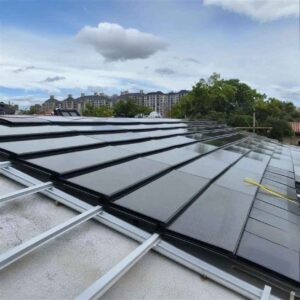
 Roof arrays collect debris, nests, and bird droppings much faster than vertical glass. Image: Wikimedia Commons.
1. Manage soiling patterns
Not all dirt is the same. Even soiling, a uniform dust layer, costs a little energy everywhere. Localized soiling, like one bird dropping, can cost a whole cell group and create a hot spot.
| Soiling Type | Risk Level | Response |
|---|---|---|
| Uniform dust | Low–medium | Scheduled cleaning |
| Bird droppings | High (hot spot risk) | Spot-clean within 1–2 weeks; install bird deterrents at ledges |
| Industrial fallout (iron, cement) | High (bonds to glass) | Specialist cleaning; shorter intervals |
| Leaf litter at frame edges | Medium | Clear during gutter maintenance |
| Bottom-edge dirt line on low-slope glass | Medium (shades the bottom row of cells) | Targeted edge cleaning |
2. Storm and debris response
After any event above your local thresholds (for example, wind over 90 km/h or hail over 20 mm), run a post-event check:
- Review monitoring within 24 hours for strings that have dropped
- Visual check from the ground or by drone for cracked glass
- Look for any insulation-resistance alarms. Water may have entered
- Fence off areas below any cracked overhead glass. Laminated glass holds together but can still shed fragments
- Photograph everything for insurance
3. Vegetation and shading management
Cities change. A tree grows 30 cm a year. A neighbor adds a floor. A billboard goes up.
- Redo a shading study every 3–5 years, or when planning applications are filed next door
- Agree tree-trimming limits with the landscaping contractor
- Compare monthly hourly yield profiles. New shading shows up as a “notch” at the same time every day
VIII. Data-Driven Performance Analysis and Benchmarking
Data-driven maintenance, instead of visual checks alone, finds the “silent” failures that nobody can see.
A silent failure is a loss that people can’t see: a failed bypass diode, a string that disconnected, a slowly degrading inverter.
1. Set a performance baseline
Your design report likely includes P50 and P90 yield predictions:
- P50: the annual output you have a 50% chance of beating, i.e. the “expected” year
- P90: the output you have a 90% chance of beating, i.e. a “bad weather” year
Compare actual yield against these, corrected for real weather, using Performance Ratio (PR). PR is actual energy divided by the energy the system should have made given the measured sunlight.
| PR Trend (weather-corrected) | What It Usually Means | Action |
|---|---|---|
| Stable within ±2% year-on-year | Healthy system | Keep schedule |
| Falling 0.5–0.8% per year | Normal module degradation | Confirm against warranty curve |
| Falling >1% per year | Abnormal loss | IR scan + I-V testing |
| Sudden step drop | Hardware fault | Immediate triage |
| Seasonal dip, recovers after rain | Soiling | Adjust cleaning interval |
2. IoT and maintenance-on-demand
IoT (Internet of Things) monitoring means sensors and loggers that send data to the cloud in real time. With string-level data and an on-site irradiance sensor, you can trigger cleaning when soiling loss passes a set level (for example, 3%) instead of on a fixed date. On many sites, this cuts the number of cleanings while keeping yield the same.
3. Report value to stakeholders
Maintenance budgets get approved when you show what they protect. In your annual report, include:
- kWh generated vs. P50
- Utility savings (kWh × tariff)
- Avoided CO₂ (kWh × local grid emission factor)
- Uptime %
- Maintenance cost per kWh
その NREL photovoltaic O&M best practices guide has reporting templates that lenders and asset managers already know.
IX. Safety Protocols for High-Altitude Solar Maintenance
Rooftop and curtain wall solar systems need strict safety practices to protect both technicians and the asset.
 A permanent BMU gives crews repeatable, safe access to every facade panel. Image: Wikimedia Commons, CC BY-SA.
1. Permanent access solutions
A Building Maintenance Unit (BMU) is a permanent roof-mounted machine with a cradle or gondola that lowers workers down the facade. (See the background on how a building maintenance unit works.)
For BIPV, confirm the following at design stage:
- BMU reach covers every PV pane, including corners and setbacks
- Cradle load rating allows for carrying a replacement module (often 40–120 kg for large laminated units)
- Bumper rollers won’t scratch the AR-coated glass
- Restraint points don’t sit over junction boxes or cable runs
2. Electrical safety: LOTO for DC circuits
LOTO (Lock-Out/Tag-Out) is a procedure that physically locks an energy source in the “off” position and tags it so nobody switches it back on while someone is working. See OSHA’s hazardous energy control standard for the baseline rules.
Critical point: You cannot fully switch off solar glass in daylight. Isolating the inverter stops current flow, but each module still makes voltage whenever light hits it. A BIPV string can sit at 600–1,500 V DC.
Safe sequence:
- Shut down the inverter (AC side first, then DC)
- Open and lock the DC isolators
- Tag with name, date, and reason
- Test for absence of current with a DC clamp meter before touching any connector
- Treat module-side conductors as live at all times in daylight
- If the system has rapid-shutdown or module-level electronics, activate it and verify voltage drop
3. Fall protection and rigging
- Use 100% tie-off (always connected) above 1.8 m / 6 ft, or per local code
- Rate glass vacuum lifters for the module weight plus a safety factor
- Use tag lines to control swinging glass in wind
- Stop lifting work when wind gusts exceed the rigging plan limit (often 30–40 km/h for large glass)
- Never stand on solar glass, even if it is “walk-rated” roof glass, without the manufacturer’s approval
X. Building a Sustainable Lifecycle Ecosystem
Solar glass pays back over decades, but only if it is treated as both a power asset and a building envelope. The approach in this guide comes down to four steps:
- Clean with the right water, chemistry, and schedule
- Inspect with visual audits, IR, and electrical tests
- Troubleshoot with a clear triage process the FM team can run
- Partner with specialists through a written SLA
For architects and developers, a documented maintenance history protects asset value, supports green certification renewals, and makes insurance and refinancing simpler. For contractors and EPCs, a good service program builds repeat business long after the ribbon is cut.
If you are specifying a new project, maintenance starts with product choice. Glass with durable encapsulants, proven edge seals, and good surface coatings needs less intervention over 25 years. You can explore the full BIPV product portfolio from Jia Mao Bipv, or read our overview of solar glass types and features to compare options.
Want a maintenance checklist matched to your facade or roof system? Talk with our BIPV engineering team. Share your project location and system type, and we’ll help you build a practical schedule.
Glossary of Key Terms
| Term | Plain-English Meaning | Example |
|---|---|---|
| BIPV | Solar modules that replace a building material | A curtain wall pane that also makes power |
| AR coating | Thin film that cuts reflection and boosts light capture | Adds ~2–3% output; damaged by abrasives |
| Hot spot | A cell that overheats because it’s shaded or damaged | Bird dropping causing a 90°C cell |
| Bypass diode | Part that routes current around a weak cell group | Shows as a striped IR pattern when active |
| Delamination | Layers in the glass laminate separating | Milky patches near edges |
| String | Modules wired in series to the inverter | 12 facade panels on one circuit |
| Voc | Voltage of a string with nothing connected | ~600 V on a typical commercial string |
| Insulation resistance | How well wiring is isolated from ground | Low readings mean moisture or damage |
| PR (Performance Ratio) | Actual output ÷ expected output for the measured sunlight | PR of 0.80 = 80% of the theoretical output |
| P50 / P90 | Expected vs. conservative annual yield forecasts | P90 is the “bad year” benchmark |
| MPPT | Inverter function that finds the best operating voltage | One MPPT per 1–2 strings |
| LOTO | Lock-out/tag-out energy isolation procedure | Locked DC isolator with a named tag |
| BMU | Permanent facade access machine | Roof crane with gondola |
| SLA | Service contract with defined tasks and response times | 24-hour response for ground faults |
Further viewing: BIPV basics for project teams
よくある質問
1. How do we distinguish between natural efficiency degradation and a technical fault in the solar glass?
Natural degradation is slow and even, usually 0.4–0.8% per year across all strings. A technical fault is uneven or sudden: one string, one elevation, or a step drop. Compare weather-corrected Performance Ratio across similar strings. If one falls behind its neighbors by more than 5%, investigate it as a fault.
2. Which specific cleaning agents are safe for anti-reflective (AR) coatings on architectural solar glass?
Use pH-neutral (6–8), non-abrasive cleaners labeled for PV or coated glass, mixed with deionized water. Diluted isopropyl alcohol can treat small stubborn spots. Avoid ammonia, strong alkalis, acids, scouring pads, and razor blades. Always check the module manufacturer’s cleaning guide first, because using an unapproved chemical can void the warranty.
3. What is the recommended frequency for thermal imaging inspections in a commercial BIPV installation?
Do a baseline IR scan at commissioning, then scan once a year under good sunlight (at least 600 W/m²). Add extra scans after hail, high winds, or any unexplained string drop. Large or high-value facades often benefit from a scan every six months during the first two years, when early-life defects tend to show up.
4. How can we maintain the waterproof integrity of a curtain wall when replacing a single damaged solar module?
Follow the curtain wall system’s original glazing method. Always fit new gaskets and setting blocks, clean the rebate fully, apply silicone within its weather limits, and allow full cure time. Seal cable penetrations again and finish with a hose test on the replaced joint before you sign off.
5. What are the red flags in a monitoring dashboard that indicate a need for immediate physical intervention?
Act right away on insulation or ground-fault alarms, arc-fault alerts, repeated inverter trips, or a string showing zero current in full sun. Each of these can point to a fire or shock risk. A sudden drop of more than 20% on one string also calls for an on-site visit within days.
6. How do we handle the warranty claim process if a performance drop is detected after three years?
Collect evidence first: weather-corrected yield data, IR images, I-V curves, serial numbers, and your cleaning and maintenance logs. Compare the measured loss with the manufacturer’s linear power warranty curve. Submit the claim in writing with this package. Good maintenance records are often the deciding factor in whether a claim is approved.
7. Can standard window cleaning crews handle solar glass, or do they require specialized training?
Standard crews can do the work after short, targeted training. They need to learn approved chemicals, water quality rules, low-pressure methods, how to avoid stepping on or loading the glass, and the basics of DC electrical hazards. Without that training, the usual risks are coating damage and water forced into connectors.
8. What is the impact of mineral buildup (scaling) on the energy yield of solar glass?
Mineral scale scatters incoming light and traps more dirt. Light scaling can cut output by 1–3%. Heavy, baked-on scale on low-slope glass can push losses past 5% and is hard to remove without damaging coatings. Prevent it by rinsing with water under 20 ppm TDS.
9. How do we manage the transition of maintenance responsibility from the EPC contractor to the facility management team?
Use a formal handover package: as-built drawings, string maps, IEC 62446-1 test results, an IR baseline, spare parts list, monitoring logins, warranty documents, and a written O&M manual. Hold a joint site walk and a training session. Many owners keep the EPC on a light-touch SLA for another year or two as a safety net.
10. What are the most common points of electrical failure in integrated solar roofing systems?
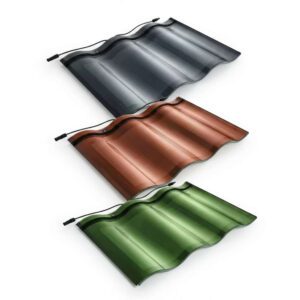
The most common are DC connectors (especially mismatched brands), junction boxes exposed to roof-void heat, cable abrasion where cables cross sharp edges or batten lines, and moisture ingress at roof penetrations. For tile systems, interconnection points between tiles deserve close attention. Our solar roof tile buyer’s guide covers what to check at the specification stage.
11. How does the thermal expansion of the building frame affect the long-term stability of the solar glass mounts?
Aluminum frames move about three times more than glass, and BIPV glass runs hotter than standard glazing. Over thousands of cycles, this can shift setting blocks, stress silicone joints, and tug on cable connections. Good design allows for the movement. Good maintenance checks for signs of it every year.
12. What documentation is required to prove “due diligence” in maintenance for insurance purposes?
Keep dated cleaning logs, annual IR reports, electrical test results, inverter event logs, post-storm inspection records, firmware update logs, LOTO records, and repair invoices with photos. Store everything centrally and keep it for the life of the system. Insurers look for evidence of a planned program, not just reactive repairs.