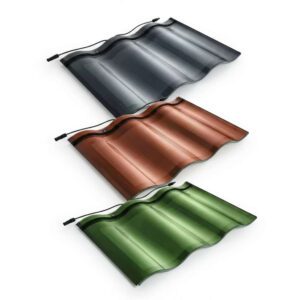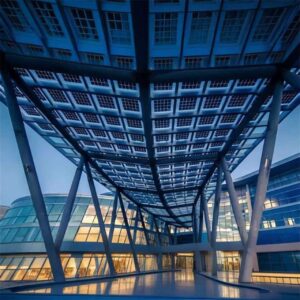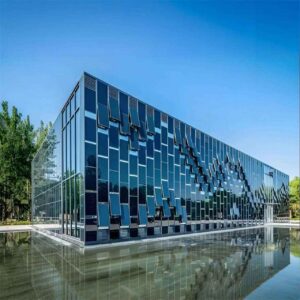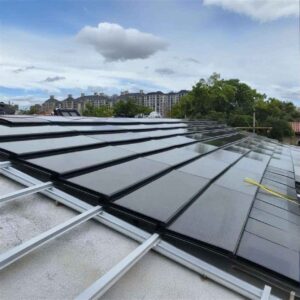
The Hidden Challenges of BIPV:
Why Architects Love It But Engineers Worry
Building-integrated photovoltaics promise aesthetic solar solutions and energy independence — but significant technical and practical barriers continue to constrain mainstream adoption. Here is what your supply chain strategy must account for.
The BIPV Promise vs. Reality Gap
“The architect’s render looked extraordinary. Then the structural engineer opened the specification document.” — A sentiment shared by project managers on BIPV installations across three continents.
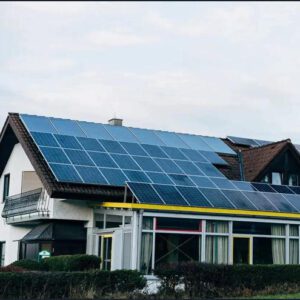
Building-Integrated Photovoltaics (BIPV) — solar modules that replace conventional building materials rather than sitting on top of them — represent one of the most compelling technology intersections in modern construction. When an architect presents a solar glass façade that generates clean energy and eliminates the “bolted-on hardware” aesthetic, the room typically responds with enthusiasm.
Then the engineers open the detailed specification package.
The reality is that BIPV occupies an uncomfortable technical space between two separate, highly regulated industries: the solar photovoltaic sector and the building construction sector. Products must simultaneously satisfy electrical codes, building codes, structural requirements, weathertightness standards, and fire safety regulations — a compliance burden that conventional solar panels or conventional building materials face individually, never simultaneously. This dual-compliance reality drives cost, complexity, and timeline in ways that project teams consistently underestimate.
This article is not a case against BIPV. The technology is maturing rapidly, and for the right applications — premium commercial facades, new-build luxury residential, institutional green building certifications — the business case is real and growing. But for distributors, agents, and building contractors who want to sell BIPV credibly and profitably, an honest and detailed understanding of its engineering challenges is the single most important competitive advantage you can develop. Clients who receive an accurate picture upfront become long-term partners; clients who discover the complications after commitment become costly disputes.

BIPV sits at the intersection of two separate technical disciplines — PV engineering and building construction — each governed by its own regulatory framework. That intersection is where most project complications originate.
Understanding BIPV Technology and Market Context
What Building-Integrated Photovoltaics Actually Are
The term BIPV is used loosely in marketing materials, which creates a persistent source of confusion at the specification stage. The technically precise definition is: a photovoltaic product that 代替 a conventional building material and simultaneously serves that material’s primary function — weather protection, structural cladding, daylighting, or thermal insulation.
A glass curtain wall unit containing PV cells that replaces standard architectural glazing: that is BIPV. A conventional solar panel mounted on brackets attached to an existing roof: that is BAPV (Building-Applied Photovoltaics). The distinction matters enormously for procurement, engineering, compliance, and cost analysis — but manufacturers and specifiers use “BIPV” to describe both, which systematically misleads buyers about what they are actually purchasing.
📖 Technical Terms Defined
- BIPV — Building-Integrated Photovoltaics
- Solar modules that replace conventional building envelope components (roof tiles, façade cladding, window glazing). The PV element and the building element are functionally inseparable.
- BAPV — Building-Applied Photovoltaics
- Conventional solar panels mounted on racking systems above existing building surfaces. The solar system and the building remain two independent systems.
- Temperature Coefficient
- The rate at which a PV cell’s output changes with temperature, expressed as %/°C. A typical value of −0.40%/°C means the panel loses 0.40% of rated power for every 1°C the cell rises above 25°C (STC).
- Mismatch Loss
- Power loss caused when cells or modules in series/parallel circuits operate at different levels (due to shading, soiling, or manufacturing variation), forcing all modules toward the performance of the weakest unit.
- STC — Standard Test Conditions
- Laboratory benchmark used to rate solar modules: 1,000 W/m² irradiance, 25°C cell temperature, 1.5 air mass. Real-world performance will always differ from STC ratings.
- MPPT — Maximum Power Point Tracking
- Electronic optimization that continually adjusts electrical operating conditions to extract maximum available power from a PV array under changing irradiance and temperature conditions.
Current Market Adoption Rates and Why They Lag Forecasts
その IEA PVPS Task 15 programme, in its third phase (2024–2027), acknowledged explicitly that BIPV adoption continues to lag behind industry forecasts despite years of consistent market growth projections. The global BIPV market reached an estimated $28.3 billion in 2024 and is growing at approximately 15–16% CAGR — healthy by any measure, but still representing a fraction of the total addressable market that optimistic projections implied a decade ago.
The gap between forecast and reality is not primarily a demand problem — architects and sustainability professionals genuinely want BIPV. It is a supply-side problem: the engineering complexity, regulatory ambiguity, and cost premium create a formidable barrier at the specification and procurement stage that eliminates a large proportion of projects before they reach contract.
The Architectural Appeal vs. Engineering Reality
Architects champion BIPV because it solves their most intractable problem: how to mandate renewable energy (increasingly required by building codes and developer ESG commitments) without compromising design intent. A BIPV glass façade is, from an architectural drawing perspective, simply a glazed elevation that happens to generate electricity. The visual result is seamless and compelling.
Structural engineers, building services engineers, and electrical contractors face a different reality. They inherit a specification that adds structural load requirements, electrical grid connection obligations, weathertightness testing under dual standards, and maintenance access constraints — all without a clear, unified industry framework defining who is responsible for what. The combination is not insurmountable, but it consistently adds 15–35% to project cost and 20–50% to project timeline compared to early design estimates.
The Efficiency Trade-Off Challenge
How BIPV Sacrifices Performance for Aesthetics
The efficiency gap between BIPV and conventional rack-mounted solar is real, quantifiable, and frequently underestimated in project financial models. It operates through three compounding mechanisms: suboptimal orientation, restricted ventilation causing higher operating temperatures, and technology trade-offs that prioritise visual properties over power generation.
Source: IEA-PVPS Technical Reports, MDPI thin-film BIPV review 2024. STC conditions; real-world output lower due to temperature, orientation and shading factors.
The efficiency numbers above look manageable in isolation. The problem arises when you compound module efficiency loss with orientation penalty (a vertical south façade receives roughly 60–70% of the irradiance that an optimally tilted roof receives) and thermal performance degradation from restricted ventilation.
Thermal Performance Degradation — The Silent Efficiency Killer
This is the technical challenge that most BIPV project financial models fail to adequately account for. When solar cells operate above their rated temperature (25°C under STC conditions), output falls at a rate of approximately 0.40–0.65% per degree Celsius above that baseline, depending on cell technology.
A conventional rack-mounted BAPV system has an air gap beneath the modules. Wind circulation cools the cells continuously, keeping operating temperatures within 20–35°C above ambient on a typical installation. A BIPV roof tile or facade panel, by contrast, is in direct contact with — or separated only by a narrow cavity from — the building structure. Surface temperatures on BIPV facades have been measured at 15.7°C above ambient on average, with daily maxima reaching 49–52°C in studies published in the journal Buildings (MDPI, 2024). In a hot summer climate where ambient temperatures reach 38°C, BIPV façade cells may operate at 53–57°C — generating a thermal penalty of 11–13% compared to STC-rated output.
Electrical Integration Complexity and Mismatch Losses
A conventional rooftop solar array is typically installed on a uniform, south-facing surface at a consistent tilt angle. All modules receive very similar irradiance levels throughout the day. BIPV façades and building envelopes break every assumption that underlies this configuration. A multi-elevation commercial building wraps solar modules around east, south, and west faces, each receiving dramatically different irradiance profiles. Adjacent modules may be partially shaded by architectural overhangs, neighbouring buildings, or the building’s own structural elements at certain times of day.
When modules in a series string receive unequal irradiance, the string current is limited by the weakest module — a phenomenon called mismatch loss. Research from the University of North Carolina analyzing BIPV façade configurations found that partial shading and mismatch effects can reduce array output by 10–40% compared to unshaded performance, depending on array configuration and time of year.
The technical mitigation for mismatch losses — module-level MPPT (Maximum Power Point Tracking) using microinverters or DC optimisers on each module — adds $150–$350 per module to project cost and introduces additional points of potential failure in the electrical system. It is the correct engineering solution, but it is rarely included in early-stage BIPV cost estimates.
| Performance Factor | Optimal BAPV (Roof, 30° tilt) | BIPV Vertical South Façade | Impact on Annual Yield |
|---|---|---|---|
| モジュールの効率 | 21–24% | 13–18% | −15 to −35% |
| Irradiance (Orientation) | 100% (optimal tilt) | 60–70% (vertical) | −30 to −40% |
| Thermal Operating Loss | Minimal (ventilated) | 5–15% reduction | −5 to −15% |
| Mismatch / Shading | 2–5% | 10–40% (complex geometry) | −5 to −35% |
| Inverter / System Losses | 3–5% | 4–8% (complex wiring) | Minor additional |
| Net Output vs. BAPV | 100% (baseline) | 35–65% of BAPV | Significant |
Cost-Per-Watt Economics That Disappoint Stakeholders
According to Market.us industry research, BIPV hardware averages $7.14 per watt, compared to $3.92 per watt for conventional rooftop PV. That 1.8× premium on hardware alone does not capture the full cost picture: BIPV projects carry significantly higher engineering coordination costs, longer permitting timelines (billing hours accumulate), and more complex installation labour with higher certification requirements.
The conventional BIPV financial model defence — “subtract the cost of the building material being replaced” — is valid in theory but overstated in practice. In retrofit projects, the building material is not being replaced at all; BIPV is an addition, not a substitution. In new construction, the timing of BIPV specification (it must occur at design stage to be fully integrated) adds design fees that offset a portion of the material substitution saving. And critically, if the BIPV system underperforms against the energy model — which thermal and shading losses virtually guarantee it will — the financial model falls short of stakeholder expectations.
Installation and Integration Complexity
▶ Watch: BIPV Engineering Principles — covering structural load safety and electrical integration requirements for contractors and specifiers.
Design and Engineering Coordination Challenges
A conventional solar project involves a relatively simple coordination chain: a solar installer quotes a system, a structural engineer confirms the roof can carry the load, an electrician wires the inverter, and the utility connects the meter. The entire coordination process typically runs through a single solar contractor who manages all trades.
A BIPV project on a commercial building involves structural engineers, façade engineers, electrical engineers, architects, planning consultants, the BIPV module manufacturer, a specialist installation contractor, the main construction contractor, and — in most jurisdictions — a building control officer who must sign off on both the electrical and the building envelope elements. When these disciplines do not communicate early and continuously, design conflicts emerge late in the project programme, triggering costly change orders.
その US Department of Energy’s BIPV challenge summary specifically identifies this coordination failure as one of the primary technical barriers: “Currently many electrical engineering firms do not design solar systems as part of their standard scope, and this creates a gap that results in under-specified BIPV electrical designs and field conflicts during installation.”
Structural Load and Building Code Complications
BIPV systems — particularly façade cladding and roof tile systems — add both dead load (the static weight of the modules and sub-frame) and dynamic load (wind pressure and uplift on large panel surfaces) to a building structure. For new construction, these loads can be designed in from the beginning. For retrofit applications — which represent a significant portion of the market — the existing structural frame may require reinforcement to support the additional loads.
Dead Load Implications
BIPV glass panels for façade applications typically weigh 20–35 kg/m², compared to 8–12 kg/m² for conventional aluminium curtain wall glazing. On a 2,000 m² commercial façade retrofit, this translates to 24–46 tonnes of additional permanent load on the building frame and foundations.
HIGH IMPACTWind Load Analysis
Large BIPV panel surfaces act as sails in high-wind events. Wind pressure calculations for tall building façades can generate uplift forces of 1.5–3.5 kPa, requiring engineered fixing systems that are significantly more robust (and expensive) than standard curtain wall anchor designs.
HIGH IMPACTSeismic Requirements
In seismic zones (Japan, California, New Zealand, Turkey, South-East Asia), façade-integrated BIPV systems must be designed to accommodate inter-storey drift without panel failure or loss of weathertightness. Achieving this with glass panels connected to a building frame that flexes during seismic events requires specialist engineering and custom fixing design.
HIGH IMPACTSpecialist Labour Shortage
BIPV installation requires technicians who are simultaneously qualified in building envelope installation (glazing, waterproofing, cladding) and PV electrical installation. This dual qualification is rare — the US DOE estimates that fewer than 5% of current solar installers have the building envelope trade background required for competent BIPV façade work.
HIGH IMPACTSequential Programme Constraints
BIPV installation on a new building cannot begin until the structural frame is complete and weatherproofed — but must be completed before internal fit-out. This narrow window in the construction programme creates scheduling pressure that drives overtime and premium labour rates, adding 15–25% to installation cost estimates that assumed normal working hours.
MEDIUM IMPACTCertification Gaps
No single international certification covers both the PV and building product competency requirements for BIPV installation. Contractors must hold separate electrical installation licences (jurisdiction-specific) and building envelope installation qualifications simultaneously. The absence of a unified BIPV installer credential is a persistent market barrier.
MEDIUM IMPACT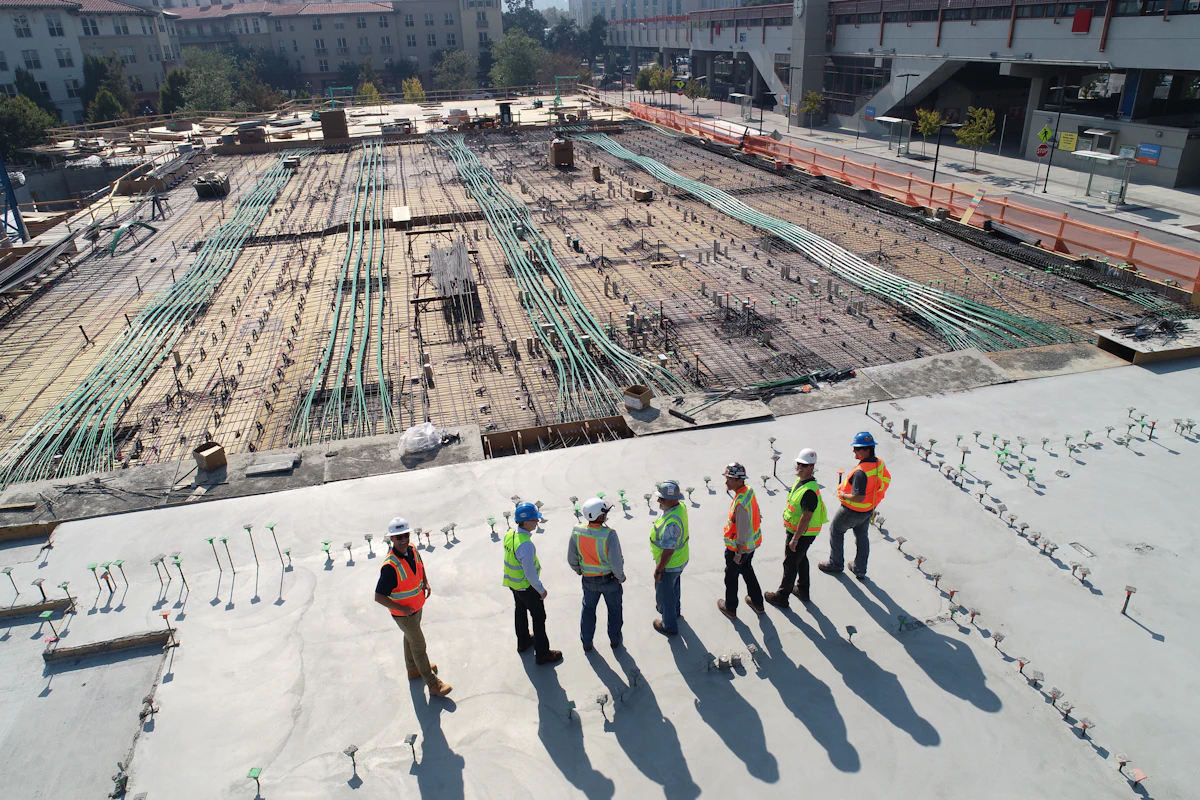
BIPV façade installation requires simultaneous coordination of structural, electrical, and building envelope trades — a level of multi-disciplinary project management that conventional solar installers are typically not trained for.
Weatherproofing and Durability Concerns
The Building Envelope Vulnerability Problem
When a BIPV module is installed as a building envelope component, it inherits the full weathertightness obligations of that element. A leaking solar panel installed on a racking system above a watertight roof is a maintenance inconvenience. A leaking BIPV roof tile or façade panel is the building’s weather barrier failing — potentially causing interior water damage, structural decay, and mould growth behind cladding systems that may not be visible until extensive damage has occurred.
The technical challenge is that BIPV modules introduce elements into the building envelope that conventional building products do not have: electrical cables, junction boxes, conduit penetrations, and module frame joints with tolerances designed for solar panel manufacturing, not architectural weathertightness. Each of these represents a potential water ingress pathway. In a well-designed BIPV system with careful detailing, these risks are manageable. In the real world of construction — where site conditions vary, trades are under programme pressure, and design details are not always executed precisely — they are a genuine and documented source of project failures.
2. Electrical penetrations: Cable routes from PV modules through the building envelope are inherent penetrations in the weather barrier. Each penetration requires engineered sealing that is compatible with both building movement and electrical safety requirements.
3. Junction boxes and connectors: MC4 and similar PV connectors are rated IP67 (dustproof, 30-minute immersion resistant) — a standard appropriate for outdoor solar installations but not for components permanently embedded in a building envelope subject to continuous water pressure during heavy rain events.
Freeze-thaw cycling: In climates with freeze-thaw cycles (Central Europe, Northern USA, Canada), any moisture that penetrates BIPV panel edges or sealant joints will expand by approximately 9% on freezing — progressively widening penetration pathways with each cycle over a building’s lifetime.
Maintenance access for waterproofing inspection: Sealant joints in high-level façade BIPV systems require rope access or elevated work platforms to inspect and renew — a £2,000–£8,000 per day access cost that is rarely included in O&M budgets.
Material Compatibility and Long-Term Degradation
BIPV modules age as both solar panels and as building materials — meaning they are subject to two different, simultaneous degradation mechanisms that interact in complex ways. As solar panels, EVA (ethylene-vinyl acetate) encapsulant material yellows and delaminates under cumulative UV exposure — a process that begins visibly after 8–15 years in high-irradiance environments and accelerates the optical efficiency loss beyond the standard 0.5% per year degradation baseline.
Research published in Solar Energy Materials and Solar Cells (ScienceDirect) confirms that EVA encapsulant yellowing is driven by UV radiation and accelerated by elevated operating temperatures — precisely the conditions that BIPV building-integrated applications create. In a laboratory accelerated aging test (4,200 hours of xenon arc UV), visual yellowing was observed at intensities proportional to module operating temperatures during the test — directly relevant to thermally constrained BIPV installations.
As building materials, BIPV modules in coastal environments face accelerated corrosion of aluminium frame components from salt spray — a known issue for curtain wall systems generally but compounded in BIPV by the presence of electrical connections and grounding conductors that create galvanic corrosion pathways not present in conventional architectural glass. For distributors selling into coastal markets across Southeast Asia, the Middle East, or the Mediterranean, this is a material selection and warranty question that must be explicitly addressed in the product specification.
IEA Technical Guidelines and Industry Standards
What the IEA PVPS Programme Says About BIPV Challenges
The IEA Photovoltaic Power Systems Programme (IEA-PVPS) runs Task 15: Enabling Framework for the Development of BIPV, the world’s most comprehensive ongoing technical research programme on building-integrated solar. Its Phase 3 (2024–2027) focuses specifically on removing the systemic barriers to mainstream adoption — a signal that after more than a decade of Task 15 work, those barriers have proven more resistant than anticipated.
The IEA PVPS December 2024 standardisation report (Advancing BIPV Standardization) identified the following core technical gaps as the primary adoption barriers:
- High Cost & Unclear ROI — 32%
- Regulatory / Standards Gaps — 24%
- Installer Shortage / Training — 20%
- Efficiency / Performance Concerns — 14%
- Other Barriers — 10%
Cost and regulatory complexity together account for 56% of adoption barriers — both addressable through informed distributor guidance and manufacturer partnerships with strong compliance documentation.
Supply Chain and Procurement Challenges
The Specification and Sourcing Problem
Conventional solar panel procurement is a transactional process: you specify a watt-peak rating, efficiency class, and physical dimension, then compare prices from multiple manufacturers selling essentially interchangeable products. BIPV procurement is a custom engineering process: module dimensions, cell density, glass specification, transparency level, colour, framing profile, and electrical configuration are all determined by the specific architectural design. No two large BIPV projects are identical.
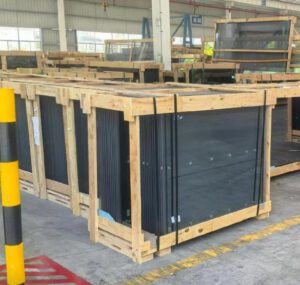
This customisation has three supply chain consequences that procurement teams consistently underestimate. First, minimum order quantities: BIPV glass manufacturers typically require minimum orders of 50–200 m² for custom specifications, which is impractical for small projects and means that bespoke prototyping for design development carries disproportionate cost. Second, lead times: standard custom BIPV solutions require 4–8 weeks lead time in normal production conditions, according to BIPV supplier evaluation research; complex or high-volume specifications can extend this to 14–20 weeks. In a fast-moving construction programme, a 16-week module delivery that arrives at week 18 can delay the entire building envelope completion sequence. Third, quality consistency: custom-manufactured BIPV glass carries higher production quality variability than standard commodity solar panels, and modules produced at different times in a project (initial order vs. replacement order) may have visible colour or texture variations that are unacceptable in a high-specification architectural application.
Vendor Lock-In and Product Compatibility
BIPV systems rely on proprietary connection systems, sub-frame profiles, and electrical connectors that are not interchangeable between manufacturers. Once a building owner has specified Manufacturer A’s façade system, replacing damaged or failed modules mid-project or during the building’s lifetime requires sourcing replacements from the same manufacturer — at whatever price and lead time that manufacturer chooses to offer. If the manufacturer discontinues a product line (which occurs regularly in an industry evolving as rapidly as BIPV), replacement procurement becomes a significant building maintenance problem.
その BIPV new construction specification guide from Jia Mao BIPV addresses this directly, recommending that specifiers request a minimum 10-year product availability commitment from manufacturers before finalising product selection — a procurement requirement that narrows the qualified supplier pool but protects the building owner from mid-life replacement crises.

Custom BIPV modules cannot be stockpiled like commodity solar panels — each project’s specification is unique, driving bespoke procurement lead times.

BIPV procurement requires detailed specification documentation covering both PV performance parameters and architectural glass quality requirements simultaneously.
Regulatory and Code Compliance Barriers
Building Code Interpretation Challenges
BIPV occupies what one US DOE researcher memorably described as “a regulatory grey zone where neither the building inspector nor the electrical inspector feels fully responsible.” This grey zone is not a permanent condition — it is the natural result of regulations written for established product categories encountering a product category that did not exist when those regulations were drafted. But navigating grey zones takes time, money, and expertise that many project teams do not budget for.
In the United States, BIPV roof panels are specifically addressed in the International Building Code (Section 1507.17), which imposes minimum roof slope requirements (≥2:12), specific underlayment requirements, and fire classification standards. However, the IBC provides a framework, not detailed installation specifications — and local jurisdictions adopt and amend the IBC on their own cycles, creating material differences between neighbouring markets. A BIPV system approved for a project in one county may require additional testing and documentation to secure approval for the same product installed 30 miles away in a different county with a different IBC amendment cycle.
Electrical Code and Safety Compliance
NEC Article 690 (USA) and its international equivalents govern BIPV electrical installations, with specific provisions for rapid shutdown systems, arc fault protection, and grounding/bonding that are particularly complex in large-scale façade installations where hundreds of modules may need individual rapid shutdown capability. The 2017 and 2020 NEC updates expanded rapid shutdown requirements significantly, and not all BIPV products currently on the market have been tested and certified to the most current requirements — creating a compliance risk for specifiers who do not verify certification currency before purchasing.
| Standard / Code | Domain | Applies To | Compliance Complexity |
|---|---|---|---|
| IEC 61215 | PV Module Design Qualification | All PV modules globally | Moderate |
| IEC 61730 | PV Module Safety Qualification | All PV modules globally | Moderate |
| EN 14449 | Laminated Glass Safety (Building) | BIPV glass products in Europe | High |
| EN 13830 | Curtain Wall Systems (Building) | BIPV curtain wall facades (EU) | High |
| NEC Article 690 | Solar PV Electrical Installation | All solar systems in USA | Moderate–High |
| IBC Section 1507.17 | BIPV Roof Panel Installation | BIPV roofing in USA | Moderate |
| UL 61730 / UL 1703 | PV Module Safety (USA Market) | Solar modules sold in USA | Moderate |
| CE Marking | Dual: PV + Building Product | BIPV products in EU market | High (dual assessment) |
| EPBD 2024 (EU) | Building Energy Performance | New/renovated buildings in EU | High (design integration) |
Financial and Risk Management Barriers
Why BIPV Projects Consistently Exceed Initial Estimates
A consistent pattern in BIPV project delivery is cost overrun — not primarily from dishonest initial estimates, but from the compounding of multiple factors that are each individually modest but collectively significant. Engineering coordination meetings that were not fully costed, permit delays that extend contractor prelims billing, rework when electrical and structural details conflict at installation stage, custom module replacement orders when panels are damaged during installation — none of these is catastrophic individually, but together they routinely add 20–45% to mid-construction BIPV project budgets.
Warranty and Liability Complications
The dual-function nature of BIPV creates a warranty responsibility structure that is significantly more complicated than either standalone solar panels or conventional building materials. When a BIPV roof tile leaks, is the cause a manufacturing defect in the PV module (manufacturer warranty), an installation error by the roofing contractor (installer workmanship warranty), a design flaw in the waterproofing detail (architect or engineer professional indemnity), or normal material degradation outside warranty scope? In practice, attributing the cause often requires forensic investigation, and all parties typically deny responsibility while the investigation proceeds — leaving the building owner holding both the repair cost and the legal burden of proof.
As a practical reference for distributors, the warranty responsibility matrix guidance from Jia Mao BIPV recommends requiring a written responsibility matrix from all parties before project commencement — a document that explicitly assigns liability for each interface between the BIPV module, the installation work, the structural support, and the building envelope. This single contractual document is the most effective risk mitigation tool available for avoiding the mid-project blame-shifting that characterises failed BIPV warranty claims.
Return on Investment Uncertainty
BIPV payback periods in real-world commercial applications typically range from 8 to 15 years, compared to 3–7 years for optimally installed conventional rooftop solar, according to Metsolar’s 2024 BIPV cost analysis. For solar roofing specifically, the payback range narrows to approximately 8–12 years when the dual-function material substitution is properly accounted for.
The challenge for project financing is that many commercial real estate debt instruments have terms of 5–10 years — shorter than the realistic BIPV payback period. A building owner who cannot demonstrate financial breakeven within the financing term will struggle to secure project-level debt for BIPV. This financing mismatch is a structural barrier to commercial real estate BIPV adoption that is separate from the technical merits of the product and requires creative financial structuring (green bonds, energy-as-a-service arrangements, ESG-linked facility repricing) to overcome.
Operational and Maintenance Challenges
Monitoring and Diagnostics Complexity
A conventional rooftop BAPV system can be monitored at string level with a standard inverter monitoring package, and a string with degraded output is relatively easy to locate visually and electrically. A BIPV façade system wrapping three or four building elevations, with modules at different orientations and subject to different shading profiles throughout the day, requires module-level monitoring to distinguish genuine faults from the expected performance variation across the array geometry. Module-level monitoring hardware adds $80–$200 per module to system cost — a significant line item across hundreds or thousands of façade modules.
Fault diagnosis in integrated systems is further complicated by the fact that a module that appears dark or non-performing from the monitoring system may have a PV fault (cell degradation, delamination, junction box failure), a shading fault (a bird nest, a cleaning fluid residue, an architectural change that created a new shadow), or a wiring fault (corroded MC4 connector, insulation damage behind the cladding) — and investigating which cause applies requires either remote electrical diagnostics with MLPE data or physical access behind the cladding system, which may require scaffold or rope access.
Performance Degradation Over Time
Long-term performance data for BIPV systems is improving but remains limited compared to conventional solar. A 2024 study tracking BIPV system degradation across 55 installations (252 module strings) found performance loss rates varying significantly by installation year and system type, with means in the range of 0.5–1.2% per year — broadly consistent with conventional solar at the lower end, but with a meaningful proportion of systems showing higher degradation rates driven by thermal stress and moisture ingress issues specific to building-integrated configurations.
What makes BIPV degradation particularly consequential is its visibility. A solar panel on a rooftop can degrade to 80% output without anyone noticing aesthetically. A BIPV façade glass panel with encapsulant yellowing, delamination, or discolouration is visible to every person who walks past the building — potentially affecting the property’s visual quality and the building owner’s brand perception. The maintenance standard for BIPV is therefore governed by both energy performance and architectural appearance, adding complexity and cost to the O&M programme.

BIPV monitoring requires module-level data analysis — not just inverter-level string monitoring — because complex façade geometries create natural performance variation that masks genuine faults under standard monitoring protocols.
Pathways Forward and Mitigation Strategies
How Forward-Thinking Organisations Are Overcoming BIPV Barriers
Despite the challenges documented throughout this article, BIPV projects succeed regularly — and the characteristics that distinguish successful projects from problem projects are consistently replicable. The most critical differentiator is early, integrated design involvement. Projects where the BIPV supplier is involved at concept design stage (before structural and façade engineering are fixed) have far better outcomes than projects where BIPV is introduced as a late-stage specification change.
The second differentiator is manufacturer selection based on technical documentation quality, not just product specification. Manufacturers who provide detailed installation drawings, comprehensive compliance documentation packages, and dedicated technical support during project delivery dramatically reduce the engineering coordination burden on the project team. The BIPV façade design guide from Jia Mao BIPV is an example of the type of specification-stage support that distinguishes a supplier ready for serious architectural project delivery from one selling commodity panels with an architectural label.
Technology Improvements on the Horizon
Three emerging technology developments are likely to meaningfully reduce BIPV’s engineering challenges within the current decade. First, perovskite-on-silicon tandem cells — actively developed for BIPV applications through EU-funded programmes including PERSEUS (launched January 2025) — are targeting 25–30% efficiency in formats suitable for building glass integration, which would substantially close the efficiency gap between BIPV and conventional solar. Second, standardised modular BIPV systems — pre-engineered sub-frame and electrical connection packages that install in defined standard sizes — are entering the market, reducing the bespoke engineering requirement and associated cost for medium-scale commercial applications. Third, integrated IoT monitoring with machine learning fault detection is beginning to appear in premium BIPV product lines, using historical performance patterns to distinguish genuine module faults from expected geometric performance variation — reducing diagnostic time and O&M cost significantly.
Recommendations for Distributors and Supply Chain Partners
Invest in Technical Competence First
Before adding BIPV to your product catalogue, develop genuine technical understanding of the engineering challenges. Clients who discover you do not understand the complexity mid-project will not return. Clients who feel you guided them through it competently will refer their network. Begin with the BIPV product and installation guide as a foundation.
PRIORITY 1Develop Installer Partnerships Proactively
The shortage of dual-qualified BIPV installers is the most limiting constraint in most regional markets. Identifying and establishing preferred-supplier relationships with 1–2 certified specialist contractors in your territory before you have projects in the pipeline means you can guarantee delivery capability when opportunities arise, rather than scrambling to find qualified labour mid-project.
PRIORITY 1Focus on Applications with Strong Business Cases
Not all BIPV applications have equally compelling financials. New-build commercial projects with mandatory solar requirements, luxury residential new-build where material substitution fully applies, and large institutional buildings with access to green building grants consistently outperform retrofit applications in financial return. Focus early sales efforts on these segments.
PRIORITY 2Build a Specification Package
Architects who specify BIPV need technical documentation in the format their software and procurement systems require. Developing a local-market specification package — including CAD details, NBS/Uniclass section text, and compliance statements for your jurisdiction’s building codes — removes a significant friction barrier from the architect’s decision to specify your product.
PRIORITY 2The BIPV Reality Check for B2B Partners
BIPV is a genuinely transformative technology operating in a genuinely complex technical and regulatory environment. The architects who champion it are responding to a real market need — the demand for solar energy infrastructure that enhances rather than compromises building design. The engineers who worry about it are responding to real technical challenges — efficiency losses, structural loads, weathertightness risks, dual-compliance obligations, and a shortage of qualified installation professionals.
Both perspectives are correct. The distributors, agents, and contractors who will build sustainable BIPV businesses are those who hold both perspectives simultaneously — who can articulate the opportunity compellingly and explain the challenges transparently. That combination is rare in the current market, which means it commands premium positioning, premium margins, and the kind of long-term client relationships that commodity solar distribution cannot sustain.
Understanding what IEA Task 15 found, what the engineering failure modes are, and where the regulatory grey zones exist is not a barrier to selling BIPV. It is the foundation of selling it well. Use the technical detail in this article as a client conversation framework, not as a set of objections to manage. Clients who trust your technical judgement will bring you their most important projects — and in the BIPV market, the most important projects are where the real margin lives.
15 Critical Questions About BIPV Challenges
The questions below address the most technically detailed client inquiries that BIPV distributors and agents encounter in B2B specification conversations.
Download Your BIPV Technical Reference Guide for Distributors
Get the comprehensive specification checklist, IEA guidelines summary, supplier evaluation framework, and case study collection — everything your team needs to sell BIPV with technical authority and zero surprises.