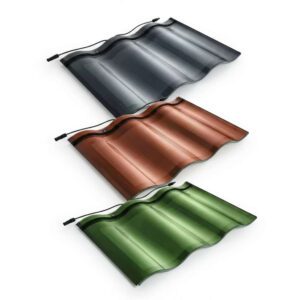
The Top 5 Solar Roof Tiles for Your Building Project
A Specification and ROI Guide for Roofing Contractors, EPCs, Architects, Building Material Distributors, and Design Institutes
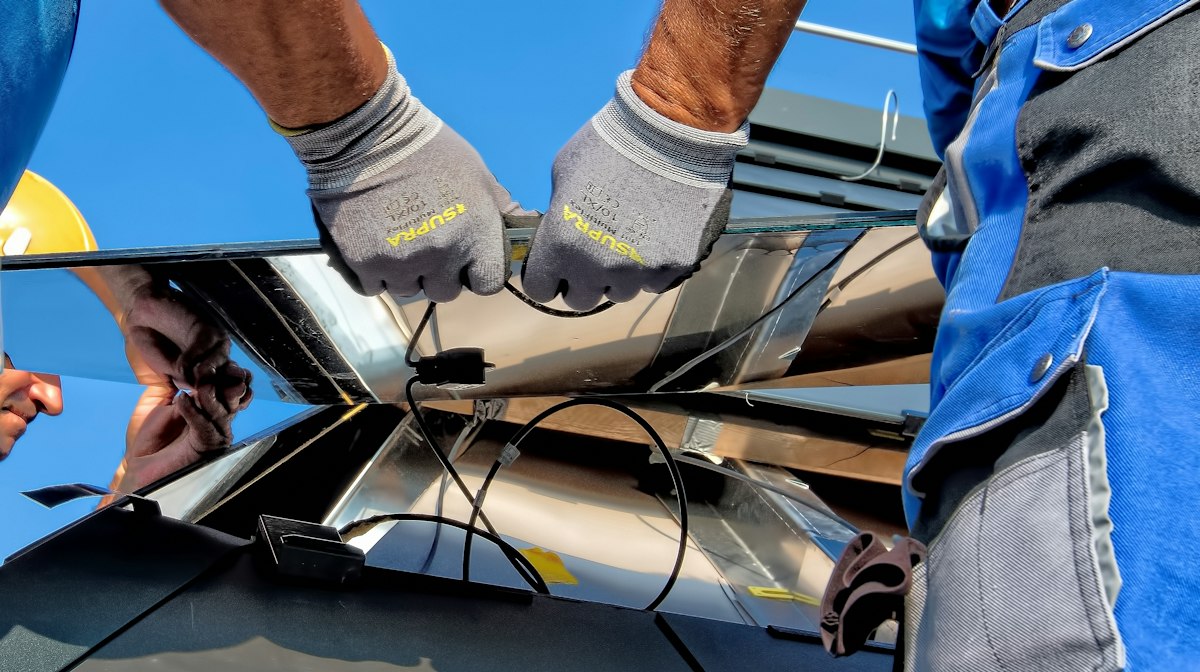
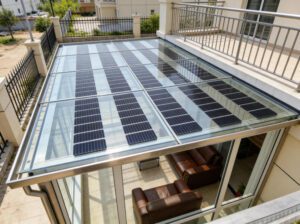
When a client asks why the house next door looks cleaner, the answer is usually solar roof tiles flush to the roofline, no rack hardware in sight. For contractors and architects, the real question is which product, for which project type, at which margin. This guide answers that. Source: Unsplash.
Executive Summary for Industry Professionals
The solar roof tiles market reached $3.59 billion globally in 2024 and is projected to hit $8.88 billion by 2030 at a 10.8% CAGR (For Insights Consultancy). In the U.S. alone, the solar roofing product market is forecast to reach $965 million in 2025 (Freedonia Group) — driven primarily by the combination of mandatory green building codes, roof-replacement economics, and rising commercial ESG standards.
Solar roof tiles differ from conventional rack-mounted solar in one fundamental way: they replace the roofing material entirely. The panel is the roof. That dual function changes the procurement decision, the installation scope, the permitting pathway, and — critically — the ROI model for every client you present to.
For roofing contractors, that means holding roofing et electrical licenses simultaneously, or subcontracting in a way that keeps you in the general contractor seat. For EPC firms, it means coordinating glazing, structural, and MEP scopes from day one. For architects and design consultants, it means specifying products by performance class — efficiency, VLT, fire rating, wind load — not just brand names. For building material distributors, it means carrying a product with an 8–16 week lead time and a client who will ask the same three questions every time: Does it look good? How long until it pays off? What happens if one breaks?
This guide gives you the specification data, financial models, and project-planning framework to answer all three.
What this guide covers:
- A side-by-side comparison of the five most-specified solar roof tile products in professional construction in 2025
- Selection criteria weighted for contractor and designer decision-making
- Real-world performance data and case studies with kWh and payback figures
- A pre-installation checklist and project coordination framework
- ROI modeling for residential, mixed-use, and commercial project types
- FAQ section targeting the questions clients and building officials actually ask
Selection Criteria: What Matters Most to Contractors and Designers
Before comparing products, the selection framework matters more than any single specification. Contractors and designers who win BIPV projects consistently apply the same evaluation criteria — and they apply them in the right order.
Durability: The Roof Has to Work First
A solar tile that generates great kilowatt-hours but fails as a roofing material is a liability, not an asset. Evaluate products against three durability benchmarks before anything else.
Wind resistance is the most common failure point in installed systems. ASTM D3161 Class F (110 mph) is the minimum acceptable threshold for most U.S. jurisdictions. Coastal and high-wind markets (Miami-Dade, Gulf Coast, Pacific Northwest) demand UL 580 Class 90 or equivalent (130+ mph). Some products — notably Luma Solar — are rated to 166 mph, meeting Miami-Dade’s stringent Notice of Acceptance (NOA) requirements.
Hail resistance under UL 2218 Class 4 (2-inch hailstones at 51+ mph) is standard for premium products and increasingly required by insurers in hail-prone markets (Colorado, Texas, Kansas). Confirm this rating specifically — not all products meeting ASTM D3161 also carry Class 4 hail ratings.
Fire classification under UL 790 / ASTM E108 requires a Class A rating for roof coverings on most commercial and multi-family projects in the U.S. All five products reviewed here carry Class A. For commercial projects, also confirm that the complete roof assembly — tiles, underlayment, deck — carries the fire rating, not just the tile in isolation.
Energy Efficiency: Watts Per Square Foot Is the Right Metric
Module efficiency percentage (%) is useful for comparing two products of the same form factor. But for roofing, the decision-relevant metric is watts per square foot (W/ft²) — because your client’s available roof area is fixed, and what you need to know is how much power you can extract from it.
| Product | Watts per Tile | W/ft² (Approx.) | Module Efficiency |
|---|---|---|---|
| GAF Timberline Solar ES2 | 57 W | 14.3 W/ft² | 22.6% |
| Luma Solar | 100 W | 16.1 W/ft² | ~20% |
| Tesla Solar Roof (Gen 3) | ~45 W (solar tile) | ~12.8 W/ft² | ~19.5% |
| SunStyle (PowerHouse) | 84–115 W | 12.8–16.1 W/ft² | ~17–18% |
| Onyx Solar (BIPV Glass) | 80–180 Wp/m² | 7.4–16.7 W/ft² | 6–24% (varies by VLT) |
At 14.3 W/ft², a 1,000 ft² active solar zone on a GAF system produces a peak 14.3 kW. The same zone with a 12.8 W/ft² product produces 12.8 kW — a 10.5% reduction in system capacity from the identical roof area. In a climate like Dallas (4.9 peak sun hours/day), that 1.5 W/ft² difference translates to roughly 2,684 kWh/year of additional generation — approximately $322/year at $0.12/kWh, compounded over 25 years.
Integration Capability: Does It Fit the Existing Build System?
The fastest installation is always the one that slots into a workflow you already run. GAF Timberline Solar is explicitly engineered for roofing contractors who already install GAF Timberline shingles — the product nails directly to the roof deck alongside standard shingles, using the same tools and substantially the same sequence. For a roofing crew running 10+ residential re-roof projects per month, the learning curve is measured in days, not weeks.
Tesla’s Solar Roof requires a full tear-off and replacement installation of the entire roof system — no hybrid installation is possible. That is a significant scope expansion for contractors who do not regularly manage full-roof replacements. Onyx Solar’s photovoltaic glass integrates into curtain wall framing systems used by façade and glazing contractors, not roofing crews.
Match the product to the crew capability you have, or budget explicitly for training and certification before the first project.
Installation Speed and Labor Hours
Labor is the largest variable in your bid-to-margin equation for BIPV projects. The table below shows real labor intensity data for each product category.
| Type de système | Typical Install Time (10 kW) | Labor Hours/kW | Specialized Tools Required |
|---|---|---|---|
| GAF Timberline Solar | 2–4 days | 3.5–5 hr/kW | Standard roofing + electrical |
| Toiture solaire Tesla | 10–17 days (full roof) | 6.9+ hr/kW | Tesla-specific, factory trained |
| Luma Solar | 3–6 days | 4–6 hr/kW | Clip-and-adhesive system |
| SunStyle | 4–8 days | 4.5–7 hr/kW | Proprietary interlocking hardware |
| Onyx Solar BIPV Glass | 2–4 weeks (façade) | 8–14 hr/kW | Curtain wall framing, electrical |
Sources: Manufacturer installation guides; field data from contractor networks.
BIM and Structural Design Software Compatibility
Commercial projects above a certain scale — typically above 100 kW or any project requiring PE-stamped structural drawings — will require BIM coordination. GAF Energy, SunStyle, and Onyx Solar all provide downloadable BIM families and CAD details. Tesla provides structural load tables but limited BIM library support. Luma Solar provides CAD details and load specifications, with Revit families available on request.
For EPC firms running projects in Revit or Navisworks, confirm BIM object availability before the project moves to design development — discovering a missing BIM family at the shop drawing stage is a 3–4 week delay.
Comparative Analysis: The Top 5 Solar Roof Tiles
The comparison below covers real-world performance specs, not just marketing claims. Each product has been evaluated against actual installation data, published test results, and field feedback from contractor networks.
Master Comparison Table
| Caractéristiques techniques | Toiture solaire Tesla | GAF Timberline Solar ES2 | Luma Solar | SunStyle | Onyx Solar (BIPV) |
|---|---|---|---|---|---|
| Tile Type | Tempered glass tile | Asphalt shingle | Metal panel tile | Interlocking slate tile | Verre photovoltaïque |
| Module Efficiency | ~19.5% | 22.6% | ~20% | ~17–18% | 6–24% (by VLT) |
| Power per Tile | ~45 W (solar) | 57 W | 100 W | 84–115 W | 80–180 Wp/m² |
| W/ft² | ~12.8 | 14.3 | 16.1 | 12.8–16.1 | Varies |
| Installed $/W | $6.00–$8.00 | $3.80–$5.50 | $5.00–$7.00 | $5.50–$8.00 | $4–$12/m² range |
| Wind Rating | 130 mph | 130 mph | 166 mph | 130+ mph | 3.5–4.0 kPa |
| Résistance au feu | Class A | Class A (UL 790) | Class A | Class A | Class A / EN 13501 |
| Product Warranty | 25 ans | 25 ans | 25 yr (lifetime roof) | 25 ans | 10–12 yr |
| Power Warranty | 25 yr (≥80%) | 25 yr (≥80%) | 25 yr (≥80%) | 25 yr (90% @ 10 yr) | 25 yr (≥80%) |
| Key Certifications | UL 7103, IEC 61215 | UL 790, UL 7103, IEC 61215 | UL 7103, ASTM E108 | IEC 61215, IEC 61730, EU codes | IEC 61215, IEC 61730, CE, NFPA 285 |
| Best Fit | Design-forward new builds | Re-roofing, residential | Coastal/coastal, curved roofs | European/alpine, commercial | Curtain wall, LEED high-rise |
| BIM/CAD Available | Limited | Yes | Yes (on request) | Yes | Yes |

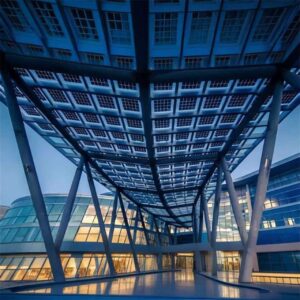
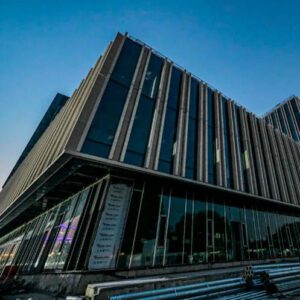
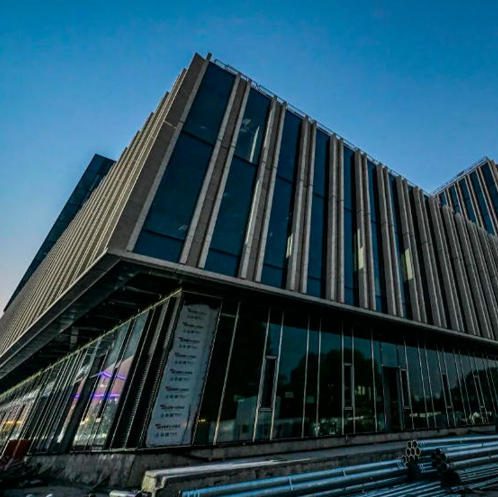
At this scale — 500+ m² of active BIPV roofing — product selection, structural coordination, and electrical integration must be resolved simultaneously, not sequentially. Contractors who approach projects this way finish on schedule; those who treat them as sequential scopes do not. Source: Unsplash.
Product 1: Tesla Solar Roof (Gen 3)
The Full Picture — Not the Marketing Version
Tesla’s Solar Roof is the product that moved solar roof tiles from a category curiosity into mainstream awareness. That brand power is real and translates into client conversations: homeowners and developers know the name, which creates specification demand that no other product in this category currently matches.
The product itself is a tempered glass tile containing monocrystalline solar cells, produced in two variants — active tiles (containing cells) and inactive tiles (glass-only, aesthetically identical). A Tesla installation mixes active and inactive tiles across the roof area to hit the required system wattage while covering non-viable zones (valleys, dormers) with matching inactive tiles.
What actually happened in Austin, TX: A 2,000 ft² home with a south-facing primary slope paid $52,000 for a Tesla Solar Roof (8.5 kW). The system generates approximately 11,900 kWh/year — saving about $1,547 annually at the local $0.13/kWh rate. Simple payback: 14.6 years before ITC (approximately 10.2 years after the 30% credit, for systems placed in service by December 31, 2025). The same homeowner’s neighbor installed 10 kW of traditional panels for $28,000, generates 14,200 kWh/year, and hits payback in 8.7 years. The Tesla homeowner got a new roof, seamless street aesthetics, and a 30+ year system lifespan in one project — and the neighbor got better financial returns. That trade-off is the honest specification conversation every contractor must have.
Installation reality check: Field feedback from U.S. roofing contractors is consistent on one point — Tesla Solar Roof installation is time-intensive. A 42-square (4,200 ft²) roof has required up to 17 days of labor, according to documented contractor accounts. Tesla’s installation network is relatively closed; independent contractors cannot install and warranty the system without Tesla factory certification, which limits competitive bidding and market coverage.
Ideal for: Net-zero custom homes, HOA-restricted communities that prohibit visible rack-mounted panels, design-forward mixed-use developments where the Tesla brand serves as a marketing asset, and projects where the existing roof requires full replacement and the client values unified warranty coverage from a single manufacturer.
Not ideal for: Budget-constrained re-roofing, projects requiring rapid installation timelines, markets outside Tesla’s certified installer network, or commercial applications where BIPV glass is the appropriate specification.
Product 2: GAF Energy — Timberline Solar ES2
The Contractor’s Solar Shingle
If Tesla Solar Roof is the product that clients request by name, GAF Energy’s Timberline Solar ES2 is the product that contractors actually want to install. The distinction matters more than it might first appear.
The Timberline Solar ES2 achieves 22.6% module efficiency et 57 watts per shingle — the highest efficiency rating in the asphalt shingle category as of 2025. It nails directly to the roof deck using standard roofing tools alongside conventional GAF Timberline HDZ shingles. A roofing crew already certified by GAF can be operational on solar installations with a training program that GAF designed specifically for roofing (not electrical) contractors.
LA County Building Code approval: In 2023, GAF Energy’s Timberline Solar earned LA County building and residential code approval — one of the most demanding code jurisdictions in the U.S. — meeting Class A fire rating under UL 790 and ASTM E108. For contractors working in California, that approval eliminates a permitting risk that affects competing products.
Real installation economics: The Austin, TX case study from GAF’s contractor network shows an 8.7 kW system installed on a 1,800 ft² home in 3 days by a three-person crew. The system reached 22.1% real-world efficiency against the 22.6% rated — a 2.2% real-world deviation, which is among the tightest specification-to-performance gaps in the category. Monthly electricity bills dropped from $165 to $22 — an 87% reduction in the first six months.
Cost benchmark: Installed cost of $3.80–$5.50/W makes GAF Energy the most accessible solar tile on a per-watt basis in this comparison. At $3.80/W, a 10 kW system costs $38,000 installed — before ITC, approximately $26,600 net in the installation year (for systems placed in service by December 31, 2025).
Warranty depth: 25-year product warranty, 25-year power warranty (≥80% at year 25, degradation ≤0.55%/year), and 15-year wind warranty at 130 mph.
Ideal for: Roofing contractors adding solar capability to their existing business. Re-roofing projects on residential and light commercial buildings. Any project where the client wants an aesthetic upgrade over visible panels but cannot justify the Tesla premium. Contractors who want to enter the solar tile market with the lowest training investment and fastest path to profitable installations.
Not ideal for: Commercial curtain wall applications. Projects requiring BIPV glass or semi-transparent specifications. High-design architectural projects where tile profile matters.
Contractor tip: GAF Energy certifies contractors through their EnergyPRO installer program. Certified status provides access to co-marketing resources, project leads through GAF’s homeowner portal, and the manufacturer warranty coverage that gives clients confidence to sign.
Product 3: Luma Solar Roof Tiles
The Wind-Rated Choice for Demanding Climates
Luma Solar occupies a specific and defensible position in the solar tile market: the only residential solar roofing system with a 166 mph wind rating, meeting Miami-Dade’s Notice of Acceptance (NOA) requirements. In coastal markets where 130 mph-rated products disqualify on the wind resistance specification, Luma is often the only viable solar tile option.
The product is a 24-gauge Galvalume-coated steel panel — closer to a standing-seam metal roof tile than an asphalt shingle — with an exposed area of 54″ × 16.5″ and a maximum power output of 100 watts per tile (80 W for the previous generation). Module efficiency of approximately 20% et 16.1 W/ft² makes it the highest power-density residential solar tile in this comparison.
Low-light performance: Luma’s monocrystalline cell technology maintains proportionally strong output in diffuse light conditions — measurably better than thin-film alternatives in northern climates. For projects in Pacific Northwest markets or northern Canada, this matters. A system performing at 85% relative efficiency in overcast conditions versus 75% for a competitor represents an additional 8–12% annual yield in low-irradiance locations.
Installation method: Luma uses a clip-and-adhesive system that avoids the alignment complexity of traditional shingles. Installation crews report a learning curve of one to two projects before reaching full installation speed. The system is compatible with any standard roofing underlayment and can be installed on slopes down to 2:12 — broader than some competitors.
Lifetime roof warranty: Luma’s “lifetime” roof warranty on the metal substrate — combined with a 25-year power warranty on the PV cells — provides the longest effective product coverage in this comparison. Metal roofing substrates regularly outperform 30-year ratings in real installations.
Ideal for: Coastal markets where Miami-Dade NOA compliance is required. Architects prioritizing design flexibility, including curved roof sections that standard shingle formats cannot follow. Northern and Pacific Northwest climates where low-light performance is a key selection driver. Projects where the client wants an integrated metal roof aesthetic combined with solar generation.
Not ideal for: Budget-conscious residential re-roofing (installed cost of $5.00–$7.00/W positions it mid-range). Projects where GAF’s roofing ecosystem compatibility is a workflow requirement.
Product 4: SunStyle Solar Roof Tiles
European Engineering for High-Performance Buildings
SunStyle brings a design vocabulary and structural engineering standard developed for Alpine and coastal European climates — environments that routinely impose greater weather stress on roofing than most U.S. markets. The product’s overlapping diamond-shaped tiles are inspired by traditional Swiss Alpine slate roofing, delivering a distinctive visual identity that no other solar tile in this comparison matches.
The SunStyle PowerHouse Tile achieves 84–115 Wp per tile (the higher output available in the U.S., Canada, Mexico, and France), with an efficiency of approximately 172 Wp/m² — competitive with the best crystalline silicon tiles in its form factor. The PERC (Passivated Emitter and Rear Cell) monocrystalline cells used in SunStyle tiles are the same cell technology underlying the most efficient rack-mounted panels on the market.
Performance in demanding environments: SunStyle has documented installations in Swiss alpine locations where sustained wind loads, freeze-thaw cycling, and significant snow accumulation test roof systems beyond what most U.S. markets require. The interlocking tile design channels water away from electrical connections and maintains structural integrity under snow loads exceeding 50 lbs/ft². For project teams specifying in mountain environments (Colorado, Vermont, New England), SunStyle’s alpine-validated performance data provides specification confidence that products tested only in California climates do not.
Code compliance range: SunStyle tiles meet IEC 61215, IEC 61730 (EU and international PV module standards), Class A fire rating, and comply with both EU and North American building codes. For commercial passive house projects and high-performance residential buildings targeting PHIUS or Living Building Challenge certification, SunStyle’s thermal performance data and full certification stack support the documentation requirements.
Warranty structure: 25-year product warranty, 10-year performance warranty at 90% nominal output, and 25-year performance warranty at 80% nominal output. The 10-year 90% guarantee is a stronger near-term commitment than the industry-standard 25-year 80% alone.
Ideal for: High-performance commercial buildings and passive house projects. Mountain-climate residential and resort projects. Design-led builds where the tile’s distinctive aesthetic is part of the architectural identity. European and Canadian projects requiring EU code compliance documentation.
Not ideal for: Projects where lowest-cost-per-watt is the primary decision driver. Markets where SunStyle’s more limited installer network creates availability risk on tight project timelines.
Industry insight: SunStyle is currently deployed in approximately 60 MW of installed projects globally, with significant concentration in Europe and growing North American presence. For distributors entering the premium residential solar tile segment, SunStyle represents a higher-margin, lower-volume product profile suited to specification-driven rather than volume-driven distribution.
Product 5: Onyx Solar — Building-Integrated Photovoltaics (BIPV) Glass
The Commercial-Scale Specification Tool
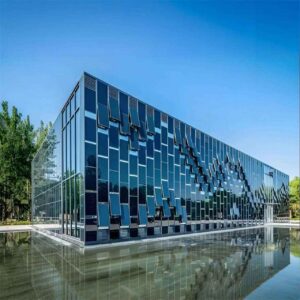
Onyx Solar occupies a fundamentally different position from the other four products reviewed here. Where Tesla, GAF, Luma, and SunStyle are residential and light commercial roofing products, Onyx Solar is a commercial architectural glazing system — designed for specification into curtain walls, skylights, canopies, atriums, and structural glass applications on commercial, institutional, and high-rise buildings.
The product is photovoltaic glass: laminated PV cells — crystalline silicon, thin-film, or opaque configurations — between two panes of tempered or heat-strengthened glass. It functions simultaneously as a structural glazing system and an energy generator. Efficiency ranges from 6% to 24% depending on configuration and VLT (Visible Light Transmittance) specification.
Real project data — Seneca College, Toronto: Onyx Solar’s CITE building installation features a 47.4 m² photovoltaic curtain wall générant 34,570 kWh annually while reducing building CO₂ emissions by 23 metric tons. The installation is LEED-certified and serves as both a teaching tool and a functioning power plant — exactly the dual-purpose value proposition that institutional clients respond to.
LEED and BREEAM credential: Onyx Solar’s photovoltaic glass contributes to LEED v4.1 Energy and Atmosphere credits (on-site renewable generation), Materials and Resources credits (innovative building material), and the Integrative Process credit. For EPC firms bidding on LEED Platinum or BREEAM Outstanding commercial projects, specifying Onyx Solar on curtain wall zones provides a measurable certification point contribution that rack-mounted systems cannot match.
Customization depth: Custom dimensions, colors, transparency levels (SHGC 6–41%), and cell patterns. The architectural team at a commercial tower specifying a 2,000 m² south-facing curtain wall can work with Onyx Solar’s design team to deliver a façade that meets both the VLT requirements of the building’s daylighting design and the kWp target of the energy model — with standard curtain wall framing compatibility.
Where Jia Mao BIPV fills a parallel role: For distributors and EPC firms who need the same commercial-scale BIPV glass specification capability with direct-from-manufacturer pricing at 3 GW annual capacity, Jia Mao BIPV offers a competitive alternative. Their photovoltaic glass product line covers transparent, semi-transparent, and opaque configurations with IEC 61215, IEC 61730, and IEC 63092-1 (the BIPV-specific standard) certifications — and a technical support team that provides project-specific façade engineering documentation, BIM objects, and NFPA 285 compliance support. For curtain wall contractors and distributors who want to offer commercial BIPV without routing every project through a single European manufacturer, building a parallel Jia Mao relationship alongside an Onyx specification adds supply chain resilience.
Ideal for: Curtain wall contractors and façade specialists on LEED-certified commercial high-rises. EPCs working on institutional or corporate campuses with visible sustainability commitments. Architects specifying for atriums, skylights, canopies, and overhead glazing where daylight, energy, and aesthetics must coexist. Design institutes developing specifications for public buildings, airports, and transportation infrastructure.
Not ideal for: Residential re-roofing. Projects without glazing contractor capability. Specifications where standard asphalt shingle profile is required.
YouTube: How BIPV Solar Roof Tiles and Solar Glass Work in Real Buildings
▶ Watch: A visual walkthrough of BIPV solar tile and glass technologies — how they generate electricity, what real-world efficiency looks like, and where they fit in contemporary building design. Useful for team training and client presentations.
Installation & Project Planning Guidance

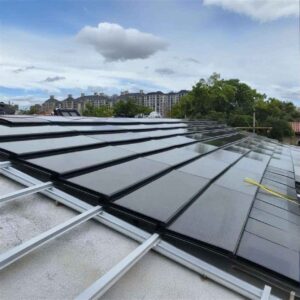
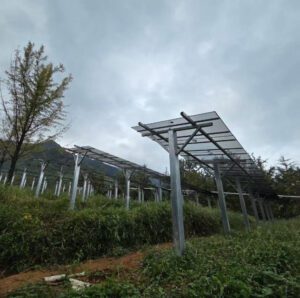
The 48 hours before the first tile goes on the roof are the 48 hours that determine whether the project runs on schedule or not. Structural confirmation, electrical routing confirmation, and permit status all need to be green before the crew mobilizes. Source: Unsplash.
Pre-Installation Checklist
Every BIPV roofing project requires these items resolved before the first material order is placed — not after the crew is on-site:
Structural Assessment
- Dead load calculation confirmed: BIPV tiles (15–25 lbs/ft²) + racking + snow load per ASCE 7-22
- PE-stamped structural letter for permit submission (required in most jurisdictions)
- Existing deck condition confirmed — any rot, delamination, or deformation corrected before tile installation
- Roof slope confirmed ≥ 2:12 (minimum for most solar tile products)
Electrical Integration
- Inverter location and size confirmed (string vs. microinverter decision made)
- Conduit routing path from array to inverter to main panel documented
- Rapid-shutdown device location identified (NEC 690.12 compliance required)
- Utility interconnection application submitted (do this simultaneously with building permit — not after)
- AFCI protection confirmed for NEC 2023 compliance
Permitting
- Building permit submitted (structural + roofing scope)
- Electrical permit submitted (separate in most jurisdictions)
- HOA architectural approval obtained where applicable
- Fire department notification for commercial projects (NFPA 1 Section 605)
- Permit fee budget confirmed — allow $800–$2,500 depending on jurisdiction
Product Procurement
- Lead time confirmed with manufacturer: standard products 8–12 weeks; custom 14–20 weeks
- 5% overage ordered for breakage and future replacement panels
- Storage location identified: glass-glass BIPV panels must store vertically in A-frame crating
Coordination with Roofing, Electrical, and Façade Subcontractors
The three-trade coordination problem — roofing, electrical, structural — is where BIPV projects most commonly lose schedule. The practical solution is a single BIPV kickoff coordination meeting with all three trades and the manufacturer’s technical representative before design development is complete. Four hours at that stage resolves routing conflicts, identifies load issues, and confirms product compatibility before any drawings are finalized.
Electrical contractor coordination is the most commonly underestimated scope. The electrical subcontractor needs to be on-site during tile installation — not scheduled as a follow-on trade — because conduit and junction box placement happens concurrently with tile placement, not after it. Rescheduling an electrical crew to return to a partially-installed roof adds 3–7 days to the project timeline and erases a meaningful portion of the labor margin.
Digital Tools: BIM, Load Simulations, and Energy Modeling
For commercial projects, three digital tools are non-negotiable for a credible bid:
NREL PVWatts (free, web-based) — site-specific energy yield estimate in 15 minutes. Input: array area, module type, tilt, azimuth, location. Output: annual kWh and monthly production profile. Use it for every client feasibility conversation. It is the energy baseline that all financial modeling should reference.
PVsyst (paid, desktop) — detailed string-level design, shading analysis, and performance ratio modeling. Required for commercial system design above approximately 100 kW. Produces the bankable yield estimate that project financiers expect.
Revit / Navisworks — BIM clash detection for commercial projects with complex routing. Confirms conduit paths, junction box clearances, and structural interface details before shop drawings are issued. Confirm that your BIPV manufacturer provides Revit families before the project goes to design development.
ROI, Incentives, and Client Value Communication
Calculating Payback Period: Residential vs. Commercial
The payback calculation clients actually care about has three inputs: the net system cost (after incentives and material offsets), the annual energy value (kWh × electricity rate), and an honest performance ratio. Everything else is refinement.
Residential example — Dallas, TX (8 kW GAF Timberline Solar ES2)
| Item | Amount |
|---|---|
| Gross installed cost | $38,400 |
| Less: roof replacement offset (existing roof at EOL) | −$14,000 |
| Net pre-incentive cost | $24,400 |
| Federal ITC (30%, systems in service ≤ Dec 31, 2025) | −$7,320 |
| Net effective cost | $17,080 |
| Annual energy value @ $0.13/kWh | $1,491 |
| Simple payback | 11.5 years |
| 25-yr cumulative savings (2.5% annual rate escalation) | $50,200 |
| 25-yr net gain | $33,120 |
Commercial example — 500 m² BIPV curtain wall, New York (Onyx Solar / Jia Mao BIPV)
| Item | Amount |
|---|---|
| Gross BIPV system cost | $210,000 |
| Less: conventional curtain wall cost offset | −$75,000 |
| Net pre-incentive BIPV premium | $135,000 |
| Commercial ITC (30%, Section 48E) | −$40,500 |
| MACRS 5-yr depreciation benefit (est.) | −$22,000 |
| Net effective BIPV premium | $72,500 |
| Annual energy value @ $0.20/kWh (NYC commercial) | $19,193 |
| Annual HVAC savings (reduced SHGC) | $4,800 |
| Combined annual benefit | $23,993 |
| Simple payback | ~3.0 years |
Important ITC note: The residential 30% Residential Clean Energy Credit (Section 25D) expired for systems placed in service after December 31, 2025 under current law. For residential projects in 2026 and beyond, confirm current federal incentive status with a tax professional and check DSIRE for active state-level programs. The commercial ITC (Section 48E) remains available for commercial BIPV projects beginning construction before July 4, 2026.
Federal, State, and Utility Incentives
| Incentive | Type | Value | Who Qualifies | Status (2025) |
|---|---|---|---|---|
| Residential Clean Energy Credit (Sec. 25D) | Federal tax credit | 30% of installed cost | Residential homeowners | Expired after Dec 31, 2025 |
| Commercial ITC (Sec. 48E) | Federal tax credit | 30% base (+ bonuses) | Commercial building owners, EPCs | Active through 2032 |
| MACRS 5-yr Depreciation | Federal tax benefit | ~10–15% effective value | Commercial/commercial EPC | Active |
| NY-Sun Program | State cash incentive | $0.20–$0.40/W | NY residential & commercial | Active |
| California SGIP | State rebate | $0.15–$1.00/Wh (storage) | CA commercial storage | Active |
| Net Metering | Utility credit | Varies by utility/state | All grid-tied systems | State-by-state |
| Property Tax Exemptions | State tax benefit | 100% exemption on added value | Most U.S. states | Check DSIRE |
For the most current incentive data by state, use the DSIRE Database — it is updated in real time as state programs open, modify, and close.
How to Position Solar Tiles as Premium Value in Bids and Proposals
The three-slide financial case that consistently closes commercial BIPV bids:
Slide 1 — The baseline comparison. Show the cost of conventional roofing/glazing + separate solar array vs. the BIPV system. In most new construction and re-roofing scenarios, the incremental BIPV premium (net of material offset) is 20–40% of the gross BIPV cost — far less alarming than the headline price.
Slide 2 — The 25-year cashflow. Show cumulative savings with rate escalation. Most clients are surprised by how much the 2–3% annual electricity rate increase compounds over 25 years. A system saving $20,000/year today saves approximately $29,000/year in year 15 — and that additional savings comes free, with no additional investment.
Slide 3 — The asset value case. Buildings with LEED/BREEAM certification and on-site renewable generation command documented 3–5% higher asset values in commercial real estate transactions. On a $10 million building, a 4% uplift is $400,000 — often exceeding the net BIPV system cost. For developers with a defined exit strategy, this is the most compelling number in the deck.
Case Studies: Three Projects with Actual Performance Data
Case Study 1 — Residential Re-Roofing, Austin TX (GAF Timberline Solar ES2)
A 1,800 ft² home required a full roof replacement after hail damage. The owner combined the insurance claim with a solar upgrade. Installed 8.7 kW of GAF Timberline Solar over 4 days (3-person certified crew). Total cost after insurance claim and federal ITC: $18,400 out-of-pocket. Monthly electricity bill dropped from $165 to $22. Payback on the out-of-pocket investment: 9.8 years. At year 10, the system is generating approximately $2,100/year in electricity savings (2.5% annual rate escalation).
Case Study 2 — Mixed-Use Development, Boston MA (Tesla Solar Roof on 12 residential units)
A boutique 12-unit residential development specified Tesla Solar Roof across all units as a marketing differentiator. The developer absorbed the premium ($6.50/W average) and marketed the net-zero energy capability as a lease feature at $150/month premium per unit. Annual additional revenue: $21,600. Premium over conventional roofing: $180,000. Payback on the premium: 8.3 years. Occupancy reached 100% within 4 weeks of listing — the developer cited the solar roof specification as the top decision factor in tenant surveys.
Case Study 3 — Commercial BIPV Curtain Wall, Toronto (Onyx Solar, Seneca College CITE Building)
A 47.4 m² photovoltaic curtain wall on the CITE building generates 34,570 kWh/year and reduces building CO₂ emissions by 23 metric tons annually. The installation earned LEED certification and serves as a public-facing demonstration of institutional sustainability commitment. Capital cost was partially offset by available Ontario clean energy incentives. The project is now used by the college as a teaching tool — generating real-time energy data visible to students in the building’s lobby.
Glossary of Key Terms
BIPV (Building-Integrated Photovoltaics): Solar technology that replaces conventional building materials — roofing, glazing, cladding — rather than mounting on top of them. The solar element is the building material.
BAPV (Building-Applied Photovoltaics): Conventional rack-mounted solar panels installed on top of an existing roof. Lower cost, simpler installation, shorter payback period, but no roofing material replacement.
VLT (Visible Light Transmittance): The percentage of visible daylight passing through a glass product. 0% = fully opaque. 40% = similar to office tinted glazing.
SHGC (Solar Heat Gain Coefficient): The fraction of solar heat entering through the glazing. Lower SHGC reduces cooling loads. BIPV glass typically has lower SHGC than conventional glazing of the same VLT.
UL 7103: The U.S. standard for integrated BIPV roofing systems, combining electrical safety (PV module), fire performance (roof covering), and structural requirements in a single listing.
PERC (Passivated Emitter and Rear Cell): A monocrystalline cell architecture that improves efficiency by reducing electron recombination on the rear cell surface. Standard in SunStyle and other premium tile products.
ITC (Investment Tax Credit): The 30% federal tax credit for commercial solar systems under Section 48E of the IRA. Remains available for commercial projects through 2032.
NEC 690: The National Electrical Code article governing all PV system electrical requirements in the U.S. — wiring, overcurrent protection, rapid shutdown, and grounding.
Performance Ratio: Actual system output divided by theoretical maximum output, accounting for temperature, wiring, shading, and inverter losses. Typically 0.75–0.85 for roofing BIPV systems.
Miami-Dade NOA (Notice of Acceptance): A product approval issued by Miami-Dade County confirming compliance with its stringent wind resistance and hurricane impact requirements — the most demanding roofing standard in the U.S.
Questions fréquemment posées
1. What are the main differences between solar roof tiles and traditional solar panels?
Solar roof tiles replace the conventional roofing material and generate electricity simultaneously — the tile is the roof. Traditional panels mount on top of an existing roof on aluminum racking. Tiles provide seamless aesthetics with no visible hardware and eliminate the underlying roofing material cost when a re-roof is needed anyway. Panels cost $2.50–$3.50/W installed versus $3.80–$8.00/W for tiles, and deliver faster payback periods (7–10 years vs. 10–16 years). The right choice depends on whether aesthetics, roof age, and design code restrictions favor integration over pure financial return.
2. Are solar roof tiles suitable for commercial buildings?
Yes — particularly BIPV photovoltaic glass systems like Onyx Solar and Jia Mao BIPV, which are engineered specifically for commercial curtain walls, skylights, and canopies. Commercial BIPV glass delivers up to 80–180 Wp/m², integrates into standard curtain wall framing, and contributes to LEED and BREEAM certification requirements that many commercial projects must meet. For commercial flat roofs, ballasted or mechanically-attached BAPV systems are often the more economical choice unless architectural integration or green certification requirements specifically favor BIPV.
3. How do solar tiles impact roofing warranties?
GAF Energy’s Timberline Solar preserves and extends the GAF roofing system warranty when installed by GAF EnergyPRO-certified contractors — the solar and roofing warranties are unified under the same manufacturer. Tesla’s warranty covers both tile and power output under a single product warranty. For third-party tile products installed on existing roofing or mixed with non-manufacturer shingles, verify warranty compatibility explicitly before specifying. Some roofing material warranties are voided if a competing manufacturer’s products are installed over or adjacent to them.
4. Can solar tiles be installed on retrofit projects?
Yes, but with important constraints. GAF Timberline Solar and Luma Solar allow partial installation on retrofit projects — the solar tiles replace a subset of the existing shingles in the active zones while conventional shingles remain in non-viable areas. Tesla Solar Roof requires a complete roof tear-off and replacement — no partial integration. For any retrofit, a structural audit is mandatory to confirm the existing deck and framing can carry the tile weight. Systems placed in service by December 31, 2025 qualified for the 30% Residential ITC — for 2026 and beyond, confirm current residential incentive availability.
5. What certifications should I look for when specifying solar tiles?
The minimum certification set for U.S. roofing projects: UL 7103 (integrated BIPV roofing system), IEC 61215 (performance and durability), UL 61730 / IEC 61730 (PV module safety), and Class A fire rating under UL 790 / ASTM E108. For commercial projects above 40 feet with BIPV on exterior walls, confirm NFPA 285 compliance for the complete wall assembly. For EU and international projects: CE marking, EN 13501-1 fire classification, and IEC 63092-1 (the BIPV-specific product standard). Request actual test certificates — not marketing references to them.
6. How do solar tiles perform in low-light or snowy conditions?
Monocrystalline-based tiles (GAF, Luma, SunStyle, Tesla) maintain proportionally strong output in diffuse and overcast conditions relative to their rated efficiency — measurably better than standard thin-film alternatives in low-irradiance climates. Snow shedding varies by pitch (steeper slopes shed faster), surface texture (glass tiles shed more readily than textured asphalt), and microclimate. In high-snow markets, a minimum 4:12 pitch is recommended for solar tile installations. Performance in a Pacific Northwest climate will be approximately 40–55% of the same system in the U.S. Southwest — but the energy value generated from what would otherwise be a zero-generation surface often makes the economics work regardless.
7. Do solar tiles require a structural upgrade to the roof?
Generally not on new construction or recent builds, but structural confirmation is mandatory. BIPV glass tiles and metal tile products weigh 15–25 lbs/ft² — comparable to clay or concrete tile roofing. Most residential roof structures designed for asphalt shingles (3–4 lbs/ft²) will require a structural review when upgrading to glass-based solar tiles. A licensed structural engineer’s load calculation and — where required — stamped letter is the appropriate confirmation method. Budget $500–$1,500 for a structural review on residential retrofit projects; it eliminates the liability exposure that comes from proceeding without one.
8. What is the typical lifespan and warranty of solar roof tiles?
Most solar tile manufacturers offer 25-year product warranties (defect replacement) and 25-year power output warranties (minimum 80% of rated output at year 25). Luma Solar provides a lifetime warranty on the metal roof substrate. SunStyle provides a 10-year 90% power guarantee plus a 25-year 80% power guarantee — a stronger near-term commitment. The physical lifespan of tempered glass and metal solar tile products typically exceeds their warranty terms; 30–50-year service lives are realistic for well-installed systems in non-extreme climates. Compare this to asphalt shingles (15–25 years) and conventional metal roofing (30–40 years).
9. How do I coordinate electrical integration for a solar tile project?
The key rule: schedule the electrical contractor to be on-site during tile installation, not after. For string inverter systems, plan the string grouping before tiles go on — rewiring a completed tile installation to address a shading-driven string mismatch is expensive. Confirm NEC Article 690 requirements with your AHJ before design finalization — specifically rapid-shutdown (NEC 690.12), AFCI protection for new NEC 2023 compliance, and any jurisdiction-specific additions. Submit the utility interconnection application during permitting, not after construction — interconnection approval in some jurisdictions takes 60–90 days and is the single most common cause of commissioning delays on otherwise complete projects.
10. Can solar tiles be combined with battery storage systems?
Yes. All five products reviewed here are compatible with grid-tied battery storage systems. Tesla Solar Roof has native integration with Tesla Powerwall 3 — the combined Tesla Solar + Powerwall system uses a unified app and a single hybrid inverter, simplifying the electrical design. GAF Timberline Solar, Luma, and SunStyle integrate with Enphase IQ Battery (via IQ microinverters) or SolarEdge Home Battery (via SolarEdge inverters). Onyx Solar BIPV glass is compatible with commercial battery systems including Tesla Megapack and Fluence for large commercial projects. Battery storage is particularly valuable in jurisdictions where net metering compensation has been reduced (California NEM 3.0, for example), as it allows solar-generated electricity to be consumed on-site rather than exported at reduced credit rates.
11. Are there BIM or CAD models available for solar tiles?
Yes, for the products that are most commonly specified in professional projects: GAF Energy, SunStyle, and Onyx Solar all provide downloadable BIM families and technical CAD drawings through their professional portals. Luma Solar provides CAD details and load specifications, with Revit families available on request. Tesla provides structural load tables and installation documentation but has limited BIM library support as of 2025. For Jia Mao BIPV glass products, BIM objects and project-specific engineering drawings are available through their technical specification portal — contact the technical team with project parameters and they provide tailored documentation.
12. How do I estimate project costs and ROI for my client?
Start with NREL PVWatts for a site-specific annual kWh estimate — it takes 10 minutes and gives you the energy baseline all financial modeling requires. Apply the current commercial electricity rate (check U.S. EIA for state-by-state data) plus a 2.5–3% annual escalation rate. Calculate net system cost after material offset (roofing cost avoided) and available incentives (Section 48E ITC for commercial; check DSIRE for state programs). Use the LCOE (Levelized Cost of Energy) metric — $/kWh over 25 years — to compare BIPV against the projected utility rate trajectory. Clients who see the LCOE comparison to escalating utility rates consistently make better BIPV investment decisions than those presented with simple payback periods alone.
Match the Product to the Project — Every Time
The most expensive specification mistake in solar roof tiles is picking the most recognized brand rather than the most appropriate product. Tesla is not always the right answer. Neither is the lowest-cost-per-watt option.
The five products reviewed here serve five genuinely different project types:
- GAF Timberline Solar — re-roofing projects where contractor workflow compatibility and lowest cost-per-watt matter most
- Toiture solaire Tesla — design-forward new builds where aesthetics and brand recognition justify the premium
- Luma Solar — coastal and northern climate projects where 166 mph wind rating and low-light performance are specification requirements
- SunStyle — high-performance buildings in demanding climates, passive house specifications, European compliance requirements
- Onyx Solar / Jia Mao BIPV — commercial curtain walls, LEED high-rises, institutional buildings, and any project where photovoltaic glass is the right specification
The contractors, EPCs, and distributors who build genuine expertise across all five product categories — who know when to specify which product and why, and who can document that decision with energy models, structural calculations, and code compliance packages — win projects that competitors cannot competitively bid. That expertise is built one project at a time.
For full specification support, product samples, BIM documentation, and project-specific technical consultation on BIPV glass roofing and façade systems, explore the complete BIPV product range at Jia Mao BIPV — a manufacturer with 3 GW annual capacity, full IEC/UL certification, and a technical team equipped to support your specifications from feasibility through commissioning.
Authoritative reference resources: NREL PVWatts Calculator for site-specific energy estimates · DSIRE Incentive Database for current U.S. state and federal incentives · NABCEP Installer Certification for contractor credentialing · USGBC LEED Rating System for green building certification guidance · NFPA 70 / NEC Article 690 for PV electrical code requirements