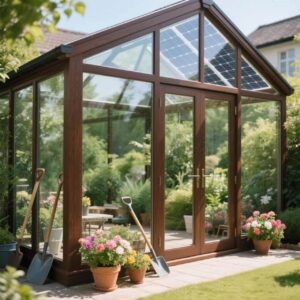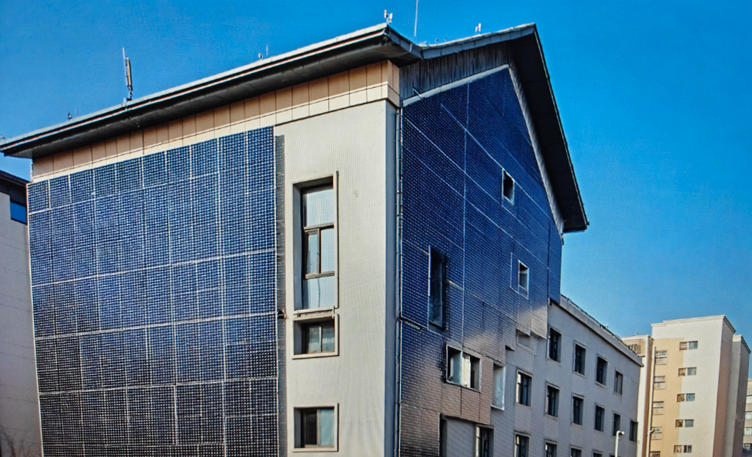
Buildings consume approximately 40% of global energy and produce nearly 33% of greenhouse-gas emissions, according to the U.S. Department of Energy. Traditional rooftop solar addresses part of this problem, but it treats panels as add-ons bolted to a finished structure. Building-Integrated Photovoltaics (BIPV) takes a fundamentally different approach: the solar element becomes the building material — replacing conventional glass, roof tiles, cladding, or shading devices.
The result is a building envelope that simultaneously keeps weather out, regulates temperature, admits daylight, and generates electricity. Whether the project is a single-family home looking to hit net-zero status or a 30-storey commercial tower seeking LEED Platinum certification, a well-designed BIPV system can deliver measurable energy output, reduce material double-ups, and boost property value — all without the visual bulk of rack-mounted panels.
In this guide we compare BIPV solutions for homes and businesses across six key dimensions: technology types, energy performance, cost and ROI, design flexibility, code compliance, and real-world case data. We also explain how Jia Mao Bipv — a manufacturer with 3 GW annual production capacity — serves both segments with customizable modules ranging from opaque solar roof tiles to transparent curtain-wall glass.
What Is BIPV? (Quick Primer)
What Is BIPV? A Quick Primer
BIPV stands for Building-Integrated Photovoltaics. Unlike Building-Attached PV (BAPV), where panels are mounted on top of existing surfaces, BIPV products replace the conventional building material entirely. A BIPV skylight, for example, is both a weatherproof glazing unit et a solar generator. The Whole Building Design Guide (WBDG) lists common BIPV forms as PV glass windows, skylights, awnings, canopies, facade spandrels, roof shingles, and even walkable pavement tiles.
This dual function is what distinguishes BIPV from conventional solar. When you replace marble cladding at €150/m² with BIPV transparent glass from Jia Mao Bipv at €200–350/m², the net premium is only €50–200/m² — and the glass begins producing revenue-generating electricity from day one. Over a 25-year service life, that electricity value typically exceeds the premium paid, meaning the BIPV option can have a lower lifecycle cost than the conventional material it replaced.
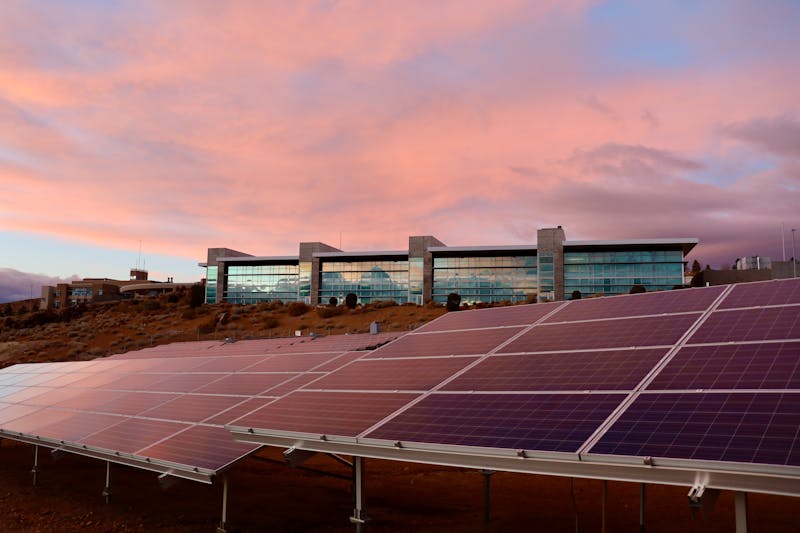
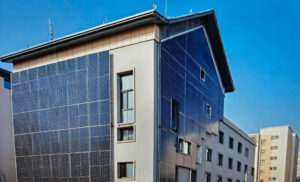
Photo: Pexels (royalty-free). BIPV panels integrated into a commercial building facade.
Residential vs. Commercial BIPV — Side-by-Side Comparison Table
Residential vs. Commercial BIPV — Side-by-Side Comparison
The table below captures the core differences architects, contractors, and building owners encounter when specifying BIPV for a home versus a commercial or institutional building. Data is compiled from METSolar’s 2024 cost analysis, the IEA-PVPS Technical Guidebook, and field project records from Jia Mao Bipv’s solutions portfolio.
| Dimension | Residential BIPV | Commercial BIPV |
|---|---|---|
| Typical System Size | 3–15 kWp | 50–500+ kWp |
| Common BIPV Forms | Solar roof tiles, solar shingles, PV skylights | PV curtain walls, transparent facades, solar canopies, PV spandrels |
| Average Energy Output | 150–200 W/m² (opaque roof) | 80–160 W/m² (semi-transparent facade) |
| Typical Efficiency Range | 18–22% | 10–18% (transparency trade-off) |
| Installation Cost (€/m²) | €200–€400 | €250–€625 |
| Payback Period | 5–10 years | 8–15 years |
| Energy Demand Offset | 60–90% of household load | 15–55% of building load |
| Warranty / Lifespan | 25-year performance; 30+ year life | 25-year performance; 30+ year life |
| Primary Decision-Maker | Homeowner / developer | Architect + MEP engineer + owner |
| Top Jia Mao Bipv Product | Panneaux solaires à haut rendement | Photovoltaic Glass Modules |
Table data: METSolar 2024, IEA-PVPS 2025, Jia Mao Bipv project records. Costs exclude country-specific incentives.
BIPV Market Growth (Bar Chart)
Global BIPV Market Growth — Residential & Commercial Segments
The Coherent Market Insights report projects the global BIPV market will grow from $33.11 billion in 2025 to $103.68 billion by 2032, at a CAGR of 17.7%. Residential buildings are expected to hold the largest share at 40.3%, driven by solar-roof mandates in states like California (Title 24) and expanding incentive programs across the EU. Meanwhile, commercial facades represent the fastest-growing sub-segment, fueled by ESG mandates and net-zero targets for office and institutional buildings.
Sources: Coherent Market Insights, Fortune Business Insights, Market.US — compiled March 2026.
Where BIPV Is Installed — Application Breakdown
According to Grand View Research and IEA-PVPS field data, BIPV roofing products (tiles, shingles, standing-seam PV) capture the largest share of installations, followed by facades and curtain walls. Windows, skylights, and shading devices are growing rapidly as architects specify greater transparency and daylighting control — particularly in commercial office towers and educational facilities.

Sources: Grand View Research, IEA-PVPS, Jia Mao Bipv project data — 2025.
Residential BIPV: Turning Every Roof into a Power Plant
Why Homeowners Are Choosing BIPV Over Rack-Mounted Panels
A standard U.S. household consumes roughly 10,500 kWh per year (EIA data). A 6 kWp BIPV solar-tile roof in a location receiving 5 peak-sun-hours daily can generate approximately 8,400–9,000 kWh annually, offsetting 80–86% of that demand — without a single rack-mounted panel visible on the roofline. In sunbelt states like Arizona, Texas, or Florida, homeowners with optimized south-facing BIPV roofs have reported offset percentages exceeding 90%.
Beyond aesthetics, BIPV roof tiles from manufacturers like Jia Mao Bipv integrate structural and electrical functions. A single tile rated at 445–465 W offers >22% cell efficiency, a 25-year linear performance guarantee, and compatibility with standard residential racking — meaning any local roofer can install it without specialized PV training. The tile’s self-cleaning double-glass design and corrosion-resistant frame reduce maintenance to quarterly visual checks and annual professional cleaning.
Cost Scenario: 6 kWp Residential BIPV Roof
Consider a 200 m² suburban home in Southern California. The south-facing roof area available for BIPV is 40 m². Using Jia Mao Bipv’s high-efficiency monocrystalline tiles (200 W/m²), the system capacity is 8 kWp.
Total BIPV material and installation cost: approximately $18,000–$22,000. The U.S. federal Investment Tax Credit (ITC) at 30% reduces this to $12,600–$15,400. California’s additional SGIP or local utility rebates can trim another $1,000–$2,500. Annual electricity savings at $0.30/kWh (Southern California Edison rate) total roughly $2,700–$3,000/year, delivering a payback period of 4.5–5.7 years — well within the 25-year warranty window.
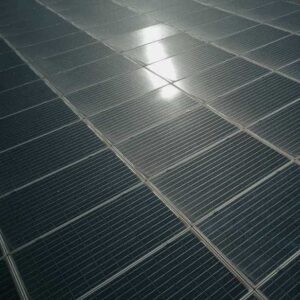
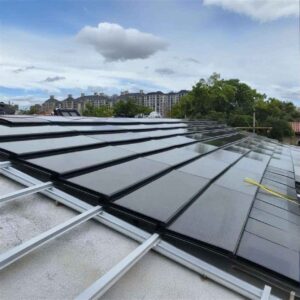
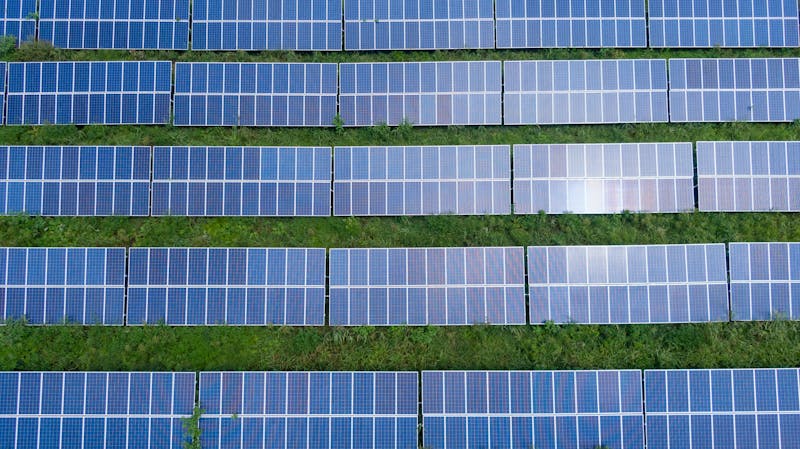 Photo: Pexels (royalty-free). BIPV solar tiles blending seamlessly with residential roof design.
Commercial BIPV: Facades That Pay for Themselves
The Business Case for BIPV Curtain Walls
For a 20-storey office tower with 8,000 m² of south- and west-facing facade area, replacing conventional curtain-wall glass (typically €100–€200/m²) with Jia Mao Bipv’s photovoltaic glass (€250–€400/m²) yields a net BIPV premium of €50–€200/m². At a conservative yield of 80 kWh/m²/year (semi-transparent facade in a temperate climate), that 8,000 m² facade generates 640,000 kWh annually — enough to power roughly 60 average U.S. homes. At a commercial electricity rate of $0.12/kWh, this translates to $76,800/year in avoided costs.
A 2024 ResearchGate study on slab-type high-rise buildings found that BIPV facades delivered comprehensive energy savings of 5–15% in mild climates and 28–55% in hot climates, thanks to the combined effects of on-site generation and reduced solar heat gain (which lowers cooling loads). An MDPI study reported maximum power-generation efficiency of 18.39% on south-facing PV curtain walls at an optimal module height of 0.7 m.
Transmission & Distribution Loss Elimination
Grid-delivered electricity loses 5–8% of its energy during transmission and distribution. BIPV generates power at the point of consumption, eliminating these losses entirely. For a commercial building consuming 2,000,000 kWh/year, this on-site advantage preserves an additional 100,000–160,000 kWh that would otherwise be wasted as line heat. IEA-PVPS data also confirms a ~35% increase in PV-suitable surface area when facades are included alongside rooftops, dramatically expanding a building’s solar potential.
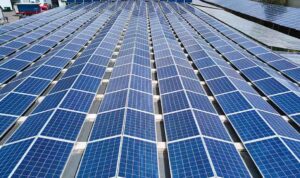
 Photo: Unsplash (royalty-free). Glass facades like this one are ideal candidates for BIPV curtain-wall integration.
Design Flexibility: 200+ Colors, 10–90% Transparency
One of the strongest advantages of BIPV over conventional PV is the degree of aesthetic customization available. Jia Mao Bipv’s transparent BIPV glass line offers transparency levels from 10% (near-opaque, maximum power) to 90% (near-clear, for skylights requiring abundant daylight), along with more than 200 color options using proprietary invisible-busbar technology. This means an architect specifying a terracotta-toned facade in Tuscany or a blue-tinted glass tower in Dubai can match the BIPV module to their design intent without compromise.
Jia Mao Bipv supports this design freedom through its 3 GW intelligent manufacturing base in Shanghai, which includes automated laminators, laser cutters, welding systems, and a Manufacturing Execution System (MES) that tracks every module from raw glass to finished product. The company’s ultra-clear tempered glass achieves 91.5% light transmittance — 8 percentage points above the industry standard — while withstanding wind pressure up to 4.0 kPa. A self-cleaning coating reduces maintenance cost by 30% over the module’s lifetime.
For residential projects, Jia Mao Bipv’s high-efficiency panels use 108-cell half-cell monocrystalline architecture with power output of 445–465 W per panel at 23.3% peak efficiency, imported POE encapsulant films that improve UV aging resistance by 40%, and fluorocarbon backsheets rated for 30 years of UV exposure. For commercial facades, BIPV laminated glass meets curtain-wall waterproof-grade standards with structural adhesive strips rated for 25 years and integrated drainage channels.
Watch: Understanding Building-Integrated Photovoltaics
This video from Elemex Architectural Facades provides a clear, jargon-free explanation of how BIPV systems work in both residential and commercial settings, including real-world installation footage and performance data.
For a deeper dive into facade design typologies, this second video covers eight distinct BIPV solar facade configurations with architectural case studies:
Challenges to Consider Before Specifying BIPV
BIPV is not a universal solution. Several factors require careful evaluation before committing to an integrated system over traditional BAPV or conventional cladding.
Higher Initial Investment: Maysun Solar’s analysis estimates that BIPV systems carry a 20–30% cost premium over traditional rack-mounted PV. For commercial facades, this can translate to €100–€400/m² above standard curtain-wall glass, depending on transparency and color requirements. However, this comparison is misleading if you account for the conventional material cost that BIPV replaces — the net premium shrinks significantly when the cladding budget is redirected.
Facade Orientation Sensitivity: South-facing BIPV facades in the Northern Hemisphere achieve 2–2.5× the energy yield of north-facing ones. East- and west-facing facades produce approximately 60–70% of the south-facing benchmark. For commercial towers with all-glass perimeters, this means only 40–60% of the total facade area delivers optimal output — a reality that must be factored into ROI projections.
Winter Heating Trade-Off: A 2025 ScienceDirect study warns that BIPV facades can increase winter heating demand by blocking passive solar radiation. This is most significant for residential homes in heating-dominated climates (e.g., northern Europe, Canada) where large south-facing windows are deliberately designed to capture winter sun.
Installer Expertise: Unlike standard PV, BIPV installation requires coordination between glazing contractors, electricians, and structural engineers. Projects benefit from manufacturers like Jia Mao Bipv that offer end-to-end technical support, including wiring schematics, structural load calculations, and on-site commissioning guidance.
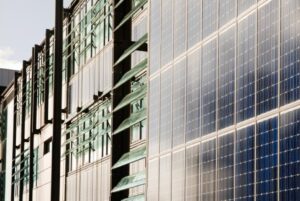
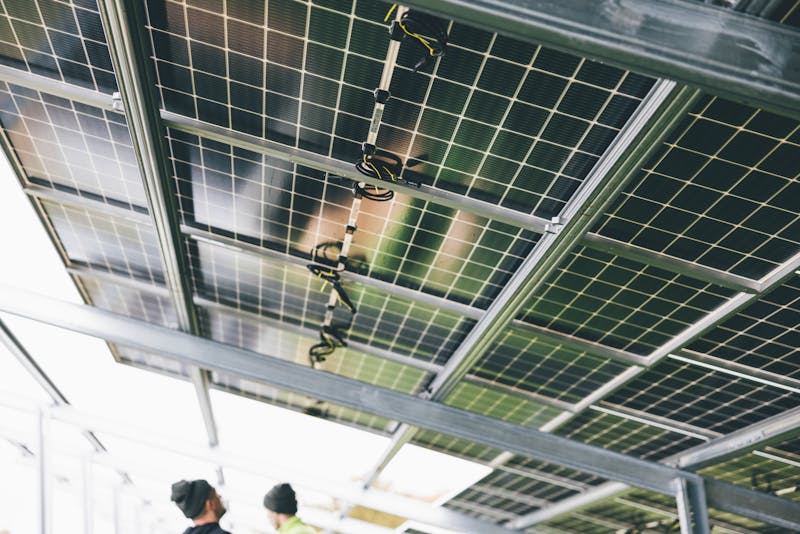 Photo: Pexels (royalty-free). Close-up of PV cell architecture used in modern BIPV modules.
ROI & Payback: Residential vs. Commercial — Detailed Breakdown
| Financial Metric | Residential (8 kWp Roof) | Commercial (200 kWp Facade) |
|---|---|---|
| Gross System Cost | $20,000 | $500,000 |
| Less: Replaced Material Value | –$4,000 (roof tiles) | –$200,000 (curtain-wall glass) |
| Less: Federal Tax Credit (30%) | –$6,000 | –$150,000 |
| Net Effective Cost | $10,000 | $150,000 |
| Annual Energy Savings | $2,800/yr | $19,200/yr |
| Simple Payback Period | 3.6 years | 7.8 years |
| 25-Year Net Benefit | $60,000+ | $330,000+ |
| Internal Rate of Return (IRR) | 18–22% | 12–16% |
Assumptions: U.S. location, 5 peak-sun-hours/day, residential rate $0.30/kWh, commercial rate $0.12/kWh, 0.4%/yr degradation, 2% annual electricity inflation. Data adapted from METSolar, Paradise Solar Energy, and Jia Mao Bipv project records.
Jia Mao Bipv: One Manufacturer, Both Markets
Shanghai Jia Mao New Energy Technology Co., Ltd. (Jia Mao Bipv) is positioned as a full-spectrum BIPV manufacturer capable of serving both residential and commercial segments from a single intelligent manufacturing base. Key capabilities include:
For Residential Projects: High-efficiency monocrystalline panels rated 445–465 W with 23.3% peak efficiency. The 108-cell half-cell architecture reduces hot-spot risk and maintains output under partial shading — a common issue on residential roofs with dormers, chimneys, or nearby trees. Each module weighs 21.5 kg and fits standard residential racking, minimizing structural reinforcement costs. The 15-year product warranty and 25-year performance guarantee align with mortgage and insurance timelines.
For Commercial Projects: Transparent BIPV glass et laminated glass modules with adjustable transparency (10–90%), over 200 color options, and structural ratings meeting curtain-wall waterproof-grade requirements. The ultra-clear tempered glass base achieves 91.5% light transmittance, and the B1-grade flame-retardant encapsulation passes international fire-safety codes for high-rise applications.
Shared Infrastructure: Jia Mao Bipv’s 3 GW annual capacity and automated production lines (laminators, laser cutters, cell welding systems, MES tracking) enable batch customization without sacrificing throughput. Whether the order is 50 residential roof tiles or 5,000 facade modules, the same quality-control pipeline — including electroluminescence testing and thermal-cycle simulation — applies to every unit.
BIPV Trends Shaping 2026 and Beyond
The BIPV landscape is evolving rapidly. Several trends are converging to make integrated solar more accessible and more powerful for both homes and businesses:
Perovskite-Silicon Tandem Cells: Lab efficiencies have reached 33.9% for tandem cells (Fraunhofer ISE, 2024), up from 26.8% for single-junction silicon. When commercialized at scale, these cells will dramatically boost BIPV facade output — particularly in semi-transparent configurations where current efficiencies of 10–15% are the primary limitation.
Self-Dimming & Thermochromic Glass: Jia Mao Bipv’s R&D pipeline includes self-dimming glass that adjusts opacity based on ambient temperature and sunlight intensity, thermal-storage integration that captures waste heat for hot-water pre-heating, and anti-fouling coatings for coastal and high-pollution environments.
Flexible BIPV for Curved Designs: Lightweight, flexible BIPV membranes enable integration on curved surfaces — a growing demand segment as parametric architecture gains popularity in commercial and institutional design. Museums, airports, and sports arenas with complex geometries are early adopters.
Energy Storage Pairing: Jia Mao Bipv’s energy storage equipment range enables residential and commercial BIPV systems to store surplus generation for evening use or demand-peak shaving, further improving ROI and grid independence.
Frequently Asked Questions — BIPV Solutions for Homes & Businesses
1. What is the difference between BIPV and traditional solar panels?
Traditional solar panels (BAPV) are mounted on top of existing roofing or walls using racks and brackets. BIPV replaces the conventional building material itself — a BIPV roof tile is both the weatherproof roofing element and the electricity generator. This eliminates material double-ups and creates a cleaner architectural appearance. Jia Mao Bipv manufactures both high-efficiency roof tiles for residential use and transparent photovoltaic glass for commercial facades.
2. How much does a residential BIPV roof cost in the United States?
A typical 6–8 kWp residential BIPV roof system costs $18,000–$22,000 before incentives. After the 30% federal ITC and applicable state rebates, the net cost ranges from $10,000–$15,400. Since BIPV replaces conventional roofing tiles (saving $3,000–$5,000 in material), the effective premium over a standard re-roof is often under $8,000.
3. What is the payback period for commercial BIPV facades?
Commercial BIPV facades typically pay back in 8–15 years, depending on orientation, electricity rate, and transparency level. When the BIPV cost is offset against the curtain-wall glass it replaces and the 30% federal tax credit is applied, the net payback can fall to 6–10 years. Internal rates of return for well-designed commercial BIPV projects range from 12–16% (InviTaic analysis).
4. Can BIPV panels generate enough electricity to power an entire home?
In many sunbelt regions, yes. A 6–8 kWp BIPV roof in a location with 5 peak-sun-hours per day generates 8,400–10,000 kWh annually, which can offset 80–95% of an average U.S. household’s electricity consumption (10,500 kWh/year per EIA). Pairing the system with battery storage enables near-100% self-sufficiency.
5. How efficient are BIPV transparent facades compared to opaque BIPV roofs?
Opaque BIPV roof tiles achieve 18–22% cell efficiency and produce 150–200 W/m². Semi-transparent BIPV facade glass typically operates at 10–18% efficiency and produces 80–160 W/m², depending on the transparency setting (10–90%). The trade-off allows commercial buildings to balance daylighting requirements with energy generation.
6. Does BIPV reduce cooling costs in commercial buildings?
Yes. Semi-transparent BIPV facades block a portion of solar radiation before it enters the building as heat. Studies published in ScienceDirect report cooling-load reductions of up to 30% for buildings in hot climates using south-facing BIPV glazing.
7. What warranty does Jia Mao Bipv offer on its BIPV products?
Jia Mao Bipv provides a 15-year product warranty and a 25-year linear performance guarantee, with first-year degradation limited to 1.0% and annual degradation of 0.4% thereafter. Structural adhesive strips and frame sealing systems are rated for 25 years; fluorocarbon backsheets offer 30-year UV resistance.
8. Is BIPV suitable for buildings in cold or cloudy climates?
BIPV works in all climates, though energy yield is lower in regions with fewer sun hours. In northern Europe or the U.S. Pacific Northwest, a BIPV roof may offset 40–60% of household demand rather than 80–90%. Architects should note that opaque BIPV on south-facing walls may block beneficial passive solar heating in winter, so hybrid designs — BIPV on east/west facades and clear glass on the south — are often recommended.
9. How does BIPV affect property value?
Research by the Lawrence Berkeley National Laboratory found that each $1 invested in solar increases U.S. home value by approximately $20. For commercial properties, green-building certifications (LEED, BREEAM) enabled by BIPV command 5–10% rental premiums. BIPV amplifies the value impact because buyers perceive it as a permanent, integrated building upgrade rather than a bolt-on accessory.
10. Where can I buy BIPV products for residential or commercial projects?
Jia Mao Bipv (jmbipvtech.com) supplies both residential and commercial BIPV products globally, including high-efficiency solar roof tiles, transparent solar glass, laminated PV glasset energy storage equipment. The company offers custom sizing, color, transparency, and power-output specifications. Visit the full product range or contact the team for a project-specific quotation.
Ready to Explore BIPV for Your Next Project?
Whether you’re a homeowner planning a net-zero renovation or an architect specifying a 200-meter commercial facade, the right BIPV solution depends on your roof area, facade orientation, transparency requirements, and local electricity rates. Jia Mao Bipv offers free project consultations with custom energy-yield modeling for both residential and commercial applications.
Explore Jia Mao Bipv Products →
Have questions or a project scenario you’d like us to analyze? Drop a comment below — we respond to every inquiry.


-300x300.jpg)