Solar photovoltaic (PV) solutions are no longer a promising experiment — they are the proven engine of the global energy transition. In 2025, renewables grew to 49.4% of global electricity capacity, with solar PV installations alone driving the majority of that expansion, according to the International Renewable Energy Agency (IRENA). Global cumulative solar PV capacity surpassed 3 terawatts (TW) by the end of 2025, a milestone that took the industry 68 years to reach for the first TW — and just two additional years to triple.
The urgency of transitioning away from fossil fuels has never been more critical. Rising global temperatures, volatile energy prices, and supply chain disruptions tied to geopolitical conflicts have exposed the fragility of fossil-fuel-dependent economies. Among all renewable options — wind, hydro, geothermal, biomass — solar PV stands out for its modularity, scalability, and dramatic cost reductions. Utility-scale solar is now the cheapest source of new electricity generation in most countries worldwide, as confirmed by the International Energy Agency (IEA).
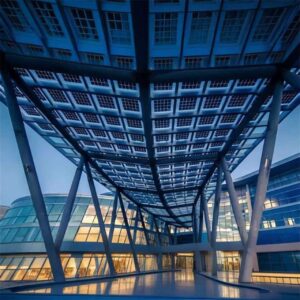
This article examines the data behind solar PV’s dominance: its environmental impact that eliminates operational carbon emissions, its economic advantages that have made it 41% cheaper than fossil fuels, its technological breakthroughs pushing cell efficiencies beyond 34%, and its future potential as innovations like building-integrated photovoltaics (BIPV) — pioneered by manufacturers such as Jia Mao Bipv — transform entire structures into clean power generators.
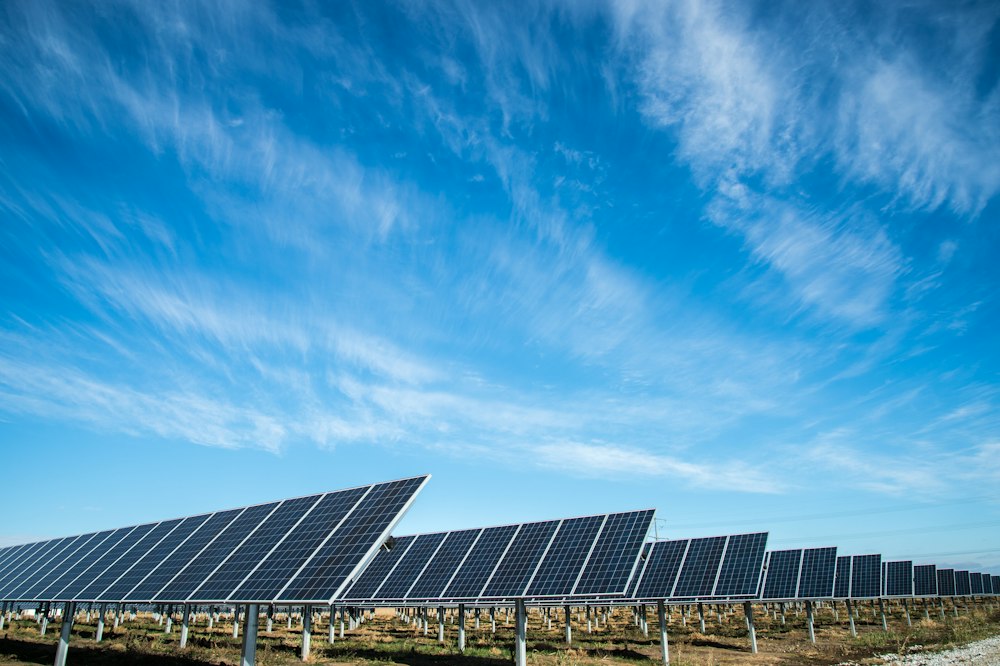
Unique Benefits of Solar PV Solutions
Abundant and Renewable Solar Energy
The sun delivers approximately 173,000 terawatts of energy to the Earth’s surface continuously — roughly 10,000 times the total energy consumed by all of humanity. Unlike coal, natural gas, or uranium, this resource replenishes every single day and is available on every continent. According to the U.S. Department of Energy, just 1.2% of the Sahara Desert covered in solar panels could theoretically generate enough electricity for the entire world.
What makes solar PV particularly powerful is its decentralized nature. A 6 kW rooftop system on a suburban home and a 500 MW utility-scale installation in a desert both tap the same inexhaustible fuel source — photons from the sun — with zero extraction costs. This is a fundamental advantage over fossil fuels, where fuel costs constitute 40–70% of the lifetime cost of electricity generation. For countries that import large volumes of oil and gas — Japan imports over 90% of its energy — domestic solar installations directly translate into reduced trade deficits and improved energy security.
Zero Emissions and Environmental Protection
During operation, solar PV systems produce zero direct greenhouse gas emissions. A lifecycle analysis published by the National Renewable Energy Laboratory (NREL) found that the total lifecycle carbon footprint of solar PV — including manufacturing, transportation, installation, and decommissioning — ranges from 20 to 50 grams of CO₂ equivalent per kilowatt-hour (g CO₂e/kWh). By comparison, coal-fired power plants emit 820–1,200 g CO₂e/kWh, and natural gas plants emit 410–650 g CO₂e/kWh.
A typical residential solar system offsets approximately 3–4 tonnes of CO₂ per year, equivalent to planting over 100 trees annually or removing one car from the road. At the utility scale, a 100 MW solar farm displaces roughly 130,000–150,000 tonnes of CO₂ per year. Solar PV also eliminates localized air pollutants — sulfur dioxide, nitrogen oxides, and particulate matter — that cause respiratory disease and cost public health systems billions of dollars annually.
Minimal Maintenance and Long-Term Value
Solar PV systems contain no moving parts in their core power-generation components, which translates directly into low maintenance requirements. According to data from Lazard’s LCOE+ analysis, annual operations and maintenance (O&M) costs for utility-scale solar PV average just $8–$12 per kW per year, compared to $28–$42 per kW for combined-cycle gas turbines and $35–$50 per kW for coal plants. Most Tier-1 solar panel manufacturers back their modules with 25 to 30-year performance warranties, guaranteeing at least 80–87.5% of nameplate output at end of warranty.
Companies like Jia Mao Bipv go further by incorporating self-cleaning surface coatings on their BIPV glass products, which the company reports reduces maintenance costs by 30% compared to standard installations. Their encapsulation technology — using imported POE films — enhances UV aging resistance by 40%, extending real-world durability well beyond the 25-year guarantee period.
Comparison: Solar PV vs. Fossil Fuel Power Generation
| Parameter | Solar PV (Utility-Scale) | Natural Gas (CCGT) | Coal |
|---|---|---|---|
| LCOE ($/MWh) | $24–$96 | $39–$101 | $68–$166 |
| Lifecycle CO₂ (g/kWh) | 20–50 | 410–650 | 820–1,200 |
| O&M Cost ($/kW/year) | $8–$12 | $28–$42 | $35–$50 |
| Fuel Cost | $0 (sunlight) | $2.50–$6.50/MMBtu | $40–$120/tonne |
| Typical Warranty / Lifespan | 25–30 years | 20–30 years | 30–50 years |
| Water Usage | Minimal (cleaning only) | High (cooling) | Very High (cooling + ash) |
Sources: Lazard LCOE+ June 2025, NREL, IRENA Renewable Power Generation Costs 2024
Solar PV Technology & Costs
Advances in Solar PV Efficiency
The efficiency gains in solar PV technology over the past decade have been extraordinary. Standard commercial monocrystalline silicon panels now routinely achieve 22–24% conversion efficiency, up from 15–17% a decade ago. But the real story lies in next-generation technologies. In April 2025, LONGi set a world record for perovskite-silicon tandem cells at 34.85% efficiency, certified by the Fraunhofer Institute for Solar Energy Systems. JinkoSolar followed closely with a 34.76% result for its n-type TOPCon-based tandem cell.
Even more remarkable, researchers in March 2026 demonstrated a “singlet fission” solar cell concept that achieved 130% quantum efficiency — meaning more energy carriers were produced than photons absorbed. While still in laboratory stages, this breakthrough, reported by ScienceDaily, suggests the theoretical Shockley-Queisser limit of ~33% for single-junction cells may eventually be circumvented.
For practical, commercially deployed panels, manufacturers like Jia Mao Bipv now offer monocrystalline silicon modules with efficiencies exceeding 22%, combined with features like invisible busbar technology and low-temperature coefficient materials that maintain stable output even in hot climates where conventional panels lose 0.3–0.5% efficiency per degree Celsius above 25°C.
Solar Cell Efficiency Records by Technology (2025)
Perovskite-Si Tandem
GaAs Multi-Junction
HJT (Heterojunction)
TOPCon
PERC Monocrystalline
Polycrystalline
Sources: NREL Best Research-Cell Efficiency Chart, LONGi, JinkoSolar, Fraunhofer ISE (2025)
Falling Costs and Accessibility
The cost trajectory of solar PV represents one of the most dramatic price declines in the history of manufactured technology. Since the 1970s, solar panel prices have fallen by more than 99%. According to an MIT study published in August 2025, this decline was driven not by a single breakthrough but by a diverse range of innovations spanning materials science, manufacturing processes, supply chain optimization, and policy-driven demand growth.
In concrete terms: the median price for residential solar in the United States reached an all-time low of $2.50 per watt in the second half of 2024, as reported by EnergySage. At the utility scale, the global benchmark LCOE for solar stood at $39/MWh in 2025, according to BloombergNEF. A UN-backed study found that solar power is now 41% cheaper than fossil fuel alternatives — a complete reversal from fifteen years ago, when solar was nearly four times the cost.
This cost revolution has made solar accessible to markets that were previously priced out. In sub-Saharan Africa and South Asia, off-grid solar home systems now serve over 420 million people. In Europe, the EU’s solar PV capacity reached an estimated 406 GW in 2025, surpassing its own 2022 target of 380 GW. Our World in Data analysis shows that solar panel prices follow a consistent learning curve: they drop by approximately 20% every time global installed capacity doubles.
Integration with Storage for Sustainable Energy
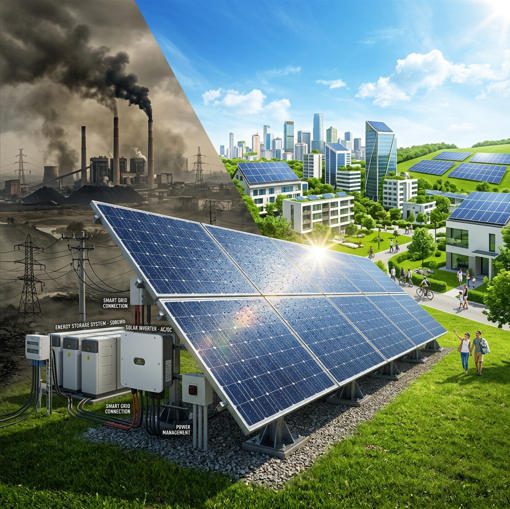
The historical criticism of solar — that it only works when the sun shines — is being systematically dismantled by the rapid scaling of battery energy storage systems (BESS). Battery pack prices have plummeted 93% since 2010, reaching $192/kWh for utility-scale systems in 2024, according to IRENA. U.S. battery energy storage capacity reached 166.1 GWh of installed capacity by end of 2024, up 53% from the prior year.
The solar-plus-storage model is rapidly becoming the default configuration for new installations. In California, over 50% of new residential solar PV systems installed in April 2024 were paired with battery storage, up from just 20% two years prior, according to the U.S. Energy Information Administration. At the utility scale, solar-plus-storage projects are routinely winning power purchase agreements at prices below standalone gas peaker plants, delivering dispatchable clean energy around the clock.
Watch: The Future of Solar PV and Energy Storage
Environmental and Economic Impact of Solar
Reducing Carbon Footprint
The scale of emissions reductions achievable through solar PV deployment is substantial and measurable. The IEA projects that solar PV generation needs to reach 8,300 TWh annually by 2030 — up from roughly 1,300 TWh in 2022 — to align with the Net Zero Emissions by 2050 Scenario. Every additional terawatt-hour of solar electricity displaces approximately 500,000–700,000 tonnes of CO₂ when replacing coal, and 250,000–350,000 tonnes when replacing natural gas.
In the United States, wind and solar generated a record 17% of total electricity in 2025 (19% when combined, per Climate Central data), directly reducing emissions from the power sector. A New York State study found that planned solar PV installations will reduce the state’s lifecycle GHG emissions by more than 7.67 million metric tonnes of CO₂ equivalent per year. Globally, with solar capacity now exceeding 3 TW, the annual emissions avoidance is measured in the billions of tonnes.
Supporting Energy Independence
Energy independence is not an abstract policy goal — it is a measurable economic and national security outcome. According to NationMaster data, the top fossil fuel importers — China (769 million metric tons), India (549 MMT), Japan (493 MMT), and the United States (466 MMT) — collectively spend hundreds of billions of dollars annually on imported coal, oil, and gas. Every megawatt of domestic solar PV capacity reduces that dependency.
The math is straightforward: a 1 GW solar farm operating at 20% capacity factor produces approximately 1,752 GWh per year. At an average displacement rate for natural gas, that replaces roughly 350 million cubic meters of gas imports annually. For a country like Japan, which imports virtually all its fossil fuels, solar PV is not just an environmental choice — it is a strategic economic imperative. The European Union reached 406 GW of solar capacity in 2025 partly as a direct response to the energy security crisis triggered by reduced Russian gas supplies.
Distributed solar further enhances resilience. When paired with battery storage, rooftop systems provide backup power during grid outages caused by extreme weather events, infrastructure failures, or cyberattacks. This decentralized architecture means no single point of failure can take down the entire energy supply — a vulnerability that centralized fossil-fuel plants cannot avoid.
Job Creation and Economic Growth
The solar PV sector has become the largest employer in the renewable energy industry, accounting for over 7.2 million jobs worldwide in 2024, according to IRENA and the International Labour Organization. In the United States alone, the solar industry employed 280,119 workers in 2024, as tracked by the National Solar Jobs Census. These roles span manufacturing, installation, project development, engineering, sales, and maintenance.
The economic multiplier effects extend beyond direct employment. A 2024 IRENA analysis found that every $1 million invested in solar PV generates approximately 7.5 full-time equivalent jobs — compared to 2.7 jobs for the same investment in fossil fuels. The BIPV segment, in particular, is creating a new class of specialized jobs at the intersection of architecture, construction, and energy engineering. As manufacturers like Jia Mao Bipv expand their production capacity — currently at 3 GW annually — they are driving employment growth across the supply chain, from raw material processing to on-site installation.
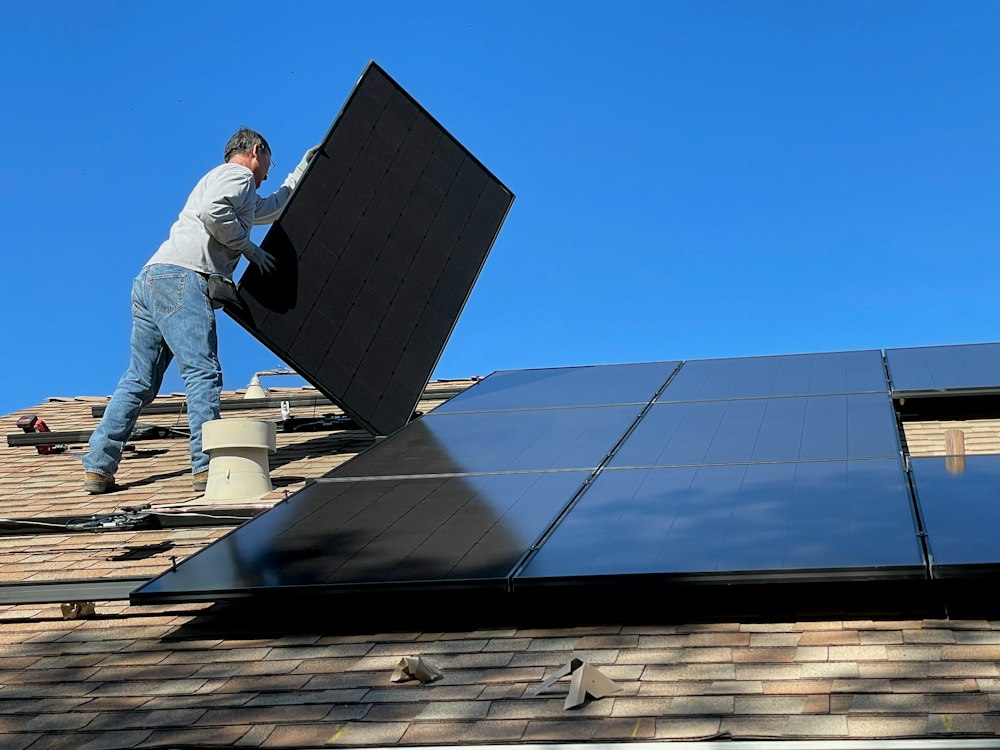
Solar PV Employment by Region (2024)
China
India
European Union
United States
Brazil
Rest of World
Source: IRENA & ILO Renewable Energy and Jobs Annual Review 2025
Future of Sustainable Solar Energy
Innovations in Solar PV Solutions
Three technological frontiers are converging to redefine what solar PV can achieve in the coming decade. The first is perovskite-based tandem cells. By layering a perovskite absorber on top of a conventional silicon cell, manufacturers have pushed lab efficiencies to 34.85% — and LONGi has signaled a 35%+ target is within reach. The practical significance is enormous: a 35% efficient panel produces roughly 50% more electricity per square meter than a standard 23% panel, meaning the same rooftop area generates substantially more power.
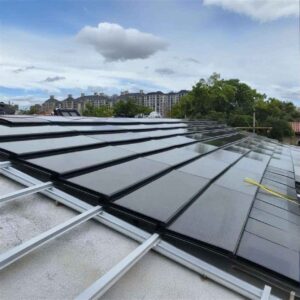
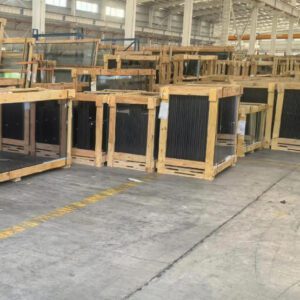
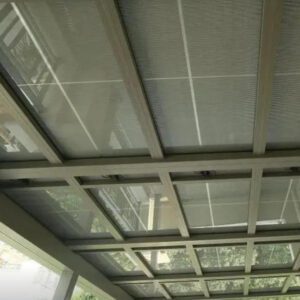
The second frontier is building-integrated photovoltaics (BIPV). Rather than bolting panels onto completed buildings, BIPV replaces conventional building materials — glass facades, roof tiles, wall cladding — with energy-generating surfaces. The BIPV market is projected to grow from $28.33 billion in 2026 to $85.9 billion by 2034, according to Fortune Business Insights. Jia Mao Bipv’s transparent solar modules exemplify this approach: their ultra-clear tempered glass achieves up to 91.5% light transmittance — 8% higher than standard glass — while simultaneously generating electricity. This dual functionality allows architects to design facades and skylights that meet both aesthetic and energy performance criteria without compromise.
The third frontier is smart and adaptive materials. Jia Mao Bipv is currently developing self-dimming materials that automatically adjust transparency based on ambient light conditions, as well as thermal-storage-integrated BIPV that improves overall building energy efficiency. Their flexible BIPV materials open the door to curved architectural designs that rigid panels cannot serve — enabling solar integration on domes, arched roofs, and non-planar facades.
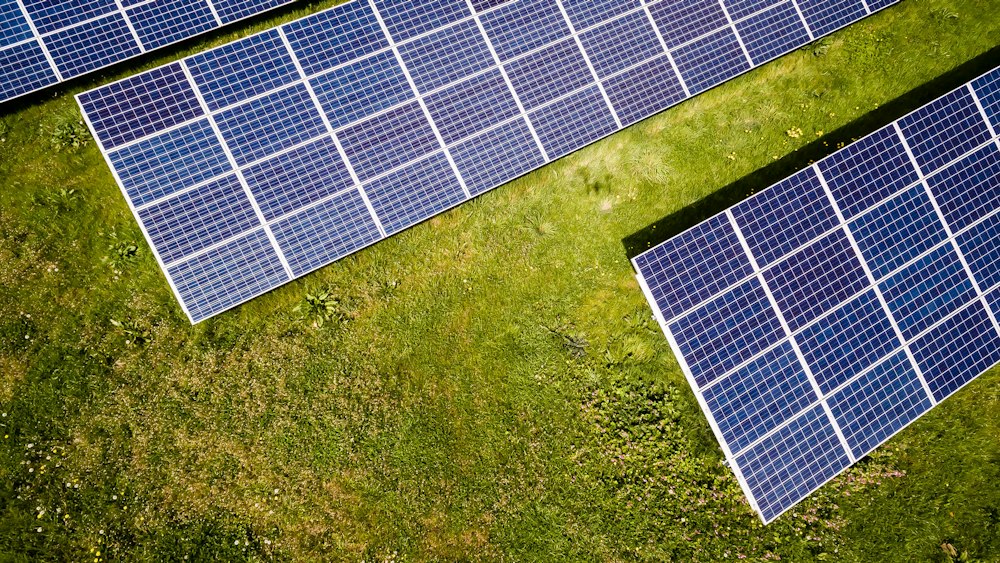
Expanding Global Adoption
The geographic democratization of solar PV is accelerating. China remains the dominant force, holding nearly 50% of cumulative worldwide capacity, but the growth story is now truly global. India’s solar deployment reached 18 GW of new installations in a single year. Brazil doubled its annual additions to 11 GW. The EU surpassed its own 2025 target of 380 GW. Even regions with historically low penetration — Southeast Asia, the Middle East, and sub-Saharan Africa — are experiencing rapid growth driven by falling module prices and innovative financing models like solar leasing and pay-as-you-go systems.
In the first half of 2025, solar and wind together outpaced electricity demand growth globally for the first time, according to Ember’s Global Electricity Mid-Year Insights. Renewables overtook coal’s share in the global electricity mix. In the United States, solar met 61% of electricity demand growth in 2025. This is no longer about pilot projects and subsidized experiments — solar PV is the primary growth engine of the global electricity system.
Top 10 Countries by Cumulative Solar PV Capacity (End of 2025)
| Rank | Country | Cumulative Capacity (GW) | % of Global Total |
|---|---|---|---|
| 1 | China | ~1,100 | ~35.6% |
| 2 | United States | ~250 | ~8.1% |
| 3 | India | ~180 | ~5.8% |
| 4 | Germany | ~105 | ~3.4% |
| 5 | Japan | ~98 | ~3.2% |
| 6 | Brazil | ~65 | ~2.1% |
| 7 | Australia | ~42 | ~1.4% |
| 8 | Spain | ~38 | ~1.2% |
| 9 | Italy | ~35 | ~1.1% |
| 10 | South Korea | ~32 | ~1.0% |
Sources: IEA PVPS Snapshot 2025, IRENA, SolarPower Europe Global Market Outlook
Overcoming Remaining Challenges
Solar PV’s trajectory is overwhelmingly positive, but intellectual honesty requires acknowledging the obstacles that remain. Intermittency — the fact that solar output drops to zero at night and fluctuates with cloud cover — is real, but it is being addressed through the battery storage revolution described above, demand-response programs, and grid interconnections. Modern grid management systems can now predict solar output 24–48 hours in advance with over 95% accuracy, enabling utilities to balance supply and demand far more effectively than a decade ago.
Grid integration challenges persist in regions where transmission infrastructure was designed around centralized fossil-fuel plants. High penetrations of distributed solar can cause voltage fluctuations and reverse power flows that existing transformers and protection systems were not designed to handle. Smart inverter technology, grid-forming battery systems, and upgraded distribution infrastructure are all part of the solution. The IEA recommends that countries spending on solar PV deployment simultaneously invest in grid modernization to avoid bottlenecks.
End-of-life recycling is an emerging priority as first-generation solar installations from the early 2000s approach decommissioning. The good news: solar panels are approximately 85–95% recyclable by weight (primarily glass, aluminum, and silicon). The European Union’s WEEE Directive already mandates solar panel recycling, and similar regulations are being developed globally. Companies investing in closed-loop recycling processes — recovering high-purity silicon and silver for reuse — are turning what was once a waste problem into a secondary resource stream.
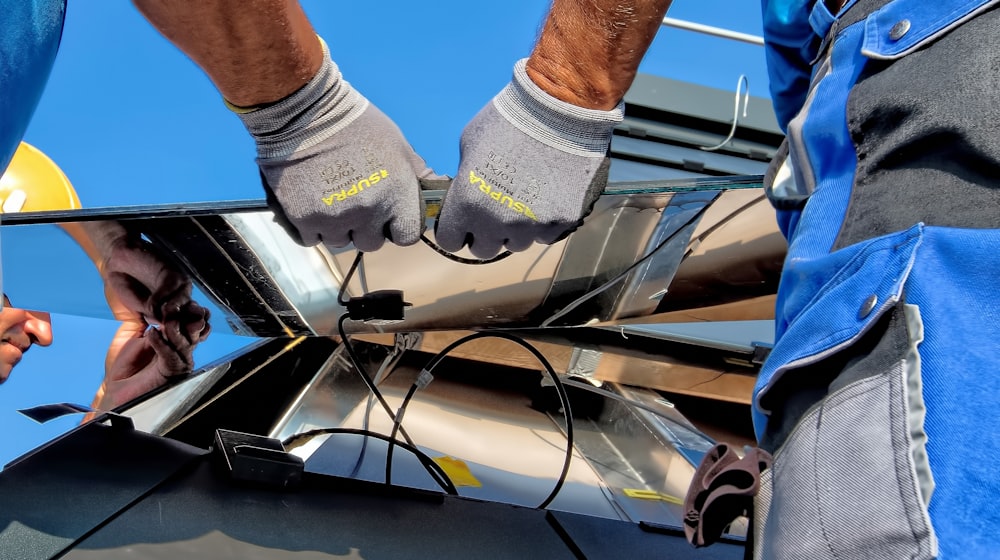
The case for solar PV as the indispensable technology for a sustainable energy future rests on hard data, not aspirational rhetoric. With costs that have fallen 99% since the 1970s and are now 41% below fossil fuel alternatives, efficiency records being shattered quarterly, global installed capacity exceeding 3 TW, and a workforce of 7.2 million people, solar PV has crossed every threshold from niche technology to mainstream energy backbone. The environmental math — lifecycle emissions 20–40x lower than coal — makes the transition not just economically rational but morally imperative.
The remaining challenges — intermittency, grid integration, and recycling — are engineering problems with known solutions that are scaling rapidly. Battery costs have dropped 93% since 2010. Smart grid technologies are being deployed at pace. Recycling frameworks are being legislated and commercialized. None of these obstacles present fundamental barriers to continued growth.
For architects, developers, and property owners evaluating their energy options, the question is no longer whether to adopt solar PV, but how quickly and comprehensively to do so. Building-integrated solutions from manufacturers like Jia Mao Bipv offer a pathway where every surface of a building — from floor tiles to facade panels — contributes to clean energy generation without compromising design aesthetics. The sun delivers 10,000 times the energy humanity needs. The technology to capture it is proven, affordable, and improving every year. The future of energy is not just renewable — it is solar.
Watch: The Beautiful Future of Solar Power | TED Talk
Frequently Asked Questions (FAQ)
1. How much does solar PV electricity cost compared to fossil fuels?
As of 2025, the global benchmark levelized cost of electricity (LCOE) for utility-scale solar PV is approximately $39/MWh, according to BloombergNEF. This is roughly 41% cheaper than new-build fossil fuel alternatives. In the United States, residential solar has reached a record low of $2.50 per watt before incentives, making it the most affordable source of new electricity generation in most global markets.
2. What is the highest solar cell efficiency achieved so far?
The world record for solar cell efficiency stands at 34.85%, set by LONGi in April 2025 for a perovskite-silicon tandem cell. For commercially deployed panels, monocrystalline silicon modules from manufacturers like Jia Mao Bipv now routinely achieve efficiencies exceeding 22%, with TOPCon and HJT designs reaching 26–27%.
3. How much CO₂ does a solar panel system save per year?
A typical residential solar PV system (6–10 kW) saves approximately 3–4 tonnes of CO₂ per year. This is equivalent to planting over 100 trees annually or taking one average car off the road. At the utility scale, a 100 MW solar farm can displace 130,000–150,000 tonnes of CO₂ annually when replacing coal-fired generation.
4. What is BIPV and how does it differ from traditional solar panels?
BIPV (Building-Integrated Photovoltaics) refers to solar PV materials that replace conventional building components — such as roof tiles, glass facades, skylights, and wall cladding — rather than being mounted on top of them. Unlike traditional bolt-on panels, BIPV modules serve dual purposes: they function as building envelope materials while simultaneously generating electricity. This reduces overall construction costs and enables seamless architectural integration.
5. How long do solar panels last and what maintenance is required?
Modern solar panels carry 25–30 year performance warranties and typically continue generating electricity well beyond that — many systems from the 1980s are still operational. Maintenance is minimal: periodic cleaning to remove dust and debris, and occasional inverter replacement (typically at 10–15 years). Annual O&M costs average $8–$12 per kW for utility-scale systems, significantly lower than any fossil fuel generation technology.
6. Can solar PV work effectively in cloudy or northern climates?
Yes. Solar panels generate electricity from diffuse light as well as direct sunlight, which means they produce power even on overcast days — typically 25–40% of their peak output. Germany, one of the cloudiest countries in Europe, ranks fourth globally in cumulative solar PV capacity with over 105 GW installed. The key metric is total annual solar irradiance, not the number of sunny days.
7. What is the BIPV market size and growth forecast?
The global BIPV market is projected to grow from $28.33 billion in 2026 to $85.9 billion by 2034, according to Fortune Business Insights. This growth is driven by stricter building energy codes, net-zero building mandates, and increasing demand for aesthetically integrated solar solutions. Leading BIPV manufacturers are scaling production to meet rapidly growing demand from commercial and residential construction sectors.
8. How does solar energy storage work with PV systems?
Solar-plus-storage systems pair PV panels with lithium-ion battery packs (or other battery chemistries) that store excess energy generated during peak sunlight hours for use during evening, nighttime, or cloudy periods. Battery costs have fallen 93% since 2010, reaching $192/kWh for utility-scale systems in 2024. In California, over 50% of new residential solar installations are now paired with storage, making clean energy available around the clock.
9. How many jobs does the solar PV industry create globally?
The solar PV sector employs over 7.2 million people worldwide as of 2024, making it the single largest employer in the renewable energy industry. China accounts for approximately 4.67 million of these jobs. In the United States, solar employs over 280,000 workers. The ILO estimates that the global energy transition will create 42 million clean energy jobs by 2030, with solar PV as the largest single contributor.
10. Are solar panels recyclable at the end of their life?
Yes. Solar panels are approximately 85–95% recyclable by weight. The primary materials — glass (about 75%), aluminum frames, silicon cells, copper wiring — can all be recovered and reused. The European Union has already mandated solar panel recycling under its WEEE Directive, and similar regulatory frameworks are being developed in the U.S., Japan, and Australia. Emerging high-value recycling processes can recover purified silicon and silver for reuse in new panels.