Why Solar Distributors and Agents Lose 80% of Sales to Slow Response Times—And How to Reclaim Them
 The gap between lead submission and first contact is where most solar distribution revenue disappears.
Here is a scenario that plays out in solar distribution offices every single day: a qualified project inquiry comes in at 10:14 AM from a builder looking to spec BIPV glass panels across a 12-unit residential development. By 10:20 AM, your two competing distributors have already sent an automated acknowledgment. By 10:45 AM, one of them has a live agent on the phone walking through product specs. By the time your team returns from the morning meeting at 11:30 AM and someone finally calls, the builder politely says: “We’re already talking to someone else.”
That is not bad luck. That is a structural, fixable revenue problem.
This guide covers the real conversion data behind lead response time in solar distribution, the operational frameworks your team needs to execute faster, and the exact 30-day roadmap to implement these systems without disrupting your current workflow. If your business manages high-volume project leads across solar glass, BIPV panels, or solar roofing products, this is written directly for your situation.
The Business Case: Why 24 Hours Kills Your Solar Sales
The First-Hour Advantage—Real Numbers from the Field
Why leads go cold: The 300% conversion drop after 1 hour
The research on lead response time is unambiguous, and it has only grown stronger as B2B buyer behavior has shifted toward digital-first inquiry.
A study examining 3.5 million leads (published via Velocify, now cited across the industry) found that calling a lead within 60 seconds of their inquiry increases conversion rates by 391%. Waiting between 5 and 24 hours produces only a 17% improvement compared to never calling at all. That is not a rounding error — that is the difference between a business that grows and one that treads water on the same lead budget.
Research from Demand Local frames the specific trade-off in concrete numbers for the solar sector: businesses responding in under 5 minutes achieve a 20–28% lead-to-appointment conversion rate. Businesses responding after 24 hours achieve 2–5%. On an identical batch of 100 leads at $100 per lead cost, that is the difference between 20–28 qualified appointments and 2–5.
The physics of this are simple. When a builder or project manager submits a product inquiry, they are in a specific mental window of engagement — typically triggered by a project milestone, an RFQ deadline, or a conversation with their procurement team. The further they move from that trigger moment, the more competing priorities crowd in. According to NREL’s Solar Energy Evolution and Diffusion Study (SEEDS), solar interest is frequently event-driven, and contractors who respond quickly “tended to have more successful outcomes” as a direct result.
The 300% conversion drop happens not because leads become less interested — it happens because competitors fill the vacuum first.
Your competitor’s edge: Response time as a competitive weapon in solar sales
In a commodity-adjacent product category like solar glass distribution, where multiple distributors can supply similar specifications, response speed has become the primary differentiation tool. A distributor who responds in 45 minutes while offering standard pricing will routinely outperform a distributor offering a 3% price advantage who takes 4 hours to respond.
According to Optifai’s lead response benchmark data, the average B2B company takes 47 hours to respond to an inbound lead. Only 23% of companies respond within the first 5 minutes. This means that any solar distribution business capable of consistent sub-60-minute response is already operating in the top quartile of the industry — simply by not waiting.
Your competitors who have built this capability are not responding faster because they have more staff. They have built the right systems. The sections below show you exactly what those systems look like.
The Data That Changes Everything
Case study #1: Regional solar distributor increases close rates from 12% to 34% in 90 days
A mid-sized solar glass distributor based in Southeast Asia managing 40–60 project inquiries per week across BIPV facades, roofing, and standard PV glass ran their entire lead process through a shared email inbox handled by three sales agents on rotating schedules.
The problem was not lead quality. Monthly inquiry volume was strong, with a healthy mix of building contractors, EPC firms, and roofing subcontractors. The problem was structural: average first-contact time was 6.2 hours, after-hours leads sat until the following morning, and agents had no standardized qualification script, so early conversations went in different directions depending on who picked up the call.
The intervention was targeted and deliberate:
- CRM implementation with automated SMS acknowledgment triggered within 90 seconds of inquiry submission
- A dedicated lead-handling agent assigned to first contact only, responsible for initial qualification and appointment booking (not closing)
- Standardized 7-question qualification script (covered in detail in the tools section below)
- Lead routing rules assigning commercial BIPV inquiries to senior technical agents, standard-glass inquiries to junior agents
Result after 90 days: close rates moved from 12% to 34%. The same lead volume, the same marketing budget, the same product offering — the only variable was response speed and structure.
Case study #2: Agent network cuts lead-to-appointment time from 48 hours to 2 hours
A regional agent network operating across three markets — Australia, Malaysia, and the Gulf — faced a coordination problem common to multi-location distribution businesses. Leads came in through a central website but were manually forwarded to regional agents via email. Agents in different time zones created overlapping gaps where no one was “on” for incoming inquiries.
Lead-to-first-appointment time averaged 48 hours. Monthly closed deals per agent averaged 4.2. Customer feedback surveys noted that competing distributors had contacted them faster in a majority of lost-deal cases.
The network implemented a shared CRM with region-based automatic routing, response time SLA tracking visible to all regional managers, and an automated acknowledgment message (in local language) deployed within 2 minutes of inquiry submission.
Lead-to-appointment time dropped to 2 hours within six weeks. Monthly closed deals per agent rose to 8.9 — a 2.3x increase — and the network reported a 40% reduction in leads marked “unresponsive” (leads that had gone cold before first contact was achieved).
The Hidden Cost of Waiting
Lost revenue per delayed response (with calculator for your business)
The revenue cost of slow response is calculable with precision. Use this formula:
Example: A solar glass distributor with 80 monthly leads, $18,000 average deal value:
| Scénario | Monthly Leads | Conv. Rate | Deals Closed | Monthly Revenue |
|---|---|---|---|---|
| Current (6-hr avg response) | 80 | 8% | 6.4 | $115,200 |
| Target (< 1-hr response) | 80 | 28% | 22.4 | $403,200 |
| Monthly Revenue Difference | +16 deals | +$288,000 |
Source: Conversion rates based on Demand Local and LeadTrackAI industry data; deal value is illustrative — substitute your own figures.
This is not theoretical upside. It is revenue that is currently being paid for through your lead generation spend and lost between inquiry submission and first contact.
Customer perception damage: Why slow response signals low professionalism in solar
For builders and EPC contractors, a slow response from a distributor communicates something specific: you are either disorganized or not serious about the relationship. In a product category where these buyers are evaluating suppliers for multi-project framework agreements, the first interaction sets the tone for the entire commercial relationship.
A response time of 6 hours on a product inquiry — in the same day a competitor responded in 45 minutes — does not just lose this deal. It can disqualify you from the supplier shortlist for the next 12 months of that builder’s projects.
Understanding Your Lead Sources—Where Solar Leads Come From (And Why Speed Matters Differently for Each)
High-Intent Leads (Website, Direct Inquiry, Referral)
Response window: Why you have 60 minutes, not 24 hours
High-intent leads — defined as project inquiries submitted directly through your website contact form, specification request forms, or sent via referral from an existing client — represent your highest-value conversion opportunity. These are buyers who have self-selected to contact you specifically. They have intent, they have budget authority (or direct access to it), and they are in an active project planning phase.
The response window for these leads is 60 minutes, not 24 hours. Research consistently shows that contact within the first hour produces conversion rates 7x higher than contact after the first hour. After 24 hours, the odds of conversion drop to near baseline.
Build your process around this reality. High-intent inquiries should trigger an immediate automated acknowledgment (within 90 seconds) and a human first contact (phone or video call) within 30–60 minutes during business hours.
The psychology: Why these leads expect immediate contact from solar companies
Builders and project managers who submit specification inquiries during business hours operate in a fast-paced procurement environment. When they contact three potential distributors for a product inquiry, they typically have a deadline driving that inquiry — a quote submission, a design review meeting, a procurement committee review.
The distributor who calls back first demonstrates two things: operational competence and genuine interest in the project. Both are commercial signals that carry weight in distributor selection. In markets where BIPV products like transparent solar glass, solar roofing tiles, and façade systems are still being specified for the first time by many builders, the distributor who arrives first in that conversation also gets to shape the specification — an enormous competitive advantage.
Warm Leads (Trade Shows, Partnerships, Distributor Networks)
Leveraging relationship warmth: How to convert faster with existing connections
Warm leads — contacts made at trade shows, through partner referrals, or within established distributor networks — carry a pre-existing context that changes the conversion dynamic. The buyer already has some familiarity with your brand, your product range, or the relationship network that connected you. This warmth accelerates trust, which in turn accelerates the decision process when your follow-up arrives.
The practical implication: your first contact with a warm lead does not need to re-establish credibility from zero. You can open with the shared context directly. “Following up from our conversation at Solar Asia” or “Sarah at GreenBuild mentioned you were specifying BIPV cladding for the Westside project” allows you to skip the trust-building phase and move directly to qualification and specification.
Conversion rates for warm leads with fast follow-up are significantly higher than cold lead benchmarks — often 35–50% for referral-sourced contacts who are reached within the first business day.
The 4-hour sweet spot: When to reach out without seeming desperate
For warm leads connected through trade events or partner introductions, the optimal response window is 2–4 hours after the connection is made. Immediate contact (within minutes) can occasionally read as over-eager in relationship-driven B2B contexts. Waiting 24+ hours signals low prioritization. The 2–4 hour window hits the sweet spot of responsive without pressured.
Use this time to research the contact’s project pipeline, company structure, and likely product needs before you call. Arriving at the conversation prepared — knowing they build mid-rise commercial projects and have three upcoming developments — is more valuable than arriving first with nothing to say.
Cold Leads (Advertising, Outreach, Purchased Lists)
Different rules apply: Why 24 hours is actually acceptable here
Cold leads — generated through digital advertising, cold email outreach, or purchased prospect lists — operate by different conversion economics. These contacts have not self-selected your business, which means their intent level is lower and their decision timeline is longer.
For cold outreach, a 24-hour response window is genuinely acceptable, because the first contact here is less about capitalizing on an active decision moment and more about introducing your business into a buying consideration that may not have fully formed yet.
The priority hierarchy for your team’s time should always be: high-intent > warm > cold. Your fastest, most capable agents should be focused on the first two categories. Cold lead follow-up can be handled through more systematized, lower-urgency workflows.
Multi-touch strategy: How to compensate for lower intent with volume
Cold leads require a different playbook — persistence through volume and variety rather than speed. A well-designed multi-touch sequence for cold solar distribution prospects typically runs 8–10 contact attempts across 4 weeks, combining email, phone, and LinkedIn touchpoints.
The structure that performs well in B2B solar contexts:
- Day 1: Email introduction + connection request on LinkedIn
- Day 3: Follow-up email with specific product reference or case study
- Day 5: Phone attempt (voicemail if no answer)
- Day 8: Email with technical resource (spec sheet, project guide)
- Day 12: Phone attempt (no voicemail) + LinkedIn message
- Day 17: Email with market insight or project reference
- Day 22: Final phone attempt + email marking as “final follow-up”
At 10 touchpoints across 4 weeks, you are giving cold prospects adequate exposure without crossing into harassment. Teams using automated multi-touch sequences close 20–30% more deals than teams relying on manual, ad hoc follow-up — primarily because the system ensures no contact is forgotten.
The 24-Hour Response Framework—Your Operational System
 A structured CRM workflow eliminates the manual gaps where most solar leads go cold.
Hour 0-1: The Critical First Contact
What to say in your first message (templates included for SMS, email, phone)
The first contact message has one job: confirm you received the inquiry, establish credibility, and secure permission for a qualifying conversation. It is not a sales pitch. It is not a product brochure. It is a professional, brief signal that you are organized and attentive.
SMS Template (send within 90 seconds of inquiry receipt):
Hi [Name], this is [Your Name] from [Company]. I’ve received your inquiry about
and will call you within the next 20 minutes to discuss your requirements. If now is a better time, feel free to call me directly: [Your Number].
Email Template (send simultaneously with SMS):
Subject: Your Inquiry — [Product Type] Specifications | [Your Company]
Hi [Name],
Thank you for reaching out about [project/product]. I’ve reviewed your inquiry and have the specifications and pricing you need.
I’ll call you shortly to understand your project requirements in detail — this usually takes about 10 minutes and ensures I can give you accurate lead times and pricing.
In the meantime, here are two resources that may be useful:
- [Link to relevant product page, e.g., BIPV glass specs]
- [Link to relevant case study]
Best regards, [Name | Role | Company | Direct Number]
Phone Script Opening (for live calls within Hour 1):
“Hi [Name], this is [Your Name] calling from [Company] — you submitted a product inquiry with us about [X] a short while ago. I wanted to call right away while the project is fresh. Do you have about 10 minutes now, or would [specific time] work better for a brief qualification call?”
Notice what this script does not do: it does not launch into product specs, pricing, or a company overview. It acknowledges the inquiry, signals urgency and respect for the prospect’s time, and asks for a defined, brief window. This converts better than long-form pitches because it is frictionless.
Tools solar agents actually use: CRM automation without losing the human touch
The most effective systems for solar distributors layer automation at the acknowledgment stage and keep human contact at the qualification stage. Automation handles the 90-second SMS and auto-email. A human agent handles the first qualifying phone call within the hour.
CRM platforms commonly used in solar distribution contexts include HubSpot, Pipedriveet SalesExec (purpose-built for solar). Each supports automated lead capture, SMS triggering, and lead routing rules. The key configuration decisions are:
- Trigger: inquiry form submission → immediate SMS + email
- Routing: lead category (BIPV / standard glass / roofing) → assigned agent team
- Alert: Slack or mobile push notification to on-duty agent
- Timer: response time clock starts at inquiry submission, visible to team manager
Hour 1-4: The Qualification Sprint
Questions that separate serious buyers from tire-kickers (solar-specific)
Qualification in solar distribution is about establishing three things quickly: project reality (does a real project exist?), decision authority (is this person in a position to buy?), and timeline (when does the project need product?). Without all three, you are potentially investing significant agent time in a lead that is not ready to convert.
These seven questions qualify 80% of solar distribution prospects within 3 minutes:
- “What’s the project type?” — Commercial, residential, industrial, public infrastructure. Determines product line and margin tier.
- “What’s the approximate system size or glass area required?” — Filters out under-threshold inquiries early. Also establishes freight logistics relevance.
- “What’s your target installation date?” — Projects needing glass within 8 weeks require immediate inventory confirmation. Projects 6+ months out allow for standard lead-time quoting.
- “Are you the decision-maker on procurement, or working with a project manager?” — Do not invest in a 45-minute technical call with someone who cannot approve the purchase.
- “Have you worked with [your product type] before, or is this a first-spec situation?” — First-spec situations require more technical support; repeat buyers need faster quotes.
- “Do you have a preferred specification already, or are you open to product recommendations?” — Determines whether you are competing on spec or creating the spec.
- “What’s your current supplier situation — are you evaluating alternatives, or replacing an existing relationship?” — Reveals urgency level and competitive context.
Agents who use this framework consistently report that 15–20% of leads self-qualify out within the first 3 questions — freeing time for genuinely convertible prospects.
Moving leads to appointment: Your 4-hour conversion checklist
Within 4 hours of first contact, a qualified lead should have reached one of these outcomes:
- ✅ Appointment booked for technical specification review (live call or in-person)
- ✅ Product quote requested, with expected delivery time confirmed
- ✅ Sample or brochure dispatched, follow-up call scheduled within 48 hours
- ❌ Lead disqualified (documented in CRM with reason code)
- 🔄 Lead nurture path initiated (not ready now, real project in 3–6 months)
If a qualified lead is still in “pending first callback” status at the 4-hour mark, it requires escalation — not another automated email.
Hour 4-24: The Follow-Up Sequence
Why persistence wins: Multi-channel touchpoints that don’t annoy prospects
Most solar distribution leads require 3–5 contact attempts before the first live conversation occurs. A prospect who did not answer your Hour 1 call is not uninterested — they are in a meeting, on a site visit, or managing a different priority. The distributors who close more deals are not necessarily better salespeople; they are more systematically persistent.
A high-performing 4–24 hour follow-up sequence for high-intent leads:
| Time | Channel | Action |
|---|---|---|
| Hour 1 | Téléphone | First call attempt |
| Hour 1 (if no answer) | SMS | Brief voicemail follow-up text |
| Hour 2 | Courriel | Detailed inquiry response + product links |
| Hour 4 | Téléphone | Second call attempt |
| Hour 6 | Connection request + brief message | |
| Hour 12 | Courriel | Project-specific resource (case study/spec sheet) |
| Hour 24 | Téléphone | Third call attempt + final email |
Each touchpoint should reference the previous one naturally: “I sent you an email this morning about the BIPV facade spec — I wanted to follow up directly in case the project timeline has moved.” This reads as attentive, not as robotic automation.
Escalation triggers: When to involve your manager or senior agent
Not all leads can be converted by a junior agent alone. Define clear escalation rules in your process:
- Project value > $50,000: Senior agent or account manager takes over after qualification
- Technical specification complexity (e.g., curved BIPV glass, structural glazing applications, photovoltaic facade systems): Technical specialist joins the qualification call
- Prospect has had a negative experience with a previous supplier: Account manager makes personal first call
- Lead is from a known high-value account or referral source: Director-level response considered
Escalation is not a sign of weakness — it is a resource allocation decision that matches prospect value to response quality.
Building Your Response Infrastructure—Systems That Actually Work for Distributors
Technology Stack for Solar Teams
CRM selection: What solar distributors need (not what salespeople want)
Solar distribution teams have specific operational needs that differ from general sales environments. Your CRM must handle:
- Multi-product lead routing (different glass types, panel systems, roofing products each route to different specialists)
- Project-stage tracking (inquiry → specification → quote → sample → purchase order is a longer cycle than retail sales)
- Freight and lead-time integration (agents need to access real-time stock and lead-time data during qualification calls)
- Multi-location visibility (regional managers need full pipeline view across all agents and geographies)
CRM platforms evaluated specifically for solar distribution suitability:
| Platform | Solar-Specific Features | Automation | Monthly Cost (est.) | Best For |
|---|---|---|---|---|
| HubSpot CRM | Moderate | Strong | Free–$800+ | Multi-agent, high volume |
| Pipedrive | Low | Moderate | $15–$65/user | Smaller teams, simple pipeline |
| SalesExec | High (solar-built) | Strong | Custom pricing | Solar-focused teams |
| Scoop Solar | High (solar PM) | Moderate | $99–$299+ | Project management + CRM |
| Zoho CRM | Moderate | Strong | $14–$52/user | Cost-sensitive, multi-location |
Tip: Avoid CRM platforms that require heavy customization before they can route multi-product leads or trigger automated SMS. Setup friction delays deployment and kills adoption.
Automation without alienation: Chatbots, auto-responses, and when to use them
Automation serves one purpose in lead response: eliminate the gap between inquiry submission and human contact. It is a bridge, not a replacement.
Use automation for: immediate inquiry acknowledgment (SMS + email), scheduling callbacks (calendar links in acknowledgment email), and after-hours inquiry flagging (alert to on-call agent with next-morning follow-up task auto-created).
Do not use automation for: technical specification discussions, pricing negotiation, or relationship-driven conversations with high-value accounts. The moment a builder realizes they are reading a templated email that does not address their specific project, trust erodes.
The right model: automation handles the first 90 seconds, humans handle everything after.
Team Structure and Accountability
Lead routing: Who should handle what (by lead quality, product type, geography)
Effective lead routing eliminates the two most common distribution team failures: senior agents spending time on low-value inquiries, and junior agents being asked to handle technically complex specifications they cannot answer.
A practical routing model for a solar distribution team of 5–12 agents:
- Tier 1 – Lead Coordinator: Handles all first-contact acknowledgments and initial qualification calls. Routes qualified leads to the correct Tier 2 agent. Does not close deals.
- Tier 2 – Product Specialists: Handles qualified leads by product type. Specialist A handles BIPV facades and glass cladding (higher technical complexity, higher margin). Specialist B handles standard PV glass and roofing tiles (higher volume, faster cycle).
- Tier 3 – Senior Account Manager: Handles projects above threshold value, key accounts, and escalated technical requests. Also owns renewals and upsell conversations.
This structure means every lead is handled by the right person at the right speed. The lead coordinator ensures no inquiry sits unacknowledged; the specialists ensure technical conversations are credible.
Response time tracking: Metrics that matter and how to measure them
Response time tracking requires three data points captured automatically in your CRM:
- Lead submission timestamp (when the inquiry arrived)
- First contact timestamp (when an agent first called, emailed, or messaged the lead)
- First response gap (minutes/hours between submission and first contact)
Weekly review of these metrics should be a standing agenda item in every sales team meeting. Teams that review response time data weekly improve their average response time within 30 days — not because agents are suddenly faster, but because the visibility creates accountability.
Publish a weekly Response Time Leaderboard showing each agent’s average first-response gap. This gamification approach drives performance without requiring performance reviews or management escalation.
Training Your Team for Speed Without Sacrificing Quality
Rapid qualification scripts: How to gather intel in under 3 minutes
Scripts work in solar distribution because the qualification variables are consistent across leads: project type, scale, timeline, decision authority, specification status, competitive context. A script does not make agents robotic — it prevents them from forgetting to ask the four questions that would have revealed the lead was not ready, after a 30-minute technical call.
Run biweekly role-play sessions where agents take turns as the prospect and the agent. Rotate scripts across different lead scenarios: the experienced EPC project manager (fast qualification, high value), the architect specifying BIPV for the first time (requires education, longer cycle), the cost-focused builder comparing three distributors on price (requires margin-defense conversation).
Objection handling at scale: Preparing your team for volume
In high-volume lead environments, agents will hear the same objections repeatedly. The most common in solar distribution:
- “We’re just gathering information at this stage.” → Response: “Understood — I can save you time by giving you the specification data and lead times specific to your project size right now. What’s the approximate scope?”
- “Your price is higher than [Competitor X].” → Response: “That’s useful to know. Can I ask what specifications they quoted? Often the difference comes down to glass thickness, certification, and warranty terms — if we’re comparing like for like, I can walk you through the breakdown.”
- “We already have a supplier.” → Response: “Of course — most of our clients started that way. Is there a reason you reached out today? Often it’s lead times, a specific certification, or a product type your current supplier doesn’t carry.”
Document agent responses to common objections in a shared team knowledge base, updated quarterly as market conditions change.
The Conversion Impact—What Happens When You Actually Respond Fast
Case Study Deep Dive #1: The Distributor Who Implemented 1-Hour Response
The problem: 40+ leads per week, 3 agents, inconsistent follow-up
A solar glass and BIPV products distributor handling approximately 45 project inquiries per week faced a classic scaling problem. Three agents — each responsible for the full sales cycle from first contact to close — were handling lead response reactively, based on when they happened to check their shared inbox. Average first response time: 5.8 hours. Lead-to-appointment conversion rate: 11%. Monthly closed deals: 8.
The agents were not underperforming. The system was underperforming. With no lead routing, no automation, and no accountability metrics, leads were effectively going to whoever noticed the inbox first — or not at all on busy days.
The solution: Automated first contact + dedicated lead-handling agent
The distributor implemented the following changes over a 3-week period:
- CRM automation triggering immediate SMS + email acknowledgment on all inquiry form submissions
- One agent designated exclusively as Lead Coordinator for the first 90 days, responsible for all first contact calls, with personal targets on response time and qualification rate
- Routing rules directing BIPV-specific inquiries to the senior agent; standard glass inquiries to a mid-level agent
- Weekly response time review added to Monday morning team meeting
The results: 28% conversion rate increase, 15% higher deal size
After 90 days: lead-to-appointment conversion rose from 11% to 31%. Monthly closed deals increased from 8 to 18. Average deal size increased by 15% — attributable to the Lead Coordinator asking the project scope question in qualification, which allowed the routing agent to arrive at the technical call better prepared to propose a complete product solution rather than a single line item.
Total monthly revenue impact: approximately +$180,000 on an average deal size of $15,000.
Case Study Deep Dive #2: Regional Agent Network Transforms Lead Management
The challenge: Multi-location coordination, inconsistent response times
A regional agent network operating across three markets had built a reputation for strong product knowledge but was consistently losing deals at the initial inquiry stage. Internal analysis showed that 68% of lost opportunities were contacted after the 6-hour mark, and that competitors had already initiated contact in the majority of those cases.
The network had no shared CRM — leads arrived via email to a central address and were manually forwarded to regional agents based on location. This manual hand-off step added an average of 3.4 hours to every lead’s first-contact time. After-hours leads — approximately 38% of weekly volume — were not contacted until the following morning.
The implementation: Shared CRM, response time SLAs, team accountability
The network implemented a shared CRM with region-based automatic routing (eliminating the manual forwarding step), set response time SLAs of 45 minutes for high-intent leads during business hours, and introduced an automated after-hours acknowledgment in local languages with a scheduled callback system.
Regional managers received a weekly dashboard showing each agent’s response time average, qualification rate, and pipeline conversion by stage. This visibility — previously unavailable — made under-performance visible without requiring subjective management feedback.
The payoff: 2.3x increase in monthly closed deals, 40% reduction in lead waste
Within six months: monthly closed deals per agent increased 2.3x (from an average of 4.1 to 9.4). Leads marked as “unresponsive” (contacts the team had never reached) dropped by 40% — these were not bad leads, they were leads that had been contacted too late. The after-hours automated callback system recovered an estimated 22 additional appointments per month that previously would have been lost.
Your Numbers: Calculate Your Potential Revenue Impact
The formula: (Current response time – 1 hour) × Your average deal value × Your conversion rate
Rather than using industry averages, calculate your own opportunity using this framework:
Example with real numbers:
That is $246,240 in additional annual revenue from the same lead volume, the same product range, and the same team — achieved purely by improving response time from 6+ hours to under 60 minutes.
Interactive calculator: See your specific opportunity in real dollars
Fill in your business data in the template below:
| Variable | Your Number |
|---|---|
| Monthly project inquiries received | ___ |
| Current lead-to-appointment conversion rate (%) | ___ |
| Target conversion rate after implementing 1-hr response (%) | ___ |
| Average deal value ($) | ___ |
| Monthly Revenue Uplift | (Target Conv. – Current Conv.) × Monthly Leads × Deal Value |
| Annual Revenue Uplift | Monthly Uplift × 12 |
Industry conversion rate benchmarks: Current (slow response, 6+ hrs): 6–12% | Target (fast response, <60 min): 22–30% Source: Demand Local, LeadTrackAI, Aurora Solar NREL analysis.
Common Obstacles for Solar Distributors—And How to Overcome Them
“We Don’t Have the Staff to Respond That Fast”
The truth: You can’t afford NOT to respond fast
The cost of slow response is not abstract — it is measurable and recurring. If your team closes 10 deals per month at an average value of $18,000, and improving response time increases your conversion rate by 18 percentage points (a conservative estimate based on industry data), you are leaving $194,400 in monthly revenue potential unrealized.
Hiring one lead coordinator at $3,500–$5,000 per month — whose sole job is rapid first contact and qualification — pays for itself on the first recovered deal. The math is not close.
Solutions: Automation, outsourcing, and restructuring for efficiency
Three viable approaches for under-resourced teams:
- Automation-first: CRM auto-response handles the first 90 seconds across all leads. A junior team member handles qualification calls for all leads under $10,000 project value. Senior agents handle only pre-qualified, high-value inquiries. This structure can be implemented with your existing team.
- Outsourced lead coordination: Specialist lead response services exist for solar B2B contexts. A trained external coordinator handles first contact, qualification, and appointment booking — and hands off to your internal agents. Cost: $1,500–$4,000/month. Revenue impact typically 3–5x the cost within 60 days.
- Restructured shifts: If your leads arrive primarily between 8 AM–6 PM, ensure at least one agent is on duty and dedicated to incoming leads (not handling existing client work) during peak hours. Rotate this responsibility across the team weekly.
“Our Leads Come at Odd Hours”
The night shift problem: Managing after-hours inquiries without burnout
In solar distribution, project inquiries do not respect business hours. Builders in Dubai are specifying while your team in Sydney sleeps. EPC contractors in Germany submit their RFQs at 7 PM local time, which is midnight in Bangkok.
Handling after-hours leads without burning out your team requires a systems approach:
- Automated acknowledgment: Every after-hours inquiry receives an immediate automated SMS + email confirming receipt and providing a specific callback time (“We’ll call you tomorrow between 9–10 AM [local time]”).
- Priority queuing: After-hours inquiries are sorted by estimated project value (gleaned from the inquiry form) and placed in a priority queue for the first agent on shift.
- On-call escalation: Inquiries above a threshold value (e.g., projects >$80,000) trigger an alert to a designated on-call senior agent who can make a brief acknowledgment call within 2 hours, even after hours. This is not nightly coverage — it is an exception-based escalation for genuine high-value opportunities.
Technology solutions: Automated acknowledgment + scheduled callbacks
The most practical after-hours solution for most distribution teams is a calendar-integrated acknowledgment. When a lead submits an inquiry at 11 PM, the auto-response email includes a calendar booking link (“Schedule a 15-minute call with our team”) with available slots starting from 8 AM the next business day. This gives the prospect agency — they self-select a time that works — and eliminates the morning scramble of manually calling through a queue of overnight leads in unknown-availability order.
Tools like Calendly or HubSpot Meetings integrate directly with CRM lead records and take less than 2 hours to configure.
“We’re Already Responding Fast—But Still Not Converting”
The real issue: Speed without qualification is wasted effort
If your team is consistently hitting sub-60-minute first contact but conversion rates are still below 15%, the constraint has shifted from speed to qualification quality. Fast response without a structured qualification conversation delivers the wrong result: leads progress further into your pipeline before being disqualified, consuming agent time that should be spent on genuinely convertible prospects.
Common signs that qualification — not speed — is the problem: agents report “lots of tire-kickers,” high inquiry volume is not translating to proportional appointment volume, and different agents produce wildly different conversion rates despite similar response times.
The fix: Combining fast response with smarter questions
Run a qualification audit: pull 30 recent unqualified leads and reconstruct the first conversation. Identify where agents deviated from the qualification script, what questions were skipped, and at what stage the lead was incorrectly advanced rather than disqualified. In most cases, a single missed question — typically around decision authority or project timeline — explains the bulk of pipeline waste.
Rebuild the qualification script with that question inserted at the right position, retrain the team with role-play sessions, and measure the qualification rate (percentage of contacted leads that proceed to appointment) over the following 30 days.
Implementation Roadmap—Your 30-Day Launch Plan
 A structured 30-day implementation plan converts theory into measurable performance gains.
Week 1: Audit and Assessment
Where you stand now: Response time audit of your last 100 leads
Pull the last 100 inquiries from your CRM or inbox records. For each, document: inquiry submission time, first contact time, first-contact gap (in minutes/hours), outcome (converted to appointment / disqualified / no response / cold).
Calculate: average first-contact gap, percentage responded within 1 hour, percentage responded within 4 hours, percentage never reached.
This audit will produce a baseline that is typically more sobering than expected. Most distribution teams, when they run this for the first time, discover an average response time between 4 and 12 hours, with 30–50% of leads never receiving more than one contact attempt.
Gap analysis: What’s preventing faster responses today
Map the specific friction points in your current lead handling process. Common blockers found in distribution businesses:
- Leads arrive in a shared email inbox with no priority flagging
- No CRM — leads tracked in a spreadsheet that agents check intermittently
- All agents handle the full sales cycle, leaving no one dedicated to first contact
- After-hours inquiries accumulate with no acknowledgment until the next business day
- No qualification script — each agent handles first calls differently
Document the top 3 blockers. These become your Week 2 implementation priorities.
Week 2: System Setup
CRM configuration: Setting up automated first contact
Select your CRM platform (if not already in place) and configure:
- Lead capture form → CRM integration: All inquiry form submissions route automatically into the CRM as new lead records. No manual entry.
- Automatic SMS trigger: Within 90 seconds of lead creation, CRM sends the SMS acknowledgment template to the lead’s phone number.
- Automatic email trigger: Simultaneously, the email acknowledgment template is sent from the assigned agent’s email address.
- Agent alert: Slack or mobile push notification to the on-duty agent with lead details and a one-click “Call Now” button.
- Response time timer: Visible on the lead record, showing time elapsed since inquiry submission. Alerts the team manager if a lead exceeds 60 minutes without first contact.
Full configuration of these workflows typically takes 8–16 hours on most CRM platforms. Budget one week and have your most technically capable team member own this setup.
Team training: Scripts, processes, and accountability measures
Run a 2-hour training session covering: the qualification script (read through, role-play twice), the escalation rules (who handles what), and the weekly metrics review format. Distribute the script in printed form and as a pinned document in the team communication channel.
Set the expectation explicitly: all high-intent leads receive first contact within 60 minutes, every time. This is not a guideline — it is a team commitment. Define consequences for consistent misses and recognition for consistent achievement.
Week 3: Pilot and Adjust
Run with your A-team: Test new processes with your best agents
During Week 3, run the new process with your two or three strongest agents while maintaining the existing process for the rest of the team. This limits disruption while generating real performance data.
Track daily: first response time average, qualification rate, appointments booked per 10 leads reached. Compare directly to the Week 1 audit baseline. By the end of Week 3, you should see measurable improvement in at least two of the three metrics.
Measure and refine: What’s working, what needs adjustment
Hold a brief retrospective with the pilot team at the end of Week 3. Common adjustments needed at this stage:
- SMS template needs a local-language version for key markets
- Qualification script needs a question about budget authority earlier (added as Q2 instead of Q5)
- Agent alerts are going to the wrong device — mobile notifications were disabled
Document every adjustment in a change log so the full-team rollout in Week 4 incorporates all learnings.
Week 4: Scale and Optimize
Roll out to full team: Implementation across all agents
Extend the new process to the full team. Run a one-hour all-hands session covering the updated script, the CRM workflow, and the accountability metrics. Assign each agent a personal response time target based on their current baseline (improvement, not immediate perfection).
The Lead Coordinator role (if implemented) begins their first full week of operations.
Monitor and maintain: Ongoing tracking and improvement
Establish the weekly rhythm: Monday morning 15-minute metrics review (response time average, qualification rate, conversion rate from the prior week). Surface wins publicly, address misses privately.
By the end of Week 4, your team will have sufficient data to project Month 2 performance improvement. Most teams see a 25–40% improvement in lead-to-appointment conversion within the first 30 days of implementing these four changes: CRM automation, dedicated first-contact resource, qualification script, and weekly metrics review.
Tools and Templates—Everything You Need to Execute
Response Time Tracking Dashboard
Simple spreadsheet template (no complex software needed)
For teams not yet on a CRM, a shared Google Sheet provides adequate response time tracking at low cost and zero setup time. Use the following column structure:
| Lead ID | Inquiry Date | Inquiry Time | First Contact Date | First Contact Time | Response Gap (hrs) | Channel | Qualification Status | Appointment Booked? | Outcome |
|---|---|---|---|---|---|---|---|---|---|
| 001 | 2025-03-12 | 09:14 | 2025-03-12 | 09:52 | 0.63 | Téléphone | Qualified | Yes | Closed |
| 002 | 2025-03-12 | 14:30 | 2025-03-13 | 09:10 | 18.67 | Courriel | Not reached | No | Lost |
| 003 | 2025-03-12 | 17:45 | 2025-03-12 | 18:20 | 0.58 | SMS | Disqualified | No | Nurture |
Update this sheet daily. Review weekly. The visible data will drive agent behavior more effectively than any coaching conversation.
Key metrics: Response time, qualification rate, conversion rate
The five metrics that define your lead response performance:
| Metric | Definition | Target |
|---|---|---|
| Average Response Time | Mean gap (hrs) between inquiry submission and first contact | < 1 hour |
| Qualification Rate | % of contacted leads that pass qualification | > 60% |
| Lead-to-Appointment Rate | % of qualified leads that book an appointment | > 50% |
| Appointment-to-Close Rate | % of appointments that result in a purchase order | > 35% |
| Lead Response Coverage | % of leads receiving first contact within 4 hours | > 95% |
First-Contact Message Templates
SMS template for immediate acknowledgment
Hi [Name], this is [Agent] from [Company]. I received your inquiry on
and will call you within 20 minutes. Direct line: [Number]. If now works, feel free to call me directly.
Email template for comprehensive information gathering
Subject: Your [Product Type] Inquiry — Next Steps | [Company Name]
Hi [Name],
Thank you for reaching out. I’ve reviewed your inquiry and have what you need.
I’ll call within the next hour to understand your project requirements. To make our call efficient, it would help to know:
- Approximate project size / glass area required
- Target installation date
- Any specific certifications or specifications required
Feel free to reply with these details, or we can cover them on the call.
In the meantime: [Product Link] | [Case Study Link]
Best, [Name | Role | Company | Number]
Phone script for real-time qualification
“Hi [Name], this is [Agent] from [Company]. You reached out about
and I wanted to connect right away while the project is on your mind. Do you have about 8–10 minutes? I’d like to understand your requirements and give you accurate specs and lead times.”
Qualification Checklist
7 questions that qualify 80% of solar prospects
| # | Question | What It Reveals |
|---|---|---|
| 1 | What type of project is this? (commercial / residential / industrial) | Product line, margin tier, technical complexity |
| 2 | What’s the approximate glass area or system size needed? | Volume, freight relevance, inventory check required |
| 3 | What’s your target installation or delivery date? | Lead time fit, urgency level |
| 4 | Are you the procurement decision-maker, or is there a project manager involved? | Decision authority — determines who needs to be in the next call |
| 5 | Have you worked with this product type before? | Technical support level required |
| 6 | Do you have a specification already, or are you open to recommendations? | Competitive spec vs. open spec — changes your positioning |
| 7 | What’s driving the inquiry today — a new project milestone or evaluation of alternatives? | Urgency context and competitive situation |
Red flags and green flags specific to your product line
Red flags (slow down, invest cautiously):
- Cannot describe the project beyond “we’re looking at solar glass”
- Unwilling to share approximate project size
- “We just need a ballpark price” with no project details
- No installation timeline, no decision-maker identified
Green flags (accelerate, invest fully):
- Project type and scale stated clearly in the inquiry form
- Decision-maker is on the call
- Installation date within 16 weeks
- Specific certification requirement mentioned (e.g., IEC 61215, CE mark) — signals informed buyer
Measuring Success—Beyond Response Time
The Metrics That Actually Matter
Response time (the foundation)
Response time is the entry metric — the one you build everything else on. Without consistent sub-60-minute response on high-intent leads, the other metrics are limited by structural leakage. Fix this first.
Target: Average response time < 60 minutes. 95% of high-intent leads contacted within 4 hours.
Conversion rate (the goal)
Conversion rate (lead-to-appointment and lead-to-close) is the metric that connects speed to revenue. Tracking it separately for different lead sources (website vs. trade show vs. referral) will reveal where your response system is working and where it is still leaking.
Target: Lead-to-appointment rate > 25%. Lead-to-close rate > 10% of total incoming leads.
Deal size (the bonus)
Fast, well-qualified leads typically produce larger average deals than slowly-handled leads — because the qualification conversation surfaces the full project scope rather than just the immediate line-item inquiry. Track average deal size before and after implementing your response framework.
Target: Average deal size increase of 10–20% within 6 months of implementation.
Customer lifetime value (the real payoff)
The most significant financial impact of fast lead response is not the first deal — it is the customer lifetime value (CLV) generated from a builder or EPC firm that had a positive first experience with your team. A builder who placed a $20,000 initial order and was impressed by your response time and technical support may place $200,000–$400,000 in annual orders across multiple projects.
Target: CLV:CAC ratio > 5:1 for distributor/agent relationships.
Setting Benchmarks for Your Team
Industry standards for solar: What “fast” really means
Based on available B2B solar distribution performance data, these are the response time benchmarks by performance tier:
| Performance Tier | Average Response Time | Lead-to-Appt Conv. Rate |
|---|---|---|
| Top 10% (Best in class) | < 15 minutes | 30–40% |
| Top Quartile | 15–60 minutes | 22–30% |
| Average | 2–6 hours | 10–18% |
| Below Average | 6–24 hours | 5–10% |
| Poor | > 24 hours | 2–5% |
Source: Demand Local, LeadTrackAI, optif.ai benchmark data; adapted for solar B2B distribution context.
Your targets: Setting realistic, achievable goals
For most solar distribution businesses implementing the 30-day plan above, a realistic trajectory is:
- Month 1: Response time from current baseline to < 2 hours average
- Month 2: Response time to < 60 minutes; conversion rate improvement +10–15 percentage points
- Month 3: Conversion rate stabilized at new baseline; deal size and CLV tracking initiated
Avoid setting a first-week target of sub-15-minute response — this creates pressure without infrastructure. Build systematically, measure weekly, and let the data guide acceleration.
Continuous Improvement
Monthly review cadence: What to track and discuss
Every month, hold a 60-minute sales operations review covering: average response time vs. target, qualification rate by agent, conversion rate by lead source, pipeline value by stage, and deals lost with “responded late” or “competitor contacted first” coded as the reason.
This last data point — deals explicitly lost to slow response — is the most powerful change driver. When agents can see in concrete dollar terms how much revenue left the room last month because of a 6-hour response gap, urgency to improve is self-generated.
Identifying your bottlenecks: Where the system breaks down
The three most common system breakdown points in solar distribution lead response:
- Inbox-to-CRM lag: Leads arriving via email are not being automatically entered into the CRM, creating manual steps that delay notification.
- Agent availability gaps: The on-duty response agent is in a client meeting during peak inquiry hours, with no backup coverage.
- Qualification script abandonment: Under time pressure, agents skip qualification questions to “get to the close faster” — producing unqualified pipeline that collapses at the proposal stage.
Identify which of these is your primary constraint. Fix that one before adding new initiatives.
The Psychology of Fast Response—Why It Matters More Than You Think
 Buyers form their impression of a supplier’s professionalism in the first interaction — and response time is the first data point they have.
Trust and Credibility in Solar Sales
First impression science: How response time signals professionalism
Response time is not just a logistics metric — it is a trust signal. When a builder or project manager submits an inquiry and receives a response within 30 minutes, they draw an immediate inference: this company is organized, values my business, and is capable of managing a commercial project relationship.
When the same buyer receives a response 18 hours later, the inference is equally automatic: this company is either busy and will be hard to reach, or does not prioritize timely communication. Neither reading is favorable for a B2B relationship built on project-critical product delivery.
Research from InsideSales.com demonstrates that conversion rates are 8x higher in the first five minutes compared to the 5-minute to 24-hour window. This is not purely about catching buyers “in the moment” — it is about the trust architecture that fast response builds before a single product feature has been discussed.
Perception vs. reality: Why slow feels unprofessional regardless of quality
A distributor with excellent product quality, competitive pricing, and deep technical expertise can be systematically eliminated from shortlists by buyers who never experienced any of those strengths — because the first interaction (a slow response) disqualified them before the relationship began.
This matters particularly for BIPV product distributors competing in a space where product differentiation is high but brand recognition is often low. In the absence of established brand trust, speed of response is how trust is established in the first instance.
Momentum and Urgency
How fast response creates buying momentum
Buying momentum — the psychological state where a prospect moves through decision stages quickly rather than deferring — is created by a specific sequence: stimulus (project trigger), inquiry (high-intent action), fast response (positive reinforcement), qualification call (progress), appointment (commitment). Each step in this sequence, completed quickly, builds momentum toward the next.
A 24-hour gap at the response stage interrupts the sequence. The prospect shifts their attention, other priorities compete, and re-engaging them requires re-establishing the motivation that drove the original inquiry. This is not impossible — it is simply harder, slower, and less likely to result in a conversion.
Fast response keeps the momentum intact. It moves the prospect through the sequence while the motivation is still active.
The psychological advantage: Why your competitor’s slow response is your opportunity
Every time a competitor responds slowly to a shared lead source (trade directory, industry portal, referral network), they create an opportunity for you. Buyers who have submitted inquiries to multiple distributors will default to the first one that impresses them with speed and competence in the first call.
In markets where Jia Mao Bipv products — including BIPV glass facades, solar roofing tiles, and transparent photovoltaic panels — are being actively specified by builders for the first time, the distributor or agent who responds first to an inquiry often gets to define the specification. This is the ultimate form of competitive advantage: you are not just winning the sale, you are setting the standard the buyer will use to evaluate all competing bids.
Customer Expectations in 2024
What solar prospects expect (spoiler: it’s faster than you think)
B2B buyer expectations have been recalibrated by consumer-world experiences. Project managers who receive instant responses from Amazon, same-day callbacks from hotel concierges, and real-time chat support from software companies bring those response-time expectations into their professional procurement behavior.
A 2024 B2B buyer survey found that 82% of B2B buyers expect a response within 24 hours. But “expectation” is the floor, not the ceiling — 56% of buyers said they would be more likely to award a contract to the supplier who responded fastest, all other factors being equal.
For solar distribution specifically, this means that speed has become a selection criterion, not just a courtesy. Buyers are not waiting 24 hours because they are comfortable with it — they are waiting 24 hours because that is the industry norm, and they adjust their expectations down accordingly. Distributors who operate above that norm create memorable first impressions.
Exceeding expectations: The competitive edge of ultra-fast response
The distributors who consistently exceed response-time expectations — responding in 20 minutes when buyers expect 24 hours — build a reputation that drives referral business. Builders who have experienced this level of responsiveness tell their colleagues: “Call [Company] first — they actually call you back.”
This word-of-mouth effect is the organic growth engine that fast response creates. No marketing budget required. The performance speaks for itself.
Scaling Beyond 24 Hours—Building a Predictable Sales Machine
From Reactive to Proactive
When you’ve mastered 24-hour response, what’s next
Once your team is consistently operating at sub-60-minute average response time and your conversion rate has stabilized at the new higher level, the next opportunity is moving from reactive (responding to inbound inquiries) to proactive (identifying and reaching prospects before they submit a competing inquiry).
Proactive outreach in solar distribution takes the form of project pipeline intelligence: monitoring planning permit databases, building permit records, government infrastructure announcements, and trade publication project pipelines to identify projects requiring BIPV or solar glass specifications 6–12 months before they formally inquire with distributors.
Distributors who contact a developer during the design stage — before the specification is fixed — can often influence the product selection in ways that reactive-only distributors cannot.
Predictive lead scoring: Knowing which leads to prioritize
As your CRM accumulates data on inquiry patterns, qualification outcomes, and conversion results, it becomes possible to build a predictive scoring model that ranks incoming leads by likelihood of conversion and deal size.
A simple scoring model for solar distribution:
- +20 points: Project type is commercial BIPV or large residential
- +15 points: Delivery date within 12 weeks
- +15 points: Inquiry submitted via website contact form (self-selected)
- +10 points: Decision-maker named in inquiry form
- +10 points: Specific certification or technical requirement mentioned
- -10 points: No project scale information provided
- -15 points: “Just gathering information” stated explicitly
Leads scoring > 40 points receive immediate senior-agent response. Leads scoring 20–40 receive standard Lead Coordinator response. Leads below 20 enter the nurture sequence.
Building Your Sales Engine
Lead flow optimization: Getting more qualified leads faster
As your conversion engine performs reliably, the ROI on lead generation spend increases. Each dollar of marketing spend produces more appointments than it did before — because the response infrastructure catches and qualifies a higher percentage of incoming inquiries.
At this stage, invest in lead sources that produce pre-qualified, project-specific inquiries: industry portals, SEIA resources, trade association membership directories, and BIPV project specification networks. These sources have lower volume than broad digital advertising but dramatically higher lead quality.
Work with manufacturing partners like Jia Mao Bipv to generate co-branded project guides, specification tools, and case study content that attract qualified buyers through search — builders and architects actively looking for BIPV facade or solar roofing specifications, who find your content, engage with it, and submit an inquiry with a fully formed project context.
Team capacity: Knowing when to hire and how to structure
If your lead volume exceeds 60–70 qualified inquiries per month and your Lead Coordinator is handling first contact for all of them, you are approaching a capacity ceiling. The signal to hire: average response time begins creeping up despite the system being in place.
The next hire should be a second Lead Coordinator, not another closing agent. Most distribution businesses under-invest in the front of the pipeline and over-invest in the back. A second Coordinator doubles your capacity to handle incoming leads at speed — and the additional closed deals they enable will cover their salary in the first 60 days.
Long-Term Sustainability
Preventing burnout: Fast response without exhausting your team
Speed without structure burns out teams. The goal is a system that maintains fast response without requiring heroic individual effort. When response speed depends on one agent who always checks their phone and always picks up, you have a fragile system, not a scalable one.
Build redundancy: every lead alert should notify at least two agents. Every shift should have a clearly designated on-duty responder. Every agent should have protected focus time (blocks in their calendar where they are not on lead duty) to prevent the constant-alert fatigue that leads to disengagement.
Sustainable high-performance response is a team sport, not an individual achievement.
Systems over heroics: Building processes that work without heroes
The best lead response systems run even when your best agent is at a conference, in surgery, or on annual leave. The test of your system’s maturity is: what happens when your most reliable person is unavailable for a week?
Document every process. Automate every step that can be automated. Cross-train every agent on every role. Build a playbook that a new hire can follow from Day 1 without needing to shadow a veteran for three weeks.
This is what turns a temporary performance improvement into a permanent competitive capability.
Concluding Thought—Your Competitive Advantage Starts Now
The solar distribution market is moving faster than it ever has. New product categories — BIPV facades, transparent solar glass, solar roofing integration — are being specified for the first time by builders and architects who are actively forming their supplier shortlists. The distributors they call first, who respond fastest, who arrive at the first call prepared and credible, will own those relationships for years.
The 24-hour lead response challenge is not a minor operational improvement. It is the single highest-ROI action available to most solar distribution businesses right now — requiring no additional marketing spend, no new product lines, and no price concessions.
Start with one change this week: run the audit. Pull your last 100 leads and measure your average response time. The number you find will tell you everything you need to know about your current competitive position — and the size of the opportunity in front of you.
Your next closed deal may already be in your CRM, waiting for a faster call back.
Watch: Solar Sales Lead Management — What Top Distributors Do Differently

How to Develop a Solar Lead Sales Plan — Key strategies for solar distributors and agents. (YouTube)
Ready to Transform Your Lead Response and Boost Conversions?
Download your complete 30-day implementation guide, response templates, and conversion calculator—built specifically for solar distributors and agents.
Download the Full Implementation Guide →
Plus: Explore the BIPV product portfolio used by leading distributors across Asia-Pacific, the Middle East, and Europe — and find the glass specification that gives your technical conversations an edge.
Browse BIPV Glass Products for Distributors →
Explore BIPV Distributor Partnership Program →
Glossary of Key Terms
Lead Response Time: The gap (measured in minutes or hours) between when a prospect submits an inquiry and when your team makes first contact. Industry average: 47 hours. Top performers: < 15 minutes.
Conversion Rate: The percentage of total leads that progress to a target outcome — typically an appointment (lead-to-appointment rate) or a completed sale (lead-to-close rate). In solar distribution, a lead-to-appointment rate above 25% is considered strong.
Lead-to-Appointment Rate: The percentage of contacted leads that agree to a formal product specification or sales appointment. Benchmark for fast-response teams: 22–30%.
Qualification Rate: The percentage of leads that, upon first contact, meet the criteria to proceed in your sales process (real project, decision authority present, aligned timeline). A high qualification rate (> 60%) indicates good lead source quality and effective screening questions.
CRM (Customer Relationship Management): Software that stores lead records, tracks communication history, automates follow-up sequences, and generates pipeline reports. Examples relevant to solar distribution: HubSpot, Pipedrive, SalesExec, Scoop Solar.
Lead Routing: The process of automatically directing incoming leads to the correct agent or team based on predefined rules — typically by product type, geography, project value, or lead source.
Multi-Touch Sequence: A structured series of contact attempts across multiple channels (phone, email, SMS, LinkedIn) designed to reach prospects who did not respond to the first contact. Typically 8–10 touchpoints over 3–4 weeks for cold leads.
SLA (Service Level Agreement): In the context of lead response, a defined commitment on response time. Example: “All high-intent leads receive first contact within 60 minutes during business hours.” SLAs create accountability and measurable targets for team performance.
CLV (Customer Lifetime Value): The total revenue a customer is expected to generate over the full duration of their relationship with your business. In B2B solar distribution, CLV is typically 10–20x the first purchase value for builders and EPC firms.
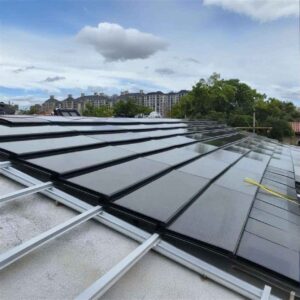
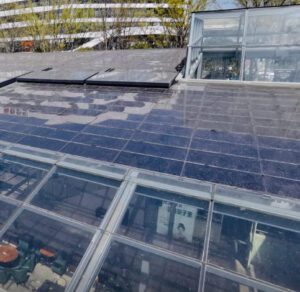
BIPV (Building-Integrated Photovoltaics): Solar technology that is integrated directly into building materials — such as glass facades, roofing tiles, or skylights — generating electricity while serving as a structural building component. BIPV products command higher margins than standard solar glass and require greater technical support from distributors. Example: A BIPV glass curtain wall on a commercial office building that simultaneously serves as the building’s exterior cladding and generates solar power.
Lead Coordinator: A dedicated team role responsible exclusively for first-contact response and initial qualification — distinct from closing agents who handle the full sales cycle. The most cost-effective role for improving first-response time in a growing distribution business.
Frequently Asked Questions (FAQs)
1. What is considered a fast lead response time in the solar distribution industry?
For solar distributors and agents handling project inquiries, industry leaders respond within 60 minutes for high-intent leads (website inquiries, direct specification requests, referrals). Research from Demand Local and Aurora Solar indicates that responding within 5 minutes produces conversion rates 8–21x higher than responding after 30 minutes. The benchmark for competitive performance in 2025 is: first contact within 30–60 minutes for high-intent leads during business hours, automated acknowledgment within 90 seconds for all leads at any hour.
2. How do we respond faster when our sales team is already at capacity?
The most effective solution for capacity-constrained solar distribution teams is separating first-contact responsibility from the full sales cycle. Designate one team member as a Lead Coordinator focused exclusively on rapid first contact and initial qualification — not closing deals. Simultaneously, implement CRM automation for the 90-second acknowledgment step. This allows your existing closing agents to focus on qualified opportunities while every inquiry receives immediate human contact.
3. Does fast response time matter as much for BIPV and solar glass products as it does for residential solar?
Yes — and arguably more so in BIPV distribution. BIPV product specifications are complex, often project-specific, and frequently require early-stage distributor engagement to influence the specification. Builders and architects specifying BIPV glass facades or solar roofing products for the first time are simultaneously evaluating the product and the distributor’s technical capability. Fast response allows you to arrive in that conversation first, shape the specification, and establish a technical relationship before competitors engage.
4. What CRM tools work best for solar glass distributors managing multi-product lead pipelines?
For multi-product solar distribution businesses, CRM platforms with strong automation and custom routing capabilities outperform general-purpose tools. Recommended platforms include HubSpot (strong automation, scalable), SalesExec (purpose-built for solar), Pipedrive (simple pipeline tracking for smaller teams), and Scoop Solar (combines CRM with project management). The critical feature set: automatic lead capture from inquiry forms, triggered SMS and email workflows, agent alert notifications, and response time tracking dashboards.
5. How should our team handle leads that come in after business hours?
Implement a two-layer after-hours system: (1) Automated acknowledgment — every after-hours inquiry receives an immediate SMS and email confirming receipt and providing a specific callback window (e.g., “We’ll call you between 9–10 AM tomorrow”). Include a calendar booking link for self-scheduling. (2) High-value escalation — leads above a project value threshold (e.g., > $80,000) trigger an alert to a designated on-call senior agent for a brief acknowledgment call within 2 hours, regardless of business hours. This system covers all leads without requiring full after-hours staffing.
6. What are the 7 qualification questions every solar distributor agent should ask on the first call?
The seven questions that qualify 80% of solar distribution prospects in under 3 minutes: (1) What is the project type? (2) What is the approximate scale or glass area required? (3) What is the target installation or delivery date? (4) Are you the procurement decision-maker? (5) Have you worked with this product type before? (6) Do you have a specification, or are you open to recommendations? (7) What is driving this inquiry today? These questions establish project reality, decision authority, timeline, and technical complexity — the four variables that determine how to route and prioritize the lead.
7. How do we calculate the revenue impact of improving our lead response time?
Use this formula: Monthly Revenue Uplift = Monthly Leads × (Target Conversion Rate − Current Conversion Rate) × Average Deal Value. Example: 60 monthly leads × (28% − 9%) × $18,000 = $205,200 per month. Multiply by 12 for annual impact. Substitute your own lead volume, current conversion rate (run the 100-lead audit to calculate it accurately), target conversion rate (use 25–30% as a realistic fast-response benchmark), and your average deal value. The resulting number is the revenue currently available to you through faster response alone.
8. Can responding to leads too quickly appear unprofessional or overly aggressive?
No — in B2B solar distribution contexts, fast response is interpreted as professionalism, not desperation. The key is the content of the first contact, not the speed. A brief, professional acknowledgment (“I received your inquiry and will call in 20 minutes”) reads as organized and attentive. A high-pressure pitch in the first 60 seconds reads as aggressive, regardless of timing. Speed combined with a calm, structured first message consistently outperforms both slow response and fast-but-pushy response in B2B conversion data.
9. What metrics should solar distribution teams track beyond response time?
The five core metrics that define lead response performance: (1) Average First Response Time (target: < 60 minutes for high-intent leads), (2) Qualification Rate (percentage of contacted leads that pass qualification; target: > 60%), (3) Lead-to-Appointment Conversion Rate (target: > 25%), (4) Lead-to-Close Rate (target: > 10% of total incoming leads), and (5) Average Deal Size (tracked against baseline to measure whether faster, better-qualified pipeline is producing higher-value deals). Review all five metrics weekly in a team dashboard.
10. What is a realistic ROI timeline for implementing a 24-hour lead response system?
For most solar distribution businesses, the revenue impact of improved lead response is visible within 30–45 days of implementation. The first closed deals attributable to faster response typically appear in Week 3–4 of the 30-day implementation plan — as the first leads handled under the new system progress through the pipeline to close. CRM setup and automation typically costs $500–$2,000 in software and configuration time. A single additional closed deal — at typical solar distribution deal values of $15,000–$50,000 — covers this investment entirely. Full ROI is typically achieved within 60 days. Ongoing performance improvement continues as the team’s qualification skill and response consistency mature over Months 2–6.
11. How do top-performing solar distribution teams maintain fast response consistently, not just at launch?
The systems that sustain performance over time share three characteristics: visible accountability (a weekly metrics dashboard seen by the full team), structural redundancy (every lead alert goes to at least two people, every shift has a designated responder), and process documentation (a written playbook that any agent can follow without relying on institutional memory). Teams that perform well at launch but regress after 60 days typically have speed dependent on individual effort rather than system design. Building the system so it works without heroes is the defining difference between a temporary improvement and a permanent competitive capability.
12. What is the financial case for hiring a dedicated Lead Coordinator in a solar distribution business?
A Lead Coordinator at $3,500–$5,000 per month (including on-costs) in a distribution business managing 40+ monthly inquiries pays for their role on a single additional closed deal. If the Coordinator’s dedicated first-contact process recovers 8 additional qualified appointments per month from leads that previously went cold — and the closing team converts 35% of those appointments — that is 2.8 additional deals per month. At an average deal value of $18,000, that is $50,400 in monthly revenue from a $5,000 per month role: a 10:1 ROI. The case for this hire is rarely about affordability; it is about recognizing that the constraint is in the front of the pipeline, not the back.
Sources: Aurora Solar / NREL Solar Lead Follow-Up Research | Demand Local — 43 CRM Lead Response Statistics | LeadTrackAI — Solar Lead Generation vs Lead Response | InsideSales.com — Response Time Matters | Optifai — Lead Response Time Benchmarks | Jia Mao Bipv — BIPV Distributor Product Range | SEIA Solar Storage Supply Chain Dashboard