How Commercial Solar Panel Companies Protect Long-Term System Value
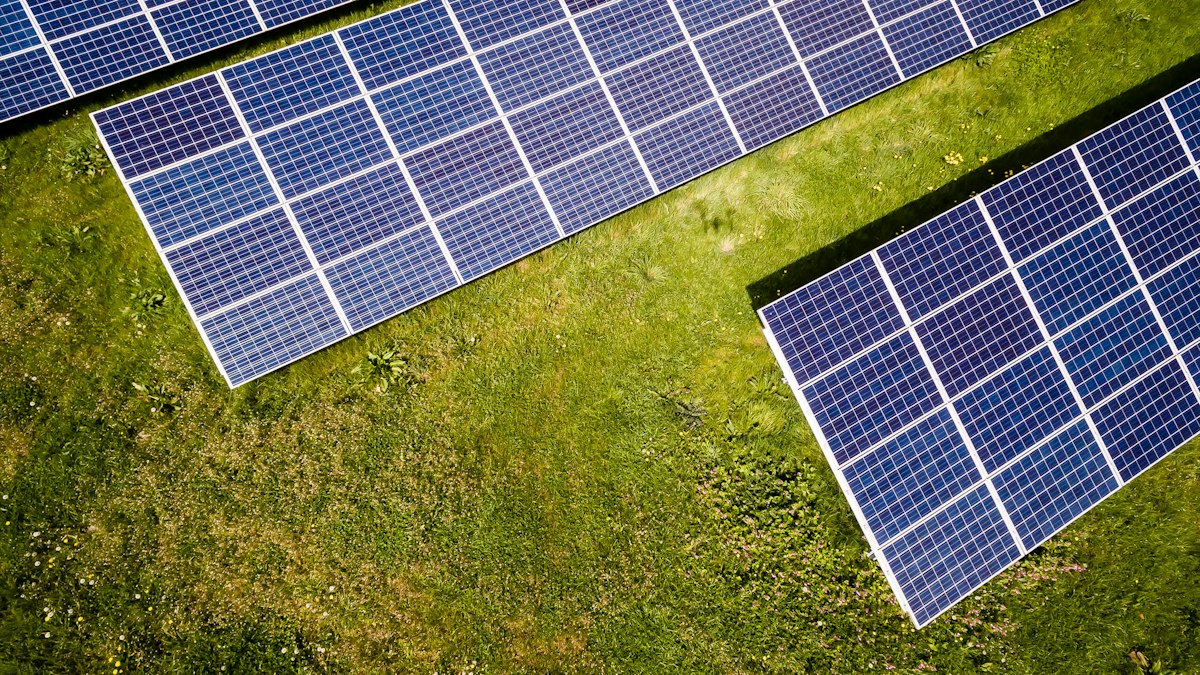
For most businesses, a commercial solar system is one of the biggest capital purchases on the building. A 500 kW rooftop array often costs as much as a new HVAC plant and a roof replacement put together.
Yet many owners treat commissioning day as the finish line. It is actually the start of a 25-to-30-year operating period. Across that period, small losses add up quietly: a dusty surface, a tripped inverter nobody noticed, a string running at 80%.
With solar adoption growing across warehouses, factories, campuses, and mixed-use buildings, the people who deliver these projects have to think past the handover. That includes roofing and curtain wall contractors, PV EPCs, energy service companies, distributors, and design consultants. Their clients now expect a plan that keeps the system earning.
This guide looks at how commercial solar panel companies help customers raise long-term system value in four areas:
- Monitoring and maintenance, so problems are caught while they are still small.
- Performance optimization habits, which lift energy yield every year.
- Timing expansions and upgrades, so capacity keeps pace with demand.
- Weighing costs against returns, so maintenance spending pays for itself.
| Term | What It Means | Simple Example |
|---|---|---|
| O&M | Operations and Maintenance: all the work that keeps a system running after installation | Quarterly inspections plus a yearly inverter service |
| Inversor | The device that turns the panels’ DC power into AC power the building uses | A 100 kW string inverter on the roof plant deck |
| Performance Ratio (PR) | Real output divided by expected output for the sunlight received | PR 0.82 = the system delivers 82% of its theoretical output |
| Specific yield | Energy produced per kW installed (kWh/kWp) per year | 1,200 kWh/kWp means a 500 kW system makes about 600,000 kWh |
| Degradation rate | How much output a panel loses each year as it ages | 0.5%/year means about 88% of original output after 25 years |
| Soiling | Dust, pollen, bird droppings, or grime blocking sunlight | A grey film on panels next to a freight yard |
| Repowering | Replacing aging parts (often inverters) to restore or raise output | Swapping 12-year-old inverters for new high-efficiency units |
| BESS | Battery Energy Storage System: batteries that store solar power for later use | Storing midday surplus to cut a 5 p.m. demand peak |
| Demand charge | A utility fee based on your highest power draw in a billing period | A single 15-minute spike that sets 30% of the monthly bill |
| LCOE | Levelized Cost of Energy: lifetime system cost divided by lifetime kWh produced | Better O&M lowers LCOE by raising the kWh side of the ratio |
Part 1: Monitoring and Maintenance Tips
Regular monitoring and maintenance are the base of solar system value. Without them, every other optimization is guesswork.

Remote Monitoring: Your System’s Early-Warning Network
Modern commercial systems report data every 5 to 15 minutes through the inverter or a data logger. A good monitoring platform shows:
- Real-time production for each inverter and, ideally, each string.
- Weather-adjusted expected output, so you can separate a cloudy week from a real fault.
- Alarms and fault codes, such as ground faults, grid trips, or communication loss.
- Historical trends that make slow degradation visible.
Why this matters in practice: picture a 100 kW inverter that trips offline in July. On a sunny site, it loses around 500–600 kWh a day. If nobody notices for three weeks, that’s more than 10,000 kWh gone. At commercial tariffs that is often $1,500 or more, from one unnoticed fault.
With alerts set up properly, the same fault gets a phone notification within an hour.
Industry insight: In our experience, the monitoring gap on many portfolios isn’t the software. It’s ownership. The EPC hands over a login and the facility manager never opens it. The better commercial solar companies now write a named alarm responder and a response time (for example, “critical alarms acknowledged within 4 hours”) into the O&M contract. That one clause often recovers more energy than any hardware upgrade.
Scheduled Maintenance: What to Check and When
| Task | Frequency | Who Does It | What It Prevents |
|---|---|---|---|
| Review dashboard and alarms | Weekly | Facility team / O&M provider | Long unnoticed outages |
| Compare string and inverter outputs | Monthly | O&M provider | Hidden string faults |
| Visual roof walk (debris, damage, drainage) | Quarterly | Trained staff | Hot spots, water ingress |
| Panel cleaning | 1–4× per year (site-dependent) | Cleaning contractor | Soiling losses |
| Inverter service (filters, fans, firmware) | Annually | Certified technician | Overheating, derating |
| Electrical testing (IV curves, insulation) | Annually | Certified technician | Ground faults, fire risk |
| Thermal (infrared) scan | Annually or every 2 years | Specialist / drone team | Cell and connector failures |
| Torque check on terminals | Every 1–2 years | Certified technician | Arcing at loose connections |
Why Proactive Beats Reactive
Reactive maintenance means fixing things after they break. It is always more expensive. You pay for the repair, for emergency call-out rates, and for all the energy lost between failure and fix.
Proactive maintenance turns surprises into planned work orders. For EPCs and energy service providers, it also protects their reputation. A client whose system quietly underperforms for two years rarely comes back for phase two.
Part 2: Performance Optimization Habits
Good monitoring shows you where energy is being lost. Optimization habits get it back. Most of these habits are cheap, repeatable, and easy to hand to a facility team.
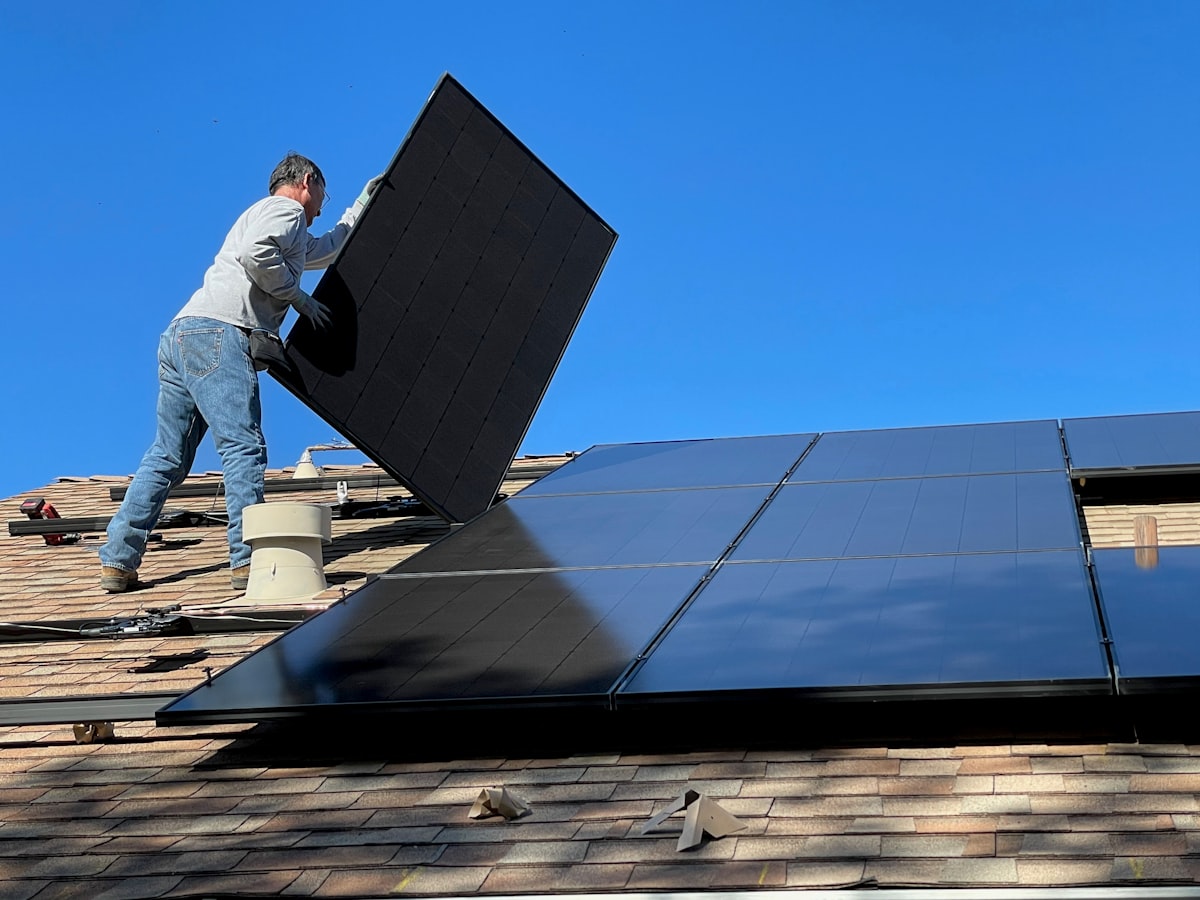
Habit 1: Get Orientation and Tilt Right, Then Protect It
Orientation is the compass direction the panels face. Tilt is their angle from horizontal.
In the Northern Hemisphere, panels facing true south at a tilt close to the site’s latitude usually give the most annual energy. On commercial roofs, though, the best choice isn’t always the one that maximizes kWh:
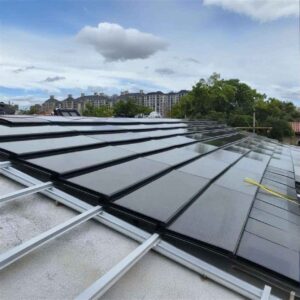
- East-west layouts at low tilt (10–15°) fit more panels on a flat roof and spread production across the day. They often produce more total energy per square meter of roof, even though each panel produces less.
- Low tilt cuts wind load, so fewer ballast blocks are needed. That matters on older roofs with limited structural capacity.
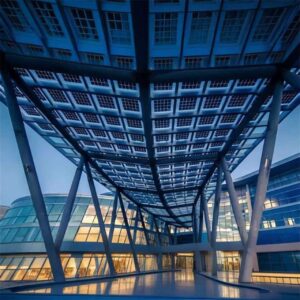
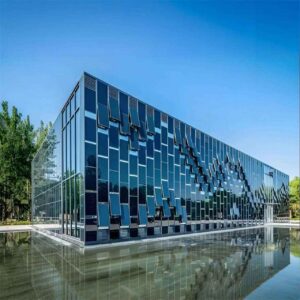
- Facade and BIPV installations trade some yield for surface area. A south-facing curtain wall on a tall building can hold several times more PV area than its roof.
Before you lock in a layout, run the options through NREL’s free PVWatts production calculator. It lets you compare tilt, azimuth, and loss settings for almost any location in minutes.
Protecting the orientation matters just as much. New rooftop HVAC units, signage, or a taller neighbouring building can add shading years after installation. Make shading review part of every tenant fit-out or roof works permit.
Habit 2: Clean Based on Data, Not the Calendar
Cleaning helps, but the right frequency depends on the site:
| Site Type | Typical Soiling Loss (Uncleaned) | Suggested Cleaning Frequency |
|---|---|---|
| Coastal office, high rainfall | 1–2% per year | Once a year or as needed |
| Suburban commercial | 2–4% per year | Twice a year |
| Industrial / near highways | 4–7% per year | 2–4 times a year |
| Agricultural / desert / near quarries | 7–15%+ per year | Quarterly or monthly |
Typical ranges. Your monitoring data is the best guide for your own site.
The smart approach: clean one test section and compare its output against an uncleaned section for two weeks. If the gain is worth more than the cleaning cost, clean more often. If not, save the money.
Safe cleaning methods: use soft brushes, low-pressure deionised water, and pH-neutral cleaners. Never use pressure washers, abrasive pads, or harsh solvents, since they can strip anti-reflective coatings and may void warranties.
Habit 3: Adjust for Seasonal Variations
Solar output changes a lot through the year. The seasons also bring their own problems:
- Spring: Pollen and bird nesting peak. Schedule a clean after pollen season and fit bird guards before nesting starts.
- Summer: Heat lowers panel efficiency by about 0.3–0.5% per °C above 25°C. Keep airflow under panels clear and make sure inverter ventilation isn’t blocked.
- Autumn: Leaves collect along edges and in valleys. Clear them before they cause hot spots.
- Winter: Low sun angles make shading from parapets and nearby structures longer. Snow cover can stop production entirely. Only clear it with approved tools, and only if it’s safe to do so.
Habit 4: Match Consumption to Production
This habit is often overlooked. Moving flexible loads to midday means more self-consumed solar and less energy exported at low feed-in rates. Examples include pre-cooling buildings, running compressors, charging forklifts or EV fleets, and scheduling batch processes.
For many businesses, a kWh used on site is worth 2–3 times more than a kWh exported.
Here is a helpful explainer on module-level optimization and monitoring for commercial arrays:
https://www.youtube.com/watch?v=5NmePt4zOUA
Part 3: When to Expand or Upgrade
A solar system sized for your business in 2018 may not fit your business in 2026. Knowing when to add capacity or replace parts keeps the system competitive.

Scenarios That Call for Expansion
| Trigger | What You’ll See | Typical Response |
|---|---|---|
| Facility growth | New production line, extra shift, building extension | Add rooftop, carport, or facade PV |
| Electrification | EV fleet chargers, heat pumps replacing gas | Expand PV and consider batteries |
| Rising demand charges | Peak kW growing faster than kWh use | Add battery storage for peak shaving |
| Tariff changes | Lower export rates, time-of-use pricing | Add storage, shift loads |
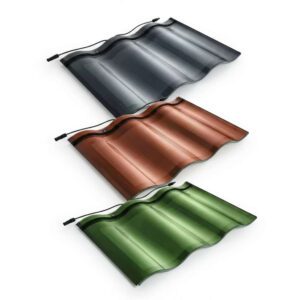
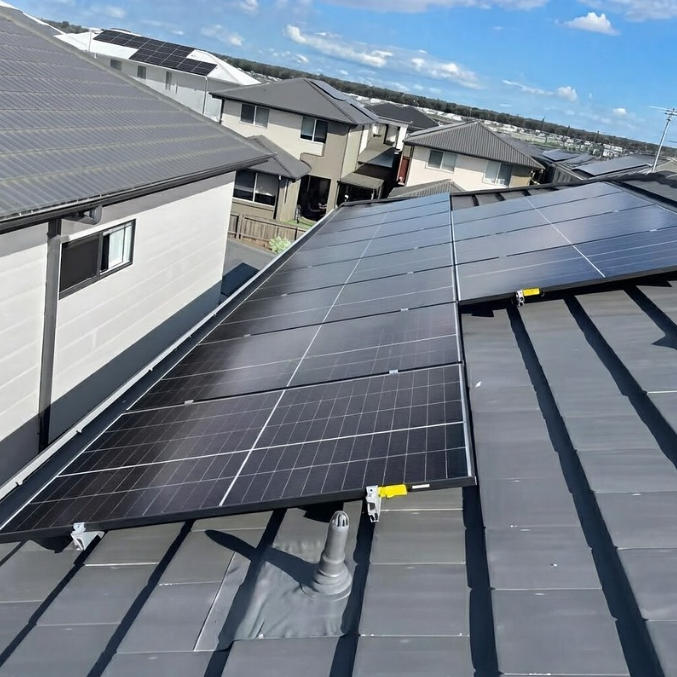
| Roof replacement due | Old roofing reaching end of life | Replace with BIPV roofing: one job, two functions |
| Sustainability targets | Scope 2 reduction goals, green building certification | Add PV on facades, canopies, and skylights |
Industry insight: One of the most expensive mistakes we see is re-roofing under an existing array. Removing and reinstalling panels can cost 15–25% of the original solar installation price. When a roof is within 5–7 years of replacement, many owners now combine the two projects. They re-roof with building-integrated PV and get the roofing material and the power plant in one scope. For curtain wall contractors, the same logic applies to facade refurbishments. This guide to BIPV curtain walls that generate power walks through the design and coordination steps.
Component Upgrades That Pay Off
Different parts of a solar system age at different speeds. Panels last longest, while inverters and electronics usually need attention first.
Typical industry ranges. Actual life depends on climate, product quality, and maintenance.
1. Inverter upgrades (repowering). Most string inverters last 10–15 years. Replacing them before they fail avoids downtime. Newer units also bring higher efficiency, better grid-support features, and much more detailed monitoring. SMA’s repowering program for commercial systems is a good example of how manufacturers now plan for this stage of a project’s life.
2. Adding battery storage. Batteries turn midday surplus into evening value. For commercial customers, the biggest win is usually peak shaving: cutting the short spikes that set demand charges. Backup power for critical loads is a second benefit. You can browse commercial and residential energy storage batteries to compare the capacity ranges available.
3. Monitoring upgrades. Older systems may only report at inverter level. Adding string-level or module-level monitoring can expose faults that were hidden for years.
4. Panel replacement or add-on. Panel efficiency has risen sharply. Many 2015-era panels were rated around 250–270 W. Many of today’s panels of similar size exceed 400 W. For broader context on where the technology is heading, this overview of PV panel trends shaping 2026 covers the main shifts.
Here is a short explainer on why repowering matters for aging solar assets:
https://www.youtube.com/watch?v=imgZLA_ww50
Getting the Timing Right
Use this simple rule of thumb:
- Years 0–5: Focus on monitoring, warranty claims, and fixing installation defects.
- Years 5–10: Review load growth. Consider storage if demand charges or tariffs have changed.
- Years 10–15: Plan inverter replacement before failures start. Upgrade monitoring at the same time.
- Years 15–25+: Assess panel degradation and roof condition. Decide between life extension and a full repower.
Counterargument: “Maintenance and Upgrades Cost More Than They Save”
Some owners and CFOs push back: solar panels have no moving parts, so why pay for O&M contracts, cleaning crews, and upgrades? Doesn’t that just eat the savings?
It’s a fair question. O&M for commercial rooftop systems often runs about $15–30 per kW per year, which is real money on a large system.
The numbers usually point the other way, though. Look at the output of a 500 kW system over 25 years in two scenarios:
- Maintained: Starts at 600 MWh a year and degrades at about 0.5% a year, close to the median rates in NREL’s analytical review of PV degradation.
- Neglected: Starts 7% lower because of soiling and undetected faults, then degrades faster, at about 0.9% a year, as the unfixed problems build up.
Illustrative model based on typical industry assumptions.
What the Gap Is Worth
| Item | Maintained | Neglected |
|---|---|---|
| Year 1 output | 600 MWh | 558 MWh |
| Year 25 output | ~532 MWh | ~450 MWh |
| Approx. 25-year total output | ~14,200 MWh | ~12,600 MWh |
| Energy difference | ≈ 1,600 MWh | |
| Value at $0.14/kWh | ≈ $224,000 | |
| O&M cost (at ~$20/kW/yr × 500 kW × 25 yrs) | ≈ $250,000 | Lower, but offset by emergency repairs |
On energy alone, the two columns look close. But the neglected system also carries:
- Emergency repair premiums, often 1.5–2× planned rates.
- Weaker warranty claims, because many manufacturers need maintenance records.
- Earlier inverter failures, from dust-clogged cooling and overheating.
- Safety and insurance exposure from arcing connectors and ground faults.
- Lower asset value when the building is sold or refinanced. Buyers discount systems that have no performance history.
Put together, disciplined O&M usually turns a break-even line item into a clear positive return. Upgrades such as repowering and storage are judged on their own payback, which is often 5–8 years in markets with high demand charges.
Long-Term Value Is Built, Not Installed
The advanced strategies that commercial solar panel companies offer play a central role in the long-term value of a business’s solar system. The installation sets the ceiling. Monitoring, maintenance, and smart upgrades decide how close the system gets to it, year after year.
Key takeaway: customers who engage actively keep their solar investments efficient, cost-effective, and aligned with their sustainability goals. That means watching the data, maintaining on a schedule, and timing upgrades to match business growth.
For contractors, EPCs, distributors, and designers, this is also a business opportunity. Teams that offer lifecycle support, and not just installation, build repeat relationships and stronger references.
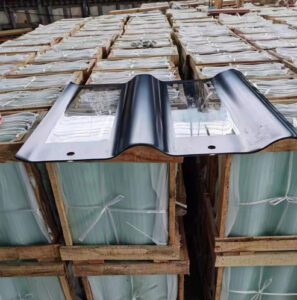
At Jia Mao Bipv, we work with roofing and curtain wall contractors, PV EPCs, and design teams on building-integrated solar projects where long-term performance planning starts at the specification stage. To compare solar roof tiles, PV glass, and storage options for your next project, explore the full BIPV and energy storage product range.
Preguntas frecuentes
1. How often should I monitor my solar energy system?
Check the monitoring dashboard at least weekly, and set up automatic alerts for critical faults such as inverter trips or ground faults. Do a deeper monthly review comparing string and inverter outputs against weather-adjusted expected output.
2. What are the signs that my solar panels need maintenance?
Common signs include:
- Output falling more than 5% below expected output for the weather.
- One string or inverter running well behind the others.
- Repeating inverter error codes.
- Visible dirt, cracks, or debris on the panels.
- Burn marks on connectors.
- Water stains in the ceiling under the array.
3. How can I optimize the orientation of my solar panels?
In the Northern Hemisphere, south-facing panels tilted near the site’s latitude usually give the highest annual yield. On flat commercial roofs, low-tilt east-west layouts often produce more total energy per roof area and reduce wind load. Model your options in a tool like PVWatts before you decide.
4. What cleaning methods are recommended for solar panels?
Use soft brushes, low-pressure deionised water, and pH-neutral, non-abrasive cleaners. Clean in the early morning or late afternoon to avoid thermal shock. Avoid pressure washers, solvents, and scouring pads, which can damage coatings and void warranties.
5. When is the best time to consider expanding my solar system?
Consider expanding when your facility grows, when you electrify vehicles or heating, when demand charges rise, when export tariffs fall, or when your roof is due for replacement. Adding capacity during a re-roof or facade refurbishment is usually the most cost-effective moment.
6. What types of upgrades can improve my solar system’s performance?
The main upgrades are:
- Inverters: Replacing units at 10–15 years brings higher efficiency and better monitoring.
- Monitoring: Adding module-level or string-level monitoring exposes hidden faults.
- Battery storage: Adding storage enables peak shaving and backup power.
- Panels: Newer high-efficiency panels can replace degraded or damaged ones.
7. How do I calculate the return on investment for my solar system?
Start with annual savings: kWh produced × your electricity rate, plus demand charge savings. Add incentives, then subtract O&M costs. Divide total system cost by net annual savings to get the simple payback period. For a fuller picture, include degradation, tariff changes, and the cost of replacing inverters over 25 years.
8. What incentives are available for upgrading solar technology?
Incentives vary by country and region. In the U.S., federal clean energy tax credits changed significantly under 2025 legislation. Deadlines for solar now differ from those for storage, so check current rules through SEIA’s federal tax policy updates. State and utility programs are listed in the DSIRE incentives database. Always confirm eligibility with a qualified tax advisor.
9. How can I integrate battery storage with my solar system?
You can add storage in two ways. AC-coupled storage uses its own inverter and suits most retrofits. DC-coupled storage uses a hybrid inverter and suits new builds or inverter replacements. Size the battery around your demand peaks and backup needs, not just your daily solar surplus.
10. What are the benefits of using a professional service for solar maintenance?
Professional O&M providers have certified electricians, testing equipment (IV curve tracers, thermal cameras), and fall-protection systems. They also produce the documented maintenance records that warranty claims, insurers, and property buyers often require.
11. Can energy monitoring software help me track performance more effectively?
Yes. Good software compares real output against weather-adjusted expected output and flags underperforming strings. It also tracks degradation over time and sends real-time alerts. That turns a hidden three-week outage into a same-day repair.
12. How do seasonal changes affect solar energy production?
Summer brings the most sunlight but also heat losses of about 0.3–0.5% per °C above 25°C. Winter brings low sun angles, longer shadows, and possible snow cover. Spring and autumn bring pollen and leaf debris. For global deployment trends and seasonal performance data, the IEA PVPS Trends in PV Applications report is a reliable reference.