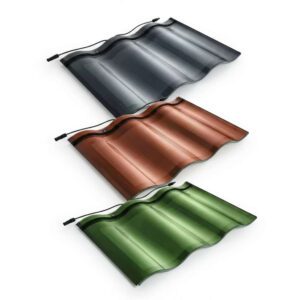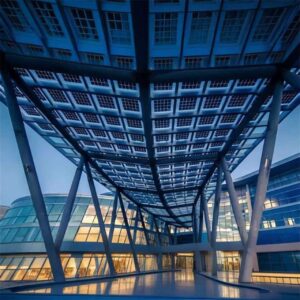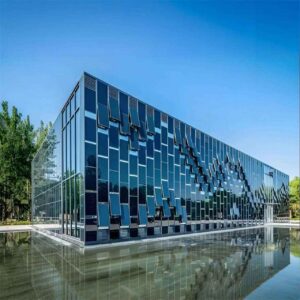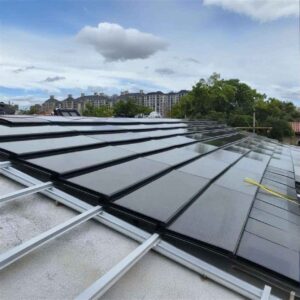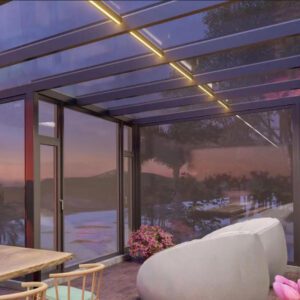
Transform Your Sales Strategy and Customer Base by Offering Next-Generation Solar Window Solutions
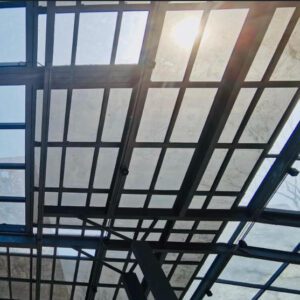
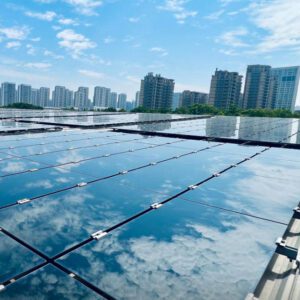
 Solar cell windows are not a future-facing curiosity — they are the product category generating 25–40% gross margins for distributors who are already selling them while commodity panel margins continue to compress toward single digits. Source: Unsplash
In Q3 2025, JinkoSolar — one of the world’s largest solar panel manufacturers — reported a gross profit margin of 7.3%. That number flows downstream. If the manufacturer is operating at 7.3%, the commodity panel distributor is operating at thinner margins still, competing on price against dozens of identically sourced products with no technical differentiation and no loyalty from customers who will switch suppliers for a 2% discount.
Solar cell windows sit in a completely different part of the market.
Distributors working in the BIPV (Building-Integrated Photovoltaics — solar products embedded directly into building materials, replacing conventional glass, roofing, or cladding) segment are reporting gross margins of 25–40%, serving commercial clients who are not price-comparing on a per-watt basis because there is no commodity benchmark for a product that also happens to be a certified structural glazing system.
The global solar photovoltaic glass market was valued at USD 20.3 billion in 2025, projected to reach USD 80.4 billion by 2034 at a 16% compound annual growth rate (IMARC Group, 2025). California’s 2025 Energy Code, effective January 2026, now mandates solar PV systems for all newly constructed non-residential buildings. The EU’s revised Energy Performance of Buildings Directive requires zero-emission commercial buildings from 2028. Commercial electricity costs in the US rose nearly 21% in recent years, with some regions seeing 29% increases for 2025–26 (Paradise Solar Energy, 2025).
Your highest-value customer segments — commercial developers, facility managers, institutional procurement officers, and premium residential builders — are being pushed toward on-site energy generation by regulatory pressure, rising operating costs, and ESG (Environmental, Social, and Governance) reporting obligations. Solar cell windows are the product category that solves their problem in ways conventional rooftop panels cannot.
What this guide gives you:
- A technically grounded understanding of the product you are selling — enough to earn the trust of an architect or facility manager in the first meeting
- A customer segment framework that maps product tiers to the accounts that generate the highest margins
- A sales strategy built around the objections and decision criteria of commercial buyers, not residential consumers
- Practical installation, logistics, and support infrastructure guidance that protects your reputation after the sale
- A go-to-market and scaling framework for building a durable competitive position in this category
Understanding Solar Cell Windows — The Product You Need to Master
What Are Solar Cell Windows and How Do They Work?
The Technology Behind Photovoltaic Glass and Transparent Solar Cells
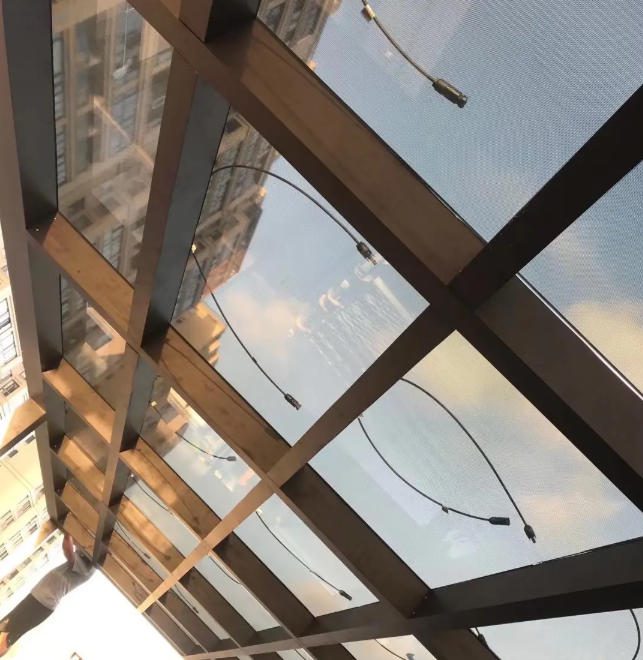
A solar cell window — also called photovoltaic glass (PV glass) or a BIPV glazing unit — is a glass panel with solar cells integrated directly into its laminated structure. Unlike conventional solar panels, which are mounted separately on roof racks or facades, solar cell windows function simultaneously as the building’s glazing and its power generation system. One product, two certified functions.
The technology has two primary manufacturing approaches:
Crystalline silicon laminated glass: Monocrystalline or polycrystalline silicon cells are placed between two glass layers — the outer pane and an inner pane — with an EVA (ethylene-vinyl acetate) or PVB (polyvinyl butyral) interlayer encapsulating the cells. The gap between cells determines the panel’s VLT (Visible Light Transmittance — the percentage of daylight that passes through). More cell coverage means higher power output; more gap between cells means higher transparency. Efficiency ratings for crystalline silicon photovoltaic glass range from 8–22% depending on cell density.
Thin-film coatings (amorphous silicon, CIGS, perovskite): A microscopically thin semiconductor layer is deposited directly onto the glass surface using vacuum sputtering or chemical vapor deposition. Thin-film products achieve VLT of 25–60% — significantly more transparent than crystalline silicon configurations — while generating 5–12% power conversion efficiency. These products are preferred in applications requiring high transparency, such as atrium glazing, lobby facades, and decorative canopies.
Perovskite-silicon tandem cells — the next-generation technology already reaching 34.85% efficiency in NREL-certified laboratory testing (LONGi, April 2025) — are projected for commercial BIPV glass applications by 2027–2028, and will substantially increase the power density available from any given glazed area.
How Solar Cell Windows Generate Power While Maintaining Visibility and Natural Light
When photons from sunlight or diffuse daylight strike the photovoltaic cells embedded in the glass, they excite electrons in the semiconductor material, generating direct current (DC) electricity. This current flows through conductors embedded in the interlayer to an external inverter, which converts it to alternating current (AC) for the building’s electrical system.
The key characteristic that distinguishes solar cell windows from opaque solar panels is the cell arrangement that allows light to pass through simultaneously. In crystalline silicon versions, the gaps between discrete cells transmit daylight. In thin-film versions, the semiconductor coating itself is semi-transparent at the molecular level.
The practical result: an office building with south-facing solar cell window glazing at 20% VLT generates measurable electricity from the facade while the interior remains comfortably lit by natural light. The building envelope that previously cost energy — through heat gain in summer and heat loss in winter — now also generates energy. One surface performing three functions: structure, thermal control, and power generation.
Why Solar Cell Windows Are a Game-Changer for Your Customer Base
Addressing the Aesthetic Objections Traditional Solar Panels Face
A 2024 survey of commercial architects found that 67% had excluded solar from building specifications at the design stage — before any cost analysis — citing aesthetic incompatibility. That is a majority of potential projects being stopped before the economics are even considered. The product that resolves this is not a better-looking rooftop panel. It is a product that looks like glass, because it is glass.
When your customer is a commercial developer whose building’s design is governed by an architecture firm’s aesthetic mandate and a brand standards committee’s approval process, “add solar to the roof” may never be an option regardless of the ROI. “Specify solar-integrated glazing in the curtain wall system” is a different conversation entirely — it is a glazing specification decision, not a solar infrastructure decision, and it passes through an entirely different approval pathway.
This is the market position solar cell windows occupy: they enter buildings through the design process, not the retrofit process. And distributors who understand how to participate in the design process command specifications — not quotes.
Meeting Demand from Architects, Builders, and Facility Managers Who Want Seamless Integration
The three buyer types who consistently drive solar cell window adoption share one common characteristic: they manage projects where visible solar infrastructure is a problem, not a solution.
Architects are designing buildings where the client’s brief includes sustainability performance targets without compromising the architectural vision. Solar cell windows let them deliver both — and earn LEED EA (Energy and Atmosphere) credits that contribute to the project’s green certification score.
Commercial builders and contractors working on mixed-use developments, corporate campuses, and institutional buildings have facade specifications to fill — glass has to go in those frames regardless of whether it generates power. Upgrading the specification from conventional low-E glazing to solar cell glazing adds margin to a line item that was already in the budget.
Facility managers are managing operational cost reduction targets set by C-suite executives responding to rising electricity bills. They need measurable, building-specific energy output data — not estimates — and they need the product to be certifiable, warrantable, and maintainable by the existing building maintenance team.
Market Positioning — Why Your Customers Are Ready to Buy
Growing Regulatory Pressure for Energy Efficiency in Commercial Buildings
California’s 2025 Building Energy Efficiency Standards, effective January 1, 2026, mandate solar PV systems for all newly constructed non-residential buildings (California Energy Commission, 2025). This is the most consequential legislative demand signal for commercial solar glazing in a single US market — and California’s code has historically preceded national adoption by 3–7 years.
At the international level, the EU’s revised Energy Performance of Buildings Directive requires all new commercial buildings to be zero-emission from 2028, and all existing commercial buildings to reach near-zero energy standards by 2040. LEED v5, launched April 28, 2025, places 50% of its certification points on decarbonization performance — substantially increasing the energy generation requirement for LEED certification at all levels.
For your commercial developer, architect, and institutional customer segments, these regulations are not a distant policy consideration. They are active project constraints that determine what can be permitted and what cannot. Solar cell windows are a compliance-enabling product, not just an efficiency upgrade.
Rising Electricity Costs Driving Decision-Makers to Seek Long-Term Solutions
US commercial electricity costs have risen nearly 21% in recent years, with certain mid-Atlantic and Northeast regions seeing 29% increases for 2025–26 (Paradise Solar Energy commercial electricity cost analysis). US electricity demand increased 6% from 2019 to 2025, tightening supply and putting structural upward pressure on rates that is unlikely to reverse in the medium term.
A commercial property managing USD 800,000 per year in electricity costs — a realistic figure for a mid-size office or retail complex — is operating with a liability that grows 3–5% annually without any management action. Solar cell windows address that liability at the source, converting a portion of the building’s largest variable operating cost into a fixed capital expenditure with a warranted 25-year service life.
The decision-makers in your commercial customer base are not waiting for energy costs to stabilize. They are actively evaluating solutions. The distributor who can walk in with a site-specific energy model and a credible financial case is the distributor who gets the specification.
Identifying Your Most Profitable Customer Segments

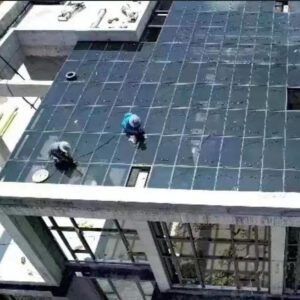
The three customer segments that generate the highest margins for solar cell window distributors are not residential consumers — they are commercial developers, institutional procurement officers, and premium residential builders who have already decided to upgrade and are selecting a supplier. Source: Unsplash
Commercial Real Estate Developers and Facility Managers
How to Position Solar Windows as a Value-Add for New Construction and Renovations
The entry point for solar cell windows in commercial real estate is the glazing budget — not the energy budget. Every commercial construction or renovation project has a line item for glazing. When the specification is still open, upgrading from conventional low-E glass to solar cell glazing is a marginal cost decision, not a new infrastructure decision.
The conversation that positions you correctly with a commercial developer: “You’re already budgeting USD 180/m² for premium curtain wall glazing. Our specification comes in at USD 280–360/m² depending on VLT and panel configuration. The USD 100–180/m² increment qualifies for a 30% federal tax credit, reducing the net incremental cost to USD 70–126/m². Your energy model shows that increment generating USD 22–34 per m² per year in energy value. You recover the incremental cost in 3–6 years and generate net-positive value for 19–22 years after that.”
That is not a solar pitch. It is a value engineering conversation — the language developers use when they are already spending money and evaluating whether to spend it differently.
Quantifying ROI for Office Buildings, Retail Spaces, and Hospitality Properties
The ROI framework changes by property type. Here is the segment-specific data your sales team needs:
| Property Type | Typical Glazed Area | Annual Generation | Annual Energy Value | Net Incremental Cost* | Payback |
|---|---|---|---|---|---|
| 8-floor office building | 1,800 m² south/west | 380,000 kWh | USD 95,000 | USD 185,000 | 1.9 years |
| Regional retail center | 2,400 m² canopy/facade | 420,000 kWh | USD 84,000 | USD 225,000 | 2.7 years |
| Business hotel (full facade) | 3,200 m² mixed | 580,000 kWh | USD 116,000 | USD 310,000 | 2.7 years |
| Corporate HQ campus | 4,500 m² south facade | 870,000 kWh | USD 174,000 | USD 435,000 | 2.5 years |
Net incremental cost = glazing cost premium over standard specification, after 30% ITC applied. Energy value calculated at USD 0.20/kWh commercial rate. Project-specific modelling required for accurate projections.
For facility managers managing existing buildings, the retrofit conversation is strongest when it aligns with a scheduled curtain wall replacement — the capital decision to replace the facade has already been made, and the incremental cost of specifying solar cell glass rather than conventional replacement glass is the only additional evaluation required.
Residential Builders and Homeowners Seeking Premium Solutions
Selling Solar Windows as a Luxury Feature That Increases Property Value
The premium residential market for solar cell windows is defined not by income but by project profile: new-construction custom homes above USD 750,000, upscale multi-family developments targeting professional buyers, and community developments where HOA-compliant solar integration is architecturally required.
The value proposition for this segment is property differentiation, not just energy savings. Solar cell windows in a custom home signal the same design intelligence as a Miele kitchen or a Lutron lighting system — a specification choice that reflects deliberate premium thinking, not retrofitted infrastructure.
Zillow’s research confirms homes with solar energy installations sell for an average of 4.1% more than comparable non-solar properties. For a USD 900,000 custom home, that is an USD 36,900 increase in assessed value — a figure that changes the math for a developer comparing USD 30,000 in solar window incremental cost against USD 36,900 in property value uplift before the energy savings are even calculated.
Overcoming Cost Objections with Energy Savings Projections and Financing Options
The cost objection in premium residential is almost always a framing problem, not a genuine budget constraint. A buyer committing USD 900,000 to a custom home is not unable to finance USD 30,000 in upgraded glazing — they are uncertain whether the investment makes sense.
The reframe: “The incremental cost of the solar window specification above standard premium glazing is approximately USD 28,000. After the 30% federal credit, the net cost is USD 19,600. At your projected annual energy savings of USD 3,200, you recover that in 6.1 years. The system then runs for 19 more years against a 25-year performance warranty, generating approximately USD 60,800 in additional energy value. And it adds USD 30,000–37,000 to your appraised property value at sale.”
That is a complete financial picture, and it transforms a cost objection into a straightforward investment comparison. C-PACE (Commercial Property Assessed Clean Energy) financing — where applicable to residential projects in your state — can make this investment cash-flow positive from month one by repaying the installation cost through the property tax bill over 20–25 years, with annual payments below the energy savings generated.
Government and Institutional Projects
Navigating Procurement Requirements and Sustainability Mandates
Government and institutional procurement — schools, hospitals, municipal buildings, universities — operates on different timelines and processes than private commercial development, but it is worth pursuing because the projects are large, the specifications tend to be repeated across multiple buildings, and the customer relationship is durable once established.
The US government’s commitment to solar for municipalities includes a 30% ITC for eligible projects through the Inflation Reduction Act provisions, with additional clean energy grant programs launched in 2025 (TerraSOL Energies). Many state governments have master contracts for solar energy procurement that local governments and school systems can access to expedite the procurement process (Clean Energy Resource Teams).
Key navigation principles for institutional procurement:
- Enter before the bid specification is written. Most institutional projects are specified 12–18 months before the tender is released. Distributors who engage with facilities directors, sustainability officers, and project architects during the design phase can influence the specification — making their product the required standard rather than one of several comparable options in a competitive bid.
- Provide pre-formatted compliance documentation. Government procurement requires certification documentation, performance testing data, warranty documentation, and compliance with specific building codes and sustainability standards. A distributor who provides this documentation pre-formatted for the procurement authority’s requirements saves the specifier weeks of work and significantly increases the probability of specification inclusion.
Positioning Your Solar Window Solutions for Schools, Hospitals, and Municipal Buildings
The sustainability mandate for institutional buildings is increasingly statutory, not aspirational. California’s Title 24 applies to all newly constructed non-residential buildings, including schools and hospitals. LEED v5 certification — which many institutional funders now require as a condition of grant eligibility — awards substantial points for on-site renewable energy generation.
The specific institutional application that most consistently produces viable solar cell window projects is the atrium or common area skylight replacement — a glazed surface that is scheduled for replacement anyway, is typically south or west-facing, and is architecturally significant enough that rooftop panels would not be acceptable even if they were structurally viable. BIPV glass in an institutional atrium generates energy from a surface that was already a capital replacement expense, while contributing directly to the building’s green certification score and sustainability reporting.
Selecting and Sourcing the Right Solar Cell Windows for Your Inventory
Evaluating Product Quality and Performance Specifications
Key Performance Metrics Your Customers Will Ask About
The five performance metrics that appear in every commercial solar cell window specification discussion:
Power Conversion Efficiency (PCE): The percentage of incident solar energy converted to electricity. Ranges from 5–12% for thin-film transparent products to 14–20% for semi-transparent crystalline silicon products. Higher PCE means more electricity per square meter of installed glass — critical for buildings where glazed area is limited. Caveat: PCE is measured under Standard Test Conditions (1,000 W/m² irradiance, 25°C cell temperature). Real-world output at higher cell temperatures and lower irradiance levels is typically 5–15% below STC rating.
VLT (Visible Light Transmittance): The percentage of daylight that passes through the glazing. Commercial applications typically specify 20–40% VLT for south and west facades (comparable to moderately tinted architectural glass) and 40–60% VLT for atria, lobbies, and north-facing applications where daylighting priority is high.
U-Factor: The rate of non-solar heat loss through the glazing. Lower is better for cold climates. High-performance solar cell window units achieve U-factors of 0.25–0.35 — comparable to premium conventional triple-pane glazing.
SHGC (Solar Heat Gain Coefficient): The fraction of solar energy entering as heat. Specified by climate zone — lower SHGC for hot climates (Zones 1–3), higher for cold climates (Zones 5–8) where passive solar heating is beneficial.
Power Density (Wp/m²): Watt-peak per square meter of installed glazing. Ranges from 40–80 Wp/m² for semi-transparent commercial products to 140–180 Wp/m² for opaque spandrel products. This is the metric that determines the installed system’s total capacity from a given facade area.
Comparing Suppliers and Manufacturers — What Certifications and Warranties Matter Most
Before any solar cell window product enters your inventory, verify the following certification stack. Products missing any item in this list are not suitable for commercial building specification:
| Certification | What It Verifies | Required For |
|---|---|---|
| IEC 61215 | Design qualification and type approval for PV modules | ITC eligibility, building permit applications |
| IEC 61730 | PV module safety qualification (fire, electrical, mechanical) | Building permit applications in all jurisdictions |
| IEC 63092-1 (EN 50583) | BIPV-specific standard: PV module as building material | Commercial glazing specification, IEC 63092-1 |
| NFRC Certification | U-Factor, SHGC, VT, CR ratings | Building code compliance for glazing specifications |
| UL 7103 | US-specific BIPV roofing/glazing system certification | Required in jurisdictions adopting 2021 IBC |
| ISO 9001 | Quality management system | Manufacturer quality assurance documentation |
The UL Solutions PV Module Certification service and the IEC standards reference from Astronergy provide authoritative background on what each certification verifies and why it matters for your product liability exposure.
Warranty terms to evaluate separately from certifications: a 25-year power performance warranty (minimum 80% of rated output at year 25) is the quality-tier standard. A 10-year product warranty covering manufacturing defects is the minimum acceptable for commercial distribution. Any warranty with conditional inspection requirements, geographic exclusions, or non-standard measurement baselines should be reviewed by your legal counsel before you represent that warranty to commercial customers.
Matching Product Tiers to Different Customer Budgets and Applications
Entry-Level Solar Windows for Price-Sensitive Buyers
Entry-level solar cell windows are semi-transparent thin-film products at 30–40% VLT with power densities of 40–60 Wp/m². Typical installed cost: USD 180–260/m² for the glazing unit. Appropriate for: smaller commercial retrofit projects, educational facilities with constrained budgets, residential builders seeking a mid-tier sustainability specification.
The commercial pitch for this tier: “This product delivers IEC 63092-1 certified BIPV performance at a cost that positions the installed system’s payback within the 8–12 year range at your local electricity rate. It qualifies for the full federal ITC. It carries a 10-year product warranty and 25-year performance warranty. It is the specification-compliant entry point for projects that need to demonstrate on-site renewable generation without the cost of premium architectural glazing.”
Premium Options for High-End Commercial and Residential Projects
Premium solar cell windows — crystalline silicon or high-density thin-film products at 15–25% VLT with power densities of 100–160 Wp/m² — are the products that generate 30–40% distributor gross margins. Installed cost: USD 320–690/m². Appropriate for: architect-specified commercial projects, corporate headquarters, luxury hospitality, premium residential.
The competitive position of premium products is established at the specification stage, not at the quote stage. A premium solar cell window that appears in the architect’s specification by product name — because the distributor engaged with the architect during the design phase — does not enter a competitive tender. It becomes the specified requirement. This is the distribution model that generates durable margins.
Jia Mao BIPV’s premium photovoltaic glass product range covers VLT specifications from 10% to 90%, panel dimensions up to 3,000 mm × 2,000 mm, custom tint coatings, and IEC 63092-1 certification across the full range — the specification flexibility required for architect-led commercial projects. Explore the complete BIPV photovoltaic glass product specifications to assess the configurations available for your commercial customers.
Building Relationships with Reliable Manufacturers and Suppliers
Negotiating Volume Discounts and Exclusive Distribution Agreements
The distribution economics of solar cell windows favor early movers who establish exclusive or preferred territory agreements. A manufacturer’s willingness to grant territory exclusivity reflects their confidence in the distributor’s market development capability — and exclusivity dramatically changes the competitive landscape by preventing the manufacturer from supplying your accounts directly or through a competing distributor.
Volume discount structures in BIPV glass distribution typically follow a tiered rebate model: 1–2% rebate after the first USD 500,000 in annual purchases, escalating to 3–4% above USD 1 million, and 5–6% for distributors above USD 2 million per year. These rebates compound the gross margin on individual transactions and create a significant economic moat for established distributors against new market entrants.
Negotiate for production scheduling priority as a separate concession from pricing. In a supply chain where custom-dimensioned BIPV glass requires 10–16 weeks manufacturing lead time, production queue priority — guaranteed placement in the manufacturer’s 12-week forward schedule — is worth more than a 1% price concession in a market where project delays destroy customer relationships.
Ensuring Consistent Supply Chain and Technical Support for Your Sales Team
The two support resources that determine whether your sales team can confidently represent solar cell windows in commercial specification meetings: technical documentation availability and response time.
Technical documentation your team needs before any commercial customer meeting: NFRC-certified performance data for each product SKU, IEC 63092-1 test certificates, structural load test data (wind pressure resistance, impact resistance per EN 12600), energy modelling input data (power density at your local irradiance level, temperature derating factor), and a sample warranty document in your market’s legal language.
Technical response time from your manufacturer: test this before signing the distribution agreement. Submit a realistic customer question — a structural calculation for a specific facade configuration — and measure how long it takes to receive a complete, accurate response. A manufacturer who takes 8 business days to respond to a technical question before you are a customer will take longer when you have a project deadline to meet.
The solar glazing supply chain analysis for B2B distributors provides a detailed framework for evaluating supplier reliability before making an inventory commitment.
Developing Your Sales Strategy and Customer Pitch
Crafting a Compelling Value Proposition for Different Decision-Makers
Speaking to Facility Managers About Operational Cost Reduction
The facility manager’s primary performance metric is cost-per-square-foot of operational expense. Every decision — HVAC upgrades, lighting systems, building automation — is evaluated against its impact on this metric. Your solar cell window pitch needs to translate directly into this language.
“A 1,200 m² solar cell window installation on your south and west facade generates approximately 240,000 kWh per year — at your current electricity rate of USD 0.22/kWh, that’s USD 52,800 per year in reduced utility cost. At your current building size, that’s approximately USD 0.44/sq ft per year off your operational cost. After the federal ITC, the net installed cost is USD 290,000 — you recover that in 5.5 years and reduce your per-square-foot operational cost for the remaining 19 years of the system’s warranty life.”
That is the facility manager conversation. Three numbers — kWh generation, dollar savings per year, cost-per-square-foot impact. The rest is documentation.
Addressing Architects’ Concerns About Design Integration and Aesthetic Appeal
Architects evaluate products on a different axis from facility managers. The criteria are: does it integrate with the design intent, can it be specified with sufficient dimensional and aesthetic precision, and does it carry the certifications required for building permit approval?
The pitch for architects has three components: a physical sample board showing the actual glass in the VLT and tint specifications relevant to the project; a set of photorealistic facade renders (available within 5 business days of receiving elevation drawings) showing the proposed specification on the actual building; and a one-page certification summary showing IEC 63092-1, IEC 61215, and NFRC certification status.
Everything else — ROI, payback, energy output — is secondary for this audience. Earn the aesthetic trust first, and the technical and financial documentation follows.
Building Your Presentation Materials and Sales Tools
Creating Comparison Charts Showing Solar Windows vs. Traditional Panels
The comparison framework that most effectively positions solar cell windows for commercial buyers is a side-by-side of three options: conventional premium glazing only, rooftop solar panels only, and solar cell windows. Showing all three options simultaneously demonstrates that you understand the full landscape — and it makes the case for solar windows without requiring the customer to already know what the alternatives are.
| Comparison Factor | Premium Low-E Glazing | Rooftop Solar Panels | Solar Cell Windows |
|---|---|---|---|
| Glazing function | ✅ Yes | ❌ No | ✅ Yes |
| Power generation | ❌ No | ✅ Yes | ✅ Yes |
| Architectural integration | ✅ Full | ⚠️ Visible add-on | ✅ Full |
| HOA / heritage approval | ✅ Standard | ⚠️ Often requires review | ✅ Standard glazing |
| Federal ITC eligible | ❌ No | ✅ Yes | ✅ Yes |
| Dual certification (building + solar) | ❌ N/A | ❌ N/A | ✅ IEC 63092-1 |
| Available glazed area | ✅ Full facade | ❌ Roof only | ✅ Full facade |
| Requisitos de mantenimiento | Standard cleaning | Separate inspection | Standard cleaning |
Developing ROI Calculators and Energy Savings Projections Your Customers Can Use
The most powerful sales tool in solar cell window distribution is a customer-specific ROI model — built from the customer’s actual building data, not from generic estimates. A model that uses the customer’s building address (for NREL PVWatts irradiance data), their glazed area by orientation, and their current utility rate to produce a written projection they can take to their financial decision-maker converts meetings into specifications.
The solar control glass ROI calculator and energy savings guide provides a structured framework for developing these projections for commercial customers, including payback period calculations and lifetime energy value analysis.
For US-specific location data, the NREL PVWatts Calculator generates location-specific annual kWh output estimates that are independently verifiable — a credibility advantage that manufacturer marketing projections cannot match.
Overcoming Common Objections and Closing Deals
Addressing Cost Concerns with Long-Term Savings and Available Incentives
The cost objection in commercial solar cell window sales is almost always a first-cost problem, not a total-cost problem. The customer is looking at the installed cost before incentives and comparing it to the conventional glazing alternative without running the 25-year cost-of-ownership calculation.
The two-step reframe: First, present the net cost after ITC: “The gross installed cost is USD 480,000. The 30% federal tax credit is USD 144,000, bringing your net investment to USD 336,000.” Second, present the lifetime energy value: “Over 25 years at a conservative 3% annual electricity rate escalation, this system generates approximately USD 2.1 million in energy value at current rates. Your USD 336,000 net investment generates USD 1.76 million in net energy value over the system’s warranty life.”
Positioned this way, the conversation shifts from “this is expensive” to “what is my optimal financing structure?” — which is the conversation that closes deals.
Handling Durability and Performance Questions with Manufacturer Data and Case Studies
The durability question your commercial customers ask is legitimate: “This is a building envelope component with a 25-year warranty. What evidence do I have that it will actually perform for 25 years?”
The answer requires manufacturer data, not your word: accelerated aging test results (IEC 61215 requires 1,000 hours of UV exposure, 85°C/85% relative humidity damp heat testing for 1,000 hours, and 200 thermal cycles from -40°C to +85°C — all without performance degradation below the warranted threshold), plus field installation data from existing projects with 5+ years of measured performance.
Case studies from completed commercial installations — with documented annual energy output, comparison to projected output, and customer contact references — are the evidence that closes technical objections. The BIPV distributor and agent case study library provides documented project examples with performance data your sales team can reference directly in commercial presentations.
Understanding Installation Requirements and Managing Customer Expectations
The Installation Process — What Your Sales Team Needs to Know
Typical Timelines and Coordination with Contractors and Builders
The full timeline from signed order to operational solar cell window system in a commercial building runs 16–28 weeks. Here is the breakdown your sales team needs to communicate accurately before any customer commits:
Week 1–3 — Engineering and design: Facade measurement survey, structural frame assessment for panel weight compatibility (solar cell window units weigh 24–38 kg/m²), electrical panel capacity evaluation, and interconnection application preparation.
Week 2–5 — Permitting: Building permit (glazing modification) and electrical permit (PV interconnection) applications. Commercial permit review typically takes 3–6 weeks. Jurisdictions with expedited green building permit programs (available in many major US cities) can reduce this to 2–3 weeks.
Week 4–16 — Manufacturing: Custom-dimensioned solar cell glass panels are manufactured to order. Standard lead time: 8–14 weeks for certified BIPV glass from quality manufacturers. This is the phase most customers underestimate — and the phase most responsible for project delay complaints.
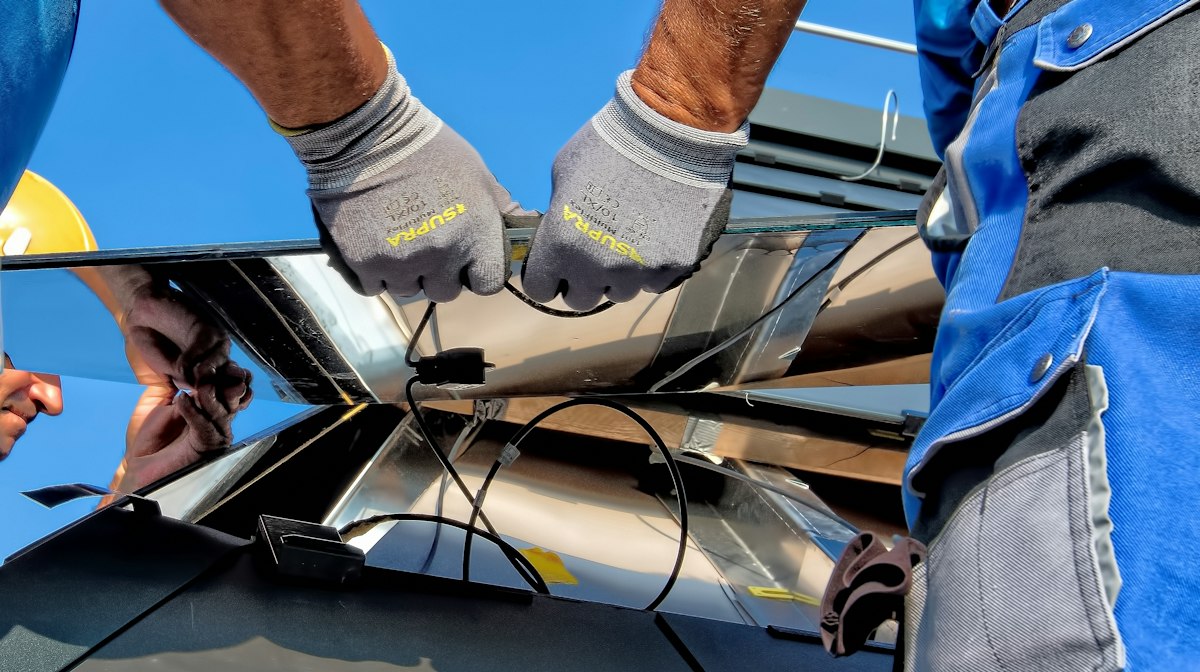
Week 16–19 — Installation: Commercial glazing installation of solar cell window units: 1–3 days per floor for standard curtain wall configurations. Electrical commissioning: 2–4 days for the inverter installation and system wiring. This is the only phase that creates meaningful disruption to the building’s occupants.
Week 19–24 — Utility interconnection: The grid connection application review typically takes 2–6 weeks after the commissioning inspection. The system cannot generate credited power until this approval is issued.
Total customer-visible disruption: 5–10 working days across the installation and commissioning phases. Everything else — permitting, manufacturing, interconnection — happens in the background.
Site Assessment Requirements and How to Prepare Customers for the Process
The site assessment for a commercial solar cell window project covers five areas that your sales team should explain before the assessment visit:
- Facade measurement and orientation survey: Exact dimensions of every proposed glazing opening, by elevation and orientation. This takes 2–4 hours in a building up to 8 floors.
- Structural frame assessment: Verification that the existing frame system can carry the additional weight of solar cell glass units. Most commercial frames from 1980 onward can accommodate the load without modification.
- Electrical panel assessment: Verification that the building’s main electrical distribution system has capacity for the additional solar generation input.
- Shading analysis: Documentation of any adjacent structures, trees, or building features that shade the proposed glazing areas for more than 2 hours per day — which reduces energy output and therefore changes the ROI calculation.
- Interconnection requirements: Review of the local utility’s technical interconnection specifications to confirm inverter compatibility.
The assessment requires 4–8 hours on-site for a mid-size commercial project. Present it as a diagnostic service your team provides, not as a preliminary hurdle — and make it genuinely low-pressure: “The assessment gives you a complete, site-specific picture before you commit to anything. It’s the information we need to give you accurate numbers, and it’s the information you need to make the right decision for your building.”
Building Partnerships with Qualified Installation Teams
Finding and Vetting Installers in Your Service Area
Your installation partner network is as important to your reputation as your product quality. A single project with installation problems — a leaking frame seal, a missed electrical termination, a project that ran 6 weeks past the promised delivery date — can destroy the customer relationship and block the referral pipeline that commercial solar cell window distribution depends on.
Vetting criteria for installation partners:
- Glazing trade certification: BIPV installation is a glazing scope, not a general solar installation scope. Your installation partners must have certified commercial glazing experience, not just rooftop panel experience.
- Large-format glass handling capability: Vacuum suction lifters, A-frame transport, and glass-rated rigging are required for panels above 1,500 mm × 1,000 mm. Verify your partner has this equipment before introducing them to a large commercial project.
- Electrical licensing: A licensed electrician is required for the PV circuit termination and inverter installation in all US jurisdictions. Your glazing installer and your electrical contractor may be the same company or separate — either works, but the electrical scope must be covered by appropriate licensing.
- Insurance: Commercial glazing and solar installation requires minimum USD 5 million general liability coverage per occurrence. Request current certificates of insurance for every installation partner.
Creating Training Programs So Installers Can Properly Represent Your Products
An installation partner who cannot answer basic technical questions about the product they are installing creates customer concern and undermines your sales team’s credibility. A one-day manufacturer-facilitated product training — covering glass handling procedures, electrical termination requirements, frame sealing specifications, and quality inspection protocols — is the minimum you should provide to every installation partner before their first project.
The training investment pays back immediately: an installer who understands why each installation step matters completes projects faster, generates fewer callbacks, and represents your products more accurately to the building owner during the installation process. They also become a referral source — commercial glazing contractors work on multiple buildings simultaneously and can refer solar cell window opportunities across their entire project portfolio if they have confidence in your product and your support.
Managing Logistics and Minimizing Project Delays
Coordinating Delivery Schedules with Construction Timelines
Custom BIPV glass panels cannot be stored at the manufacturing facility indefinitely, and they cannot be stored on a construction site in standard warehousing conditions — they require A-frame glass storage racks, climate-controlled (or at minimum, humidity-controlled) storage, and protection from site vibration. The delivery logistics plan for every commercial project needs to specify the exact delivery date coordinated with the installation schedule, the storage requirements at the delivery point, and the handling equipment required on-site on delivery day.
Establish this logistics plan before manufacturing commences, in writing, as part of the project confirmation document. A panel that arrives at a construction site on the wrong date, to a receiving area that cannot accommodate it, or without the handling equipment required to offload it safely generates a project delay and a glass breakage risk simultaneously.
Troubleshooting Common Installation Challenges Before They Impact Customer Satisfaction
The three most frequent installation challenges in solar cell window projects — and the pre-emptive actions that prevent each:
Challenge 1 — Measurement discrepancy: The manufactured panel does not fit the opening as measured. Prevention: Double-check all measurements from two independent sources before manufacturing order is confirmed. For openings in existing facades, verify that the frame is plumb and square — bowed or out-of-plumb frames must be corrected before custom-dimensioned panels are manufactured to the nominal dimension.
Challenge 2 — Electrical panel capacity shortfall: The building’s electrical system cannot accept the solar input without a panel upgrade that was not included in the project budget. Prevention: The electrical assessment must occur before the project quote is finalized — not after the glazing installation is complete and the customer is expecting to commission the system.
Challenge 3 — Interconnection approval delay: The utility’s grid connection approval takes 4–8 weeks longer than projected, leaving the system installed but non-operational. Prevention: Submit the interconnection application at the earliest possible date — ideally at the same time as the building permit application. Brief the customer on the interconnection timeline at project kickoff so that a 6-week utility review is an expected phase, not a surprise delay.
Quantifying and Communicating Cost Savings to Your Customers
Calculating Energy Savings Based on Location, Climate, and Usage Patterns
Using Solar Irradiance Data and Local Electricity Rates to Project Annual Savings
The projection methodology that produces credible, verifiable results — and builds the customer trust required for referral-driven growth — uses two authoritative data sources: NREL’s PVWatts Calculator for location-specific solar irradiance data, and the US Energy Information Administration’s state-level commercial electricity rate data.
Step-by-step projection for a commercial customer:
- Input the building’s address and the proposed array tilt and azimuth (orientation) into PVWatts to get annual kWh/kWp production for that location.
- Multiply by the total installed kWp of the proposed solar cell window system (glazing area × power density in kW/m²) to get total annual kWh generation.
- Multiply annual kWh by the customer’s current electricity rate (obtain from their most recent utility bill — not from an average) to get annual USD generation value.
- Add the HVAC savings from the Low-E thermal performance of the solar glass (typically 15–25% of the HVAC cost attributable to solar heat gain through the glazed facades, calculable from the building’s energy audit data).
- The sum of generation value and HVAC savings is the combined annual energy value of the installation.
Accounting for Seasonal Variations and Weather Patterns in Your Projections
Present savings as an annual figure, not as a peak summer projection. Customers who receive a summer peak generation estimate and then see lower winter output interpret the difference as underperformance — even if the system is performing exactly as designed.
The honest seasonal profile for a mid-latitude US commercial building: June–August accounts for approximately 35% of annual generation; December–February accounts for approximately 12%. The remaining 53% is distributed across spring and autumn. Annual generation is the only figure that should appear in a customer’s financial model — quarterly or monthly projections add complexity without adding accuracy, and they create opportunities for seasonal disappointment.
Presenting Total Cost of Ownership to Decision-Makers
Breaking Down Upfront Costs, Installation, Maintenance, and Long-Term ROI
The total cost of ownership (TCO) presentation that closes commercial deals is structured in four columns: Year 0 (installation costs and ITC), Years 1–10 (annual energy value and cumulative savings against installation cost), Years 11–25 (cumulative savings in the fully paid-back period), and 25-year total (net financial position after all costs).
A USD 1 million net financial position over 25 years from a USD 290,000 net investment is a 352% return over the asset life — a figure that any commercial property CFO can evaluate against other capital allocation options.
Showing Payback Periods and Lifetime Energy Generation in Clear, Persuasive Terms
The payback visualization that works best in commercial presentations is a simple cumulative cash flow chart: X-axis is years 0–25, Y-axis is cumulative dollars. The chart starts at -USD 290,000 at year 0 (the net installation cost), rises at USD 52,800/year, crosses zero at approximately year 5.5 (the payback point), and reaches +USD 1,021,500 at year 25.
A visual of this kind — one line crossing a breakeven threshold and continuing upward for 19 additional years — communicates the investment logic more effectively than any table of numbers. Every financial decision-maker understands what it means when a line crosses zero and keeps going.
Leveraging Government Incentives and Financing Options
Federal Tax Credits, State Rebates, and Local Incentive Programs Your Customers Can Access
Federal ITC (Investment Tax Credit under Section 48E): 30% of total installed cost for commercial solar cell window installations. No project size cap. Available to commercial property owners, real estate investment trusts, and institutional entities. For a USD 650,000 commercial installation, this is USD 195,000 in federal tax credits, reducing the net investment to USD 455,000.
MACRS 5-year accelerated depreciation: Commercial solar property qualifies for 5-year MACRS depreciation, allowing the net-of-ITC installed cost to be depreciated over 5 years against taxable income. For a property owner in the 35% marginal tax bracket, this generates an additional tax benefit equivalent to approximately 15–20% of the original installation cost in years 1–5.
State incentives: Available in approximately 35 US states. California, Massachusetts, New York, New Jersey, and Oregon offer the most substantial additional incentives. The DSIRE Database of State Incentives for Renewables and Efficiency is the authoritative source for current program status by state and zip code — updated monthly.
Offering Financing Solutions to Reduce Barriers to Purchase
C-PACE (Commercial Property Assessed Clean Energy): Available in 37 US states, C-PACE finances the full installed cost through a property tax assessment repayable over 10–25 years. Multiple providers confirm that C-PACE-financed solar projects are cash-flow positive from day one when energy savings exceed the annual assessment payment — which is the case for most commercial projects with sufficient south or west-facing glazing area.
C-PACE’s key advantage for closing commercial deals: the financing is attached to the property, not the borrower. This means no impact on the building owner’s balance sheet or credit lines, and no personal guarantee requirement in most states. For commercial property owners managing portfolio-wide capital allocation, C-PACE creates a solar cell window investment that is completely off-balance-sheet — a significant structural advantage over conventional commercial lending.
Building Long-Term Customer Relationships and Support Infrastructure
Providing Technical Support and Troubleshooting Resources
Creating a Knowledge Base for Common Questions and Maintenance Issues
The technical questions your commercial customers encounter after installation fall into three predictable categories: performance monitoring (why does my generation data show a lower output than projected on this date?), maintenance procedures (what cleaning products can safely be used on the solar glass surface?), and system expansion (can I add more panels to the existing inverter, or does expansion require a new system?).
Build a documented response to each of these categories before your first commercial project is commissioned — not after the first question arrives. A written knowledge base, accessible to your customers via email link or your website, demonstrates organizational maturity and eliminates the round-trip communication time that erodes customer confidence when questions take days to answer.
Establishing a Support Hotline or Response Protocol for Customer Problems
Define your response time commitment before you make your first commercial sale. The response protocol that commercial facility managers find acceptable: acknowledgment of technical inquiries within 4 business hours, substantive response within 2 business days, on-site support within 5 business days for critical system issues.
Document this protocol in your standard commercial supply agreement and treat it as a performance commitment. A distributor who consistently meets this standard builds the kind of account loyalty that survives competitive pricing pressure — and generates the referrals that drive new commercial account acquisition without a marketing spend.
Offering Ongoing Training and Education for Your Sales Team
Regular Product Updates and Market Trend Briefings
The solar cell window technology landscape is evolving faster than most product categories your sales team has sold before. Perovskite-silicon tandem cells are advancing from laboratory to commercial pilot at a pace that will produce materially better products within 24–36 months. Building energy codes are being updated in multiple major markets simultaneously. New incentive programs are being launched and existing ones are being modified on an ongoing basis.
Schedule a monthly product and market update — 60 minutes, internal, facilitated by your most technically informed team member or by your manufacturer’s regional sales support representative. Cover: any product updates from your manufacturer, any regulatory changes affecting your top 5 market areas, any competitor moves or new entrants in your territory, and one customer success case from the previous month’s project completions.
This cadence keeps your sales team current, builds their confidence in technical conversations, and creates a formal mechanism for sharing field learning across the organization.
Role-Playing Scenarios and Sales Coaching to Improve Conversion Rates
The conversion gap in solar cell window distribution is almost always in the meeting — not in the product or the price. Sales representatives who can confidently answer a facility manager’s energy modelling questions, respond accurately to an architect’s certification inquiry, and handle a CFO’s payback period challenge close at significantly higher rates than those who defer technical questions with “let me get back to you on that.”
Run monthly role-playing sessions covering the five most frequently encountered objections in your market: cost vs. conventional glazing, performance in your local climate, installation timeline and disruption, warranty and manufacturer credibility, and compatibility with the building’s existing electrical system. Each session should end with a role-played close — asking for the next step (a site assessment, a specification meeting, a follow-up with the architect) with a specific date and time attached.
Sales representatives who can execute this close in a role-play setting carry the same confidence into real meetings. Those who stumble in role-play will stumble in the meeting — and the investment in practice is significantly cheaper than the cost of lost commercial deals.
Developing Case Studies and Success Stories from Early Adopters
Documenting Customer Results and Energy Savings Achieved
A commercial solar cell window case study has five components, and all five are required to be useful in your sales process:
- Project description: Building type, size, glazed area installed, product specification (VLT, power density), and installation date.
- Projected performance: The energy model output that was presented to the customer before installation — annual kWh generation, annual energy value, simple payback.
- Measured performance: Actual annual kWh from inverter monitoring data, compared to projection. For quality installations, actual performance should be within 5–10% of the modelled projection.
- Customer financial outcome: Energy bill reduction in dollars — verifiable against utility bills before and after installation.
- Customer statement: A brief direct quote from the facility manager, developer, or building owner — specific, in their own words, addressing one key concern they had before installation and how that concern was resolved.
A case study with all five components is a commercial sales tool. A case study with only items 1 and 5 is a marketing brochure. The difference matters enormously when your customer is a commercial CFO evaluating a six-figure capital commitment.
Marketing and Expanding Your Solar Window Business
Creating a Go-to-Market Strategy That Reaches Decision-Makers
Identifying Trade Shows, Industry Conferences, and Networking Events Where Your Customers Gather
The commercial decision-makers who specify solar cell windows — architects, facility managers, commercial developers, institutional procurement officers — have specific professional event calendars. Your marketing budget delivers the highest ROI when it is concentrated in the events where these specific buyers are present in density.
Highest-priority events for solar cell window distributors: Greenbuild International (the largest green building conference in North America, attracting 20,000+ architects, developers, and building professionals annually), Facades+ (the US national conference specifically focused on building envelope and facade systems — the exact specification community your product targets), LIGHTFAIR International (lighting and daylighting specification professionals who frequently overlap with BIPV glazing decisions), and local and regional AIA (American Institute of Architects) chapter events where the architects specifying projects in your specific territory gather.
At each event, your objective is not to generate broad awareness — it is to have 15–20 specific, substantive conversations with identified decision-makers and to leave with a documented follow-up action (a site visit, a specification meeting, a sample request). An event that produces 200 brochure handoffs and 5 business cards is a worse outcome than one that produces 12 substantive conversations and 8 documented follow-ups.
Developing Digital Marketing Campaigns Targeting Facility Managers and Builders
The digital channel that consistently produces the highest-quality leads in commercial solar cell window distribution is LinkedIn-targeted content marketing — specifically, educational content (energy savings case studies, ROI frameworks, regulatory update summaries) targeted by job title (Facility Manager, Director of Real Estate, VP of Operations, Sustainability Director) and by industry (commercial real estate, healthcare, education, hospitality).
The content format that performs best for this audience: a specific, data-driven case study with a verifiable energy savings result, presented in under 800 words with one clear takeaway. Not a product brochure. Not a feature list. A documented outcome from a real project that addresses a problem your target buyer is actively managing.
Budget this channel at USD 2,000–4,000/month in ad spend for a mid-size distribution territory. Expect 30–60 days to see qualified lead generation, and track leads by building type and job title to continuously refine your targeting.
Building Your Brand as a Trusted Solar Window Authority
Publishing Thought Leadership Content on Energy Efficiency Trends
The distributors who become the go-to resource for solar cell window expertise in their territory don’t get there by having the best product brochure. They get there by producing content that their target customers find genuinely useful — and that demonstrates knowledge their customers don’t have access to anywhere else in their market.
Monthly content that works: a building energy code update for your specific state or region (most facility managers don’t track code changes proactively), a new incentive program announcement with eligibility criteria explained clearly, or a documented case study from a completed project with specific performance data. This content, distributed via LinkedIn, email newsletter, and your website, establishes your organization as the informed, reliable source that commercial buyers call when they have a question — long before they have a project.
Establishing Partnerships with Complementary Service Providers
The commercial building efficiency ecosystem includes multiple service categories that your solar cell window customers are simultaneously evaluating: HVAC system upgrades, building automation and energy management systems, LED lighting retrofits, insulation and air sealing, and EV charging infrastructure. Establishing referral partnerships with credible providers in each of these categories creates a mutual lead generation network that generates new business without marketing spend.
Structure the partnership simply: you refer your solar cell window customers to your HVAC partner for efficiency consultation; they refer their HVAC customers to you when facade glazing comes up in the efficiency assessment. No fee arrangement, no contractual complexity — just a mutual agreement to refer specifically and to follow up on every referral. Track it monthly, and evaluate each partnership quarterly on the number of mutual referrals generated.
Scaling Your Distribution Network
Recruiting and Training New Agents and Sub-Distributors
The limiting factor on solar cell window distribution scale is almost never market demand — it is the number of trained, technically confident people who can represent the product in commercial specification meetings. Recruiting agents and sub-distributors who already have relationships with your target customer segments (commercial glazing contractors, curtain wall specialists, commercial HVAC companies) is faster and more capital-efficient than building those relationships from scratch through new hires.
Sub-distributor agreements should include: a defined territory (geographic or market-segment-based), a minimum annual purchase commitment that justifies the territory protection, access to your full technical documentation and training program, and a margin structure that rewards volume — typically a base margin of 18–22% escalating to 26–30% above specified annual thresholds.
Creating Incentive Programs and Margin Structures That Motivate Your Sales Team
The incentive structure that most consistently drives solar cell window sales behavior in distribution organizations is project-based bonuses — a fixed dollar amount per commercial project closed above a minimum order value — rather than percentage-based commissions on revenue. Project bonuses maintain consistent motivation regardless of project size variability, and they focus the sales team’s behavior on closing commercial accounts rather than accumulating small-ticket volume.
A tiered structure that works in practice: USD 500 bonus per commercial project above USD 50,000 net revenue, USD 1,500 per project above USD 200,000, USD 3,500 per project above USD 500,000. These amounts are meaningful enough to influence behavior without creating a margin problem — at 30% gross margin on a USD 200,000 project, USD 1,500 represents 2.5% of gross profit, a reasonable sales incentive cost.
Staying Ahead of Market Trends and Regulatory Changes
Monitoring Technology Advancements and Product Innovation
Understanding Next-Generation Solar Window Improvements
The technology advancement pipeline for solar cell windows over the next 3–5 years has three developments that will materially change the product category:
Perovskite-silicon tandem cells: LONGi achieved 34.85% laboratory efficiency in April 2025 (certified by NREL). Commercial BIPV applications of tandem cell technology are projected for 2027–2028. When this technology reaches commercial scale, the power density available from any given glazed area approximately doubles — fundamentally improving the economics of the product for every customer segment.
Electrochromic BIPV glass (smart solar glass): Glass that adjusts its tint dynamically in response to building management system commands or daylight sensors, optimizing the balance between solar generation and interior daylighting in real time. Pilot commercial deployments are active in 2025; distributed commercial scale is expected by 2027–2028.
Organic photovoltaic coatings: Lightweight, flexible photovoltaic coatings that can be applied to existing glass surfaces rather than requiring glass replacement. If this technology reaches commercial stability (currently in advanced pilot stage), it opens the retrofit market for existing commercial buildings without requiring curtain wall replacement — a significantly larger addressable market than new construction and scheduled renovations.
Positioning Your Business to Adopt New Products Before Competitors
The competitive advantage in solar cell window distribution comes from being first with the next generation, not last with the previous one. Maintain an active technical relationship with your manufacturer’s R&D team — request quarterly briefings on development timelines for next-generation products, and negotiate first-in-territory access rights as part of your distribution agreement renewal.
A distributor who has already tested and certified a perovskite tandem BIPV glass product in their inventory when commercial scale becomes available in 2027 is positioned as the expert their customers call first. A distributor who finds out about the technology from a competitor’s product launch is playing catch-up for 18–24 months.
Tracking Regulatory Requirements and Sustainability Standards
Building Code Changes That Favor or Mandate Solar-Integrated Solutions
California’s 2025 Energy Code (Title 24), effective January 1, 2026, mandates solar PV for all new non-residential construction — the first state-level mandate of this scope in the US. California code historically precedes national adoption by 3–7 years. New York’s CLCPA (Climate Leadership and Community Protection Act) is driving similar requirements at the state level, with building-specific mandates expected in commercial and institutional construction by 2028.
For distributors operating in non-California markets: monitor your state’s energy code update cycle and track the adoption of ASHRAE 90.1-2022, which significantly tightens commercial building energy requirements and creates growing compliance motivation for on-site generation. The SEIA Codes and Standards resource provides ongoing tracking of solar-relevant code developments at state and national level.
Green Building Certifications That Create Demand for Your Products
LEED v5, launched April 2025, places 50% of its certification points on decarbonization — up significantly from the 30–35% energy focus of LEED v4. On-site renewable energy generation is among the most straightforward paths to Energy and Atmosphere credits, and solar cell windows contribute directly to multiple LEED v5 credit categories: EA Credit: Optimize Energy Performance, EA Credit: Renewable Energy, and potentially IEQ Credit: Daylight.
WELL Building Standard (administered by the International WELL Building Institute — a certification focused on human health outcomes in the built environment) awards credits for daylight access and view quality — both of which are supported by properly specified high-VLT solar cell windows. WELL-certified buildings are concentrated in the corporate office and healthcare sectors — two of the highest-margin customer segments for solar cell window distribution.
Adapting Your Business Model to Market Opportunities
Exploring Adjacent Markets — Smart Glass Integration, Battery Storage Partnerships

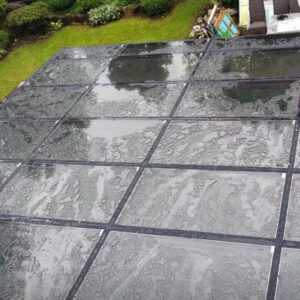
The distributors who build durable margins in solar cell windows are those who move beyond the product into the integrated energy solution — solar generation, storage dispatch, and smart building management as a single commercial offering. Source: Unsplash
The most valuable adjacent market for solar cell window distributors is battery energy storage — because BIPV solar generation creates the midday surplus that battery storage monetizes. A commercial building generating 60% of its electricity from solar cell windows but exporting the midday surplus to the grid at reduced net metering rates is a candidate for a behind-the-meter battery system that shifts that generation to high-demand periods and eliminates demand charges.
The distributor who introduces this conversation — solar cell windows generating during the day, battery dispatching during the evening demand peak, combined system eliminating the demand charge that represents 30–50% of the commercial electricity bill in many markets — is selling a complete energy strategy rather than a product. This positioning commands higher fees, generates stronger customer loyalty, and creates a more defensible competitive position than product sales alone.
Developing Subscription or Service-Based Revenue Models Beyond Product Sales
The recurring revenue opportunities in solar cell window distribution include:
Performance monitoring subscription: Annual or monthly fee for remote performance monitoring, quarterly reporting, and performance guarantee underwriting. USD 150–400 per year per commercial installation.
Maintenance contract: Annual cleaning and inspection contract for commercial installations. USD 300–800 per year depending on building height and glazed area. This is the same crew that cleans the conventional glass — the incremental cost to your customer is low, and the incremental revenue to you is 80–90% margin.
Energy data reporting service: For commercial customers with ESG reporting obligations, a quarterly Scope 2 emissions offset report based on actual solar generation data — documented, audit-ready, formatted for GHG Protocol reporting standards. USD 500–1,500 per year. Pure service revenue, zero inventory cost.
These recurring revenue streams are worth building explicitly into your commercial customer proposals — not as afterthoughts, but as expected components of the ongoing relationship. A commercial customer who signs a maintenance and monitoring agreement at project close is a customer who remains engaged, reports problems early, and is first to hear about your next-generation product offering.
Your Roadmap to Success in Solar Window Distribution
The Bottom Line for Your Business
Solar cell windows represent a product category where the fundamentals are aligned in your favor for the next decade: regulatory mandates are driving demand, technology improvements are improving economics, and commodity solar panel margins are making the alternative — staying in a race to the bottom on per-watt pricing — increasingly unattractive.
Distributors who build expertise in solar cell windows now — who can walk into a commercial specification meeting and answer the architect’s certification questions, the facility manager’s energy model questions, and the CFO’s payback questions with specific, documented, verifiable data — are building a competitive position that new entrants will not be able to replicate quickly.
The margin opportunity is real: 25–40% gross margins on commercial projects where the customer is not price-comparing on a commodity benchmark. The market size is real: USD 20.3 billion in 2025, growing to USD 80.4 billion by 2034 (IMARC Group). The regulatory tailwind is real: California’s 2025 Energy Code is already mandating what the rest of the US market is actively evaluating.
The question for your business is not whether this market is growing. It is whether you are building the expertise, the supplier relationships, and the customer trust that will make you the distributor your commercial accounts call first when the specification is being written.
Ready to Launch Your Solar Window Business?
Connect with Jia Mao BIPV’s distribution team for a consultation on sourcing the right products for your market, developing your sales strategy, and building installation partnerships. Start with the product range overview and the case studies from existing distributor networks — then let’s discuss your territory and your first target customer segment.
👉 Schedule a distributor consultation via jmbipvtech.com — or review the full BIPV solar glass application guide for B2B distributors to assess the product configurations available for your commercial customer base.
📺 Watch: BIPV Solar Cell Windows in Commercial Architecture — Technology, Performance, and Real Project Outcomes
Before your next commercial specification meeting, watch this expert overview of building-integrated photovoltaic technology in commercial applications — covering installation principles, energy performance data, and real project case studies from completed BIPV facade installations:
Source: IEA PVPS — Building-Integrated Photovoltaics: Design, Performance and Applications
Glossary of Key Technical Terms
BIPV (Building-Integrated Photovoltaics): Solar energy products that replace conventional building materials — glass, roofing, cladding — while generating electricity simultaneously. Solar cell windows are a BIPV subcategory.
PCE (Power Conversion Efficiency): The percentage of incident solar energy converted to electricity. Measured under Standard Test Conditions (STC): 1,000 W/m² irradiance, 25°C cell temperature.
VLT (Visible Light Transmittance): The percentage of daylight that passes through the glass panel. Higher VLT = more interior daylighting. Lower VLT = higher power output per m².
U-Factor: The rate at which a window assembly loses heat. Lower values indicate better thermal insulation. Critical performance metric for cold-climate product selection.
SHGC (Solar Heat Gain Coefficient): The fraction of solar energy entering the building as heat. Low SHGC = better solar shading for hot climates; high SHGC = passive solar heating for cold climates.
ITC (Investment Tax Credit): The US federal tax credit covering 30% of the installed cost of qualifying solar energy systems, available to commercial property owners under IRC Section 48E.
C-PACE (Commercial Property Assessed Clean Energy): A financing structure repaid through property tax assessments over 10–25 years, allowing commercial solar installations with zero upfront capital and potential cash-flow-positive results from day one.
IEC 63092-1: The international standard for photovoltaic modules used as building materials. Required for commercial building permit specification in most jurisdictions. The certification that distinguishes BIPV glass from a conventional solar panel installed near a building.
MACRS (Modified Accelerated Cost Recovery System): The US tax depreciation system allowing solar energy property to be depreciated over 5 years, improving the first-year tax cash flow of commercial solar investments.
STC (Standard Test Conditions): The laboratory measurement conditions for solar panel efficiency ratings: 1,000 W/m² irradiance, 25°C cell temperature, AM 1.5 spectrum. Real-world performance typically runs 5–15% below STC due to higher operating temperatures and variable irradiance.
LEED (Leadership in Energy and Environmental Design): The US Green Building Council’s green building certification system. LEED v5 (launched April 2025) places 50% of certification points on decarbonization performance, substantially increasing the energy generation requirement for certification.
WELL Building Standard: A green building certification focused on human health outcomes — daylight access, air quality, thermal comfort. Relevant for solar cell window specification in corporate office and healthcare projects where WELL certification is pursued.
12 Frequently Asked Questions (FAQs)
1. What’s the difference between solar cell windows and traditional rooftop solar panels?
Solar cell windows integrate photovoltaic cells directly into architectural glass panes — they function simultaneously as the building’s glazing system and its power generation system. Traditional rooftop panels are opaque and mounted above the building’s existing roof surface on a separate racking structure. The functional difference is significant: solar cell windows can be installed on vertical facades, curtain walls, canopies, skylights, and balustrades — surfaces where rooftop panels cannot go and where the glazing specification is already required by the building design. For buildings in dense urban environments, heritage districts, or with HOA aesthetic restrictions where rooftop panels are impractical or prohibited, solar cell windows are frequently the only viable path to on-site solar generation.
2. How much energy can solar cell windows actually generate compared to standard panels?
Semi-transparent solar cell windows at 20–30% VLT generate 40–100 Wp/m² of installed glazing area, compared to 180–220 Wp/m² for opaque conventional solar panels of equivalent area. The power differential reflects the transparency requirement — cell density is reduced to allow light transmission. However, the comparison is not directly meaningful because solar cell windows occupy a different building surface. A commercial office building might have 3,000 m² of south and west-facing facade glazing and only 800 m² of viable rooftop area. The solar cell windows can access a 3.75× larger generation surface — and for buildings where rooftop area is limited or structurally insufficient, the total generation from solar windows can exceed what a rooftop system achieves from the same building.
3. What’s the typical payback period for a customer investing in solar windows?
Commercial payback periods range from 4.5 to 9 years depending on: the local electricity rate (USD 0.10–0.35/kWh varies enormously by US market and drives proportional variation in savings value), the applicable incentives (the 30% federal ITC alone reduces the net investment by 30%, compressing the payback by approximately 42%), the glazed area and orientation (south-facing installations in Zones 3–5 perform significantly better than north-facing or heavily shaded installations), and whether HVAC savings are included in the payback calculation alongside direct generation value. Premium residential installations with lower electricity rates typically see payback in 7–12 years. Always calculate using local utility rate data and location-specific NREL irradiance values — never from manufacturer averages or national benchmarks.
4. How do solar windows perform in cloudy climates or regions with less sunlight?
Solar cell windows generate electricity from diffuse irradiance — the scattered daylight present on overcast days — not only from direct sunlight. Under overcast conditions, output falls to 10–25% of rated capacity; on partially cloudy days, 30–70% of rated capacity. For commercial buildings in the US Pacific Northwest, New England, or the upper Midwest, annual generation is 65–75% of equivalent Southern US installations — but electricity rates in these markets are typically 40–80% higher than in sunny Southern markets, which substantially compensates for the lower irradiance. Always calculate customer projections using PVWatts data for the specific location — regional generalizations mislead in both directions.
5. What maintenance do solar cell windows require?
Maintenance requirements are effectively identical to conventional commercial glazing: exterior cleaning every 12–18 months using mild soap solution and soft cleaning equipment (the same cleaning schedule as standard architectural glass), plus a 5-year electrical system inspection by a licensed electrician. No specialized solar maintenance program is required. There are no moving parts, no inverter maintenance at the glass panel level, and no separate cleaning protocol beyond standard facade maintenance. This low-maintenance profile is a genuine selling point for facility managers concerned about operational complexity — present it with the maintenance cost included in the total cost of ownership calculation.
6. Are solar windows durable enough for long-term commercial use?
Quality solar cell windows from certified manufacturers carry 25-year power performance warranties (minimum 80% of rated output at year 25) and 10-year product warranties covering manufacturing defects. IEC 61215 qualification testing includes 1,000 hours of UV exposure, 1,000 hours of 85°C/85% RH damp heat testing, and 200 thermal cycles from -40°C to +85°C — all without performance degradation below the warranted threshold. For structural durability, BIPV glass meeting IEC 63092-1 certification has been tested to wind pressure resistance of 2.5–4.0 kPa (equivalent to 90–130 mph sustained winds) and impact resistance per EN 12600 (the European standard for building safety glass). The product is designed to outlast the warranty period — field performance data from early commercial installations shows minimal degradation relative to warranty thresholds.
7. How do building codes and permits affect solar window installation?
Building permits for solar cell window installations require two separate applications in most US jurisdictions: a building permit (for the glazing modification) and an electrical permit (for the PV interconnection). Permit timelines vary significantly: major cities with green building expedited review programs (available in Los Angeles, New York, San Francisco, Chicago, and others) can approve in 2–4 weeks. Standard municipal review takes 4–8 weeks. Some jurisdictions have adopted the 2021 International Building Code provisions for BIPV glazing, which streamline the permitting pathway for IEC 63092-1 certified products. Research local permitting requirements for every new market territory before making commercial sales commitments — the permitting timeline is one of the most variable elements in the project schedule and the one most frequently responsible for customer expectations mismatch.
8. Can solar windows be retrofitted into existing buildings, or only for new construction?
Retrofit installation is viable and frequently more commercially attractive than new construction for distributors, because the customer is already committed to a capital expenditure (window or facade replacement) and the incremental cost of upgrading to solar cell glass is the only additional investment being evaluated. The most productive retrofit opportunities: commercial curtain wall replacement in buildings built 1975–2000 (original glazing at or near end of life), institutional building renovation projects where facade upgrading is part of a broader energy efficiency investment, and historic preservation projects where BIPV glass can be specified to match original glazing aesthetics while adding generation capability. New construction integration is simpler and more cost-effective at the product level, but retrofit represents a larger addressable market simply because existing commercial building stock is vastly larger than new construction volume.
9. What financing options should I offer customers to overcome cost objections?
Present options in sequence from lowest customer effort to highest: first, the net-of-ITC cost (30% federal credit applied immediately — no financing required, just proper tax filing); second, C-PACE financing (where available — zero upfront, repaid through property tax, often cash-flow positive from year one); third, commercial energy efficiency loans (SBA 504 green loans, state energy bank programs, utility efficiency financing programs); fourth, conventional commercial lending (used when C-PACE is not available in the state). For commercial customers using C-PACE, SunPeak Power and multiple other lenders confirm that solar projects are cash-flow positive from day one when annual energy savings exceed the annual assessment payment — which is achievable in most commercial applications with adequate south or west-facing glazed area. Partner with at least one C-PACE lender in your primary market territory so you can facilitate introductions directly in the sales conversation.
10. How do I explain the aesthetic benefits of solar windows to architects and designers?
Lead with physical samples, not photographs. An architect evaluating a glazing specification wants to hold the product, examine the cell pattern under natural light, see the transparency, and evaluate the color in the context of their existing design palette. A sample board with 3–4 VLT and tint options — available from quality manufacturers including Jia Mao BIPV — transforms the conversation from abstract to concrete in the first 5 minutes of a meeting. Follow the sample with a photorealistic render of the proposed specification on the architect’s actual building design, available within 5 business days of receiving elevation drawings. The combination — physical sample plus building-specific visual — ends the aesthetic objection before it becomes a project-stopping concern.
11. What certifications and standards should I verify when selecting solar window manufacturers?
The non-negotiable certification set for commercial building specification: IEC 61215 (design qualification for PV modules — required for ITC eligibility), IEC 61730 (safety qualification — required for building permit applications), IEC 63092-1 (BIPV-specific building material certification — distinguishes your product from a conventional panel near a building), NFRC certification (U-Factor, SHGC, and VT ratings — required for commercial glazing specifications). Verify each certification in the issuing organization’s database — not on the manufacturer’s datasheet. The PVKnowHow guide to PV module certification standards provides a clear explanation of what each certification verifies and which testing laboratory accreditations are acceptable.
12. How can I differentiate my solar window offering from competitors?
The distributors commanding 30–40% gross margins in solar cell window distribution are not differentiating on price — they are differentiating on three capabilities that competitors cannot replicate quickly: technical expertise (the ability to answer an architect’s certification question, a facility manager’s energy model question, or a CFO’s payback question with specific, documented data in the meeting); specification support (site energy models, LEED credit mapping, building permit documentation packages — delivered as standard service, not as a premium offering); and project track record (completed commercial case studies with measured performance data and customer references, available for customer review during the sales process). Build all three capabilities deliberately, and your competitive position becomes a function of your organization’s knowledge and relationships — not your price list.
Research sources: IMARC Group Solar Photovoltaic Glass Market Report 2025, SEIA Solar Market Insight Report Q3 2025, California Energy Commission 2025 Building Energy Efficiency Standards, Paradise Solar Energy commercial electricity cost analysis 2025, NREL PVWatts calculator methodology and TMY datasets, US Green Building Council LEED v5 documentation (April 2025), Coherent Market Insights Perovskite Solar Cell Market Report, SunPeak Power C-PACE commercial solar financing data, DSIRE Database of State Incentives for Renewables and Efficiency, IEA PVPS Task 15 BIPV standards documentation, Jia Mao BIPV product certification and warranty documentation, and ACEEE 2025 Building Efficiency Outlook. All financial projections are directional estimates for planning purposes — consult a licensed financial and tax advisor for project-specific calculations.