Solar Roof Tiles vs Panels: Costs, Installation and ROI
I. A conventional solar array sits above the roof. Solar roof tiles become part of it.
That change matters to the whole project team. The architect gains a cleaner roofline. The roofing contractor takes on electrical interfaces. The photovoltaic EPC—engineering, procurement, and construction—provider must coordinate power generation with a weather-resistant building envelope.
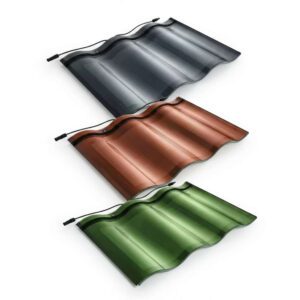
Solar roof tiles are roofing units that contain photovoltaic cells and replace part of the conventional roof covering. They are a form of building-integrated photovoltaics (BIPV): solar products that also perform a building function.
The U.S. Department of Energy’s explanation of building-integrated solar makes this distinction clear. Integration means replacing a building material, not simply placing solar equipment above it.

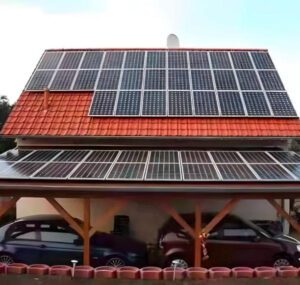
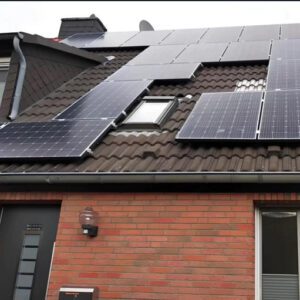
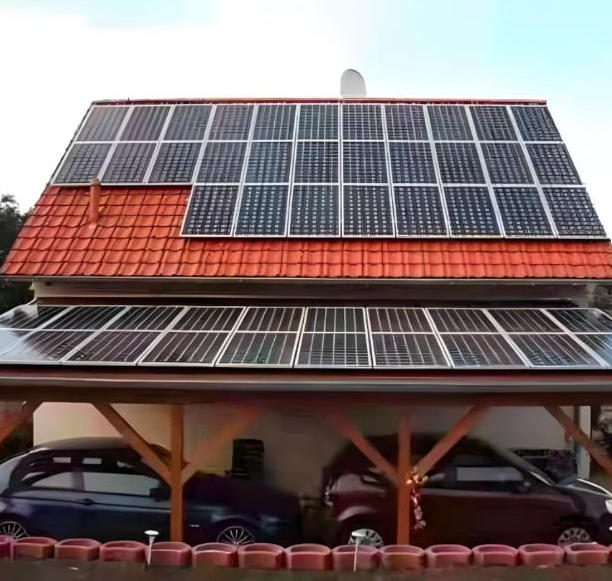
Solar roof tiles bring generation into the roof covering. Reference photograph—not a Jia Mao Bipv installation. Photo: Helena Wright, solar roof tile image source, licensed under Creative Commons Attribution 2.0.
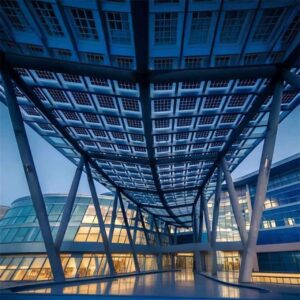
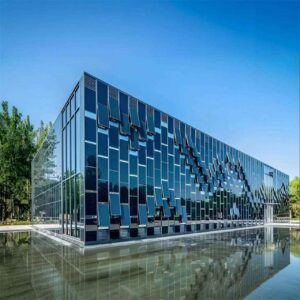
For a hotel, visitor center, or design-led office campus, that visual integration may solve a real planning problem. For a warehouse with an unseen roof and a tight energy budget, conventional panels may be the better choice.
The comparison should therefore use total cost of ownership (TCO): the cost of buying, installing, operating, maintaining, and eventually replacing the system over an agreed period.
The central trade-off: solar tiles can provide stronger architectural integration and better coordination with a new roof. However, they often require higher upfront spending, more specialized installation, and longer energy-only payback than conventional panels.
This guide examines those trade-offs for contractors, EPCs, energy-service providers, distributors, architects, and design consultants.
II. Comparative Capital Expenditure Analysis
Solar tiles turn procurement from a standard PV purchase into a combined roofing and electrical package.
Capital expenditure (CAPEX) means the upfront cost needed to deliver the working system. For BIPV, it includes more than the active tiles.
Compare material prices on the same basis
A traditional monocrystalline panel uses cells made from single-crystal silicon. Standardized dimensions and established distribution channels make these modules relatively easy to compare.
Solar tiles may include shaped glass, weather-shedding joints, concealed connections, and matching non-generating units.
A per-watt comparison remains useful, but it does not capture the roofing function.
| Comparison item | Conventional panels | Solar roof tiles |
|---|---|---|
| Active-material price | Module cost divided by rated watts | Active-tile cost divided by rated watts |
| Roofing scope | Usually purchased separately | Partly incorporated into the tile package |
| Non-generating components | Mounting hardware and roof covering | Inactive tiles, borders, flashings, and support components |
| Useful secondary metric | Installed cost per watt | Installed cost per watt و per covered roof area |
For illustration, an assumed panel-material price of $0.40/W and active-tile price of $1.35/W show a substantial material premium. These are budgeting inputs, not current market averages or Jia Mao Bipv quotations.
Request separate prices for active tiles, inactive tiles, flashing kits, electrical equipment, freight, and spares.
Labor shifts from mounting equipment to completing a roof
A conventional array on a suitable existing roof generally follows an equipment-installation sequence: attachments, mounting, modules, wiring, and commissioning.
A solar-tile reroof may also require:
- Removal of the old covering.
- Deck repairs.
- Underlayment installation.
- Tile layout and weather detailing.
- Electrical checks before connections become concealed.
- Combined roof and PV acceptance.
Not every tile project requires a complete roof replacement. Some systems allow defined integrated zones. The approved design determines the scope.
نظرة ثاقبة في المجال: Do not compare a full BIPV reroof quotation with a panel-only quotation. Compare solar tiles against the equivalent conventional roof plus panels.
Procurement needs an earlier design freeze
Standard panels can often be sourced from stocked product ranges. Custom BIPV colors, profiles, edge units, and flashings may require project-specific production.
Jia Mao Bipv’s curved CIGS solar roof tile specifications illustrate why configuration matters: the published table lists 32 W for the black version and 25 W for colored versions.
Those are supplier-published ratings. Confirm the offered model and test evidence before using them in an EPC guarantee.
CIGS means copper indium gallium selenide, a thin-film photovoltaic material.
For distributors, the procurement checklist should include approved samples, certificate coverage, production slots, replacement availability, and written delivery milestones.
III. Installation Complexity and Technical Integration
The main installation challenge is the meeting point between roofing workmanship and electrical compliance.
Use coordinated, qualified trades
A BIPV crew needs roofing competence and legally qualified electrical support. This may be one organization or two subcontractors working under one installation plan.
A universal “dual-certified installer” requirement does not exist across all jurisdictions. Local licensing rules determine who may perform each task.
Before mobilization, assign responsibility for:
- Roof preparation and weather protection.
- Tile attachment.
- Electrical connections and testing.
- Inspection records.
- Commissioning and utility approval.
Do not allow electrical work to begin only after the roofing crew has concealed every connection.
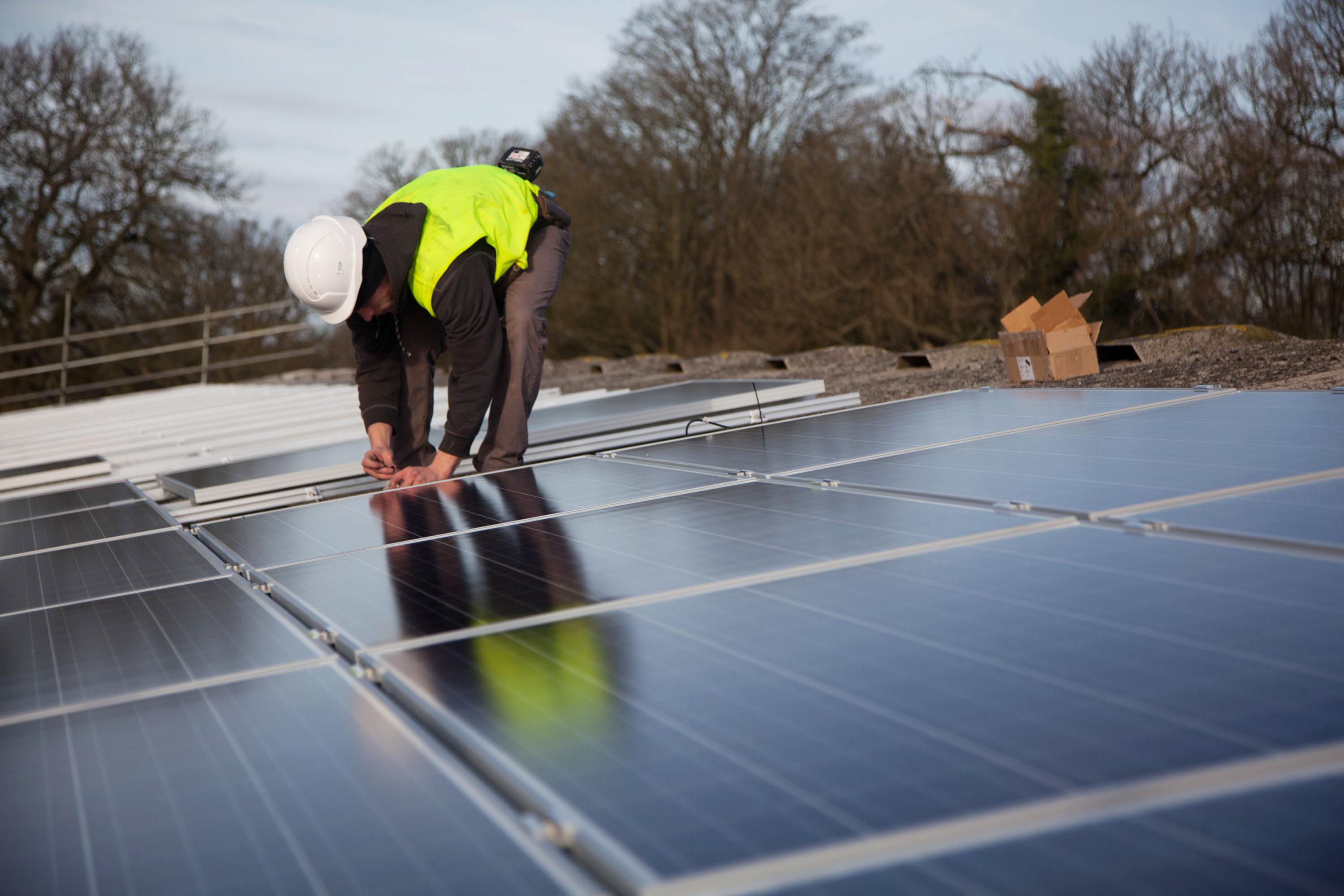
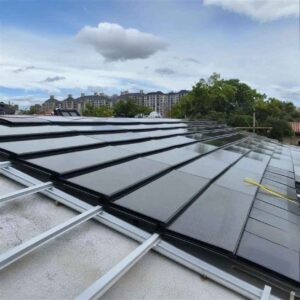
Conventional panel installation shows the separate mounting workflow that BIPV changes. Photo: Kristian Buus / 1010 Climate Action, rooftop installation photograph, CC BY 2.0.
Treat flashing as a designed component
Flashing is the shaped material that directs water away from joints and openings. Underlayment is the protective layer beneath the roof covering.
Critical BIPV interfaces include:
- Valleys and roof-to-wall junctions.
- Chimneys and skylights.
- Active-to-inactive tile transitions.
- Cable penetrations.
- Eaves, ridges, and drainage channels.
Use the approved detailing system. Extra sealant is not a substitute for a drainage path.
Require a mock-up containing a real roof junction, tile overlap, cable route, and flashing detail. Inspect it before the main installation.
Check the complete structural load
Dead load is the permanent weight carried by the structure.
For solar tiles, compare the new assembly with the covering being removed. For panels, calculate the retained roof plus modules and mounting equipment.
The engineer must also assess wind uplift, snow, fasteners, deck condition, and construction loads.
For example, a replacement that adds 10 kg/m² across 1,000 m² adds 10 tonnes of distributed mass. That calculation does not establish structural capacity; it shows why a review matters.
Installation video: roof-integrated solar detailing
This Marley SolarTile demonstration shows one integrated-roof installation workflow. It is a coordination reference, not an installation manual for another manufacturer’s product.
https://www.youtube.com/watch?v=7Cd5A9kPt2c
IV. Long-Term Maintenance and Operational Durability
Solar-tile maintenance covers both electrical performance and roof integrity.
A conventional panel fault may reduce generation while leaving the roof covering intact. A damaged BIPV tile may affect both functions.
Price the replacement procedure—not just the spare tile
A panel can often be replaced by disconnecting and removing one module. Access still requires safe isolation and working-at-height controls.
Replacing a solar tile may also involve lifting adjacent units, accessing concealed connectors, and restoring overlaps or seals.
Before procurement, request a demonstration or written method showing:
- How a central tile is removed.
- Which neighboring units must move.
- How electrical isolation is achieved.
- How weather protection is restored.
- Which tests follow replacement.
For hail damage, map the affected area and test the associated electrical circuits. Do not assume every fault is visible from the surface.
Jia Mao Bipv’s commercial solar-tile maintenance guidance is a starting point for the service plan. The contract should still use the exact product’s approved instructions.
Separate heat-related output loss from degradation
Temperature coefficient describes how power changes as cell temperature changes.
For an illustrative coefficient of −0.35% per °C, operating 20°C above the 25°C rating condition implies about 7% lower power, before other effects.
That is a temperature-related operating loss—not automatically permanent damage.
Degradation is the lasting decline in output over time. Heat can contribute to aging, but no single degradation rate applies to all tile systems.
PVsyst’s array thermal-model guidance explains that mounting configuration and rear ventilation affect module temperature.
Use the correct integrated-roof thermal assumptions. Do not copy open-rack settings into a flush-mounted tile model without justification.
Synchronize the roof and electrical lifecycles
Review the expected service lives of:
- Active tiles.
- Inactive roof covering.
- Underlayment and flashings.
- Connectors and cables.
- Inverters.
An inverter converts the tiles’ direct-current electricity into alternating current for building use.
A 25-year power warranty does not prove that every component will operate without replacement for 25 years.

Historical thin-film BIPV shingles illustrate roof integration, not current product availability or performance. Image: National Renewable Energy Laboratory, public-domain solar-shingle reference.
نظرة ثاقبة في المجال: The costliest repair may be access to a hidden component—not the component itself. Make serviceability part of the tender evaluation.
V. ROI and Financial Modeling for Commercial Projects
Solar-tile return on investment depends partly on the conventional roof cost that the project avoids.
Use the net-cost approach
Incremental solar-tile investment = complete BIPV roof cost − equivalent conventional roof cost avoided.
Subtract only work that genuinely disappears. Shared deck repairs, insulation, or drainage upgrades cannot be treated as avoided costs if both options still need them.
For a healthy existing roof, a full replacement cost may not be an immediate avoided expense. Model its remaining life rather than subtracting a new roof today.
Excel-ready commercial comparison
The following model assumes a 1,000 m² pitched-roof replacement, with approximately 600 m² available for active PV layouts.
All figures are illustrative. The outputs reflect different assumed capacities and thermal/layout conditions; they are not measured customer results.
| Input or result | Conventional roof + panels | Integrated solar-tile roof |
|---|---|---|
| Conventional roof baseline | $100,000 | $100,000 avoided |
| Installed solar package above that roof | $200,000 | Included below |
| Complete roof-and-solar cost | $300,000 | $330,000 |
| Incremental energy investment | $200,000 | $230,000 |
| Installed rated capacity | 100 kWp | 80 kWp |
| Annual specific yield | 1,200 kWh/kWp | 1,100 kWh/kWp |
| First-year electricity generation | 120,000 kWh | 88,000 kWh |
| Weighted electricity value | $0.16/kWh | $0.16/kWh |
| First-year electricity benefit | $19,200 | $14,080 |
| Additional annual O&M allowance | $1,800 | $2,400 |
| First-year net operating benefit | $17,400 | $11,680 |
| Simple payback before incentives | 11.5 years | 19.7 years |
kWp measures rated peak capacity under standard test conditions. kWh measures energy produced over time. Specific yield is annual energy divided by installed capacity.
The assumed $0.16/kWh combines 80% on-site use valued at $0.18/kWh and 20% export valued at $0.08/kWh. An hourly load model should replace that assumption for a real project.
Original illustrative chart. Comparing complete roof-and-solar packages gives a fairer capital-cost picture than comparing BIPV roofing with panels alone.
The assumed $330,000 BIPV budget comprises:
| Budget component | Assumed amount |
|---|---|
| Active tiles | $108,000 |
| Inactive units, flashing, and roofing materials | $72,000 |
| Roof installation labor | $90,000 |
| Inverter, wiring, and electrical work | $30,000 |
| Design, testing, and project coordination | $30,000 |
| Total | $330,000 |
Original illustrative chart. Materials include active and inactive roofing components. This is not an industry-average cost breakdown.
Quantify the architectural trade-off
In this example, tiles generate about 26.7% less annual electricity. That comes from both lower installed capacity and lower assumed specific yield—not a universal tile-efficiency penalty.
The tile option costs $30,000 more for the complete package and delivers $5,720 less first-year net operating benefit.
An energy-only decision favors panels. Tiles need a separate reason: planning compliance, a required roof appearance, or documented development value.
Complete the investment model with net present value (NPV), which converts future cash flows into today’s money using a discount rate. Include degradation, replacements, downtime, financing, insurance, and roof maintenance.
Keep valuation and LEED claims evidence-based
Lower operating costs may support asset value, but there is no automatic commercial-property premium for solar tiles.
Use an appraisal or lease analysis. Do not transfer residential resale percentages to a hotel or office project.
Solar tiles can support LEED, the Leadership in Energy and Environmental Design rating system, through qualifying renewable generation. They do not automatically earn more points than panels.
The USGBC energy-modeling guidance explains how on-site generation is treated in the LEED versions it addresses. Confirm the project’s registered version.
VI. Navigating Tax Incentives and Regulatory Compliance
Incentives can change the result, but only if eligibility, timing, and cost allocation are correct.
U.S. commercial tax credits require current review
As of October 12, 2026, qualifying U.S. projects may use the Section 48E Clean Electricity Investment Credit.
The Section 48E statutory framework provides a 6% base rate and a 30% alternative rate for qualifying cases, including facilities below 1 MW AC or projects satisfying applicable labor requirements.
Do not assume that 30% applies to the complete roof invoice.
The statute excludes buildings and structural components from its qualified-property definition. Active BIPV components need project-specific classification and cost allocation; ordinary roofing does not become eligible simply because it shares the roof.
Timing also matters. Under the current solar termination rules summarized by SEIA’s tax-policy update, solar facilities beginning construction after July 4, 2026 generally need to be placed in service by December 31, 2027.
For projects already claiming an earlier construction start, obtain tax advice on the evidence and continuity requirements.
Supply-chain restrictions are another gate. IRS Notice 2026-15 addresses prohibited-foreign-entity and material-assistance rules.
Request the necessary sourcing documentation before making a tax-credit claim. Neither product certification nor a supplier’s brand name establishes tax eligibility.
Certify the roof assembly, not only the cells
UL Solutions’ BIPV testing guidance describes evaluations covering electrical safety, fire, wind, impact, and weather protection.
For U.S. projects, review the applicable requirements for:
- UL 7103 BIPV roof coverings.
- PV electrical-safety listing.
- Roof fire classification under UL 790 or ASTM E108, as applicable.
- Wind and weather resistance.
- The adopted electrical and building codes.
A fire classification applies to the tested assembly and installation conditions. Changing the deck, underlayment, or mounting arrangement may affect acceptance.
Start interconnection early
The utility mainly evaluates electrical capacity, inverter behavior, protection, metering, and export—not the roof’s appearance.
Confirm service capacity, export limits, required studies, and permission-to-operate procedures before procurement.
A completed roof is not necessarily an approved generating system.
VII. Strategic Selection: When to Recommend Tiles vs. Panels
The best recommendation depends on roof timing, visual constraints, and energy priorities.
New construction versus retrofit
Tiles are often more practical during a new build or scheduled roof replacement. Access, design, and roof expenditure can be coordinated.
On a healthy existing roof, panels usually avoid premature removal of useful materials.
| Project condition | Initial recommendation | Reason |
|---|---|---|
| New pitched roof with strict design requirements | Evaluate tiles | Roof and PV scopes can be planned together |
| Roof replacement already funded | Compare both complete packages | Avoided roofing cost is relevant |
| Healthy roof with substantial remaining life | Usually panels | Avoids unnecessary replacement |
| Large, low-slope industrial roof | Usually conventional PV | Greater layout and equipment flexibility |
| Complex roof with many valleys and dormers | Detailed modeling first | Tile cuts, inactive areas, and shading can increase costs |
| Visually sensitive entrance or roof elevation | Tiles or a hybrid design | Integration may solve an approval constraint |
Aesthetic mandates need written approval
A homeowners association (HOA) or heritage authority may restrict visible equipment. That does not guarantee approval of solar tiles.
Submit samples, roof elevations, glare information, and color details before ordering.
For historic buildings, replacing original roof materials may itself be restricted.
There is no universal project-size tipping point
Panels often become more attractive where generation capacity and low cost dominate. But a fixed threshold such as “tiles below 50 kW, panels above 50 kW” is not reliable.
Run the comparison using usable area, local labor, roof geometry, approval conditions, and required appearance.
نظرة ثاقبة في المجال: A hybrid design can preserve solar tiles on visible slopes while using conventional panels on hidden roof zones.
Use Jia Mao Bipv’s photovoltaic tile product category to identify candidates, then request a configuration-specific quotation and compliance package.
VIII. Risk Mitigation for Contractors and EPCs
Integrated products create integrated liabilities. Contracts need to reflect that.
Resolve warranty overlap before signing
Roofing workmanship, product defects, watertightness, and power output may have different warranties.
A power warranty may replace an underperforming tile while excluding scaffolding, adjacent-tile removal, or water-damage repair.
Agree on:
- One first-contact party for faults.
- Leak-response procedures.
- Investigation costs.
- Access and reinstatement costs.
- Spare-part responsibilities.
- Coverage after manufacturer or installer changes.
Do not promise a “single warranty” unless the documents actually provide one.
Excel-ready quality-control checklist
| Stage | Inspection item | Acceptance evidence | Responsible party |
|---|---|---|---|
| Design release | Model, slope, fire classification, electrical layout | Approved submittals | Designer and EPC |
| Delivery | Damage, quantities, model numbers, traceability | Receiving log | Contractor |
| Before covering | Deck, underlayment, flashings, cable routes | Photographs and signed inspection | Roofing lead |
| Tile installation | Fixings, overlaps, drainage, movement allowances | Zone inspection record | Roofing lead |
| Electrical completion | Connections, identification, safety tests | Test report | Qualified electrical contractor |
| Commissioning | Inverter settings, shutdown functions, monitoring | Commissioning record | EPC |
| Handover | As-builts, repair method, spares, warranties | Owner acceptance package | General contractor |
Electrical testing should follow the applicable standards and approved equipment instructions. Roof tests should use the specified method.
Present payback as a range
The Section V model gives 19.7 years for tiles and 11.5 years for panels.
If electricity value falls from $0.16 to $0.12/kWh, with other inputs unchanged, those simple paybacks rise to approximately:
- 28.2 years for tiles.
- 15.9 years for panels.
These remain simplified calculations. The longer result may exceed the investment horizon.
Show the base case and downside case before the owner signs. That protects the relationship better than an optimistic headline.
IX. Future Outlook: Technological Trends in BIPV
Manufacturing scale, improved cell performance, and simpler installation can narrow the cost gap. That outcome is not guaranteed across every product or market.
Thin-film and perovskite integration
Thin-film technologies use very thin active photovoltaic layers. They can support shapes and finishes that are difficult for conventional cells.
Perovskites are a family of light-absorbing materials with potential for high-efficiency solar devices. A tandem cell stacks different absorbers to capture more of the solar spectrum.
The DOE overview of perovskite technology identifies durability, scale-up, and manufacturing as key development challenges.
For a commercial roof, laboratory efficiency is not enough. Require certified modules, relevant aging data, approved roof assemblies, and an enforceable service plan.
Smart-grid and building-automation coordination
Roof tiles can work with batteries, energy management, and building automation through suitable inverters and controls.
For energy-service providers, the important metric is when electricity is produced and used—not annual generation alone.
Specify exportable monitoring data, alarm ownership, and compatibility with planned storage.
Standardization should reduce coordination risk
Product standards can help align electrical and building requirements. Installer training should cover both functions.
However, manufacturer training is not the same as a legal trade license, and one universal global BIPV installer qualification does not exist.
Building information modeling (BIM) provides a shared digital building model. Use it to coordinate active tile zones, roof junctions, cable routes, and access.
For early yield screening, the PVWatts calculator is useful. Its own disclaimer notes limits in technology-specific modeling. Detailed BIPV analysis should use the actual layout, shading, module data, and thermal assumptions.
Practical glossary
| Term | Plain-English meaning | Project example |
|---|---|---|
| TCO | Lifetime ownership cost | Include repairs and roof work, not only installation |
| CAPEX | Upfront investment | Tiles, labor, electrical equipment, and design |
| O&M | Operations and maintenance | Monitoring, inspections, cleaning, and repairs |
| Specific yield | Energy produced per unit of rated capacity | 1,100 kWh/kWp annually |
| Dead load | Permanent structural weight | Roof covering plus supports and equipment |
| Degradation | Lasting output decline | Lower production after aging, unlike temporary heat loss |
| NPV | Today’s value of future cash flows | Compare savings after applying a discount rate |
| String | PV units electrically connected in series | A fault can affect the connected circuit |
X. Solar roof tiles are a strategic roofing choice—not simply a more attractive version of a standard solar panel.
Their strongest applications combine a planned new roof, a real architectural requirement, and a coordinated installation team. Their financial case weakens when the existing roof is sound, the design is complex, or low-cost electricity is the owner’s main goal.
An Envelope-First approach means resolving roof condition, water management, structural capacity, and maintenance access before optimizing generation.
For the next tender:
- Price the equivalent roof-and-solar packages.
- Model each option’s actual usable capacity.
- Review repair access and warranty responsibilities.
- Confirm incentives and approvals separately.
- Present lifetime economics alongside appearance.
To review a candidate project with Jia Mao Bipv’s specification team, prepare the roof plan, elevations, location, roof-replacement scope, energy target, and delivery date.
The right specification is the one the contractor can build, the owner can maintain, and the financial model can defend.
Related FAQs for Professional Stakeholders
1. How does a solar-tile leak warranty differ from a conventional-panel leak warranty?
With panels, a leak may involve a mounting penetration or a separate roof defect. With tiles, the generating unit and weather-shedding assembly may both be involved. Check who diagnoses the cause, restores temporary protection, and pays for access, electrical testing, reinstatement, and consequential damage.
2. Can solar roof tiles be installed over an existing roof?
Only where the specific system and local rules allow it. Many integrated systems require removal of the existing covering in the installation zone. A full tear-off is not universal, but an unapproved overlay can compromise fastening, drainage, inspection, and warranty coverage.
3. What is the average efficiency loss compared with conventional panels?
There is no reliable universal percentage. Compare module ratings, watts per usable roof area, installed capacity, and annual yield. Cell efficiency alone ignores inactive tiles, overlaps, roof geometry, shading, and operating temperature.
4. Do solar tiles improve the roof’s R-value?
Not automatically. R-value measures resistance to heat flow. Roof insulation, deck construction, air layers, and thermal bridges determine the assembly’s performance. A solar tile is primarily a generating roof covering, not a replacement for specified insulation.
5. Which tax credits apply to the roofing portion of BIPV?
For U.S. commercial projects, Section 48E may cover qualifying energy property, subject to eligibility and timing. Ordinary roofing and structural components are not automatically eligible. Have a tax adviser classify active components and allocate shared costs; do not apply a credit to the entire invoice by default.
6. What electrical interconnect failures matter in extreme weather?
Potential problems include moisture ingress, damaged seals, incomplete connector engagement, incompatible connector pairs, cable abrasion, and movement-related strain. Use the approved connection system and inspect relevant circuits after severe weather. An IP rating for one component does not prove the complete roof assembly is weatherproof.
7. How should contractors calculate avoided roofing cost?
Use a like-for-like quotation for the conventional roof that would otherwise be installed. Match area, finish, access, and required detailing. Subtract only displaced work. If roof replacement is years away, model that future expense rather than treating it as an immediate saving.
8. What qualifications are required to install BIPV legally?
Requirements vary by jurisdiction. Verify roofing and electrical licenses, required product training, working-at-height competence, insurance, and inspection obligations. A voluntary PV credential can support competence but does not replace a required legal license.
9. How does solar-tile weight compare with asphalt or clay roofing?
It depends on the product and complete assembly. Some solar-tile systems weigh more than an asphalt covering but less than heavy clay or concrete roofing. Compare installed kg/m², including supports and underlayment, and obtain a structural review rather than relying on a generic category range.
10. What is the typical commercial payback difference?
There is no single typical difference that applies across projects. In this article’s illustrative model, tiles take about 19.7 years versus 11.5 years for panels before incentives. Replace the assumptions with local quotations, hourly electricity values, simulated yield, and lifecycle costs before recommending either option.