Amorphous silicon (a-Si) solar cells offer a compelling trade-off: they are cheaper to manufacture, physically flexible, and outperform crystalline alternatives in low-light and high-heat conditions — but they deliver substantially lower efficiency (6–14% vs. 20–25% for crystalline) and experience a unique initial degradation phenomenon that reduces output by 10–30% in the first six months of operation.
Whether that trade-off makes sense depends entirely on the application. For standard rooftop installations where maximum power per square meter is the goal, crystalline silicon remains the superior technology. For building-integrated photovoltaics (BIPV), portable electronics, IoT sensors, and installations on curved or weight-limited structures, amorphous silicon’s unique physical and electrical properties make it the only viable — and often the optimal — choice.
This guide examines each advantage and disadvantage with specific data, explains the real-world contexts where those characteristics matter, and helps you decide whether a-Si technology fits your particular project needs. No filler — just the numbers and scenarios that inform a practical decision.
Advantages of Amorphous Silicon
Flexible Design
The defining physical advantage of amorphous silicon solar cells is their mechanical flexibility. Because a-Si is deposited as a continuous thin film — typically onto plastic, stainless steel, or flexible glass substrates — the resulting panels can bend, roll, and conform to non-flat surfaces without cracking or losing electrical connectivity. Rigid crystalline panels, by contrast, are built from brittle 150–180 μm-thick silicon wafers that fracture under bending stress.
This flexibility opens installation possibilities that crystalline technology simply cannot address. Curved building facades, barrel-vault roofs, cylindrical columns, vehicle surfaces, backpack panels, and wearable devices all require solar cells that bend. Field-deployed a-Si panels routinely flex to radii as tight as 25 mm without measurable power loss — a performance threshold no crystalline product can approach.
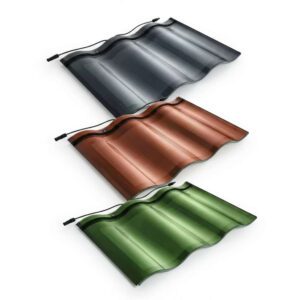
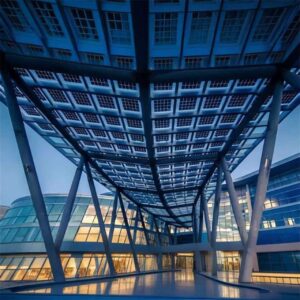
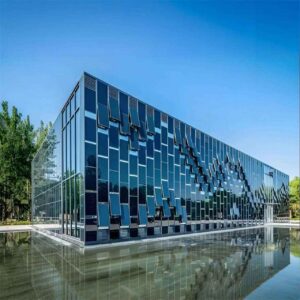
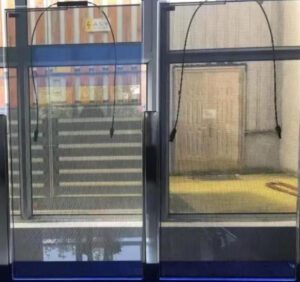
In BIPV applications, this flexibility translates to design freedom. Architects integrating solar into building envelopes are not restricted to flat rectangles on south-facing roofs. A-Si thin-film can follow the geometry of the building itself, wrapping around curves and fitting into irregular spaces. Manufacturers like جيا ماو BIPV leverage both thin-film and crystalline cell technologies in their BIPV product lines, giving project designers the ability to select the right approach for each surface — rigid high-efficiency crystalline glass for flat facades, and flexible thin-film for curved architectural elements.
Lightweight Panels
Amorphous silicon panels weigh dramatically less than their crystalline counterparts. A typical a-Si thin-film module weighs approximately 2–3 kg/m², compared to 10–15 kg/m² for a standard glass-fronted crystalline panel. That 70–85% weight reduction is not a minor detail — it directly impacts structural engineering requirements, installation costs, and the range of surfaces that can host solar panels.
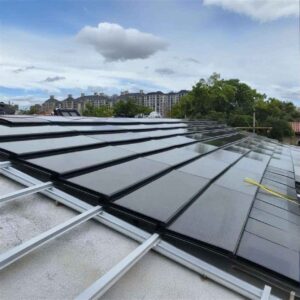
Many existing commercial and industrial buildings were designed without accounting for rooftop solar loads. Adding 10–15 kg/m² of crystalline panels across a large roof area may require structural reinforcement — an expense that can add 15–30% to total project cost and months to the timeline. Lightweight a-Si panels often install within the existing structural load margins, eliminating this cost entirely. A distribution warehouse in Southern California documented a case where choosing thin-film over crystalline panels avoided $180,000 in structural steel reinforcement for a 50,000 sq ft roof — more than offsetting the thin-film panels’ lower energy output.
For portable applications, the weight difference is even more decisive. A foldable 100W a-Si solar charger for field use weighs under 2 kg; an equivalent rigid monocrystalline panel weighs 7–9 kg. Military, emergency response, and recreational users overwhelmingly prefer a-Si for this reason.
Low Production Cost
The raw material economics of amorphous silicon manufacturing fundamentally favor thin-film technology. A-Si solar cells use less than 1% of the silicon required for crystalline production — the active photovoltaic layer is approximately 1 micrometer thick, compared to the 150–180 μm wafers in crystalline cells. Silicon is one of the most expensive material inputs in traditional solar manufacturing, so reducing its usage by two orders of magnitude has a significant cost impact.
Manufacturing energy consumption is proportionally lower as well. The U.S. Department of Energy reports that a-Si modules achieve energy payback in 1–2 years, compared to 2–4 years for crystalline modules. This means a-Si panels produce more net energy over their lifecycle relative to the energy consumed in their production — a metric that matters for both economic and environmental assessments.
Industry data indicates that manufacturing costs for a-Si modules run approximately $0.73 per Wp for 10%-efficient glass-based modules, translating to roughly $73 per square meter. However, it is critical to distinguish between cost per panel area and cost per watt. Because a-Si efficiency is 2–3× lower than crystalline, the cost per watt generated often converges — and in some cases, crystalline modules’ massive manufacturing scale (driving wholesale prices to $0.10–$0.15/W) makes them cheaper per watt despite higher per-panel material costs.
Simple Manufacturing Process
Crystalline silicon production involves multiple complex, energy-intensive steps: polysilicon refining, ingot growth (Czochralski or directional solidification), wire sawing into wafers, cell processing (diffusion, passivation, metallization), and module assembly. Each step requires specialized equipment and tight process control.
Amorphous silicon production condenses this into a fundamentally simpler workflow. The primary method — Plasma-Enhanced Chemical Vapor Deposition (PECVD) — deposits the a-Si layer directly onto a substrate in a single vacuum chamber at relatively low temperatures (150–300°C, compared to 1,400°C+ for crystalline ingot growth). The entire cell stack (transparent conductive oxide, p-i-n silicon layers, back contact) can be deposited in sequence without removing the substrate from the vacuum system.
This process simplification means faster production ramp-up, smaller factory footprints, and lower capital investment per unit of production capacity. It also enables continuous roll-to-roll manufacturing on flexible substrates — an inherently more efficient production format than the batch processing used for crystalline wafers.
| Advantage | Amorphous Silicon (a-Si) | Crystalline Silicon (c-Si) |
|---|---|---|
| Minimum Bend Radius | 25 mm | Rigid (cannot bend) |
| Panel Weight (per m²) | 2–3 kg | 10–15 kg |
| Silicon Usage | <1% of crystalline | 150–180 μm wafers |
| Energy Payback Period | 1–2 years | 2–4 years |
| Temperature Coefficient | -0.16% to -0.25%/°C | -0.35% to -0.45%/°C |
| Low-Light / Diffuse Performance | ممتاز | معتدل |
| Indoor Light Operation | Yes (useful power) | Negligible output |
| Manufacturing Process Temp | 150–300°C | 1,400°C+ (ingot) |
Disadvantages of Amorphous Silicon
Lower Efficiency
The most frequently cited drawback of amorphous silicon solar cells is their lower power conversion efficiency. Under Standard Test Conditions (1000 W/m² irradiance, 25°C cell temperature), commercially available a-Si modules achieve 6–14% efficiency. Single-junction designs — the most common — typically reach 7–10%. Tandem and triple-junction configurations push toward 12–14%, but at increased manufacturing complexity and cost.
For comparison, monocrystalline silicon panels now routinely deliver 20–25% efficiency in commercial products, with laboratory records exceeding 26.8%. Polycrystalline panels achieve 15–20%. This means a-Si panels generate roughly one-third to one-half the electricity per square meter compared to crystalline technology.
The practical impact is straightforward: you need 2–3× more roof or facade area to generate the same total energy. A 6 kW residential system using 22%-efficient monocrystalline panels requires approximately 25 m² of roof space. Achieving 6 kW with 10%-efficient a-Si panels would require roughly 55 m² — more than double the area. For any space-constrained installation, this is a disqualifying limitation.
Efficiency Ranges by Solar Cell Technology
Data sources: NREL Best Research-Cell Efficiency Chart, manufacturer datasheets (2024–2025). STC = Standard Test Conditions.
However, rated efficiency alone does not tell the complete performance story. Amorphous silicon’s broader spectral absorption means it harvests energy from diffuse and indirect light far more effectively than crystalline cells. Research from PowerFilm Solar documented a-Si panels outperforming crystalline alternatives by up to 4× under indoor lighting conditions. In heavily overcast climates like the Pacific Northwest or Northern Europe, this diffuse-light advantage can narrow the real-world annual energy gap between the two technologies to less than the STC ratings would suggest.
Shorter Lifespan
Amorphous silicon modules carry typical warranty periods of 20–25 years, compared to 25–30 years for crystalline modules. Real-world lifespan data supports this gap: a-Si panels are generally expected to deliver useful power for 15–25 years, while well-manufactured crystalline panels routinely operate for 25–35+ years. A 2023 study published in Progress in Photovoltaics tracked a-Si modules over 11 years and measured an average annual power degradation rate of 1.12% — approximately double the 0.5% median rate observed in crystalline modules.
The shorter lifespan has direct financial implications. Over a 25-year analysis period, a crystalline system retaining 87–93% of original output in year 25 delivers significantly more cumulative energy than an a-Si system retaining 75–87% — and that is before accounting for any panels that may need early replacement. For long-term fixed installations where the panels will remain in place for decades, crystalline technology’s durability advantage compounds meaningfully.
That said, for applications where the panel’s expected service life is shorter — portable devices, temporary installations, consumer electronics, or building facades scheduled for renovation within 15–20 years — the lifespan differential matters less, and a-Si’s other advantages (cost, weight, flexibility) may outweigh the durability gap.
Degradation Issues
The most distinctive disadvantage of amorphous silicon is the Staebler-Wronski effect — a light-induced degradation phenomenon that reduces cell output by 10–30% during the first several hundred hours of sunlight exposure. According to Wikipedia’s summary of the research, “in a typical amorphous silicon solar cell the efficiency is reduced by up to 30% in the first 6 months.” This occurs because photon energy creates structural defects (dangling silicon bonds) in the disordered atomic lattice, which act as charge-carrier traps and reduce current flow.
The initial degradation is dramatic enough that reputable manufacturers rate their a-Si panels at stabilized power output (after the Staebler-Wronski effect has largely completed) rather than initial output. A panel labeled as 100W has already accounted for this drop — it may have produced 115–130W when first exposed to sunlight.
There is a partial silver lining: the Staebler-Wronski effect is partially reversible through thermal annealing. When cell temperatures rise above approximately 60°C (common in summer), some of the light-induced defects self-heal, recovering a portion of the lost output. This creates a cyclical seasonal pattern where a-Si panels lose output in winter (continued degradation, lower temperatures inhibit annealing) and partially recover in summer (thermal annealing + longer days). After the initial stabilization period (typically 6–12 months), the ongoing annual degradation rate settles to approximately 0.5–1.0%/year.
Annual Degradation Rate Comparison by Technology
Sources: Progress in Photovoltaics (Piliougine et al., 2022), NREL PV Degradation Rates Report, manufacturer warranty data.
Limited for High-Power Needs
Amorphous silicon’s low efficiency creates a hard ceiling on achievable power density. A state-of-the-art a-Si module generates approximately 60–140 W/m², compared to 200–250 W/m² for monocrystalline panels. For applications demanding high total power output — residential systems offsetting 8,000–12,000 kWh/year of grid consumption, commercial rooftops powering HVAC and lighting, or utility-scale solar farms where every additional watt per acre improves project IRR — this power density gap is disqualifying.
The balance-of-system (BOS) costs further amplify the efficiency disadvantage. Inverters, mounting hardware, wiring, conduit, and installation labor scale with the physical area of the array, not its wattage. A system that needs 2–3× more panels to reach the same target output also needs 2–3× more mounting rails, 2–3× more wiring runs, and significantly more installation labor-hours. These multiplied BOS costs can entirely negate the per-panel manufacturing cost savings of a-Si technology, making crystalline the cheaper option on a $/kWh-delivered basis for large installations.
This is precisely why crystalline silicon technology commands over 95% of the global solar module market. For the vast majority of power-generation-focused solar applications, crystalline technology delivers more energy at lower total cost. Manufacturers like جيا ماو BIPV address this reality by building their high-performance BIPV modules around N-type monocrystalline cells exceeding 22% efficiency — capturing the aesthetic and integration benefits of building-integrated design without sacrificing the energy output that project economics demand.
Global Solar Module Market Share by Technology (2025)
Source: Market.us, Mordor Intelligence, industry analyst estimates (2024–2025).
Amorphous Silicon in Real-World Use
Best Applications
Amorphous silicon technology has carved out durable market positions in application categories where its unique properties provide decisive advantages over crystalline alternatives. These are not niche curiosities — they represent growing, multi-billion-dollar market segments.
Building-Integrated Photovoltaics (BIPV): The thin-film amorphous silicon solar cell market was valued at USD 1.3 billion in 2024 and is projected to reach USD 2.8 billion by 2034, growing at a CAGR of 7.9%. BIPV represents the largest driver of this growth. A-Si thin-film can be produced in semi-transparent configurations (10–40% visible light transmittance), enabling solar windows, skylights, and glass facades that generate electricity while maintaining daylighting. The panels serve dual duty as both building material and energy generator — eliminating the cost of conventional glazing they replace. A research team documented in PV Magazine that hydrogenated a-Si solar cells optimized for BIPV applications achieved promising bifacial performance, further expanding use-case potential.
Consumer Electronics and IoT: Solar-powered calculators were the original a-Si consumer product, and the principle has expanded dramatically. Wireless sensors, remote environmental monitors, smart home devices, and industrial IoT nodes increasingly use a-Si micro-cells to achieve battery-free or battery-extending operation. The critical advantage is a-Si’s ability to generate useful power from indoor artificial lighting — fluorescent and LED office lighting at 300–500 lux produces measurable current from a-Si cells, while crystalline cells produce negligible output at those illuminance levels.
Portable and Emergency Power: Foldable a-Si solar panels for camping, hiking, military field use, and disaster relief leverage the technology’s unmatched combination of flexibility, low weight, and shade tolerance. A soldier carrying a 50W flexible a-Si panel adds roughly 1 kg to their pack; a rigid crystalline equivalent adds 4–5 kg — a difference that matters when every gram counts.
Hot-Climate Installations: In desert and tropical regions where panel temperatures routinely reach 60–70°C, a-Si’s temperature coefficient of -0.16%/°C (vs. -0.40%/°C for standard crystalline) preserves significantly more rated output. A project in the UAE documented that a-Si panels retained 91% of rated output at 65°C cell temperature, while co-installed polycrystalline panels dropped to 82% — a 9-percentage-point real-world gap that substantially reduced the paper efficiency difference between the two technologies.
Watch: Understanding Amorphous Silicon Solar Cells — Technology Explained
| Application | Best Technology | Why |
|---|---|---|
| Standard Rooftop (Residential) | Crystalline Si | Max power from limited roof area |
| Utility-Scale Solar Farm | Crystalline Si | Lowest $/kWh, highest energy yield per acre |
| Curved Building Facades | Amorphous Si | Flexibility to conform to curved geometry |
| Semi-Transparent Windows / Skylights | Both (a-Si or c-Si BIPV) | a-Si for uniform transparency; c-Si BIPV for higher output |
| IoT Sensors / Indoor Devices | Amorphous Si | Only technology producing useful indoor light power |
| Portable / Military Field Power | Amorphous Si | 70–85% lighter than crystalline equivalent |
| Hot Climate (Desert / Tropical) | Amorphous Si (advantage) | Superior temperature coefficient preserves output |
| Heavily Shaded Urban Sites | Amorphous Si | Retains 60–70% output under partial shade |
| High-Performance BIPV Facades | Crystalline Si (BIPV) | 2–3× more generation per m² of facade |
| Weight-Limited Rooftops | Amorphous Si | Avoids structural reinforcement costs |
Where It Falls Short
For all its niche strengths, amorphous silicon is not competitive for the majority of global solar installations — and it is important to be clear about why.
Any project where the primary goal is maximum kilowatt-hours per dollar invested will choose crystalline silicon. The math is unambiguous: crystalline panels generate 2–3× more energy per square meter, degrade more slowly, last 5–10 years longer, and — thanks to massive manufacturing scale — now cost approximately the same or less per watt at the wholesale level. The only scenarios where a-Si panels make economic sense purely on energy output are those where their unique physical properties (flexibility, weight, shade tolerance, heat resistance) eliminate costs or enable installations that crystalline technology cannot physically achieve.
A-Si’s market share reflects this reality. Thin-film technologies (including a-Si, CdTe, and CIGS combined) account for roughly 5–8% of global module shipments. Monocrystalline silicon alone commands approximately 80%. The growth trajectory in crystalline efficiency — with HJT and TOPCon architectures pushing commercial modules past 23–24% — continues to widen the efficiency gap, making it harder for a-Si to compete in any application where space permits the use of rigid panels.
The Staebler-Wronski degradation remains a practical concern for project financiers and lenders, who prefer the predictable, well-documented degradation curves of crystalline technology when modeling 20–25 year cash flows. And while a-Si’s simpler manufacturing process was once a competitive advantage, the economies of scale achieved by crystalline manufacturers (producing 500+ GW/year globally) have driven crystalline costs to levels that a-Si’s manufacturing simplicity cannot match.
Amorphous silicon solar cells occupy a well-defined position in the photovoltaic landscape: they are the right technology for a specific set of applications, and the wrong technology for most others. Their advantages — flexibility (bending to 25 mm radii), lightweight construction (2–3 kg/m²), low production cost per panel area, superior temperature performance (-0.16%/°C), excellent diffuse and indoor light harvesting, and manufacturing simplicity — are genuine, measurable, and practically significant in the right context.
Their disadvantages — lower efficiency (6–14% vs. 20–25%), the Staebler-Wronski initial degradation (10–30%), shorter operational lifespan (15–25 years vs. 25–35 years), and inadequate power density for high-energy-demand installations — are equally real and cannot be engineered away without fundamentally changing the material.
The decision framework is not complicated. If your project involves curved surfaces, weight-limited structures, portable or wearable devices, indoor energy harvesting, or hot/cloudy climates where temperature and diffuse-light performance close the efficiency gap — amorphous silicon deserves serious evaluation. If your project requires maximum power per square meter on a rigid surface with a 25+ year financial horizon — crystalline silicon is the clear choice. For BIPV applications that blend architecture with energy generation, both technologies have roles to play, and specialized manufacturers like جيا ماو BIPV offer product lines spanning both — including transparent BIPV glass, high-efficiency crystalline modules, and custom photovoltaic solutions tailored to each project’s unique balance of efficiency, aesthetics, and structural requirements.
Weigh efficiency against flexibility. Weigh lifespan against weight. Weigh cost per watt against cost per installed system. The answer is almost always application-specific — and when you match the right technology to the right use case, both amorphous and crystalline silicon deliver outstanding value.
Watch: Amorphous vs. Crystalline Solar Panels — Real-World Testing
Frequently Asked Questions (FAQ)
What is the efficiency of amorphous silicon solar cells?
Commercially available amorphous silicon (a-Si) solar cells achieve 6–14% power conversion efficiency under Standard Test Conditions. Single-junction modules typically reach 7–10%, while tandem-junction designs (combining a-Si with microcrystalline silicon) can reach 12–14%. The laboratory record for a-Si cells stands at approximately 14%. For comparison, monocrystalline silicon modules achieve 20–25% in commercial products.
What is the Staebler-Wronski effect and how does it affect amorphous silicon panels?
The Staebler-Wronski effect is a light-induced degradation phenomenon unique to amorphous silicon. During the first 6–12 months of sunlight exposure, a-Si cells lose 10–30% of their initial power output as photon energy creates structural defects (dangling bonds) in the disordered silicon lattice. This degradation is partially reversible through thermal annealing at elevated temperatures. After stabilization, ongoing degradation settles to approximately 0.5–1.0% per year. Reputable manufacturers rate their panels at stabilized output, so the labeled wattage already accounts for this initial drop.
How long do amorphous silicon solar panels last?
Amorphous silicon panels typically have operational lifespans of 15–25 years, with manufacturer warranties generally covering 20–25 years. Annual degradation after the initial Staebler-Wronski stabilization period averages 0.5–1.0% per year. This compares to 25–35+ year lifespans for crystalline silicon panels with degradation rates of 0.3–0.5% per year. For shorter-duration applications (portable devices, temporary installations, facades with planned renovation cycles), the lifespan difference is less significant.
Are amorphous silicon panels better in hot climates?
Yes. Amorphous silicon has a significantly lower temperature coefficient: approximately -0.16% to -0.25% per °C above 25°C, compared to -0.35% to -0.45% per °C for standard crystalline silicon. At 65°C cell temperature (common in desert and tropical environments), a-Si panels retain roughly 91–94% of rated output while polycrystalline panels drop to 82–85%. This 6–9 percentage point real-world advantage significantly narrows the efficiency gap between the two technologies in hot climates.
Can amorphous silicon solar cells generate power from indoor lighting?
Yes — this is one of amorphous silicon’s most distinctive advantages. A-Si cells produce useful electricity under indoor artificial lighting (fluorescent and LED at typical office illuminance levels of 300–500 lux). Research from PowerFilm Solar documented a-Si panels outperforming crystalline alternatives by up to 4× under indoor conditions. Crystalline silicon produces negligible output at these low illuminance levels, making a-Si the only viable solar cell technology for battery-free IoT devices, smart home sensors, and indoor energy harvesting applications.
How much area do amorphous silicon panels need compared to crystalline?
Due to lower efficiency (6–14% vs. 20–25%), amorphous silicon panels require approximately 2–3× more installation area to generate the same total power output. A 6 kW system using 22%-efficient monocrystalline panels needs roughly 25 m² of roof space; the same 6 kW using 10%-efficient a-Si panels would require approximately 55 m². This space requirement makes a-Si impractical for space-constrained residential rooftops but less of an issue for large commercial facades or structures with ample unused surface area.
What is the cost difference between amorphous and crystalline silicon solar panels?
Amorphous silicon panels cost less per panel area (approximately $73/m² for 10%-efficient glass modules) but not necessarily less per watt. Crystalline silicon wholesale module prices have fallen to approximately $0.10–$0.15 per watt due to massive manufacturing scale. When measuring cost per watt generated — the metric that matters for energy production — crystalline panels are typically equal to or cheaper than a-Si. However, for BIPV applications where panels replace building materials (glass, cladding), a-Si’s dual-function value (building material + energy source) can make the total installed cost highly competitive.
Is amorphous silicon good for BIPV (building-integrated photovoltaics)?
Amorphous silicon is well-suited for certain BIPV applications, particularly curved facades, semi-transparent windows, and lightweight installations on structures with limited load capacity. Its flexibility, adjustable transparency (10–40% visible light transmittance), and low weight (2–3 kg/m²) are genuine advantages for architectural integration. However, crystalline-based BIPV modules — such as those produced by جيا ماو BIPV — offer 2–3× higher energy output per square meter while still providing architectural transparency and aesthetic integration, making them the preferred choice when maximum energy generation from the facade is a priority.
Do amorphous silicon panels work better in shade than crystalline panels?
Yes, significantly. Amorphous silicon panels retain approximately 60–70% of their rated output under partial shading conditions, while crystalline panels can drop to just 20–30% because shading one cell in a series-connected string limits current flow through the entire string. A-Si’s monolithic thin-film construction avoids this series-chain vulnerability. This makes a-Si particularly valuable in urban environments with complex shadow patterns from surrounding buildings, trees, and architectural elements where crystalline panels would suffer severe output losses.
What is the market outlook for amorphous silicon solar cells?
The global thin-film amorphous silicon solar cell market was valued at approximately USD 1.3 billion in 2024 and is projected to reach USD 2.8 billion by 2034, growing at a CAGR of 7.9%, according to Market.us. Growth is driven primarily by BIPV demand, IoT device proliferation, and expanding applications in portable power. While a-Si will not challenge crystalline silicon’s dominance in standard power generation, it is expected to maintain and grow its position in specialized application segments where its unique properties provide irreplaceable advantages.