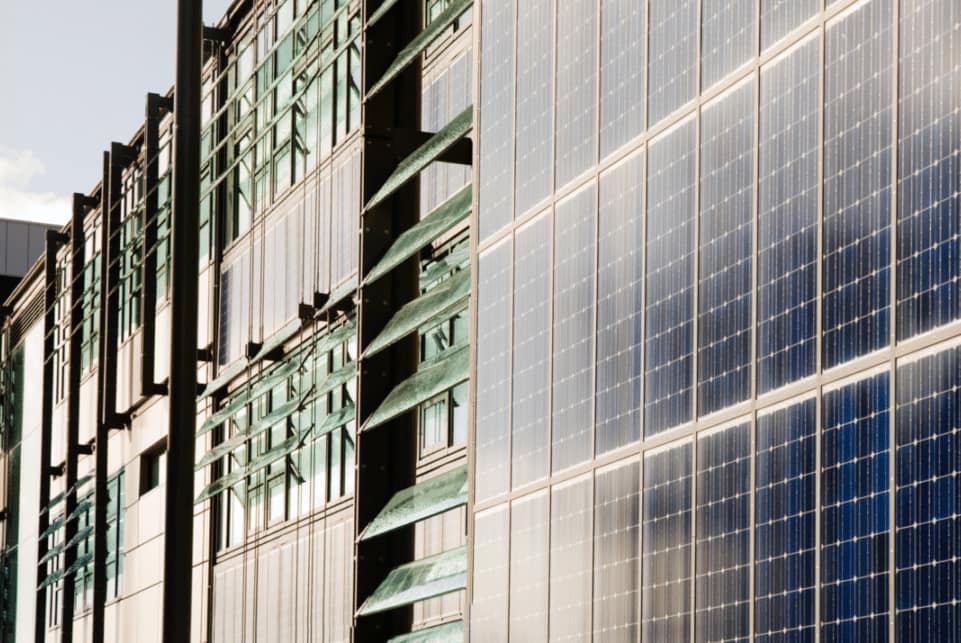

The most important factors for choosing a PV panel manufacturer are quality and reliability, certifications, warranty structure, efficiency, bankability, supply chain transparency, and reputation. Getting even one of these wrong can result in panels that underperform within 3–5 years, warranty claims that go unanswered because the manufacturer has exited the market, or project financing that falls apart because the lender doesn’t recognize the brand.
These factors directly impact three outcomes that define whether your project succeeds or fails: long-term energy yield (how many kWh your system actually produces over 25+ years), financial return (whether the investment pays for itself and generates profit), and risk exposure (the likelihood of premature failures, warranty disputes, or regulatory non-compliance). A study published in Sustainability journal found that many PV manufacturers struggle to honor their 25-year performance warranties — making manufacturer selection arguably the single most consequential decision in any solar project.
With a clear, step-by-step process, you can confidently evaluate and select the best solar panel company for your specific needs. This guide provides exactly that — from understanding PV panel fundamentals through a detailed evaluation framework to practical comparison tools and checklists you can use immediately.
Why the Right PV Panel Manufacturer Matters
Risks of Choosing Poor Solar Panel Companies
The solar industry has seen over 100 PV manufacturers exit the market since 2010 — through bankruptcy, acquisition, or simple closure. When a manufacturer disappears, every warranty it issued becomes worthless. A 25-year performance guarantee means nothing if the company behind it ceases to exist in year 6. Installers and project developers who built their businesses around these panels were left holding the liability, and end customers lost their investment protection entirely.
Beyond manufacturer failure, poor-quality panels present direct technical risks. The U.S. Customs and Border Protection (CBP) has seized counterfeit solar panels bearing falsified brand markings — modules that bypassed all quality testing and certification. Even legitimate budget manufacturers have been documented engaging in practices like downgrading cell quality after certification testing, using thinner EVA encapsulation to reduce costs, or substituting lower-grade backsheet materials that degrade within 5–7 years instead of the warranted 25.
The financial consequences are measurable. A poorly manufactured module that degrades at 1.2%/year instead of the warranted 0.5%/year will produce 17.5% less cumulative energy over 25 years. For a 100 kW commercial installation generating approximately $15,000/year in energy value, that 17.5% gap represents over $65,000 in lost revenue over the system lifetime — far more than any upfront savings from choosing a cheaper panel.
Benefits of a Reliable Manufacturer
Conversely, selecting a proven manufacturer creates compounding advantages. Panels from established manufacturers with rigorous quality control consistently achieve — and often exceed — their rated specifications. Field data from an 82 MWp study published in Progress in Photovoltaics found that high-quality crystalline modules degraded at just 0.27%/year, significantly better than the 0.5–0.8% that most warranties guarantee. That outperformance translates directly to higher-than-projected energy yields and faster payback.
Reliable manufacturers also facilitate project financing. Banks, institutional investors, and leasing companies maintain approved module lists based on manufacturer bankability assessments. Using panels from a manufacturer that lenders don’t recognize can delay or derail project financing entirely. Established BIPV and module manufacturers like جيا ماو BIPV, which operates a 3 GW annual production facility with fully digitalized MES production management, provide the kind of manufacturing traceability and quality documentation that institutional buyers require.

Rigorous quality control in manufacturing directly determines whether panels will perform to specification for 25+ years.
PV Panel Basics for Your Project
Types of PV Panels
Understanding the major panel technologies helps you evaluate whether a manufacturer’s product portfolio matches your project requirements. The PV market in 2025–2026 is dominated by four primary technology categories, each with distinct performance characteristics and cost profiles.
Monocrystalline PERC (Passivated Emitter and Rear Contact) panels represent the workhorse of the industry. Using single-crystal silicon wafers with a passivation layer on the rear surface, PERC modules achieve commercial efficiencies of 20–22% and remain the most cost-effective option for standard installations. They account for the majority of panels shipped globally, though they are gradually being displaced by newer technologies.
N-Type TOPCon (Tunnel Oxide Passivated Contact) is the leading next-generation technology, achieving mass production efficiencies of 24–26%. TOPCon’s lower degradation rate (typically 1% first-year, then 0.4%/year) and better temperature coefficient make it the preferred choice for projects where maximizing lifetime energy yield justifies a moderate cost premium over PERC. Most major manufacturers are transitioning their production lines to TOPCon.
HJT (Heterojunction Technology) panels combine crystalline silicon with thin amorphous silicon layers, achieving efficiencies of 25–27% with the industry’s best temperature coefficients (approximately -0.26%/°C). HJT commands a price premium but delivers measurably higher energy yields in hot climates. Manufacturing complexity is higher, meaning fewer manufacturers currently offer HJT at competitive scale.
Thin-Film technologies (including amorphous silicon, CdTe, and CIGS) offer lower efficiencies (6–18%) but unique advantages: flexibility, lightweight construction, and superior performance in low-light and high-temperature conditions. They are increasingly used in building-integrated photovoltaic (BIPV) applications where form factor and aesthetics are decisive factors.
| Technology | Commercial Efficiency | Temp. Coefficient | Typical Degradation | Relative Cost | Best Application |
|---|---|---|---|---|---|
| Mono PERC | 20–22% | -0.35%/°C | 0.55%/year | $$ | Standard rooftop & ground-mount |
| N-Type TOPCon | 24–26% | -0.29%/°C | 0.40%/year | $$$ | High-performance commercial & utility |
| HJT | 25–27% | -0.26%/°C | 0.35%/year | $$$$ | Hot climates, premium residential |
| Thin-Film (a-Si/CdTe) | 6–18% | -0.16 to -0.25%/°C | 0.50–1.0%/year | $–$$ | BIPV, flexible, low-light environments |
Key Performance Metrics
When comparing PV panel manufacturers, four performance metrics matter most. Module efficiency (%) determines how much electricity each panel generates per square meter — critical for space-constrained installations. Temperature coefficient (%/°C) indicates how much output drops as panels heat up; lower absolute values mean better hot-climate performance. Annual degradation rate (%/year) predicts long-term output retention; even a 0.2% difference compounds significantly over 25 years. And power tolerance — the variation between a panel’s rated wattage and its actual output — reveals manufacturing precision. Premium manufacturers guarantee positive-only power tolerances (e.g., 0 to +5 Wp), meaning every panel meets or exceeds its rating. Budget manufacturers with ±5% tolerances may ship panels that actually produce 10% less than expected when negative tolerances are combined with other real-world losses.
Key Criteria for PV Panel Manufacturers
Product Quality and Reliability
Product quality is not an abstract concept — it manifests in specific, measurable characteristics that you can verify before purchase. Start with the bill of materials: what grade of silicon cells does the manufacturer use, and do they source from their own wafer production or purchase on the open market? Vertically integrated manufacturers who control their own cell production (or maintain long-term contracts with premium cell suppliers) deliver more consistent quality than assemblers who purchase cells opportunistically from whatever source offers the lowest spot price.
Examine the encapsulation materials. The industry has largely shifted from EVA to POE (Polyolefin Elastomer) encapsulant for premium modules because POE provides approximately 40% better UV aging resistance and superior moisture barrier properties. The backsheet material also matters: fluoropolymer backsheets (Tedlar-based or equivalent) provide the most proven long-term protection, while cheaper polyethylene terephthalate (PET) backsheets have been associated with earlier degradation in humid climates.
For BIPV and specialty modules, quality requirements intensify because panels serve structural and architectural functions simultaneously. Manufacturers like Jia Mao Bipv address this by using architectural-grade tempered glass, imported POE encapsulant films, double-layer encapsulation to prevent PID (Potential Induced Degradation), and waterproof-breathable membrane technology — specifications that go well beyond standard module requirements.
Certifications and Standards
Certifications provide third-party verification that a manufacturer’s products meet internationally recognized safety and performance standards. Two certifications are non-negotiable for any PV project:
IEC 61215 is the design qualification standard that tests whether panels will perform reliably throughout their expected 25+ year life. It includes 200 thermal cycles between -40°C and +85°C, damp heat testing at 85°C/85% humidity for 1,000 hours, UV exposure, mechanical load testing, hail impact simulation, and hot-spot endurance testing. A panel that passes IEC 61215 has demonstrated the ability to survive the environmental stresses it will encounter during decades of outdoor operation.
IEC 61730 (harmonized with UL 61730 for the North American market) is the safety qualification standard that ensures panels won’t cause electrical shocks, fires, or other hazards. It evaluates electrical insulation, mechanical strength, fire resistance, and safe failure modes.
Beyond these minimums, additional certifications signal higher quality: IEC 61701 (salt mist corrosion resistance for coastal installations), IEC 62716 (ammonia corrosion resistance for agricultural environments), and IEC TS 62804 (PID resistance). Manufacturers who test beyond the minimum requirements — for example, achieving 2,000 hours of damp heat instead of the required 1,000, or 400 thermal cycles instead of 200 — demonstrate confidence in their product’s durability margin.
Warranty and Support
PV panel warranties consist of two components, and understanding both is critical for protecting your investment. The product warranty covers manufacturing defects (cracked cells, delamination, junction box failures, frame corrosion) and typically ranges from 10–15 years for standard manufacturers to 25–30 years for premium brands. The performance warranty guarantees a minimum power output over time — typically 90% at year 10 and 80% at year 25 for standard warranties, or 92% at year 25 for premium manufacturers like Maxeon, REC, and Silfab.
| Warranty Element | Budget Tier | Mid-Range Tier | Premium Tier |
|---|---|---|---|
| Product Warranty | 10–12 years | 15–20 years | 25–40 years |
| Performance at Year 25 | ≥80% | ≥84–87% | ≥88–92% |
| Degradation Guarantee | 0.7%/year | 0.5%/year | 0.25–0.4%/year |
| Warranty Type | Step-down | Linear or step-down | Linear |
| Claim Process | Often unclear, slow | Documented process | Streamlined, local support |
The critical question is whether the manufacturer will still exist to honor the warranty. A 30-year warranty from a company with $50 million in annual revenue and thin margins provides less real protection than a 25-year warranty from a manufacturer with billions in revenue, strong balance sheets, and a documented claims process. This is why bankability assessment matters — which we cover next.
Efficiency and Power Output
Module efficiency directly determines how much electricity your system generates from available space. For a residential rooftop with 30 m² of usable area, the difference between a 20%-efficient and a 23%-efficient panel means approximately 450 additional watts of installed capacity — translating to 550–700 more kWh per year depending on location. Over 25 years, that efficiency gap represents $3,000–$5,000 in additional energy value from the same roof area.
However, nameplate efficiency under Standard Test Conditions (STC) is only part of the story. Real-world performance depends on how efficiently the panel converts energy across varying conditions: partial cloud cover, early morning and late afternoon angles, high temperatures, and spectral variations across seasons. Manufacturers who publish NMOT (Nominal Module Operating Temperature) data and IEC 61853 energy rating results provide a more accurate picture of field performance than STC ratings alone.
Bankability and Financial Stability
BloombergNEF’s Tier 1 module manufacturer list is the most widely referenced bankability indicator in the solar industry. To qualify, a manufacturer must have supplied branded modules to at least six different projects of 1.5 MW or larger (financed non-recourse by different banks) within the past two years. As of Q1 2026, approximately 40–50 manufacturers maintain Tier 1 status globally — out of hundreds of module producers worldwide.
Tier 1 status is a useful starting point, but it is not a quality certification. It measures bankability (whether lenders accept the brand for project financing) rather than product quality directly. A more comprehensive assessment includes the manufacturer’s annual revenue, debt-to-equity ratio, manufacturing capacity utilization, R&D spending as a percentage of revenue, and geographic diversification of sales. Wood Mackenzie’s annual global solar module manufacturer ranking evaluates 38 manufacturers across these multidimensional criteria.
Supply Chain and Panel Origin
Supply chain transparency has become a critical manufacturer evaluation criterion, driven by regulatory requirements (such as the U.S. Uyghur Forced Labor Prevention Act), tariff considerations, and quality assurance concerns. Understanding where each component of your panel originates — from polysilicon to cells to final assembly — affects both compliance risk and quality consistency.
Vertically integrated manufacturers who control multiple stages of the supply chain (polysilicon purification, wafer production, cell fabrication, module assembly) offer the greatest traceability. Manufacturers who purchase cells and components from third parties introduce additional quality variables — the same module brand may contain cells from different suppliers across production batches, resulting in inconsistent performance.
For projects requiring full traceability, look for manufacturers with MES (Manufacturing Execution System) digital production management that assigns unique serial tracking to every module from raw material intake through final shipment. Jia Mao Bipv, for instance, implements an intelligent MES production system that enables fully digitalized and traceable manufacturing — every panel can be traced back to specific production runs, cell batches, and quality test results.
Reputation of the Solar Panel Company
A manufacturer’s reputation is built from measurable outcomes, not marketing claims. Evaluate reputation using verifiable data points: how many GW of cumulative shipments has the manufacturer delivered, what percentage of their installed base has experienced warranty claims, do they maintain local service centers or authorized service partners in your region, and what do independent testing organizations (PVEL, TÜV Rheinland, DNV) report about their products?
PVEL’s annual PV Module Reliability Scorecard publishes results from accelerated stress testing that goes beyond IEC certification requirements — including extended thermal cycling, extended damp heat, and potential-induced degradation (PID) testing. Manufacturers who voluntarily submit to these extended tests and publish results demonstrate confidence in their product quality that marketing materials cannot replicate.
Top 10 Global PV Module Manufacturers by 2024 Shipment Volume (GW)
Jinko
JA Solar
LONGi
Trina
Canadian
Tongwei
Risen
Astronergy
Qcells
DAS Solar
Source: Wood Mackenzie / Enerdata 2025 data (approximate shipment volumes in GW)

Panels from reputable manufacturers undergo rigorous quality verification before shipment, ensuring every module meets rated specifications.
Comparing PV Panel Manufacturers
Research and Shortlisting
Begin your evaluation by creating a shortlist of 3–5 manufacturers that meet your project’s baseline requirements. Start with the BloombergNEF Tier 1 list for bankability screening, then filter by technology type (PERC, TOPCon, HJT, thin-film), available wattage range, and physical dimensions that fit your installation constraints. For BIPV projects, filter for manufacturers that offer customization in transparency, color, and size — a capability that standard module producers typically lack. Jia Mao Bipv’s BIPV solutions portfolio exemplifies the kind of customization flexibility needed for architectural integration projects.
Cross-reference your shortlist against independent testing results. PVEL’s PV Module Reliability Scorecard, DNV’s module assessments, and TÜV Rheinland’s quality monitoring reports provide data-driven quality comparisons that supplement manufacturer self-reporting. Check whether the manufacturer has been flagged in any CBP detention orders, import compliance actions, or industry quality alerts.
Using a Quality Checklist
Apply a standardized evaluation framework to each shortlisted manufacturer. Score each criterion on a 1–5 scale, then weight the scores according to your project’s specific priorities. The table below provides a template:
| Evaluation Criterion | الوزن | What to Verify | Mfr. A Score (1-5) | Mfr. B Score (1-5) | Mfr. C Score (1-5) |
|---|---|---|---|---|---|
| Module Efficiency (STC) | 15% | Datasheet efficiency rating | |||
| Temperature Coefficient | 10% | Pmax temp. coefficient (lower = better) | |||
| الشهادات | 10% | IEC 61215 + 61730 + additional (salt mist, PID, ammonia) | |||
| Product Warranty Length | 10% | Years of defect coverage | |||
| Performance Warranty (Yr 25) | 10% | Guaranteed minimum output at year 25 | |||
| Bankability / Tier Status | 15% | BNEF Tier 1, financial reports, lender acceptance | |||
| Supply Chain Transparency | 10% | Traceability documentation, compliance certifications | |||
| Independent Test Results | 10% | PVEL Scorecard, TÜV, DNV reports | |||
| Customer Reviews & References | 5% | Installer feedback, project references | |||
| Price Competitiveness | 5% | $/Wp landed cost including logistics | |||
| WEIGHTED TOTAL | 100% |
Evaluating Customer Reviews
Customer reviews provide ground-truth validation that no datasheet or certification can replicate. Prioritize reviews from installers and EPC contractors over end consumers, because professionals evaluate panels based on measurable performance data rather than subjective impressions. Useful review sources include industry forums (e.g., r/solar on Reddit), installer association feedback channels, and direct reference checks with the manufacturer’s existing project customers.
When evaluating reviews, look for specific, data-backed observations: “We installed 500 kW of [Brand X] TOPCon modules in Phoenix, and they produced 3.2% more energy than our PVsyst model predicted in the first year” carries far more weight than “great panels, highly recommend.” Similarly, negative reviews with specific failure descriptions (“delamination along the edge seal after 18 months in a coastal installation”) are more actionable than general complaints.
Assessing Quotes and Value
When comparing quotes, normalize pricing to cost per watt ($/Wp) to enable apples-to-apples comparison across different panel wattages and sizes. But don’t stop at $/Wp — calculate the Levelized Cost of Energy (LCOE) for each option, which factors in efficiency, degradation rate, warranty terms, and expected lifespan to determine the true cost per kWh produced over the system’s life.
A module that costs $0.12/Wp but degrades at 0.7%/year and carries a 10-year product warranty will produce more expensive energy over 25 years than a module costing $0.16/Wp that degrades at 0.4%/year with a 25-year product warranty. The “cheaper” panel may actually cost 15–20% more on an LCOE basis once real-world performance is accounted for.
Video: Engineer Explains How to Decide Which Solar Panel to Buy — A practical guide to evaluating panel specifications
Practical Tools for Choosing a Solar Panel Company
Sample Comparison Checklist
Use this condensed checklist when you’re on a factory visit, reviewing a manufacturer’s documentation, or conducting a final evaluation call. Each item represents a verified indicator of manufacturing quality and business reliability:
Manufacturing verification: Does the manufacturer operate its own production lines (not contract assembly)? What is the factory’s annual capacity, and what percentage is currently utilized? Can they provide a factory tour or virtual walkthrough? Do they use automated optical inspection (AOI) and electroluminescence (EL) testing on 100% of modules?
Quality documentation: Can they provide IEC 61215 and IEC 61730 certificates from a recognized test lab (TÜV, UL, CSA, MCS)? Do they have ISO 9001 (quality management), ISO 14001 (environmental management), and ISO 45001 (occupational health and safety) certifications? Can they share results from extended reliability testing beyond IEC minimums?
Financial verification: Are audited financial statements available? What is their debt-to-equity ratio? Are they listed on any stock exchange (which mandates financial disclosure)? Do they appear on the BloombergNEF Tier 1 list?
Supply chain verification: Can they provide full supply chain traceability documentation for polysilicon, wafers, cells, glass, encapsulant, backsheet, and junction boxes? Do they comply with applicable forced labor prevention regulations?
Questions to Ask Solar Panel Companies
These questions cut through marketing language and reveal substantive quality differences between manufacturers. Based on recommendations from industry experts, ask:
“What is your annual module degradation rate based on field data — not warranty terms?” Warranty guarantees represent the worst-case scenario manufacturers are willing to cover financially. Actual field performance data reveals true quality. Premium manufacturers will share field degradation data from monitored installations showing rates of 0.3–0.4%/year, well below their warranty commitments.
“Show me your bill of materials — specifically, who supplies your cells, encapsulant, glass, and backsheet, and have those suppliers changed in the last 12 months?” Frequent component supplier changes can indicate cost-cutting that compromises consistency.
“What percentage of modules shipped in the last year required warranty claims, and what was the average resolution time?” Claim rates below 0.1% and resolution times under 30 days indicate robust quality control and responsive service infrastructure.
“Can you provide reference contacts from three projects of similar scale and application type installed more than 2 years ago in my region?” Willingness to provide verifiable project references is one of the strongest indicators of manufacturer confidence in their product.
Making the Final Choice
Weighing Pros and Cons
Every manufacturer represents a different balance of strengths and trade-offs. The optimal choice depends on which factors carry the most weight for your specific project. A utility-scale developer optimizing for the lowest LCOE may prioritize a Tier 1 manufacturer with the highest efficiency and lowest $/Wp, even if the product warranty is shorter. A building owner installing a BIPV facade that must last 30+ years and look architecturally refined may prioritize product durability, aesthetic customization, and warranty length over pure cost-per-watt.
For architectural and BIPV projects specifically, the evaluation criteria shift toward manufacturers who demonstrate both photovoltaic expertise and building-materials-grade construction quality. Standard solar module manufacturers rarely offer the customization needed for building integration — custom sizing, variable transparency levels, color matching, architectural-grade glass tempering, and curtain-wall-compatible profiles. Specialized BIPV manufacturers like جيا ماو BIPV bridge this gap, combining monocrystalline cell efficiencies exceeding 22% with architectural features like 91.5% ultra-clear tempered glass, self-cleaning coatings, and wind pressure resistance rated at 4.0 kPa for high-rise applications.
What Matters Most When Choosing a PV Panel Manufacturer
Bankability & Warranty (22%)
Efficiency & Output (18%)
Price & Value (14%)
Supply Chain (10%)
Reputation (8%)
Based on industry survey data of EPC contractors and project developers
Avoiding Common Mistakes
Mistake #1: Choosing on price alone. The cheapest panel on the market is rarely the lowest-cost option over 25 years. A module priced $0.02/Wp below competitors that degrades faster, carries a weaker warranty, or comes from a manufacturer with uncertain financial viability will cost more in lost production and replacement risk than it saves upfront.
Mistake #2: Ignoring the warranty fine print. Not all 25-year warranties are equal. A “step-down” warranty (90% at year 10, 80% at year 25) allows faster degradation in early years than a “linear” warranty (guaranteed minimum 0.5%/year decline). The step-down structure can mask a module that degrades at 1%/year for the first 10 years and slows down afterward — still technically within warranty but significantly underperforming a linear-warranted module.
Mistake #3: Confusing Tier 1 status with quality certification. Tier 1 means banks will finance projects using that module brand. It does not certify that the panels passed extended reliability testing, use premium materials, or achieve best-in-class efficiency. Tier 1 is necessary but not sufficient for quality assurance.
Mistake #4: Overlooking local service and support. A manufacturer with excellent products but no service infrastructure in your region creates warranty enforcement challenges. If a claim requires shipping panels internationally for inspection, the cost and logistics may exceed the claim value.
Mistake #5: Not requesting sample modules for independent testing. For large-scale procurements (500 kW+), request sample modules and submit them to an independent testing lab for EL imaging, flash testing, and visual inspection. This $500–$1,000 investment can reveal quality issues before you commit to a multi-million-dollar procurement.

Proper manufacturer selection ensures commercial installations deliver projected returns for decades — avoiding costly panel replacements and warranty disputes.
Choosing the best PV panel manufacturer is a structured process, not a guessing game. Start by defining your project’s non-negotiable requirements — technology type, efficiency threshold, warranty minimums, and compliance certifications. Build a shortlist of 3–5 manufacturers using the BloombergNEF Tier 1 list and independent testing reports as filters. Evaluate each shortlisted manufacturer using the weighted checklist framework: quality and reliability (28%), bankability and warranty (22%), efficiency and output (18%), price and value (14%), supply chain transparency (10%), and reputation (8%).
The importance of considering quality, warranty, efficiency, bankability, and supply chain factors together cannot be overstated. A manufacturer that scores exceptionally on efficiency but poorly on bankability creates financing risk. One that offers excellent warranty terms but has questionable supply chain practices creates compliance risk. The best manufacturers — whether they are global-scale Tier 1 producers or specialized BIPV manufacturers like جيا ماو BIPV with their 3 GW capacity and full digital traceability — excel across multiple criteria simultaneously.
Use the comparison checklist and manufacturer questions provided in this guide to structure your evaluation conversations. Request datasheets, warranty documents, certification copies, and project references from every shortlisted manufacturer. For procurements above 100 kW, invest in independent sample testing. The time you invest in thorough manufacturer evaluation will protect your project’s financial returns for the next 25+ years.
As a next step, identify 2–3 manufacturers from this guide’s criteria that match your project requirements and request detailed proposals. Compare them using the weighted evaluation framework, verify their claims through independent sources, and make your decision based on data — not marketing brochures. For BIPV and specialty solar glass projects, you can explore Jia Mao Bipv’s photovoltaic glass portfolio as a starting reference for what comprehensive BIPV manufacturers offer.

Every successful solar project starts with the right manufacturer choice — a decision that determines performance, reliability, and returns for decades.
Frequently Asked Questions (FAQ)
Q1: What is the most important factor when choosing a PV panel manufacturer?
Product quality and reliability — verified through independent testing results (PVEL Scorecard, TÜV reports), IEC certifications, and field performance data — is the most important factor. A panel that degrades at 0.3%/year instead of 0.7%/year produces approximately 10% more cumulative energy over 25 years, which typically exceeds any upfront price difference between manufacturers. Bankability is the second most important factor, because a warranty is only as strong as the company behind it.
Q2: What does BloombergNEF Tier 1 mean for solar panel manufacturers?
BloombergNEF Tier 1 status indicates that a manufacturer has supplied branded modules to at least six different projects of 1.5 MW+ financed non-recourse by six different banks in the past two years. It measures bankability (lender acceptance) rather than product quality directly. As of Q1 2026, approximately 40–50 manufacturers globally maintain this status. Tier 1 is necessary for most financed projects but should be combined with independent quality testing for a complete assessment.
Q3: How long should a solar panel warranty last?
Industry-standard product warranties range from 12–25 years, with premium manufacturers offering up to 40 years (Maxeon). Performance warranties typically guarantee 80–92% output at year 25. For most projects, look for a minimum 15-year product warranty and a linear performance warranty guaranteeing at least 84% at year 25. Specialized BIPV manufacturers like Jia Mao Bipv offer 25-year linear power warranties with guaranteed 80% retention, plus separate optical clarity warranties for transparent modules.
Q4: What certifications should PV panels have?
At minimum, every panel should carry IEC 61215 (design qualification for performance and reliability) and IEC 61730 / UL 61730 (safety qualification). For coastal installations, require IEC 61701 (salt mist corrosion resistance). For agricultural settings, require IEC 62716 (ammonia resistance). For all installations, verify IEC TS 62804 (PID resistance). Extended testing beyond IEC minimums — such as 2,000-hour damp heat or 400 thermal cycles — indicates superior quality confidence.
Q5: How do I verify a solar panel manufacturer’s quality claims?
Use three independent verification methods: check the manufacturer’s inclusion in PVEL’s annual PV Module Reliability Scorecard (which tests modules beyond IEC requirements), request copies of IEC certification reports from the issuing test laboratory (not just the certificate — the full test report), and for large procurements, submit sample modules to an independent testing lab for electroluminescence imaging, flash testing, and visual inspection. Cross-reference manufacturer claims against reviews from professional installers on industry forums.
Q6: Is it worth paying more for premium solar panels?
For most installations, yes — when the premium translates to measurably lower degradation, stronger warranties, and higher bankability. The LCOE calculation reveals the true economics: a module costing $0.04/Wp more that degrades 0.3%/year slower will produce enough additional energy over 25 years to exceed the premium cost by 3–5×. The exception is very short-payback projects (under 5 years) in high-irradiance locations where the degradation difference has less time to compound.
Q7: What are the differences between Tier 1, Tier 2, and Tier 3 solar panel manufacturers?
Tier 1 manufacturers meet BloombergNEF’s bankability criteria (six 1.5 MW+ projects financed by six banks in two years). They are accepted by most project lenders. Tier 2 manufacturers typically have established production but limited non-recourse financing track records — they may be accepted by some lenders but not all. Tier 3 manufacturers are smaller producers, often newer to the market, with limited bankability history. Tier classification correlates with financing access, not necessarily with product quality — some Tier 2 manufacturers produce excellent panels but lack the commercial track record for Tier 1 status.
Q8: How do I choose between PERC, TOPCon, and HJT panel technology?
Choose PERC for budget-constrained standard installations where proven reliability and lowest $/Wp are priorities. Choose TOPCon for projects prioritizing the best balance of efficiency, degradation rate, and cost — it is rapidly becoming the new industry standard. Choose HJT for hot-climate installations and premium projects where its superior temperature coefficient (-0.26%/°C) and lowest degradation rates justify a higher upfront cost. For BIPV applications, consult with specialized manufacturers who can match the right cell technology to your architectural requirements.
Q9: What questions should I ask a solar panel manufacturer before buying?
The five most revealing questions are: (1) What is your actual field degradation rate from monitored installations? (2) Who supplies your cells, encapsulant, and backsheet, and have those suppliers changed recently? (3) What percentage of shipped modules required warranty claims in the last two years? (4) Can you provide three project references of similar scale installed 2+ years ago in my region? (5) Are you willing to submit sample modules for independent third-party testing before we commit to a purchase order?
Q10: What are the biggest risks of choosing the wrong PV panel manufacturer?
The three biggest risks are: (1) Warranty orphanship — the manufacturer exits the market, leaving you with no warranty coverage for defects or underperformance. Over 100 PV manufacturers have closed since 2010. (2) Accelerated degradation — poor-quality materials or manufacturing cause panels to degrade at 1.0–1.5%/year instead of 0.4–0.5%/year, costing 15–20% in lost energy over the system lifetime. (3) Financing failure — lenders reject the manufacturer brand, delaying or canceling project financing. All three risks are mitigable through the systematic manufacturer evaluation process described in this guide.




-300x300.jpg)